
Auto Loan Indirect Dealer Sales — 60-Min Training
 Curated byKory White · Fractional CRO · Maryland
 PULSEKNOWLEDGE LIBRARY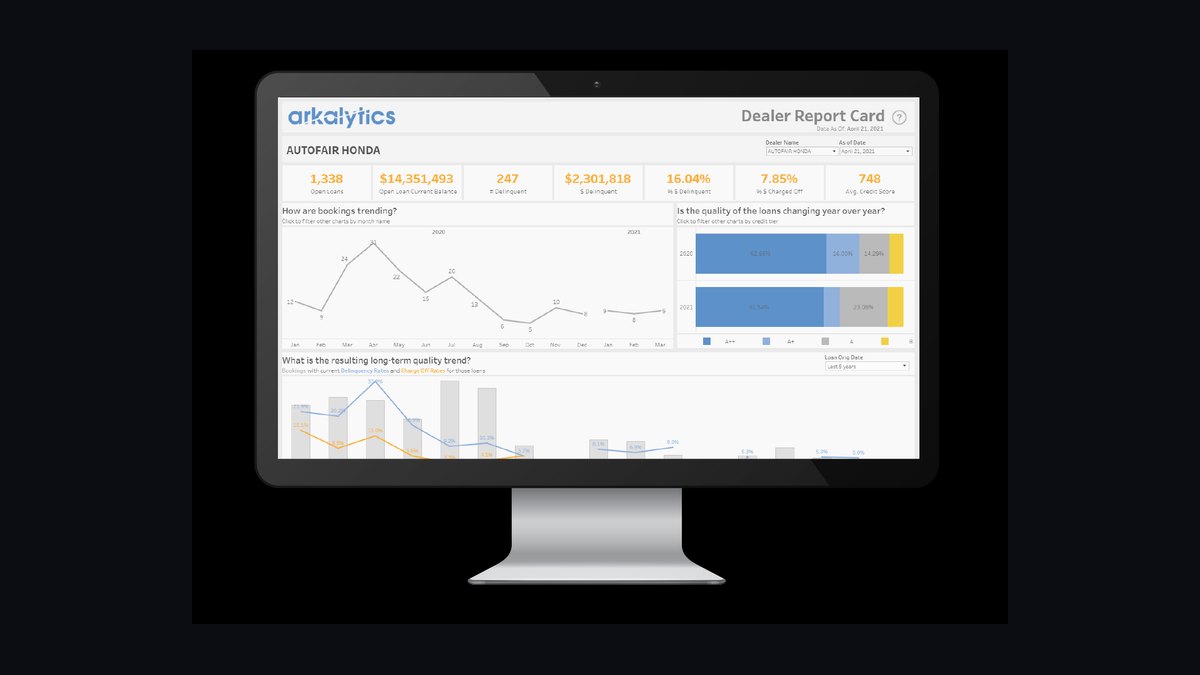
Indirect dealer sales training teaches Dealer Relationship Managers to grow funded auto-loan volume through franchised and independent F&I offices. A 60-minute session covers visit cadence, look-to-book diagnosis, capped non-discretionary reserve policy, and contract-validity auditing — the four habits that move share without buying volume or creating fair-lending exposure.
What indirect dealer sales actually is and why the role exists
In indirect auto lending, the lender never meets the borrower before the contract is signed. The customer walks onto a lot, negotiates a vehicle, and lands in the F&I office at the back of the store. The F&I Manager pulls a credit application into a submission platform — RouteOne or Dealertrack are the two dominant rails — and blasts it to a panel of lenders the store has been approved with. Approvals come back with a buy rate, an advance cap, a term, and a stipulation list. The F&I Manager decides which one to present. The lender's entire commercial outcome is decided by someone the lender doesn't employ, in a room the lender isn't in, in under four minutes.
That is why the Dealer Relationship Manager exists. The DRM's customer is not the car buyer. It is the F&I Manager, the Used-Car Manager, and the Dealer Principal. The product is not a loan — it is the *experience of submitting to your lender code*: how fast the decision comes back, how honest the approval is, how few stipulation surprises appear after the customer has driven off, and how quickly the money lands in the dealer's account. Everything in a 60-minute training session should be organized around that one reframe, because new DRMs almost always arrive thinking they sell rates.
The structural facts worth putting on a whiteboard in the first five minutes:

- The DRM's asset is a bench, not a pipeline. A typical territory is 25 to 40 active rooftops, each submitting somewhere between 8 and 30 applications a week. There is no cold-outbound motion that meaningfully changes that number quickly; you grow by taking share of an existing dealer's submissions, and you lose by giving share back.
- Dealers stop sending paper for operational reasons, not pricing reasons. Slow funding turns and late-breaking stipulations kill deals after the customer believes the deal is done. That is the single most relationship-damaging event in the business, because the dealer has to make an unwinding phone call you caused.
- Every conversation in the role sits inside a compliance frame. ECOA and Regulation B govern how credit is priced and offered. The CFPB's 2013 indirect-auto bulletin put lenders on notice that discretionary dealer markup creates statistical fair-lending exposure. UDAAP governs how products are presented. The Servicemembers Civil Relief Act caps rates on pre-service debt for active-duty borrowers. State retail-installment-contract law governs the paper itself. A tactic that widens spread but produces a pricing pattern that varies by protected class is not a clever tactic; it is an enforcement file.
The training should also be honest about the competitive set, because it shapes every objection a DRM will hear. Captive finance arms carry subvented OEM rates the bank lenders cannot match on new-vehicle prime paper. Bank auto groups and credit-union aggregation platforms compete on rate and on relationship. Non-prime and subprime specialists compete on advance, speed, and willingness to buy deeper. A DRM at a bank auto group who tries to win a subvented new-car deal is wasting a visit; a DRM at a subprime shop who leads with rate is doing the same. Teach the room where their own paper actually wins and let them stop fighting on ground they cannot hold.
The step-by-step process a DRM runs every week
The core of the training is a cadence, not a technique. Dealer relationships erode from windshield time not spent far more often than from a basis point of pricing. The weekly rhythm below is the deliverable — every attendee should leave having mapped their own rooftop list against it.

Monday morning, before the first visit. Pull the weekend funding report out of the servicing platform. You are looking for three lists: contracts pending stipulations, contracts that were re-decisioned or declined at funding, and rooftops whose look-to-book dropped week-over-week. Those three lists set the first visits of the week. A DRM who builds Monday's route from geography instead of from the funding report is optimizing for driving time instead of for revenue.
Tuesday through Thursday, the visit block. Five to seven named dealer visits per day, weighted to the top quartile of the bench. A named visit means you know before you walk in which F&I Manager you are seeing, what their numbers did, and what you are asking for. Bring a printed scorecard — applications submitted, approvals issued, contracts captured, look-to-book, average amount financed, average advance, and early-payment-default or 30-day delinquency if your lender shares it. Paper on the desk outperforms a dashboard link nobody opens.
Friday afternoon, the no-surprises email. One message to every rooftop on the bench covering any change effective Monday: advance grid movement, LTV caps, term availability, stipulation policy, program expirations. Dealers forgive tightening. They do not forgive discovering the tightening when a deal blows up.
Monthly, the dealer council. Breakfast with the top handful of rooftops. Half the time is market data you bring; half is open feedback you shut up and take. Log it in the CRM as voice-of-dealer, because the pattern across eight stores is worth more than any single complaint.
Quarterly, the F&I training visit. Refresh the F&I bench on product eligibility, advance math, and the eContracting workflow. This is the visit that quietly raises look-to-book, because most declines and re-decisions come from F&I Managers structuring deals your box was never going to buy.
The 24-hour rule. Any stipulation question from an F&I Manager gets a callback inside the hour during business hours. This is the single commitment that most reliably separates a DRM who keeps share from one who slowly bleeds it.
Coach the room on what practitioners call the top-of-deal problem. F&I Managers will say they shop every deal across the full panel. In practice they present the first two or three offers that come back cleanly, because the customer is sitting across the desk and the store wants the deal delivered today. If your automated decision is slow, or your approval comes back so hedged that it needs explaining, you are structurally not top-of-deal regardless of how good your rate is. Decision speed and approval clarity are sales features, and a DRM who cannot articulate them is selling the wrong thing.

The numbers: look-to-book, funding ratio, and what a territory is worth
Look-to-book — booked contracts divided by applications received — is the metric the whole role orbits. It moves for four reasons and only four: your pricing changed, your credit box changed, your stipulation policy changed, or the store's behavior changed. The diagnostic conversation is a matter of ruling out three to find the fourth, and it belongs in a chair in the F&I office, not on a phone call.
Open with the scorecard rather than with pricing. Something close to: *"You sent 142 applications last week, we approved 68, you booked 31. That's a look-to-book of 22 percent, down from 31 the week before. Walk me through what changed on the floor."* Then diagnose before you negotiate. Did a subvented captive program pull the prime paper out of your mix? Did a competitor move their advance grid? Did the store hire a new desk manager who steers differently? Did back-end product attach change what the deal needs to hold?
Only after the cause is identified do you reach for a concession — and the concession has to be a *program*, not a favor. A temporary advance bump on a defined tier, a stipulation relief on a defined customer profile, a funding-fee credit for a defined window. Write down the scope. Offer it to every dealer in that tier. The instant a concession exists for one store and not another with no documented, non-prohibited basis, you have manufactured disparate-treatment evidence against your own institution.

The territory math is what makes the visit cadence feel urgent rather than administrative. Work it live on the board with the room's own numbers, but the shape looks like this: take a bench of roughly thirty rooftops submitting on the order of fifteen to twenty applications a week each. That is several hundred applications a week landing in your queue. Apply the territory's look-to-book, then apply the funding ratio — the share of booked contracts that actually fund rather than bouncing back for correction — and you get funded units per week. Multiply by average amount financed, which in the current market for a blended prime and near-prime book sits in the low-to-mid five figures, and a single DRM territory is a nine-figure annual funded-volume business.
Run the sensitivity and the point lands: a single percentage point of look-to-book improvement across that bench is worth several additional funded contracts per week, which annualizes into eight figures of funded volume. No pricing exception a DRM could win from credit policy comes close to that. The visit *is* the job.
Funding ratio deserves its own treatment because it is both a relationship metric and, for most DRMs, a compensation metric — comp plans generally pay on funded volume, not approved volume. Contracts bounce for a small, boringly repetitive set of reasons: the signed contract terms do not match the approval, a stipulation was never cleared, the vehicle or collateral details are wrong, insurance or title documentation is missing, identity verification fails, or an SCRA hit requires re-disclosure at the capped rate. Every one of those is preventable at the F&I desk, and every one of them is prevented by the quarterly training visit rather than by a funding-department phone call.

Timelines to teach as targets, not promises: an approval decision should return in seconds, not minutes. A stipulation request should be communicated at approval, never discovered at funding. A clean eContracted deal with stipulations cleared before the afternoon cutoff should fund same-day or next-day. A paper contract mailed to a funding center will take days longer and is worth saying so plainly — it is the strongest argument a DRM has for pushing a holdout store onto eContracting.
Where DRMs get it wrong
Improvising an off-program exception to save a single deal. The F&I Manager who asks for more spread, a deeper advance, or a waived stipulation is not testing your ethics; they are testing whether the grid is real. If it bends once, it will be pushed every week, and the pattern of who got the bend and who did not becomes the exhibit. The correct answer is a version of: *"The grid is the same for every rooftop in my territory. I can't break it for one deal — not for you, not for anyone."* Then immediately pivot to what you actually can authorize.
Talking reserve in dollars instead of basis points. Dealer reserve, or participation, is the spread between the lender's buy rate and the contract APR the dealer signs with the consumer, paid to the dealer as compensation for originating. Discussing it in dollars turns a pricing policy conversation into a compensation negotiation, which is exactly the frame that produced the CFPB's 2013 bulletin. The industry's answer to that bulletin — capped, non-discretionary participation grids and flat-fee structures — only works as a defense if the DRM treats the cap as a published policy rather than an opening bid.

Promising an APR to the consumer. The lender funds a contract; the dealer sells the rate. A DRM who tells a customer what their rate will be has stepped into the dealer's disclosure obligations under Truth in Lending and created a mess for everyone.
Suggesting the store recover margin somewhere else. If a DRM's answer to a capped reserve is a nudge toward inflated fees or unauthorized add-on products, that is a UDAAP problem for the customer, the dealer, and the DRM personally. The legitimate levers are real: a documented rate buydown under a published dealer program, a funding-fee waiver, faster funding, or better back-end product eligibility. Teach those four so the DRM always has somewhere to go when the answer to "more spread" is no.
Six things that should never be said in an F&I office — read them aloud in the session, slowly, because new DRMs need to hear how these sound:

- Any version of splitting an off-program markup. That is exactly the discretionary-markup conduct the 2013 bulletin targeted.
- Any suggestion that the disclosed APR is negotiable after the fact. The contract APR is the customer's rate.
- Any statement that ties credit availability to geography. That is redlining, and it is a fair-lending referral.
- Any suggestion to route an active-duty servicemember away from their SCRA entitlements.
- Any encouragement to overstate income or employment. That is application fraud with two names attached.
- Any offer to waive a proof-of-insurance or title stipulation informally. It makes the contract a servicing and collateral problem the moment anything goes wrong.
Confusing activity with cadence. Fifteen drop-in visits where the DRM chats at the service drive and leaves is not a territory plan. Five named visits with a scorecard, a diagnosis, and an ask is. The training should force each attendee to name their next two weeks of rooftops in writing before they leave the room.
Letting the independent-dealer channel grow unmanaged. Independent used-only stores can be excellent volume, but they carry different chargeback, title, and fraud profiles than franchised rooftops, and onboarding one is a real underwriting exercise: license verification, sanctions and background screening, financial review, F&I compliance check, and a site visit. Most lenders manage concentration limits on independents for good reason. A DRM who fills a soft quarter with unvetted independents creates a portfolio problem that surfaces two quarters later.
Choosing your move when a dealer pushes back
The final working section of the training is a decision framework, because the whole role compresses into a handful of recurring moments where a DRM has to pick a lever under time pressure. Give them a rule for each.

When the ask is "more spread." Never the answer they want. Route to the four legitimate levers in order of cost to the lender: expedite funding, waive the funding fee, apply a published buydown program, escalate for a documented exception through the formal exception-justification process with credit-policy sign-off. If none apply, say no cleanly and explain why the cap protects both parties.
When look-to-book drops. Do not concede anything until you know the cause. If it is subvention, you are not losing to a competitor, you are losing to a manufacturer program, and the right response is to redirect at the used and near-prime paper where you actually compete. If it is a competitor's advance grid, take it to credit policy with the data. If it is a personnel change at the store, it is a relationship problem and the answer is time, not pricing.
When the complaint is speed. This is the most winnable objection in the business and the most often mishandled. Do not argue. Concede the point, then show the specific path to faster funding: eContracting through the submission platform, stipulations cleared before the day's cutoff, and correct contract terms on the first submission. Speed complaints are usually a workflow problem wearing a pricing costume.

When the complaint is the stipulation list. Ask for the specific deal. Audit it together. If the automation genuinely over-pulled documentation at a given profile, take it back to credit policy as a policy question. If it did not, walk the F&I Manager through why the box asks for what it asks for. Either way you leave having done something concrete instead of absorbing a complaint.
When a deal is outside the advance cap because of rolled negative equity. Total advance includes the vehicle, the negative equity from the trade, taxes and fees, and any back-end products. Caps vary by credit tier and term. The fix is not an exception; it is training F&I to check the advance percentage in the submission platform *before* the customer signs, which the platform displays in real time.
Close the 60 minutes with three written commitments each attendee tapes to their laptop: the next two weeks of named visits are calendared in the CRM by Friday; the published participation grid lives in the visit folder and no off-grid exception happens without the formal justification form; and any contract pending stipulations more than 24 hours gets a personal call from the DRM, not an email from the funding department. Three commitments, all behavioral, all verifiable next week. That is what makes a training session survive contact with Monday.
Related questions
How is dealer reserve different from a flat fee?
Reserve, or participation, is a share of the spread between the lender's buy rate and the contract APR. A flat is a fixed dollar amount paid at funding regardless of rate. After the CFPB's 2013 bulletin, many lenders moved toward flats or capped participation to reduce disparate-impact exposure.
What does "top-of-deal" mean and why does it matter?
It describes which lender's approval the F&I Manager presents to the customer first. Because deals close in minutes, the first clean approval usually wins. Decision speed and approval clarity therefore drive share as much as price does.
How many rooftops should one DRM carry?
Typical benches run roughly 25 to 40 active rooftops, sized so a DRM can sustain five to seven meaningful in-person visits a day. Larger benches force drop-in visits, which do not move look-to-book.
Why do approved contracts fail at funding?
Almost always contract terms not matching the approval, uncleared stipulations, missing insurance or title documentation, identity-verification failures, or an SCRA hit requiring re-disclosure. All are preventable at the F&I desk with training.
Should a DRM ever talk directly to the borrower?
No. The dealer sells the rate and makes the Truth in Lending disclosures. The lender funds the contract. A DRM quoting an APR to a consumer creates disclosure problems for the store and confusion for the customer.
FAQ
A dealer wants me to stretch the advance on one deal as a favor. Should I?
No. The moment an off-grid advance exists for one rooftop, the next store asks for the same thing and you either repeat it or refuse it — and the refusal is what creates the pattern. Use your lender's published exception policy with documented criteria and sign-off, or decline cleanly and note the request in the CRM.
What is the SCRA check and why does it delay funding?
Under the Servicemembers Civil Relief Act, active-duty servicemembers are entitled to a rate cap on debt incurred before service. Lenders verify active-duty status against the Defense Manpower Data Center database, and a hit triggers re-disclosure at the capped rate. It rarely kills a deal but reliably delays one, so train F&I to identify active-duty customers at application rather than at funding.
How should a DRM handle rolled negative equity?
Treat it as an advance-cap question, not a pricing question. Negative equity, taxes, fees, and back-end products all consume the same advance capacity as the vehicle itself, and caps tighten as term extends and credit tier weakens. Coach F&I to check advance percentage in the submission platform before the customer signs.
An independent dealer wants to start sending applications. What is the onboarding?
A full dealer underwriting: state license verification, sanctions and background screening, financial review, F&I compliance assessment, code-of-conduct attestation, and a site visit. Independents carry different chargeback and title-risk profiles than franchised stores, and most lenders hold concentration limits on them for that reason.
Does the compliance posture change with a different regulatory environment?
The operating model shouldn't. Capping participation, documenting exceptions, running periodic statistical analysis of pricing distribution, and remediating disparities you find are what a prudent lender does regardless of who is enforcing this year. Institutions build these controls to survive examination cycles, litigation, and state regulators — not just one federal agency's current appetite.
What single change most improves a struggling territory?
Fixing the funding experience. A store that gets fast decisions, honest approvals, no late stipulation surprises, and quick money will send more paper without a basis point of pricing movement. Pricing concessions are expensive and temporary; operational reliability compounds.
Sources
- Consumer Financial Protection Bureau — *Bulletin 2013-02: Indirect Auto Lending and Compliance with the Equal Credit Opportunity Act* — https://www.consumerfinance.gov/compliance/supervisory-guidance/bulletin-indirect-auto-lending-compliance/
- Equal Credit Opportunity Act, Regulation B (12 C.F.R. Part 1002) — https://www.consumerfinance.gov/rules-policy/regulations/1002/
- Federal Deposit Insurance Corporation, *Supervisory Insights* — https://www.fdic.gov/regulations/examinations/supervisory/insights/
- Department of Defense Manpower Data Center, SCRA verification — https://scra.dmdc.osd.mil/
- Servicemembers Civil Relief Act overview, U.S. Department of Justice — https://www.justice.gov/servicemembers/servicemembers-civil-relief-act-scra
- National Automobile Dealers Association — https://www.nada.org/
- American Financial Services Association — https://afsaonline.org/
- RouteOne — https://www.routeone.com/
- Dealertrack, Cox Automotive — https://us.dealertrack.com/
- Truth in Lending Act, Regulation Z (12 C.F.R. Part 1026) — https://www.consumerfinance.gov/rules-policy/regulations/1026/
Related on PULSE
- [Auto Dealership BDC Appointment Selling — 60-Min Training](/knowledge/st341)
- [Commercial Lending and SBA Loan Selling — 60-Min Training](/knowledge/st336)
- [Ag Equipment Dealer Selling — 60-Min Training](/knowledge/st353)
- [Auto Detailing Package and Membership Selling — 60-Min Training](/knowledge/st285)
- [Sales Forecasting Accuracy: Template for a Team Meeting Focused on Data Hygiene](/knowledge/st0796)
- [Selling with Stories: Narrative Structure Template for a 45-Minute Sales Workshop](/knowledge/st0792)
This page will be disappearing soon. Save it to your device for $1 — or read it free while it is here.
@Kory-White- · if Venmo asks, the last 4 of my number are 2012
 sales-trainingCommercial Lending and SBA Loan Selling — 60-Min Training
 sales-trainingEquipment Financing and Leasing Selling — 60-Min Training
 sales-trainingMortgage Purchase Origination Selling — 60-Min Training
 sales-trainingRefinance and HELOC Conversion Selling — 60-Min Training
 sales-trainingAnnuity and Retirement Income Selling — 60-Min Training
 sales-trainingWealth Management HNW Prospecting — 60-Min Training
 sales-trainingGroup Health Benefits Broker Selling — 60-Min Training
 sales-trainingIndustrial MRO Distribution Selling — 60-Min Training
 sales-trainingCommercial Flat-Roof Selling — 60-Min Training
 sales-trainingFinancial Advisor Discovery Meeting Close — 60-Min Training