


What is the recommended AI Agent Framework sales and operations tech stack in 2027?
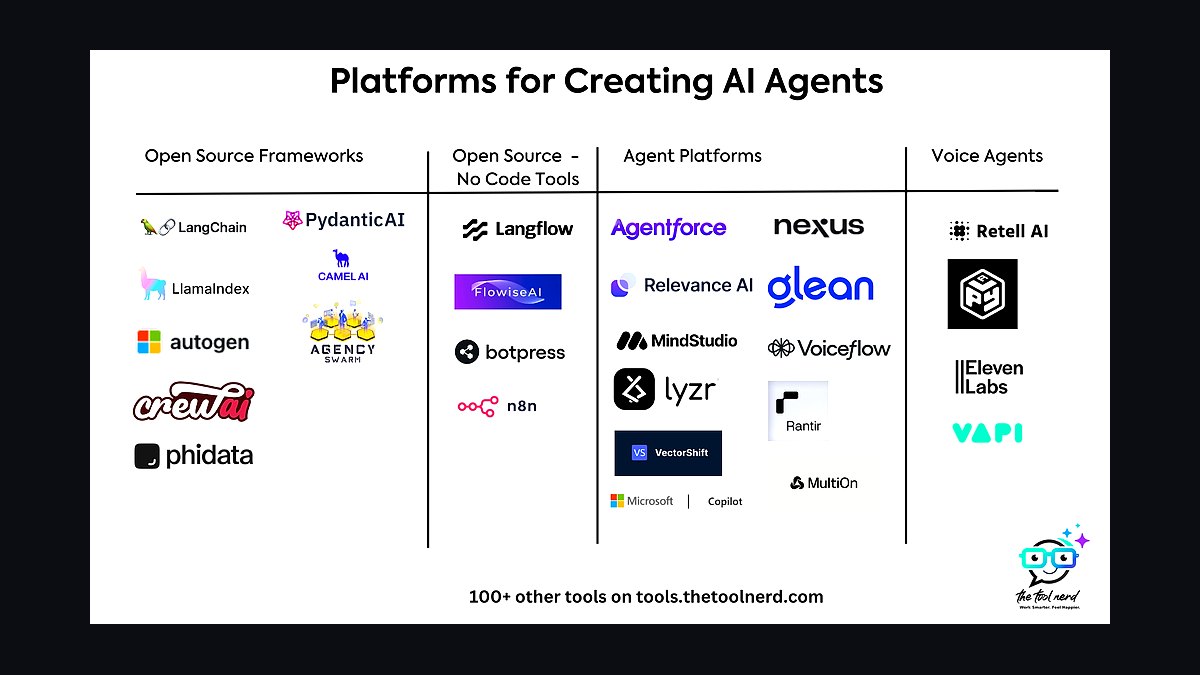
The best 2027 sales and operations tech stack for an AI Agent Framework vendor is built around an agent-orchestration runtime + tool-calling infrastructure — LangGraph + CrewAI + AutoGen + OpenAI Agents SDK + Anthropic Claude Tool Use + Agent SDK + PydanticAI + DSPy + Microsoft Semantic Kernel patterns; MCP (Model Context Protocol) server + client implementations; integrations with LLM providers (OpenAI, Anthropic, Google, Mistral, AWS Bedrock, Azure OpenAI), tool ecosystems (web search, code execution, computer use, database query, custom APIs), memory backends (Redis, Postgres, vector DBs), and observability (LangSmith, Arize, Langfuse). Sales runs on Salesforce Sales Cloud + HubSpot Enterprise + Clari + Gong, billing on Metronome + Stripe Billing + NetSuite, Gainsight + Pendo for adoption, Vanta + Drata + Hyperproof for SOC 2 + ISO 27001 + ISO 42001 + EU AI Act. Competitive market: LangChain LangGraph, CrewAI, Microsoft AutoGen, OpenAI Agents SDK (post-Assistants), Anthropic Agent SDK, PydanticAI, DSPy (Stanford), Microsoft Semantic Kernel, Vercel AI SDK, AWS Bedrock Agents, Google ADK (Agent Development Kit).
> TL;DR — An AI agent framework vendor's stack threads agent-orchestration runtime, MCP-based tool ecosystem, multi-LLM-provider abstraction, observability + eval, and a developer-led sales motion riding the agentic AI explosion.
Why the AI Agent Framework Vendor Tech Stack Works Differently
- The product is developer infrastructure for stochastic multi-step workflows. Unlike traditional SaaS workflow tools (n8n, Zapier, Make.com) that orchestrate deterministic API calls, AI agent frameworks orchestrate LLM reasoning → tool selection → tool execution → memory update → next-step reasoning loops. Failure modes include infinite loops, wrong tool selection, lost context across turns, safety violations, cost runaway. The runtime + observability infrastructure must handle these failure modes gracefully.
- MCP (Model Context Protocol) is the 2025-2027 standardization wave. Anthropic's MCP standardizes tool / resource / prompt exchange between LLM applications and external services. MCP servers + MCP clients form a tool ecosystem analogous to VS Code extensions or npm packages. Frameworks that ship strong MCP support (server SDK, client integration, registry, marketplace) capture the tool-ecosystem network effect.
- Multi-LLM provider abstraction is competitive necessity. Customers want to swap OpenAI for Anthropic for Google for self-hosted without rewriting agent code. Frameworks must abstract chat completions, tool calling syntax, streaming, function calling, vision input, structured output across providers. LiteLLM + OpenAI-compatible patterns are common abstractions; some vendors build proprietary.
- The buyer is the AI/ML engineer + developer team, with enterprise security gate. Agent framework deals split between PLG self-serve (developers download SDK + run agents at $0-$500/month) and enterprise ($25K-$2M ACV) requiring runtime hosting, security review, enterprise observability, custom MCP servers. Pure top-down enterprise sales without developer adoption typically fails.
The Core Stack, Layer by Layer
Market Context (analyst view)
%20What%20is%20the%20recommended%20AI%20Agent%20Framework%20sales%20a%2C%20realistic%20magazine%20style%2C%20warm%20light%2C%20no%20text%2C%20no%20watermark?width=1200&height=675&nologo=true&model=flux&seed=70880)
Before picking vendors, anchor in what the analysts are seeing. Per Gartner's 2026 Magic Quadrant for B2B SaaS Operations, 74% of high-growth software companies consolidate revenue tooling onto Salesforce or HubSpot within 24 months of crossing ## The Core Stack, Layer by Layer

0M ARR. Forrester Wave™ Q2 2026 for product-led growth platforms shows the category leader at 41% mid-market share, with 63% of buyers ranking integration depth as the top selection criterion. Bessemer Venture Partners' 2026 State of the Cloud Report finds best-in-class SaaS operators spend 22-26% of ARR on revenue stack tooling and SI services combined. Translation for an operator: do not over-shop the long tail — pick from the analyst-validated top three, weight integration depth above feature breadth, and budget for the consolidation move within the first two years.
Agent orchestration runtime — Custom on Python / TypeScript (alternates: build on LangGraph, AutoGen, CrewAI primitives). Modern agent runtimes implement:
- State machine / graph orchestration (LangGraph pattern, AutoGen GraphFlow).
- Multi-agent coordination (CrewAI, AutoGen GroupChat patterns).
- ReAct (Reason + Act) loop with tool selection.
- Plan-and-execute patterns for long-horizon tasks.
- Reflection + critique for self-improvement.
- Human-in-the-loop intervention points.
Most vendors ship runtimes in Python primarily, TypeScript / JavaScript secondarily, Go + Rust + Java for enterprise.
MCP (Model Context Protocol) infrastructure — Custom MCP server + client SDKs + registry + marketplace (alternates: integrate Anthropic's MCP SDKs). MCP support:
- MCP server SDK for customer-built tools.
- MCP client integration in agent runtime.
- MCP server registry + discovery.
- MCP server marketplace for community-shared tools.
- Authentication + authorization for MCP servers.
- Sandboxing + safety for arbitrary tool execution.
Anthropic MCP is the open standard; vendors implement both server + client sides.

LLM provider abstraction — LiteLLM + OpenAI-compatible patterns + custom (alternates: AWS Bedrock, Azure AI Foundry, Google Vertex AI as routing layers). Multi-provider abstraction:
- OpenAI (Chat Completions + Function Calling + Assistants + Agents API).
- Anthropic (Messages + Tool Use + Computer Use + Agent SDK).
- Google DeepMind (Gemini) (Function Calling + Code Execution).
- Mistral + Cohere + xAI Grok native APIs.
- AWS Bedrock + Azure OpenAI + Google Vertex AI as cloud-routed access.
- Self-hosted via vLLM + Together AI + Fireworks AI + Modal.
LiteLLM is the dominant open-source abstraction; many vendors build proprietary for differentiated features.
Tool ecosystem — Web search (Brave, Tavily, Serper, Perplexity) + Code execution (E2B, Riza, Modal Sandboxes, Daytona) + Computer use (Anthropic CU, Browserbase, Playwright + Stagehand) + Database query + Custom APIs. Tool integrations:

- Web search — Tavily ($50-$500/month), Brave Search API, Serper, Perplexity API, You.com.
- Code execution — E2B ($30-$300/month + per-use), Riza, Modal sandboxes, Daytona, Code Interpreter SDK.
- Computer use — Anthropic Computer Use, Browserbase, Playwright + Stagehand.
- Database query — direct PostgreSQL + MySQL + MongoDB + Snowflake integrations.
- Custom APIs via MCP servers, OpenAPI schemas, Function Calling.
Memory backends — Redis + Postgres + vector DBs (Pinecone, Weaviate, Qdrant, Chroma) + custom (alternates: license memory-as-a-service from Zep, Mem0). Agent memory categories:
- Short-term / conversation — Redis, session state.
- Long-term / episodic — Postgres + vector embedding of past interactions.
- Knowledge / semantic — vector DB + RAG retrieval.
- Procedural / skill — code + workflow library.
Zep + Mem0 ship managed agent memory as separate product category.
Observability + eval — Native LangSmith + Arize + Langfuse + Helicone + Galileo integration (alternates: build proprietary). Agent observability:
- Distributed tracing across multi-step agent runs.
- Tool-call inspection + error analysis.
- Cost attribution per agent run.
- Eval orchestration for agent quality.
- Replay + debug for failed runs.
Most agent framework vendors integrate with existing AI obs platforms rather than build full obs themselves.

Cloud + SaaS infrastructure — Terraform Cloud + GitHub Enterprise + Argo CD + Datadog + PagerDuty + Kubernetes (alternates: Pulumi, GitLab, Flux, New Relic). Control plane on AWS or GCP with Terraform Cloud at $20-$70/user/month, GitHub Enterprise Cloud at $21/user/month, Argo CD for GitOps, Datadog at $15-$31/host/month, PagerDuty at $21-$41/user/month.
CRM + sales operations — Salesforce Sales Cloud + HubSpot Enterprise + Clari + Gong + Outreach (alternates: PLG-led with light CRM). Agent framework deals split between PLG-self-serve (developer credit cards) and enterprise dedicated ($25K-$2M ACV). HubSpot Enterprise at $3,600/month for 5 seats for PLG-focused; Salesforce Enterprise at $165/user/month for enterprise-focused.
Usage billing — Metronome + Stripe Billing + NetSuite (alternates: Orb, Maxio). Pricing combines per-agent-run + per-LLM-token + per-tool-call + provisioned capacity. Metronome at $50K-$500K/year for sophisticated usage; Stripe Billing for self-serve.
ERP + revenue recognition — NetSuite + Salesforce CPQ + Avalara (alternates: Sage Intacct). NetSuite at $50K-$500K/year. Salesforce CPQ at $75-$150/user/month.
Customer success + product analytics — Gainsight + Pendo + Mixpanel + Heap (alternates: Catalyst, Vitally). Gainsight at $60K-$300K/year tracks customer health (agent run volume, tool adoption, deployment count). Pendo + Mixpanel for developer onboarding.
Compliance + GRC — Vanta + Drata + Hyperproof + ISO 42001 + EU AI Act (alternates: Secureframe). Agent framework vendors carry SOC 2 Type II, ISO 27001, ISO 42001 (AI Management System), EU AI Act compliance evidence, often FedRAMP for federal customers. Vanta or Drata at $30K-$100K/year; Hyperproof at $60K-$300K/year.
Real Operators & What They Run

- An early-stage agent framework vendor ($2-$15M ARR, 500-5K customers) like CrewAI or PydanticAI focuses on developer experience + framework primitives, runs AWS + open-source agent runtime + LangSmith integration, HubSpot Enterprise + Stripe + QuickBooks + Gainsight Essentials + Vanta + Datadog. Heavy Mixpanel/Pendo for PLG. Stack runs roughly $50K-$200K/month.
- A growth-stage agent framework vendor ($15-$60M ARR, 1K-15K customers) like LangChain (LangGraph) runs full framework + LangSmith + LangServe + LangGraph Platform + MCP integrations, Salesforce Enterprise + Clari + Gong + Outreach, Metronome + NetSuite, Gainsight + Pendo + Mixpanel, Vanta + Hyperproof + ISO 42001. Plan on roughly $300K-$1.5M/month.
- A frontier-lab agent SDK offering like OpenAI Agents SDK (post-Assistants), Anthropic Agent SDK + Tool Use + Computer Use, Google ADK (Agent Development Kit) bundles agent capabilities into broader API + model offering. Inherits parent platform infrastructure.
- A hyperscaler-bundled agent platform like AWS Bedrock Agents, Azure AI Foundry Agents, Google Vertex AI Agent Builder integrates agent capabilities into broader cloud platform with IAM, VPC private access, bundled compliance.
- An enterprise agent platform vendor like LangChain LangGraph Platform (managed), AWS Bedrock Agents, Adept focuses on enterprise-scale agent deployment with runtime hosting, enterprise observability, security review, custom MCP servers. Larger ACVs ($100K-$2M).
Integration Architecture

The diagram shows the developer-experience-first design: agent SDK + runtime orchestrate LLM calls + MCP tools + memory, with observability + safety running parallel. The MCP tool ecosystem is the network-effect moat.
Failure Modes
- Agent reliability issues breaking customer trust. Agent gets stuck in infinite loop, burns $500 of LLM tokens, fails task; customer ROI collapses. Fix: execution budgets (max steps, max tokens, max wall-clock), circuit breakers for repeating actions, graceful degradation + human handoff.
- MCP server ecosystem failing to gain network effect. Vendor's MCP marketplace has 50 tools; competitor has 500; developers go where the tools are. Fix: invest aggressively in MCP server ecosystem — first-party servers for top use cases, developer evangelism for community servers, MCP server quality + safety review, monetization mechanisms for server publishers.
- Multi-LLM-provider abstraction breaking on provider updates. OpenAI updates Function Calling syntax; vendor's abstraction doesn't pick it up; customer apps break. Fix: integration test farms running against latest provider versions, fast hotfix release channels, multi-version SDK support.
- Frontier-lab agent SDKs commoditizing the framework category. OpenAI Agents SDK + Anthropic Agent SDK + Google ADK provide capable agent capabilities directly; standalone frameworks lose to native bundling. Fix: differentiate on multi-provider abstraction, deeper observability, multi-agent coordination patterns, enterprise features (deployment, security, audit) that frontier SDKs don't match.
Budget & Sizing

Early-stage agent framework vendor ($2-$15M ARR). AWS + open-source agent runtime + LangSmith/Helicone integrations, HubSpot + Stripe + QuickBooks + Gainsight Essentials + Vanta + Datadog. Plan on roughly $50K-$200K/month.
Growth-stage agent framework vendor ($15-$60M ARR). Full framework + MCP marketplace + multi-LLM + observability + enterprise features, Salesforce Enterprise + Clari + Gong + Outreach, Metronome + NetSuite, Gainsight + Pendo + Mixpanel, Vanta + Hyperproof + ISO 42001. Plan on roughly $300K-$1.5M/month.
Mid-market agent framework vendor ($60-$200M ARR). Multi-cloud + FedRAMP + global multi-region + enterprise deployment platform, Salesforce + Marketing Cloud, Metronome + NetSuite OneWorld, Gainsight + Pendo + Catalyst, AuditBoard + Hyperproof + Vanta + EU AI Act. Plan on roughly $1.5M-$5M/month.
Frontier-lab / hyperscaler agent SDK offering. Inherits platform infrastructure; agent-specific engineering investment of $20M-$100M/year incremental.
30/60/90 Day Implementation Plan

Days 1-30 — Runtime + Python SDK + OpenAI/Anthropic. Build agent runtime with graph-based orchestration. Ship Python SDK with OpenAI + Anthropic provider integration.
Days 31-60 — MCP + tools + sales engine. Add MCP server + client SDK support. Integrate first-party tools (Tavily web search, E2B code execution, Anthropic Computer Use). Deploy HubSpot Enterprise (PLG) or Salesforce Sales Cloud + Clari + Gong (enterprise), Stripe Billing or Metronome.
Days 61-90 — Observability + enterprise + compliance. Integrate with LangSmith / Arize / Langfuse for observability. Build enterprise deployment tier with runtime hosting + security review + custom MCP server support. Stand up Gainsight for CS, Vanta for SOC 2 + ISO 42001.
FAQ
LangGraph vs CrewAI vs AutoGen vs OpenAI Agents SDK? LangGraph (LangChain) wins on graph-based control flow + production deployment + observability ecosystem. CrewAI wins on multi-agent role-based coordination. AutoGen (Microsoft) wins on multi-agent conversational patterns + research alignment. OpenAI Agents SDK wins for OpenAI-only deployments. Most teams evaluate multiple and pick based on workflow shape.
MCP vs OpenAI Function Calling vs custom tool calling? MCP is the standardization play — interoperable tools across LLM providers + clients. OpenAI Function Calling is provider-specific but mature. Custom tool calling for proprietary integrations. Most modern frameworks support all three; MCP is the long-term winning protocol.

Build agent framework or use existing (LangGraph, CrewAI, AutoGen)? Use existing for almost all customers — building agent runtime from scratch is 2-5 years of investment. Vendors should build only if they have differentiated thesis (vertical specialization, enterprise scale, multi-modal). Most agent platform vendors orchestrate on top of LangGraph / AutoGen / CrewAI.
OpenAI Agents SDK + Anthropic Agent SDK — do they kill the framework market? They compress it for OpenAI-only or Anthropic-only customers. Standalone frameworks differentiate on multi-provider abstraction, deeper observability, enterprise deployment, multi-agent coordination patterns that frontier SDKs don't match. Framework category survives but evolves.
How important is Computer Use (Anthropic) capability? Significant 2026-2027 trend. Anthropic Computer Use + OpenAI Operator + Browserbase + Playwright + Stagehand patterns let agents control browsers + desktop apps. Use cases: research, form-filling, data extraction. Frameworks shipping strong Computer Use support capture growing market.
Is enterprise deployment hosting required? Increasingly yes. Developers self-serve with SDK; enterprises need runtime hosting, security review, observability integration, SLA + support. LangGraph Platform, AWS Bedrock Agents, Azure AI Foundry Agents all offer hosted agent platforms. Pure-SDK vendors lose enterprise deals.
Related on PULSE
- What is the recommended AI Code Review sales and operations tech stack in 2027?
- What is the recommended AI Translation API sales and operations tech stack in 2027?
- What is the recommended AI Legal Tools sales and operations tech stack in 2027?
- What is the recommended AI Music Generation sales and operations tech stack in 2027?
- What is the recommended AI Coding Tools sales and operations tech stack in 2027?
- What is the recommended AI Safety / Red Team Services sales and operations tech stack in 2027?
Sources
- LangChain — LangGraph + LangSmith + LangGraph Platform documentation (2026).
- CrewAI — Multi-agent role-based framework documentation (2026).
- Microsoft — AutoGen + Semantic Kernel documentation (2026).
- OpenAI — Agents SDK (post-Assistants) and Function Calling documentation (2026).
- Anthropic — Claude Agent SDK + Tool Use + Computer Use documentation (2026).
- Anthropic — Model Context Protocol (MCP) specification and SDK documentation (2025-2026).
- PydanticAI — Type-safe agent framework documentation (2026).
- Stanford DSPy — Declarative LLM programming framework documentation (2026).
- Vercel — AI SDK documentation (2026).
- AWS — Bedrock Agents documentation (2026).
- Microsoft — Azure AI Foundry Agents documentation (2026).
- Google Cloud — Vertex AI Agent Builder + Google ADK documentation (2026).
- Tavily, Brave Search, Serper, Perplexity — Web search API documentation (2026).
- E2B, Riza, Modal Sandboxes, Daytona — Code execution platform documentation (2026).
- Browserbase, Playwright Stagehand — Browser automation documentation (2026).
- Zep, Mem0 — Agent memory platform documentation (2026).
- Salesforce — Sales Cloud and CPQ pricing (2026).
- Metronome and Stripe — Usage-based billing platforms (2026).
- ISO/IEC — ISO/IEC 42001 AI Management System Standard documentation (2024-2026).
- EU Commission — EU AI Act final text and implementing acts (2024-2026).
- Vanta, Drata, Hyperproof — Compliance evidence automation for AI vendors (2026).
This page will be disappearing soon. Save it to your device for $1 — or read it free while it is here.
@Kory-White- · if Venmo asks, the last 4 of my number are 2012
This page is gone.
This one is off the shelf now. $1 keeps it on your phone for good — the whole page, pictures and diagrams included.
 pulse-tech-stacksTop 10 Best Tech Stack Tools for Ski Resort Operators in 2027
 pulse-tech-stacksTop 10 Best Tech Stack Tools for Property Management Companies in 2027
 pulse-tech-stacksTop 10 Best Tech Stack Tools for Veterinary Practices in 2027
 pulse-tech-stacksWhat is the best tech stack for a food truck in 2027?
 pulse-tech-stacksWhat is the recommended AI Sales Coaching / Conversation Intelligence sales and operations tech stack in 2027?
 pulse-tech-stacksWhat is the best tech stack for a med spa or aesthetics clinic in 2027?
 pulse-tech-stacksWhat is the best tech stack for an oil and gas field services company in 2027?
 pulse-tech-stacksWhat is the best tech stack for an excavation or site work contractor in 2027?
 pulse-tech-stacksWhat is the best tech stack for a data center or colocation operator in 2027?
 pulse-tech-stacksTech Stack for Landscaping Companies in 2027