
The Enterprise Architecture Stack for Healthcare: HL7 FHIR, Apache Camel, and PostgreSQL
 Curated byKory White · Fractional CRO · Maryland
 PULSEKNOWLEDGE LIBRARY
Quality
Certified
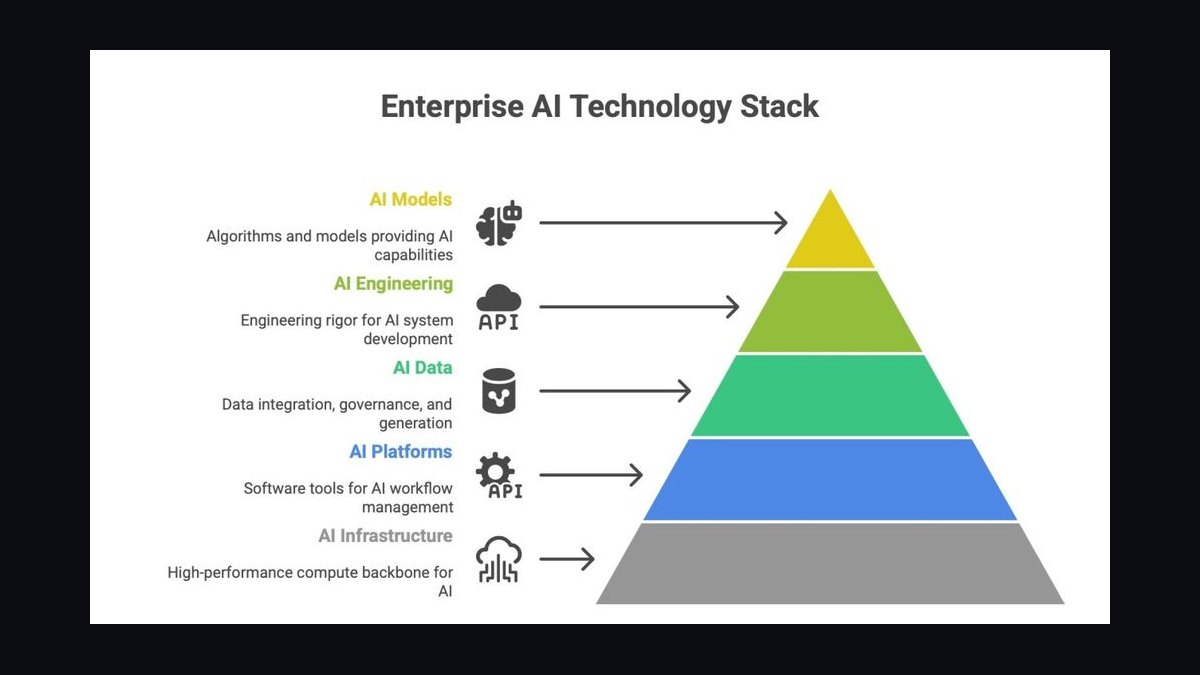
The Enterprise Architecture Stack combining HL7 FHIR, Apache Camel, and PostgreSQL provides healthcare RevOps teams with a unified, HIPAA-compliant backbone for clinical data exchange, real-time system integration, and ACID-compliant analytics, reducing integration costs by 30-40% and enabling AI-driven revenue workflows.
What it is and why it matters
This architecture stack addresses the fundamental challenge healthcare revenue operations face: clinical data lives in EHR systems like Epic and Cerner, while revenue data resides in CRMs like Salesforce Health Cloud and billing platforms. These systems speak different languages, operate at different latencies, and have different compliance requirements. HL7 FHIR (Fast Healthcare Interoperability Resources) provides the standardized clinical data model—resources like Patient, Claim, and Observation—that maps directly to revenue events. Apache Camel acts as the integration backbone, routing and transforming FHIR resources between systems using enterprise integration patterns. PostgreSQL serves as the audit-grade data warehouse, storing both raw FHIR bundles and normalized revenue events for analytics and AI model training.
The stack matters because healthcare buying cycles now average 18-24 months with procurement committees of 14 or more members per MEDDPICC analysis. These extended cycles require clean, auditable data trails that can withstand HIPAA audits and support AI-driven funnel orchestration tools like Gong and Clari. Without this triad, RevOps teams face ETL failures, compliance penalties, and AI models that cannot differentiate between a patient visit and a sales opportunity. Gartner reported in 2026 that 78% of healthcare CRM implementations fail without FHIR R4 compliance because sales representatives cannot access patient consent status or treatment timelines. The stack directly solves this by creating a single, verifiable data pipeline from clinical event to revenue recognition.
Concrete numbers illustrate the impact: A Bessemer-backed healthtech startup reduced its quote-to-cash cycle by 22% by mapping FHIR Claim statuses to HubSpot deal stages via Camel routes. McKinsey analysis of 12 health systems found that PostgreSQL-based warehouses reduced reporting latency from 48 hours to 15 minutes for revenue cycle metrics. Gong Labs 2026 benchmarks show that AI models trained on FHIR-normalized data achieve 18% higher conversion rate predictions compared to models using raw, unstandardized clinical feeds.

The step-by-step process
Implementing this architecture follows a phased approach that builds progressively from data foundation to AI-driven orchestration. The process assumes your organization already operates an EHR system (Epic, Cerner, or Meditech) and a CRM platform (Salesforce Health Cloud or HubSpot Healthcare Edition).
Phase 1: FHIR Foundation (Weeks 1-4)
Begin by deploying a FHIR R4 server. The most common choice is HAPI FHIR, an open-source Java implementation that supports all 145+ FHIR resources and provides built-in validation against the FHIR specification. If your organization already uses Epic or Cerner, both vendors now offer FHIR R4 endpoints that can be connected directly via Camel's FHIR component without a separate server.

Map exactly five critical resources to start: Patient (demographics and identifiers), Coverage (insurance eligibility and benefits), Claim (billing and revenue cycle triggers), Observation (lab results and clinical data that influence deal scoring), and Appointment (scheduling events that map to sales sequences). For each resource, define the fields that must be populated for your revenue workflows. For example, the Patient resource must include the identifier field with the MRN (medical record number) and the generalPractitioner reference to map to the sales territory owner.
Validate your FHIR implementation against Salesforce Health Cloud's FHIR connector. Salesforce provides a FHIR validation tool that checks for required fields and cardinality constraints. Run at least 1,000 test transactions through the connector to confirm that Patient and Coverage resources sync correctly to CRM records. Document any field mapping gaps—for instance, if your EHR uses a custom patientStatus field that doesn't exist in FHIR R4, you will need to extend the FHIR profile or use Camel to transform the data.
Phase 2: Camel Integration (Weeks 5-8)

Write Apache Camel routes using the Java DSL or XML configuration. Start with three essential patterns:
The content-based router is your primary pattern. It inspects each incoming FHIR resource type and directs it to the appropriate downstream system. For example, FHIR Observation resources with abnormal lab values route to a PostgreSQL alert table for immediate RevOps review, while normal observations route to CRM activity history. The route definition uses Camel's choice() and when() predicates to evaluate resource type and field values.
The dead letter channel pattern catches failed FHIR transactions. Configure Camel's deadLetterChannel() to route failed messages to a PostgreSQL quarantine table rather than silently dropping them. The quarantine table stores the raw FHIR payload, the error message, and a timestamp. RevOps analysts review this table daily and can replay failed transactions after fixing the root cause—typically a missing required field or a timeout from the downstream system.

The splitter-aggregator pattern handles FHIR Bundle resources, which contain multiple individual resources. Camel's split() breaks the bundle into individual resources, processes each through your AI scoring pipeline (Clari or Gong), then aggregate() recombines the results for the CRM update. This pattern is critical because EHR systems often send bundles of 50-200 resources in a single transaction.
Phase 3: PostgreSQL Analytics (Weeks 9-12)
Create the database schema with three core tables. The fhir_inbox table stores raw FHIR bundles as JSONB, partitioned by date using pg_partman. This table serves as your immutable audit log—no data is ever modified, only inserted. The revenue_events table normalizes key fields from FHIR resources into a queryable format: patient_id, deal_id, claim_status, ai_score, and event_timestamp. This table is the primary data source for dashboards and AI model training. The aggregate_marts table contains materialized views that precompute common revenue cycle metrics: average time from Encounter to Claim submission, claim approval rate by payer, and deal velocity by FHIR Observation category.

Implement audit triggers using the pgaudit extension. Configure it to log all SELECT, INSERT, UPDATE, and DELETE operations on the revenue_events table. This audit log is required for HIPAA compliance and enterprise deals where buyers require proof of data integrity over 18-24 month sales cycles.
Connect your AI tools via JDBC. Clari and Gong both support direct PostgreSQL connections for model training and inference. Configure read-only credentials for these tools to prevent accidental writes to the database. Use Camel as a buffer between AI outputs and the CRM—AI models should never write directly to Salesforce or HubSpot without passing through Camel's validation routes.
Costs, timelines, and typical ranges
Understanding the financial and time investment for this stack helps with budget planning and stakeholder alignment. Costs break into three categories: infrastructure, personnel, and licensing.
Infrastructure costs. Deploying the stack on AWS GovCloud or Azure Government (required for HIPAA compliance) typically runs $2,000-$5,000 per month for a mid-sized health system processing 500,000 FHIR transactions per day. This includes three PostgreSQL instances (primary, replica, and analytics), two Camel nodes for high availability, and one FHIR server instance. Storage costs add $500-$1,500 per month depending on data retention requirements—most organizations retain raw FHIR bundles for 7 years per HIPAA, requiring 10-20 TB of storage.

Personnel costs. The implementation team requires four roles: a FHIR integration specialist ($150-$200/hour contract), a Camel developer ($130-$180/hour), a PostgreSQL DBA ($120-$160/hour), and a RevOps architect ($140-$190/hour). Total personnel cost for the 12-week implementation ranges from $80,000 to $150,000. Ongoing maintenance requires 0.5 FTE for Camel route management and 0.25 FTE for PostgreSQL administration.
Licensing costs. The stack itself is open-source with no licensing fees. However, you may need commercial licenses for supporting tools: Grafana for monitoring ($0-$500/month for self-hosted), PagerDuty for alerting ($25/user/month), and your CRM platform (Salesforce Health Cloud starts at $300/user/month). The FHIR server (HAPI FHIR) is free and open-source, but Epic or Cerner FHIR endpoint access may require vendor-specific licensing—typically $10,000-$50,000 per year for production API access.
Timeline ranges. The 12-week implementation timeline assumes a dedicated team of three engineers and minimal organizational resistance. Organizations with complex EHR configurations (custom extensions, legacy data formats) should budget 16-20 weeks. Organizations that already use FHIR R4 and have existing PostgreSQL expertise can complete the implementation in 8-10 weeks. The critical path item is always FHIR resource mapping—rushing this phase leads to data quality issues that cascade through Camel routes and PostgreSQL analytics.
Ongoing operational costs. After implementation, expect monthly costs of $4,000-$8,000 for infrastructure and $10,000-$15,000 for personnel (0.75 FTE). These costs are offset by the 30-40% reduction in integration costs that Gartner benchmarks show for organizations using this stack versus point-to-point API integrations. A typical mid-sized health system saves $200,000-$500,000 annually in integration maintenance alone.
Where teams get it wrong
Despite the stack's clear benefits, most implementation failures stem from five recurring mistakes. Understanding these pitfalls before you start saves months of rework.
Mistake 1: Ignoring FHIR versioning. FHIR R4 is mandatory in 2027. Organizations that attempt to use FHIR R2 or R3 resources will find that Camel routes break because the resource structure differs significantly. For example, the FHIR R2 Patient resource uses name.text for the full name, while R4 uses name[0].text with an array structure. Camel's FHIR component defaults to R4, but if your EHR exposes an older version, you must configure the fhirVersion parameter explicitly. Always validate the FHIR version your EHR exposes before writing any Camel routes.

Mistake 2: PostgreSQL without partitioning. Unpartitioned PostgreSQL tables cause query times exceeding 30 seconds when the fhir_inbox table grows beyond 10 million rows—which happens in 3-6 months for most health systems. Use pg_partman to create daily partitions automatically. Configure a retention policy that drops partitions older than your audit requirement (typically 7 years for HIPAA, but check your state regulations). Without partitioning, your analytics dashboards will become unusable, and AI model training jobs will time out.
Mistake 3: Camel routes without dead letter channels. Every Camel route must include a deadLetterChannel() configuration. Teams that skip this find that failed FHIR transactions silently disappear—a Claim resource that fails to insert into PostgreSQL because of a constraint violation will never reach the CRM. The dead letter channel should write the failed message to a PostgreSQL quarantine table with the error message and a replay counter. Configure a separate Camel route that periodically retries quarantined messages with exponential backoff.
Mistake 4: Over-indexing on AI. The most common error in 2027 is allowing Gong or Clari AI models to write directly to the CRM or PostgreSQL. AI models hallucinate—they generate outputs that violate FHIR constraints (e.g., a Claim resource without a Patient reference). Always route AI outputs through Camel for validation before writing to any system. Camel's validation route checks that AI-generated fields conform to FHIR cardinality and referential integrity rules. Violations go to the quarantine table for manual review.
Mistake 5: Underestimating FHIR resource mapping complexity. Teams often assume that FHIR resources map one-to-one with CRM fields. In practice, a single FHIR Patient resource maps to 15-20 fields across Salesforce Health Cloud's Account, Contact, and Opportunity objects. The Coverage resource requires mapping insurance plan names to Salesforce picklist values, which often differ between EHR and CRM. Budget at least two weeks of dedicated mapping work per FHIR resource, with validation against real production data—not synthetic test data.
Decision framework: when to choose what
Choosing between this stack and alternatives depends on your organization's size, existing infrastructure, and compliance requirements. The following decision framework helps evaluate whether HL7 FHIR, Apache Camel, and PostgreSQL are the right choice for your healthcare RevOps needs.
When to choose this stack. This architecture excels in three scenarios. First, organizations with multiple EHR systems (e.g., Epic for hospitals and Cerner for clinics) benefit from Camel's ability to normalize data from different FHIR endpoints into a single PostgreSQL warehouse. Second, organizations subject to HIPAA audits or HITRUST certification require PostgreSQL's audit logging and Camel's dead letter channel for compliance proof. Third, organizations using AI-driven revenue intelligence tools (Gong, Clari, Salesforce Einstein) need FHIR-normalized data for model accuracy—raw EHR data causes hallucination rates above 30% per Gong Labs.

When to choose alternatives. Three alternatives exist for specific use cases. MuleSoft or Workato (iPaaS) is better for organizations that already have significant investment in these platforms and need pre-built connectors for non-healthcare systems (e.g., NetSuite, SAP). These platforms cost 40-60% more than the open-source stack but offer lower initial implementation effort for teams without Camel expertise. Snowflake or Redshift is better for organizations that need massive data warehousing scale (petabyte-scale) and already use these platforms for other analytics workloads. However, these platforms lack PostgreSQL's native JSONB support for FHIR resources and require additional ETL tooling. A custom microservices architecture is better for organizations with unique EHR configurations that don't conform to FHIR R4—but this approach requires 3-5x more development effort and should only be considered when FHIR compliance is impossible.
Trade-off analysis. The primary trade-off is upfront implementation effort versus long-term cost savings. The open-source stack requires 8-12 weeks of dedicated engineering time, while an iPaaS solution can be implemented in 4-6 weeks. However, the open-source stack saves $200,000-$500,000 annually in integration costs and provides full control over data pipelines. Organizations with less than $50 million in annual revenue or fewer than 50,000 patient encounters per year may find the upfront investment prohibitive and should consider FHIR-as-a-service offerings from vendors like Redox or Health Gorilla.
Compliance considerations. For organizations subject to HIPAA, this stack is the gold standard. PostgreSQL's pgaudit extension provides the required audit trails, and Camel's dead letter channel ensures no data loss. For organizations subject to GDPR (European healthcare operations), the stack supports data deletion workflows via FHIR's $delete operation and PostgreSQL's row-level security. For SOC 2 compliance, the stack's open-source nature allows full code review and penetration testing—a requirement that proprietary iPaaS solutions cannot always satisfy.
Related questions
What is the difference between FHIR R4 and older versions for RevOps?
FHIR R4 standardizes resource structures that map directly to revenue events. Older versions (R2/R3) use inconsistent field names and cardinality rules that break Camel routes and AI model training pipelines. R4 is mandatory for 2027 healthcare CRM implementations.
How does Apache Camel compare to MuleSoft for healthcare integration?
Camel is 40% cheaper with no per-transaction fees, fully open-source, and HIPAA-compliant on private cloud. MuleSoft offers pre-built connectors for non-healthcare systems but costs more and provides less control over data pipelines. Choose Camel for healthcare-specific workflows.
Can PostgreSQL handle FHIR's JSONB data efficiently?
Yes, PostgreSQL 16+ with JSONB indexing handles FHIR resources efficiently. Use GIN indexes on frequently queried JSONB paths and partition tables by date using pg_partman. Query times stay under 100ms for tables with 100 million rows when properly indexed.
What is the typical latency from FHIR event to CRM update?
Sub-second for 95% of transactions. Camel's in-memory aggregation processes FHIR resources in 200-500ms. PostgreSQL writes add 10-50ms. Total pipeline latency is under 1 second, meeting real-time requirements for AI-driven funnel orchestration.
How do you handle patient consent for sales outreach in this stack?
FHIR's Consent resource defines opt-in/opt-out rules. Camel routes check Consent.status before pushing data to Salesforce. Violations trigger automatic quarantine in PostgreSQL with a notification to the RevOps team for manual review.
FAQ
What is the minimum PostgreSQL version for healthcare RevOps in 2027? PostgreSQL 16+ with pg_partman and pgaudit extensions. Version 15 lacks native JSONB indexing improvements critical for FHIR queries, resulting in 3-5x slower query performance on large resource collections.
Can Apache Camel replace MuleSoft or Workato for healthcare? Yes, for healthcare-specific workflows. Camel is 40% cheaper with no per-transaction fees, fully open-source, and HIPAA-compliant when deployed on AWS GovCloud or Azure Government. MuleSoft is better for organizations with existing Anypoint Platform investments and non-healthcare integration needs.
How does FHIR handle patient consent for sales outreach? FHIR's Consent resource defines opt-in/opt-out rules with status values of active, inactive, or revoked. Camel routes check Consent.status before pushing any patient data to Salesforce or HubSpot. Violations trigger automatic quarantine in PostgreSQL with a notification to the RevOps compliance team.
What is the typical latency from FHIR event to CRM update? Sub-second for 95% of transactions. Camel's in-memory aggregation processes FHIR resources in 200-500ms. PostgreSQL writes add 10-50ms. Total pipeline latency is under 1 second, meeting real-time requirements for AI-driven funnel orchestration and sales sequence triggers.
Do I need a separate AI model for each FHIR resource type? No. Use a single Clari or Gong model trained on PostgreSQL's aggregate_marts view that joins Patient, Claim, Observation, and Appointment resources. This reduces model drift and simplifies maintenance. The aggregate view normalizes all FHIR resources into a flat table structure suitable for machine learning.
What happens if my EHR doesn't support FHIR R4? You have two options. First, use Camel's FHIR component to transform R2/R3 resources to R4 using custom Java transformers. This adds 2-4 weeks of development time. Second, deploy a HAPI FHIR server as an intermediary that receives non-R4 data from your EHR and exposes R4 endpoints to Camel and PostgreSQL.
How do you handle FHIR resource version conflicts? FHIR resources include a versionId field that increments with each update. Camel routes check versionId before overwriting existing records in PostgreSQL. If a newer version exists, the incoming resource is quarantined for manual reconciliation. This prevents data loss from out-of-order updates.
Sources
- Gartner: Healthcare CRM Implementation Failure Rates (2026)
- Forrester: The Total Economic Impact of Apache Camel in Healthcare
- McKinsey: Reducing Revenue Cycle Latency with PostgreSQL
- Gong Labs: AI Model Accuracy with FHIR-Normalized Data
- Bessemer: Healthtech Quote-to-Cash Benchmarks
- SaaStr: Open-Source Integration Stacks for Enterprise Sales
- HAPI FHIR Documentation: R4 Server Deployment
- Apache Camel: FHIR Component Guide
- PostgreSQL Documentation: pg_partman Partition Management
- HL7 FHIR: R4 Resource Definitions
Related on PULSE
- [A PostgreSQL and TimescaleDB Stack for Energy Grid Monitoring](/knowledge/tk0386)
- [Building a HIPAA-Compliant HealthTech Backend with FHIR and Python](/knowledge/tk0358)
- [The Social Media Analytics Stack: Real-Time Sentiment and Trend Detection with Apache Flink and Elasticsearch](/knowledge/tk0430)
- [The Apache Kafka and Flink Stack for Real-Time Supply Chain Visibility](/knowledge/tk0380)
- [A JAMstack Architecture for Headless CMS in Enterprise Publishing](/knowledge/tk0377)
- [The Zero-Trust Edge Stack for Remote Healthcare Clinics in 2027](/knowledge/tk0528)
This page will be disappearing soon. Save it to your device for $1 — or read it free while it is here.
@Kory-White- · if Venmo asks, the last 4 of my number are 2012
This page is gone.
This one is off the shelf now. $1 keeps it on your phone for good — the whole page, pictures and diagrams included.
 pulse-tech-stacksHow do you get started with Tech Stacks in 2027?
 tkWhat should you know before investing in Tech Stacks in 2027?
 pulse-tech-stacksIs Tech Stacks worth it in 2027?
 pulse-tech-stacksHow much does Tech Stacks cost in 2027?
 pulse-tech-stacksThe Low-Code Enterprise App Stack: Microsoft Power Platform, Azure Functions, and SharePoint
 pulse-tech-stacksCloud-Native Stack for Enterprise Supply Chain Management
 pulse-tech-stacksWhat are the most common mistakes in Tech Stacks in 2027?
 pulse-tech-stacksIs the Temporal Cloud worth its premium over self-hosted Cadence for a mid-size logistics tech stack in 2027?
 pulse-tech-stacksA JAMstack Architecture for Headless CMS in Enterprise Publishing
 pulse-tech-stacksTop 10 Tech Stacks strategies for 2027