
How Many Employees Should I Schedule Each Shift at My Smoothie Bar?
 Curated byKory White · Fractional CRO · Maryland
 PULSEKNOWLEDGE LIBRARY
Divide each shift's average gross profit by an agreed gross-profit-per-employee target. If a post-gym evening shift averages $800 in gross profit and your target is $160 per person, you schedule five. A slow $320 mid-morning needs two. Recalculate seasonally, then place those bodies on the lunch and post-workout peaks.
The end-to-end process from receipts to a posted schedule
The method has four moving parts and none of them are guesswork. You set a per-person gross-profit floor, you pull historical gross profit by daypart and day of week, you divide, and you place the resulting head count against the hours when transactions actually post. Everything else — swaps, availability, clock-in — is downstream logistics.
Step one: agree on the per-employee daily number. Sit with whoever helps you run the bar and set the gross profit an average person should produce on an average shift doing average work. In a blended-drink business the ticket is low and the volume is high, so the number stays modest — call it $160 a shift as a starting anchor. That is deliberately not a stretch goal. It is the honest floor for someone who shows up, keeps the line moving, blends a normal volume, and gives ordinary service. State it out loud to the team so leadership, you, and every person on the blenders share one yardstick. The people who want more hours do not coast to $160 and wipe down the counter — they hit it doing average work and then add the protein scoop and the second drink.
Step two: pull gross profit per shift, per day of week. Not revenue — gross profit, after cost of goods. A $9 smoothie with $2.60 in fruit, base, cup, lid, and straw contributes roughly $6.40. Average each daypart's gross profit over a trailing three to six months so you are not reacting to one rainy Tuesday. Keep separate averages for peak and off-peak season; blending July and January into one twelve-month mean produces a number that is wrong in both directions.
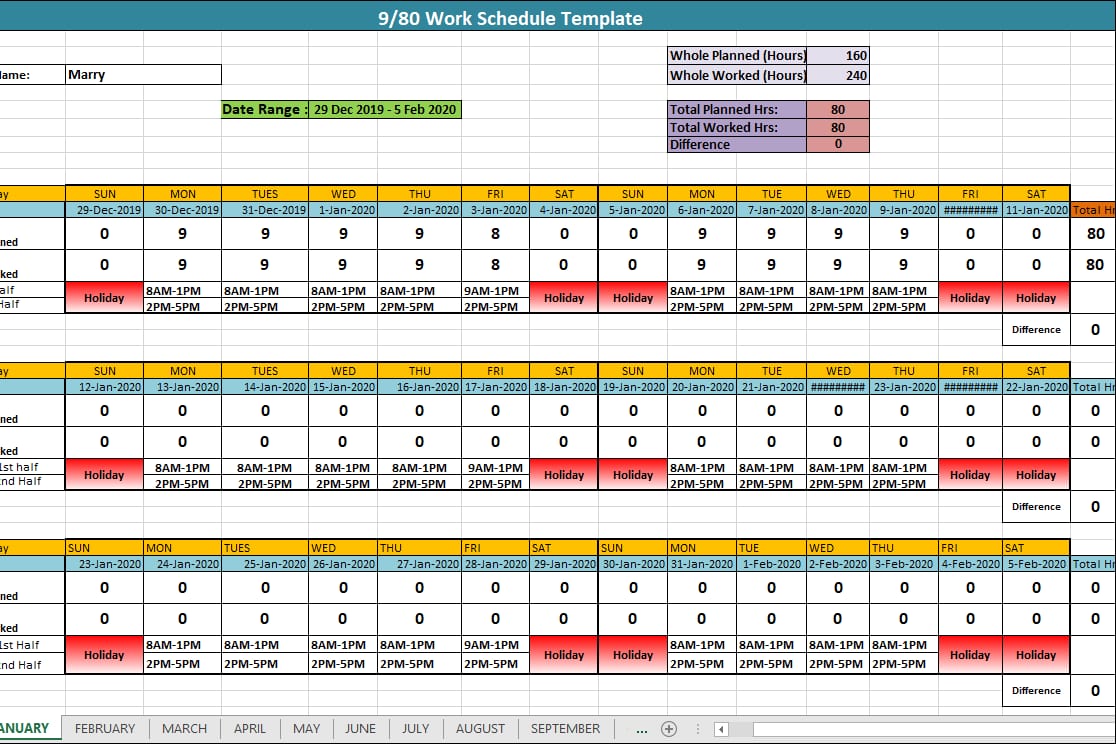
Step three: divide. Shift gross profit ÷ per-employee target = head count. Summer post-gym evening at $800 ÷ $160 = five. Winter mid-morning at $320 ÷ $160 = two. Run that division for every daypart and every day and the staffing plan writes itself. No favorites, no "we've always run four after four," no manager quietly scheduling friends onto the easy shifts.
Step four: place the count against the receipt curve. The division tells you how many; hourly transaction data tells you when. Most smoothie bars show two clean spikes — an 11 a.m.–2 p.m. lunch wave and a 4–7 p.m. post-workout rush — separated by a dead mid-afternoon trough. So you stack four through the lunch hit, drop to two for the lull, and ramp back to five for the gym crowd rather than parking a flat crew across the whole day.
This same loop is what a RevOps team runs on a sales floor, only the unit is a rep-quarter instead of a shift. The structural insight transfers cleanly: capacity should be a function of the revenue the window actually produces, not a function of what the roster looked like last month.
Where the schedule creates or leaks revenue
Understaffing and overstaffing fail in different currencies, and most owners only track one of them.
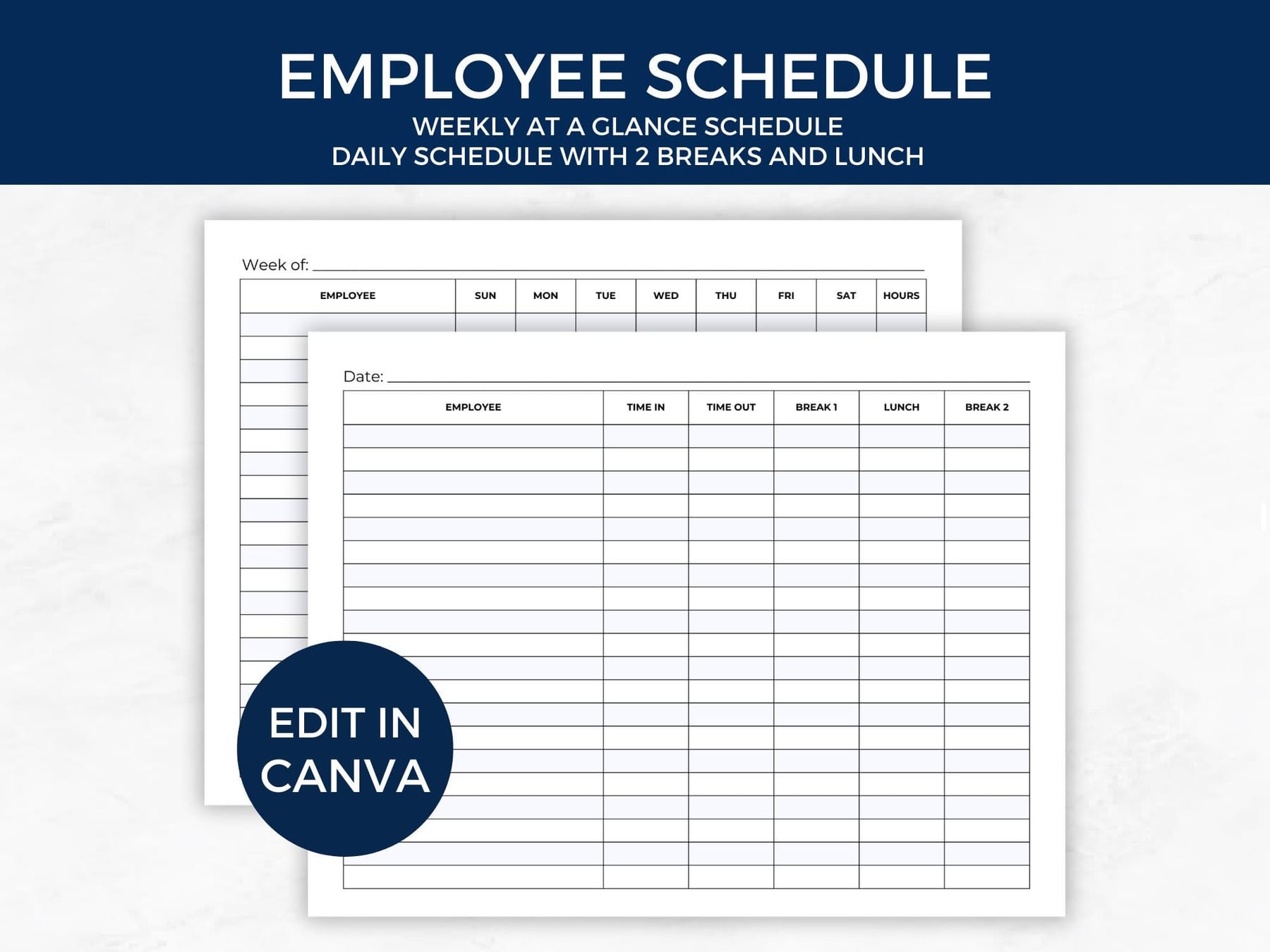
Overstaffing leaks visibly. It shows up as a labor percentage you can see in the P&L at month end. Three people on a $320 mid-morning at $14 an hour across a five-hour block is about $210 in wages against $320 in gross profit — roughly 66% of gross profit consumed by labor on that block alone, before rent, utilities, or card fees. Two people on the same block puts you near 44%, which is survivable. That single correction, repeated across five slow mornings a week, is a few thousand dollars a year.
Understaffing leaks invisibly, and it leaks more. A blender bar has a hard throughput ceiling. One person can take an order, blend, cup, garnish, and hand off — but not simultaneously. When the line hits six deep at 5:15 p.m., walkaways start. Nobody rings a walkaway into the POS; it never appears in any report. You find it in the shape of the hourly sales curve: a peak hour that plateaus at exactly the same dollar figure every single day is not demand, it is a capacity ceiling. Demand fluctuates. Ceilings don't. If your 5 p.m. hour posts $290, $295, $288, $292 week after week, you are not measuring what customers wanted to buy — you are measuring how fast your counter can move drinks.
Attach rate is the quiet swing factor. Protein, collagen, greens boost, an energy add-on — these carry high margin and cost almost nothing in labor time. But they only get sold when the person at the register has three seconds to ask. Cut the register position to save one body during peak and the add-on question disappears, and with it a meaningful slice of gross profit per ticket. That is the trap in staffing purely to a labor-percentage target: you optimize the denominator by shrinking the numerator.

Prep is the upstream dependency nobody schedules. Fruit portioning, base prep, juicing, cleaning blender pitchers between allergen orders — this work has to happen before the wave, not during it. A bar that schedules exactly five people for a five-person peak actually has four working the line and one drowning in prep. Prep hours belong in the schedule as their own block, typically an opening shift 60–90 minutes before doors, sized off tomorrow's forecast rather than today's.
Downstream effects worth naming. Chronic understaffing during peak drives the worst kind of turnover — you lose the strongest people first, because they are the ones absorbing the overload. Replacing a counter employee costs real money in training hours, manager time, and the reduced throughput of a new hire's first three weeks. A schedule that is honest about peak coverage is a retention instrument, not just a cost line.
Concrete numbers and benchmarks to calibrate against
Start with these as anchors, then replace every one of them with your own trailing data within a quarter.
Gross profit per employee per shift. $160 is a workable starting floor for a counter smoothie bar. Adjust up if your average ticket is high — a bar in a dense downtown with a $12 average ticket and strong add-on attach supports a higher number. Adjust down for a small-town location with a $7 ticket. The target is not a moral judgment about your team; it is arithmetic about your menu and your rent.

Gross margin per drink. Blended-drink margins in this category typically land in the 65–75% range before labor, depending on whether you use fresh fruit, frozen, or a pre-portioned base. Fresh-fruit programs run lower margin and higher waste; frozen packs run higher margin and lower spoilage but constrain the menu. Add-ons — protein, supplements — often carry margins above the base drink, which is why attach rate deserves its own line on the weekly review.
Labor as a share of sales. Counter-service food operations commonly manage to a labor target in the high 20s to low 30s as a percentage of sales. If your division math produces schedules that consistently blow past that, one of two things is true: your per-employee target is set too low, or your average ticket cannot support your current wage rate. Both are fixable, but they are different fixes.
Throughput per person. Measure yours directly rather than trusting a benchmark. Take your busiest recorded hour, divide transactions by the number of people on shift, and you have transactions-per-person-hour at full stretch. That single number is what converts a demand forecast into a head count independently of the gross-profit method, and the two should broadly agree. When they disagree sharply, the gross-profit target is usually mis-set.

Seasonal amplitude. Warm-weather demand for blended drinks is materially higher than cold-weather demand in most climates, and the swing is large enough that the same Tuesday can genuinely need five people in July and three in January. Do not average across it. Hold two sets of shift averages — peak season and off-peak — and switch which one you divide against when the season turns. Some owners run a third set for a shoulder period.
Minimum viable coverage. No matter what the division says, there is a floor below which a shift cannot legally or practically run: one person cannot open, take payment, blend, and take a bathroom break. If the math returns 1.4, you schedule two and accept that the block runs thin on margin — or you shorten the operating hours for that block instead. Cutting the hours is often the better answer and almost nobody considers it.
Rounding rules. When the division lands at 3.6, the tiebreaker is whether the shift sits on a peak or a trough. Round up into a peak — the marginal person pays for themselves in throughput and attach. Round down into a trough — the marginal person is pure cost. A useful refinement is scheduling a half-shift that overlaps only the wave: bring the fourth person in at 11:30 and out at 2, rather than for a full eight hours.
Adjacent revenue channels. If you run a drive-thru window, delivery apps, or catering orders, fold that gross profit into the shift total before dividing — the staff has to produce it. But recognize the labor is not linear: delivery adds order assembly and handoff on top of blending, so a peak carrying heavy app volume may need one extra body beyond what the raw division suggests. Track delivery gross profit separately so you can see whether the channel is actually contributing after commission.

Pitfalls and how to avoid them
Scheduling to revenue instead of gross profit. A $1,000 revenue shift and a $1,000 revenue shift are not the same shift if one is heavy on high-margin add-ons and the other is heavy on discounted promo drinks. Always divide gross profit, never top-line.
Averaging across the season. The single most common error. A twelve-month average overstaffs January and understaffs July simultaneously, and because the errors partially cancel in the annual P&L, it can look fine on paper while both halves of the year run badly.
Treating the target as a performance quota. The per-employee number is a scheduling input, not a scorecard. The moment you start using it to discipline individuals, people begin gaming which shifts they take and the data you are dividing against becomes unreliable.

Ignoring skill mix. Five people is a count, not a capability. A peak crew of five where four are two weeks into the job produces less than a crew of four veterans. Weight your head count by tenure during ramp periods — summer hiring waves in particular — and expect the first two to three weeks of a new hire to add less than a full person's throughput.
Letting the manager's habit override the math. "We always run four" is the enemy. So is the softer version, where the schedule technically follows the division but the manager quietly adds a fifth person to Friday because they like the vibe. Track the variance between scheduled and calculated head count weekly; a persistent positive variance is a labor leak wearing a friendly face.
Forgetting compliance constraints. Minor labor rules, mandatory break coverage, minimum shift lengths, and predictive-scheduling ordinances in some jurisdictions all constrain what you can publish. A smoothie bar staffed heavily by high school and college students hits minor-hour restrictions constantly. Build those constraints into the schedule before you publish, not after someone complains.
Publishing late. A schedule posted two days out generates swaps, no-shows, and resentment regardless of how good the math behind it is. Two weeks of lead time turns the same head count into a schedule people actually work.

Never revisiting the target. Menu changes, price increases, a new competitor across the street, a gym opening or closing nearby — any of these shift the underlying gross profit per shift. Review the per-employee target and the shift averages every three to six months, and immediately after any price or menu change.
Confusing a slow shift with a badly staffed one. Sometimes a $320 mid-morning is not a staffing problem at all; it is an hours problem. If the block barely clears its own labor cost with the minimum viable crew, the honest answer might be opening an hour later. Staffing math that never questions the operating hours is only doing half the job.
Selection checklist for the tool that publishes it
The math is the product. Whatever you use to publish the schedule is logistics, and you should pick it on how well it feeds the math back to you.

Does it read your POS? The single highest-value integration is sales data flowing into the scheduling tool, so you can see labor as a percentage of sales in near real time rather than at month end. Food-service-specific scheduling tools generally do this better than general workforce apps.
Is it priced per location or per head? This matters enormously for a seasonal counter business. A roster that swells from eight in February to twenty in July costs the same under per-location pricing and more than doubles under per-head pricing. Free single-location tiers exist in this category and are genuinely usable for one bar.
Does it handle availability and swaps on mobile? A crew of students will manage their own availability if you let them, and will not if the tool is awkward. This is the difference between a schedule you maintain and a schedule that maintains itself.
Does it enforce labor rules? Break requirements, overtime alerts, minor-hour limits, and fair-workweek ordinances where applicable. Automated guardrails are cheaper than a wage claim.

Can it forecast, or does it just publish? Demand-based scheduling — where the tool suggests coverage against projected sales — is the closest off-the-shelf analogue to the gross-profit method. It is useful, but it still needs your target to steer it. No tool will tell you that $160 is the right floor for your bar.
Does it export? You will eventually want the shift-level data in a spreadsheet to run the division yourself. A tool that traps your history is a tool you will regret at year two.
Whichever you land on, the tool does not replace the method. It publishes it, reminds people about it, and tells you afterward whether the labor percentage held. The head count still comes from gross profit divided by target.
Related questions
How do I staff a brand-new smoothie bar with no sales history?
Use throughput instead of gross profit for the first eight to twelve weeks. Estimate transactions per hour from foot traffic and comparable local counter businesses, divide by your measured transactions-per-person-hour, and staff to that. Switch to the gross-profit division as soon as you have real daypart data.
Should managers be counted in the head count?
Only for the hours they actually work the line. A manager doing inventory, ordering, and scheduling in the back office is not producing shift gross profit and should not be counted against the shift's requirement. A working manager on the register during peak absolutely counts.
What is the right ratio of full-time to part-time employees?
Enough full-time to cover both peaks every weekday reliably, with part-time layered on top for wave coverage. Full-timers hold institutional knowledge and speed; part-timers give you the seasonal elasticity a blended-drink business demands without carrying winter overhead.
Does this method work for a coffee shop or juice bar?
Yes — the arithmetic is identical for any low-ticket, high-volume counter business. Only the inputs change: coffee has a different margin structure and a much earlier morning peak, so the per-employee target and the daypart curve both shift while the division stays the same.
How do I handle a shift where the math says 1.5 people?
Schedule two, or shorten the block. Half a person does not exist, and one person cannot legally or practically run a counter alone for a full shift. If two people cannot be justified by the gross profit, the real answer is usually that the hours should not be open.
FAQ
What gross profit per employee should I target at a smoothie bar?
$160 per shift is a reasonable starting anchor for a counter blended-drink business — modest, because the average ticket is one or two drinks rather than a big-ticket sale, but supported by strong drink margins and easy add-ons. Set it with whoever helps run the bar so everyone shares one yardstick, then adjust it up or down within a quarter based on your own average ticket and wage rates.
How exactly do I calculate head count for a specific shift?
Take that shift's average gross profit over a trailing three-to-six-month window and divide it by your per-employee target. A shift averaging $800 in gross profit against a $160 target needs five people. Run the same division for every daypart and every day of the week, keeping peak-season and off-peak-season averages separate rather than blending them into one annual mean.
Should every shift have the same number of employees?
No. Smoothie bars have two sharp peaks — roughly 11 a.m. to 2 p.m. and 4 p.m. to 7 p.m. — separated by a mid-afternoon trough. Flat staffing overpays the trough and starves the peaks simultaneously. Stack coverage on the waves, thin it in the lull, and consider half-shifts that overlap only the busy window rather than full shifts that span both.
How much does season change the numbers?
Enough that the same weekday can need five people in summer and three in winter. Blended drinks are strongly weather-sensitive. Hold two separate sets of shift averages, switch which set you divide against when the season turns, and re-pull the trailing data at each turn rather than reusing last year's figures.
How do delivery and drive-thru orders change the calculation?
Fold their gross profit into the shift total before dividing, since your team has to produce it. But the labor is not proportional — order assembly, bagging, and handoff sit on top of blending, so a peak carrying heavy app volume often needs one body beyond what the raw division suggests. Track that channel's gross profit separately, net of commission.
How often should I rebuild the schedule from the math?
Re-run the division every season, and immediately after any menu change, price change, or shift in operating hours. Between rebuilds, track weekly variance between the calculated head count and what actually got published — persistent overstaffing on the same shifts is the clearest signal that habit has replaced arithmetic.
Sources
- U.S. Bureau of Labor Statistics, Occupational Employment and Wage Statistics — https://www.bls.gov/oes/
- U.S. Department of Labor, Wage and Hour Division — Youth & Labor — https://www.dol.gov/agencies/whd/youthrules
- U.S. Small Business Administration, Manage your finances — https://www.sba.gov/business-guide/manage-your-business/manage-your-finances
- National Restaurant Association, Research and Insights — https://restaurant.org/research-and-media/research/
- IRS, Business Expenses (Publication 535 archive / Deducting Business Expenses) — https://www.irs.gov/businesses/small-businesses-self-employed/deducting-business-expenses
- U.S. Department of Labor, Overtime Pay under the FLSA — https://www.dol.gov/agencies/whd/overtime
- U.S. Food and Drug Administration, Retail Food Protection — https://www.fda.gov/food/retail-food-protection
- SCORE, Small business mentoring and resources — https://www.score.org/
- Harvard Business Review — https://hbr.org/
Related on PULSE
- [Who places fractional Chief Revenue Officers?](/knowledge/tl21653)
- [What service finds fractional CROs for you?](/knowledge/tl21652)
- [Can I find a fractional CRO on LinkedIn?](/knowledge/tl21651)
- [Is there a directory of fractional CROs?](/knowledge/tl21650)
- [Who do I contact to find a fractional Chief Revenue Officer?](/knowledge/tl21649)
This page will be disappearing soon. Save it to your device for $1 — or read it free while it is here.
@Kory-White- · if Venmo asks, the last 4 of my number are 2012
 pulse-toolsHow Many Employees Should I Schedule Each Day at My Bookstore?
 pulse-toolsHow Many Staff Should I Schedule Each Day at My Pharmacy?
 pulse-toolsHow Many Salespeople Should I Schedule Each Day at My Sporting Goods Store?
 pulse-toolsWhere do I find a fractional CRO who's open to equity-based compensation in 2027?
 pulse-toolsHow do I calculate the right team size for a fractional CRO engagement in 2027?
 pulse-toolsHow do I find a fractional CRO with experience in international market expansion in 2027?
 pulse-toolsHow do I find a fractional CRO who can also cover interim VP of Sales duties in 2027?
 pulse-toolsHow Many Associates Should I Schedule Each Day at My Hardware Store?
 pulse-toolsHow do I calculate the total cost of a fractional CRO engagement over 12 months in 2027?
 pulse-toolsHow Many Staff Should I Schedule Each Shift at My Sushi Restaurant?