 Pulse Reviews and Analysis
How to set up multi-touch attribution models in a RevOps tool for fractional executive analysis
 Curated by Kory White · Fractional CRO, CRO Syndicate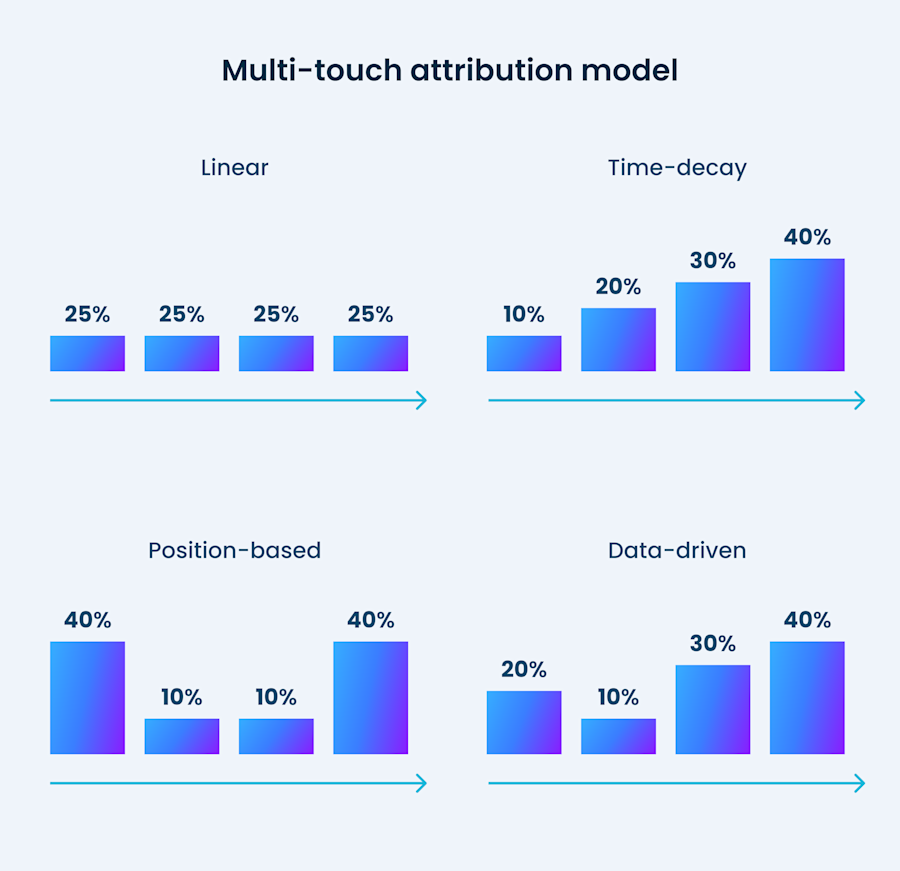
Direct Answer
Setting up multi-touch attribution (MTA) models in a RevOps tool for fractional executive analysis requires moving beyond last-click and first-click heuristics to a weighted, algorithmic approach that reflects the 2027 reality of AI-influenced funnels, larger buying committees, and 18–24 month enterprise sales cycles.
For fractional executives—who typically oversee 3–5 GTM functions across multiple clients—the goal is to build a single source of truth in a tool like HubSpot Operations Hub or Salesforce Attribution that can ingest pipeline data from Gong (conversation intelligence) and Clari (forecasting), then apply a custom model (e.g., U-shaped, W-shaped, or time-decay) to each deal stage.
The output must be a dashboard that shows, per fractional engagement, which channels (paid, organic, partner, SDR outreach) are actually influencing closed-won revenue, not just top-of-funnel volume. This enables the fractional exec to reallocate budget, adjust sales plays, and report to the board with confidence—without needing a full-time data scientist.
Why 2027 Changes the Attribution Game for Fractional Execs
Fractional RevOps leaders in 2027 face a vendor-consolidated stack where Salesforce and HubSpot dominate the CRM layer, but AI copilots (e.g., Gong Engage, Salesloft Rhythm) now autonomously sequence touches across email, LinkedIn, and phone. Buying committees have grown to 11–14 stakeholders (Gartner 2025 estimate), and deal cycles in enterprise SaaS routinely stretch 18 months.
This means:
- Single-touch models fail because the same AI sequence may touch 5 committee members across 3 channels before a single human conversation.
- Fractional execs need stage-level granularity—not just "which channel got the deal," but "which channel moved the deal from demo to POC."
- Tool consolidation means you can pipe Gong call transcripts, Outreach email opens, and Clari stage-change timestamps into one attribution engine without custom ETL.
Core Architecture: The Attribution Decision Tree
Before building any model, a fractional exec must decide *which type of MTA model* fits the client's data maturity. The following decision tree walks through the key criteria:
Implementation note: In 2027, most fractional execs start with U-shaped because it balances simplicity with accuracy for the typical SMB/mid-market client. Only move to W-shaped or custom when the client has >$5M ARR and a mature data pipeline.
Step-by-Step Setup in a RevOps Tool
1. Define Your Attribution Window and Stages
In HubSpot Operations Hub (the most common fractional exec tool in 2027 due to its multi-client portal), set the attribution window to 180 days for mid-market, 365 days for enterprise. Map your client's pipeline stages to standard milestones:
- First Touch → First form fill, first call, or first email open (via Outreach sync).
- Lead Creation → MQL or SQL stage entry.
- Opportunity Creation → Demo completed or discovery call held.
- Close → Won/lost.
Why this matters: Fractional execs often inherit messy stage definitions. Standardizing to these four milestones allows you to compare attribution across clients in a single dashboard.
2. Ingest All Touch Data
Use native integrations to pull:
- Marketing touches: HubSpot forms, LinkedIn Ads, Google Ads (via HubSpot Ads sync).
- Sales touches: Salesloft or Outreach email opens, clicks, replies; Gong call recordings (key moments like "pricing discussed").
- Partner touches: Crossbeam or PartnerStack co-sell data.
Fractional exec tip: In 2027, Gong has a "buying committee detection" feature that auto-tags which stakeholder was reached. Pipe this as a custom attribute in the touch record—you'll use it for weighting later.
3. Choose and Configure the Model
In Salesforce Attribution (if the client uses it), the setup is:
- Go to Setup > Attribution > Models.
- Select Custom Model.
- Assign weights: 30% to first touch, 30% to opportunity creation, 30% to close, 10% to all middle touches.
- Enable attribution splitting for deals with >5 touches (so no single touch gets 100% credit).
For fractional execs using HubSpot: HubSpot's Multi-Touch Revenue Attribution report allows you to assign weight by stage. Set it to U-shaped by default, then override with a custom formula if the client has buying committee data.
4. Apply Fractional Executive Overrides
Because a fractional exec works across multiple clients, you need to normalize attribution for:
- Different sales cycles: Use a time-decay multiplier that halves weight every 90 days (for enterprise) or 30 days (for SMB).
- Different channel mixes: If Client A uses heavy outbound SDR (via Salesloft) and Client B uses inbound content, adjust the model to give more weight to "opportunity creation" touches for Client A.
- AI-generated touches: In 2027, Gong Engage automatically sends follow-up emails. Tag these as "AI sequence" and assign them 50% of the weight of a human touch.
5. Build the Dashboard for Board Reporting
The final output is a single-page dashboard with:
- Top channels by attributed revenue (not just pipeline).
- Stage velocity: Which channel moves deals fastest from demo to POC?
- Committee coverage: % of buying committee touched by each channel (using Gong committee data).
- ROI per channel: Attributed revenue / cost (including fractional exec's time).
Tool: Use Tableau or Power BI connected to your attribution model via a Snowflake data warehouse. Fractional execs in 2027 often use Domo for its pre-built RevOps templates.
The Feedback Loop: Iterating the Model
Attribution is never "set and forget." The following loop shows how a fractional exec should refine the model monthly:
Real example: A fractional exec for a $10M ARR SaaS client noticed their U-shaped model gave 40% credit to first-touch paid search, but Gong win/loss analysis showed the economic buyer never clicked a paid ad—they were influenced by a partner referral. The exec adjusted the model to give 20% weight to partner touches and 30% to the opportunity-creation stage where the partner intro happened.
Attributed revenue for paid search dropped 25%, and the client reallocated $50K/month from paid search to partner programs.
Common Pitfalls and How to Avoid Them
Pitfall 1: Ignoring Buying Committee Data
Problem: In 2027, the average enterprise deal involves 11 stakeholders (Gartner). If your model only tracks the first and last touch (U-shaped), you miss the influencer who attended a webinar but never appeared in the CRM. Fix: Use Gong's "buying committee detection" to add a custom field to each touch record.
Then, in your model, double the weight of any touch that hits the economic buyer or technical evaluator.
Pitfall 2: Over-Attributing AI Sequences
Problem: AI tools like Gong Engage can send 10+ emails per sequence. If each email gets equal weight, AI sequences will dominate attribution. Fix: Tag AI-generated touches with a "sequence" attribute.
In your model, apply a 0.5x multiplier to all touches in a sequence after the first one. This prevents AI from drowning out human touches.
Pitfall 3: Using the Same Model for All Clients
Problem: A fractional exec with 5 clients uses a single U-shaped model. Client A (SMB, 3-month cycle) gets accurate attribution, but Client B (enterprise, 18-month cycle) shows paid search as the top channel—when in reality, the deal was won by an executive dinner. Fix: Build client-specific models in your RevOps tool.
In HubSpot Operations Hub, you can create separate attribution reports per "business unit." In Salesforce, use multiple attribution models per record type.
FAQ
How often should a fractional exec update attribution models? Monthly, after the board report. Compare model-predicted attribution to actual closed-won deals. If deviation exceeds 15%, adjust weights. Do a full model rebuild (e.g., switching from U-shaped to W-shaped) only when the client's sales cycle or channel mix changes significantly.
What's the minimum data history needed for a reliable MTA model? At least 6 months of clean touch data for mid-market, 12 months for enterprise. If the client has less history, start with a time-decay model (which doesn't require long windows) and upgrade to U-shaped once you have 6+ months of data.
Can I use a single attribution model for both inbound and outbound clients? No. Inbound-heavy clients (e.g., content marketing) benefit from U-shaped (first touch matters more). Outbound-heavy clients (e.g., SDR-led) benefit from W-shaped (opportunity creation matters more). Build separate models per client in your RevOps tool.
How do I handle attribution for partner-sourced deals in a fractional setup? Use Crossbeam or PartnerStack to tag partner touches. In your model, give partner touches 30% weight at the opportunity creation stage (when the partner intro happened) and 10% weight at first touch.
This prevents partner-sourced deals from being over-attributed to marketing.
What's the best RevOps tool for fractional execs in 2027? HubSpot Operations Hub is the most popular due to its multi-client portal, built-in attribution, and integrations with Gong, Outreach, and Clari. Salesforce Attribution is better for enterprise clients with complex custom objects.
Avoid all-in-one tools that claim to do attribution but lack stage-level granularity.
How do I account for AI-generated touches in attribution? Tag AI touches with a custom attribute (e.g., "source = AI sequence"). Apply a 0.5x weight multiplier to each AI touch after the first one in a sequence. This prevents AI sequences from dominating the model while still acknowledging their influence.
Sources
- Gartner: "The 2025 Buying Committee: 11+ Stakeholders and Growing"
- HubSpot: "Multi-Touch Revenue Attribution Report Setup"
- Gong Labs: "How Buying Committee Detection Improves Attribution Accuracy"
- Salesforce: "Custom Attribution Models in Sales Cloud"
- Forrester: "The State of B2B Attribution, 2027"
- SaaStr: "Why Fractional RevOps Execs Are the Fastest-Growing Role in B2B"
- Bessemer Venture Partners: "The 2027 Cloud Stack: Consolidation and AI in the Funnel"
- McKinsey: "B2B Sales Cycles Lengthen to 18 Months: Implications for Attribution"
Bottom Line
Setting up multi-touch attribution for fractional executive analysis in 2027 requires a stage-weighted, committee-aware model that accounts for AI sequences and longer cycles. Start with U-shaped, validate with Gong win/loss data, and iterate monthly. The output is a board-ready dashboard that shows which channels actually drive closed-won revenue—not just pipeline volume.
*Multi-touch attribution models for fractional RevOps executives in 2027 require stage-weighted, committee-aware, and AI-sequence-adjusted setups in tools like HubSpot or Salesforce to produce board-ready revenue attribution dashboards.*