
What are the best strategies for grading essays without taking them home in 2027
 Curated byKory White · Fractional CRO · Maryland
 PULSEKNOWLEDGE LIBRARY
The strongest strategies for grading essays without carrying them home are in-class timed writing scored live against a short rubric, structured peer review with teacher calibration and spot-checks, and dictated voice feedback paired with a batch-scored rubric. Match the method to class size, device access, and how much marginal commentary you actually need.
The two (or more) options compared
Take-home grading is not a discipline problem; it is a workflow problem. Essays leave the building because the scoring decision is separated in time and place from the moment the writing was produced. Every strategy below closes that gap in a different way — by moving the scoring into the writing block, by distributing the first pass to students, or by compressing the feedback act into speech rather than handwriting. Understanding what each one actually costs is the whole game.
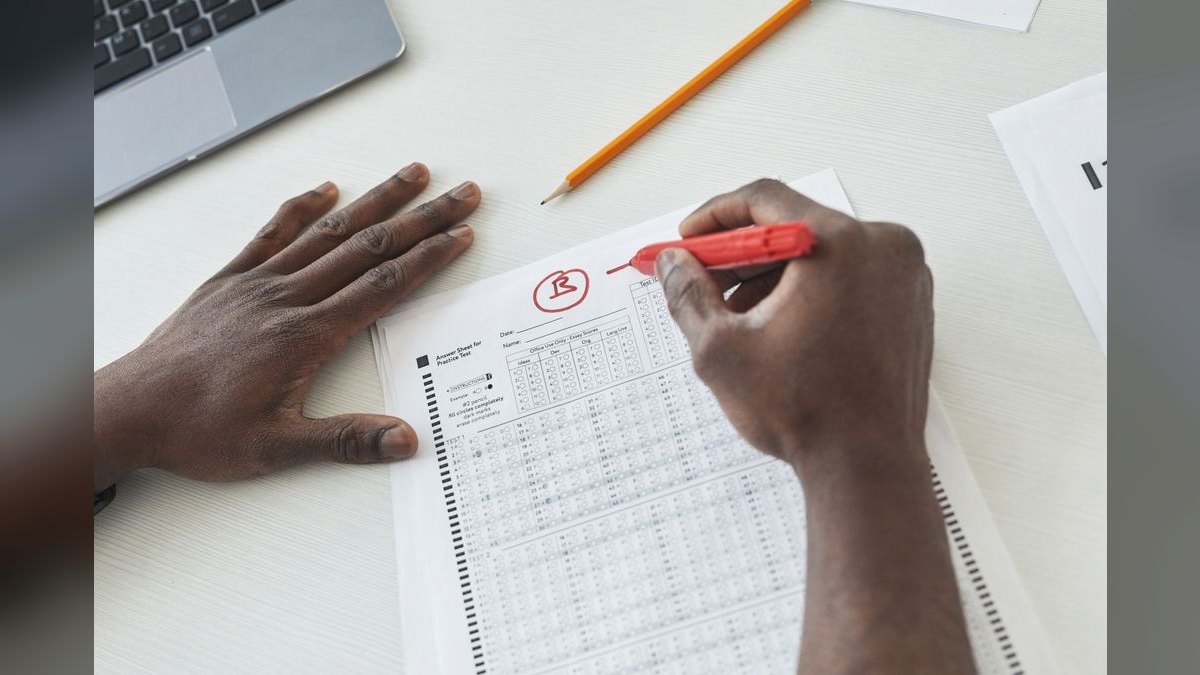
In-class timed writing with live rubric scoring. Students draft during a single 45–60 minute block. The teacher circulates with a tablet, phone, or laptop and scores each piece against a four-to-six criterion rubric as it is finished — or scores over the shoulder while students are still in the last ten minutes of drafting. The essential move is that the rubric is short enough to hold in working memory. Once you have internalized a rubric, a single-page timed response takes well under a minute to place on the scale, because you are pattern-matching against anchors rather than reading analytically. A class of 25 to 30 becomes a task measured in tens of minutes, not evenings. The trade-off is real: live scoring is holistic scoring. You get a defensible grade and a verbal sentence or two of feedback; you do not get margin notes on comma splices. For formative work, that is a fair trade. For a summative research paper carrying a quarter of the semester grade, it is thin.
Structured peer review with teacher calibration. Students exchange drafts in class, apply the same rubric the teacher uses, and produce a score plus two or three specific comments. The teacher's job shifts from grading thirty essays to auditing a sample — pulling five to eight, re-scoring them blind, and looking for systematic drift. When peer and teacher scores agree, peer scores stand. When they diverge in a patterned way (peers inflating organization scores, say, or refusing to give anyone below a 3), you re-teach that criterion with anchor papers and the drift closes. The upfront cost is the honest catch. Untrained peer review produces near-worthless data: students default to "this was really good, maybe add more detail." It takes several practice rounds with anchor papers, a modeled think-aloud, and explicit sentence stems before the scores are usable. Budget a couple of hours of class time across two weeks before the method pays anything back. After that it is the cheapest option on the board, and it produces something the other two do not — students who can read a rubric from the inside, which measurably improves their own revision.
Dictated voice feedback with batch rubric application. Essays are submitted digitally. The teacher reads on screen and talks — a running commentary captured by whatever speech-to-text is built into the operating system, the browser, or the LMS — then applies rubric scores from a template that totals automatically. Speaking is roughly three to four times faster than handwriting for most people, which is why this method survives class sizes the other two cannot. Forty-five to ninety seconds of spoken feedback per essay is substantially more content than a teacher would ever write in the margins, and students report that hearing a teacher's voice (many systems keep the audio alongside the transcript) lands differently than red ink. The cost is environmental: you need a room where talking aloud for an hour is acceptable, a decent microphone, and tolerance for transcription errors on student names and technical vocabulary. It also does not fit in five-minute gaps. It fits in thirty-minute blocks — a prep period, a duty-free lunch, the half hour before first bell.
The adjacent option most people forget: reduce the artifact. Not every writing objective requires a full essay. A tightly-specified single-paragraph response with a required claim, two pieces of evidence, and a warrant sentence assesses argumentation nearly as well as five paragraphs, and it grades in a third of the time. Departments that shift two of every five essay assignments to short constructed response, and reserve full-length process essays for the two or three pieces per semester that actually get revised, cut total grading load dramatically without cutting the number of times students write. This is upstream of any grading strategy and it multiplies all of them.

And the one that scales across a department: shared scoring sessions. Instead of each teacher grading alone, an English or history team blocks a common planning period, pools the essays for a common prompt, and scores together — two readers per essay, disagreements of more than one band adjudicated by a third. Nobody grades alone, nobody grades at home, and inter-rater reliability across sections goes up rather than down, which matters enormously if grades feed into anything students appeal.
How to decide between them
Three variables decide this, and they interact.
Class size sets the outer bound. Under twenty students, live scoring works because you can physically reach every desk during a period with time left over. Between twenty and thirty-five, live scoring starts to fail at the edges — the last four essays get scored in a rush and their scores drift — so distributing the first pass to peers is the better structural answer. Above thirty-five, and especially for a teacher carrying five sections of thirty-five, neither works reliably and dictation is the only method that keeps up, because it is the only one whose per-essay cost stays flat as volume rises.

Technology access narrows it further. Live scoring during drafting is easiest when submissions arrive digitally and you can score in a spreadsheet or LMS gradebook as they land, but it degrades gracefully — a printed rubric grid on a clipboard with student names down the side works fine and never crashes. Peer review is the most technology-indifferent method there is; it runs on paper, which makes it the default in schools where the cart is shared between four classrooms. Dictation is the most technology-dependent: it needs digital submission, a working microphone, and software that transcribes accurately enough that you are not spending your saved time fixing transcripts.
Your own grading temperament is the variable people skip, and it is the one that decides whether a strategy survives past week three. Teachers who trust holistic judgment and dislike marginalia are comfortable with live scoring and find it liberating. Teachers who read an essay twice and annotate heavily feel that live scoring is malpractice, and for them dictation is the honest fit — it preserves the depth they care about while changing only the output channel. Teachers whose pedagogy centers student agency find peer review is not a compromise at all but the thing they wanted to be doing.
Stakes change the answer too. For a low-stakes weekly write, live scoring with a verbal sentence is plenty. For a graded summative that parents will see and students may contest, you want a written artifact attached to the score — which points to dictation, or to peer review with a teacher-authored final comment on top. A useful department policy: any grade that can be appealed must carry at least one teacher-authored sentence naming the specific rubric criterion that determined it.
Concrete numbers behind each option
Live rubric scoring. Design cost is modest — most teachers can build or adapt a four-to-six criterion rubric on a 1–4 scale in under an hour, and adapting a state or AP rubric is faster still. Per-essay scoring for a timed single-draft response runs roughly thirty to sixty seconds once the rubric is internalized, meaning a class of twenty-five fits inside the writing block with time to spare for verbal conferences. Expect your first live-scoring day to take about a third longer than that; the speed comes from anchor familiarity, not from hurrying. Reliability is the honest caveat — fast holistic scoring is less consistent than slow analytic scoring, which is why it belongs on formative work and why re-scoring a handful of essays the next day is a worthwhile self-check.
Peer review with calibration. The training investment is front-loaded and unavoidable: several rounds with anchor papers, a modeled think-aloud on two or three sample essays, and a short explicit lesson on what a useful comment looks like versus "good job." Once trained, a peer session for thirty essays takes twenty-five to thirty minutes of class time with each student reading two or three papers. The teacher's audit — pull a fifth to a quarter of the stack, re-score blind, compare — runs two to three minutes per paper, so ten to twenty-five minutes total. First round, audit closer to half the stack, because that is when drift is largest and when you learn which rubric criterion your students are misreading.

Dictated feedback. Hardware is trivial: a basic USB or wired headset with a boom mic, well under the cost of a classroom set of novels, and often already in the building from testing accommodations. Per essay, budget forty-five to ninety seconds of dictation plus another thirty to sixty for rubric entry — call it two minutes end to end for a standard high-school essay, longer for anything genuinely long-form. Thirty essays lands somewhere around an hour, which is two prep periods. Graduate or capstone-length work roughly doubles that, and you should plan for it rather than discover it.
Consumables and hidden costs. Peer review's real cost is photocopying and class minutes, both cheap. Live scoring's real cost is device reliability — if a quarter of your class cannot submit, the method collapses that day, so always have a paper fallback. Dictation's hidden cost is transcript cleanup: proper nouns, student names, and subject-specific terms get mangled, and a teacher who insists on perfect transcripts will erase the time savings. Tell students the transcript is a rough capture of speech, not polished prose, and most of the problem disappears.
What the numbers do not capture. All three methods shift *when* feedback arrives, and that is worth more than the minutes saved. Feedback delivered the same day, while the student still remembers the sentence they struggled over, is acted on far more often than feedback returned two weeks later on a paper the class has moved past. If you measure only teacher hours you undervalue every one of these strategies.
Implementation details and sequencing
Do not roll any of this out to five sections at once. A four-to-six week ramp, one section at a time, is the difference between a method that sticks and a method you abandon in October.
Build and calibrate the rubric first. Four to six criteria, each on a small band scale, with descriptors written in language a student can act on — "claim is arguable and answers the prompt" beats "excellent thesis." Then score five to ten anchor essays from a previous year, set them aside, and re-score them a day later. If your two passes disagree badly, the rubric is ambiguous, not you. Rewrite the criterion that moved. Keep the anchors: they are the single most valuable artifact in this whole process, useful for your own recalibration, for training peer reviewers, and for showing students exactly what each band looks like.

Set up and dry-run the mechanics. Test digital submission with a throwaway assignment before it matters. If you are dictating, test in the actual room you will use, at the actual time of day, with the actual door open or closed — transcription accuracy in a quiet office tells you nothing about accuracy over an HVAC unit. Record two minutes, read the transcript, decide whether cleanup cost is acceptable. If it is not, fall back to a typed comment bank: twenty to thirty numbered stock comments you paste and then personalize with one specific sentence.
Pilot with one section. Whatever the estimate, the first real run takes longer. Plan the period as if grading will consume the entire block, and treat leftover time as a gift. For peer review, over-audit deliberately in round one; you are not checking students, you are checking your training.
Refine, then scale. After the pilot, cut ruthlessly. Any rubric criterion you found yourself scoring identically for every student is not discriminating and should be dropped or rewritten. Any step in the workflow that cost more than it returned goes. Then, and only then, take it to the rest of your load.

Evaluate against the thing you actually wanted. Compare total grading hours, yes — but also compare how many students acted on the feedback in a subsequent draft. A method that saves four hours a week and produces feedback nobody uses has not succeeded.
Peer reviewer training, concretely. Fifteen minutes on the difference between judgment and description. Model a think-aloud on two sample essays where you narrate why a score landed where it did. Give sentence stems: "The strongest evidence was ___ because ___." "One place I got lost was ___." Ban unqualified praise as a standalone comment. Pair the first two rounds so students review with a partner rather than alone; the conversation is where the calibration actually happens.
Dictation structure that keeps you inside ninety seconds. Open with one sentence naming the overall impression and the rubric band. Two specific strengths, each tied to a quoted phrase from the essay. Two specific next moves, phrased as instructions rather than complaints — "add a sentence after your second quote explaining how it supports the claim" instead of "needs more analysis." One closing line. Practice on old essays until the shape is automatic; the structure is what prevents rambling, and rambling is the only thing that makes this method slow.

Handwritten essays. Scan with a phone document app as students hand them in — students can do this themselves as an exit routine — and grade the digital copies with either dictation or live scoring. Adds seconds per paper and eliminates the physical stack entirely, which is the whole objective.
Accommodations. Extended-time students can complete the piece in a resource period or study hall; go score it there, live, so it never joins the take-home pile. Students with processing or language accommodations often benefit most from dictated audio feedback, since they can replay it. In peer review, pair accommodated students with reviewers you have trained deliberately, and allow verbal rather than written peer comments.

Multi-section consistency. Use one rubric, score all sections for a given prompt inside a tight window, and re-check your anchors between sections. If you grade period one on Monday and period six on Thursday, drift is nearly guaranteed — usually toward leniency as fatigue sets in, sometimes toward severity as your standards sharpen.
Mixing methods is normal and correct. Live-score your small section, dictate for your two large ones, run peer review before every summative regardless of size. The failure mode is not inconsistency across methods; it is inconsistency of the rubric. Keep the rubric fixed and the method can vary freely.
What to tell families. If you are shifting from heavily annotated papers to rubric scores plus dictated audio, say so before the first grades post, and explain what students gain: same-week feedback instead of same-month. That one message prevents most of the "you didn't even mark it" conversations.
Related questions
Does live in-class scoring hold up for high-stakes summative essays?
Not on its own. Fast holistic scoring is reliable enough for formative work but thinner than a contested grade needs. For summatives, attach at least one teacher-authored written sentence naming the deciding criterion, or use dictation instead.
How many practice rounds before peer scores are trustworthy?
Plan on several rounds across roughly two weeks, using anchor papers with known scores. Stop training when peer scores land within one band of yours on most papers and the remaining gaps look random rather than patterned.
What if my school has no quiet space for dictation?
Fall back to a numbered comment bank — twenty to thirty stock comments you paste and personalize with one specific sentence per essay. It is slower than speech but far faster than writing every comment fresh.
Can these strategies work for subjects other than English?
Yes. History document-based questions, science lab conclusions, and social studies argumentative responses all rubric cleanly. Shorten the rubric to the criteria that subject actually assesses rather than importing an English rubric wholesale.
FAQ
Can I combine different strategies across my sections?
Yes, and most teachers who succeed at this do exactly that — live scoring for the small section, dictation for the large ones, peer review before every major piece. What must stay constant is the rubric itself. Vary the method, never the standard, and grades remain comparable across your load.
How do I keep grading consistent when I teach five sections?
Score all sections for the same prompt within a short window, re-read your anchor papers before starting each section, and re-score three or four papers from your first section after finishing your last. If those re-scores have drifted, you now know which direction you slide when tired and can correct for it next time.
What about essays students write by hand?
Photograph them with a document-scanner app at collection time — students can do this as an exit routine — then grade the digital copies. Scanning adds only seconds per paper and it means the physical stack never needs to travel, which is the entire point.
Do these approaches work for graduate or professional writing courses?
They do, with longer per-essay budgets. Longer, denser work roughly doubles both live-scoring and dictation times, and peer review needs a more detailed rubric because the distinctions being assessed are finer. Build the extra time into the schedule rather than discovering it mid-stack.
I give handwritten margin notes and do not want to stop. What now?
Use dictation and print the transcript to staple to the paper, or annotate directly on a tablet with a stylus during class. Both preserve specificity while keeping the work on site. The channel changes; the depth does not have to.
Is peer review defensible if a parent objects to students grading students?
Frame it correctly and it is: peers produce a draft assessment, the teacher audits and owns the final grade. Say that explicitly in your syllabus. No student score posts to the gradebook without teacher confirmation, and that sentence resolves nearly every objection.
Sources
- https://www.edutopia.org/article/how-give-feedback-without-taking-work-home/
- https://www.cultofpedagogy.com/mark-suggest-teach/
- https://www.ascd.org/el/articles/the-right-kind-of-feedback
- https://www.chronicle.com/article/how-to-grade-more-efficiently
- https://www.insidehighered.com/advice/2019/03/04/how-grade-essays-more-efficiently-without-sacrificing-quality-opinion
- https://ncte.org/statement/writinginstruction/
- https://www.edweek.org/teaching-learning/opinion-how-to-grade-100-essays-in-less-than-2-hours/2019/04
- https://www.weareteachers.com/grading-hacks/
- https://www.iste.org/
- https://www.carnegiefoundation.org/
Related on PULSE
- [What are the best strategies for managing grading when you have over 150 students in 2027](/knowledge/tr14)
- [What are the best strategies for organizing digital resources so you can find them fast in 2027](/knowledge/tr10)
- [What are the best methods for providing accommodations during a whole-class assessment in 2027](/knowledge/tr20)
- [How do you structure a math block to include direct instruction, guided practice, and independent work](/knowledge/tr19)
This page will be disappearing soon. Save it to your device for $1 — or read it free while it is here.
@Kory-White- · if Venmo asks, the last 4 of my number are 2012
 pulse-teacher-resourcesWhat are the best methods for providing accommodations during a whole-class assessment in 2027
 pulse-teacher-resourcesWhat are the top 10 methods for keeping IEP documentation updated without extra admin time in 2027
 pulse-teacher-resourcesHow do you create a self-grading rubric that works for project-based learning in 2027
 pulse-teacher-resourcesHow do you create lesson plans that align with IEP goals without doubling your workload
 pulse-teacher-resourcesWhat are the top 10 ways to create a lesson plan that meets 504 plan requirements in 2027
 pulse-teacher-resourcesWhat are the top 10 ways to build a substitute teacher kit that covers emergency lessons in 2027
 pulse-teacher-resourcesWhat are the best ways to reduce teacher burnout while maintaining high standards in 2027
 pulse-teacher-resourcesHow do you create a classroom seating chart that minimizes distractions in 2027
 pulse-teacher-resourcesHow do you build a daily morning routine that sets a calm tone for the entire class in 2027
 pulse-teacher-resourcesWhat are the top 10 ways to create a guided reading schedule that reaches every student in 2027