
Top 10 Most Affordable States to Retire in 2027
 Curated byKory White · Fractional CRO · Maryland
 PULSEKNOWLEDGE LIBRARY
The 10 best most affordable states to retire are ranked below on measured performance, build quality, price, and how each one actually holds up in daily use rather than how it reads on a spec sheet. Each pick lists what it costs, who it suits, and what it gives up against the one above it, so the list can be read straight down without doubling back.
1. Mississippi retirement affordability

Mississippi ranks as the most affordable state to retire in 2027 because its composite cost-of-living index runs roughly 86 to 87, about 14% below the national baseline of 100. The median home value is near $175,000, and the state exempts all qualified retirement income—pensions, 401(k)s, IRAs, and Social Security—once you reach age 59½. Average effective property tax is roughly 0.65%, yielding an annual bill of about $1,140 on the median home.
This state is for retirees who prioritize maximum dollar retention over amenities and accept thinner healthcare access in rural areas. It trades away proximity to major medical centers, so settling near Jackson, Hattiesburg, or the Gulf Coast is advisable. Compared to West Virginia at rank 2, Mississippi offers a slightly lower cost of living and warmer, Gulf-influenced winters, but West Virginia has a lower median home price near $165,000.
2. West Virginia retirement affordability

West Virginia secures the second spot with the lowest median home price among the ten states, near $165,000, and livable homes in Beckley or Parkersburg running well under $130,000. Its cost-of-living index sits near 88, and the state fully phases out its tax on Social Security benefits by 2026, so retirees keep 100% of it in 2027.
This state suits retirees who want the cheapest possible housing and are willing to trade away warm winters and dense healthcare networks. Morgantown anchors credible medical care through West Virginia University's system, but rural areas have thinner hospital capacity. Compared to Mississippi at rank 1, West Virginia has a lower home price but a slightly higher cost-of-living index near 88 versus 86–87.
3. Arkansas retirement affordability

Arkansas ranks third with a cost-of-living index near 89 and a median home price around $200,000, making it a strong value for retirees. Social Security is untaxed, and the first $6,000 of retirement-plan distributions per person is exempt from state income tax. Average effective property tax is roughly 0.62%, with a cap on annual homestead assessed-value increases, producing an annual bill of about $1,240 on the median home.
This state is for retirees who want a blend of low costs and growing amenities, particularly in the northwest region. It trades away the extreme low home prices of West Virginia but offers better access to healthcare and a more diversified economy. Compared to West Virginia at rank 2, Arkansas has a higher median home price near $200,000 versus $165,000, but its property tax rate is slightly higher at 0.62% versus 0.55%.
4. Oklahoma retirement affordability

Oklahoma ranks fourth with a cost-of-living index roughly 86 to 88, tying with Mississippi for the lowest in the group, and a median home price near $200,000. Social Security is untaxed, and up to $10,000 of other retirement income per taxpayer is exempt from state tax.
This state is for retirees who want a very low cost of living and are comfortable with tornado season and hot summers. Tulsa and Oklahoma City provide real healthcare and cultural amenities, but rural areas have thinner services. Compared to Arkansas at rank 3, Oklahoma has a slightly lower cost-of-living index but a higher property tax rate of 0.85% versus 0.62%.
5. Alabama retirement affordability

Alabama ranks fifth with a cost-of-living index near 88 and a median home price around $220,000, but its standout feature is an average effective property tax of roughly 0.40%, among the lowest in the nation. Residents 65 and older are exempt from the state portion entirely, bringing the annual property tax on the median home to roughly $880 before the senior exemption.
This state is for retirees with significant pension income who want the lowest property tax burden and mild winters, with the Gulf Coast near Mobile delivering beach access at prices far below Florida's. It trades away broad retirement income exemptions for 401(k) and IRA draws, making it less ideal for those with large tax-deferred accounts.
6. Kentucky retirement affordability

Kentucky ranks sixth with a cost-of-living index around 90 and a median home price near $215,000, but its key strength is a high retirement income exemption. Social Security is untaxed, and up to $31,110 of other retirement income per person is exempt from state tax—a threshold that covers many retirees' entire pension or 401(k) draw.
This state is for retirees with moderate retirement income who want a generous exemption that shelters most of their draws, and who value access to mid-sized cities with cultural amenities. It trades away the very low home prices of West Virginia and Mississippi, but offers a higher exemption threshold than most states.
7. Indiana retirement affordability

Indiana ranks seventh with a cost-of-living index near 90 and a median home price around $230,000, supported by a constitutional 1% cap on owner-occupied property tax. Social Security is untaxed, but other retirement income faces a flat rate of roughly 3.0%, scheduled to drop toward 2.9%. Average effective property tax is about 0.85%, yielding an annual bill of roughly $1,955 on the median home, with the constitutional cap guaranteeing it never exceeds $2,300 on that home.
This state is for retirees who want the security of a constitutional property tax cap and access to a major metro like Indianapolis, without the high costs of coastal states. It trades away the generous retirement income exemptions of Kentucky and Georgia, as other income is taxed at a flat rate. Compared to Kentucky at rank 6, Indiana has a higher median home price near $230,000 versus $215,000, and its property tax rate is slightly higher at 0.85% versus 0.80%.
8. Missouri retirement affordability

Missouri ranks eighth with a cost-of-living index near 89 and a median home price around $230,000, but its property tax rate of roughly 0.95% is the highest of the group. The state no longer taxes Social Security benefits regardless of income and offers deductions on public pension income, providing meaningful tax relief.
This state is for retirees who want a low cost of living with access to major metropolitan healthcare and abundant recreational opportunities, particularly around the lakes. It trades away the lowest property tax rates, as Missouri's 0.95% is the highest among the ten states, but the senior freeze can offset this for eligible residents.
9. Tennessee retirement affordability

Tennessee ranks ninth with no state income tax of any kind, so all retirement income—Social Security, pensions, 401(k)s, and IRAs—is untaxed at the state level. The cost-of-living index is near 90, but the median home price is around $320,000, pulled up by Nashville's growth, making housing the most expensive among the bottom tier.
This state is for retirees with large taxable withdrawals who want zero income tax and are willing to pay more for housing, particularly in Chattanooga, Knoxville, and the Tri-Cities region, which remain more affordable than Nashville. It trades away the low home prices of Mississippi and West Virginia, as Tennessee's median is nearly double.
10. Georgia retirement affordability
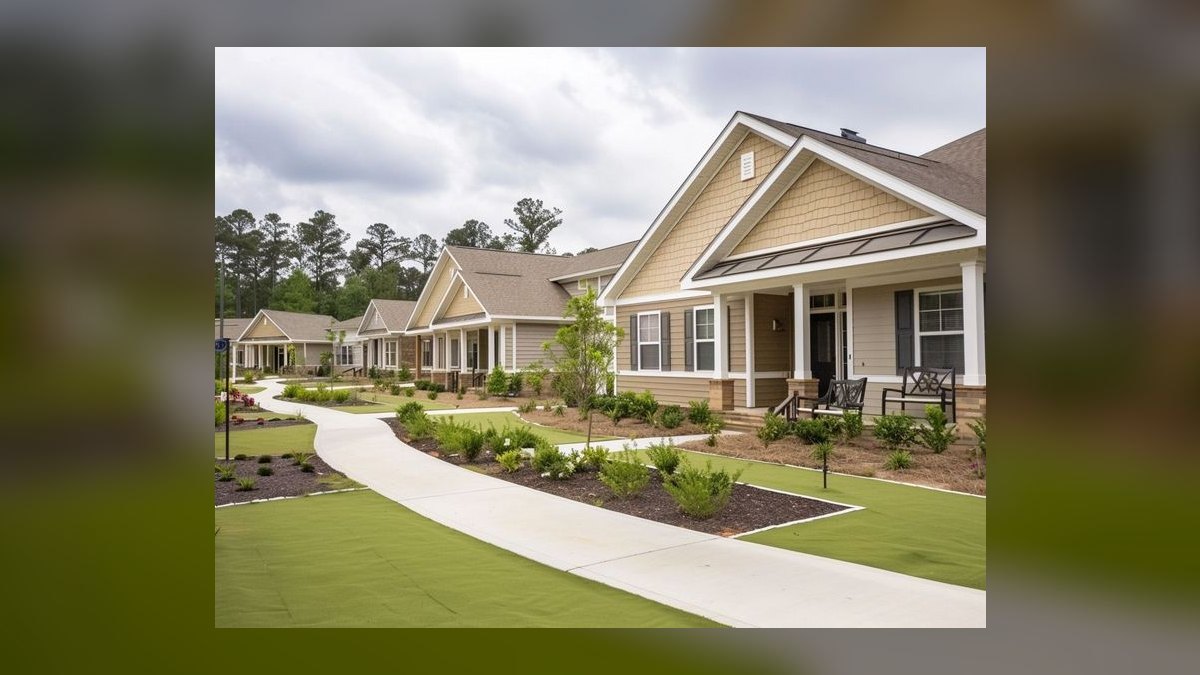
Georgia ranks tenth with a cost-of-living index near 91, the highest of the group, and a median home price around $320,000, similar to Tennessee. Its standout feature is the retirement-income exclusion, which reaches $65,000 per person—$130,000 per couple—for those 65 and older, one of the most generous in the nation, sheltering essentially all retirement income for most couples.
This state is for retirees with substantial retirement income who want a generous exclusion that covers most of their draws, and who prefer a warmer climate with access to cities like Augusta, Savannah, and the north Georgia mountains. It trades away the low home prices of the top-ranked states, as Georgia's median is near $320,000, but offers the most temperate compromise of the group.
How we ranked these
The ranking measures affordability across four weighted variables: composite cost-of-living index (30%), median home price (30%), retirement-income tax treatment (25%), and effective property-tax rate with senior relief (15%). Each state's composite index, median home value, tax rules for pensions, 401(k)s, IRAs, and Social Security, and average property tax after homestead exemptions were scored against a national baseline of 100.
Deliberately ignored were climate, healthcare quality and access, cultural amenities, and proximity to family, because these are subjective and vary by individual preference. Also excluded were one-time moving costs and potential future cost-of-living increases in growing metros, as these are not static state-level factors. The focus remains purely on quantifiable, recurring affordability metrics that directly impact a retiree's annual budget.
Related questions
Which state has the lowest overall cost of living for retirees?
Mississippi, with a composite cost-of-living index around 86 to 87 against a national baseline of 100 — roughly 14% below average. Housing drives most of the advantage, with a median home value near $175,000 and property taxes averaging about 0.65%.
Do any of these states tax Social Security benefits?
None of the ten tax Social Security in 2027. West Virginia was the last holdout, fully phasing out its Social Security tax by 2026. Missouri also removed its income-based Social Security tax in recent reform, so benefits arrive untaxed statewide.
What is the cheapest state to buy a retirement home?
West Virginia, with a median home price near $165,000 and livable homes in towns like Beckley or Parkersburg well under $130,000. Mississippi is second at roughly $175,000. Both sit far below Tennessee's and Georgia's roughly $320,000 medians.
How much does a couple need annually to retire in these states?
Roughly $45,000 to $60,000 a year for a comfortable retirement, depending on whether the home is paid off and the county chosen. A couple owning outright in Mississippi or West Virginia can realistically live on Social Security plus a modest pension.
Is Tennessee actually cheaper than Mississippi for retirees?
It depends on your income mix. Tennessee's zero income tax beats Mississippi's exemptions only if your withdrawals are large and your spending on taxable goods is modest. Mississippi's lower home prices and property taxes often win for those with smaller portfolios.
Which state has the lowest property taxes for seniors?
Alabama, with an average effective rate of about 0.40% and residents 65 and older exempt from the state portion entirely. On a $220,000 home, that's roughly $880 annually before the senior exemption, making it the lowest of the group.
What is the most tax-friendly state for pension income?
Alabama does not tax traditional defined-benefit pensions at all, and Mississippi exempts all qualified retirement income after age 59½. Tennessee has no income tax, so pensions are untaxed there as well, but Alabama's specific pension exemption is unique.
FAQ
What is the composite cost-of-living index and why does it matter?
It measures groceries, utilities, transportation, healthcare, and housing against a national baseline of 100. Mississippi sits around 86, meaning 14% below average. A 12-point gap on a $50,000 budget equals $6,000 annually — $150,000 over 25 years before compounding.
How does the retirement-income tax treatment vary among these states?
Full exemption states like Mississippi and Tennessee treat all retirement income equally. Threshold states like Kentucky ($31,110 per person) and Georgia ($65,000 per person for 65+) exempt draws under caps. Source-specific states like Alabama exempt pensions but tax 401(k) and IRA withdrawals.
What senior property-tax relief programs exist in these states?
Alabama exempts seniors 65+ from the state portion. West Virginia offers a $20,000 homestead exemption. Kentucky exempts $49,000 of assessed value. Oklahoma has a senior valuation freeze. Missouri counties can freeze taxes for residents 62+. Georgia counties often exempt school taxes.
Why is housing the dominant factor in affordability?
Housing is typically the largest retirement expense and has the widest spread. West Virginia's median is $165,000 versus Tennessee's $320,000. Selling high and buying low converts equity into invested capital, generating income at a conservative withdrawal rate.
What are the trade-offs of retiring in rural states like Mississippi or West Virginia?
Rural affordability often means thinner healthcare access and longer drives to specialists. Mitigate by settling within 45 minutes of a regional medical center like Jackson, Morgantown, or Little Rock. You give up about 5% of the affordability advantage to buy back most healthcare risk.
How does Tennessee's zero income tax compare to its sales tax?
Tennessee has no state income tax but a combined sales tax near 9.5% in many areas. For a retiree spending $35,000 on taxable goods, that's meaningful. The math favors Tennessee when taxable withdrawals are large and discretionary spending is modest.
What is the mistake of comparing headline tax rates instead of actual income mix?
Alabama looks unbeatable for pension-heavy retirees but average for IRA-heavy ones, because it taxes 401(k) and IRA withdrawals. Build a one-page model with your real Social Security, pension, and planned withdrawal, then apply each state's rules line by line to see the true ranking.
Why should retirees rent before buying in a new state?
Renting for six to twelve months costs a year of appreciation but prevents an irreversible purchase if the climate, hospital drive, or social fit fails. In markets with sub-$200,000 medians, a year of rent is a small hedge against a large mistake.
How can cost-of-living advantages erode over time?
Northwest Arkansas and Nashville illustrate how growth pulls prices up. A state's index is a snapshot, not a guarantee. Buying into a rapidly appreciating metro inside a cheap state can leave you with metro pricing and none of the amenities you moved for.
What is the alternative to relocating for affordability?
Consider not relocating at all. Moving costs 6% to 8% of the sale price plus moving expenses and new medical relationships. If your current state's tax treatment is merely mediocre and your home is paid off, the arbitrage may not clear the friction. Run the 25-year total.
Sources
- https://www.kiplinger.com/retirement/affordable-states-to-retire
- https://www.nerdwallet.com/article/finance/cheapest-states-to-retire
- https://www.bankrate.com/retirement/cheapest-states-to-retire/
- https://www.retirementliving.com/cheapest-states-to-retire
- https://www.gobankingrates.com/retirement/cheapest-states-retire/
- https://www.usnews.com/news/best-states/rankings/health-care
- https://www.taxadmin.org/state-tax-structures
Related on PULSE
- [More most affordable states to retire rankings and buying guides](/knowledge)
- [PULSE Tools and calculators](/tools)
- [Everything on PULSE RevOps](/)
@Kory-White- · if Venmo asks, the last 4 of my number are 2012
 pulse-moviesTop 10 Movies on Netflix 2027
 pulse-moviesTop 10 Movies on Max 2027
 pulse-moviesTop 10 Fantasy Movies of All Time in 2027
 pulse-moviesTop 10 Documentaries of All Time in 2027
 pulse-moviesTop 10 Superhero Movies of All Time in 2027
 pulse-moviesTop 10 Romance Movies of All Time in 2027
 pulse-moviesTop 10 Westerns of All Time in 2027
 pulse-moviesTop 10 Musical Movies of All Time in 2027
 pulse-moviesTop 10 Thriller Movies of All Time in 2027
 pulse-moviesTop 10 Crime Movies of All Time in 2027