 Pulse Reviews and Analysis
How do you coach reps to use MEDDIC in discovery?
 Curated by Kory White · Fractional CRO, CRO Syndicate
Direct Answer
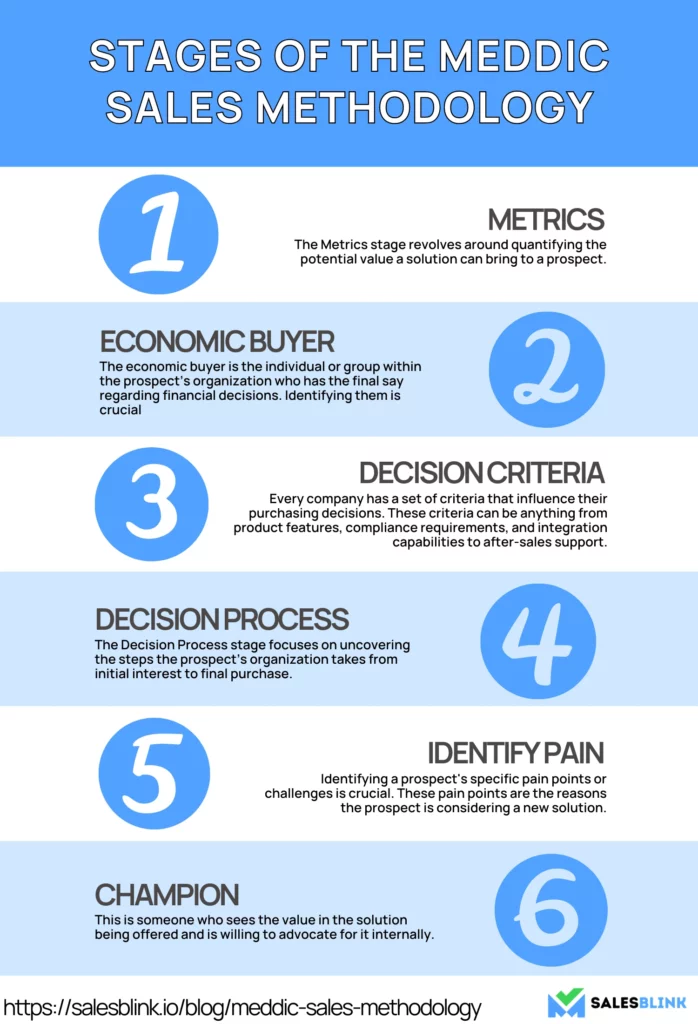
Coach reps to use MEDDIC in discovery by treating it as a set of questions reps must *earn answers to*, not a form they fill out after the call. As the manager, run discovery call reviews against the six elements — Metrics, Economic buyer, Decision criteria, Decision process, Identify pain, Champion — and demand evidence in the buyer's own words for each.
The core move is the gap review: pull a real deal, ask the rep to defend each MEDDIC field with a quote from the customer, and coach the holes. Do this weekly, score it, and make "no champion / no metric" a deal-stage blocker in Salesforce so the discipline sticks. This is the single highest-leverage habit you can build on a 2027 RevOps team facing longer cycles and bigger buying committees.
Why This Happens — Diagnose Before You Coach
Most reps don't fail at MEDDIC because they can't recite the acronym. They fail for one of four root causes, and you coach each one differently. Before you build a plan, figure out which one you're looking at.
Skill — the rep doesn't know *how* to ask a metric question or test for a real champion without sounding like an interrogation. Will — the rep knows how but skips it because it slows the "good vibes" call or risks hearing bad news. Knowledge — the rep doesn't understand the buyer's business well enough to translate pain into an economic metric.
System — your CRM, deal stages, or forecast process don't require MEDDIC, so reps rationally ignore it.
Coaching skill when the real problem is will wastes everyone's time. Coaching will when it's actually a broken system makes you the villain for a process gap. Route the symptom to the cause first.
The Coaching Conversation
Run this in a 1:1 using the GROW model (Goal, Reality, Options, Will). Pull up one of the rep's live deals before you start. The point is to make the rep *discover* the gaps, not to lecture them. Below are verbatim manager scripts plus the exact discovery questions to teach for each MEDDIC element.
Goal — set the target: *"Let's pick the Acme deal. By the end of this, I want you to walk out able to name the economic buyer and quote me one hard metric in their words. Fair?"*
Reality — expose the gaps: *"Walk me through MEDDIC on Acme. Don't tell me what you think — read me the customer's actual words for each one. Where's the quote?"* When they can't produce a quote, stay quiet and let the silence do the work. Then: *"So we don't actually have that yet. What would you have to ask to get it?"*
Options — build the question bank with them, element by element. Teach these as the verbatim discovery questions:
- Metrics — the quantified value. *"What does this problem cost you today, in dollars or hours per month?"* and *"If we fixed this, what number would your boss expect to move, and by how much?"* Coach the rep to push past "it would help" to a figure.
- Economic buyer — who controls the budget. *"Who signs off on a spend this size, and have they ever bought something like this before?"* and the test: *"Would it make sense to get their perspective directly so we're not building a solution they reject?"*
- Decision criteria — how they'll judge options. *"What are the three things this has to do for you to choose us over the alternative or doing nothing?"* and *"Did your team write these down, or are we helping shape them?"*
- Decision process — the steps and timeline. *"Walk me through exactly what happens between a yes from you and a signature — who, what, and how long at each step?"* and *"What's killed deals like this internally before?"*
- Identify pain — the compelling event and root pain. *"What happens if you do nothing for another two quarters?"* and *"Why is this a priority now versus six months ago?"*
- Champion — a person with power *and* personal stake who sells for you when you're not in the room. Test it: *"Would you be comfortable introducing me to your economic buyer?"* A real champion says yes.
Will — lock the commitment: *"Which two of these will you go get on the next Acme call, and when's that call?"* Write it down. *"I'll listen to the recording Thursday — let's see if you got the quote."*
That last line matters. Coaching without follow-through is just a conversation.
The Coaching Plan / Cadence
Build the habit on a 30/60/90 arc, then settle into a weekly loop.
Days 1–30 — Teach and model. Run one team workshop on MEDDIC with Force Management's Command of the Message framing if you use it; otherwise use the MEDDIC Academy definitions. Each rep does two role-plays. You review one real discovery call per rep per week and score the six elements.
Days 31–60 — Embed in the system. Add MEDDIC fields to opportunities in Salesforce (or your CRM) and make "Identify pain + Metric + Champion confirmed" a requirement to move a deal past Discovery stage. Use Gong or Chorus to auto-surface whether reps actually asked metric and decision-process questions on calls.
Days 61–90 — Reinforce and scale. Reps now lead their own MEDDIC self-review before the 1:1. You spot-coach exceptions and have your strongest reps run a peer call-review. The goal is reps catching their own gaps before you do.
Drills & Role-Play
- The quote test. Open the rep's CRM and demand a customer quote behind each MEDDIC field. Empty fields become this week's call objectives. Five minutes, ruthless, do it every week.
- Call review with a scorecard. Listen to one recorded discovery call together. Score each element 0–2: 0 = not attempted, 1 = asked but didn't land, 2 = quantified answer in the buyer's words. Total out of 12. Track the trend.
- Champion vs. Coach role-play. You play a friendly contact with no power. The rep must figure out — through questions — that you can't get them to the economic buyer, and adjust. This breaks the "they like me, so they're my champion" trap.
- The metric ladder. Rep practices taking a vague pain ("reporting is slow") down to a number ("eight hours per analyst per week, four analysts") and up to an economic impact the economic buyer cares about.
- Reverse pitch. Rep states the customer's decision criteria and decision process back to you as if briefing an exec. If they can't, they didn't really run discovery.
What to Measure
Don't measure MEDDIC by closed-won alone — that lags by a full sales cycle. Track the leading indicators:
- MEDDIC completeness at stage gate — percent of fields filled with a real quote, not a guess, before a deal advances.
- Metric-capture rate — percent of discovery calls where the rep got a quantified metric (Gong/Chorus can flag this from transcripts).
- Economic-buyer access — percent of qualified deals where the rep has met the economic buyer, not just a contact.
- Champion confirmation — deals with a tested champion (one who agreed to an intro) vs. Those with only a "friendly."
- Stage conversion and slippage — discovery-to-proposal conversion should rise and pushed-close-dates should fall as qualification tightens.
- Win rate on MEDDIC-complete deals vs. Incomplete — the proof point that earns rep buy-in.
When reps see that MEDDIC-complete deals close at a much higher rate, the discipline sells itself.
Common Mistakes Managers Make
- Treating MEDDIC as a CRM form, not a conversation. Reps backfill fields to clear the stage gate. Coach the *questions*, audit the *quotes*.
- Coaching the deal instead of the skill. Saving one Acme deal feels productive, but if you don't build the rep's questioning ability, you'll re-coach the same gap on the next deal. Fix the rep, not just the pipeline.
- No follow-through. You agree on next steps and never listen to the follow-up call. The rep learns coaching is optional.
- Coaching everyone the same. A skill gap and a will gap need opposite responses. Diagnose first.
- Confusing a contact for a champion. Managers let reps log a friendly name as a champion. Always apply the intro test.
- Skipping it for closers. Even reps who hit quota leave money on the table without a quantified metric. Hold your best reps to it too — they set the bar.
FAQ
What's the difference between MEDDIC and MEDDPICC, and which should I coach? MEDDPICC adds Paper process (legal/procurement steps) and Competition to the original six. For complex 2027 enterprise deals with procurement gauntlets, coach MEDDPICC. For mid-market and faster cycles, plain MEDDIC keeps reps focused.
Start with the six and add P and C as deals get bigger.
How is a champion different from a coach or a friendly contact? A coach gives you information; a champion has organizational power, a personal stake in your success, and actively sells for you internally. The test is access: a real champion will introduce you to the economic buyer. If they dodge that, you have a coach, not a champion.
My rep fills in MEDDIC but deals still slip — what's wrong? Almost always the Identify pain or Metric is weak — there's no compelling event forcing a decision now. Re-run discovery on the pain. "Nice to have" with no quantified cost and no deadline will slip every quarter regardless of how clean the rest of the fields look.
How do I coach MEDDIC without making discovery feel like an interrogation? Teach reps to layer questions inside a real conversation and to *give before they take* — share an insight or benchmark, then ask. Use Gong/Chorus to show reps the calls where the questions felt natural versus forced, and have them model the good ones.
Can AI tools coach MEDDIC for me? Gong, Chorus, and Clari can flag whether the questions were asked and auto-score deal health, which scales your visibility across the team. But the GROW conversation, the diagnosis of skill-vs-will, and the role-play are still yours. Use AI to find the gaps; you still coach them.
When is the problem not coachable? If a rep can run MEDDIC perfectly in role-play but refuses to on live calls after repeated follow-up, that's a will-and-accountability issue, not a skill gap — move to a performance plan, not more coaching. Likewise, broken territory or comp will undermine any methodology; fix the system before you blame the rep.
Bottom Line
The one move that matters is the weekly gap review: make every rep defend each MEDDIC element with a real customer quote, coach the holes with verbatim questions, and lock a stage-gate so the CRM enforces what your 1:1s teach. Diagnose skill versus will versus system before you coach, measure leading indicators not just closed-won, and never let a "friendly" get logged as a champion.
Sources
- MEDDIC Academy — The MEDDIC Sales Methodology
- Force Management — Command of the Message and MEDDPICC
- Gong Labs — Sales Discovery Call Research
- Harvard Business Review — The New Sales Imperative
- RAIN Group — Sales Discovery Questions
- Sales Hacker — How to Qualify with MEDDIC
- Salesforce Blog — Sales Coaching Techniques
*Sales coaching for MEDDIC discovery — how to coach reps to use MEDDIC, sales manager coaching guide, rep discovery qualification framework, and a MEDDIC coaching playbook for 2027.*