 Pulse Reviews and Analysis
How do you apply the GROW model in a weekly sales 1-on-1?
 Curated by Kory White · Fractional CRO, CRO Syndicate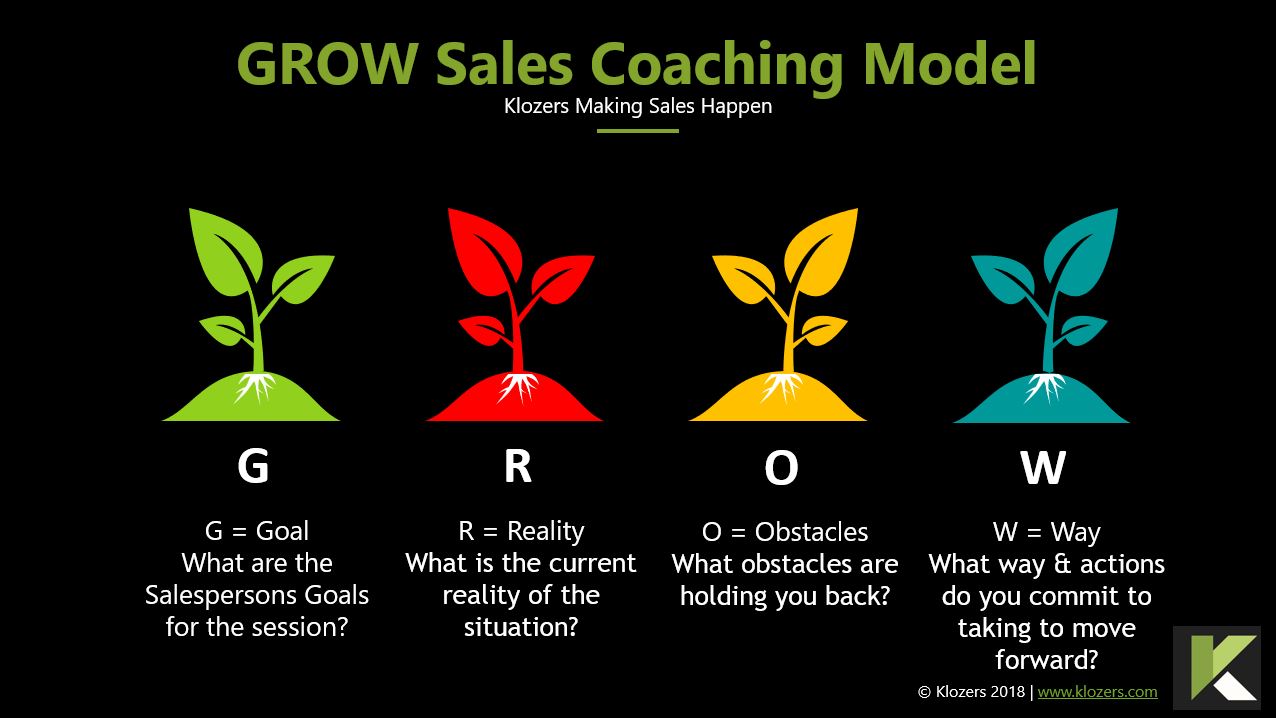
Direct Answer
Apply the GROW model in a 2027 weekly sales 1-on-1 by shifting from retrospective pipeline reviews to forward-looking, AI-informed coaching. Use Gong or Clari to surface the Goal from deal-level gaps, assess Reality with real-time conversation data and MEDDPICC scoring, brainstorm Options using Salesforce Einstein GPT for next-best actions, and lock a Will with specific, tracked commitments.
This framework turns a 30-minute check-in into a structured, data-driven growth session that aligns with longer buying cycles and multi-stakeholder committees.
Why the GROW Model Fits 2027 RevOps
The GROW model (Goal, Reality, Options, Will) is not new, but its application in a weekly sales 1-on-1 must adapt to the 2027 reality: AI in the funnel, vendor consolidation, longer B2B buying cycles (often 12–18 months), and buying committees averaging 11 stakeholders per deal (per Gartner).
Traditional pipeline reviews waste time on vanity metrics. Instead, GROW forces a structured, problem-solving dialogue that leverages AI insights from Gong, Clari, or Outreach to focus on what moves deals forward.
Goal: Define the Weekly Outcome with AI Context
In 2027, the Goal is not a revenue number—it's a specific, measurable progress step tied to a deal or skill. Use Clari to pull AI-predicted close dates and risk scores. For example:
- Bad goal: "Increase pipeline by 20%."
- Good goal: "Advance the Acme Corp deal from 'Technical Validation' to 'Executive Alignment' by Friday, using the Challenger framework to reframe their ROI."
How to set it in the 1-on-1:
- Open with: "Based on Clari's risk flag on the Acme deal, what's the one outcome we need this week to keep it on track?"
- Use Salesforce Einstein to suggest the next milestone from your MEDDPICC playbook (e.g., "Identify the Champion" → "Secure a multi-stakeholder meeting").
- Write it down—commit to a single, verifiable goal.
Reality: Ground the Conversation in Data, Not Feelings
The Reality phase is where 2027 RevOps shines. Avoid "how do you feel about the pipeline?" Instead, pull real data:
- Gong conversation intelligence: "Your last call with the CFO had 40% talk time—how did that affect their buying intent score?"
- Outreach sequence analytics: "The champion opened the proposal but didn't click the pricing page. What's the blocker?"
- MEDDPICC dashboard: "The 'Economic Buyer' is still unidentified. That's a red flag for deals >$500k."
Structured reality check:
- Deal-level: Show the Clari risk score (e.g., 65/100) and the top 3 missing criteria from MEDDPICC.
- Skill-level: Use Gong to highlight a call pattern—e.g., "You didn't ask a 'pain expander' question in the last discovery call."
- Buying committee reality: "We have 4 of 11 stakeholders engaged. Who's missing, and what's their influence level?"
Coach's role: Challenge assumptions with data. If the rep says "the deal is solid," ask: "Gong shows the champion only spoke 15% of the time—how do you know they're still the champion?"
Options: Brainstorm AI-Generated and Rep-Driven Actions
The Options phase is where you generate 3–5 concrete actions, blending AI suggestions from Salesforce Einstein GPT with the rep's creativity. In 2027, AI can propose 10 options, but the rep must pick the most human-centric one.
AI-generated options (from tools):
- Salesforce Einstein: "Send a personalized ROI calculator to the CFO based on their industry benchmark data."
- Gong: "Re-record the discovery call with a 50% talk-time limit and use the Challenger 'teach' tactic."
- Outreach: "Trigger a 3-step sequence targeting the procurement stakeholder who hasn't opened emails."
Rep-generated options:
- "I'll ask the champion for a direct intro to the VP of Engineering."
- "I'll share a case study from a similar company in their vertical."
Coach's role: Force prioritization. Ask: "Which option has the highest probability of moving the deal to the next MEDDPICC stage? Rank them." Use a simple matrix: impact (1–5) x confidence (1–5).
Will: Lock the Commitment with a Tracking Mechanism
The Will phase is the most critical—and most often skipped. In 2027, you must tie the commitment to a measurable action in your CRM. Use Salesforce Tasks or Clari Deal Rooms to track it.
Structured commitment:
- Action: "I will send the ROI calculator to the CFO by Wednesday 3 PM."
- Trigger: "If the CFO doesn't open it within 24 hours, I'll call their admin to schedule a 15-minute walkthrough."
- Accountability: "I'll log a Salesforce task with a due date, and we'll review the outcome in next week's 1-on-1."
Coach's role: Ask "What will stop you from doing this?" and "How will I know it's done?" Use Gong to set a call recording alert for the next conversation with that stakeholder.
Mermaid Diagram 1: Decision Tree for GROW in 1-on-1s
This flowchart shows how to decide which phase of GROW to emphasize based on AI data.

Reach Kory White, Fractional CRO: 📅 Book a Quick Call · 💼 Kory on LinkedIn · 🏢 CRO Syndicate
Mermaid Diagram 2: Process Loop for GROW in a 30-Minute 1-on-1
This shows the weekly cycle, integrating AI tools.
How to Run the 30-Minute GROW 1-on-1 (Step-by-Step)
In 2027, time is compressed. Here's a scripted flow:
Minutes 0–2: Goal
- "Based on Clari, the Acme deal is at risk. Our goal this week is to re-engage the economic buyer. Agreed?"
- Write the goal on a shared doc (e.g., Notion or Salesforce note).
Minutes 2–10: Reality
- Open Gong and play a 30-second clip of the last call. "Notice you didn't ask about budget timeline. How does that affect our MEDDPICC score?"
- Show the Clari deal timeline: "The deal has been in 'Technical Validation' for 45 days—industry average is 30. What's the blocker?"
Minutes 10–20: Options
- "Salesforce Einstein suggests a multi-stakeholder workshop. What's your alternative?"
- List 3 options on the whiteboard (physical or digital like Miro). Rank them by impact.
- "Which option will the buying committee actually respond to?"
Minutes 20–25: Will
- "So you'll send the workshop invite by Friday. I'll set a Salesforce task with a 3 PM reminder. If they don't respond, you'll call the champion's assistant on Monday."
- Ask: "On a scale of 1–10, how committed are you to this action?" If <8, revisit.
Minutes 25–30: Wrap
- Summarize: "Goal: Re-engage economic buyer. Action: Workshop invite by Friday. Check-in: Next Monday if no response."
- Log the Salesforce task and set a Gong alert for the next call with that stakeholder.
Common Pitfalls in 2027 GROW 1-on-1s
- Over-reliance on AI: Don't let Clari or Gong dictate the entire conversation. The rep's intuition about the buying committee's politics is still critical.
- Skipping Will: 40% of coaching sessions fail because the action isn't tracked (per Gong Labs). Always create a Salesforce task.
- Ignoring the buying committee: In 2027, deals die when one stakeholder is ignored. Use MEDDPICC to map all 11 stakeholders and ensure each has a touchpoint.
- Too many goals: A single, specific goal per week outperforms 3 vague ones. Forrester data shows reps with one weekly focus are 2.3x more likely to hit quota.
FAQ
How do you handle a rep who resists the GROW structure? Start with a data-driven reality check: "Gong shows your last 5 calls had no next-step commitment. Let's try GROW for 2 weeks and measure the impact on close rates." Use Clari to show the correlation between structured 1-on-1s and quota attainment.
What if the rep's goal is too ambitious for one week? Break it down: "Your goal is to close the deal, but that's a 3-month outcome. What's the one milestone you can achieve this week?" Use MEDDPICC to identify the next logical step (e.g., "Identify the Champion" vs. "Get a signed contract").
Can GROW work for remote or async teams? Yes. Use Salesforce Chatter or Slack to pre-share the Clari and Gong data. Then run the 1-on-1 as a 15-minute video call focused only on Options and Will. Pre-record the Reality phase via Loom.
How do you integrate AI without losing the human element? Use AI for data (e.g., "Gong says you missed the pain expander question"), but let the rep generate the Options. The coach's role is to ask "What would you do differently?"—not to prescribe AI's answer.
What's the biggest mistake in 2027 1-on-1s? Treating them as pipeline reviews. Gartner research shows that 67% of sales coaching fails because it focuses on metrics, not behavior. GROW forces a behavioral focus: "What will you *do* differently this week?"
Sources
- Gong Labs: The Anatomy of a Great Sales 1-on-1
- Gartner: The Future of Sales Coaching in 2027
- Forrester: The ROI of Structured Sales Coaching
- Clari: Using AI to Predict Deal Outcomes
- Salesforce: Einstein GPT for Sales Coaching
- SaaStr: How to Run a 30-Minute 1-on-1
- MEDDPICC Framework: A Complete Guide
- Challenger Sale: Coaching for Complex Deals
Bottom Line
The GROW model is not a theoretical framework—it's a tactical, data-driven structure for weekly sales 1-on-1s in 2027. By anchoring each phase in real AI insights from Gong, Clari, and Salesforce, you turn a 30-minute check-in into a high-impact coaching session that directly addresses longer cycles and buying committees.
Stop reviewing pipelines—start coaching behaviors.
*RevOps weekly sales 1-on-1 coaching using GROW model with AI data from Gong, Clari, and Salesforce in 2027.*