 Pulse Reviews and Analysis
Community-led growth GTM playbook in 2027
 Curated by Kory White · Fractional CRO, CRO Syndicate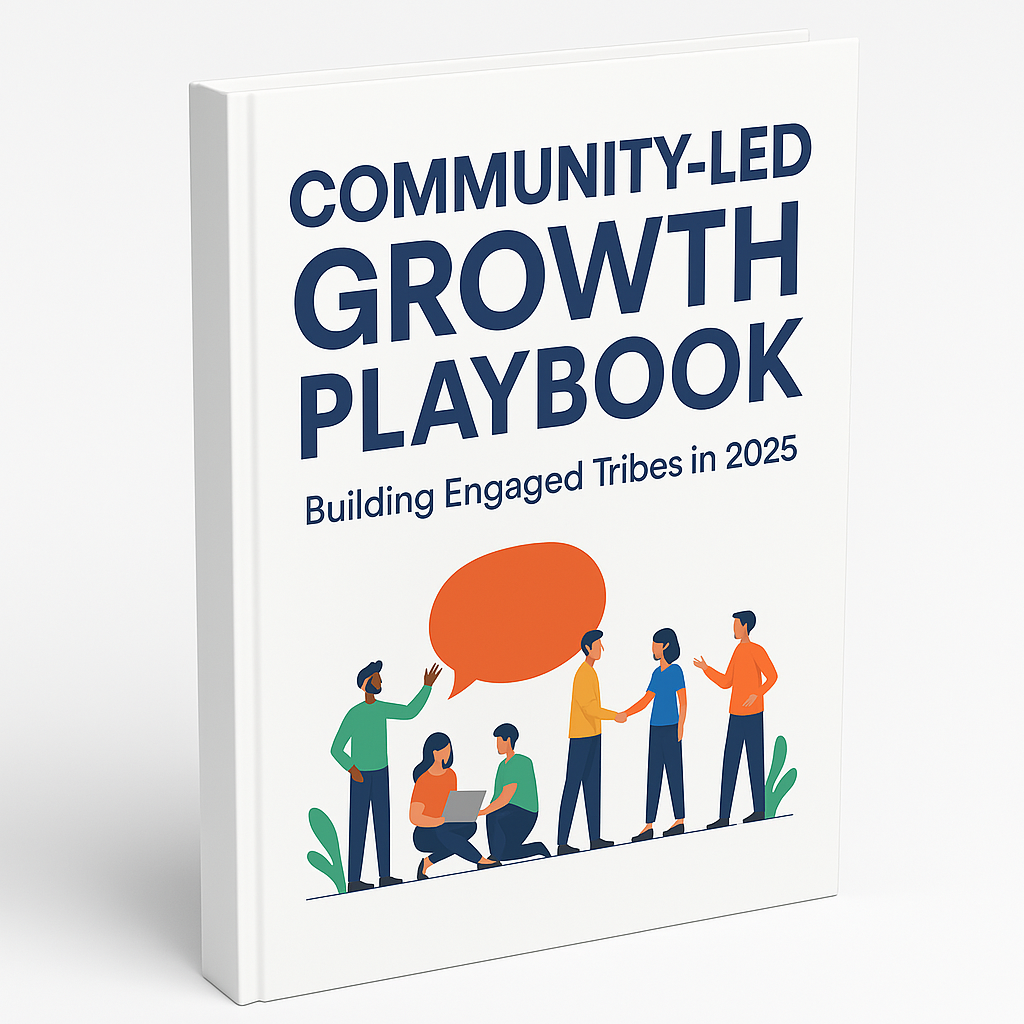
Direct Answer
A community-led growth (CLG) GTM playbook makes an engaged community of users, practitioners, and advocates the primary engine for acquisition, activation, retention, and expansion. Instead of pushing demand through ads and outbound, the company builds a place where its audience learns, connects, and gets value from one another, and that gravity pulls in new users and deepens existing relationships.
The motion works because trust transfers between peers: a recommendation inside a community of practitioners carries more weight than any ad. In 2027 it is operationalized through hubs on Slack, Discord, or dedicated platforms like Circle and Bettermode, supported by events, content, and a recognized community manager or developer-relations function.
Success is measured by active community members, member-sourced signups and pipeline, time-to-first-value, and expansion among community members versus non-members.
What "Community-Led" Actually Means
Community-led growth is not a Slack channel bolted onto a marketing plan. It is a strategy where the community delivers genuine value independent of the product: members get answers, career help, peer connection, and status. The company's role is to host and steward that value, not to extract from it.
Done well, the community becomes a moat — competitors can copy features, but not the relationships and reputation built inside a thriving community.
Two reinforcing loops drive the motion: acquisition (members invite peers, content ranks and attracts newcomers) and retention/expansion (members who belong to the community churn less and buy more because the product is woven into a relationship, not just a tool).
Choose the Community Model and Platform
Pick a model that matches your audience and goal:
- Product community — users help each other use the product (support deflection, retention). Often hosted on Discourse or inSided/Gainsight.
- Practice community — practitioners advance a shared craft (RevOps, growth, design), which builds category authority and top-of-funnel.
- Developer community — developers adopt and extend an API, driving bottom-up adoption via GitHub, Discord, and Stack Overflow presence.
Platform choice follows the model: Slack and Discord for real-time conversation, Circle or Bettermode for owned, structured spaces, Discourse for searchable forums that also fuel SEO.
Seed and Activate the Community
A community fails if it is empty. Seed deliberately:
- Recruit founding members — invite engaged customers and respected practitioners personally.
- Create reasons to show up — a recurring event, an AMA, a weekly prompt, or exclusive content.
- Make the first experience easy — a clear welcome, an introductions ritual, and a fast first interaction so new members feel value quickly.
A dedicated community manager is essential. This person sets norms, sparks conversation, recognizes contributors, and connects member needs back to the product and content teams.
Connect Community to the Funnel Without Killing It
The hard part of CLG is tying community to revenue without making members feel sold to. The connection is indirect and trust-preserving:
- Acquisition — community content and member referrals create top-of-funnel; track signups attributed to community sources.
- Activation — community helps new users reach first value faster, raising activation rates.
- Retention — members who participate churn measurably less.
- Expansion — engaged members are warmer for upsell, and advocates provide testimonials, case studies, and word-of-mouth.
Use tools like Common Room or Orbit-style community-intelligence platforms to see which members are active, influential, and showing buying signals, then route those signals to sales appropriately.
Govern for Health, Not Just Growth
A large but toxic or silent community has negative value. Govern with clear norms, active moderation, and a focus on quality of interaction over raw member count. Recognize and reward top contributors — badges, spotlights, early access — because a small core of active members drives most of the value.
Protect the space from spam and over-promotion, including from your own team.
Metrics for the Motion
Grade community-led growth on:
- Active members — weekly/monthly active participants, not just total joins.
- Member-sourced signups and pipeline — acquisition attributable to the community.
- Activation lift — time-to-first-value for members vs. Non-members.
- Retention delta — churn among community members vs. Non-members.
- Advocacy output — referrals, reviews, and testimonials generated.
FAQ
What is community-led growth? A GTM strategy where an engaged community of users and practitioners drives acquisition, activation, retention, and expansion, because peer trust and shared value pull in and keep customers more effectively than paid channels alone.
How is community-led growth different from a support forum? A support forum mainly deflects tickets; community-led growth treats the community as a strategic engine that delivers independent value and feeds the whole funnel, from acquisition through expansion and advocacy.
Which platforms host these communities? Slack and Discord for real-time chat, Circle or Bettermode for owned structured spaces, and Discourse for searchable forums that also generate SEO value; developer communities often center on GitHub and Discord.
How do you connect community to revenue? Indirectly: track member-sourced signups, measure activation and retention lift for members, and surface engaged, high-intent members to sales using community-intelligence tools like Common Room, without overtly selling inside the space.
Do you need a dedicated community manager? Yes. A community manager sets norms, sparks conversation, recognizes contributors, and links member needs to product and content, which is what keeps a community active rather than empty.
Related on PULSE
- What is the go-to-market playbook for marketing-led demand-gen growth in 2027?
- The Education-First GTM Playbook: Using Webinars and Certifications to Generate Demand
- PLG-to-sales-assist handoff playbook in 2027