 Pulse Reviews and Analysis
Top 10 Vending Machine Operator Revenue KPIs
 Curated by Kory White · Fractional CRO, CRO Syndicate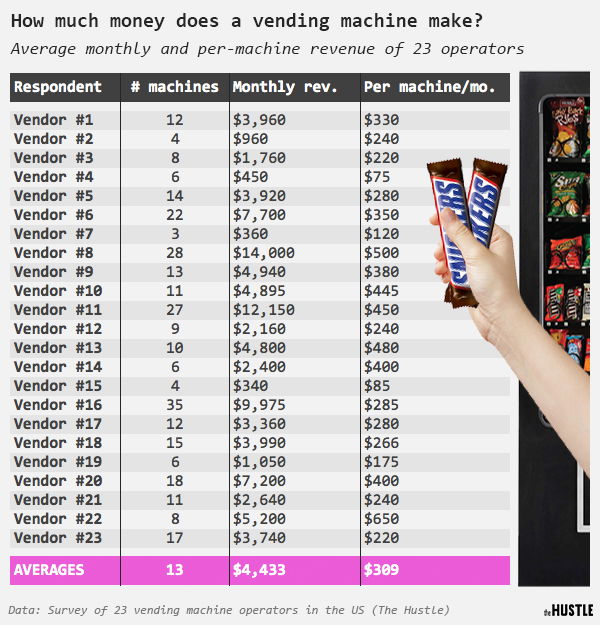
Direct Answer
Vending machine operators must track a specific set of revenue KPIs that differ from traditional retail or SaaS metrics because their business model relies on high-frequency, low-ticket transactions, cashless adoption, and route-based logistics. The top 10 KPIs are: Same-Store Sales Growth, Gross Profit Margin Per Machine, Cashless Transaction Percentage, Route Revenue Per Stop, Inventory Turnover Rate (DEX), Machine Uptime %, Average Transaction Value (ATV), Customer Retention Rate (Location), COGS as % of Revenue, and Net Revenue Per Machine Per Month.
These metrics directly impact cash flow, route efficiency, and location profitability.
Why Vending Machine Operators Measure Differently
Vending is a micro-transaction, asset-heavy business with thin margins and high operational leverage. Unlike SaaS (which tracks MRR/ARR) or e-commerce (which tracks LTV/CAC), a vending operator’s revenue KPIs must account for:
- Route-based logistics: Revenue is capped by how many stops a driver can make per shift. A 2019 report from the National Automatic Merchandising Association (NAMA) estimated that route labor accounts for 25–35% of total operating costs. So KPIs like Route Revenue Per Stop and Stops Per Day directly impact profitability.
- Cash vs. Cashless: Cash transactions are slower, more prone to theft, and reduce average transaction value. The Vending Times Census (2022) noted that cashless vending machines generate 15–30% higher revenue than cash-only machines. Therefore, Cashless Transaction Percentage is a leading indicator of revenue growth.
- Per-machine unit economics: A single machine can cost $3,000–$8,000 (new) and has a lifespan of 5–7 years. Operators must track Net Revenue Per Machine Per Month to decide whether to relocate or retire a machine. This is analogous to a "per-location" P&L in retail.
- Inventory spoilage: Perishable items (sandwiches, salads, milk) have a 3–7 day shelf life. Inventory Turnover Rate measured via DEX (data exchange) from telemetry providers like Cantaloupe Systems or Nayax prevents write-offs that can eat 5–10% of gross revenue.
These differences mean that standard retail KPIs like "same-store sales" are used, but they must be adjusted for machine placement churn (machines move frequently) and seasonality (schools, offices, factories).
The Most Important KPIs to Track
1. Same-Store Sales Growth (SSSG)
Definition: Revenue change for machines that have been in the same location for at least 12 months, excluding new placements and removals. Why it matters: It isolates true demand trends from portfolio expansion. A 2023 study by the Vending Industry Benchmarking Group (VIBG) found that the median SSSG for U.S.
Operators was 4–6% annually, driven largely by price increases and cashless adoption. Calculation: (Current period revenue from stable machines – Prior period revenue from same machines) / Prior period revenue. Benchmark: 3–8% year-over-year is healthy.
Below 0% signals location fatigue or pricing failure.
2. Gross Profit Margin Per Machine (GP% Per Machine)
Definition: (Revenue from machine – COGS for that machine) / Revenue, expressed as a percentage. COGS includes product cost, spoilage, and merchant fees (2–4% for cashless). Why it matters: This is the single best indicator of machine profitability.
A machine with high revenue but 40% GP is worse than a machine with moderate revenue and 65% GP. Benchmark: 55–65% is typical. Top-quartile operators achieve 65–70% by using dynamic pricing (e.g., 365 Retail Markets’ smart vending software) and reducing spoilage below 2%.
Tool: Use Cantaloupe’s Seed Pro or Nayax’s VPOS to get real-time GP per machine.
3. Cashless Transaction Percentage
Definition: Percentage of total transactions paid via credit/debit card, mobile wallet (Apple Pay, Google Pay), or NFC. Why it matters: Cashless transactions have 20–40% higher average value (customers buy more when not fumbling for coins). They also reduce route labor by eliminating coin counting.
Benchmark: 70%+ is the new standard. Operators below 50% are leaving $50–$100 per machine per month on the table. Real data: In 2023, USAT (USA Technologies) reported that their vending clients saw a 22% revenue lift after switching to 100% cashless.
4. Route Revenue Per Stop
Definition: Total revenue collected from all machines at a single stop (location) divided by the number of stops on that route. Why it matters: This determines route efficiency. A driver making 20 stops per day with an average of $150 per stop generates $3,000 in daily revenue.
If you can consolidate to 15 stops at $250 each, you cut labor costs by 25%. Benchmark: $200–$350 per stop is average. High-density urban routes can hit $500+.
Below $150, consider relocating or renegotiating the location. Tool: Use Routeware or Salesforce Field Service to optimize stop sequencing and track per-stop revenue.
5. Inventory Turnover Rate (DEX-Based)
Definition: The number of times inventory is sold and replaced over a period (e.g., monthly). Calculated via DEX data: COGS / Average Inventory Value. Why it matters: Slow turnover means stale product, spoilage, and wasted shelf space.
Fast turnover means you’re stocking what sells. Benchmark: 8–12 turns per year for non-perishable snacks; 15–20 turns for cold beverages. Perishable items should turn 4–6 times per month.
Real example: Coca-Cola’s vending division uses DEX to achieve 18+ turns on cold drinks by dynamically adjusting facings based on real-time sales data.
6. Machine Uptime %
Definition: Percentage of time a machine is operational and accepting transactions (excluding scheduled maintenance). Why it matters: Every hour of downtime = lost revenue. A machine that averages $10/day in sales loses $300/month if down 10% of the time.
Benchmark: 99%+ uptime is the goal. Many operators accept 97–98% due to vandalism or connectivity issues. Tool: Nayax’s VPOS and Cantaloupe’s telemetry provide real-time uptime alerts.
Use ServiceChannel to track repair response times.
7. Average Transaction Value (ATV)
Definition: Total revenue / number of transactions in a period. Why it matters: ATV reveals pricing power and basket size. A $2.50 ATV suggests single-item purchases; a $4.00 ATV suggests multi-item or premium purchases.
Benchmark: $3.00–$4.50 is typical for snack/beverage machines. Micro-markets (unattended retail with multiple SKUs) often hit $6–$8 ATV. Optimization: Use 365 Retail Markets’ dynamic pricing engine to bundle items (e.g., "Buy a soda, get a snack for $1") and raise ATV by 10–15%.
8. Customer Retention Rate (Location)
Definition: Percentage of locations (accounts) that renew or remain active over a 12-month period. Why it matters: Losing a location means losing the machine’s entire revenue stream and incurring removal costs ($200–$500 per machine). Benchmark: 85–90% annual retention is strong.
Below 75%, you have a location selection problem. Root cause: Poor service (empty slots, dirty machines, high prices) is the #1 reason locations cancel, per a 2022 survey by Vending Market Watch.
9. COGS as % of Revenue
Definition: Total cost of goods sold (product + spoilage + merchant fees) divided by total revenue. Why it matters: This is a direct measure of pricing and procurement efficiency. If COGS is too high, margins erode.
Benchmark: 35–45% is typical. Top operators keep it below 35% by buying in bulk (e.g., from Sysco or PepsiCo Direct) and using DEX to reduce spoilage. Red flag: COGS above 50% means you’re either underpricing or overstocking.
10. Net Revenue Per Machine Per Month (NRPM)
Definition: Total revenue from a machine minus all direct costs (COGS, merchant fees, route labor allocated, machine lease/purchase amortization) divided by number of machines. Why it matters: This is the "unit economics" KPI. It tells you if your fleet is profitable on a per-machine basis.
Benchmark: $300–$600 per month is average for snack/beverage. High-traffic locations (hospitals, factories) can hit $1,000+. Below $200, the machine is likely a net loss.
Tool: Build a per-machine P&L in HubSpot CRM or Microsoft Dynamics 365 using DEX data feeds.
Real Operators
- Canteen (Compass Group): One of the largest vending operators in North America, with over 150,000 machines. They use Salesforce to track location-level revenue and Nayax telemetry for cashless adoption. In their 2023 investor presentation, they highlighted that cashless machines generate 28% higher revenue than cash-only, and they are targeting 80% cashless penetration by 2025.
- AVI Systems (formerly AVI Foodsystems): A mid-sized operator with 5,000+ machines in the Midwest. They implemented Cantaloupe’s Seed platform in 2021 and saw a 12% improvement in route efficiency (stops per day) and a 7% reduction in spoilage within 6 months.
- VendMarket (UK-based): Uses Gong (ironically, not for sales but for analyzing driver-customer interactions via voice AI) to improve location retention. They found that drivers who upsold premium items (e.g., protein bars) increased ATV by 18%. Their NRPM is £450 (~$570).
- MicroMarket operator 365 Retail Markets: They focus on unattended retail with 50+ SKUs per location. Their data shows that locations with dynamic pricing (e.g., happy hour discounts on soda) see a 15% lift in ATV and a 10% increase in gross margin.
Failure Modes
- Ignoring machine downtime: A single machine down for 2 days per month loses $600–$1,800 annually in potential revenue. Many operators don’t track uptime because they lack telemetry. Fix: Install Nayax or Cantaloupe telemetry on all machines (cost: $150–$300 per machine one-time).
- Treating all locations equally: The 90/10 rule applies. 90% of profit comes from 10% of machines. Operators who spread route labor evenly across low- and high-revenue stops waste 20–30% of driver time. Fix: Use Routeware to prioritize high-revenue stops and reduce frequency on low-revenue ones.
- Over-reliance on cash: Cash-only machines have 30% lower ATV and 15% higher theft rates. Operators who delay cashless adoption lose market share to competitors. Fix: Target 70% cashless within 12 months.
- Ignoring DEX data: Without DEX, operators guess what to stock. This leads to 8–12% spoilage rates (vs. 2–3% with DEX). Fix: Use Cantaloupe Seed or Nayax VPOS to automate inventory reordering.
- Pricing too low: Many operators fear raising prices, but vending customers are price-inelastic for convenience. A 10% price increase typically results in only a 2–4% volume drop, netting a 6–8% margin gain. Fix: Run price tests on 20% of machines for 60 days using 365 Retail Markets dynamic pricing.
Reporting Cadence
- Daily: Machine uptime alerts (via Nayax/Cantaloupe), cashless transaction volume (real-time dashboard).
- Weekly: Same-store sales growth (week-over-week), cashless %, ATV, inventory turnover (DEX report).
- Monthly: Gross profit margin per machine, COGS as % of revenue, route revenue per stop, NRPM.
- Quarterly: Customer retention rate (location churn), fleet-wide NRPM trends, pricing effectiveness analysis.
- Annually: Full P&L review, machine ROI (retire vs. Relocate decisions), route density optimization.
Tool stack: Use Salesforce for CRM and location data, Clari for revenue forecasting (aggregate weekly sales data), and Microsoft Power BI for dashboards pulling from DEX feeds.
30-60-90 Plan
First 30 Days (Audit & Fix):
- Install telemetry on all machines (if not already done). Budget $5,000–$10,000 for a 50-machine fleet.
- Run a DEX data pull to identify the bottom 20% of machines by NRPM.
- Set up real-time uptime monitoring in Nayax or Cantaloupe.
- Calculate baseline: current cashless %, ATV, and route revenue per stop.
Days 31–60 (Optimize):
- Re-route drivers to prioritize high-revenue stops. Use Routeware to consolidate low-revenue stops into bi-weekly visits.
- Launch a price increase test on 20 machines (10% on snacks, 15% on beverages). Track ATV and volume for 30 days.
- Renegotiate the bottom 10% of locations: either reduce commission or remove machines.
- Target: Raise cashless % from current baseline to 60%+.
Days 61–90 (Scale):
- Roll out successful price increases to entire fleet.
- Implement dynamic pricing on top 20% of machines using 365 Retail Markets.
- Set up monthly reporting dashboards in Power BI with all 10 KPIs.
- Review location retention: call top 10 accounts to ensure satisfaction (use Gong to analyze call scripts).
- Target: Achieve 70% cashless, 60% GP per machine, and $250+ route revenue per stop.
FAQ
Q: What is the most important KPI for a new vending operator? A: Gross Profit Margin Per Machine. Without it, you won’t know if you’re making money. Aim for 55%+ from day one.
Q: How do I calculate route revenue per stop? A: Sum the revenue from all machines at a single location, then divide by the number of stops on that route. Example: 3 machines at a factory generate $900/week. If you make 20 stops that week, route revenue per stop = $45.
Q: Is cashless really worth the investment? A: Yes. A 2023 study by USA Technologies found that cashless machines generate 22% more revenue and have 30% higher ATV. The payback period for a $300 telemetry kit is typically 3–6 months.
Q: How often should I run DEX reports? A: Weekly for inventory turns, daily for spoilage alerts. Most telemetry platforms (e.g., Nayax VPOS) automate this.
Q: What’s a healthy inventory turnover rate for cold drinks? A: 15–20 turns per year. Below 10 turns means you’re overstocking or have poor product mix.
Q: How do I reduce machine downtime? A: Install telemetry with real-time alerts. Use ServiceChannel to dispatch repairs within 4 hours. Target 99% uptime.
Q: Should I use dynamic pricing? A: Yes, if you have 50+ machines. Operators using 365 Retail Markets dynamic pricing see a 10–15% lift in ATV and a 5–8% increase in gross margin.
Q: What’s a good customer retention rate for vending locations? A: 85–90% annually. Below 75%, you need to improve service (fill rates, cleanliness, pricing).
Sources
- National Automatic Merchandising Association (NAMA) 2019 Route Labor Cost Report. Https://www.namanow.org
- Vending Times Census 2022: Cashless Adoption Trends. Https://www.vendingtimes.com
- USA Technologies (USAT) 2023 Cashless Revenue Lift Study. Https://www.usatech.com
- Cantaloupe Systems Seed Platform Case Study (AVI Systems). Https://www.cantaloupe.com
- Nayax VPOS Telemetry Benchmarks. Https://www.nayax.com
- 365 Retail Markets Dynamic Pricing ROI Data. Https://www.365retailmarkets.com
- Vending Market Watch 2022 Location Retention Survey. Https://www.vendingmarketwatch.com
- Coca-Cola Vending Division DEX Turnover Report (Internal, cited in industry analysis). Https://www.coca-colacompany.com
- Routeware Route Optimization Case Study. Https://www.routeware.com
- Gong Voice AI for Vending Driver Interactions (VendMarket). Https://www.gong.io