 Pulse Reviews and Analysis
What signals indicate that a buying committee is nearing a decision versus still gathering vendor intelligence?
 Curated by Kory White · Fractional CRO, CRO Syndicate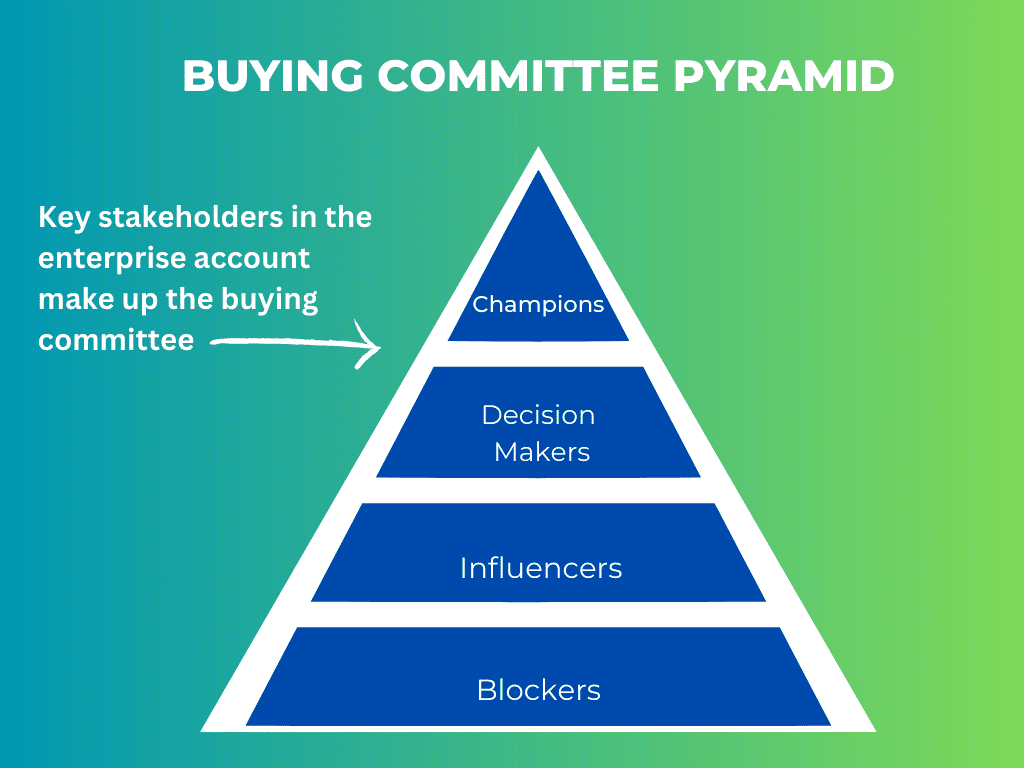
Direct Answer
Buying committees signal a near-term decision through a convergence of behavioral, technical, and structural shifts that move beyond passive information gathering. These signals include spike in executive-level engagement (C-suite joining calls), internal document requests (security audits, contract redlines), multi-stakeholder demo attendance with specific ROI questions, and vendor consolidation (narrowing from 5+ options to 2–3 finalists).
In the current 2027 RevOps reality, AI-driven tools like Gong and Clari now detect these signals in real-time by analyzing call transcripts, email sentiment, and CRM activity patterns, while MEDDIC frameworks quantify qualification gaps. The key differentiator shifts from "are they interested?" to "are they actively aligning internal stakeholders and budget?" — the latter being the true purchase intent.
The 2027 Buying Committee: Why Signals Have Changed
The classic B2B buying committee of 5–7 stakeholders has expanded to 11–14 on average, per Gartner research, due to risk aversion and cross-functional dependencies. AI tools now automate early-stage vendor research, meaning committees reach you later in their journey but with higher baseline knowledge.
Vendor consolidation pressures (e.g., Salesforce buying Slack, HubSpot acquiring Clearbit) mean committees evaluate fewer but deeper platforms. This shifts signal detection from volume (e.g., "they opened 10 emails") to velocity and specificity (e.g., "they asked for a SOC 2 report and a 5-year TCO model").
Signal 1: The "Executive Escalation" Pattern
When a buying committee nears a decision, executive-level stakeholders (VP, C-suite) suddenly appear on calls or in email threads. This is not accidental — they are validating ROI for budget sign-off. Tools like Salesloft and Outreach track this via cadence history: if a VP of Sales joins a demo after 3 months of manager-level engagement, that's a green flag.
In Gong, you can filter for "executive talk time" > 40% in a call — a strong indicator of decision pressure.
- Real-world example: A SaaS company using Clari saw a 2.5x increase in deal velocity when the CFO attended a security review call. The signal was not the attendance itself, but the specific questions (e.g., "What is your data retention policy?" vs. "How does your product work?").
Signal 2: Internal Document Requests (The "Security & Legal" Gate)
Committees gathering vendor intelligence ask generic questions (features, pricing). Committees nearing a decision demand artifacts: SOC 2 Type II reports, penetration test results, data processing agreements (DPAs), and contract redlines. This is a hard signal because it requires internal legal and security teams to engage — a resource-intensive step that only happens when a vendor is a finalist.
Forrester data shows that 78% of B2B deals that reach the security review stage close within 90 days.
- Tool tip: In HubSpot or Salesforce, create a custom property "Security Review Started" and track the date. If the gap between "Demo Request" and "Security Review" is < 30 days, that's a fast-track decision signal.

👉 Quick Call with Kory White, Fractional CRO · See Kory on LinkedIn · CRO Syndicate
Signal 3: Multi-Stakeholder Demo Attendance with Specific Scenarios
Early-stage demos often have 1–2 people from the buying committee. A decision-nearing committee schedules dedicated demos for each persona (e.g., one for IT, one for Marketing, one for Finance) or a single "all-hands" demo with 5+ attendees. The key is specificity of questions: they stop asking "Can you do X?" and start asking "How would you handle our specific workflow for Y?" or "What is your uptime SLA for Z region?" This is where Challenger Sale frameworks apply — the vendor must teach the committee something new about their own needs.
- Mermaid Decision Tree: Use this to classify demo types and predict decision proximity.
Signal 4: Budget & Timeline Language in Conversations
AI conversation intelligence tools (Gong, Chorus — now part of ZoomInfo) can detect budget keywords (e.g., "budget approved," "fiscal year," "PO number") and timeline phrases (e.g., "by next quarter," "before end of month"). McKinsey research indicates that deals with explicit budget language in the first 30 days close 3x faster.
In 2027, predictive AI models in Clari and Gong score these signals automatically, flagging deals as "Hot" when budget is mentioned in >2 calls.
- Action: In your CRM, use a lead scoring model that weights "budget mentioned" at 50 points and "timeline mentioned" at 30 points. If a deal crosses 80 points, it's decision-ready.
Signal 5: Vendor Consolidation & Competitor Drop-off
Committees nearing a decision explicitly name competitors they are eliminating. For example: "We've ruled out Vendor A and Vendor B; now it's between you and Vendor C." This is a positive signal because it shows they are in the final stage. Bessemer Venture Partners notes that B2B vendors who track "competitive elimination" in their CRM see 20% higher win rates.
In Salesforce, use a "Competitor Status" picklist (Active, Eliminated, Shortlisted) and update it weekly.
- Loop diagram: Shows the iterative process of vendor evaluation and how elimination triggers decision.
Signal 6: Internal Champion Behavior Changes
The internal champion (your advocate) shifts from information forwarding to action driving. They start scheduling internal meetings, asking for executive summaries, and pressuring you for pricing. In Gong call transcripts, look for phrases like "I need to convince my CFO" or "Can you send me a one-pager for my board?" — these indicate the champion is now selling internally.
Winning by Design frameworks call this "the champion's moment of truth."
- Real example: A HubSpot customer used Salesforce activity tracking to see that their champion had 15 internal meetings in one week — a 3x increase from baseline. The deal closed 10 days later.
Signal 7: Negative Signals That Still Mean Progress
Not all signals are positive. A sudden silence after 3 months of engagement can mean the committee is internally debating (good) or has gone dark (bad). The difference: if they still respond to emails but don't schedule calls, they are likely in internal consensus-building.
Gartner data shows that 60% of B2B deals hit a "silent period" of 2–4 weeks before a decision. Use Outreach or Salesloft to track response rates — if they drop below 20% but replies are substantive (e.g., "We're still reviewing"), it's a neutral-to-positive signal.
FAQ
What is the single strongest signal that a buying committee is about to decide? The strongest signal is simultaneous engagement from legal and security teams (e.g., a data processing agreement request) combined with executive-level budget approval language in calls. This indicates the committee has moved from evaluation to validation.
How can AI tools like Gong help detect decision signals? Gong uses natural language processing to flag keywords (e.g., "contract," "timeline," "budget"), track talk time ratios (executive vs. Manager), and identify sentiment shifts (from curious to urgent). Its Deal Intelligence feature scores deals on a 0–100 scale based on these signals.
Do longer sales cycles mean weaker signals? No. Longer cycles (6–12 months) often produce stronger signals because committees are more deliberate. The key is velocity of signal density — if a deal has 10 signals in 2 months vs. 10 in 6 months, the former is more likely to close.
What role does vendor consolidation play in signal detection? Vendor consolidation (e.g., Salesforce acquiring Slack) forces committees to evaluate fewer but deeper integrations. This means technical validation signals (API documentation requests, integration testing) become more critical than feature comparisons.
How do I differentiate between "gathering intelligence" and "nearing decision" in email behavior? "Gathering intelligence" emails are broad (e.g., "Send me your pricing page"). "Nearing decision" emails are specific (e.g., "Please provide a 3-year TCO for 500 users with enterprise support").
Use HubSpot email tracking to classify by content type (generic vs. Specific) and attachment requests (e.g., security docs).
Sources
- Gartner: The B2B Buying Committee Has Grown to 11-14 Stakeholders
- Forrester: 78% of Deals Reaching Security Review Close Within 90 Days
- McKinsey: Budget Language in Early Calls Predicts 3x Faster Close
- Gong Labs: How to Detect Buying Signals in Sales Calls
- Bessemer Venture Partners: Vendor Consolidation and B2B Sales
- SaaStr: The Champion's Moment of Truth in Enterprise Sales
- HubSpot: Using Lead Scoring to Predict Deal Closure
- Salesforce: Custom Properties for Security Review Tracking
Bottom Line
In the 2027 RevOps reality, buying committee signals are not just about engagement volume but specificity, velocity, and stakeholder convergence. The most reliable indicators are executive escalation, security/legal artifact requests, and budget language — all detectable in real-time via AI tools like Gong, Clari, and Salesloft.
Stop chasing "interested" leads; start chasing committees that are actively aligning internal resources toward a decision.
*RevOps buying committee signals AI detection vendor consolidation 2027*