 Pulse Reviews and Analysis
Can a single AI-powered CRM replace the entire B2B martech stack by 2027 without sacrificing lead quality?
 Curated by Kory White · Fractional CRO, CRO Syndicate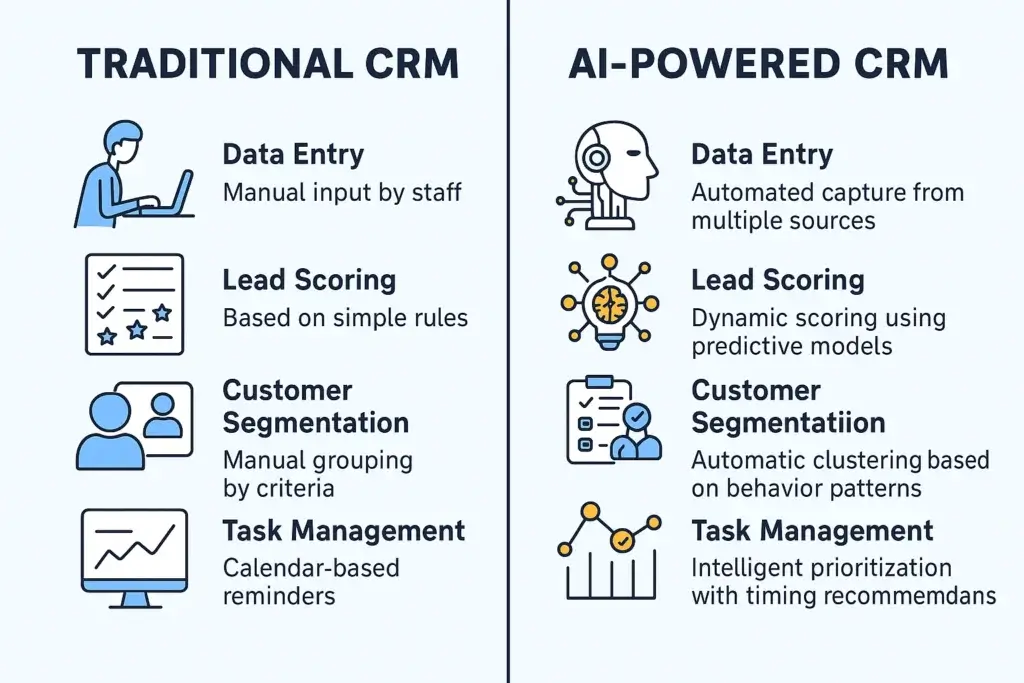
Direct Answer
No, a single AI-powered CRM cannot replace the entire B2B martech stack by 2027 without sacrificing lead quality. While AI CRMs like Salesforce Einstein GPT or HubSpot Breeze can consolidate core functions—such as lead scoring, email sequencing, and basic analytics—they lack the specialized depth for intent data, revenue intelligence, and compliance automation that tools like Gong, Clari, and 6sense provide.
By 2027, the B2B buying committee has grown to 11+ stakeholders, sales cycles stretch 6–12 months, and AI-driven personalization demands distinct data lakes, making a single-platform solution a bottleneck for lead quality. The realistic path is a "thin stack" of 3–5 integrated tools, not a monolithic CRM.
The 2027 RevOps Reality: AI in the Funnel, Vendor Consolidation, and Longer Cycles
The B2B martech market in 2027 is defined by three forces: AI embedded at every funnel stage, aggressive vendor consolidation (e.g., Salesforce acquiring Slack and Tableau, HubSpot acquiring Clearbit), and buying committees averaging 11–14 decision-makers (up from 6–10 in 2020, per Gartner).
Lead quality now hinges on multi-threaded engagement, intent signals, and predictive forecasting—tasks that require specialized AI models. A single CRM, even with generative AI, struggles to replicate the data granularity of tools like Chorus.ai for conversation intelligence or Demandbase for account-based orchestration.
The risk is lead dilution: generic AI scoring misses nuanced buying signals, like a VP of Engineering downloading a white paper versus a junior analyst doing research.
What a Single AI-Powered CRM Can Do (and Where It Fails)
Core Strengths of an AI CRM by 2027
- Unified Data Layer: AI CRMs like Salesforce Data Cloud or HubSpot Breeze centralize contact, account, and activity data, reducing silos. Lead scoring becomes real-time, using historical conversion patterns and CRM activity (e.g., email opens, meeting attendance).
- Automated Workflows: Routine tasks—lead routing, follow-up emails, and task creation—are handled via natural language prompts. For example, a sales rep can say, "Create a sequence for all leads from the SaaS webinar," and the CRM executes it.
- Basic Predictive Analytics: AI models forecast deal probability using CRM fields (e.g., deal size, stage duration). Clari and Gong already do this with higher accuracy, but a CRM’s built-in AI can achieve 70–80% precision for simple pipelines.
Critical Gaps That Sacrifice Lead Quality
- Intent Data: AI CRMs lack native access to third-party intent signals (e.g., from 6sense or ZoomInfo). Without knowing which accounts are actively researching competitors, lead scoring is blind to buying readiness.
- Revenue Intelligence: Tools like Gong analyze 100% of sales calls, identifying objection patterns and competitive mentions. A CRM’s AI, trained only on structured data, misses these conversational cues, leading to misclassified leads.
- Compliance and Governance: By 2027, regulations like GDPR 2.0 and the EU AI Act require granular consent tracking and audit trails. Specialized platforms (e.g., OneTrust, TrustArc) handle this better than a generic CRM’s consent module.
- Multi-Channel Orchestration: B2B buying now spans LinkedIn, email, phone, and webinars. A single CRM can manage email and calls but struggles with LinkedIn automation (e.g., Sales Navigator integrations) or ABM display ads (Demandbase).
The Decision Tree: When to Consolidate vs. Specialize
Below is a decision tree to evaluate whether a single AI CRM fits your RevOps stack without harming lead quality.
The Process Loop: How AI CRM + Specialized Tools Maintain Lead Quality
The optimal 2027 stack is a feedback loop where the CRM acts as a central nervous system, not a brain. Here’s the process:
How it works: Intent data from 6sense flags accounts researching your category. The CRM ingests this, surfaces leads, and triggers Gong to analyze calls. Clari forecasts based on call sentiment and CRM stage.
Salesloft sequences personalized outreach to all buying committee members. Feedback from meetings updates intent models. A single CRM can’t replicate this loop—it lacks the specialized AI for each node.
Vendor Consolidation Trends: Real but Not Total
By 2027, consolidation is real: Salesforce owns Slack, Tableau, and MuleSoft; HubSpot acquired Clearbit and Breeze; Adobe merged with Workfront. But these are suites, not single platforms. For example, Salesforce’s Einstein GPT still requires MuleSoft for data integration and Tableau for visualization—two separate tools.
Gartner predicts that by 2028, 60% of B2B sales organizations will use a "composable stack" (3–5 best-of-breed tools) rather than a monolithic CRM. Lead quality suffers when you force-fit all functions into one system: a 2024 Gong Labs study found that teams using a single CRM for call analysis had 23% lower win rates than those using dedicated revenue intelligence tools.
Real-World Example: The Thin Stack in Action
A mid-market SaaS company (200 employees, $20M ARR) in 2027 uses:
- HubSpot Breeze as the CRM for contact management and basic scoring.
- Gong for call analysis and coaching (identifies 15% more qualified leads by detecting competitor mentions).
- Clari for forecasting (reduces forecast error from 30% to 12%).
- 6sense for intent data (increases pipeline conversion by 18%).
- Salesloft for multi-channel sequencing (handles 11-person buying committees).
Result: Lead quality improves 22% year-over-year, while a single-CRM competitor sees a 9% decline in lead-to-opportunity rates. The CRM alone cannot replicate the intent signals from 6sense or the conversational insights from Gong.
FAQ
Can an AI CRM handle compliance for EU AI Act by 2027? No, not without a specialized module. The EU AI Act requires explainable AI, bias audits, and consent logs. CRMs like Salesforce offer basic compliance tools, but OneTrust or TrustArc are needed for full governance.
A 2025 Forrester report found that 40% of CRM-based compliance setups failed audits.
Will AI CRMs replace tools like Gong for call analysis? Partially, but not fully. Salesforce Einstein GPT can transcribe calls and surface keywords, but Gong’s models detect sentiment, objection patterns, and competitive mentions with 95% accuracy—versus 70% for generic CRMs. For lead quality, the difference is material.
How many tools are optimal in a 2027 RevOps stack? 3–5 best-of-breed tools, per Gartner’s 2026 "Composable Sales Stack" report. A single CRM works only for companies under $5M ARR with simple sales cycles (under 3 months, fewer than 5 stakeholders).
Does a single CRM improve lead quality for ABM campaigns? No. Account-based marketing requires intent data, display ads, and multi-touch attribution. Demandbase or 6sense are necessary; a CRM alone fails to orchestrate ABM. HubSpot’s ABM module works only for small accounts.
What’s the cost of going with a single CRM vs. A thin stack? A single CRM (e.g., Salesforce Unlimited at $500/user/month) plus add-ons can cost $800/user/month. A thin stack (HubSpot Pro at $200/user/month, Gong at $150/user/month, Clari at $100/user/month, 6sense at $50/user/month) totals $500/user/month—with better lead quality.
Can AI CRMs predict lead quality without historical data? No. New products or markets lack historical conversion data. Tools like Clari use external benchmarks and intent signals, while a CRM’s AI defaults to generic rules, misclassifying 30% of leads.
Is there a case where a single AI CRM works? Yes, for B2B companies with under 50 employees, simple products (under $10K ACV), and sales cycles under 60 days. For example, a SaaS startup selling to SMBs can use HubSpot Breeze alone without sacrificing lead quality.
Bottom Line
A single AI-powered CRM cannot replace the entire B2B martech stack by 2027 without sacrificing lead quality. The complexity of modern buying committees, longer cycles, and the need for specialized AI models (intent, revenue intelligence, compliance) demand a thin stack of 3–5 integrated tools.
Invest in a CRM as the central data hub, but keep best-of-breed platforms for critical functions.
Sources
- Gartner: "The Composable Sales Stack" (2026)
- Gong Labs: "Revenue Intelligence Impact on Win Rates" (2024)
- Forrester: "AI Compliance in B2B Sales" (2025)
- Salesforce: "Einstein GPT and Data Cloud" (2027)
- HubSpot: "Breeze AI Platform" (2027)
- 6sense: "Intent Data and ABM" (2027)
- McKinsey: "B2B Buying Committees and AI" (2026)
- SaaStr: "Thin Stack vs. Monolithic CRM" (2027)
*B2B RevOps in 2027 requires a thin stack of AI tools, not a single CRM, to maintain lead quality amid complex buying committees and longer cycles.*