 Pulse Reviews and Analysis
Top 10 Best College Towns
 Curated by Chief Revenue Officer Kory White · CRO Syndicate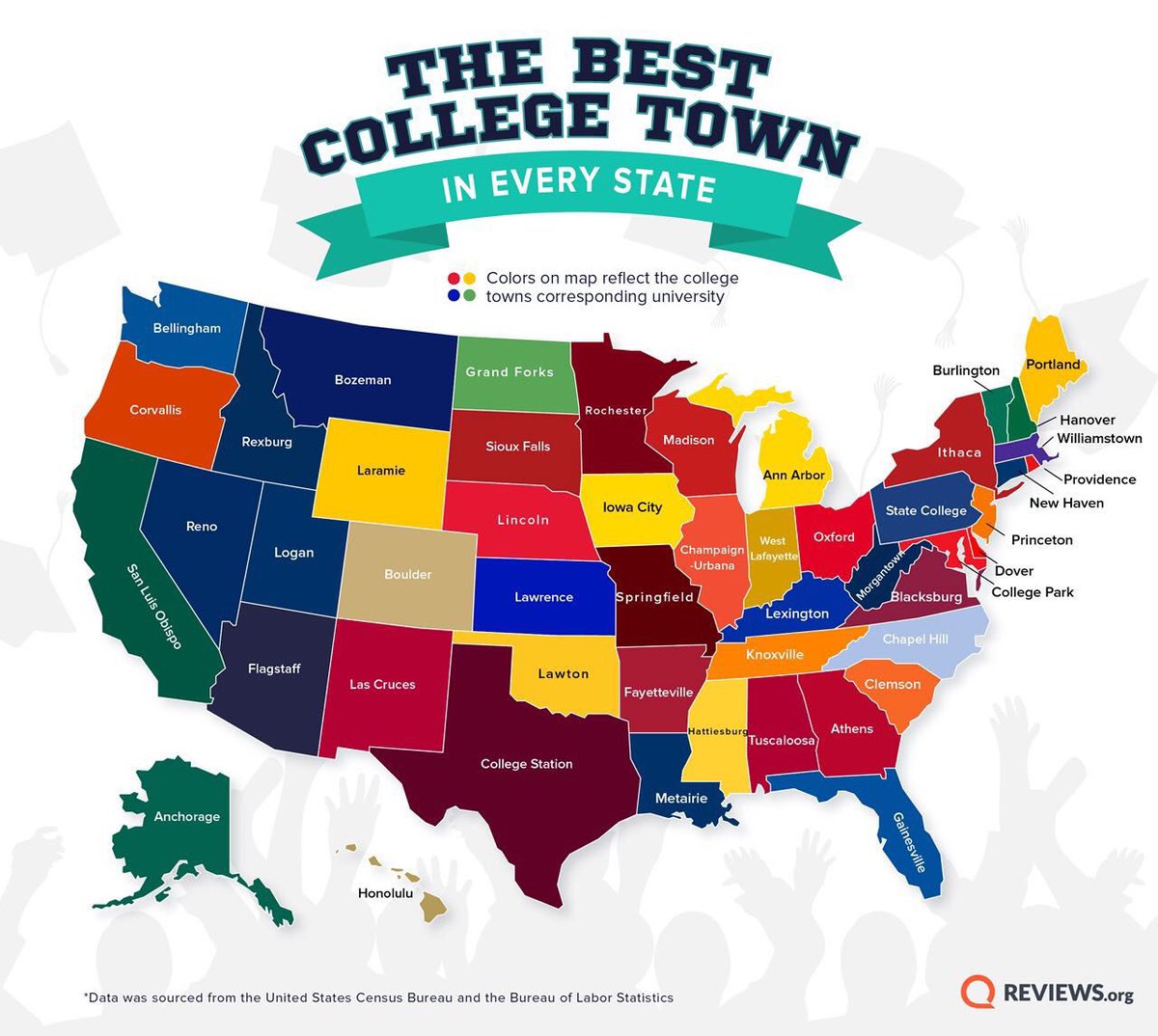
Top 10 Best College Towns
Direct Answer
The Best Overall college town in the United States is Ann Arbor, Michigan, home to the University of Michigan and consistently ranked the nation's premier college town for its blend of a flagship research university, a walkable downtown, a serious arts and music scene, and a metro economy that keeps graduates around long after commencement.
The Best Value pick is College Station, Texas, where Texas A&M University anchors one of the most affordable college towns in the country, pairing a low cost of living with a strong job pipeline into Texas energy, engineering, and agriculture. This list is built for students and families choosing where to spend four formative years, weighing academics, livability, cost, safety, and culture.
Every pick uses real, publicly reported data from U.S. Census figures, university enrollment reports, U.S. News, Niche, and Bureau of Labor Statistics sources.
How We Ranked the Top 10
We weighted each town against the factors students and parents tell admissions offices and survey firms they actually care about, drawing on published figures from U.S. News, Niche, the U.S. Census Bureau, the Bureau of Labor Statistics (BLS), and individual university enrollment reports. The weighting:
- Academic strength of the anchor university - 25%
- Livability and walkability - 20%
- Cost of living and affordability - 15%
- Job market and graduate retention - 15%
- Safety and environment - 15%
- Culture, food, and nightlife - 10%
A town with an elite university but a hollow downtown, or great bars but weak job prospects, drops fast. The winners balance all six.
1. Ann Arbor, Michigan 🏆 BEST OVERALL

Anchor: University of Michigan | Metro population: ~370,000 | Best for: Students who want a top-tier research university inside a genuinely thriving small city
Ann Arbor routinely tops national college-town rankings, and the case is easy to make. The University of Michigan enrolls roughly 52,000 students and feeds one of the strongest research economies in the Midwest, with average graduate starting salaries among the highest at any public flagship.
The downtown is dense and walkable, packed with independent bookstores, the Michigan Theater, and a nationally regarded restaurant scene. Median home values run high for the region, but the metro unemployment rate stays well below the national average, and the university plus the nearby tech corridor keep graduates rooted.
Football Saturdays at the 107,000-seat Michigan Stadium define the town's autumn rhythm.
Pros:
- Top-five public research university with elite outcomes
- Walkable, dense downtown with strong arts and dining
- Low metro unemployment and strong graduate retention
- National-caliber athletics and campus culture
Cons:
- Higher cost of living than most Midwest college towns
- Cold, long winters test newcomers
Verdict: Ann Arbor wins on balance - an elite university inside a real, livable city with outcomes to match.
2. Madison, Wisconsin

Anchor: University of Wisconsin–Madison | Metro population: ~680,000 | Best for: Students who want a Big Ten flagship plus a state-capital job market
Madison pairs the University of Wisconsin–Madison and its roughly 48,000 students with the energy of a state capital, set on an isthmus between two lakes. The result is a town with a top public research university, a vibrant State Street corridor connecting campus to the capitol, and a diversified economy spanning government, biotech, and insurance.
The metro unemployment rate is consistently among the lowest of any U.S. Metro, and graduates land jobs at Epic Systems and a growing startup base. Lakefront recreation and the Dane County Farmers' Market round out the livability case.
Pros:
- Flagship research university with strong STEM and business programs
- Very low metro unemployment and broad job base
- Lakefront setting with strong outdoor recreation
- Lively, walkable State Street corridor
Cons:
- Harsh winters limit outdoor months
- Housing costs near campus have climbed sharply
Verdict: A near-perfect balance of academics, jobs, and livability - Ann Arbor's closest rival.
3. Boulder, Colorado

Anchor: University of Colorado Boulder | Metro population: ~330,000 | Best for: Outdoorsy students who want a research university at the foot of the Rockies
Boulder sets the University of Colorado Boulder and its roughly 39,000 students against the Flatirons, and the lifestyle sells itself. The town blends strong programs in aerospace, environmental science, and physics with a startup and federal-lab economy that keeps graduates local.
Pearl Street Mall anchors a walkable, bike-friendly downtown, and the surrounding open space delivers unmatched hiking and climbing. The catch is cost: Boulder is one of the most expensive college towns in the country, with home values well above the national median.
Pros:
- Strong research programs in aerospace and environmental science
- Exceptional outdoor recreation and bike infrastructure
- Healthy startup and federal-lab job market
- Walkable Pearl Street downtown
Cons:
- Very high cost of living and housing
- Less socioeconomic diversity than larger college towns
Verdict: The best outdoor-lifestyle college town - elite if you can absorb the cost.
4. Austin, Texas

Anchor: University of Texas at Austin | Metro population: ~2.4 million | Best for: Students who want a flagship university inside a booming tech city
Austin is the largest market on this list, and the University of Texas at Austin and its roughly 52,000 students sit at the center of one of the fastest-growing tech economies in the nation. The town offers an unmatched live-music scene, a deep startup and semiconductor job market, and warm weather most of the year.
Graduate retention is exceptional given employers like Dell, Tesla, and a dense venture base. The trade-off is scale: Austin feels more like a city than a classic college town, and housing costs have risen fast.
Pros:
- Flagship research university with strong CS and engineering
- Booming tech job market and high graduate retention
- Renowned live-music and food culture
- Warm climate most of the year
Cons:
- Rising housing costs and traffic
- Big-city scale dilutes the small-town college feel
Verdict: The best big-market college town - unbeatable jobs and culture if you want city energy.
5. Chapel Hill, North Carolina

Anchor: University of North Carolina at Chapel Hill | Metro population: ~150,000 (Triangle ~2.1M) | Best for: Students who want a classic Southern college town near a research hub
Chapel Hill is the quintessential college town, built around the University of North Carolina at Chapel Hill and its roughly 32,000 students. Franklin Street runs straight into campus, packed with restaurants and bars, and the basketball culture is among the most intense in the country.
Crucially, Chapel Hill sits inside the Research Triangle, so graduates plug into Durham and Raleigh employers in pharma, tech, and finance without leaving the region. Cost of living is moderate for a town of this caliber.
Pros:
- Top public research university with strong outcomes
- Classic walkable Franklin Street college-town feel
- Research Triangle job market next door
- Moderate cost of living for its tier
Cons:
- Humid summers
- Town itself is small; nightlife concentrates on one street
Verdict: The archetypal college town with a major job market on its doorstep.
6. College Station, Texas

Anchor: Texas A&M University | Metro population: ~270,000 | Best for: Value-focused students who want a huge university and a low cost of living 💎 BEST VALUE
College Station delivers the best outcomes-per-dollar on this list. Texas A&M University enrolls more than 74,000 students, one of the largest enrollments in the country, and the surrounding town offers a cost of living well below the national average with affordable off-campus housing.
The economy feeds graduates into Texas energy, engineering, and agriculture, and the Aggie network is famously loyal in hiring. The town is built almost entirely around the university, so student life and local life are one and the same.
Pros:
- Very low cost of living and affordable housing
- Massive university with strong engineering and ag programs
- Powerful Aggie alumni hiring network
- Tight-knit, university-centered town life
Cons:
- Limited diversity of nightlife and dining beyond campus
- Hot, humid summers
Verdict: The value champion - a major university and strong job pipeline at a fraction of the cost.
7. Berkeley, California

Anchor: University of California, Berkeley | Metro population: Bay Area ~7.7M | Best for: Students who want an elite public university and Bay Area access
Berkeley sets the University of California, Berkeley and its roughly 45,000 students inside the San Francisco Bay Area, one of the world's strongest innovation economies. Telegraph Avenue and the surrounding neighborhoods deliver a famously intellectual, activist culture, and the campus ranks among the top public universities on the planet for research output.
Graduates enjoy direct access to Silicon Valley employers. The clear downside is cost: Berkeley is among the most expensive college towns in the nation.
Pros:
- Elite public research university with global reputation
- Direct access to Bay Area tech job market
- Rich intellectual and activist campus culture
- Mild year-round climate
Cons:
- Extremely high cost of living
- Urban density and homelessness pressures near campus
Verdict: An elite-university, elite-jobs town for students who can manage Bay Area costs.
8. Athens, Georgia

Anchor: University of Georgia | Metro population: ~215,000 | Best for: Students who want a legendary music-and-football college town at moderate cost
Athens is one of the South's great college towns, built around the University of Georgia and its roughly 40,000 students. The town launched R.E.M. And the B-52s, and the live-music scene remains a defining feature alongside fierce SEC football culture.
Cost of living is moderate, and downtown is compact and walkable, packed with bars and restaurants. The job market is smaller than the metro towns on this list, but Atlanta is a 70-mile drive for broader opportunities.
Pros:
- Strong flagship university with broad programs
- Renowned live-music history and culture
- Moderate cost of living
- Walkable, bar-and-restaurant-dense downtown
Cons:
- Local job market is thinner than larger metros
- Humid summers
Verdict: The best music-and-football college town - huge culture at a reasonable cost.
9. Iowa City, Iowa

Anchor: University of Iowa | Metro population: ~175,000 | Best for: Students who want a literary, walkable town with strong healthcare jobs
Iowa City punches far above its size, anchored by the University of Iowa and its roughly 30,000 students. It is a UNESCO City of Literature, home to the famed Iowa Writers' Workshop, and the downtown pedestrian mall keeps campus and city life tightly woven. The University of Iowa Hospitals and Clinics is a major regional employer, giving graduates a strong healthcare job base.
Cost of living sits below the national average, adding to the value case.
Pros:
- Strong university with a world-famous writing program
- Below-average cost of living
- Major hospital system anchors the job market
- Walkable downtown pedestrian mall
Cons:
- Cold winters
- Smaller nightlife and dining than larger towns
Verdict: An underrated literary college town with real affordability and steady healthcare jobs.
10. Charlottesville, Virginia

Anchor: University of Virginia | Metro population: ~220,000 | Best for: Students who want a historic, scenic town and an elite public university
Charlottesville wraps the University of Virginia and its roughly 26,000 students in Blue Ridge foothills and Jeffersonian architecture. The Downtown Mall is one of the longest pedestrian streets in the country, lined with restaurants, music venues, and shops. UVA is a top public university with strong outcomes in law, business, and the humanities, and the surrounding wine country and outdoor recreation add to livability.
Cost of living runs above average, and the town is on the smaller side.
Pros:
- Elite public university with strong professional programs
- Scenic Blue Ridge setting with outdoor recreation
- Long, walkable Downtown Mall
- Strong arts and music scene for its size
Cons:
- Above-average cost of living
- Smaller local job market
Verdict: The most scenic college town on the list - historic, walkable, and academically elite.
Which One's Right for You?
What to Look For When Choosing a College Town
- Strength of the anchor university - The university shapes the town's economy, culture, and graduate outcomes, so weigh program fit and reputation first.
- Cost of living and housing - A famous town with sky-high rent can erase the value of a strong scholarship; check median rents near campus.
- Job market and graduate retention - Towns with diversified economies or a nearby metro keep more graduates employed and rooted after commencement.
- Walkability and transit - A dense, walkable core means you can live well without a car and stay connected to campus life.
- Safety and environment - Review local crime data and campus climate reports rather than relying on reputation.
- Culture and fit - Music, food, sports, and the outdoors decide whether four years feel vibrant or flat, so match the town to your interests.
What matters less than marketing implies: a single national ranking number, the newest stadium, or a glossy brochure. Day-to-day affordability, job access, and whether the town's culture fits you matter far more than a headline figure.
FAQ
Which is the best college town overall? Ann Arbor, Michigan earns the top spot for combining a top-five public research university, a genuinely walkable downtown, a strong arts and dining scene, and a metro economy that retains graduates.
What is the best value college town? College Station, Texas is our best value - Texas A&M's massive enrollment and strong job pipeline come with a cost of living well below the national average and affordable off-campus housing.
Which college town has the best job market for graduates? Austin and Berkeley offer the strongest tech job markets, while Ann Arbor and Madison post very low metro unemployment and excellent research-economy retention.
Which college towns are most affordable? College Station and Iowa City sit below the national cost-of-living average, making them the most affordable picks for students watching their budgets.
Are big-city college towns better than small ones? It depends on fit - large markets like Austin offer more jobs and culture but feel less like a classic college town, while smaller towns like Chapel Hill and Iowa City deliver a tighter, more campus-centered experience.
Which college town is best for the outdoors? Boulder, Colorado is the clear leader for hiking, climbing, and biking, with Charlottesville a strong second for Blue Ridge access and scenery.
Bottom Line
For students choosing where to spend four years, Ann Arbor is our Best Overall college town - an elite public university inside a walkable, economically strong small city. College Station is our Best Value, pairing Texas A&M's scale and hiring network with a cost of living well below the national average.
If your priority is a booming tech market, the outdoors, or a music-and-football culture, use the decision tree above to route yourself to Austin, Boulder, or Athens instead. Choose on academic fit, affordability, and the kind of daily life you want - not a single ranking number - and your four years will set you up to thrive.
Sources
- U.S. News - Best Colleges rankings
- Niche - Best College Towns in America
- U.S. Census Bureau - QuickFacts
- Bureau of Labor Statistics - Local Area Unemployment Statistics
- University of Michigan - enrollment and facts
- University of Wisconsin–Madison - data and facts
- Texas A&M University - enrollment profile
- University of Texas at Austin - facts and figures
- University of North Carolina at Chapel Hill - facts
*Best college towns review - best college towns, rankings, ratings, and a review of the top picks for students and families.*