


SPIN Selling by Neil Rackham — Cliff Notes & Chapter-by-Chapter Summary
Quality
Certified

SPIN Selling (Neil Rackham, McGraw-Hill, 1988) reports Huthwaite's observation of roughly 35,000 sales calls: in large, complex deals, closing techniques and feature pitches correlate with failure, while a question sequence — Situation, Problem, Implication, Need-payoff — wins, because the buyer, not the seller, articulates the need.
Two ways to run a large sale: the closing school versus the questioning school
Before *SPIN Selling* landed, the dominant training product in North America and Britain was closing technique. Reps learned named maneuvers — the assumptive close, the alternative close, the puppy-dog close, the Ben Franklin balance sheet — and were measured on how many they deployed per call. The theory was mechanical: persuasion is pressure, pressure is applied at the end, and the rep who applies more of it converts more. It was also cheap to teach. You can script a close, role-play it in an afternoon, and audit it from a call sheet.
Rackham's research team took the opposite path. They didn't theorize about persuasion; they sat in on live calls with a coding sheet and counted behaviors, then matched behavior counts against outcomes. The comparison that emerged is the book's spine, and it's a genuine fork in the road for any sales organization deciding how to train:
Option A — the closing school. Front-load rapport, present capability early and broadly, then apply closing pressure at the end. Objection handling is a core skill because objections are treated as inevitable friction. Success metric: closes attempted per call, calls per week, pitch fidelity.

Option B — the questioning school (SPIN). Spend the bulk of the call investigating. Withhold the pitch until the buyer has stated an explicit need in their own words. Objections are treated as a symptom of seller error, not buyer resistance. Success metric: questions asked, need statements elicited, next step committed.
The finding that made the book famous is that Option A's tools don't merely underperform in large sales — the research showed closing behaviors correlating *negatively* with success as deal size and cycle length grew. The same techniques that lifted conversion on a low-commitment, single-decision-maker purchase suppressed it on a multi-stakeholder one. Rackham's explanation is about the buyer's risk, not the buyer's psychology of resistance: pressure works when the cost of being wrong is trivial and the buyer can absorb a bad decision privately. When a purchase is visible to peers, hard to reverse, and attached to someone's professional judgment, pressure reads as a reason for suspicion.
This is why the book's most useful move happens in its opening chapter, before any technique appears — the small-sale versus large-sale distinction. Rackham names four variables that flip the rules: length of the selling cycle (months instead of minutes), size of the customer's commitment, the ongoing relationship the vendor must live inside after signature, and the buyer's exposure if the decision fails publicly. Any of those four rising is a signal to switch schools. All four rising means the closing school is actively working against you.
The distinction generalizes well past software. A contractor bidding a kitchen remodel, a staffing firm placing a director-level search, a commercial insurance broker moving an account — all sit on the large-sale side of the line even though none of them sell technology. Conversely, plenty of nominally "enterprise" transactions are structurally small: a seat expansion on an existing contract with a champion who already owns the budget is a small sale wearing a large sale's logo, and treating it with a full discovery arc wastes everyone's afternoon.
What each SPIN question type actually does, chapter by chapter

Part Two of the book — the questioning model — is where the mechanism lives. Each question type has a distinct job, and Rackham's data gives each one a different prescription, which is the detail most summaries flatten.
Situation Questions establish background facts. *How many reps do you have? What system are you on today? How long does a typical cycle run?* The counterintuitive finding: top performers ask *fewer* of these than average performers. Situation Questions cost the buyer time and return them nothing. Every one you ask that you could have answered from a website, a filing, a LinkedIn page, or the last call's notes spends goodwill you'll need later. The prescription is not zero — you need orientation — it's *ruthlessly pre-researched and few*.
Problem Questions probe difficulties and dissatisfactions. *What slows the cycle down? Where do deals stall? What's the part of this workflow people complain about?* Top performers ask substantially more of these. Their output is what Rackham calls an Implicit Need — a vague dissatisfaction, expressed as a complaint: "the system is clunky," "handoffs are messy." Implicit Needs are progress. They are also not enough. Rackham's finding is that Implicit Need frequency predicts success in small sales and stops predicting it in large ones. A complaint justifies a $200 decision. It does not justify a decision someone has to defend in a steering committee.

Implication Questions are the engine. They take a stated problem and walk it outward into consequences the buyer hasn't yet added up. Following "the system is clunky": *How much of a rep's day goes to that? At your headcount, what does that add up to in a quarter? When managers can't see the pipeline accurately, what happens to the forecast? And what happens internally when the forecast misses?* These questions are uncomfortable for both sides, which is exactly why average performers skip them. They feel like making the customer feel bad. What they actually do is convert a nuisance into a quantified cost — the only thing that funds a large purchase.
Need-payoff Questions invert the frame from cost to value, and hand the articulation to the buyer. *If every rep got that hour back, what would you point them at? What would tighter forecast accuracy be worth heading into board season? If your managers saw this in real time, how would the pipeline review change?* The mechanism is not subtle and doesn't need to be: when the buyer says the value out loud, the value becomes theirs. The seller's later presentation stops being a claim and becomes a confirmation. Rackham's term for the output is an Explicit Need — a specific want the seller can actually deliver against.
Note the asymmetry in the prescriptions. Situation: fewer. Problem: more. Implication: many more, and deliberately. Need-payoff: more, and specifically before you present anything. A rep who "does SPIN" by asking more of all four question types has half-learned it. The lift comes from redistributing, not inflating.
Part Three carries the model into presentation. Rackham separates three things sellers routinely blur: a Feature is a fact about the product; an Advantage is what the feature does; a Benefit is how it satisfies an explicit need the buyer *has already stated*. Under that definition a Benefit is structurally impossible before discovery has worked — you cannot map onto a need that hasn't been voiced. Top performers in the study delivered far more Benefits and far fewer bare Feature statements. Chapter Nine follows the logic to its conclusion: most objections are seller-manufactured. Pitch a capability before the buyer needs it and you've handed them a reason to say no; list capabilities without context and you've built the buyer's price objection for them. Reps trained in the sequence didn't get better at handling objections. They generated fewer.
How to decide which school your deal belongs to

The decision isn't philosophical. It's a read on four variables, and it can be made in the first ten minutes of a discovery call or from a CRM record.
Two decision rules deserve emphasis because they're where teams get it wrong in opposite directions.
First, don't upgrade a small sale. Running a forty-minute Implication sequence on a renewal with an existing champion is not thoroughness, it's friction. The buyer already knows the cost of the problem; making them re-derive it is condescending. Rackham is explicit that the closing school's tools work in their native habitat.
Second, don't downgrade a large sale under time pressure. The most common failure mode Rackham documents isn't ignorance of the model, it's abandonment of it at the worst moment — quarter-end, forecast call in an hour, deal needs to move. That's precisely when reps revert to pitching and closing, and precisely when it costs the most.
There's a third rule the research implies without naming: the decision is per-stakeholder, not per-account. The economic buyer's exposure and the end user's exposure are different sizes, so the same account can require large-sale discipline in the CFO conversation and small-sale efficiency in the admin's. Reusing one call plan across a buying committee is a reliable way to bore the operator and under-serve the executive.
The book's other reframe belongs here: Rackham replaces "closing the sale" with obtaining commitment, and gives four possible call outcomes. An Order is signature. An Advance is the buyer agreeing to a specific, scheduled next action that moves the deal — a session with the economic buyer, a scoped pilot, a security review kickoff. A Continuation ends with warmth and no commitment: "send me something, we'll circle back." A No-sale is explicit rejection. The finding that reorganizes pipeline hygiene is that average performers produce Continuations and *record them as good calls*, while high performers produce Advances. A Continuation is not a soft yes. It's a no with better manners, and treating it as progress is how forecasts inflate.
The numbers behind each option, and what they do and don't support

The research base is the reason this book outlasted its contemporaries, so it's worth being precise about its scale and its limits.
Scale. Roughly 35,000 sales calls observed, across more than twenty countries, over about twelve years, by Huthwaite's team. That is an unusual asset — most sales methodology rests on a practitioner's own win record, and a practitioner's win record is a sample of one operating in one market. Rackham's method was behavioral coding: watch the call, tally observable behaviors, correlate tallies with outcomes.
What the data supports well. The behavioral splits are the durable part. Top performers ask more questions than average performers and make fewer statements. Buyers talk more on successful large-sale calls than on unsuccessful ones. High performers allocate the majority of call time to investigation — the book's figure is roughly 60–70% for stars versus well under half for average reps. Objection frequency drops when premature Advantages drop. Implication and Need-payoff question density separates high from average performers more cleanly than any other single behavior measured. And closing-behavior frequency shows an inverse relationship with success as deal size rises.
What the data doesn't establish, and where summaries overreach. Behavioral correlation isn't a controlled trial. Rackham is careful; secondary summaries often aren't, attaching invented conversion percentages and precise win-rate lifts to the framework that the book doesn't claim. If you're building a business case for training spend, cite the behavioral differences and the study's scale — those are real and checkable — and generate your own lift numbers from your own call data rather than borrowing figures of uncertain origin. The book's own defensible claim is directional and strong: question density, question type, and talk-time distribution differ measurably between high and average performers in large sales.

Numbers that are actually yours to measure. Instrument four things and you can evaluate the model in your own pipeline inside a quarter: (1) investigation share of call time, from recordings or a simple rep self-report; (2) count of Implication-type questions per discovery call; (3) percentage of calls ending in a scheduled, dated Advance versus a Continuation; (4) objections raised per call, split into price objections and value objections. That fourth one is the sleeper metric. If price objections fall while value objections stay flat, the premature-Advantage problem is resolving.
Cost comparison, honestly framed. Closing-technique training is cheap and fast — a day or two, scriptable, immediately auditable. Question-based discovery training is slower and more expensive, because the skill is judgment under live conditions and judgment doesn't install in a workshop. That cost difference is real and it's the reason the closing school persisted long after Rackham published. The trade is: pay less and get a behavior that helps in small sales and hurts in large ones, or pay more and get a behavior whose payoff scales with deal size. Deal size and cycle length are the variables that decide which side of that trade you're on.
The competing frameworks, briefly. Later methodologies didn't replace SPIN so much as bolt qualification and messaging scaffolding onto it. MEDDPICC-style qualification asks whether identified pain is documented and quantified — which is SPIN's Implicit-to-Explicit conversion, restated as a checklist item. Command-of-the-message approaches formalize "required capabilities before differentiation," which is the Benefits-after-explicit-need rule with a content library attached. Challenger-style teaching-first selling genuinely diverges on one point — it argues the seller should sometimes introduce a problem the buyer hasn't recognized rather than only develop stated ones — and that's a real, substantive disagreement worth understanding rather than glossing. Sandler-style approaches share SPIN's suspicion of pressure and its emphasis on the buyer surfacing pain. Pick one to standardize on, then don't mix vocabularies mid-quarter; the cost of framework churn usually exceeds the difference between frameworks.
Implementation, sequencing, and where teams stall

Part Four is the part practitioners skip and then wonder why nothing changed. Rackham's adoption advice is deliberately unglamorous and it maps cleanly onto how skills actually install.
Practice one behavior at a time. Not the whole sequence. Pick Implication Questions, because that's where the largest behavioral gap sits, and work only on that until it's automatic. Attempting four question types simultaneously produces a rep who sounds like they're reading a form.
Try it at least three times before judging it. First attempts feel clumsy and land badly, and reps conclude the technique doesn't work when what doesn't work is their unfamiliarity with it. Three reps minimum before you're allowed an opinion.
Quantity before quality. Do it often and badly rather than rarely and perfectly. Frequency produces the reps that produce quality; there's no path to smooth Implication Questions that doesn't run through awkward ones.
Practice in safe calls. Run the new behavior on small accounts and low-stakes conversations first. Do not debut a new question sequence in the largest deal of the quarter.
Chapter Eleven supplies the call architecture the questions sit inside: Preliminaries, Investigating, Demonstrating Capability, Obtaining Commitment. The stall Rackham documents is a time-allocation problem — average performers overspend Preliminaries and Demonstrating Capability, starving Investigating. Preliminaries are where nervous reps hide, because rapport is comfortable and discovery isn't.
A ninety-day sequencing plan that respects the above. Weeks 1–2: instrument the baseline. Capture investigation share and Advance rate as they are now, before any training, or you'll never know whether anything moved. Weeks 3–6: install Implication Questions only — three per discovery call, logged verbatim in the CRM. Coach from recordings, not from self-report. Weeks 7–10: add Need-payoff Questions and enforce the withholding rule: no capability presented until an explicit need sits in the notes. Weeks 11–12: attack the Advance-versus-Continuation gap directly by making "next step, dated, with a named attendee" a required field. Deals without it don't get forecast credit.

Where it stalls in practice, and the fix. Managers inspect outcomes, not behaviors — asking "what's the close date" teaches reps to manufacture close dates, while asking "what did they say the problem costs them, in their words" teaches discovery. Compensation and activity quotas that reward call volume punish long investigation, so the metric has to change with the training or the training loses. Reps also fear that Implication Questions are manipulative; the honest answer is that they *are* manipulative if you don't have a solution to the problem you're enlarging, and legitimate if you do — which is a reason to disqualify early, not a reason to skip the questions.
Downstream effects worth planning for. Better discovery notes change more than the call. Proposals stop being feature inventories and start quoting the buyer's own language back to them. Renewal conversations improve, because the original explicit need is on record and you can measure against it. Marketing gets usable objection and language data instead of anecdote. And forecast quality improves mechanically, not culturally: when the field distinguishes Advances from Continuations, the pipeline shrinks and then becomes trustworthy — a first quarter of apparent contraction is the model working, not failing, and someone senior needs to say that out loud before the numbers land.
Rackham's closing line carries the whole strategy: you don't close sales, you open relationships. In a large sale the next call is more consequential than this one, which is why every technique built on the assumption that this call is the last one performs worst exactly where the stakes are highest.
Related questions
Is SPIN Selling still relevant, or has it been superseded?
It hasn't been superseded — it's been absorbed. Modern qualification and messaging frameworks restate its core moves under new labels. The examples and industries in the 1988 text feel dated; the behavioral findings about question density and talk-time distribution have held up.
Which chapter should I read if I only read one?

Chapter Six, on Implication Questions. It contains the single largest behavioral gap between high and average performers, and it's the one technique that changes call outcomes without requiring the rest of the framework to be in place first.
How does SPIN relate to MEDDPICC?
MEDDPICC is qualification; SPIN is conversation. MEDDPICC's pain criterion asks whether quantified pain exists in the record — SPIN's Implication and Need-payoff questions are how you produce it. They stack cleanly; running MEDDPICC without a discovery method leaves the pain field filled in by guesswork.
Does SPIN work for non-software or services selling?
Yes — the deciding variables are cycle length, stakeholder count, commitment size, and the buyer's exposure if it fails, not the category. Commercial insurance, executive search, construction bids, and equipment leasing all sit on the large-sale side of Rackham's line.
What's the fastest way to tell if a rep is actually using it?
Read their CRM notes. A rep running the sequence has the buyer's own words about cost and value in the record, plus a dated next step. A rep who isn't has a feature list and "following up next week."
FAQ
Do I need to ask the four question types in strict order?
No — the sequence describes a logical dependency, not a script. You can't quantify a consequence before a problem is stated, and you can't ask about payoff before there's a cost worth paying to remove. Within that dependency, real calls loop: a Need-payoff answer often surfaces a fresh problem, sending you back to Problem Questions. Robotic order-following is the most common way reps make the method sound artificial.
How long before this shows up in results?

Behavior change is visible in weeks with deliberate practice; deal-outcome change lags by roughly one sales cycle, because deals in flight were sold the old way. If your cycle runs ninety days, expect leading indicators — investigation share, Advance rate, notes quality — to move first, and win rate to move a quarter later. Judging the method before one full cycle has turned over is measuring the wrong thing.
Isn't asking about consequences just manufacturing anxiety?
It's manufacturing accuracy. The consequences either exist or they don't; if the problem genuinely costs the buyer nothing, the questions will reveal that and you should disqualify. The manipulation risk is real only when you enlarge a problem you can't solve. Used honestly, Implication Questions protect the buyer from a purchase they'd regret as often as they justify one they need.
Can this work over email, chat, or asynchronous channels?
Partially. Problem and Situation content transfers to writing reasonably well. Implication Questions largely don't — they depend on pauses, tone, and the buyer's reaction shaping the follow-up, all of which asynchronous channels strip out. The workable pattern is written pre-work for background facts so the live conversation can go straight to consequences and value.
What about buyers who arrive already educated and just want pricing?
Confirm rather than excavate. Ask them to state the problem and its cost in their own words; if their articulation is specific and quantified, you have your explicit need and can present against it immediately. If it's vague — "we're looking at options" — you have an Implicit Need wearing late-stage clothing, and the discovery still has to happen or the deal stalls at legal.
Does this require a particular personality?
No. Rackham's data found high performers among both reserved and outgoing reps; what separated them was discipline — more questions, fewer statements, patience before pitching. Quiet reps often have the easier time, because the hardest part of the method is not talking.
Sources
- https://www.mheducation.com/
- https://www.huthwaiteinternational.com/
- https://hbr.org/1982/07/major-sales-who-really-does-the-buying
- https://www.gartner.com/en/sales
- https://www.salesforce.com/resources/articles/sales-methodology/
- https://www.gong.io/resources/
- https://www.sandler.com/
- https://www.rain.co/blog
- https://www.forcemanagement.com/resources
- https://www.worldcat.org/title/spin-selling/oclc/17324446
Related on PULSE
- Major Account Sales Strategy by Neil Rackham — Cliff Notes Summary
- The SPIN Selling Fieldbook — Cliff Notes Summary
- The Challenger Sale — Cliff Notes & Chapter-by-Chapter Summary
- The Psychology of Selling by Brian Tracy — Cliff Notes & Chapter-by-Chapter Summary
- What is MEDDPICC and how do you actually run it?
- How do you run a discovery call that produces a real next step?
This page will be disappearing soon. Save it to your device for $1 — or read it free while it is here.
@Kory-White- · if Venmo asks, the last 4 of my number are 2012
This page is gone.
This one is off the shelf now. $1 keeps it on your phone for good — the whole page, pictures and diagrams included.
 book-summarySPIN Selling by Neil Rackham: Summary, Key Lessons, and RevOps Takeaways
 book-summarySPIN Selling by Neil Rackham — Cliff Notes Summary
 pulse-recentSales Engagement by Manny Medina — Top 10 Key Takeaways for Sales Leaders in 2027
 pulse-recentWhat is the first concrete step in Sandler Rule #4 for a sales leader to implement in 2027?
 pulse-recentHow to Apply Strategic Selling — Step-by-Step Playbook in 2027
 pulse-booksWhat are the most common mistakes in Book Summaries in 2027?
 pulse-recentSPIN Selling by Neil Rackham — Top 10 Key Takeaways for Sales Leaders in 2027
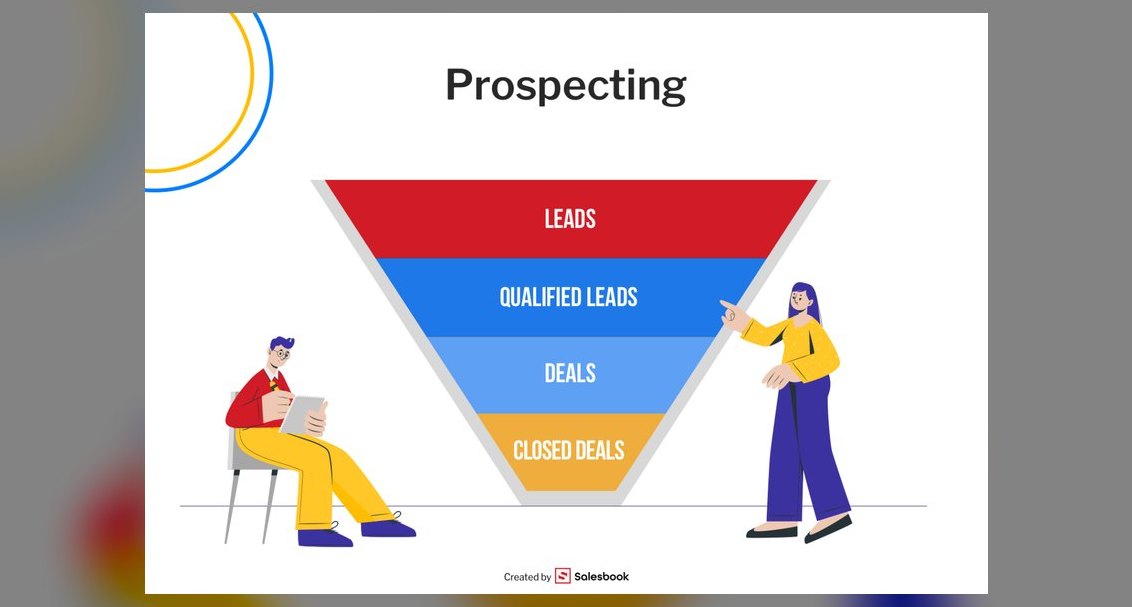 pulse-recentHigh-Profit Prospecting by Mark Hunter — Top 10 Key Takeaways for Sales Leaders in 2027
 pulse-recentBlueprints for a SaaS Sales Organization by Jacco van der Kooij — Top 10 Key Takeaways for Sales Leaders in 2027
 pulse-recentThe Greatest Salesman in the World by Og Mandino — Top 10 Key Takeaways for Sales Leaders in 2027