


The Psychology of Selling by Brian Tracy — Cliff Notes & Chapter-by-Chapter Summary
Quality
Certified
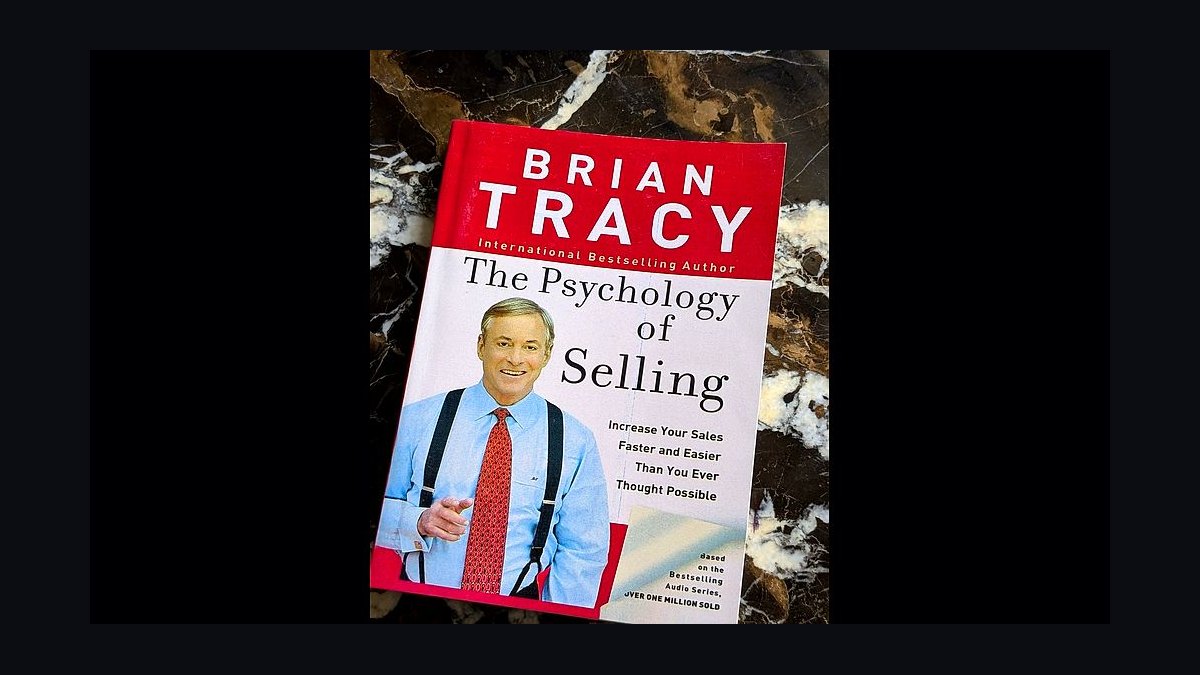
*The Psychology of Selling* by Brian Tracy argues that sales results mirror self-concept: raise how you see yourself as a seller, and behavior, activity volume, and income follow. The book pairs mindset work — goals, self-talk, visualization — with fundamentals like prospecting volume, appointment-setting, and buyer motivation, making it a mindset-first companion to tactical methodologies.
The two books inside one cover: mindset volume versus fundamentals manual
Most readers pick up *The Psychology of Selling* expecting a single argument and find two books braided together. The first is a psychology-of-performance volume in the Napoleon Hill and Maxwell Maltz lineage — self-concept, self-esteem, goal setting, mental rehearsal, self-talk. The second is a nuts-and-bolts fundamentals manual — how to get an appointment, how to structure a call, how to ask for the order, how to earn referrals. Understanding which of the two you are reading at any moment is the single most useful thing you can do with the book, because the two halves have aged very differently and demand different responses from a modern seller.
The mindset half is the durable one. Tracy's core claim is that a seller carries an internal "sales thermostat" — a self-concept about the level of income, deal size, and client caliber they belong at — and performance regulates itself toward that setting. A rep whose self-concept sits at fifty thousand dollars of income will, in Tracy's account, unconsciously throttle activity once they are pacing above it: they stop prospecting in a strong month, they get sloppy on discovery, they take an afternoon off. Conversely, when they fall behind the setting, urgency spikes and they work. The prescription follows directly: change the setting before you try to change the behavior, because behavior reverts to the setting.
The fundamentals half is where the period shows. Tracy is writing out of an era of face-to-face field sales, phone dials to switchboards, and a buyer who had far less information than the seller. Whole chapters assume you will physically drive to a prospect's office. Closing is treated as a distinct skill with a named repertoire — the assumptive close, the alternative-choice close, the trial close. None of that is wrong, but its usefulness now depends heavily on what you sell. A one-call consumer or small-business sale still rewards a clean, confident ask. A six-month enterprise cycle with a buying committee does not respond to close mechanics at all; Neil Rackham's research in *SPIN Selling* found that pressure-style closing techniques correlated with worse outcomes as deal size rose.

That split gives you a practical reading strategy. Take the mindset chapters literally and do the exercises. Take the fundamentals chapters as historically instructive — the underlying principle (sell the meeting, not the product; identify the buyer's dominant motive; follow up past the point most sellers quit) transfers cleanly, while the specific script or channel usually needs re-expression for email, LinkedIn, and video calls. The reader who does the reverse — skimming the "soft" chapters and copying the scripts verbatim — gets the least out of the book and often sounds like a period reenactment on a modern call.
There is a third way to read it that experienced sellers sometimes prefer: as a document of where a large chunk of modern sales training came from. Tracy compressed the success-literature tradition and pointed it at a sales quota, and much of what circulates today as sales-mindset coaching, morning-routine doctrine, and prospecting-volume evangelism traces back through this lineage. Reading it that way turns a dated chapter into useful context rather than an annoyance.
Chapter-by-chapter: what each part actually delivers
A Chapter-by-Chapter Summary is worth doing carefully, because the book's structure is not obvious from the table of contents.
Chapter 1 — The Inner Game of Selling. The framing chapter. Tracy introduces the observation that a minority of a sales force produces a large majority of the revenue, and asks what separates them. His answer is not technique, territory, or education but self-concept: top producers believed themselves top producers before the numbers agreed. He introduces the loop that runs through the whole book — belief drives behavior, behavior produces results, results reinforce belief — and argues the loop compounds in both directions, which is why struggling sellers spiral and strong ones look unfairly lucky.

Chapter 2 — Set and Achieve All Your Sales Goals. The most mechanically useful chapter. Tracy's method is written goals, deadlines, a full task list, that list sequenced into a plan, immediate action, and something every single day. His distinctive additions are handwriting the goals rather than typing them, and re-reading them morning and night so they stay top-of-mind. Stripped of the mystical framing, the mechanism is mundane and real: a goal you re-read daily changes what you notice and what you say yes to.
Chapter 3 — Why People Buy. The buyer-psychology chapter, and the one that survives best. Tracy enumerates the recurring reasons people spend: to make money, to save money, to save time, to avoid effort, to gain comfort, to increase pleasure, to reduce risk, and to gain prestige or recognition. The instruction that matters is not the list but the discipline — find which motive dominates for this specific buyer and frame everything through that one lens. Sellers who spray all eight motives land none. Risk reduction is the quietly dominant motive in most corporate purchases, and it is the one inexperienced sellers most often ignore in favor of upside.
Chapter 4 — Creative Selling. Prospecting. This is where Tracy's volume doctrine lives: when results stall, commit to a large block of outreach and detach from the outcome of any single touch. The psychological trick is real — call reluctance is fear of a specific rejection, and a volume commitment converts each contact from a verdict into a tally mark. He also applies concentration logic to territory, arguing you should spend the bulk of your prospecting energy on the small share of accounts capable of large orders, since effort per account is roughly constant while revenue per account is not.
Chapter 5 — Getting More Appointments. Tightly practical. Sell the appointment, not the product. Refuse to quote price on a prospecting call. Keep the opener short. Speak as a peer rather than a supplicant. Offer two specific times instead of asking when is good. Follow up longer than feels comfortable, because most sellers quit after two or three attempts and most sales happen after that point. Every one of these translates to email and LinkedIn with almost no modification, which is why this chapter has aged better than its channel assumptions suggest.
Chapter 6 — The Power of Suggestion. Non-verbal and environmental influence. Tracy splits it three ways: internal suggestion (your self-talk, which leaks into your voice), external suggestion (dress, punctuality, the state of your materials and your car), and implied suggestion (posture, eye contact, pace). The claim is that a buyer forms a confidence judgment before the seller says anything substantive. The corny-sounding affirmations in this chapter are the part readers most often skip and the part Tracy considered load-bearing.
Chapter 7 — Making the Sale. The full call structure: prospect, build rapport, identify needs, present, handle objections, close, generate referrals and resales, follow up. The needs-identification and objection-anticipation material is solid. The closing repertoire is the dated portion, and should be read as a snapshot of an era rather than a modern playbook for complex sales.
Chapter 8 — Ten Keys to Sales Success. The habits chapter: decide to be excellent, find your single limiting skill and fix it, choose your peer group deliberately, protect physical energy, rehearse mentally, manage self-talk, act rather than deliberate, refuse to entertain failure, read in your field daily, and accept that the price is real. The limiting-skill idea is the most immediately actionable thing in the book — a seller's results are usually capped by one weak link, not by a general deficiency, and fixing that one link lifts everything downstream of it.
How to decide which half to invest in first

Reading order should follow diagnosis, not preference. The wrong sequence wastes months: a seller with a genuine skill gap who spends ninety days on affirmations improves nothing, and a seller with a confidence collapse who is handed another script gets more polished at avoiding the phone.
Start by separating activity problems from conversion problems. If the pipeline is thin — too few conversations to produce a forecast regardless of skill — the constraint is upstream, and it is usually either mindset (reluctance, avoidance, a self-concept that does not include being someone who calls strangers) or time allocation. That is where Tracy's mindset and prospecting chapters earn their keep. If activity is healthy but conversion is poor — plenty of meetings, few advances — the constraint is craft, and Tracy's fundamentals chapters will get you partway there while a needs-based methodology will take you the rest of the way.
The second question is deal shape. Short cycles, single decision-makers, and transactional or consumer-adjacent products sit squarely in Tracy's home territory, and you can apply his material close to as written. Long cycles, committees, procurement, and multi-stakeholder consensus sit outside it; there, use Tracy for the inner game and prospecting cadence, and take structure from research-based methodologies built for complex sales.
A third factor is career stage. New sellers get the most from Chapters 2, 4, and 5 — goals, prospecting volume, appointment mechanics — because they need reps and a reason to keep dialing before results arrive to sustain them. Mid-career sellers who have plateaued get the most from Chapter 1 and the limiting-skill idea in Chapter 8, because plateaus are usually a settled self-concept plus one unaddressed weakness rather than a broad deficit. Managers get the most from Chapter 3, since coaching a team to identify a dominant buyer motive is a repeatable, observable skill you can inspect in call reviews.
Concrete numbers behind each half — and what the numbers actually mean
Tracy's book is full of ratios, and the honest framing is that they are field observations and training-room heuristics rather than controlled research. Treat them as directionally useful shapes, not measured constants — and then measure your own.
The concentration claim is the most famous: a small fraction of a sales force produces a large majority of revenue, and the very top slice produces a disproportionate share even of that. Any sales leader who has ranked a roster by attainment recognizes the shape. What matters operationally is not the exact split but the implication — average performance is not the middle of a normal distribution, so coaching to "the average rep" targets a rep who may not exist. Rank your own team and look at where the curve bends before deciding where to invest coaching hours.
The follow-up claim — that a large share of sales close only after many touches, well past where most sellers stop — is the one with the clearest modern corroboration in aggregate industry reporting. The actionable version is a cadence rule rather than a statistic: decide in advance how many attempts across how many channels constitute a complete sequence, write it down, and let the sequence run to completion rather than deciding touch by touch. Most reps quit early not because they judged the account dead but because each additional attempt feels increasingly awkward without a rule to lean on.
The volume prescription — a large committed block of outreach when you are stuck — should be calibrated, not copied. What made the number work in Tracy's era was that it exceeded any single day's normal effort by enough to break the avoidance habit. The modern equivalent is a defined sprint: a fixed number of contacts, across a fixed window, with the success criterion being completion of the block rather than any meeting booked. Set it at roughly two to three times your current daily contact rate, run it for a week, and record contact-to-conversation and conversation-to-meeting rates. Those two conversion figures, measured on yourself, are worth more than any published benchmark.
The meeting-acceptance figures Tracy attaches to his phone opener are the ones to hold most loosely. They come from a period with different gatekeeping, different call volumes, and a different baseline willingness to take an unscheduled call. The structural lesson survives — a short opener that names a specific, brief time commitment outperforms an open-ended request — but do not calibrate your expectations to the reported rate. Build the opener, run fifty of them, and record what you actually get.
Two numbers Tracy does not emphasize are worth adding to your instrumentation. First, conversation-to-meeting rate isolated from dial-to-conversation rate, since these fail for entirely different reasons — a bad connect rate is a data and timing problem, a bad conversation rate is a message problem. Second, meetings-held versus meetings-booked, because no-show rate is where confident-sounding phone openers quietly leak value; a booking secured through pressure rather than interest often never happens.
Implementation: a sequenced ninety-day install
The failure mode with this book is enthusiasm without sequence — reading it in a weekend, adopting six habits at once, and keeping none by week three. A staged install works better, and each stage has an observable output rather than a feeling.
Days 1-7, instrumentation. Before changing anything, measure the baseline: daily contacts attempted, conversations held, meetings booked, meetings held, opportunities created. Without this you cannot tell whether the mindset work did anything, and you will end up arguing about whether the book works instead of whether it worked for you.
Days 8-21, goals and calendar. Write the goals by hand — an income figure, a pipeline figure, a named-account list — with dates. Read them morning and evening. Block prospecting time on the calendar as a recurring commitment and protect it the way you would protect a customer meeting. Nothing else changes yet. The output is a written page and a protected block, both inspectable.
Days 22-45, volume. Run the prospecting sprint at two to three times baseline contact rate. Judge yourself on block completion, not outcomes, for the entire period — this is the mechanism that breaks reluctance, and evaluating outcomes mid-sprint reintroduces the fear you are trying to disarm. Keep the rest of your process unchanged so the variable is isolated.

Days 46-70, message and motive. Now work the conversation. For every live opportunity, write down which single buyer motive dominates and what evidence supports that read. Rewrite your opener to sell only the meeting. Standardize on offering two specific times. Track conversation-to-meeting and meeting-held rates against the baseline you captured in week one.
Days 71-90, limiting skill. Review the funnel and identify the single weakest transition. Attack only that one. If discovery is thin, work questioning. If proposals stall, work multi-threading and mutual action plans. If meetings do not convert to next steps, work the explicit advance. One skill, thirty days, measured at the same transition you started from.
Two sequencing rules keep this from collapsing. First, never run the mindset install and a methodology change in the same month; you will not know which moved the number. Second, keep the measurement window at thirty days minimum — sales data is noisy at weekly resolution, and a single large deal can make a bad month look like a breakthrough.
For managers installing this across a team, the adaptation is straightforward: make the written goals a coaching artifact reviewed in one-on-ones, make the prospecting block a team-wide protected window so it is culturally defensible, and inspect the dominant-motive read in deal reviews by asking one question — which motive, and what did the buyer say that told you? That question alone surfaces more shallow discovery than any pipeline-hygiene exercise.
Where this sits among the other books on the shelf
*The Psychology of Selling* is best understood as one layer in a stack rather than a complete strategy. It answers a question the tactical books largely skip — why a seller who knows what to do does not do it — and it is thin exactly where those books are strong.
Pair it with a research-based methodology for complex sales. Rackham's *SPIN Selling* supplies what Tracy's closing chapter lacks: evidence that in large sales, the questions asked during discovery predict outcomes far more than the technique used at the end. If you sell into committees, read them together and let SPIN override Tracy anywhere they conflict on call mechanics.

Pair it with a modern prospecting volume book if the discipline half is your gap. Jeb Blount's *Fanatical Prospecting* is the closest contemporary descendant of Tracy's volume doctrine and updates the channel mix for email, social, and phone in combination.
Pair it with influence and negotiation material for the conversation itself. Robert Cialdini's *Influence* supplies experimentally grounded mechanisms — reciprocity, commitment, social proof, scarcity, authority, liking — where Tracy supplies intuition. Chris Voss's *Never Split the Difference* gives you calibrated questions and tactical empathy for the tense parts of a deal that Tracy's era treated as objection handling.
The adjacent domains are worth a mention because the self-concept mechanism is not sales-specific. The same loop shows up in performance coaching, in recruiting (candidates negotiate toward their self-assessed market value), and in founder-led selling, where the founder's reluctance to charge properly is a self-concept problem wearing a pricing-strategy costume. If you manage a team of account managers, customer success professionals, or partner managers, the mindset chapters apply essentially unchanged even though the fundamentals chapters do not.
What you should not do is treat this as a complete Summary of how to sell in a modern enterprise environment. It contains no meaningful material on multi-threading, mutual action plans, procurement, security review, champion development, or the mechanics of consensus buying — all of which now determine outcomes in large deals. Read it for the engine, not the map.
Related questions
Is *The Psychology of Selling* still worth reading given its age?
Yes, for the mindset half. The self-concept, goal-setting, and prospecting-discipline material transfers intact. Read the closing-technique chapter as historical context rather than instruction, especially if you sell complex, multi-stakeholder deals where research shows pressure closes backfire.
How does it compare to *SPIN Selling*?

They solve different problems. Tracy addresses why sellers underperform relative to what they already know; Rackham addresses what actually happens in large sales conversations, based on observational research. Where they conflict — mainly closing technique in big deals — follow Rackham.
Which chapters should a brand-new seller read first?
Chapters 2, 4, and 5 — goals, prospecting, and appointment-setting. They produce activity, and activity produces the reps and early wins that make the mindset chapters believable. Return to Chapters 1 and 6 once you have a few months of data on yourself.
Does the self-concept idea have any research support?
Adjacent research supports the general shape — work on mindset, self-efficacy, and perseverance points the same direction. Tracy's specific claims are field observations from training programs, not controlled studies, so treat the mechanism as plausible and the exact figures as illustrative.
Is it useful for sales managers, not just individual sellers?
Very. The limiting-skill idea gives you a coaching frame, the dominant-motive question gives you a deal-review question, and the written-goal ritual gives you an inspectable artifact for one-on-ones without adding another dashboard.
FAQ
Is this book only for experienced salespeople, or can beginners use it too?
Both, but they use different parts. Beginners get the most from the goal-setting, prospecting, and appointment chapters, which produce activity and early confidence. Experienced sellers who have plateaued get more from the self-concept chapter and the limiting-skill idea, since plateaus usually come from one unaddressed weakness plus a settled internal target rather than a broad skill deficit.
How long before applying Tracy's methods shows up in results?
Habit changes — written goals, protected prospecting blocks — show up in activity metrics within two to three weeks because they are directly observable. Pipeline effects lag by roughly one sales cycle, so if your average cycle is sixty days, expect closed-revenue signal around month three. Judge yourself on leading indicators first; trailing indicators are too noisy to steer by month to month.
Are the cold-calling scripts still usable?
The structure is; the wording needs updating. Sell the meeting rather than the product, keep it short, offer two specific times, and speak as a peer — all of that transfers to email, LinkedIn, and video calls. The literal phone script reads as period-specific, and buyers who have heard hundreds of openers recognize a recited one immediately.
Is it just a rehash of classic self-help literature?
It draws heavily on that tradition and does not hide it. The contribution is the translation: pointing success-literature principles at a quota, a call plan, and a territory, with concrete sales exercises attached. If you have already internalized that tradition, the fundamentals chapters and the buyer-motive material are the parts with new value.
Does it work for high-ticket B2B, or only transactional sales?
The mindset, prospecting discipline, and buyer-motive material work at any deal size. The closing repertoire does not scale to large, multi-stakeholder deals — research on complex sales found technique-driven closing correlates with worse outcomes as deal value rises. Use Tracy for the engine and a complex-sale methodology for the deal mechanics.
Are there exercises, or is it purely conceptual?
There are exercises and action steps throughout — goal-writing, self-talk routines, call planning, activity tracking. The book functions closer to a workbook than an essay collection, which is why readers who only skim it report little benefit; the value is concentrated in the parts that require you to write something down and repeat it daily.
Sources
- https://www.briantracy.com/
- https://www.harpercollinsleadership.com/
- https://www.mheducation.com/
- https://hbr.org/
- https://www.wiley.com/
- https://www.penguinrandomhouse.com/
- https://www.amazon.com/Psychology-Selling-Increase-Faster-Thought/dp/0785288066
- https://www.goodreads.com/book/show/79021.The_Psychology_of_Selling
Related on PULSE
- Eat That Frog by Brian Tracy — Cliff Notes Summary for Sellers
- Influence: The Psychology of Persuasion by Robert Cialdini — Cliff Notes & Chapter-by-Chapter Summary
- The Psychology of Selling — Cliff Notes Summary
- Inbound Selling by Brian Signorelli — Cliff Notes Summary
- The 12 Week Year by Brian Moran and Michael Lennington — Cliff Notes Summary
- Lead Generation for the Complex Sale by Brian Carroll — Cliff Notes Summary
This page will be disappearing soon. Save it to your device for $1 — or read it free while it is here.
@Kory-White- · if Venmo asks, the last 4 of my number are 2012
This page is gone.
This one is off the shelf now. $1 keeps it on your phone for good — the whole page, pictures and diagrams included.
 book-summaryEat That Frog by Brian Tracy — Cliff Notes Summary for Sellers
 pulse-recentThe Collaborative Sale by Keith Eades — Top 10 Key Takeaways for Sales Leaders in 2027
 pulse-recentHow do you implement the Sandler Rules by David Mattson in your first 30 days as a new sales manager in 2027?
 pulse-booksRework by Jason Fried and David Heinemeier Hansson — Cliff Notes Summary
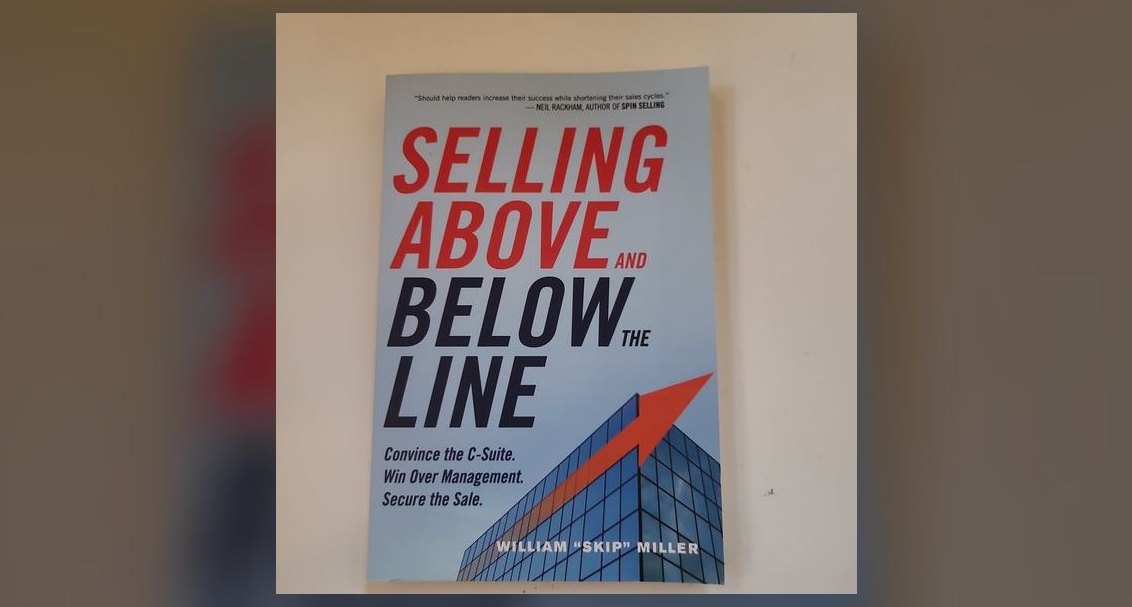 pulse-recentSelling Above and Below the Line by Skip Miller — Top 10 Key Takeaways for Sales Leaders in 2027
 pulse-recentWhat are the concrete steps in Strategic Selling for building a sales plan in 2027?
 pulse-recentThe Closer’s Survival Guide by Grant Cardone — Top 10 Key Takeaways for Sales Leaders in 2027
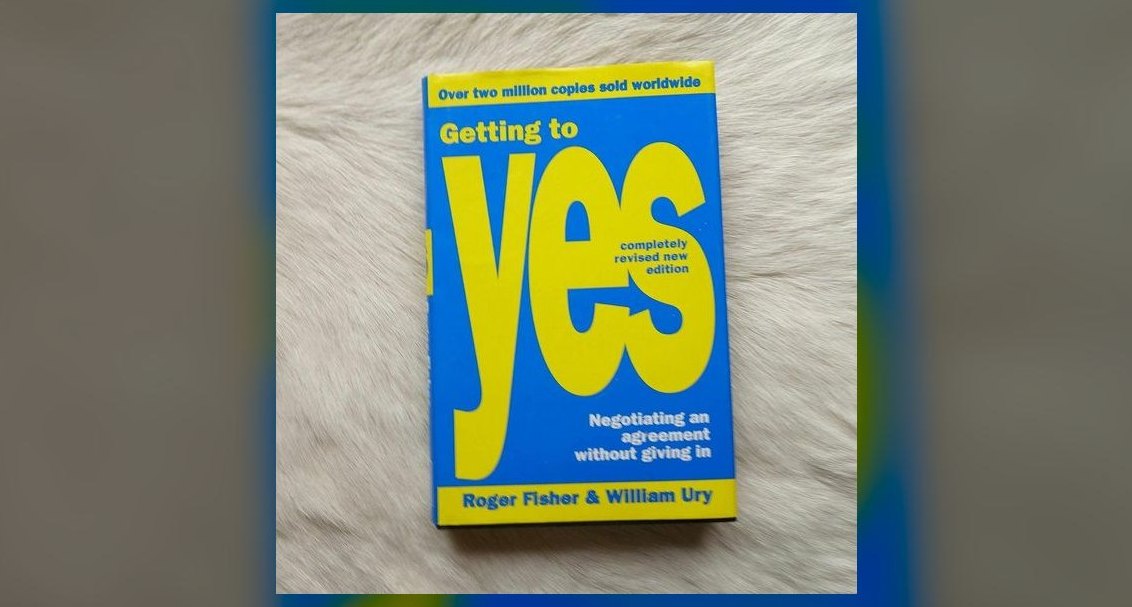 pulse-recentGetting to Yes by Roger Fisher and William Ury — Top 10 Key Takeaways for Sales Leaders in 2027
 pulse-recentInsight Selling by Mike Schultz and John Doerr — Top 10 Key Takeaways for Sales Leaders in 2027
 pulse-recentHow do you implement the Sandler Rules in your first 30 days as a new sales rep in 2027?