


The JOLT Effect by Matthew Dixon — Cliff Notes Summary & Key Takeaways
Quality
Certified
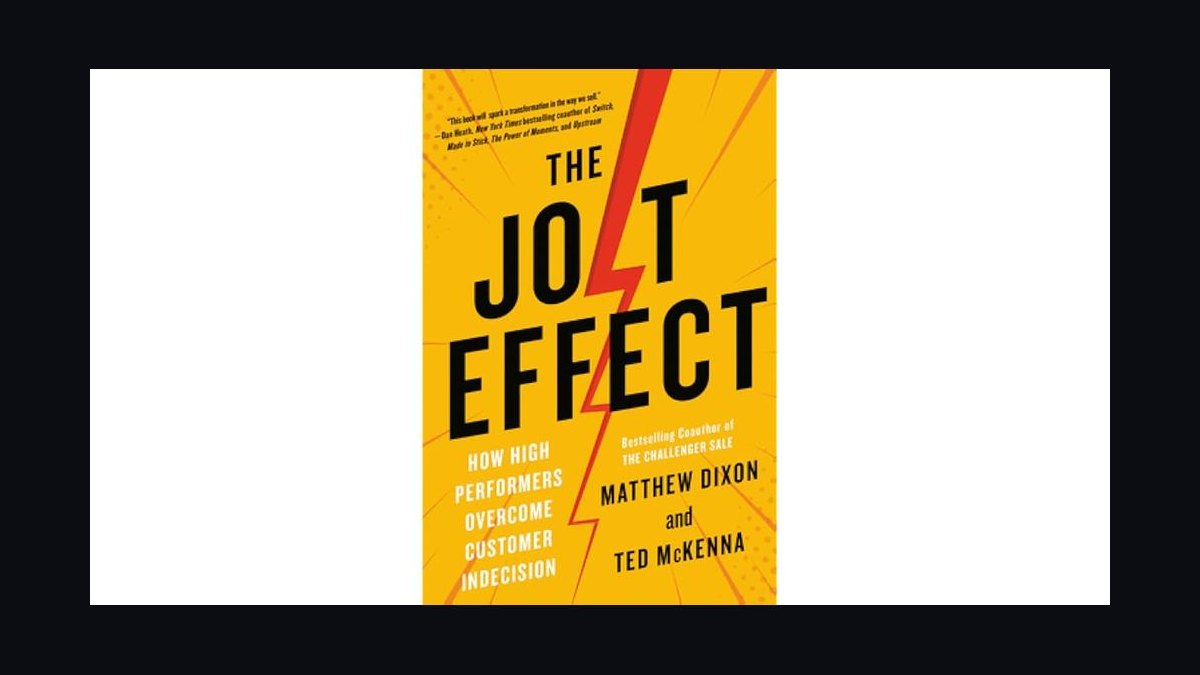
The JOLT Effect by Matthew Dixon and Ted McKenna (Portfolio, 2022) analyzed roughly 2.5 million recorded sales conversations and found that most lost deals die in "no decision," driven by customer indecision rather than status-quo bias. Its cure is a four-move method: Judge indecision, Offer a recommendation, Limit exploration, Take risk off the table.
The outcome you should expect from adopting JOLT
The honest framing for any leader considering this book as an operating change: JOLT is not a pipeline-generation strategy and it will not raise your win rate against named competitors. It attacks exactly one loss category — the deals that die in silence after full qualification, after the demo, after the business case, after the champion said "this is happening." In the corpus that Dixon and McKenna analyzed, that category consumed a large share of qualified pipeline, with the authors reporting figures in the 40-60% range depending on segment. If your CRM's closed-lost reason codes are dominated by "no decision," "timing," "budget freeze," "revisit next quarter," and "went dark," JOLT is aimed squarely at your problem. If your losses are mostly competitive displacement, it is the wrong book and you should be reading positioning and differentiation material instead.
What you should expect operationally is a reallocation of rep effort rather than an increase in it. The book's central behavioral claim is that average reps respond to a hesitant buyer by adding — more content, more options, more references, more stakeholders, more "cost of inaction" pressure — and that this addition is precisely what deepens the freeze. High performers subtract. They narrow the option set to one recommendation, they cap the research loop, and they restructure the commitment so the buyer's personal downside shrinks. The practical consequence inside a sales org is that late-stage activity volume tends to go *down* while late-stage conversion goes *up*. Managers who measure rep effort by touches, emails sent, or collateral shared will read the change as reps working less. That measurement conflict is the most common reason JOLT adoption stalls in month two.
Expect the effect to concentrate in a specific slice of your funnel. JOLT moves deals that are already qualified and already emotionally committed — the buyer wants the thing and cannot sign. It does nothing for unqualified deals, does nothing for deals with no economic buyer identified, and does nothing for deals where the customer genuinely prefers a competitor. So the realistic outcome is not "win rate up across the board" but "no-decision share of closed-lost down, with a corresponding lift in closed-won on deals that reached late stage." That is a narrower claim than most book-driven initiatives make, and it is why JOLT stacks cleanly on top of MEDDPICC-style qualification rather than competing with it: qualification decides which deals deserve the effort, JOLT decides what the effort looks like once the deal is real and stuck.

One more expectation to set: forecast accuracy usually improves before revenue does. The Judge step forces reps to explicitly rate a buyer's decision confidence, which surfaces the deals that were being sandbagged at 90% on the strength of enthusiasm alone. The first two forecast cycles after adoption often look *worse* — commit numbers come down as reps admit which deals are actually frozen. Leaders who are not warned about this read the honesty as a performance drop and pull the initiative right before it pays. Treat the first quarter's forecast reset as evidence the diagnostic is working, not as a failure.
What drives the outcome — the four sources of buyer paralysis
The mechanism underneath every JOLT prescription is the book's taxonomy of why a committed buyer freezes. Dixon and McKenna separate the classic status-quo bias — the customer is comfortable and sees no reason to move — from three distinct flavors of indecision that afflict customers who *do* want to move. The distinction matters because the two categories require opposite plays. Status-quo bias responds to disruption: teaching, reframing, sharpening the cost of inaction. Indecision responds to reassurance and simplification. Running a disruption play on an indecisive buyer adds pressure to someone already overloaded, and the book's call data shows it makes the freeze worse. This is the single most important takeaway in the entire book, and it is a direct amendment to the Challenger prescription Dixon co-authored a decade earlier.
Valuation problems are the first source: the buyer cannot determine which version, tier, package, or configuration is correct for them. This is choice overload arriving in a procurement process, and the book explicitly connects it to Barry Schwartz's *The Paradox of Choice* and Sheena Iyengar's choice-set experiments. The operational tell is a buyer who keeps asking for revised quotes, comparison matrices, and "what if we did the middle option but with these two add-ons." Every revision feels like progress and is actually the deal moving sideways. The counter-move is the O in JOLT — collapse the option set to a single named recommendation with a stated reason.

Lack of information is the second: the buyer believes they have not researched enough to defend the decision. The tell is the endless artifact request — one more case study, one more reference call, one more analyst report, one more security questionnaire that was already answered. The average rep treats each request as a buying signal and floods the buyer, which validates the premise that more research is needed. The counter-move is the L — cap the loop explicitly, curate one artifact, and tell the buyer directly that it is sufficient.
Outcome uncertainty is the third and usually the deepest: the buyer fears the product will not deliver and that the failure will attach to them personally. This is a career-risk calculation, not a product-evaluation one, and no amount of ROI modeling touches it because the buyer already believes the ROI model. Gartner's buyer-enablement research on purchase regret and confidence points in the same direction — buyers routinely report low confidence and high regret about major purchases. The counter-move is the T — restructure the deal so the buyer's personal exposure drops: pilot conversion, phased rollout, opt-out window, success-tied terms.
The reason the taxonomy is useful rather than academic is that it makes coaching specific. "This deal is stalled, go push harder" is not a coaching instruction. "This buyer has a valuation problem — you gave them four packages in the deck, go back with one recommendation and a sentence explaining why" is. The diagnostic is what converts a book insight into a repeatable rep behavior, and it is why the J step comes first in the acronym rather than being an afterthought.
The four moves, and what each one actually looks like on a call
Judge is a diagnostic run during discovery and refreshed at every stage gate, not a one-time exercise. The book's practical instrument is a small set of direct questions: asking the buyer to rate on a 1-10 scale how confident they are that a decision will be made by a specific date; asking what the hardest part of this decision is for them personally; asking what actually changes if they do nothing. The scale question is the workhorse because it produces a number a manager can inspect in the CRM. A buyer who says "6" to a decision-by-date question has told you the deal is not a commit, regardless of how enthusiastic the champion sounds. The follow-up — "what would make it a 9?" — surfaces which of the three indecision sources is operating, which routes the rest of the pursuit.
Offer a recommendation is the move most reps resist and the one with the clearest data behind it. Average sellers present options because it feels respectful of buyer autonomy; the book's transcript analysis shows close rates moving in the opposite direction from option count. The verbatim pattern high performers use is a stated position with a stated rationale: "Based on what you've told me about your team size and your Q3 deadline, the right move is the mid tier with the implementation package. Here's why." The rationale clause is not optional — a recommendation without a reason reads as a quota-driven push, and a recommendation grounded in the buyer's own stated constraints reads as expertise. Keep alternatives available on request rather than in the deck; the point is to remove the burden of comparison from someone who has already told you they cannot compare.
Limit the exploration is culturally the hardest, because most sales orgs train unconditional responsiveness and score reps on it. The move is to say no to research requests that will not change the decision. Concretely: when a buyer asks for a third reference call, the high-performer response is to name a stopping point — two calls covering the two use cases that matter, and an explicit statement that a third will not surface anything new. When a buyer asks for more case studies, send one deliberately chosen for their industry and situation with a sentence explaining why it is the relevant one. The underlying logic is that every additional artifact reinforces the buyer's belief that the decision requires more information, so responsiveness that feels like service is functionally sabotage.
Take risk off the table addresses outcome uncertainty structurally rather than rhetorically. The menu the book describes includes pilot-to-production conversions, phased rollouts that start with one team, opt-out windows in the contract, money-back periods, success-tied commercial terms, and named executive sponsorship on the vendor side. The finding that makes this practical is that buyers offered explicit risk mitigation do not disproportionately exercise it — the clause functions as permission to commit rather than as a free option to walk. That asymmetry is what makes it economically viable to offer. The failure mode is offering the clause reflexively to every deal; it is a targeted instrument for buyers whose hesitation is specifically about being blamed, and offering it to a buyer with a valuation problem just adds another decision to a person who cannot make decisions.
Benchmarks, realistic ranges, and how to measure it

The headline benchmark is the no-decision share of closed-lost. Dixon and McKenna report it in the 40-60% band across the deals in their corpus, with meaningful variation by segment — higher in complex enterprise pursuits with large buying groups and long cycles, lower in transactional or self-serve motions where the buyer's personal exposure is small. Directionally consistent findings have come from Gartner's buyer-enablement work on purchase confidence and regret, and from published call-data research by conversation-intelligence vendors. Before adopting any of this, measure your own number: pull twelve months of closed-lost, and classify each record as competitive loss, disqualification, or no-decision. Most orgs discover their CRM reason codes are unusable for this — "timing" and "budget" are frequently no-decision losses wearing a polite label — so the classification usually requires reading the deals, not querying them.
The second benchmark is the performance spread between reps on indecisive deals specifically. The book reports high performers closing indecisive buyers at roughly twice the rate of average reps, with a wider gap against the bottom of the distribution. What makes this number actionable is the implication: the variance is behavioral, not territorial or product-driven, because the same product and the same buyer types produce very different outcomes across reps. Replicate the analysis in your own org by segmenting late-stage conversion by rep on deals that showed indecision signals — if your spread is narrow, JOLT training has less headroom than the book implies; if it is wide, you have a coaching problem the method can address.

For instrumentation, the practical set of metrics is small. Track no-decision share of closed-lost as the primary outcome. Track late-stage cycle time, which should compress as exploration loops get capped. Track option count in proposals — a countable proxy for whether the O move is actually happening, and one you can audit from the CRM or the quoting tool without listening to a single call. Track the frequency of risk-mitigation structures in signed contracts, and separately track the exercise rate of those clauses, because that ratio is what tells your CFO whether the T move is economically sound in your business. Track the presence of a decision-confidence rating on late-stage opportunities, which measures whether the J move is real or theater.
Set the time horizon honestly. If your average sales cycle is three months, the earliest you can read a genuine signal on no-decision share is roughly two cycles out — six months — because deals that entered the pipeline before the change will keep closing under the old behavior and dilute the read. Leading indicators arrive sooner: proposal option counts and decision-confidence field completion move within weeks, and they are the right things to inspect in the first quarter. Judging a six-month effect at week five is how good initiatives get killed early. Expect improvement measured in single-digit-to-low-double-digit percentage-point shifts in no-decision share, not in the deal-count multiples that book jackets imply.
Risks, edge cases, and where the method breaks down
The most common misapplication is running JOLT on unqualified deals. A buyer who cannot articulate a business problem, has no budget authority, and cannot name a consequence of doing nothing is not indecisive — they were never a deal. Applying the recommendation move here produces a rep confidently prescribing a package to someone who was browsing, which wastes cycles and generates a forecast full of deals that will never close. JOLT presumes qualification has already happened. If your qualification discipline is weak, fix that first; layering a closing method on an unqualified pipeline just makes the pipeline confidently wrong.
The second risk is the recommendation move degrading into pressure. The difference between "based on what you've told me, the right move is X, here's why" and "you should just buy X" is the grounding in the buyer's own stated constraints. Reps who skip discovery and jump to recommendations sound like they are pushing inventory, and the buyer's trust drops rather than their anxiety. This is a real coaching hazard, because the recommendation move is the easiest to mimic superficially and the hardest to do with genuine grounding. Audit for it by checking whether the rep's recommendation cites specific things the buyer said.
The third risk is the Limit move colliding with genuine procurement requirements. Capping exploration is right when the buyer's research is anxiety-driven; it is wrong when the request is a compliance obligation. Security reviews, legal redlines, accessibility audits, and regulatory documentation are not indecision — they are process, and refusing them reads as evasion and can disqualify you outright. Teach the distinction explicitly: process requirements come with a named owner and a defined completion criterion, while anxiety-driven research is open-ended and the buyer cannot say what would satisfy them. If the buyer cannot describe what a satisfactory answer looks like, that is indecision. If they can hand you a checklist, that is procurement.
The fourth risk is the risk-mitigation clause becoming a commercial habit. If every deal ships with a money-back window and an opt-out, finance loses revenue predictability and reps stop treating the clause as a targeted instrument, reaching for it whenever a deal feels slow. Govern it: require a stated indecision diagnosis before a risk structure is offered, cap the percentage of deals that can carry one, and review exercise rates quarterly. The book's finding that exercise rates stay low depends on the clause being offered to buyers who genuinely want to proceed — offer it to buyers who are lukewarm and you have simply sold a free trial with a purchase order attached.
There are also structural edge cases where the method has less to say. Product-led and self-service motions resolve indecision without a rep present, so the JOLT moves have no delivery mechanism; the equivalent work happens in onboarding design and in-product guidance. Usage-based pricing models blur the T move because the commercial structure is already low-commitment — when the pilot is the product, there is no opt-out clause to offer, and the real risk mitigation is expansion mechanics rather than contract terms. Very large buying groups add a coordination problem the book underweights: an individual buyer can be fully decided while the group remains stuck, which is closer to the mobilizer and consensus territory of *The Challenger Customer* than to individual indecision. And in genuinely competitive deals, the buyer is not frozen — they are choosing — and JOLT plays will feel beside the point.

Finally, note what has aged since publication. The Judge step is increasingly machine-assisted: conversation-intelligence platforms now flag hesitation language and decision-risk signals automatically, which changes Judge from a rep-memory exercise into a data field. That is an improvement, but it introduces a new failure mode — reps trusting a score they do not understand and skipping the two questions that would have told them which of the three sources was operating. The tooling category itself has consolidated considerably since 2022, so treat any specific vendor recommendation in the book as dated while the underlying behavior remains sound.
A practical rollout plan for a revenue org
Start with the diagnosis, not the training. Spend the first two weeks classifying twelve months of closed-lost deals into competitive, disqualified, and no-decision buckets, reading enough deal history to correct the reason codes. This produces the baseline you will be measured against and, more importantly, tells you whether the initiative is warranted at all. If no-decision is under a quarter of your losses, deprioritize this and go work on something else. If it is approaching or above half, you have a business case that will survive a CFO conversation.
In weeks three and four, instrument before you train. Add a decision-confidence field to late-stage opportunities that captures the buyer's own 1-10 rating and the date it was collected. Add a field for the diagnosed indecision source. Make both required at the stage gate where deals move to commit. Do not train anyone yet — you want a few weeks of baseline data on how reps behave without instruction, and you want the CRM changes to have shaken out before the training makes them load-bearing.
Weeks five and six are training, and the format matters more than the content. Abstract instruction on the four moves does not change behavior; call review does. Run sessions where managers and reps listen to recordings of actual stalled deals from their own pipeline and identify, together, which source of indecision was operating and which move was missed. Two hours of reviewing four real calls beats a full-day workshop on the framework. Give reps concrete language to reuse: the confidence-scale question, the recommendation sentence with its rationale clause, the explicit stopping point for research requests, and the two or three risk structures your company will actually approve.

Weeks seven through twelve are the coaching cadence, and this is where most rollouts fail through neglect. Add a short indecision review to every forecast call — for each commit deal, the rep states the buyer's confidence rating, the diagnosed source, and the specific move being run. Fifteen minutes appended to an existing meeting is enough; a new standalone meeting will be cancelled by week four. Managers should be spot-checking one recorded call per rep per week against the four moves, not reviewing everything.
Two governance decisions should be made before launch rather than improvised later. First, decide which risk-mitigation structures are pre-approved so reps are not negotiating novel terms deal by deal — a short menu with clear thresholds, agreed with finance and legal, removes the friction that otherwise kills the T move. Second, decide how the compensation plan treats deals that carry an opt-out; if commission claws back on exercise, reps will avoid the structure entirely and the most valuable move in the method never gets used. Getting these two decisions wrong is the quiet reason JOLT rollouts produce training completion without behavior change.
At month six, re-measure against the baseline and make an honest call. If no-decision share has moved and late-stage cycle time has compressed, codify the behaviors into onboarding and the deal-review template so they survive turnover. If nothing moved, resist the urge to run more training — check first whether qualification discipline is the actual constraint, and whether the CRM fields were being filled in truthfully or clicked through. A method that depends on an honest confidence rating fails silently when reps learn that a low rating triggers an uncomfortable conversation.
Related questions
Does JOLT replace The Challenger Sale?
No. Challenger targets buyers who are comfortable with the status quo and need disruption; JOLT targets buyers who want to change but cannot commit. Dixon co-authored both. Most mature teams run Challenger-style teaching early in the cycle and JOLT moves late, with the Judge step deciding which mode applies.
How does JOLT fit with MEDDPICC?

They operate at different layers. MEDDPICC is qualification and deal inspection — it tells you whether a deal is real and who must say yes. JOLT is closing behavior for deals that are already qualified and stuck. Running JOLT on a poorly qualified pipeline produces confident recommendations to people who were never buyers.
Is offering one recommendation risky if you guess wrong?
Less than it feels. The recommendation is grounded in what the buyer told you, and alternatives remain available on request. If the buyer pushes back, you learn their real constraint immediately — which is faster diagnosis than a four-option matrix that invites months of silent comparison.
What if the buyer's hesitation is really a budget problem?
Then it is not indecision, and JOLT moves will not help. A buyer with no budget has a qualification gap; a buyer with budget who cannot commit has an indecision problem. The confidence-scale question usually separates them within one call.
Do you need conversation-intelligence software to run JOLT?
No. The four moves are behavioral and can be coached from manual call reviews. Recording tools accelerate the Judge step and give managers material for coaching, but the diagnostic questions and the recommendation language work in a notebook.
FAQ
Who wrote The JOLT Effect and what is the core claim?
Matthew Dixon and Ted McKenna wrote it, published by Portfolio in 2022. The core claim is that the largest category of lost B2B deals is "no decision," and that most of those losses stem from customer indecision — the buyer wants to change but cannot commit — rather than from attachment to the status quo. That distinction reverses the standard prescription: indecisive buyers need reassurance and simplification, not disruption.
What does the JOLT acronym stand for?
Judge the level of indecision, Offer a recommendation, Limit the exploration, and Take risk off the table. Judge is diagnostic and comes first because it determines whether the buyer needs disruption or reassurance. The other three map to the three sources of indecision: Offer addresses valuation problems, Limit addresses information overload, and Take risk off addresses fear of personal blame for a bad outcome.
How large was the research base behind the book?
The authors analyzed roughly 2.5 million recorded sales conversations using conversation-intelligence tooling, coding transcripts for behaviors and correlating them with deal outcomes. That scale is the book's main methodological asset relative to interview-based sales literature, though it carries the usual limits of observational data — it identifies behaviors that correlate with winning, not controlled proof that the behaviors caused the wins.
Should reps stop presenting multiple options entirely?
No — the prescription is to lead with a single recommendation and hold alternatives in reserve rather than to hide them. Buyers who explicitly want to compare should get comparisons. The failure mode the book identifies is defaulting to a multi-option presentation for every buyer, which transfers the analytical burden to someone who has already signaled they cannot carry it.
Does the risk-mitigation advice work with usage-based pricing?
Partially. When the commercial model is already low-commitment — consumption pricing, short terms, easy exit — much of the buyer's structural risk is removed before the rep says anything, so the T move has less room to operate. In those motions the equivalent work shifts to onboarding, time-to-first-value, and expansion mechanics rather than contract clauses.
Is the full book worth reading if you have the summary?
Yes, if you coach reps. The framework compresses well into a summary, but the book's persuasive weight sits in the verbatim call excerpts showing exactly how high performers phrase the recommendation and the exploration cap. Those transcript snippets are what make the behaviors reproducible, and no summary carries them. If you only need the strategy at a decision-making level, the summary is sufficient.
Sources
- https://www.penguinrandomhouse.com/books/706054/the-jolt-effect-by-matthew-dixon-and-ted-mckenna/
- https://www.challengerinc.com/
- https://www.gartner.com/en/sales/insights/b2b-buying-journey
- https://hbr.org/2022/09/what-to-do-when-a-customer-cant-make-up-their-mind
- https://www.penguinrandomhouse.com/books/204152/the-challenger-sale-by-matthew-dixon-and-brent-adamson/
- https://www.penguinrandomhouse.com/books/314049/the-challenger-customer-by-brent-adamson-matthew-dixon-pat-spenner-and-nick-toman/
- https://www.harpercollins.com/products/the-paradox-of-choice-barry-schwartz
- https://www.gong.io/resources/labs/
- https://www.nobelprize.org/prizes/economic-sciences/2002/kahneman/facts/
Related on PULSE
- The Challenger Sale by Matthew Dixon & Brent Adamson — Cliff Notes & Chapter Summary
- The Challenger Customer by Adamson, Dixon, Spenner & Toman — Cliff Notes Summary
- The Effortless Experience by Dixon, Toman & DeLisi — Cliff Notes Summary for Sellers
- Hope Is Not a Strategy by Rick Page: Summary, Key Lessons, and RevOps Takeaways
- Start with No by Jim Camp: Summary, Key Lessons, and RevOps Takeaways
- The Compound Effect by Darren Hardy — Cliff Notes Summary for Sales Professionals
This page will be disappearing soon. Save it to your device for $1 — or read it free while it is here.
@Kory-White- · if Venmo asks, the last 4 of my number are 2012
This page is gone.
This one is off the shelf now. $1 keeps it on your phone for good — the whole page, pictures and diagrams included.
 pulse-recentSell or Be Sold by Grant Cardone — Top 10 Key Takeaways for Sales Leaders in 2027
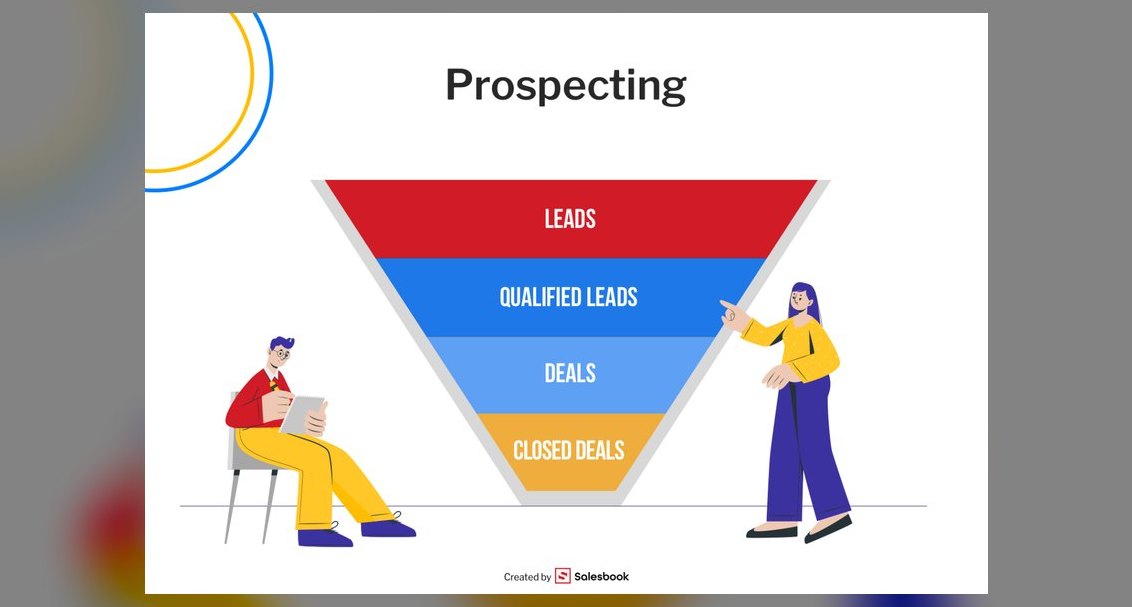 pulse-recentHigh-Profit Prospecting by Mark Hunter — Top 10 Key Takeaways for Sales Leaders in 2027
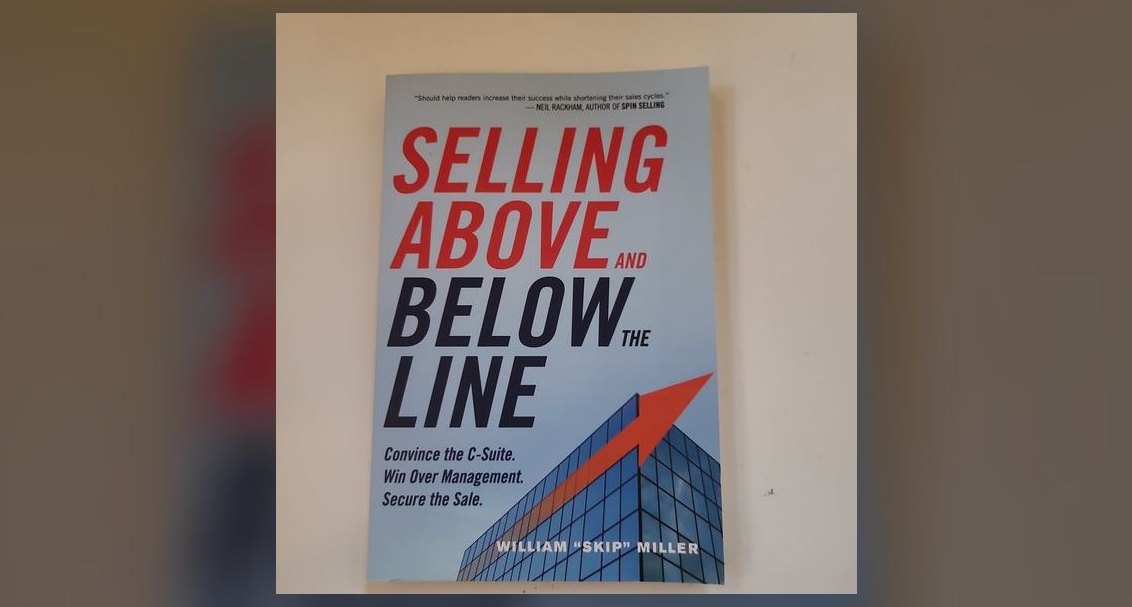 pulse-recentSelling Above and Below the Line by Skip Miller — Top 10 Key Takeaways for Sales Leaders in 2027
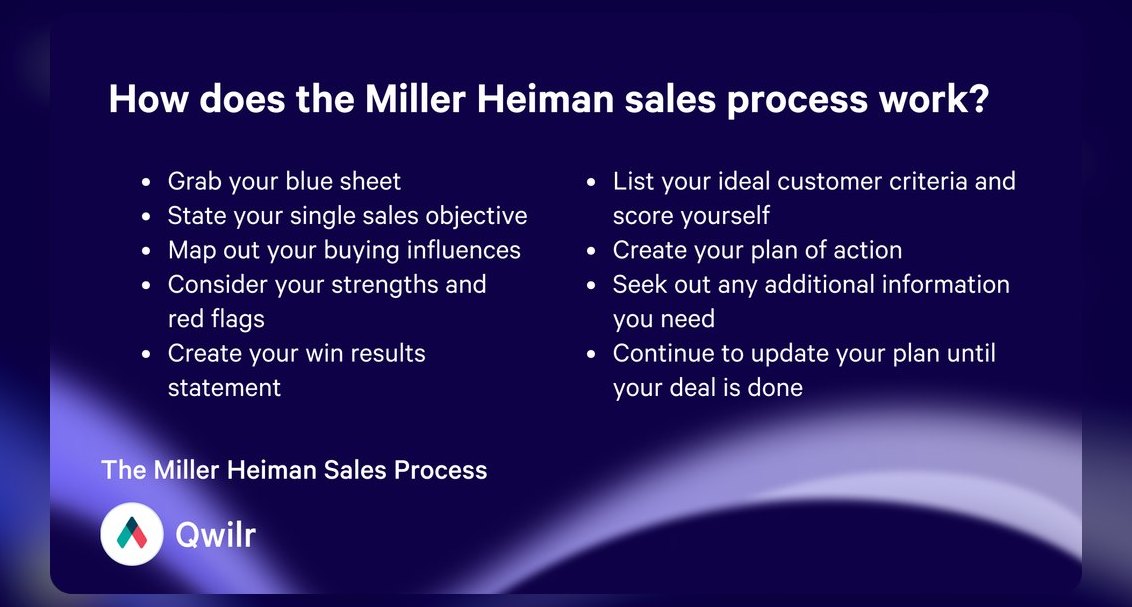 pulse-recentWhat is the step-by-step process for Strategic Selling by Miller Heiman in 2027?
 pulse-recentCoaching Salespeople into Sales Champions by Keith Rosen — Top 10 Key Takeaways for Sales Leaders in 2027
 pulse-recentWhat is the first concrete step in SPIN Selling by Neil Rackham for structuring a discovery call in 2027?
 pulse-recentWhat is the second concrete step in Strategic Selling by Miller Heiman for identifying a sales coach in 2027?
 pulse-recentThe Closer’s Survival Guide by Grant Cardone — Top 10 Key Takeaways for Sales Leaders in 2027
 pulse-booksRework by Jason Fried and David Heinemeier Hansson — Cliff Notes Summary
 pulse-recentWhat is the first concrete step in Sandler Rule #4 for a sales leader to implement in 2027?