


New Sales. Simplified. by Mike Weinberg — Cliff Notes Summary & Key Takeaways
Quality
Certified
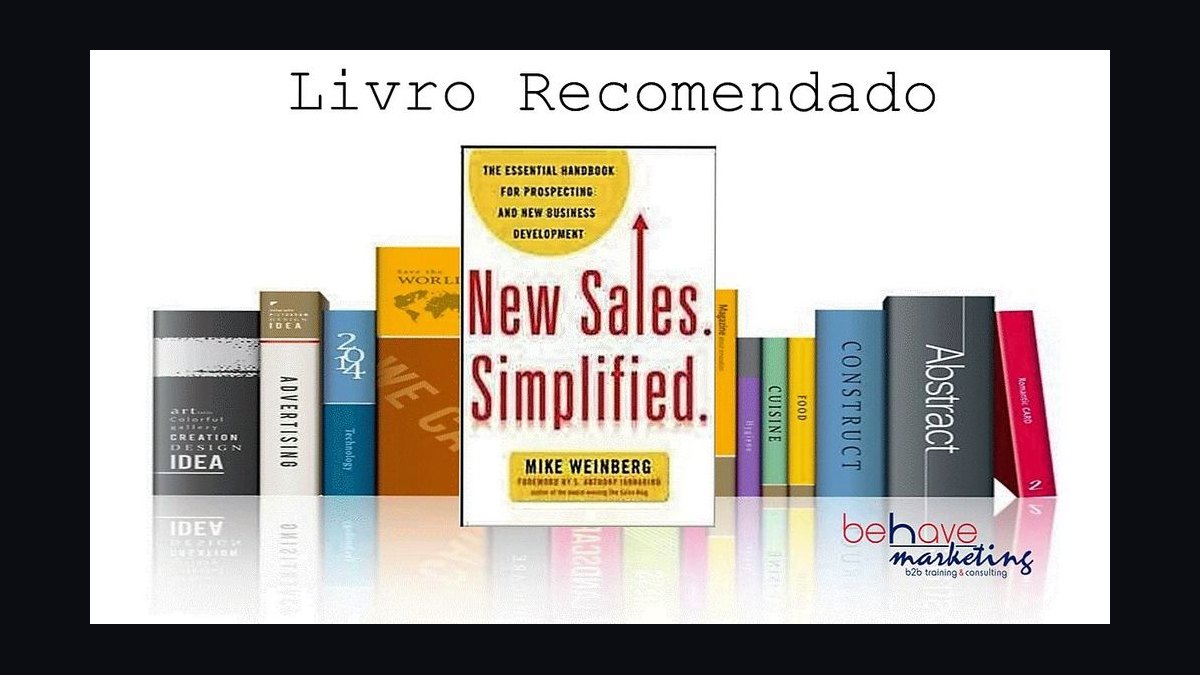
*New Sales. Simplified.* by Mike Weinberg (AMACOM, 2012) is a back-to-basics handbook for winning net-new business. Its core claim: most reps are "account managers in hunter's clothing." The fix is a finite target list of roughly 30 named accounts, a three-part Sales Story, a memorized Power Statement, and calendar-blocked outbound time.
The account executive who hasn't opened a new logo in fourteen months
Picture a mid-market AE — call her a composite of every rep this book was written for. Her title says "Business Development Manager." Her quota says 60% new logo, 40% expansion. Her actual calendar says something else entirely: four standing internal meetings, a Monday forecast call, a Thursday product sync, thirty-one recurring check-ins with existing accounts, and a rolling inbox of support escalations that her customers route to her because she answers faster than the support queue does.
She is busy from 8:00 a.m. to 6:30 p.m. She is also, by any honest measure, not selling. She has not initiated a conversation with a company that isn't already a customer in over a year. When the quarterly business review comes and the new-logo column reads zero, the diagnosis in the room is usually "market conditions" or "our pricing is off" or "marketing isn't sending enough leads." Weinberg's argument is that all three of those are downstream symptoms. The upstream cause is that nobody, anywhere in the org, is doing proactive outbound work against a named list.
This scenario is worth sitting in because it explains why the book landed the way it did. It wasn't published into a vacuum of tactics — 2012 had plenty of tactics. It was published into an era when the profession had quietly redefined "sales" to mean "responding." Inbound marketing had matured enough that a lot of pipeline arrived without anyone dialing. CRM adoption meant reps had a place to log activity that felt productive. SDR teams were emerging as the group that did the unpleasant part. The net effect was a generation of quota-carrying sellers who had never been taught, and were never expected, to open a cold relationship from nothing.

The scenario broadens well past software. A commercial insurance producer inheriting a renewal book faces exactly the same trap: the book renews, the commission is fine, and there is no forcing function to go find new risk to write. A staffing agency account manager servicing three big logos will absorb every hour those logos generate. A commercial printer, a freight broker, a managed-services provider, a regional industrial distributor — same structure, same drift. The book is written in B2B-generic language on purpose, because the failure mode is structural rather than industry-specific.
What makes the diagnosis sting is that the drifting rep is usually a *good* one. She is responsive, technically credible, well-liked by her accounts, and genuinely valuable to the company. She is not lazy. The work she does is real work. It is simply not new-business work, and no amount of doing it harder produces a new logo. Weinberg's phrase for the resulting org — everyone busy, nobody hunting — is the crisis half of "Sales Crisis and Opportunity," the title of the book's first part.
The opportunity half is the flip side: because so few sellers do proactive outbound competently, the ones who do face weak competition for a prospect's attention. If your named target has heard from four vendors this quarter and three of them opened with "I wanted to reach out and see if you'd be open to a quick fifteen minutes to learn about our platform," a rep who opens with a specific, recognizable client issue in the prospect's own language is not competing on a level field. That asymmetry is the whole business case for the system.
How the Weinberg system actually works, component by component

The framework has five linked pieces, and the linkage matters more than any single piece. Weinberg's structure runs: a selected target list, a compelling message, an effective sales story, active pursuit, and face-to-face meetings. Break any link and the chain stops producing.
The Strategic Target Account List. This is the spine. The instruction is aggressive in its narrowness: roughly 30 named accounts, with real company names on a real page. Not "the manufacturing vertical." Not a 400-row CRM filter. Thirty. The number is chosen to be small enough that a rep can remember every name, know the current state of every pursuit without opening a system, and touch each account meaningfully in a rolling cycle. Four selection signals govern who makes the cut: fit (right industry, right size, right complexity for what you sell), pain (a visible problem you actually solve), access (some plausible route to a decision-maker — a warm intro, a conference, a known org chart), and timing (a triggering event such as a leadership change, an acquisition, a funding round, a facility opening, a regulatory deadline).
The Sales Story. Weinberg is blunt that this is not the product brochure. It is a three-part construction, and the order is the entire point: client issues we solve, then offerings, then differentiators. Reps who lead with offerings sound identical to every competitor, because offerings across a category genuinely are similar. Reps who lead with client issues — described in the prospect's vocabulary, not the vendor's — earn the right to keep talking. The story is written once, refined continuously, and reused across cold calls, first meetings, proposals, and networking conversations.
The Power Statement. A roughly 30-second verbal word-track distilled from the Sales Story, structured as: we help *[type of client]* who struggle with *[client issues]* to achieve *[outcomes]*, and what makes us different is *[differentiators]*. It is meant to be memorized to the point of naturalness. Weinberg's comparison is to a stand-up comic rehearsing material — the goal is not to sound scripted but to have removed every moment of improvisation from a high-stakes thirty seconds.
Active pursuit. The phone is the anchor channel in the 2012 text, with voicemail, email, and physical mail as assists rather than substitutes. Voicemails run under about 20 seconds, reference one specific client issue, and state the callback number twice. Emails reference the voicemail and propose a specific next step rather than asking for open-ended "thoughts." Hand-addressed physical mail is recommended specifically in categories where every competitor has abandoned it.
Face-to-face meetings. The first meeting follows a four-part structure: build rapport, set the agenda, discover client issues through open-ended questions, and propose a specific next step before leaving the room. The stated goal of a first meeting is never the close — it is earning a second meeting with the right people present.
Wrapping all five is the Sales Attack Planner, a single-page weekly operating document listing the 30 accounts down the left with contact name and title, date of last touch, next planned touch, channel, and desired outcome. It is reviewed and rewritten every Friday for the following week. It deliberately lives outside the CRM dashboard, because a dashboard reports what happened and the planner commits to what will happen.
The system is closed-loop by design. Accounts that go a full pursuit cycle without traction come off the list and get replaced, which keeps the roster at a workable size instead of letting it calcify into thirty names the rep has stopped believing in. That refresh discipline is what separates a target list from a wish list.
The numbers the system actually runs on
Weinberg's book is not a quantitative study, and it is worth being precise about which numbers come from the text and which are the practitioner's job to establish. The figures the book itself anchors on are structural, not statistical.
Thirty accounts. The target list size is the load-bearing number. Its logic is cognitive rather than mathematical: thirty names is roughly what one person can hold in working memory, prepare distinctly for, and revisit on a repeating cycle without the list becoming an abstraction. A rep touching each of thirty accounts across a rolling four-to-six-week cycle is running something like five to eight meaningful account-touches per working day — demanding but survivable. The same rep with 300 names touches each one roughly never.

Two to three hours, three mornings a week. The prescribed prospecting block. Calendar-protected, phone-forward, no email, no internal meetings, no interruptions. That is six to nine hours weekly of genuinely proactive work — call it 15–20% of a standard week. The number is set low deliberately: it has to survive contact with a real calendar. A rep who commits to "prospecting all day Monday" abandons it the first Monday a customer escalates. A rep who commits to 8:00–10:30 on Monday, Wednesday, and Friday can defend it for a year.
Thirty seconds. The Power Statement length. Under twenty seconds and there isn't room for issues, outcomes, and differentiation. Past forty-five and you have lost a cold prospect. The constraint forces brutal editing, which is most of its value.
Twenty seconds. The voicemail ceiling, with the number stated twice — once early, once at the close — because the listener's pen never comes out on the first pass.
Ninety days. The trial period Weinberg asks readers to commit to before judging the system. That window is chosen because new-business cycles in most B2B categories run long enough that thirty days of prospecting produces meetings but not closed revenue, which invites premature abandonment right at the point where the pipeline is finally building.
Beyond the book's own figures, the honest guidance for a practitioner is to instrument your own funnel rather than borrow someone else's benchmarks. Track four ratios over a full quarter: dials-to-conversations, conversations-to-first-meetings, first-meetings-to-second-meetings, and second-meetings-to-closed-won. Those four numbers, measured on your own list in your own category, tell you exactly where the system is leaking. Published industry conversion benchmarks vary so widely by deal size, category, and buyer seniority that importing them mostly produces false confidence — a $4,000 ACV transactional motion and a $400,000 enterprise pursuit share almost nothing in funnel shape.

One derived number is worth computing early: your meetings-per-week requirement. Work backward from quota — annual new-logo target, divided by average new-logo deal size, gives deals needed; divide by your close rate from first meeting to get first meetings needed; divide by working weeks. If the answer is four first meetings a week and your current outbound cadence produces one, the gap is not a motivation problem, it is an arithmetic one, and it tells you exactly how much the prospecting block has to expand or how much the target list has to sharpen.
The list-refresh rate deserves a number too. A practical rule is that if an account has absorbed a full pursuit cycle — a sequence of calls, voicemails, emails, and at least one non-digital touch — with zero response, it is replaced. Reps who never replace names end up with a comfortable list of familiar non-buyers. Reps who churn the list weekly never build the multi-touch persistence that actually opens doors. Somewhere around a 20–30% quarterly replacement rate keeps a list both fresh and patient.
What holds up, what has aged, and what to run instead
Any honest summary of a 2012 sales book has to separate the durable from the dated, because the temptation is either to treat the whole thing as scripture or to dismiss it because the phone chapter reads as a period piece.
Durable. The diagnosis is the most durable part — organizations drift toward account management, and the drift is invisible until the new-logo column reads zero. The finite named target list is durable and arguably more valuable now than in 2012, because modern tooling makes it trivially easy to build a 5,000-row list and spray it, which is precisely the failure the constraint prevents. The Sales Story's issues-before-offerings ordering is durable and maps cleanly onto every serious messaging framework since. The blocked-time discipline is durable, and if anything harder to maintain now than it was before persistent chat notifications. The mindset material is durable for the plain reason that rejection volume in outbound work has gone up, not down.

Aged. The phone-is-king thesis is the clearest casualty. Desk phones largely vanished; mobile numbers are guarded; carrier spam-labeling means an unknown number often never rings at all. The gatekeeper Weinberg trains reps to navigate has been replaced by a spam filter, a LinkedIn connection request queue, and an assistant who screens by calendar rather than by phone. The channel logic inverts in many categories: the call is now often the follow-up to a warm email or a referral, not the opener.
What replaced the manual layer. Multi-channel sequencing platforms generalized what Weinberg had reps do by hand on the Attack Planner — Outreach, Salesloft, and Apollo all encode the same idea of a planned, multi-touch, multi-channel pursuit against a named list. Intent-data providers such as 6sense, Demandbase, and Bombora automate a slice of the target-selection work that Weinberg did by paging through directories. The important observation is that these tools implement the *mechanics* of the system while doing nothing about its *substance*: a sequencing platform will happily send a thousand copies of a message that leads with offerings instead of client issues, at which point you have industrialized the exact failure the book was written to correct.
Where an SDR model changes the shape. The 2012 text assumes the AE prospects for themselves. The split-role model — SDRs open, AEs close — became dominant after *Predictable Revenue* popularized it, and Weinberg later pushed back on over-delegation of prospecting in *Sales Truth*. The practical synthesis: the specialization argument is strongest at high volume with short cycles and a repeatable qualification bar, and weakest in complex, low-volume, high-ACV pursuits where the person who opens the relationship needs the credibility to carry it. Even in a full SDR model, the AE owning a personal list of a dozen strategic names is a hedge worth keeping — an AE with zero self-sourced pipeline has no floor when the SDR team's output drops.
Adjacent workflows the system touches. Marketing feels the Sales Story immediately, because a well-built client-issues section is better positioning research than most vendor messaging documents. Customer success benefits from the trigger-event discipline in reverse — the same signals that make an account a good target (leadership change, acquisition) make an existing account a churn risk. RevOps inherits the measurement burden: the four ratios above only exist if activity and stage transitions are captured consistently, which is a systems problem, not a seller problem.
The failure modes that kill this system in practice

The book is simple. Implementing it is not, and the ways it fails are consistent enough to enumerate.
The list that quietly grows. A rep builds thirty names, has a good conversation with a company that wasn't on the list, adds it, adds two more the following week, and inside a quarter is running an eighty-name list that is functionally the same as no list. The discipline is one-in-one-out: adding a name requires removing one. Write the list on a single page precisely because a page has an edge and a spreadsheet does not.
The Sales Story that is secretly a brochure. The most common corruption. A rep writes the client-issues section by paraphrasing the product's feature list into problem-shaped sentences — "companies struggle with a lack of unified reporting" is a feature written backward, not an issue a buyer recognizes. The test is whether a target prospect, reading only the issues section with the vendor's name removed, would say "that's us." If it reads as generic, it is generic. Source the language from actual customer interviews and lost-deal debriefs, not from the marketing site.
The prospecting block that erodes. It starts with one legitimate exception — a customer emergency on a Wednesday morning. Then a Monday QBR gets scheduled into the slot. Within six weeks the block exists only on the calendar. Defenses that work: put it on the calendar as busy so colleagues cannot book it, agree the exception rule with your manager in advance (typically: only a live customer outage moves it, and it moves rather than being cancelled), and track blocks-held-versus-blocks-scheduled as a weekly number. If you cannot report that number, the block is already gone.

Confusing activity with pursuit. Sending forty templated emails is not active pursuit under this framework, because pursuit means a planned multi-touch sequence against a *specific* account with a *specific* desired outcome. The Attack Planner's "desired outcome" column exists to force that distinction. A rep who cannot state what they want from the next touch on a given account is generating activity, not pursuit.
Skipping the rehearsal. The Power Statement written but never spoken aloud is worthless. It has to be delivered out loud, repeatedly, until the delivery is unremarkable. Reps skip this because rehearsing feels embarrassing in an open office. The workaround is mundane: record yourself on a phone, listen once, re-record. Three cycles is usually enough to hear every unnatural clause.
Managers who inspect instead of accompany. The management failure mirrors the rep failure. A manager who reviews the pipeline weekly and never joins a live prospecting call is inspecting output while having no visibility into method. The high-leverage management activity in this system is going on calls — joint dials, joint first meetings, listening to how the Sales Story actually comes out of the rep's mouth. Everything a dashboard shows is a lagging indicator of something a manager could have heard directly six weeks earlier.
Judging the system at thirty days. Prospecting started in January produces meetings in February and revenue in April in a lot of categories. Abandoning at the four-week mark — right when meetings are appearing but revenue isn't — is the single most common way the whole effort dies. This is what the ninety-day commitment exists to prevent.
Treating tooling as the strategy. Buying a sequencing platform and importing 5,000 contacts is not an implementation of this book; it is the industrialized version of the problem. The tool should execute a strategy that already exists on paper — a named list, a written story, a defended block of time. Sequence the thirty. Personalize the first touch from the client-issues section. The platform is a multiplier on whatever discipline you already have, including zero.
Related questions
How long does it take to see pipeline from this system?

Meetings typically appear within two to four weeks of consistent blocked prospecting; closed revenue lags by however long your sales cycle runs. Weinberg asks for a 90-day commitment specifically because judging earlier catches the meetings-without-revenue window and invites premature abandonment.
Should the Sales Story be different per target account?
The structure stays fixed; the client-issues section gets tailored. Keep one canonical story, then swap in the two or three issues most relevant to a given account's industry and trigger event. Rewriting the whole story per account defeats the memorization the system depends on.
Does this work for inbound-heavy businesses?
Yes, as a hedge. Inbound volume is a function of marketing spend and market conditions, both of which can drop without warning. A rep with a live named target list and a defended prospecting block has a floor under their number that a purely reactive rep does not.
What if my target list has fewer than 30 viable accounts?
Then use fewer. In genuinely small addressable markets — heavy industrial equipment, regional enterprise accounts — a list of twelve deeply researched names with multiple contacts mapped inside each is stronger than thirty shallow ones. The number is a ceiling on cognitive load, not a quota.
FAQ
Is New Sales. Simplified. still worth reading?
Yes, with a caveat. The diagnosis, the target-list discipline, the Sales Story structure, and the blocked-time prescription are durable and remain among the clearest articulations of proactive new-business work available in a single volume. Read the phone chapter as a historical channel argument rather than a current one, and pair it with more recent material on multi-channel cadence.
How does it differ from The Challenger Sale?
They solve different problems. *The Challenger Sale* is about how to run a meeting with a complex buying committee — teaching, tailoring, and taking control of the conversation. *New Sales. Simplified.* is about how to get the meeting at all. If your first meetings convert poorly, Challenger addresses that. If you aren't getting first meetings, this book does. They are complements, not substitutes.
Can I just run the target list inside a sequencing platform?
You can, and most people should. The mechanics of the Attack Planner — who, what channel, when, desired outcome — map cleanly onto a modern sequence. The risk is that the platform's ease of scale tempts you into a 5,000-contact list with a templated message that leads with your product. Run the sequence against thirty named accounts with a message built from client issues and you have modernized the system rather than abandoned it.
Does the book address SDR teams?
Barely. The 2012 text assumes account executives prospect for themselves, and the split SDR/AE model scaled after publication. Weinberg addressed over-reliance on delegated prospecting in his later work. The practical read: specialization suits high-volume short-cycle motions, while complex high-value pursuits usually benefit from the closer having opened the relationship personally.
What should a sales manager do differently after reading it?
Go on calls. The book's management argument is that joint prospecting calls, joint first meetings, and ride-alongs are the highest-leverage activity available to a manager, and that dashboard review is a poor substitute because it surfaces lagging indicators only. A manager who has not heard a rep deliver the Power Statement live cannot coach it.
What is the single highest-value takeaway?
Build a written list of roughly thirty named accounts, write the three-part Sales Story leading with client issues, memorize the Power Statement, and defend two to three hours of outbound time on three mornings a week. Those four actions constitute the entire strategy; everything else in the book is implementation detail supporting them.
Sources
- https://www.mikeweinberg.com/
- https://www.harpercollinsleadership.com/
- https://www.wiley.com/
- https://hbr.org/2012/07/the-end-of-solution-sales
- https://www.salesforce.com/resources/
- https://www.hubspot.com/sales
- https://www.gartner.com/en/sales
- https://www.linkedin.com/business/sales/blog
- https://www.salesloft.com/resources
- https://www.outreach.io/resources
Related on PULSE
This page will be disappearing soon. Save it to your device for $1 — or read it free while it is here.
@Kory-White- · if Venmo asks, the last 4 of my number are 2012
This page is gone.
This one is off the shelf now. $1 keeps it on your phone for good — the whole page, pictures and diagrams included.
 book-summaryLittle Red Book of Selling by Jeffrey Gitomer — Cliff Notes Summary
 pulse-recentWhat are the concrete steps in Strategic Selling for building a sales plan in 2027?
 pulse-recentObviously Awesome by April Dunford — Top 10 Key Takeaways for Sales Leaders in 2027
 pulse-recentProActive Selling by Skip Miller — Top 10 Key Takeaways for Sales Leaders in 2027
 pulse-recentConceptual Selling by Robert Miller and Stephen Heiman — Top 10 Key Takeaways for Sales Leaders in 2027
 pulse-recentHow I Raised Myself from Failure to Success in Selling by Frank Bettger — Top 10 Key Takeaways for Sales Leaders in 2027
 pulse-recentHow do you implement the Sandler Rules in your first 30 days as a new sales rep in 2027?
 pulse-recentStart with No by Jim Camp — Top 10 Key Takeaways for Sales Leaders in 2027
 pulse-recentSales Engagement by Manny Medina — Top 10 Key Takeaways for Sales Leaders in 2027
 pulse-recentCrossing the Chasm by Geoffrey Moore — Top 10 Key Takeaways for Sales Leaders in 2027