


The Power of Moments by Chip and Dan Heath — Cliff Notes Summary
Quality
Certified
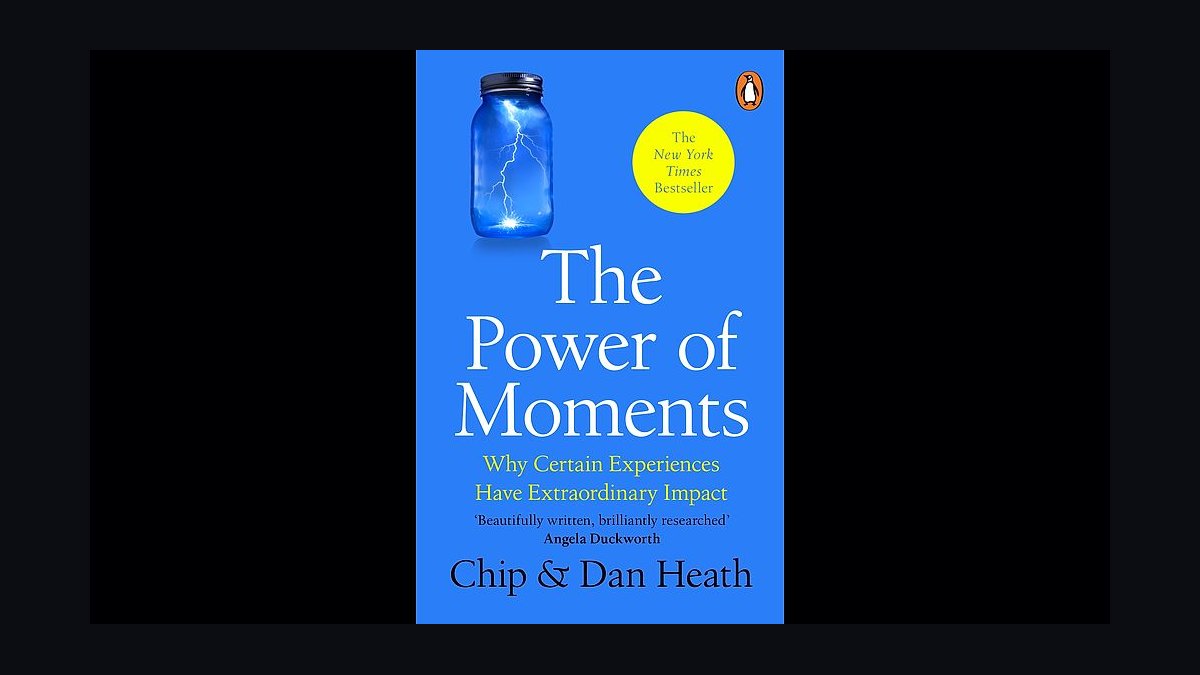
The Power of Moments: Why Certain Experiences Have Extraordinary Impact by Chip Heath and Dan Heath (Simon & Schuster, 2017) argues that memorable experiences are not accidents — they are engineered from four ingredients the brothers label EPIC: Elevation, Pride, Insight, and Connection. The central thesis: human memory is lumpy, not linear; buyers, employees, and students remember the peaks and the endings of an experience and forget almost everything in between (the Forgettable Middle). Sellers and Customer Success Managers who deliberately design Defining Moments at the three high-leverage points — Transitions, Milestones, and Pits — outperform peers on retention, expansion, and referrals because their customers literally remember them. In the modern sales canon the book sits alongside Cialdini's Pre-Suasion, Voss's Never Split the Difference, and the Gainsight customer-success playbook as a foundational text for experience design in B2B revenue — the in-product onboarding flows built in Gainsight, Pendo, and Appcues are direct descendants of its moment-design logic.
1Part One — Defining Moments

1.1 Chapter 1 — Defining Moments
The Heaths open at the Magic Castle Hotel in Los Angeles — a frumpy 1960s motor lodge that ranks near the very top of TripAdvisor for the entire city, ahead of the Four Seasons and the Ritz-Carlton. The mechanism is the Popsicle Hotline: a cherry-red phone by the pool that guests dial for a free popsicle delivered on a silver tray by a white-gloved server. The amenity is trivial. The moment is unforgettable. This is the book's opening proof — that memorable experiences are engineered, not stumbled into, and that the cost of the moment has nothing to do with its memorability. The chapter introduces the four ingredients the rest of the book unpacks.
1.2 Chapter 2 — Thinking in Moments
Kahneman's Peak-End Rule anchors this chapter — research showing that humans evaluate experiences not by averaging every minute but by the most intense moment (the peak) plus the final moment (the end). The brothers argue this is liberating: you don't need every customer touchpoint to be amazing; you need to engineer two or three peaks and stick the landing. The chapter establishes the book's operating principle: "Moments matter — design them or accept the default." Default experience is forgettable middle. Designed experience is memorable. The choice is the seller's.
2Elevation — Break Above the Everyday
2.1 Chapter 3 — Build Peaks
A peak is a moment that rises above the routine of daily life. The Heaths profile Hillsdale High School's Senior Trial — students spend a week prosecuting a literary character (Lady Macbeth) in a real courtroom with real judges. Alumni remember it twenty years later. The mechanism: sensory richness + stakes + a clean ending. For sellers, the analog is Disney's Magical Express at Walt Disney World — guests' luggage was whisked from the airport to their hotel room without them seeing it, transforming a logistics chore into a moment of "how did they do that?" elevation.
2.2 Chapter 4 — Break the Script
Break the Script is the operating verb of Elevation. Pret a Manger lets its staff give away a portion of orders for free at their personal discretion — to the woman who looks like she's having a bad day, to the kid whose face lights up. The cost is real; the memorability is enormous because the brain logs novelty. Disney's threshold rituals work the same way — a personalized welcome at the door turns arrival into a moment rather than a transaction. For B2B sellers, breaking the script can be as small as a handwritten thank-you note after a discovery call when every other vendor sends a templated follow-up email. The default is forgettable; deviation from the default is the moment.
3Insight — The Sudden Realization
3.1 Chapter 5 — Trip Over the Truth

Insight is the moment a person realizes something for themselves rather than being told. The Heaths' rule: engineer the truth so the buyer trips over it — don't recite it. The case study is Scott Guthrie, a Microsoft executive who, instead of telling his engineers their build process was broken, made them sit in a room and try to install their own software. The team realized for themselves how unusable the install was. Insight earned is insight kept. For sellers, this is the Challenger Sale "commercial teaching" move executed correctly: don't present a slide deck of pain points — show the buyer their own data, ask the question, let them say the painful sentence out loud themselves. Cialdini's Pre-Suasion is the academic cousin of this chapter.
3.2 Chapter 6 — Stretch for Insight

Self-insight comes from being pushed past the comfort zone — the Heaths argue that stretching toward a goal, and sometimes failing, generates self-knowledge that comfort never will. For Customer Success Managers, the Aha Moment in product onboarding is the textbook example: the moment a Slack user creates their first channel and sees the team's first reply land, the moment a Notion user nests their first database inside a page, the moment a Figma user shares their first live link. Pendo and Appcues are entire product categories that exist to engineer this moment on a schedule.
4Pride — Recognize Accomplishment
4.1 Chapter 7 — Recognize Others
Recognition is wildly under-deployed because managers assume people already know they're appreciated. They don't. The Heaths cite research showing that personal recognition from a manager is one of the most motivating workplace events there is — outranking even pay raises in many studies. The sales-floor analog is ringing the bell when a rep closes their first deal. The brain encodes the bell-ring + the cheers + the manager walking over to shake the hand as a defining moment that the rep will tell their spouse about that night. Cost: a few minutes and a little ceremony. Lifetime value: incalculable.
4.2 Chapter 8 — Multiply Milestones
The most actionable chapter in the book. Language-learning programs discovered that learners quit because "fluency" is a milestone years away. The fix: break fluency into named sub-levels — like the A1, A2, B1, B2, C1, C2 scale — with badges and certificates at each. Learners now get a pride hit every few months and persistence improves dramatically. The sales analog: don't celebrate only the closed-won. Celebrate the first discovery call, the first demo booked, the first MEDDPICC field filled, the first MQL touched in 24 hours. Pipeline is a marathon; multiply the milestones and reps don't burn out before the finish.
4.3 Chapter 9 — Practice Courage
Courage is rehearsed, not summoned. The Heaths profile the civil-rights workers of the 1960s who practiced being screamed at, shoved, and spat on so the real moment would not paralyze them. For sellers, role-play before a high-stakes negotiation is the same mechanism: rehearse the price objection out loud before the call so that, in the room, holding the line is muscle memory rather than improvisation. Courage you've practiced is courage you can summon under pressure.
5Connection — Shared Meaning
5.1 Chapter 10 — Create Shared Meaning
Connection peaks when a group goes through something synchronized, significant, and slightly painful together. The chapter profiles a large all-staff healthcare meeting where leadership reconnected thousands of employees to the patient at the center of the mission and asked every person to recommit — a moment still referenced by name years later. For sellers, the analog is the kickoff meeting at the start of an enterprise implementation — the buyer, the seller, the CSM, and the implementation team in one room, naming the outcome they will achieve together. Skipping the kickoff and going straight to status updates kills the relationship before it starts.
5.2 Chapter 11 — Deepen Ties
The Heaths borrow John Gottman's relationship research: ties strengthen through responsiveness to the other person's small bids for attention. The B2B parallel is the CSM who replies to a customer's casual Slack message within an hour instead of two days, or the seller who notices a buyer mention their kid's basketball game and sends a "how'd the game go?" text the next morning. Connection is built in micro-moments of responsiveness, not in the QBR. Reliable, attentive responsiveness is what turns a vendor relationship into a reference for life.
5.3 Chapter 12 — Making Moments Matter
The closing chapter ties the four ingredients into the central operating principle: "Pits demand rescue. Peaks demand engineering." Every customer journey has natural pits — implementation hell, the renewal-anxiety moment, the executive-sponsor-just-quit moment. These demand a rescue play. And every customer journey has natural milestone opportunities — first value, first ROI report, first expansion conversation. These demand engineered peaks. The Forgettable Middle is where most experiences die — not because anything goes wrong, but because nothing is designed.
6The EPIC Ingredients Mapped to Defining Moments
Frameworks at a Glance
- EPIC — Elevation, Pride, Insight, Connection. The four ingredients of every defining moment.
- Peak-End Rule — Kahneman's research: humans remember the peak intensity and the ending; everything else fades.
- Defining Moments — concentrate moment-design at three points: Transitions (new chapter), Milestones (achievement), Pits (low moment needing rescue).
- Break the Script — the Elevation tactic; disrupt expected patterns (Pret a Manger free coffees, Disney's threshold welcome).
- Recognize Others — the Pride tactic; personal recognition is one of the most under-deployed levers in management.
- Multiply Milestones — break long journeys into named sub-levels so pride hits land every few months.
- Practice Courage — rehearse hard moments so the real moment is muscle memory.
- Trip Over the Truth — the Insight tactic; engineer the realization rather than reciting it.
- The Forgettable Middle — the default state of any experience that isn't deliberately designed.
7The Customer-Journey Moment-Design Operating Loop
What Holds Up, What Has Aged
What holds up. The EPIC ingredients are durable because they map to how human memory actually works — Lisa Genova's 2021 book Remember deepened the neuroscience behind the Peak-End Rule and is consistent with the memory claims the Heaths made in 2017. The Magic Castle Popsicle Hotline, Pret a Manger free coffees, and the Magical Express elevation cases still land. The Multiply Milestones chapter is arguably more useful now than it was in 2017 because PLG companies like Notion, Linear, Figma, and Slack have built in-product milestone celebrations — anniversary banners, "first file" toasts, streak counters — at a scale the original book never imagined.
What has aged. The book is pre-remote. Most Connection case studies assume people are in the same room — the all-staff meeting, the courtroom Senior Trial. In a remote-first revenue org the Connection ingredient is the hardest to engineer, because in-person rapport is gone; Loom and Vidyard async video partially fill the gap, but the synchronous tears-in-the-room moment is much harder to manufacture over Zoom. The book also predates the AI moment-detection category — call-intelligence tools like Gong now auto-summarize calls and flag risk and competitor mentions, surfacing potential Pits and Peaks the Heaths would have loved but couldn't have written about. And the Customer Success discipline has formalized much of what the book taught: a Gainsight playbook reads as a direct application of these ideas — Onboarding = Transition, Aha = Insight, QBR = Milestone, Save Play = Pit. The book supplied the vocabulary; the category turned it into software.
FAQ
What are the four EPIC ingredients in The Power of Moments? Elevation (break above the everyday), Pride (recognize accomplishment), Insight (trip over the truth), and Connection (shared meaning). Any defining moment contains at least one; the most powerful contain three or four.
What is the Peak-End Rule and why does it matter for sellers? It's Kahneman's finding that humans evaluate experiences by the most intense moment (peak) plus the final moment (end), not by averaging the whole. For sellers it means: engineer two or three peaks during the deal cycle and obsess over the closing moment — the contract signing, the kickoff handoff, the first ROI report — because that's what the buyer will actually remember.
Where in the customer journey should I design defining moments? At three specific points: Transitions (onboarding kickoff, contract renewal), Milestones (first value, first ROI report, first expansion), and Pits (implementation hell, executive-sponsor churn, product outage). The Heaths call the time between these points the Forgettable Middle — don't over-invest there.
What's a concrete example of Break the Script for a B2B seller? Send a handwritten thank-you note after a discovery call when every competitor sends a templated email. Or record a five-minute personalized Loom video walkthrough of the buyer's exact pain point instead of a generic deck. The script is whatever everyone else does; your job is to deviate in a way the buyer remembers.
How does this book relate to The Challenger Sale and Pre-Suasion? Power of Moments is the experience-design layer underneath both. The Challenger Sale prescribes commercial teaching — Power of Moments tells you how to make that teaching land as Insight by engineering the buyer's own realization. Pre-Suasion (Cialdini, 2016) is the cousin idea — both argue that what you do *before* the message determines whether the message is remembered.
Is the book still relevant in a remote-first revenue org? Yes, with one caveat. Elevation, Pride, and Insight all work as well or better in remote settings (in-product onboarding, badge systems, async video). Connection is harder because in-person tears-in-the-room moments are gone; the workaround is intentional synchronous rituals (kickoff calls, QBRs with cameras on, customer-advisory-board offsites) plus async micro-responsiveness in Slack and email.
Bottom Line
Read The Power of Moments if you sell, manage CSMs, or run revenue operations — it explains why Gainsight playbooks, Pendo onboarding flows, and Appcues guided tours work. Monday morning: audit your customer journey and mark every Transition, Milestone, and Pit — then engineer one EPIC moment at each. Skip the Forgettable Middle. Pits demand rescue. Peaks demand engineering. The sellers and CSMs who internalize this outperform on retention, expansion, and referrals because their customers literally remember them.
Related on PULSE
- Decisive by Chip and Dan Heath — Cliff Notes Summary for Sales Leaders
- Switch by Chip and Dan Heath — Cliff Notes Summary for Salespeople
- Made to Stick by Chip and Dan Heath — Cliff Notes Summary for Salespeople
- The Power of Habit by Charles Duhigg — Cliff Notes Summary for Sellers
- The Power of a Positive No by William Ury — Cliff Notes Summary
- Power Listening by Bernard Ferrari — Cliff Notes Summary
Sources
- Chip Heath & Dan Heath — *The Power of Moments: Why Certain Experiences Have Extraordinary Impact* (Simon & Schuster, 2017)
- Chip Heath & Dan Heath — *Made to Stick* (Random House, 2007)
- Chip Heath & Dan Heath — *Switch: How to Change Things When Change Is Hard* (Crown Business, 2010)
- Chip Heath & Dan Heath — *Decisive: How to Make Better Choices in Life and Work* (Crown Business, 2013)
- Daniel Kahneman — *Thinking, Fast and Slow* (Farrar, Straus & Giroux, 2011) — origin of the Peak-End Rule
- Robert Cialdini — *Pre-Suasion: A Revolutionary Way to Influence and Persuade* (Simon & Schuster, 2016)
- Lisa Genova — *Remember: The Science of Memory and the Art of Forgetting* (Harmony, 2021)
- Nick Mehta, Dan Steinman, Lincoln Murphy — *Customer Success: How Innovative Companies Are Reducing Churn and Growing Recurring Revenue* (Wiley, 2016) — the Gainsight playbook
- Matthew Dixon & Brent Adamson — *The Challenger Sale* (Portfolio, 2011) — commercial teaching and the Insight move
- John Gottman — *The Seven Principles for Making Marriage Work* (Crown, 1999) — research on responsiveness and "bids" for connection
This page will be disappearing soon. Save it to your device for $1 — or read it free while it is here.
@Kory-White- · if Venmo asks, the last 4 of my number are 2012
This page is gone.
This one is off the shelf now. $1 keeps it on your phone for good — the whole page, pictures and diagrams included.
 pulse-recentWhat are the first three concrete steps in Sandler Rule #1 for a new sales rep in 2027?
 pulse-recentHow does *The New Strategic Selling* define the first step in qualifying an opportunity in 2027?
 pulse-recentProActive Selling by Skip Miller — Top 10 Key Takeaways for Sales Leaders in 2027
 pulse-recentSales Engagement by Manny Medina — Top 10 Key Takeaways for Sales Leaders in 2027
 pulse-recentThe Sales Acceleration Formula by Mark Roberge — Top 10 Key Takeaways for Sales Leaders in 2027
 pulse-recentConceptual Selling by Robert Miller and Stephen Heiman — Top 10 Key Takeaways for Sales Leaders in 2027
 pulse-recentThe Closer’s Survival Guide by Grant Cardone — Top 10 Key Takeaways for Sales Leaders in 2027
 pulse-recentTraction by Gabriel Weinberg and Justin Mares — Top 10 Key Takeaways for Sales Leaders in 2027
 pulse-recentWhat is the first concrete step in The Sandler Rules by David Mattson for a sales leader to implement the system in 2027?
 pulse-recentBlue Ocean Strategy by W. Chan Kim and Renee Mauborgne — Top 10 Key Takeaways for Sales Leaders in 2027