


Crucial Conversations by Patterson, Grenny, McMillan, Switzler — Cliff Notes Summary
Quality
Certified
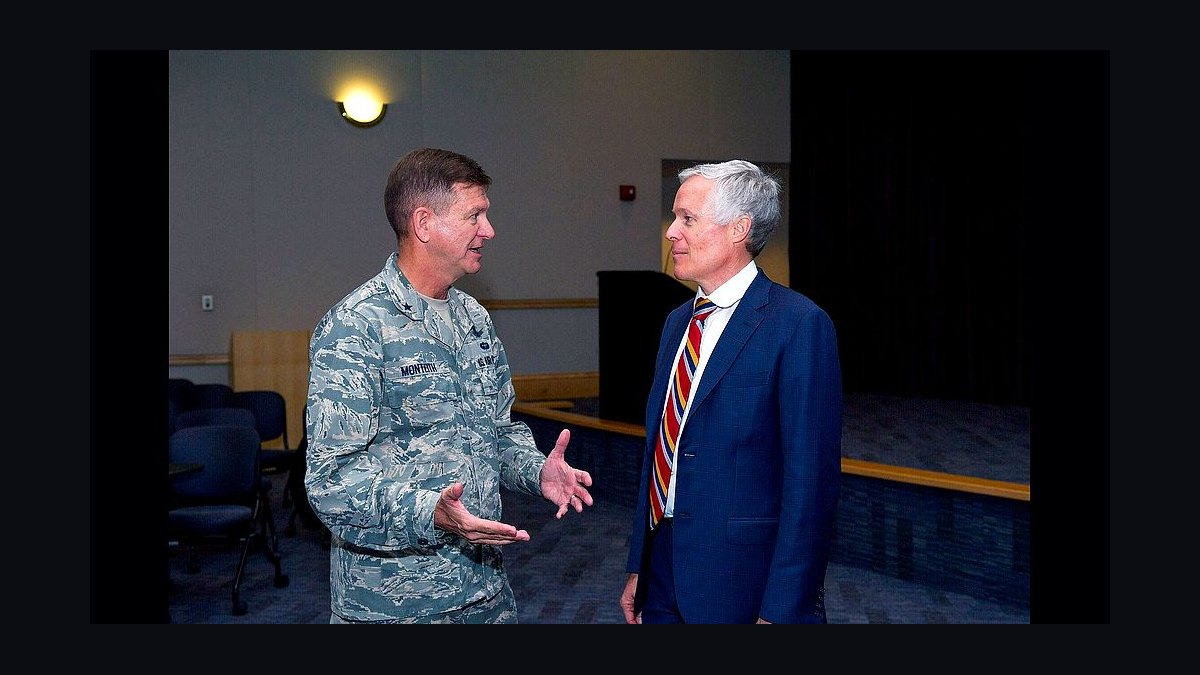
Crucial Conversations: Tools for Talking When Stakes Are High by Kerry Patterson, Joseph Grenny, Ron McMillan, Al Switzler, and (in the 3rd edition) Emily Gregory — first published by McGraw-Hill in 2002 and expanded into a 3rd edition in 2021 — argues that every consequential moment in business and life is a *crucial conversation*: a dialogue where stakes are high, opinions differ, and emotions run strong. The default human response is Silence (avoiding, masking, withdrawing) or Violence (controlling, labeling, attacking) — and both destroy outcomes. The book's central operating system is the Pool of Shared Meaning: get every party's facts, stories, and feelings into the same pool so the group reaches a better decision than any one person could alone. For sales, that is the playbook for stalled deals, ghosting champions, procurement showdowns, and renewals under pricing pressure. It sits alongside Stone, Patton, and Heen's Difficult Conversations (1999), Chris Voss's Never Split the Difference (2016), and Brené Brown's Dare to Lead (2018) as part of the canonical professional-dialogue stack.
1Part One — What and Why
1.1 Chapter 1 — What Is a Crucial Conversation?
The opening chapter sets the diagnostic: a conversation becomes crucial the moment three conditions converge — high stakes, differing opinions, and strong emotion. The authors note that people are *worst* at exactly the conversations that matter most. A rep with a deal slipping past quarter-end, a CSM watching a champion go quiet two weeks before renewal, an AE facing surprise procurement pushback at a 40% discount — all three are textbook crucial conversations. The book's premise is that this skill set is learnable, not innate, and that mastering it is one of the highest-leverage professional capabilities a person can build. The authors draw on VitalSmarts' research — decades of study across thousands of people and many organizations — to argue that high performers are not louder or smarter; they are simply more skilled at the moments when dialogue matters.
1.2 Chapter 2 — Mastering Crucial Conversations: The Power of Dialogue
Chapter 2 introduces the book's north star: the Pool of Shared Meaning. When two people disagree, each holds a private pool of facts, interpretations, and feelings. Most conversations stay private — the pools never merge. Dialogue is the act of getting every relevant fact and story into a shared pool so the team can decide from combined insight rather than partial information. The authors frame this as the antidote to both Silence and Violence: when people feel safe contributing, the pool fills, and the quality of decisions rises in direct proportion to the pool's depth.
.jpg)
2Part Two — Start with Heart and Learn to Look
2.1 Chapter 3 — Start with Heart
This chapter argues that the only person you can directly control in a crucial conversation is yourself. Before opening your mouth, ask: *What do I really want? For me, for the other person, for the relationship?* The villain is what the authors call the Fool's Choice — the false binary of "tell the truth OR keep the relationship," "win OR lose," "honesty OR kindness." Skilled communicators refuse the Fool's Choice and search for the AND — how to be brutally honest *and* deeply respectful in the same breath. The book illustrates this with leaders who held candor and respect together instead of trading one for the other, consistently producing better outcomes than those who picked a side.
2.2 Chapter 4 — Learn to Look
You cannot fix what you cannot see. Chapter 4 trains the reader to watch three things at once: content (what is being said), conditions (is safety present or at risk?), and your own style under stress (do you default to Silence or Violence?). The authors give three forms of Silence — masking, avoiding, withdrawing — and three forms of Violence — controlling, labeling, and attacking. In a sales context, a buyer going quiet on email is Silence; a buyer suddenly demanding a 50% discount and threatening to walk is Violence. Both are signals that safety has collapsed.
.jpeg)
3Part Three — Make It Safe
3.1 Chapter 5 — Make It Safe
When you notice safety breaking down, step out of the content and rebuild safety first. This is the single most counterintuitive move in the book. Most people, sensing tension, double down on the argument — which destroys safety further. Skilled communicators pause the substance, repair the relationship, then return to the substance. The two safety conditions are Mutual Purpose ("do you believe I care about your goals?") and Mutual Respect ("do you believe I respect you as a person?"). If either is missing, no amount of clever argument will land.
3.2 Chapter 6 — Master My Stories
This chapter delivers the book's most-cited framework: the Path to Action — Fact → Story → Feeling → Action. We see or hear a Fact, instantly invent a Story to explain it, the Story generates a Feeling, and the Feeling drives our Action. The trap is that we rarely separate the Fact from the Story. *"My champion didn't reply to my email"* is a Fact. *"She's ghosting me because she chose the competitor"* is a Story. The authors name three Clever Stories people use to dodge accountability: Victim ("it's not my fault"), Villain ("it's all their fault"), and Helpless ("there's nothing I can do"). The discipline is to retrace the path: separate Fact from Story, ask what other Stories could explain the same Fact, and choose a more useful interpretation before reacting.
.jpg)
4Part Four — STATE My Path and Explore Others' Paths
4.1 Chapter 7 — STATE My Path
When you have a controversial view to share, the public script is STATE:
- Share your facts — start with what is least controversial and most persuasive
- Tell your story — your interpretation of what those facts mean
- Ask for the other's path — invite their facts and story
- Talk tentatively — soften your certainty ("I'm starting to wonder if...")
- Encourage testing — actively invite disagreement
The first three letters are the *what* (the content you share); the last two are the *how* (the way you hold it). STATE is the book's signature script for performance reviews, escalations, and any moment you must voice an unpopular truth without triggering Silence or Violence.

4.2 Chapter 8 — Explore Others' Paths
The mirror of STATE is AMPP: Ask, Mirror, Paraphrase, Prime. When the other person has gone silent or hostile, you reverse the flow — pull their facts, story, and feelings into the pool with curious questions rather than pushing yours. Priming is the boldest move: take a guess at what they might be thinking, even if it casts you in a bad light, to make it safe for them to say it out loud. It rhymes with the move Chris Voss later codified as the Accusation Audit in *Never Split the Difference*.
5Part Five — Move to Action
5.1 Chapter 9 — Move to Action
A great dialogue that ends without clear next steps is a failure. Chapter 9 closes every crucial conversation with four explicit decisions: Who does what by when, and how will we follow up? The authors call out the most common failure mode — everyone nods in the room and nothing changes after. They lay out four decision-making methods (Command, Consult, Vote, Consensus) and force the group to name which one they are using before they argue about the outcome. In sales, this is the mutual action plan — written, shared, and confirmed before the call ends.

5.2 Chapter 10 — Yeah, But (Tough Cases)
The "Yeah, But" chapter applies the framework to the hardest real-world scenarios: a peer who takes credit for your work, a boss who micromanages, a partner who breaks commitments, a customer who lies. The pattern is always the same — Start with Heart, Learn to Look, Make it Safe, STATE, Explore, Move to Action — but the chapter shows how to sequence the moves under maximum pressure.
6Part Six — Putting It All Together
6.1 Chapter 11 — Putting It All Together
The capstone chapter introduces CRIB for finding mutual gain when two parties seem stuck on opposing positions:
- Commit to seek mutual purpose
- Recognize the purpose behind the strategy
- Invent a mutual purpose
- Brainstorm new strategies

CRIB is the move that breaks procurement stalemates. The buyer says "I need 30% off." The seller says "I can't go below 10%." Both have stated strategies, not purposes. CRIB pulls each side up one level — the buyer's purpose might be "predictable budget"; the seller's purpose might be "protect margin and CAC." Once both purposes are on the table, new strategies emerge — multi-year contracts, ramped pricing, scope adjustments — that neither side could see while locked on the original numbers.
6.2 Chapter 12 — Change Your Life (3rd edition addition)
The 2021 edition with Emily Gregory added material on virtual conversations, shaped by the pandemic remote-work shift. The skills are the same, but the diagnostic signals are harder to read — no body language, no hallway side-conversations, no read on who is checked out on the call. The chapter prescribes more explicit safety-building ("I want to hear the disagreement that isn't being said") and more frequent check-ins on Mutual Purpose, because the ambient relational signal is thinner.

Frameworks at a Glance
- Crucial Conversation — any dialogue where stakes are high, opinions differ, and emotions run strong.
- Pool of Shared Meaning — the goal: every party's facts, stories, and feelings combined so the group decides from full information rather than partial views.
- Silence vs Violence — the two default failure modes. Silence (masking, avoiding, withdrawing) and Violence (controlling, labeling, attacking).
- Fool's Choice — the false binary ("honesty OR kindness," "win OR lose") that skilled communicators refuse.
- STATE — Share facts, Tell story, Ask for their path, Talk tentatively, Encourage testing. The public script for controversial views.
- AMPP — Ask, Mirror, Paraphrase, Prime. The script for pulling the other person's path into the pool.
- Path to Action — Fact → Story → Feeling → Action. The internal sequence that drives every reaction; the skill is separating Fact from Story.
- Clever Stories — Victim, Villain, Helpless. The three self-serving narratives we invent to dodge accountability.
- CRIB — Commit to seek mutual purpose, Recognize purpose behind position, Invent mutual purpose, Brainstorm new strategies. The unstick move.
- Make it Safe — when safety drops, step out of content, rebuild Mutual Purpose and Mutual Respect, then return.
- Contrasting — a don't/do statement that clarifies what you do *not* mean before stating what you do mean. ("I don't want you to think I'm questioning your integrity — I do want to understand how the numbers came together.")
- Four decision methods — Command, Consult, Vote, Consensus. Pick one *before* arguing the outcome.
What Holds Up, What Has Aged
What holds up. The diagnostic — high stakes + different opinions + strong emotion = crucial conversation — is timeless and instantly portable to any team, deal, or relationship. STATE, CRIB, and the Path to Action are still taught today through Crucial Learning (formerly VitalSmarts) in corporate training programs worldwide. Amy Edmondson's work on psychological safety (*The Fearless Organization*, 2018) is the academic complement to Patterson's "Make it Safe" — Edmondson's research shows that teams with high psychological safety learn faster, surface more errors, and innovate more, and Crucial Conversations remains one of the most practical trainings for *building* that safety.

What has aged. The 2002 edition leaned hard on in-person body-language cues — crossed arms, eye contact, vocal tone — which are exactly the signals that thinned out with Zoom, Slack, and asynchronous work. The 2021 3rd edition with Emily Gregory addressed this with virtual-conversation guidance, but the diagnostic is still harder remotely. Conversation-intelligence tools — Gong, Chorus, Tethr, Avoma — now auto-flag talk-time imbalances, sentiment shifts, and topic-avoidance across recorded calls, giving reps a feedback loop the original book had to teach by feel. And "Pool of Shared Meaning" is a phrase that reads as corporate-speak today, even though the concept underneath it — combined insight beats partial views — is as sound as ever.
FAQ
What makes a conversation "crucial"? Three conditions, all present at once: stakes are high, opinions differ, and emotions run strong. Miss any one and it's just a conversation — you don't need the full toolkit.
What's the single most important move in the book? When safety breaks down, step out of the content and rebuild safety first. Almost every failed crucial conversation fails because both parties stayed in the content while the relationship was on fire.
How is this different from Chris Voss's Never Split the Difference? Voss's book is tactical negotiation under adversarial conditions (FBI hostage roots) — Mirroring, Labeling, Calibrated Questions. Patterson's book is the broader operating system for any high-stakes dialogue — peer, boss, customer, spouse. The two stack cleanly: Voss for the negotiation moment, Patterson for the whole relationship around it.
How does Crucial Conversations connect to Stone, Patton, and Heen's Difficult Conversations? *Difficult Conversations* (Harvard Negotiation Project, 1999) is the academic sibling — it diagnoses three layers in every hard conversation (the What Happened conversation, the Feelings conversation, the Identity conversation). Patterson's team built a teachable corporate skill set in the same territory. Read Stone for depth; read Patterson for the practical playbook.
Do the frameworks work in a deeply remote, asynchronous sales motion? Yes, but the signals are harder to read. The 3rd edition (2021) addresses this directly. Conversation-intelligence tools like Gong, Chorus, and Tethr restore some of the diagnostic — they flag long talk-time imbalances, sentiment drops, and topic-avoidance patterns that signal Silence in a recorded call.
What's the Monday-morning move for a stalled deal? Find the silence. Identify the stakeholder who has gone quiet, ask yourself what story you're telling about *why*, then deliberately invent two alternative stories. Reach out using STATE — share the fact ("you haven't replied in eight days"), tell your tentative story ("I'm starting to wonder if something shifted internally"), ask for their path ("can you tell me what's actually going on?"), and stay curious until their facts and feelings are in the pool with yours.
Where does CRIB fit in a procurement battle? The moment both sides have stated numbers ("I need 30% off" / "I can't go below 10%"), you're stuck on strategies, not purposes. CRIB pulls both sides up one level — the buyer's purpose might be predictable annual budget; the seller's might be margin protection and CAC payback. With both purposes visible, new strategies appear — multi-year terms, ramped pricing, scope shifts — that were invisible while both sides argued the original numbers.
Bottom Line
Crucial Conversations is one of the most practical books ever written on professional dialogue under pressure, and roughly two decades after first publication it remains required reading for any seller, manager, CSM, or operator who deals with humans under stakes. Read it once for the diagnostic (Silence vs Violence), keep it on the desk for the frameworks (STATE, CRIB, Path to Action). Monday morning: name the one stalled deal in your pipeline where a stakeholder has gone quiet, apply STATE in a single email or call, and watch what comes back. Stack it with Voss's Never Split the Difference for negotiation tactics, Stone/Patton/Heen's Difficult Conversations for the academic foundation, and Brené Brown's Dare to Lead for the leadership application — together they form a strong operating system for high-stakes professional dialogue.
Related on PULSE
- Crucial Accountability by Patterson et al — Cliff Notes Summary for Sales Managers
- Influencer by Grenny et al — Cliff Notes Summary
- Conversations That Win the Complex Sale by Erik Peterson and Tim Riesterer — Cliff Notes Summary
- Difficult Conversations by Stone, Patton & Heen — Cliff Notes Summary for Sales Leaders
- Conversations That Sell by Nancy Bleeke — Cliff Notes Summary
Sources
- Kerry Patterson, Joseph Grenny, Ron McMillan, Al Switzler, Emily Gregory — *Crucial Conversations: Tools for Talking When Stakes Are High*, 3rd edition (McGraw-Hill, 2021; originally 2002)
- Patterson, Grenny, McMillan, Switzler, David Maxfield — *Crucial Accountability* (McGraw-Hill, 2005)
- Patterson, Grenny, Maxfield, McMillan, Switzler — *Influencer: The New Science of Leading Change* (McGraw-Hill, 2007)
- Patterson, Grenny, Maxfield, McMillan, Switzler — *Change Anything: The New Science of Personal Success* (Business Plus, 2011)
- Chris Voss with Tahl Raz — *Never Split the Difference: Negotiating As If Your Life Depended On It* (HarperBusiness, 2016)
- Douglas Stone, Bruce Patton, Sheila Heen — *Difficult Conversations: How to Discuss What Matters Most* (Penguin, 1999; updated 2010)
- Jeb Blount — *Sales EQ: How Ultra High Performers Leverage Sales-Specific Emotional Intelligence* (Wiley, 2017)
- Brené Brown — *Dare to Lead: Brave Work. Tough Conversations. Whole Hearts.* (Random House, 2018)
- Amy C. Edmondson — *The Fearless Organization: Creating Psychological Safety in the Workplace for Learning, Innovation, and Growth* (Wiley, 2018)
- Roger Fisher, William Ury, Bruce Patton — *Getting to Yes: Negotiating Agreement Without Giving In* (Penguin, 1981; 3rd ed. 2011) — the Harvard Negotiation Project root that connects to both Patterson and Stone/Patton/Heen
- VitalSmarts / Crucial Learning — the research-and-training organization founded by the authors; the body of research behind the book and its corporate training programs
- Gong, Chorus, Tethr, Avoma — modern conversation-intelligence tools that operationalize talk-time, sentiment, and topic-avoidance detection across recorded sales calls
This page will be disappearing soon. Save it to your device for $1 — or read it free while it is here.
@Kory-White- · if Venmo asks, the last 4 of my number are 2012
This page is gone.
This one is off the shelf now. $1 keeps it on your phone for good — the whole page, pictures and diagrams included.
 pulse-recentWhat is the second concrete step in Strategic Selling by Miller Heiman for identifying a sales coach in 2027?
 book-summaryMajor Account Sales Strategy by Neil Rackham: Summary, Key Lessons, and RevOps Takeaways
 pulse-recentThe Greatest Salesman in the World by Og Mandino — Top 10 Key Takeaways for Sales Leaders in 2027
 pulse-booksRework by Jason Fried and David Heinemeier Hansson — Cliff Notes Summary
 pulse-booksTop 10 practical takeaways from Atomic Habits for building a new routine in 2027.
 pulse-recentConceptual Selling by Robert Miller and Stephen Heiman — Top 10 Key Takeaways for Sales Leaders in 2027
 pulse-recentObviously Awesome by April Dunford — Top 10 Key Takeaways for Sales Leaders in 2027
 pulse-recentCoaching Salespeople into Sales Champions by Keith Rosen — Top 10 Key Takeaways for Sales Leaders in 2027
 pulse-recentThe Transparency Sale by Todd Caponi — Top 10 Key Takeaways for Sales Leaders in 2027
 pulse-recentWhat are the first three concrete steps in Sandler Rule #1 for a new sales rep in 2027?