


Drive by Daniel Pink — Cliff Notes Summary for Sales Leaders
Quality
Certified

Drive: The Surprising Truth About What Motivates Us by Daniel H. Pink (Riverhead Books, 2009) argues that the carrot-and-stick incentive model — what Pink calls Motivation 2.0 — is the wrong operating system for creative, conceptual, complex work. The right one for high-performing knowledge workers — and for modern sales reps doing consultative discovery, multi-stakeholder consensus, and account strategy — is Motivation 3.0, built on three intrinsic drivers: Autonomy, Mastery, and Purpose (AMP).
Drawing on four decades of research from Edward Deci, Richard Ryan, and Mihaly Csikszentmihalyi, Pink shows that "If-Then" rewards (do X, get Y) narrow focus and crush insight on any task that requires more than mechanical execution. The single most actionable takeaway for a sales leader: pay base high enough to take money off the table, then compete on autonomy, mastery, and purpose — because commission alone never explained why your best reps stay or leave. For 2027 sales leaders, Drive sits beside The Challenger Sale, SPIN Selling, and Mark Roberge's Sales Acceleration Formula as a canonical text on motivation and retention.
1Part One — A New Operating System

1.1 Chapter 1 — The Rise and Fall of Motivation 2.0

Pink opens with Harry Harlow's rhesus monkey puzzle experiments of 1949. Monkeys solved mechanical puzzles for no reward — and when researchers added food rewards, performance got worse, not better. Edward Deci replicated the pattern with humans using Soma cube puzzles at Carnegie Mellon around 1969–1971. The conclusion: humans have a "third drive" beyond biology (food, shelter) and external reward (carrot and stick). Pink calls the carrot-stick model Motivation 2.0 — the operating system designed for the industrial-era assembly line. It works fine for routine, algorithmic tasks. It breaks badly for anything requiring judgment, creativity, or care. Most modern sales work — discovery, deal strategy, executive sponsorship — is exactly the kind of work where Motivation 2.0 misfires.
1.2 Chapter 2 — Seven Reasons Carrots and Sticks (Often) Don't Work

Pink catalogs the seven deadly flaws of contingent rewards: they extinguish intrinsic motivation, diminish performance, crush creativity, crowd out good behavior, encourage cheating and shortcuts, become addictive, and foster short-term thinking. A real-world example makes the flaw concrete: the Wells Fargo cross-sell scandal, in which roughly 5,300 employees opened fake accounts to hit aggressive cross-sell targets, is exactly the failure mode this chapter predicts. The lesson generalizes: what gets measured gets gamed, especially when the bonus is contingent on the metric. The sales-comp parallels are obvious — sandbagging quarters, end-of-quarter discounting, and picking winnable deals over strategic ones.
1.3 Chapter 2A — When Carrots and Sticks Work

Pink is careful: rewards aren't universally toxic. For routine, rule-following work (data entry, cold-call dialing, list-cleaning), "If-Then" rewards still work because there's no creative insight to crush. The risk shows up when the same logic is bolted onto heuristic work — work that requires figuring something out for the first time. Most enterprise sales lives in the heuristic zone.
1.4 Chapter 3 — Type I and Type X

Pink introduces the framework that became Drive's most quoted contribution. Type X behavior is fueled by extrinsic desires — money, status, the corner office. Type I behavior is fueled by intrinsic desires — the inherent satisfaction of the work itself. Both can close deals; the difference is durability. Type I reps last longer, stretch further, and survive cold streaks because their motivation doesn't evaporate the month they miss quota. Pink's claim: Type I is made, not born — and the environment a sales manager creates determines which type dominates.
2Part Two — The Three Elements

2.1 Chapter 4 — Autonomy

The first element of Motivation 3.0 is Autonomy — control over the four T's: Task (what you do), Time (when you do it), Team (who you do it with), and Technique (how you do it). Pink's flagship case study is Atlassian's FedEx Day — 24 hours where engineers can ship anything they want, with one rule: deliver it the next day, like FedEx. Atlassian credits the format with features that became real product. Google's 20% Time — engineers spending roughly one day a week on self-directed projects — is associated with the origins of Gmail, AdSense, and Google News. The sales translation: reps with autonomy over Technique (their own discovery framework, their own outreach cadence) outperform reps handed a rigid 47-step playbook.
2.2 Chapter 5 — Mastery

The second element is Mastery — the urge to get better at something that matters. Pink draws on Carol Dweck's growth-mindset research at Stanford and Anders Ericsson's deliberate-practice work to argue that Mastery has three laws: it's a mindset (you have to believe ability is expandable), it's painful (it requires effortful, focused practice), and it's an asymptote (you never fully arrive — you only ever close the gap). Mastery requires what Pink calls "Goldilocks tasks" — challenges slightly above current skill level. Too easy and reps coast; too hard and they break. The sales analog: assign reps deals one tier above their comfort zone, paired with a manager who coaches the gap.
2.3 Chapter 6 — Purpose

The third element is Purpose — connection to something larger than the self. Pink points to the rise of B-corps, purpose-driven mission statements, and founders like TOMS Shoes' Blake Mycoskie as evidence that Purpose is now table stakes for attracting talent. The sales translation is the Pink-ism every rep has heard a manager butcher: "We don't make insurance — we protect families." Reps who can articulate the buyer-side outcome (the family protected, the surgeon's day saved, the warehouse worker not injured) sustain motivation through grinding quarters that pure commission-chasers cannot.
3Part Three — The Type I Toolkit

3.1 Chapter 7 — The Type I Toolkit for Individuals
Pink's individual prescriptions include: run a flow test (notice when you lose track of time and engineer more of that), take a "Sagmeister sabbatical" (designer Stefan Sagmeister closes his studio every seventh year), give yourself a performance review weekly (graded against your own goals, not someone else's), and practice deliberately (set a specific stretch goal, get immediate feedback, repeat). For reps, weekly deal-debrief journaling is the single most underused Type I practice in B2B sales.
3.2 Chapter 8 — The Type I Toolkit for Organizations
Org-level prescriptions: run a FedEx Day, promote "20% Time" even informally, pay people enough to take money off the table (Pink's most-cited compensation principle — once pay is high enough that comp stops being a daily worry, intrinsic motivation can lead), and conduct an autonomy audit (where are people scripted who shouldn't be?). The sales-org translation: base salary high enough to live on, variable comp meaningful but not desperate, account ownership granted not micromanaged.
3.3 Chapter 9 — The Type I Toolkit for Compensation
Pink's compensation rules are specific: make base pay generous and externally fair, prefer "Now-That" rewards over "If-Then" rewards (acknowledge after the fact rather than pre-promise contingent), and make rewards non-contingent when possible (a surprise bonus preserves intrinsic motivation; a routine quarterly SPIFF degrades it over time). In a B2B sales context, this is the most controversial chapter — most SaaS comp plans are exactly the "If-Then" structure Pink warns against. PLG companies such as Linear, Notion, and Figma have experimented with salary-plus-equity structures that lean lighter on individual quota, testing Pink's model in production.
3.4 Chapter 10 — The Type I Toolkit for Parents and Educators
The classroom chapter argues for autonomy-supportive teaching over controlling teaching, citing decades of work by Richard Ryan and Deci. Sales translation: managers are teachers. Coaching that asks "What did you learn?" outperforms coaching that asks "Why did you lose?" Modern call-coaching platforms (Gong, Chorus, Clari Copilot) operationalize this when used to surface learning — and undermine it when reduced to a compliance checklist.
4The Candle Problem — Drive's Most Famous Experiment
Drive's most-cited experiment is the Glucksberg candle problem. Sam Glucksberg at Princeton in 1962 gave subjects a candle, a box of tacks, and a book of matches and asked them to attach the candle to the wall so wax didn't drip on the floor. The solution requires noticing the tack-box can be emptied and used as a shelf — a flash of insight. Glucksberg ran two groups. The first was told the test was a benchmark exercise. The second was offered a cash reward for fast solutions. The reward group took, on average, about three and a half minutes longer to solve the puzzle. When the same puzzle was given in an easier version (tacks already outside the box), the reward group won — because for routine work, focus helps. For insight work, it hurts. This single experiment is the empirical backbone of Pink's case against commission-style incentives for consultative selling.
5Flow, the Sawyer Effect, and the Goldilocks Zone
Mihaly Csikszentmihalyi's Flow (Harper, 1990) gave Pink the optimal-experience concept — the state where you lose track of time because skill and challenge are perfectly matched. Flow requires three conditions: a clear goal, immediate feedback, and a task slightly above current skill level. Sales orgs that design for Flow (clear deal stages, fast pipeline feedback, deal sizes that stretch reps) keep talent. Sales orgs that grind on lagging quotas and quarterly reviews kill Flow and burn reps out.
The Sawyer Effect — named after the Tom Sawyer whitewashing scene — describes the reversal Pink documents repeatedly: when play becomes work (rewards turn intrinsic interest into a paid task), motivation collapses; when work becomes play (autonomy plus mastery plus purpose), motivation soars. Pink treats this as one of the most under-appreciated dynamics in modern workplace design.
Frameworks at a Glance
- Motivation 2.0 vs Motivation 3.0 — carrot-and-stick vs Autonomy + Mastery + Purpose.
- The Three Elements (AMP) — Autonomy (task/time/team/technique), Mastery (deliberate practice in the Goldilocks Zone), Purpose (larger-than-self).
- Type X vs Type I Behavior — extrinsically driven vs intrinsically driven; both close deals, Type I lasts.
- Flow (Csikszentmihalyi) — clear goal + immediate feedback + Goldilocks task = optimal experience.
- "If-Then" vs "Now-That" Rewards — contingent pre-promised rewards crush intrinsic motivation; surprise after-the-fact recognition preserves it.
- The Sawyer Effect — rewards convert play into work (motivation drops); autonomy converts work into play (motivation rises).
- FedEx Day / 20% Time — Atlassian and Google institutionalized intrinsic-motivation experiments.
- Goldilocks Task Design — challenges one tier above current skill, paired with immediate feedback.
- The Candle Problem (Glucksberg) — empirical evidence that contingent rewards degrade insight work.
- Pay Enough to Take Money Off the Table — Pink's compensation rule: base must be generous and externally fair before intrinsic motivation can lead.
What Holds Up, What Has Aged
What holds up. The core science — Deci, Ryan, Csikszentmihalyi, Glucksberg — has only strengthened. Self-Determination Theory is now a dominant intrinsic-motivation framework in academic psychology, with a large replication base. The AMP framework remains the cleanest articulation of why some sales orgs retain reps and others churn them. The candle problem still lands in any executive offsite. Drive remains a frequently recommended business book among sales-leadership communities such as Pavilion and RevGenius.
What has aged or fallen short. Pink lost the practical battle on commission. The dominant B2B SaaS comp plan in 2027 is still base + variable tied to quota — exactly the "If-Then" structure Pink warned against. Mark Roberge's Sales Acceleration Formula (2015) offered the SaaS world a more pragmatic compromise: variable comp aligned to leading indicators reps actually control, paired with autonomy on technique and heavy investment in onboarding mastery. PLG-led companies (Linear, Notion, Figma, Vercel) have experimented with comp structures that lean lighter on individual quota — results are promising but mixed. Modern AI coaching tools (Gong, Chorus, Clari) now operationalize Mastery at scale by delivering personalized, immediate feedback on recorded calls — a Pink-aligned accelerator that didn't exist in 2009. Remote work has amplified both the Autonomy upside (reps with control over Time and Team report higher satisfaction) and the Purpose downside (disconnected reps lose the larger-than-self thread that in-office cultures used to supply).
FAQ
Should I rip up my commission plan after reading Drive? No. Pink himself acknowledges contingent rewards work fine for routine work and even for short bursts. The realistic move is to make base generous enough that comp stops being a daily worry, then layer autonomy on technique, Goldilocks deal assignment, and Purpose-led messaging on top. Ripping out variable comp entirely is not what Pink prescribes — recalibrating the ratio and the contingency is.
Does Drive say money doesn't motivate? No — that's the most common misreading. Pink says money matters intensely until it stops being a worry, and only then do non-monetary factors take over. His exact rule: pay enough to take money off the table. Below that threshold, money is the dominant driver. Above it, AMP leads.
How does Drive relate to The Challenger Sale and SPIN Selling? Drive is about why reps perform; Challenger and SPIN are about how they should sell. A Type I rep running the Challenger teach-tailor-take-control model is the strongest pairing — intrinsic drive plus a disciplined commercial method. Drive explains retention and stamina; the selling frameworks explain in-deal execution.
What's the single most actionable Drive idea for sales managers? Replace "If-Then" SPIFFs with "Now-That" recognition. Stop pre-promising bonuses for specific behaviors; start surprising reps with acknowledgment after the fact. Pink's research shows the after-the-fact pattern preserves intrinsic motivation, while the pre-promised pattern slowly erodes it — and the surprise version is usually cheaper, too.
Is Daniel Pink's To Sell Is Human a sequel to Drive? Effectively yes. To Sell Is Human (Riverhead, 2012) applies Drive's framework directly to selling, with the ABC update (Attunement, Buoyancy, Clarity) replacing the old "Always Be Closing." If Drive tells you why reps stay, To Sell Is Human tells you how to move buyers — read both.
What's the Sawyer Effect in one sentence? Rewards can turn play into work (motivation drops) and autonomy can turn work into play (motivation rises) — the same activity, two opposite psychological frames depending on whether it feels controlled or chosen.
Bottom Line
Read Drive if you manage knowledge workers — and modern sales reps are knowledge workers. The Monday-morning move is small and concrete: pick one rep, grant them autonomy on technique for one quarter (their own outreach cadence, their own discovery framework), assign one Goldilocks deal above their current comfort zone, replace one "If-Then" SPIFF with a "Now-That" acknowledgment, and measure retention plus pipeline quality six months out. Drive earned its place beside The Challenger Sale, SPIN Selling, and Sales Acceleration Formula in the modern sales canon because it answered the one question every other sales book skipped: why do your best reps stay, and why do they leave?
Related on PULSE
- To Sell is Human by Daniel Pink — Cliff Notes Summary & Key Takeaways
- Thinking Fast and Slow by Daniel Kahneman — Cliff Notes Summary for Salespeople
- The Advantage by Patrick Lencioni — Cliff Notes Summary for Sales Leaders
- Difficult Conversations by Stone, Patton & Heen — Cliff Notes Summary for Sales Leaders
- The First 90 Days by Michael Watkins — Cliff Notes Summary for Sales Leaders
- The Sandler Rules for Sales Leaders by David Mattson — Cliff Notes Summary
Sources
- Daniel H. Pink — Drive: The Surprising Truth About What Motivates Us (Riverhead Books, 2009)
- Daniel H. Pink — To Sell Is Human: The Surprising Truth About Moving Others (Riverhead Books, 2012)
- Mihaly Csikszentmihalyi — Flow: The Psychology of Optimal Experience (Harper & Row, 1990)
- Edward L. Deci & Richard M. Ryan — Intrinsic Motivation and Self-Determination in Human Behavior (Plenum, 1985); foundational Self-Determination Theory papers (University of Rochester)
- Sam Glucksberg — "The Influence of Strength of Drive on Functional Fixedness and Perceptual Recognition" (Journal of Experimental Psychology, 1962) — the candle-problem study
- Harry F. Harlow — "Learning Motivated by a Manipulation Drive" (Journal of Experimental Psychology, 1950) — the rhesus-monkey puzzle experiments
- Mark Roberge — The Sales Acceleration Formula (Wiley, 2015) — modern application of intrinsic-motivation principles to SaaS sales orgs
- Carol S. Dweck — Mindset: The New Psychology of Success (Random House, 2006) — growth-mindset research cited by Pink
- K. Anders Ericsson & Robert Pool — Peak: Secrets from the New Science of Expertise (Houghton Mifflin Harcourt, 2016) — deliberate-practice research
- Stefan Sagmeister — "The Power of Time Off" (TED, 2009) — sabbatical case referenced in Drive
- Atlassian — ShipIt Day / FedEx Day published case studies (Atlassian company blog)
This page will be disappearing soon. Save it to your device for $1 — or read it free while it is here.
@Kory-White- · if Venmo asks, the last 4 of my number are 2012
This page is gone.
This one is off the shelf now. $1 keeps it on your phone for good — the whole page, pictures and diagrams included.
 pulse-recentBlueprints for a SaaS Sales Organization by Jacco van der Kooij — Top 10 Key Takeaways for Sales Leaders in 2027
 pulse-recentSales Engagement by Manny Medina — Top 10 Key Takeaways for Sales Leaders in 2027
 pulse-recentWhat are the first three concrete steps in Sandler Rule #1 for a new sales rep in 2027?
 pulse-booksTop 10 practical takeaways from Atomic Habits for building a new routine in 2027.
 pulse-recentStart with No by Jim Camp — Top 10 Key Takeaways for Sales Leaders in 2027
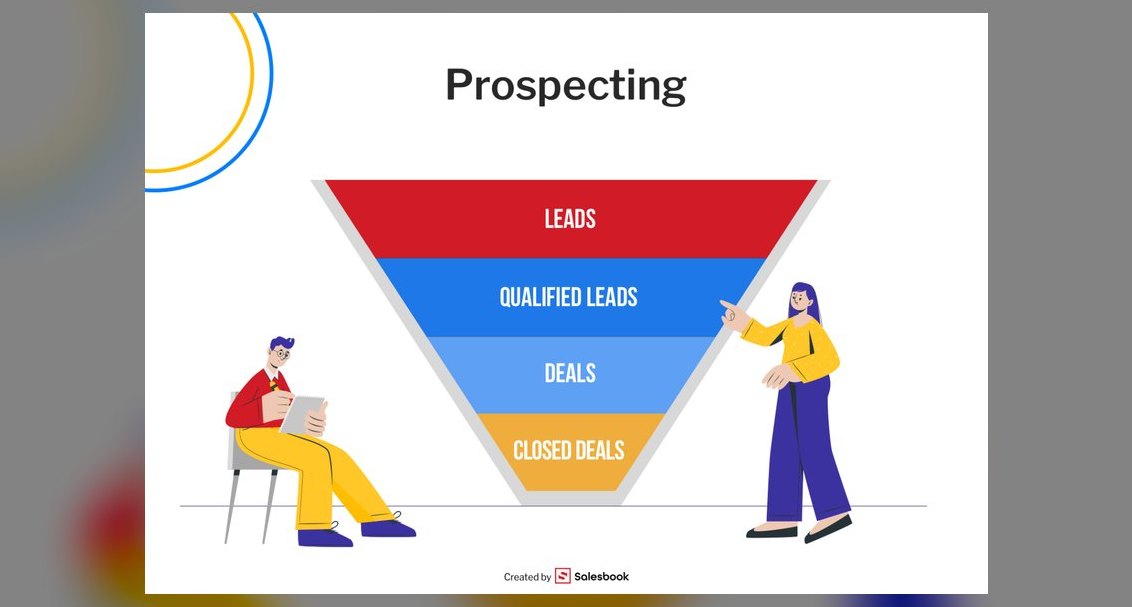 pulse-recentHigh-Profit Prospecting by Mark Hunter — Top 10 Key Takeaways for Sales Leaders in 2027
 pulse-recentThe Challenger Customer by Brent Adamson — Top 10 Key Takeaways for Sales Leaders in 2027
 pulse-recentBlue Ocean Strategy by W. Chan Kim and Renee Mauborgne — Top 10 Key Takeaways for Sales Leaders in 2027
 pulse-recentWhat are the concrete steps to implement the Sandler Rules for Sales Leaders by David Mattson in 2027?
 book-summaryMajor Account Sales Strategy by Neil Rackham: Summary, Key Lessons, and RevOps Takeaways