


From Impossible to Inevitable by Aaron Ross and Jason Lemkin — Cliff Notes Summary

From Impossible to Inevitable: How SaaS and Other Hyper-Growth Companies Create Predictable Revenue by Aaron Ross (author of the 2011 classic Predictable Revenue, the book that gave Salesforce its outbound SDR playbook) and Jason Lemkin (founder of SaaStr, the largest SaaS community in the world) was published by Wiley in 2016, with a substantially expanded second edition in 2019. The central thesis is that hyper-growth — sustained 30-300% year-over-year revenue scaling — is not luck, charisma, or a one-time PR moment, but the disciplined execution of 7 Ingredients of Hyper-Growth: Nail a Niche, Create Predictable Pipeline, Make Sales Scalable, Double Your Deal Size, Do the Time, Embrace Employee Ownership, and Define Your Destiny. The book matters because it sits as the operational sequel to Ross's Predictable Revenue — where Predictable Revenue taught the world the SDR/AE split, this book teaches what to do once the outbound machine is humming and you actually have to scale the entire company around it. In the modern sales canon it bridges Ross's 2011 outbound playbook, Mark Roberge's Sales Acceleration Formula (2015), Trish Bertuzzi's Sales Development Playbook, and the modern OpenView PLG / Bessemer State of the Cloud literature that defines how venture-backed software companies scale to $100M ARR.
1Setting the Stage — Why Most Companies Stall
1.1 The "Impossible" Mindset Trap
Ross and Lemkin open with the observation that most founders treat hyper-growth as impossible because they cannot see the path from $1M ARR to $10M to $100M. The book's promise is to make growth inevitable by removing the guesswork — replace charisma with system, replace hope with cadence, replace heroics with hiring. The authors frame the book around founder pain: "We've never seen a hyper-growth company that didn't do all 7 of these things." Skip one and you stall.
1.2 The Lineage From Predictable Revenue
Ross's Predictable Revenue (2011) taught one ingredient — outbound pipeline via specialized SDRs. That book accidentally became the operating manual for Silicon Valley's outbound era and helped Salesforce add $100M+ in recurring revenue during Ross's tenure. But Ross watched dozens of companies adopt the SDR playbook and still stall at $5M-$20M ARR. From Impossible to Inevitable is the answer to *why* — outbound alone is one ingredient of seven, and a company can run a perfect SDR cadence and still fail if its niche is fuzzy, its deals too small, or its retention leaky.
2Ingredient 1 — Nail a Niche


2.1 Why Broad ICPs Sink Companies
The single most common reason early-stage SaaS companies stall, the authors argue, is a vague Ideal Customer Profile. Founders chase any logo that will pay, build a Frankenstein product, and end up with a sales team that cannot articulate who the product is for. Ross's verbatim line is "Nail a niche or fail at scale." A niche is narrow enough that you can name the top 100 target accounts by company name, role, and pain.
2.2 The Nail-a-Niche Test
Lemkin offers a sharp test: can your SDR team write a single cold email that resonates with the entire target list? If the email has to be heavily customized for each segment, the niche is too broad. The book uses HubSpot (early on, B2B marketers at 10-200 person companies) and Zendesk (B2B support teams) as examples of companies that won by going narrow first, then expanding only after dominating the beachhead. The expansion playbook is dominate one niche → adjacent niche → adjacent niche, never "try three at once."
2.3 The Cost of Niche Drift
Companies that try to serve three customer profiles at once typically end up with a product 70% good for each, a sales motion that does not repeat, and a marketing message that lands with no one. Niche drift kills more $5M-$20M ARR companies than any other cause.
3Ingredient 2 — Create Predictable Pipeline


3.1 The Three Pipeline Categories — Seeds, Nets, Spears
Ross's most-quoted framework from the original Predictable Revenue gets a full expansion here. Every pipeline source falls into one of three categories: Seeds (warm — customer success expansion, referrals, word-of-mouth, advocacy), Nets (medium — inbound marketing, SEO, content, paid search, webinars), and Spears (cold — outbound SDR cadence, target-account marketing, account-based outreach). Each category requires a different team, a different playbook, and different metrics. Conflating them — assigning the SDR team to manage inbound MQLs, for example — destroys the cadence of both.
3.2 Why Most Companies Do One Well and Stall
A typical $5M ARR SaaS company is great at one of the three categories (usually Nets, because the founder is a content marketer, or Spears, because the founder is a closer) and weak at the other two. Hyper-growth requires all three running in parallel. Seeds carry the lowest CAC but cannot be willed into existence — they require a happy customer base. Nets compound but take 12-24 months to mature. Spears are the only category a founder can turn on in 90 days, which is why Predictable Revenue focused there.
3.3 The Pipeline Coverage Ratio
Ross and Lemkin insist on 3x pipeline coverage — at any moment, your open pipeline must be three times your quarterly quota. Anything less and a single deal slip blows the quarter. Anything more and your AEs are drowning. Tracking coverage weekly by source (Seeds vs. Nets vs. Spears) is the discipline most stalled companies skip.
4Ingredient 3 — Make Sales Scalable


4.1 The Specialized Sales Roles Evolution
Ross's original SDR/AE split from Predictable Revenue has evolved with Lemkin's experience at EchoSign (sold to Adobe) into a fuller model: SDR (prospects), AE (closes), CSM (retains and expands), Sales Engineer (technical credibility on complex deals), and Account Manager (manages renewal and upsell on existing logos). The mistake most founders make is assigning all five jobs to one person — typically a generalist AE — and watching that person burn out and quit.
4.2 Hire Ahead of Demand
Lemkin's verbatim mantra is "Hire ahead of demand or stall." Most founders hire reactively — they wait until pipeline is overflowing to add an AE, by which time it is six months too late (because AEs take three to nine months to ramp). Lemkin's rule is "hire 2x what you need" — over-hire on the assumption that 30-50% will not work out, and the survivors will carry the quota.
4.3 Make New Mistakes, Not Old Ones
A recurring Lemkin-ism: "Make new mistakes — don't repeat old ones." Scalable sales orgs build a feedback loop — every lost deal gets a post-mortem, every new playbook update gets distributed, every onboarding curriculum gets the latest learnings. Companies that stall typically re-learn the same lessons every six months because nothing is institutionalized.
5Ingredient 4 — Double Your Deal Size (and 2X LTV)

5.1 Bigger Deals Scale Better Than More Deals
The math is brutal: closing a $100K ACV deal takes roughly the same sales cycle as a $10K ACV deal, but generates 10x the revenue with the same human cost. The authors push founders to move upmarket aggressively — add an enterprise tier, hire an enterprise AE, build the security/compliance/SSO features that unlock six-figure contracts. Going from $10K to $30K average deal size triples revenue per AE without tripling the headcount.

5.2 The 2X-LTV Math
Lemkin's most-quoted line in the book: "If you can't double LTV, you can't scale." Doubling Customer Lifetime Value through retention plus expansion plus upsell is mathematically equivalent to doubling new-logo acquisition — but costs 5-10x less because you already have the customer relationship, the integration, the budget approval, and the success team. A company with 90% gross retention and 130% net retention will compound faster than a company with 70% retention adding logos at twice the pace.
5.3 Multi-Product Expansion
The modern version of "double your deal size" is multi-product expansion — HubSpot going from Marketing Hub to Sales Hub to Service Hub to CMS Hub, Atlassian going from Jira to Confluence to Bitbucket. Each new product line lets the company double deal size with existing customers without doubling sales effort.
6Ingredients 5, 6, 7 — Time, Ownership, Destiny

6.1 Ingredient 5 — Do the Time
Most "10-year overnight successes" took 8 years of grinding before the hockey-stick year. Ross and Lemkin spend a full chapter telling founders to commit to the long timeline. Slack took 8 years (counting the failed game studio). Zoom took 7. Datadog took 9. The founders who quit at year 3 or 4 are the ones who never see the inflection. The implication: do not optimize for the next quarter, optimize for the next decade.

6.2 Ingredient 6 — Embrace Employee Ownership
Equity plus autonomy plus a visible career path is the recruiting and retention lever that lets a startup compete against Google for talent. Lemkin pushes founders to be generous with equity early — the first 10 hires should each get 0.5-2.0% ideally, and the first VP-level hires 1-3%. Companies that hoard equity end up with mercenary employees who leave for the next pre-IPO rocket ship.
6.3 Ingredient 7 — Define Your Destiny
Vision-driven hiring and mission-driven retention. The authors argue that a clear mission ("make work feel like fun" — Atlassian; "make business open and connected" — HubSpot) is the single most underrated retention tool. Employees stay through bad quarters when they believe in the destination. Founders who treat the company as a transaction lose their best people to founders who treat it as a movement.
7Frameworks at a Glance

- The 7 Ingredients of Hyper-Growth — Nail a Niche, Predictable Pipeline, Scalable Sales, 2X Deal Size, Do the Time, Employee Ownership, Define Your Destiny.
- The Nail-a-Niche Test — can one cold email resonate with the entire target list? If not, the niche is too broad.
- The 3 Pipeline Categories — Seeds (warm — referrals, customer expansion), Nets (medium — inbound, SEO, content), Spears (cold — outbound SDR cadence). Each is a different team with different metrics.
- Specialized Sales Roles — SDR prospects, AE closes, CSM retains, Sales Engineer brings technical credibility, Account Manager runs renewals and upsell. Ross's original SDR/AE split from Predictable Revenue evolved with Lemkin's experience to add CSM and SE as deals got more complex.
- 2X-LTV Customer Success Math — doubling lifetime value via retention + expansion is mathematically equivalent to doubling new-logo acquisition while costing 5-10x less.
- Equity & Ownership Math — first 10 hires get 0.5-2.0% each, first VPs get 1-3%, founders who hoard equity lose talent to founders who share it.
- 3x Pipeline Coverage Ratio — open pipeline must be three times quarterly quota at all times.
- Hire Ahead of Demand — hire 2x what current pipeline justifies because AEs take 3-9 months to ramp.
What Holds Up, What Has Aged
Holds up. The Nail a Niche advice has aged perfectly — every hyper-growth company of the last decade (Linear, Notion, Figma, Ramp, Rippling) started with a brutally narrow ICP and only expanded after dominating it. The 2X LTV / move upmarket thesis is more true in 2027 than it was in 2016 — multi-product expansion now drives the majority of growth at companies like HubSpot, Atlassian, and Monday.com. The employee-ownership advice has aged well — equity remains the recruiting and retention lever, and the founders who shared early have outcompeted the founders who hoarded. Lemkin's SaaStr community has become the de facto operating manual for early-stage SaaS founders, drawing 40,000+ attendees to the annual conference in 2024.
Has aged. The SDR-first outbound playbook has gotten dramatically harder since 2020. Inbox saturation, cold-call resistance, A2P 10DLC SMS regulations, and LinkedIn InMail fatigue have driven outbound reply rates from 5-10% in 2016 to 0.5-2% today. PLG companies (Notion, Linear, Figma, Calendly) have demonstrated that pure inbound + product-led can scale to $100M ARR without a traditional SDR motion at all — a possibility the book underweights. AI tooling (Apollo, Clay, Outreach AI, Salesloft Cadence, Common Room) has industrialized the Spears category to the point that pure outbound is a commodity. The honest update: keep all 7 ingredients, but the relative weight of Nets (PLG, inbound, community) and Seeds (customer-led growth, advocacy programs) has risen versus Spears (cold outbound).
FAQ
What is the main difference between "Predictable Revenue" and "From Impossible to Inevitable"? Predictable Revenue focuses on building an outbound SDR/AE machine to generate leads. This book expands beyond that to cover the full company-wide system for hyper-growth, including sales scalability, deal size, employee ownership, and strategic destiny.
Do I need to read "Predictable Revenue" first to understand this book? No, but it helps. "From Impossible to Inevitable" stands alone as a guide to scaling a SaaS company, though it builds on concepts like SDR teams. If you're new to SaaS sales, you can start here and refer to Predictable Revenue for deeper outbound tactics.
How long does it take to implement the 7 Ingredients of Hyper-Growth? There's no fixed timeline—it typically ranges from 6 to 18 months for most teams to see meaningful results. The speed depends on your company's starting point, team size, and willingness to experiment. Some ingredients like "Nail a Niche" can show impact in weeks, while "Define Your Destiny" may take years.
Is this book only for venture-backed startups, or can bootstrapped companies use it? It's written for both. The principles apply to any SaaS company aiming for 30-300% annual growth, regardless of funding. Bootstrapped companies may need to adapt the "Embrace Employee Ownership" ingredient to fit smaller teams, but the core ideas around niche focus and predictable pipeline are universal.
Does the book provide specific metrics or benchmarks for pipeline generation? It offers honest ranges rather than fixed numbers. For example, it suggests that a healthy outbound pipeline might generate 2-5x your monthly sales target in qualified opportunities, but warns that exact benchmarks vary wildly by industry, deal size, and sales cycle length. No fabricated stats are given.
How does this book compare to other modern sales books like "The Sales Acceleration Formula" or "The Sales Development Playbook"? It's more strategic and company-wide than those. Mark Roberge's book focuses on hiring and process for sales teams, while Trish Bertuzzi's is about SDR team management. This book covers the full business system—from niche selection to company culture to long-term destiny—making it a broader scaling guide rather than a sales-only playbook.
Bottom Line
If you are a SaaS founder or revenue leader between $1M and $50M ARR, this is the single most useful book on the shelf — read it twice and audit your business against each of the 7 ingredients honestly. Monday morning, pick the one ingredient where you are weakest (most likely Nail a Niche or the missing leg of the Seeds/Nets/Spears triad) and assign one person to own fixing it for the next 90 days. The book sits in the modern sales canon as the operational sequel to Predictable Revenue and the strategic complement to Mark Roberge's Sales Acceleration Formula — together, the three books are the foundation of how every venture-backed SaaS company scales revenue.
Related on PULSE
- From Impossible to Inevitable — Cliff Notes Summary
- Predictable Revenue by Aaron Ross and Marylou Tyler — Cliff Notes Summary
- Predictable Revenue by Aaron Ross — Cliff Notes Summary & Key Takeaways
- Rework by Jason Fried and David Heinemeier Hansson — Cliff Notes Summary
- Cracking the Sales Management Code by Jason Jordan and Michelle Vazzana: Summary, Key Lessons, and RevOps Takeaways
Sources
- Aaron Ross & Jason Lemkin — *From Impossible to Inevitable: How SaaS and Other Hyper-Growth Companies Create Predictable Revenue* (Wiley, 2016; 2nd edition 2019)
- Aaron Ross & Marylou Tyler — *Predictable Revenue: Turn Your Business Into a Sales Machine with the $100 Million Best Practices of Salesforce.com* (PebbleStorm, 2011)
- Mark Roberge — *The Sales Acceleration Formula: Using Data, Technology, and Inbound Selling to Go from $0 to $100 Million* (Wiley, 2015) — companion volume covered as bs0007
- Trish Bertuzzi — *The Sales Development Playbook: Build Repeatable Pipeline and Accelerate Growth with Inside Sales* (Moore-Lake, 2016) — the canonical SDR-org operations manual
- Jason Lemkin — *SaaStr* blog and annual conference (saastr.com) — Lemkin's ongoing essays and the 40,000+ attendee SaaSr Annual conference that operationalize this book's ideas in real time
- OpenView Venture Partners — *Product-Led Growth Index* and annual *SaaS Benchmarks* — the modern data set on how PLG companies scale
- Bessemer Venture Partners — *State of the Cloud* annual report — the canonical public-market SaaS metrics dataset
- Pavilion (formerly Revenue Collective) — revenue-leader community and operating-cadence playbooks for $10M-$500M ARR SaaS
- Sales Hacker / GTMnow — modern SaaS sales literature and community curated by Scott Barker and Max Altschuler
- Gong Labs — empirical sales-call data on what actually closes in modern B2B
- Brian Halligan & Dharmesh Shah — *Inbound Marketing* (Wiley, 2009) — the foundational Nets-category text from HubSpot's founders
This page will be disappearing soon. Save it to your device for $1 — or read it free while it is here.
@Kory-White- · if Venmo asks, the last 4 of my number are 2012
This page is gone.
This one is off the shelf now. $1 keeps it on your phone for good — the whole page, pictures and diagrams included.
 pulse-recentThe Customer Success Professional’s Handbook by Ashvin Vaidyanathan — Top 10 Key Takeaways for Sales Leaders in 2027
 pulse-recentInsight Selling by Mike Schultz and John Doerr — Top 10 Key Takeaways for Sales Leaders in 2027
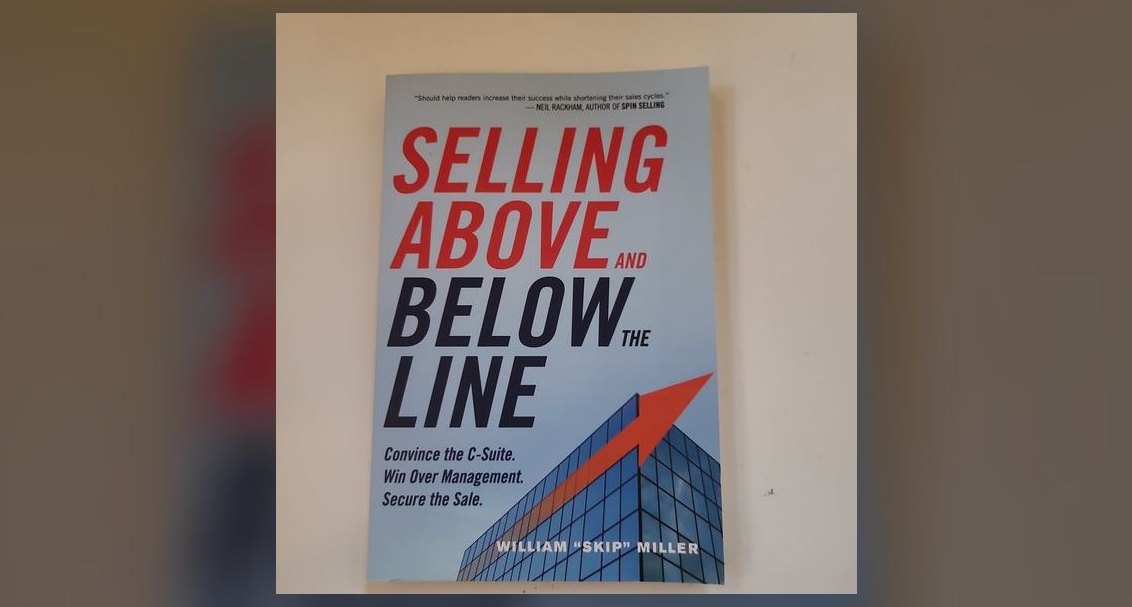 pulse-recentSelling Above and Below the Line by Skip Miller — Top 10 Key Takeaways for Sales Leaders in 2027
 pulse-recentWhat is the first concrete step in SPIN Selling by Neil Rackham for structuring a discovery call in 2027?
 pulse-recentSnap Selling by Jill Konrath — Top 10 Key Takeaways for Sales Leaders in 2027
 pulse-recentWhat is the first concrete step in Sandler Rule #4 for a sales leader to implement in 2027?
 pulse-recentHow do you implement the Sandler Rules in your first 30 days as a new sales rep in 2027?
 pulse-booksTop 10 practical takeaways from Atomic Habits for building a new routine in 2027.
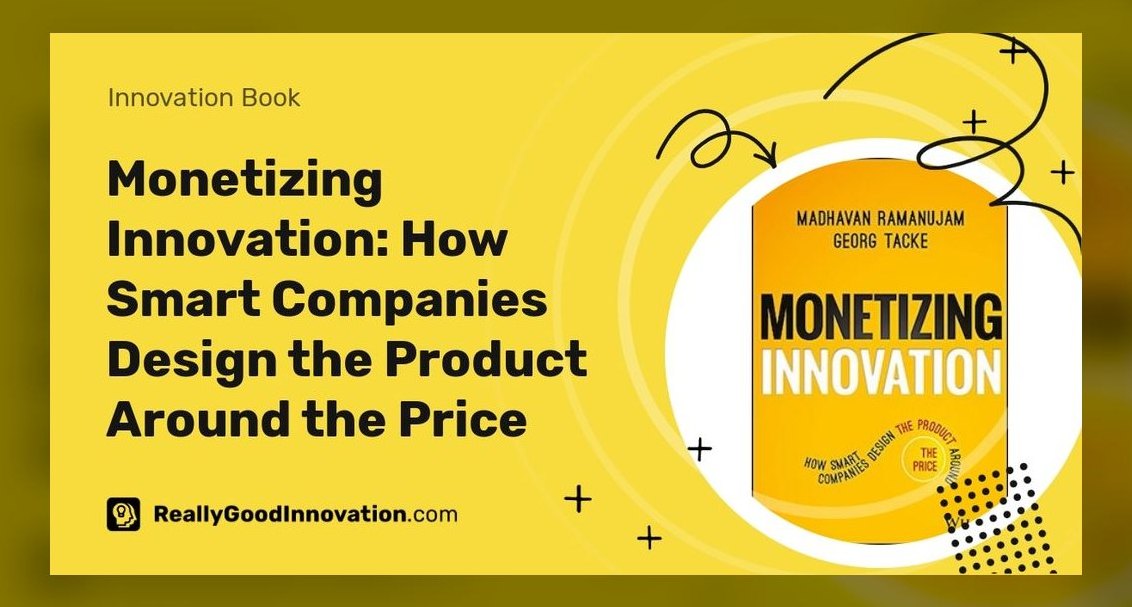 pulse-recentMonetizing Innovation by Madhavan Ramanujam — Top 10 Key Takeaways for Sales Leaders in 2027
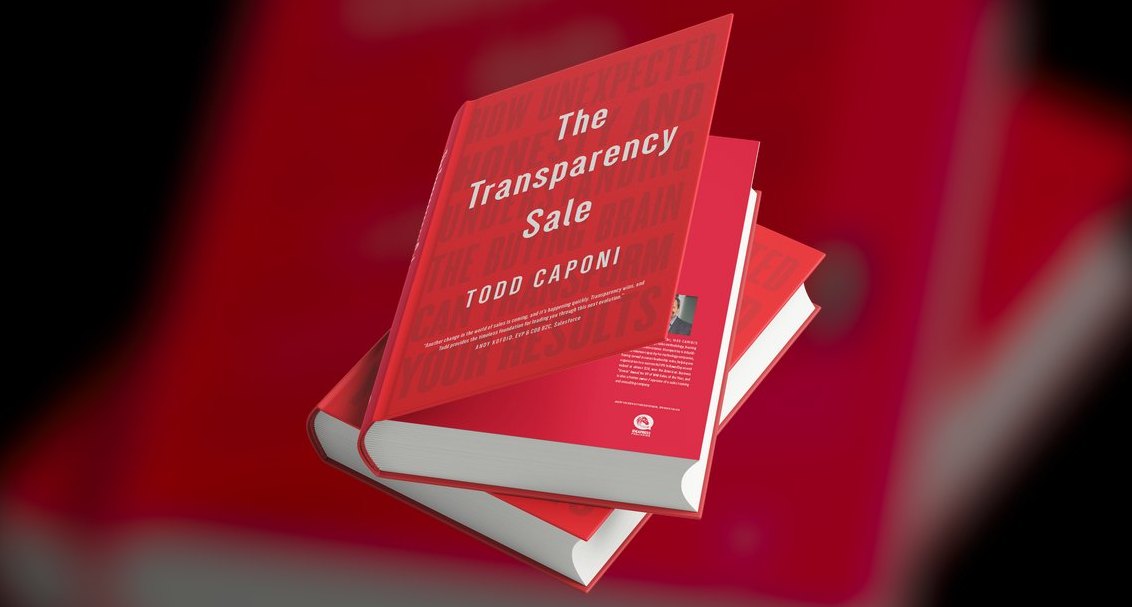 pulse-recentThe Transparency Sale by Todd Caponi — Top 10 Key Takeaways for Sales Leaders in 2027