


Sell with a Story by Paul Smith — Cliff Notes Summary
Quality
Certified
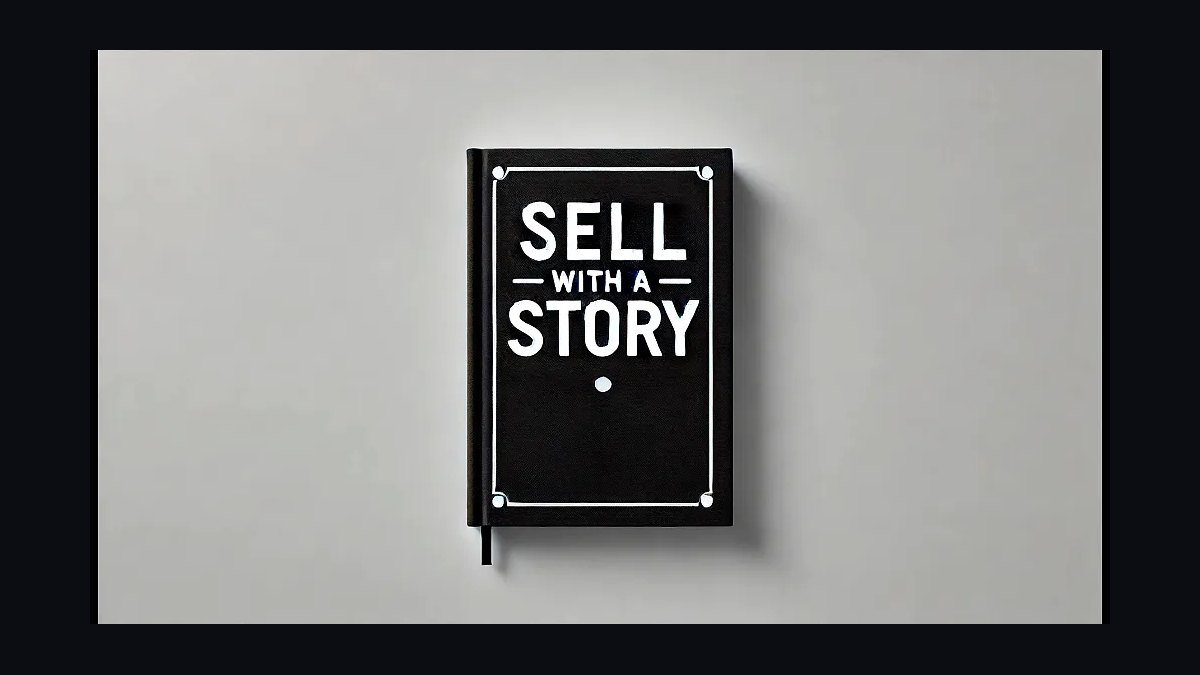
Sell with a Story: How to Capture Attention, Build Trust, and Close the Sale by Paul Smith (AMACOM, 2016) is a practical playbook for putting narrative to work inside a real sales process. Smith — a former Procter & Gamble director turned corporate-storytelling consultant — interviewed hundreds of sales professionals and managers and distilled their best moments into 25 generic sales stories every rep should have ready in advance, collected in the book's Appendix A, *25 Stories Salespeople Need*. The stories are organized by when you use them across a deal — from introducing yourself to building rapport, the main sales pitch, handling objections, closing, and after the sale — and each is built from the same repeatable spine: Hook, Context, Challenge, Conflict, Resolution, Lesson, Action. The thesis is unromantic: a good sales story is not an art form, it is a structure you can prepare, rehearse, and reuse. The book matters because it is one of the few sales-storytelling texts that names *which* story to tell at *which* moment and hands you a template to build it — turning the higher-level advice of Chip and Dan Heath's Made to Stick and Simon Sinek's Start with Why into something a rep can draft this week.
1Foundations — Why Stories Outsell Facts
1.1 Why Tell Sales Stories
Smith's case rests on two things buyers actually do: forget and distrust. They forget feature lists almost immediately, but they remember stories, because narrative encodes emotion and sequence the way human memory naturally files information. He points to research — including Stanford's Jennifer Aaker — showing that stories are markedly more memorable and persuasive than facts presented alone. He backs the claim with examples drawn from real companies he profiles in the book, among them Microsoft, Costco, Xerox, Abercrombie & Fitch, and Hewlett-Packard. The operational takeaway: a rep who can only recite features is competing on the one dimension buyers are worst at retaining.
1.2 What a Sales Story Is (and Isn't)
A sales story is not a brag, a war story, or a case study read aloud. Smith defines a good story by six facets: a time, a place, a main character, a goal, an obstacle, and the events that follow. If a "story" is missing a named character with a goal and something in the way, it is just an assertion wearing a narrative costume. A real sales story takes the buyer somewhere and lands on a point they can use.

1.3 The 25-Story Repertoire
The book's organizing promise is that selling has a finite set of recurring moments, and each one has a story that fits it. From his interviews, Smith assembles 25 generic stories — gathered in Appendix A as a checklist — that a rep can prepare in advance rather than improvise under pressure. The rest of the book is the instruction manual: where each story belongs, and how to build one.
2When to Tell Them — Smith's Eight Selling Moments
Part One of the book ("What Sales Stories You Need and When to Tell Them") walks the deal chronologically. Eight moments each call for a different kind of story:
- Introducing Yourself. The opening stories that answer who you are and — in the book's own example — *explain what you do, simply*, so a buyer remembers it.
- Stories You Tell Yourself. The internal narratives a rep uses to build their own confidence and mindset before walking into the room. Smith is unusual in starting *inside* the seller's head.
- Getting Buyers to Tell Their Story. Using your own short stories — and good questions — to draw the buyer's real situation into the open.
- Building Rapport. Personal, human stories that earn trust faster than credentials, including the willingness to share a relevant mistake.
- The Main Sales Pitch. The value and product stories — the company's founding story, the customer who succeeded — that carry your case.
- Handling Objections. Pre-prepared stories that reframe the handful of objections every rep hears, so you respond with a customer example instead of an argument.
- Closing the Sale. Stories that help a hesitant buyer picture deciding "yes" and living with it.
- Storytelling After the Sale. The onboarding, retention, and advocacy stories that keep a won account and turn it into a reference.
Read together, these eight moments are the map; the 25 stories are the pins you place on it.
3The Story Structure — Hook to Action
Part Two ("How to Craft Sales Stories") replaces inspiration with a template. Smith's structure is a sequence of named beats, and Appendix C ships it as a fill-in Story Structure Template.
3.1 The Hook and the Context
Every story opens with a Hook — what Smith calls the Transition In — a line that interrupts the buyer's attention and signals "a story is starting." It is followed by Context: the minimum setup the buyer needs — who the protagonist is, where and when this happened — and nothing more. Over-explain the context and you lose the room before the story has a chance to work.
3.2 Challenge, Conflict, Resolution
This is the engine. The Challenge is what the protagonist was trying to achieve; the Conflict is the obstacle in the way — a deadline, a skeptic, a failed first attempt; and the Resolution is how it actually turned out. Smith treats these three as inseparable: a story without a real obstacle is a status update, and a story without a resolution is an anecdote left hanging.
3.3 Lesson and Action — the Transition Out
The story closes with the Lesson — the point the buyer is meant to take — and the Action, Smith's Transition Out, which tells the buyer what to do with that point now. Around this spine Smith layers the enhancers that separate a flat story from a memorable one: emotion, surprise, dialogue, vivid details, and disciplined length. The structure is what you prepare; the enhancers are what make it land.
4Crafting, Sourcing, and Saving Your Stories
Smith closes Part Two with the unglamorous discipline that makes the whole system work. Finding Great Stories is a sourcing chapter: the best material is hiding in your own closed deals, your colleagues' accounts, your customers' own words, and published case studies — you collect it on purpose, not by accident. Practicing and Saving Your Stories is the maintenance chapter: write each story down, rehearse it until the beats are automatic, and keep the collection somewhere you can actually find it under pressure. A story you cannot retrieve in the moment may as well not exist.
In 2016 that "somewhere" was a Word document or a binder. The modern equivalent is a tagged library in a tool like Notion, Highspot, or Seismic — one entry per story, with the trigger moment, the seven-beat breakdown, and a rehearsal note — but the underlying habit Smith prescribes is identical: capture it, structure it, rehearse it, reuse it.
5Telling Stories with Data — and the Truth Boundary
Two of the book's most useful chapters address the seams where storytelling meets selling reality. In Telling Stories with Data, Smith argues that numbers and narrative are not rivals: a statistic gives a story credibility, and a story gives a statistic meaning, so the strongest pitch wraps the metric inside the human moment that produced it. In Stretching the Truth, he draws a firm line — you may compress timelines, combine details, or omit the irrelevant to make a story tighter, but you may never invent an outcome, a customer, or a result. Cross that line and the first buyer who checks destroys your credibility for every story that follows.
6Delivery — Voice, Pace, and Rehearsal
The structure gets you a good story on paper; delivery decides whether it lands in the room. Smith's delivery guidance is mechanical and learnable: pause before the Hook so the shift registers, slow down through the Conflict where the tension lives, and let the Resolution and Lesson breathe instead of rushing past them. His central warning is against memorizing word-for-word — a script recited verbatim sounds robotic and collapses the moment you're interrupted. You rehearse the beats and the key phrases; you improvise the words. That is the difference between a story you own and a paragraph you recite.
7The Eight Selling Moments, Mapped
Frameworks at a Glance
- The 25 Sales Stories — the master checklist (Appendix A) every rep prepares in advance instead of improvising.
- The Eight Selling Moments — Introducing Yourself, Stories You Tell Yourself, Getting Buyers to Tell Their Story, Building Rapport, The Main Sales Pitch, Handling Objections, Closing the Sale, and After the Sale.
- The Story Structure — Hook → Context → Challenge → Conflict → Resolution → Lesson → Action, with the Hook as the Transition In and the Lesson/Action as the Transition Out.
- The Six Facets of a Story — time, place, main character, goal, obstacle, and events.
- The Enhancers — emotion, surprise, dialogue, vivid details, and disciplined length.
- The Truth Boundary — compress and combine for clarity; never invent an outcome, a customer, or a result.
The Story Structure, End to End
What Holds Up, What Has Aged
What holds up: the chronological map of selling moments, the seven-beat structure, and the discipline of preparing and rehearsing a fixed repertoire are timeless. The Hook–Conflict–Resolution–Lesson backbone maps cleanly onto any channel that exists today — Zoom, Loom, a LinkedIn voice note, an async demo. Smith's core insight, that a buyer remembers a structured story long after they forget a slide, has only gotten more valuable as attention has fragmented.
What has aged: Smith's 2016 examples assume in-person meetings and longer discovery calls, and modern remote selling has compressed the time you get for any single story. The "saving your stories" chapter pictures a document or binder; today that is a tagged library in Notion, Highspot, or Seismic. Tools like ChatGPT and Claude can now scaffold a first draft of the seven beats from a few inputs in seconds — but they cannot supply the authentic Context or Resolution, which still come from real customer conversations. The structure inside the story has not changed; only the container and the clock around it have.
FAQ
How long should a sales story be? Smith dedicates a section to length and lands on "short" — most sales stories should run roughly one to two minutes, long enough to include every structural beat and no longer. On a modern remote call you will often want the tighter end of that range. Too long and you lose the buyer; too short and you have skipped a beat the story needs.
Do I really need all 25 stories? Not on day one. Appendix A is a checklist, not a prerequisite — Smith's advice is to build first for the moments you face most often, typically introducing yourself and the main sales pitch, then fill in the rest over time as you collect material.
What if I don't have a great customer story yet? Smith's "Finding Great Stories" chapter is built for exactly this: borrow from a colleague's account, a published case study, or a marketing-approved reference — and attribute it honestly ("a colleague of mine had a customer who…") rather than pass it off as your own or invent one.
How is Sell with a Story different from Lead with a Story? Smith's earlier Lead with a Story (2012) is for leaders — stories for vision, change, and culture. Sell with a Story (2016) narrows the same craft to the individual seller and the specific moments of a deal, making it the more operational, sales-rep-facing of the two.
Where does this book sit relative to StoryBrand and Stories That Stick? Donald Miller's StoryBrand (2017) is about marketing positioning and messaging; Kindra Hall's Stories That Stick (2019) is closer to the executive-keynote stage. Smith's book is the one that maps individual stories to specific selling moments and gives the rep a fill-in template.
Can AI write my sales stories? AI can draft the seven-beat skeleton from your inputs and tighten your wording, which saves real time. But the Context (a real protagonist) and the Resolution (a real result) have to come from human customer research — and Smith's own "Stretching the Truth" rule applies double to anything a model generates: never let it invent an outcome you cannot stand behind.
Bottom Line
Read Sell with a Story if you are a B2B seller who has ever frozen when a prospect asked, "can you give me an example?" The week you finish it, list the selling moments you hit most — introducing yourself, the main pitch, your two most common objections — and draft one story for each using the Hook-to-Action template. Write them down, rehearse the beats, and reuse them. In the modern sales canon, Smith sits between Daniel Pink's To Sell Is Human (the philosophy) and Kindra Hall's Stories That Stick (the keynote craft) — but for an individual rep who wants the parts and the instructions, this is the book that ships the full kit.
Related on PULSE
- Selling Disruption by Mark S.A. Smith — Cliff Notes Summary
- Sell or Be Sold — Cliff Notes Summary
- To Sell Is Human — Cliff Notes Summary
- Built to Sell by John Warrillow — Cliff Notes Summary for Founders
- Conversations That Sell by Nancy Bleeke — Cliff Notes Summary
- Sell Different! by Lee Salz — Cliff Notes Summary
Sources
- Paul Smith — *Sell with a Story: How to Capture Attention, Build Trust, and Close the Sale* (AMACOM, 2016) — the primary text, including Appendix A ("25 Stories Salespeople Need") and Appendix C ("Story Structure Template")
- Paul Smith — *Lead with a Story: A Guide to Crafting Business Narratives That Captivate, Convince, and Inspire* (AMACOM, 2012) — the author's prior, leadership-focused volume
- Paul Smith — author resources and sample sales-story posts, *leadwithastory.com* — companion material and the downloadable "25 Stories" checklist
- Chip Heath & Dan Heath — *Made to Stick: Why Some Ideas Survive and Others Die* (Random House, 2007) — the memory-and-stickiness foundation behind "stories beat facts"
- Daniel Pink — *To Sell Is Human: The Surprising Truth About Moving Others* (Riverhead, 2012) — the modern sales-philosophy companion
- Simon Sinek — *Start with Why: How Great Leaders Inspire Everyone to Take Action* (Portfolio, 2009) — the "why you care" grounding for purpose-driven stories
- Kindra Hall — *Stories That Stick: How Storytelling Can Captivate Customers, Influence Audiences, and Transform Your Business* (HarperCollins Leadership, 2019) — the keynote-craft descendant
- Donald Miller — *Building a StoryBrand: Clarify Your Message So Customers Will Listen* (HarperCollins Leadership, 2017) — the marketing-positioning application
- Andy Raskin — *The Greatest Sales Deck I've Ever Seen* (Medium, 2016) — the enterprise strategic-narrative cousin
- Jennifer Aaker — Stanford Graduate School of Business research on narrative, meaning, and memory — academic support for why stories are recalled more readily than facts
Recently Added — Related
This page will be disappearing soon. Save it to your device for $1 — or read it free while it is here.
@Kory-White- · if Venmo asks, the last 4 of my number are 2012
This page is gone.
This one is off the shelf now. $1 keeps it on your phone for good — the whole page, pictures and diagrams included.
 pulse-recentInsight Selling by Mike Schultz and John Doerr — Top 10 Key Takeaways for Sales Leaders in 2027
 pulse-recentBlue Ocean Strategy by W. Chan Kim and Renee Mauborgne — Top 10 Key Takeaways for Sales Leaders in 2027
 pulse-recentGetting to Yes by Roger Fisher and William Ury — Top 10 Key Takeaways for Sales Leaders in 2027
 pulse-recentWhat is the first concrete step in the Sandler Selling System for handling a prospect's initial brush-off in 2027?
 pulse-recentWhat are the first three concrete steps in Sandler Rule #1 for a new sales rep in 2027?
 pulse-recentNever Split the Difference by Chris Voss — Top 10 Key Takeaways for Sales Leaders in 2027
 pulse-booksWhat are the most common mistakes in Book Summaries in 2027?
 pulse-recentHow to Apply Strategic Selling — Step-by-Step Playbook in 2027
 pulse-booksTop 10 practical takeaways from Atomic Habits for building a new routine in 2027.
 pulse-recentThe Sales Acceleration Formula by Mark Roberge — Top 10 Key Takeaways for Sales Leaders in 2027