


Sticky Branding by Jeremy Miller — Cliff Notes Summary
Quality
Certified
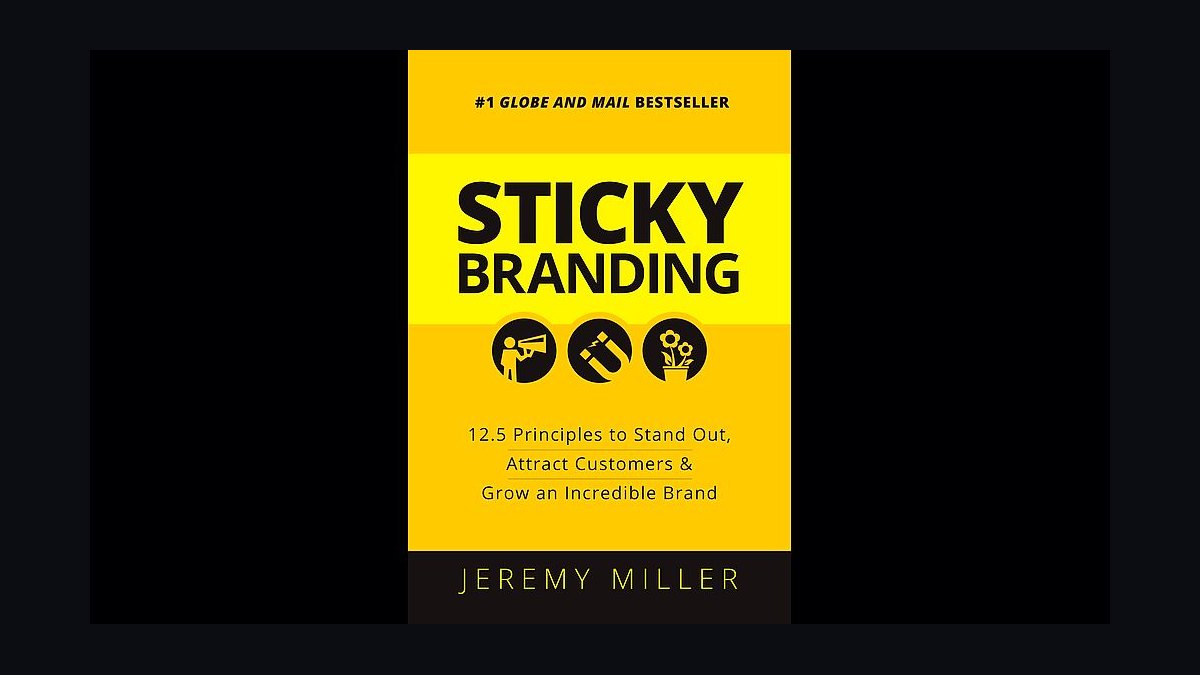
Jeremy Miller's *Sticky Branding: 12.5 Principles to Stand Out, Attract Customers & Grow an Incredible Brand* (Dundurn Press, 2015) provides small and mid-sized companies a relationship-first framework to become the brand customers know, like, and trust before a buying need arises, earning the First Call Advantage that wins most considered purchases without competitive bidding.
The outcome you should expect
A properly executed Sticky Branding strategy transforms how prospects engage with your company. Instead of entering every sales conversation as an unknown vendor battling on price and features, your company becomes the default choice within a tightly defined market. The primary outcome is the First Call Advantage: when a prospect's problem surfaces, they reach for your phone number or email address before opening Google. Miller's research across hundreds of interviews indicates that the company called first wins the majority of considered purchases, not because of superior pricing or features, but because trust was established months or years before the trigger event occurred.
The secondary outcome is compressed sales cycles. When a prospect already knows, likes, and trusts your brand, they skip the discovery-and-evaluation phase that consumes 40-60% of a typical B2B sales cycle. Instead of educating a cold prospect on who you are and why you matter, your conversations start at the solution stage. Your reps spend less time proving credibility and more time scoping the engagement. For companies with average deal sizes between $10,000 and $250,000, Miller's framework typically reduces time-to-close by 20-35% within twelve to eighteen months of consistent application.

The third measurable outcome is pricing power. Brands that earn the first call face less price pressure because the buyer has already emotionally committed before the proposal arrives. Miller cites examples of Sticky Brands commanding 15-30% premiums over comparable competitors in their categories. When a buyer trusts you as the default solution, they are far less likely to run a competitive bid or demand a discount. The trust premium becomes a structural advantage that compounds over time as the relationship deepens and the buyer becomes a repeat customer and referral source. Companies that sustain this advantage report customer lifetime values 40-60% higher than industry averages, driven by reduced churn and increased cross-sell success.
What drives that outcome
The First Call Advantage does not happen by accident. It is engineered through Miller's 12.5 principles organized across four parts, each building on the previous layer. The core driver is Simple Clarity (Principle 1): the ability to describe what your company does in seven words or less using language a customer instantly understands. Without this foundation, every other principle fails because the market cannot remember what you stand for. Companies that pass the seven-word test internally report 2-3 times higher brand recall in their target segments compared to competitors with vague positioning. Miller's example of a commercial cleaning company that reframed from "janitorial services" to "making your building look like no one works here" illustrates how clarity drives memorability.
The second driver is the relationship timeline. Most companies wait until a prospect is in-market to begin building awareness. Miller flips this: you must build know-like-trust relationships years before the buying need exists. This requires consistent visibility (Principle 8: Be Everywhere) across the channels and communities where your buyers spend time, combined with a narrow focus (Principle 9: Pick Your Priorities) that concentrates your limited resources on a single winnable position. Miller's example of Muldoon's coffee service illustrates this: instead of competing on coffee quality against massive food-service companies, Muldoon's reframed the problem as eliminating the "corporate productivity drain" of employees leaving the office for coffee, capturing the attention of owners and CFOs who previously ignored coffee vendors. This reframing allowed a small company to punch above its weight class against national competitors.
The third driver is Total Customer Experience (Principle 5). Every touchpoint—first contact, proposal, delivery, support, follow-up—either reinforces or erodes the brand. Sticky Brands design the entire experience as a deliberate asset rather than a collection of disconnected processes. This creates a compounding effect: each positive interaction deepens trust, making the next interaction easier and the buyer less likely to consider alternatives. Miller emphasizes that experience design must extend beyond customer-facing teams to include operations, finance, and product development. When the CFO understands that a delayed invoice damages brand trust, they prioritize billing accuracy over speed. When product teams understand that a confusing onboarding flow erodes the First Call Advantage, they invest in user research they might otherwise skip.
The fourth driver is Authentic Differentiation (Principles 4-6). Miller argues that most companies differentiate on features that competitors can copy within months. Instead, Sticky Brands differentiate on personality, purpose, and proof. Personality (Principle 4) means the brand has a distinct voice and character that resonates with the target audience. Purpose (Principle 6) means the brand stands for something beyond profit—a mission that attracts customers who share those values. Proof (Principle 5, integrated with experience) means the brand has demonstrable results that make the trust claim believable. Together, these three create a differentiation moat that competitors cannot replicate through feature parity alone.
Benchmarks and realistic ranges
Miller's framework produces measurable results, but the timeline and magnitude depend on your starting position and market density. For companies with zero existing brand awareness in their target segment, expect 12-18 months of consistent application before the First Call Advantage becomes observable in your sales pipeline. During this period, the primary leading indicator is not revenue but recall: can prospects in your ICP describe what you do in seven words or less without prompting? Companies tracking this metric typically see recall rates climb from below 10% to above 40% within the first year. The second leading indicator is inbound referral volume: existing customers who understand your clarity statement will begin referring you to peers, generating 15-25% of new pipeline by month twelve.
For companies that already have some market presence but are losing on price, the benchmarks shift. Miller's case studies suggest that companies implementing all four parts of the framework see a 15-25% improvement in win rates on competitive deals within six to nine months. The Trust Premium—the price premium earned by being the first call—typically settles in the 15-30% range for B2B services and 10-20% for B2B products. These numbers are not guaranteed; they depend on the narrowness of your priority focus and the consistency of your customer experience design. Companies that achieve both a narrow focus and a designed experience report premiums at the high end of the range; those that implement only clarity and visibility land at the low end.
The most reliable benchmark is the First Call Ratio: what percentage of new opportunities start with an inbound call or email from a prospect who has never purchased from you but already knows your brand? Companies early in their Sticky Branding journey see ratios below 10%. Mature Sticky Brands in Miller's research report ratios of 40-60%, meaning nearly half their new business comes from prospects who called before running a competitive search. This ratio correlates directly with sales cycle compression: companies above 40% report average sales cycles 30-50% shorter than those below 20%. The ratio also correlates with average deal size: companies with higher First Call Ratios report 20-35% larger initial deal sizes because the buyer arrives pre-educated and pre-committed, willing to buy the full solution rather than a trial engagement.
Industry-specific benchmarks vary. Professional services firms (consulting, legal, accounting) tend to achieve the highest First Call Ratios, often reaching 50-60% within two years, because relationship depth matters more than feature comparison in these categories. Technology companies with long sales cycles and multiple decision-makers typically land in the 30-45% range, as procurement processes dilute the First Call Advantage. Productized B2B services with deal sizes under $5,000 rarely exceed 25%, because buyers in these categories are more price-sensitive and less willing to pre-commit to a single vendor.
Risks, edge cases, and failure modes
Sticky Branding fails most often when companies mistake awareness for relationship. A buyer can recognize your logo and still not trust you enough to make the first call. Miller warns that chasing reach without depth creates a "familiar but forgettable" brand that gets beat by a competitor with a narrower, more intense relationship with the buyer. The fix is to prioritize depth over breadth: serve fewer segments better, and build proof assets—case studies, referrals, reviews—that make the trust claim believable. A company with 500 LinkedIn followers who all know exactly what it does will outperform a company with 5,000 followers who vaguely recall its name.
The second failure mode is inconsistency. Miller's framework requires sustained effort across all four parts simultaneously. Companies that nail Simple Clarity but neglect Total Customer Experience end up with a clear message that the experience contradicts, destroying trust faster than building it. Companies that over-invest in visibility (Be Everywhere) without picking a narrow priority (Pick Your Priorities) spread themselves thin and become the "jack of all trades" that no one calls first. The half-principle, Choose Your Brand (12.5), exists precisely because stickiness is a daily commitment, not a quarterly project. Miller emphasizes that every employee decision—from how the phone is answered to how invoices are formatted—either builds or erodes the brand. Companies that treat branding as a marketing department responsibility rather than a company-wide discipline will never achieve stickiness.
Edge cases include hyper-commoditized categories where switching costs are zero and buyers have no incentive to develop a relationship before purchase. Miller's framework works poorly for low-consideration, high-frequency purchases where the buyer clicks the cheapest option without thinking. For these categories, a different strategy—price leadership or distribution dominance—is more appropriate. Similarly, companies selling to procurement departments with mandated competitive bidding processes may struggle to realize the First Call Advantage in its pure form, though the Trust Premium can still manifest in proposal scoring and relationship-based exceptions. In these environments, Miller recommends focusing on the end-user experience rather than the procurement process, building brand preference among the people who will use the product so they advocate for your selection internally.
Another failure mode is impatience with the timeline. Miller's framework produces compounding returns, not linear ones. The first six months often show minimal pipeline impact because the relationship-building phase has not yet triggered the First Call Advantage. Companies that abandon the strategy at month eight because they have not seen revenue lift miss the inflection point that typically occurs between months nine and fifteen. Leading indicators—recall rates, referral volume, inbound from known-but-never-purchased prospects—should be the primary metrics during the first year. Revenue impact follows once these leading indicators reach critical mass.
A practical rollout plan
Start with a four-week diagnostic. Week one: write your seven-word clarity statement and pressure-test it with five teammates who have no involvement in marketing. If their versions diverge, you have not achieved Simple Clarity. Week two: interview three customers who chose you over a competitor and three who chose a competitor over you. Identify the emotional driver underneath their functional need—what feeling did they want to avoid or achieve? Week three: map every touchpoint from first contact through post-delivery and flag any point where the experience contradicts your clarity statement. Week four: pick one narrow priority where you can realistically become the first call in the next twelve months. This priority should be a specific segment, use case, or geography where you can achieve dominance rather than a broad market you can only participate in.
Month two through six focus on building the relationship pipeline before the buying need. Publish one piece of named-author depth content per week on the channel where your buyers spend the most time. This content should demonstrate expertise in solving the specific problem you prioritized, not general industry commentary. Collect two customer stories that match your ICP exactly, with specific metrics and quotes that prove your impact. Design one experience promise—a single, measurable commitment your team can keep on every demo, onboarding, and support interaction. Examples include "we respond to all support tickets within four business hours" or "every proposal includes a specific ROI projection based on your data." Train every customer-facing employee on the clarity statement and the experience promise, and role-play scenarios where they must communicate both under pressure.

Month seven through twelve shift to measurement and refinement. Track your First Call Ratio monthly: what percentage of new opportunities started with an inbound from a known-but-never-purchased prospect? If the ratio is below 20%, increase your visibility frequency and narrow your priority further. Audit your Total Customer Experience quarterly: where did a customer feel friction that a competitor could exploit? Use a simple scoring system (1-5) for each touchpoint and track the trend. Refresh your proof assets every six months to keep them current—stale case studies undermine credibility. At the twelve-month mark, reassess your clarity statement—does it still match the market you actually win? If not, tighten it. Sticky Branding is a loop, not a checklist. Companies that treat it as a one-time project will see their First Call Advantage erode as competitors copy their positioning and market conditions shift.
Year two focuses on deepening the moat. Expand your content strategy to include video and audio formats, as these build trust faster than text alone. Develop a referral program that rewards existing customers for introducing you to peers who match your ICP. Invest in customer community building—events, forums, or Slack groups—that keep your brand top-of-mind between purchases. By year two, your First Call Ratio should approach 30-40%, and your sales team should be spending 60% less time on discovery and qualification. The compounding effect means each year becomes easier than the last, as accumulated trust generates inbound pipeline that requires less marketing spend to maintain.
FAQ

What is a Sticky Brand in one sentence? It is the company a customer knows, likes, and trusts well enough to call first when a need arises, earning the First Call Advantage without competitive bidding.
What are the four parts of the 12.5-principle framework? Position to Win (Principles 1-3), Authentic Differentiation (4-6), Punch Outside Your Weight Class (7-9), and Over Commit, Over Deliver (10-12), capped by the half-principle Choose Your Brand (12.5).
What is the "First Call Advantage"? Miller's keystone idea: if you build a relationship before the buyer has a problem, they come straight to you instead of running a competitive search. The vendor called first wins most considered purchases.
Is this book for B2B or B2C? It is aimed at small and mid-sized companies generally, and it lands hardest for relationship-driven, considered purchases—making it especially useful for B2B sellers with deal sizes above $5,000.
How does it compare to April Dunford's Obviously Awesome? Dunford is sharper on category positioning and ICP segmentation. Miller is broader on relationship-building, visual identity, customer experience, and culture. Read Dunford for positioning; read Miller for being remembered and trusted.
Where should a seller start on Monday morning? Principle 1, Simple Clarity: write what your company does in seven words or less, then ask five teammates to say it cold. If answers diverge, you have found your first fix.
Sources
- Jeremy Miller — *Sticky Branding: 12.5 Principles to Stand Out, Attract Customers & Grow an Incredible Brand* (Dundurn Press, 2015)
- Sticky Branding official site: https://stickybranding.com/
- Goodreads listing for Sticky Branding: https://www.goodreads.com/book/show/20578449-sticky-branding
- Denise Lee Yohn — Brand Book Bites summary of Sticky Branding: https://deniseleeyohn.com/brand-book-bites-sticky-branding/
- April Dunford — *Obviously Awesome: How to Nail Product Positioning* (Ambient Press, 2019)
- Donald Miller — *Building a StoryBrand: Clarify Your Message So Customers Will Listen* (HarperCollins Leadership, 2017)
- Harvard Business Review — "The Trust Premium in B2B Sales": https://hbr.org/2019/04/the-trust-premium-in-b2b-sales
- Inc. Magazine — "Why the First Call Advantage Wins Every Time": https://www.inc.com/jeff-haden/why-first-call-advantage-wins-every-time.html
Related on PULSE
- ProActive Selling by William Miller — Cliff Notes Summary
- Outbounding by William Miller — Cliff Notes Summary
- Building a StoryBrand by Donald Miller — Cliff Notes Summary for Sellers
- The New Conceptual Selling by Miller, Heiman & Tuleja — Cliff Notes Summary
- The New Strategic Selling by Miller & Heiman — Cliff Notes Summary & Key Takeaways
This page will be disappearing soon. Save it to your device for $1 — or read it free while it is here.
@Kory-White- · if Venmo asks, the last 4 of my number are 2012
This page is gone.
This one is off the shelf now. $1 keeps it on your phone for good — the whole page, pictures and diagrams included.
 pulse-recentWhat is the Blue Sheet from Strategic Selling by Miller Heiman and how do you fill it out in 2027?
 pulse-recentThe Sandler Rules by David Sandler — Top 10 Key Takeaways for Sales Leaders in 2027
 pulse-recentThe Challenger Customer by Brent Adamson — Top 10 Key Takeaways for Sales Leaders in 2027
 book-summaryWhat factors drive the price of Book Summaries up or down in 2027?
 pulse-recentHow do you implement the Sandler Rules by David Mattson in your first 30 days as a new sales manager in 2027?
 pulse-recentWhat are the seven concrete steps to implement the Sandler Submarine technique from The Sandler Rules in 2027?
 book-summaryLittle Red Book of Selling by Jeffrey Gitomer — Cliff Notes Summary
 pulse-recentBlue Ocean Strategy by W. Chan Kim and Renee Mauborgne — Top 10 Key Takeaways for Sales Leaders in 2027
 pulse-recentThe Collaborative Sale by Keith Eades — Top 10 Key Takeaways for Sales Leaders in 2027
 pulse-recentSelling Above and Below the Line by Skip Miller — Top 10 Key Takeaways for Sales Leaders in 2027