


The Compound Effect by Darren Hardy — Cliff Notes Summary for Sales Professionals
Quality
Certified
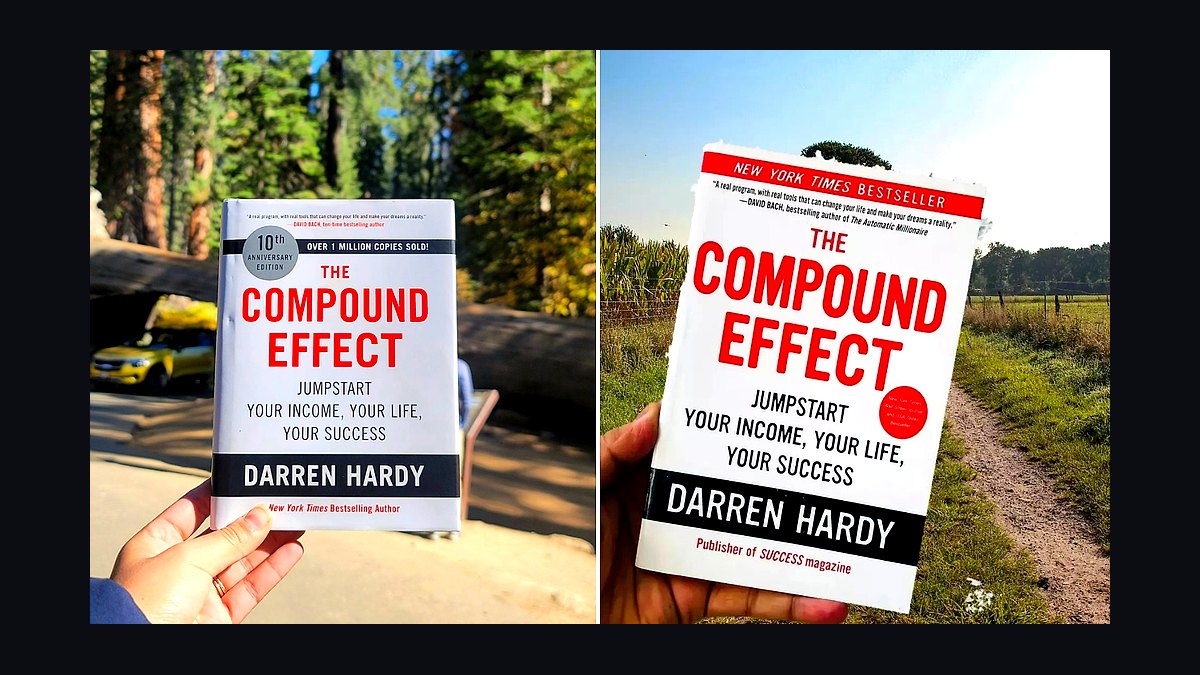
The Compound Effect: Jumpstart Your Income, Your Life, Your Success by Darren Hardy (Vanguard Press, 2010) argues that small, consistent, smart choices, repeated over time, produce radical outcomes — and conversely, small "innocent" indulgences repeated over time produce catastrophic ones. Hardy, the former publisher of SUCCESS magazine and a protege of the late Jim Rohn, opens with the Penny vs $3M thought experiment: take $3 million in cash today, or one penny that doubles every day for 31 days? Most people grab the cash; the penny becomes $10,737,418.24 by day 31 — the Compound Effect is invisible mid-curve, then explosive. For sellers, the thesis is brutal: 5 extra dials/day, 5 extra LinkedIn DMs/day, 10 extra thoughtful comments/day compound into a materially larger book of business over a few years — but only if the seller is willing to be bored, unrecognized, and unrewarded through the flat part of the curve. The book sits upstream of James Clear's Atomic Habits (2018) and BJ Fogg's Tiny Habits (2019), and it predates both — Hardy was teaching habit-stacking and identity-based behavior change eight years before Clear made it canon.
1The Power of the Compound Effect

1.1 Chapter 1 — Why the Compound Effect Wins Over Talent
Hardy opens with the Penny vs $3M parable and immediately translates it: the person who shows up every day, makes the calls, sends the emails, runs the loops beats the talented one-hit wonder every time. He uses the example of three friends — one keeps doing what he's always done, one makes a few small positive changes (reads 10 pages/day, walks 30 minutes/day, cuts 125 calories), and one makes a few small negative changes (a beer here, a missed workout there). At month 5, they all look identical. At month 31, the gap is life-altering — one friend is 33 pounds heavier, the other 33 pounds lighter and reading 50 books/year. "You're either compounding success or compounding failure — there is no neutral." This is the entire book in one sentence, and Hardy hammers it relentlessly.
1.2 Chapter 1 (continued) — The Invisible Middle
The hardest part of the Compound Effect is the flat middle of the curve — months 4 through 18 — when nothing visible is happening but the compounding is silently accumulating. Hardy calls this "the cost of admission" — the period most people quit. Sales reps quit prospecting in week 6 because no deals closed; content creators quit posting in month 4 because nobody read the post; founders quit raising in month 9 because every VC said no. The people who stay through the flat middle are the ones who win in the acceleration phase.
2Choices — Every Small Choice Compounds
2.1 Chapter 2 — The Tyranny of "Innocent" Indulgences
Hardy's second lever is Choices. Every choice — a snack, a Netflix episode, a skipped call, a "let me think about it" instead of an ask — compounds. He builds the book around the idea that it's the little, in-the-moment things that matter the most. The dangerous choices are the ones that feel harmless in the moment — one extra cookie, one extra hour of Reddit, one skipped follow-up email. None of them register as a "decision," and that's why they compound silently into poor health, mediocrity, and a quarter of missed quota.
2.2 Chapter 2 (continued) — Becoming Conscious of Your Choices
Hardy's prescription is tracking — write down every choice for a week. Every dollar spent, every minute consumed, every food eaten, every call made or skipped. "What gets measured gets managed" is the operating principle; awareness, not willpower, is the lever. He cites the well-known finding that dieters who keep a food journal tend to lose more weight than those who don't, with no other intervention. For sellers, the equivalent is a daily activity scorecard — dials, conversations, demos, follow-ups, pipeline added. Hardy is adamant: awareness is the lever — you cannot change what you are not consciously measuring.
3Habits — Design Routines, Don't Rely on Willpower
3.1 Chapter 3 — Why Willpower Always Loses

Hardy's third lever is Habits, and his thesis is the same one Charles Duhigg would popularize two years later in The Power of Habit (2012) and James Clear would refine in Atomic Habits (2018) — willpower is a finite resource, but habits are automatic. The seller who relies on motivation to make their prospecting calls will quit by week 3. The seller who has a standing 8am-10am block with phone, headset, list, and coffee already in place will make the calls for years without thinking about it.
3.2 Chapter 3 (continued) — The Strategies for Eliminating Bad Habits

Hardy gives a concrete playbook for killing bad habits: (1) Identify your triggers (what stress, what time of day, what person), (2) Clean house (remove the temptation from your environment), (3) Swap (replace the bad habit with a better one), (4) Ease in (don't quit cold turkey on six habits at once), (5) Jump in (sometimes the only way is a hard pivot — quit Netflix entirely for 30 days). Then a set of techniques for installing GOOD habits: set yourself up for success, think addition not subtraction, write down your WHY, declare a big goal publicly, find an accountability partner, and celebrate small wins. Eight years before Clear's habit-stacking diagrams, Hardy was teaching the same operating system.
4Momentum — The Big Mo
4.1 Chapter 4 — Why Momentum Is the Secret of Every Overnight Success
Hardy's fourth lever is Momentum, which he nicknames "Big Mo." "The Big Mo is the secret of every overnight success that took 10 years." Momentum is the second derivative of the Compound Effect — it's not the action, it's the acceleration of the action. A rep who has been calling 30 prospects/day for 18 months has built a referral network, a brand, a reputation, a CRM full of warm leads, and a body of patterns that the rep starting today simply does not have. Big Mo is impossible to fake, slow to build, and fast to lose — a few weeks of broken routine can wipe out months of compounding.
4.2 Chapter 4 (continued) — The Rhythm of Routine
Hardy's prescription for building Big Mo is rhythm and routine — a morning ritual, a weekly review, a quarterly planning session, an annual reset. He describes running a structured morning routine (gratitude journal, intention setting, reading, exercise, family time, planning the day) for years. The rhythm is what locks in the compounding. Skipping is the killer — not because one skipped day matters, but because one skipped day becomes two becomes a week becomes a quarter.
5Influences — Inputs, Associations, Environment
5.1 Chapter 5 — The Three Influence Levers
Hardy's fifth lever is Influences, and he splits it into three categories: Inputs (what you read, watch, listen to), Associations (who you spend time with), and Environment (your physical and digital surroundings). "You are the average of the five people you spend the most time with" — a line popularized by Jim Rohn, Hardy's mentor, and a thesis Hardy operationalizes throughout the book.
5.2 Chapter 5 (continued) — Auditing Your Inputs
For Inputs, Hardy prescribes a media diet — replace time spent on news and scrolling with podcasts, books, and courses in your domain. For Associations, he prescribes a three-tier audit: who do you need less time with (the energy vampires), who do you need more time with (the positive accelerators), and who do you need to add (mentors, peers, masterminds). For Environment, he prescribes physical re-design — the home gym in plain sight, the books on the desk, the phone in the other room. Sellers who join communities like Pavilion or RevGenius are pulling the Associations lever directly — the gain comes not from any single tactic, but from the compound effect of being surrounded by people who treat selling as a craft.
6Acceleration — The Hockey-Stick Moment
6.1 Chapter 6 — Doing More When It Counts Most
Hardy's sixth lever is Acceleration — the hockey-stick moment when the Compound Effect tips from invisible into explosive. His instruction: when you feel the momentum, push HARDER, not softer. Most people coast when they finally start winning — they take their foot off the gas, they celebrate too early, they assume the win is permanent. The winners double down in the acceleration phase because they know Big Mo, once built, is the most valuable asset they own.
6.2 Chapter 6 (continued) — Beyond the Wall
Hardy uses the marathon-runner metaphor of "the wall" — at mile 20, the runner's body wants to quit. The runners who push through the wall discover the runner's high on the other side. Sellers hit the same wall around month 6 of disciplined prospecting — the deals haven't materialized, the pipeline looks thin, the boss is asking questions. The reps who push through typically find that the back half of the year produces far more closed business than the front half, because every prior touch compounds. "The harder the push at the moment you want to quit, the bigger the breakthrough on the other side."
7The Compound Effect for B2B Sellers
7.1 The Math — 5 Extra Dials/Day (Illustrative)
Hardy's logic, translated into an illustrative B2B sales model: 5 extra dials/day × 250 working days = 1,250 extra dials/year. At a 10% connect rate, that's 125 extra conversations. At a 20% conversation-to-opportunity rate, that's 25 extra opportunities. At a 25% win rate and a $50K average deal size, that's roughly $312,500 in extra annual revenue — from 5 extra dials/day. (Plug in your own real connect, conversion, and win rates and the number moves, but the shape holds.) Run it for three years and the daily delta that felt invisible becomes career-defining. This is the Penny vs $3M problem in seller form.
7.2 The Modern Stack — Gong, Outreach, Apollo
Modern sales tools have automated the tracking discipline Hardy preached manually in 2010. Gong records every call and surfaces the talk-to-listen ratio. Outreach and Salesloft sequence the cadences and track touches. Apollo and ZoomInfo automate prospect sourcing. Clari forecasts the pipeline. The "track everything that matters" instruction is now default behavior in any modern revenue org — but the discipline to act on the data remains the seller's choice. Hardy's thesis arguably applies more powerfully today than in 2010 because the feedback loop is faster — a rep can see early compounding effects in weeks, not months.
Frameworks at a Glance
- Compound Effect Math — small actions multiplied by time produce exponential outcomes; the curve is invisible in the middle and explosive at the end.
- The Penny vs $3M Choice — Hardy's opening parable; a penny doubling for 31 days becomes $10.7M, far outrunning the $3M cash.
- The 5 Levers — Choices, Habits, Momentum, Influences, Acceleration — the five operating dials of the Compound Effect.
- Big Mo (Momentum) — the second derivative; impossible to fake, slow to build, fast to lose; the secret of every overnight success.
- The Habit Playbook — strategies to eliminate bad habits plus techniques to install good ones; predates Atomic Habits by 8 years.
- Influence Trio — Inputs (media), Associations (people), Environment (physical context); change these and outcomes change.
- Track Everything That Matters — daily scorecard; "what gets measured gets managed."
- The Wall and the Push — at the moment of greatest desire to quit, push hardest; breakthrough is on the other side.
What Holds Up, What Has Aged
What holds up. The core thesis is stronger in 2026 than in 2010. The rise of AI tools means content compounds faster — one well-written LinkedIn post can keep surfacing followers and leads for years. Gong, Outreach, Salesloft, Apollo, Clari automate the "track everything" discipline Hardy preached manually. The Penny vs $3M parable lands harder in a distraction-saturated, dopamine-fried economy where most people genuinely cannot tolerate the invisible middle of the curve. Hardy's mentor Jim Rohn (died 2009) remains one of the most-cited voices in modern entrepreneur and sales mindset content — a meta-proof of compounding influence.
What has aged. The book reads as more personal-development than enterprise B2B in places — Hardy came up through direct-sales and success-publishing culture, and the examples skew toward self-improvement rather than complex enterprise selling. The SUCCESS magazine brand has lost cultural reach — many younger SDRs in 2026 have never heard of it. James Clear's Atomic Habits has eclipsed The Compound Effect as the canonical habit book for a younger audience, even though Hardy's framework is largely the same. The 2010-era cultural references date the book mildly. None of this dents the core thesis.
FAQ
What is the Compound Effect in one sentence? Small, consistent, smart choices repeated over a long enough time produce radical results — and the same is true in reverse for small bad choices.
What's the Penny vs $3M parable? Hardy's opening question: would you take $3M cash today or a penny that doubles every day for 31 days? Most people grab the cash. The penny becomes $10,737,418.24 by day 31 — the entire book compressed into one image of how compounding hides until the end.
How does this apply to a B2B sales rep? As an illustration: 5 extra dials/day × 250 days = 1,250 extra dials/year ≈ 125 extra conversations ≈ 25 extra opportunities ≈ ~$312K extra revenue/year at a $50K ACV and a 25% win rate. Swap in your own real rates and the math moves, but the compounding shape is the point — run it three years and the gap over a flat peer is large.
Is this just Atomic Habits before Atomic Habits? Largely yes. Hardy (2010) predates Clear (2018) by 8 years and teaches the same core lessons — design your environment, stack small wins, let identity drive behavior. Clear is more academically polished and tactical; Hardy is more direct and motivational.
What's the single most important lever? Tracking. Hardy's claim — and a recurring claim of the whole genre — is that awareness is the lever: you cannot compound what you do not measure. For a seller, that means a daily activity scorecard: dials, conversations, opportunities created, pipeline added, deals closed.
Who else should I read after Hardy? Jim Rohn (Hardy's mentor, The Treasury of Quotes), James Clear (Atomic Habits), Charles Duhigg (The Power of Habit), BJ Fogg (Tiny Habits), and Alex Goldfayn (Pick Up the Phone and Sell) for the sales-specific version of the compound discipline.
Bottom Line
Read The Compound Effect if you are a seller, founder, or operator who suspects the daily grind is too small to matter — Hardy will convince you, in one weekend of reading, that it is close to the only thing that matters. The Monday-morning takeaway is concrete: pick one metric (dials, demos, follow-ups, posts), commit to a small daily increase (say 5/day), track it visibly, and show up for 90 days without quitting. The Compound Effect does the rest. The book is shorter than Atomic Habits, more emotional than Tiny Habits, and more accessible than The Power of Habit — a strong first read for a rep building their first real activity discipline.
Related on PULSE
- The JOLT Effect by Matthew Dixon — Cliff Notes Summary & Key Takeaways
- The Advantage by Patrick Lencioni — Cliff Notes Summary for Sales Leaders
- Major Account Sales Strategy by Neil Rackham: Summary, Key Lessons, and RevOps Takeaways
- Demand-Side Sales 101 by Bob Moesta: Summary, Key Lessons, and RevOps Takeaways
- Cracking the Sales Management Code by Jason Jordan and Michelle Vazzana: Summary, Key Lessons, and RevOps Takeaways
- Founding Sales by Pete Kazanjy: Summary, Key Lessons, and RevOps Takeaways
Sources
- Darren Hardy — The Compound Effect: Jumpstart Your Income, Your Life, Your Success (Vanguard Press, 2010)
- Darren Hardy — The Entrepreneur Roller Coaster (Hardy Ventures, 2015)
- Darren Daily daily message and email newsletter (DarrenHardy.com)
- Jim Rohn — The Treasury of Quotes (Jim Rohn International, 1993) — Hardy's mentor and a widely cited voice in modern mindset content
- James Clear — Atomic Habits (Avery, 2018) — the canonical descendant
- Charles Duhigg — The Power of Habit (Random House, 2012)
- BJ Fogg — Tiny Habits (Houghton Mifflin Harcourt, 2019)
- Alex Goldfayn — Pick Up the Phone and Sell (Wiley, 2021) — the sales-activity-discipline application
- Pavilion and RevGenius — modern revenue-community resources on daily seller discipline
- Gong Labs and Outreach — published research on sales cadence, touches, and activity
- SUCCESS magazine — Hardy served as publisher during his tenure beginning in 2007
This page will be disappearing soon. Save it to your device for $1 — or read it free while it is here.
@Kory-White- · if Venmo asks, the last 4 of my number are 2012
This page is gone.
This one is off the shelf now. $1 keeps it on your phone for good — the whole page, pictures and diagrams included.
 pulse-recentThe Closer’s Survival Guide by Grant Cardone — Top 10 Key Takeaways for Sales Leaders in 2027
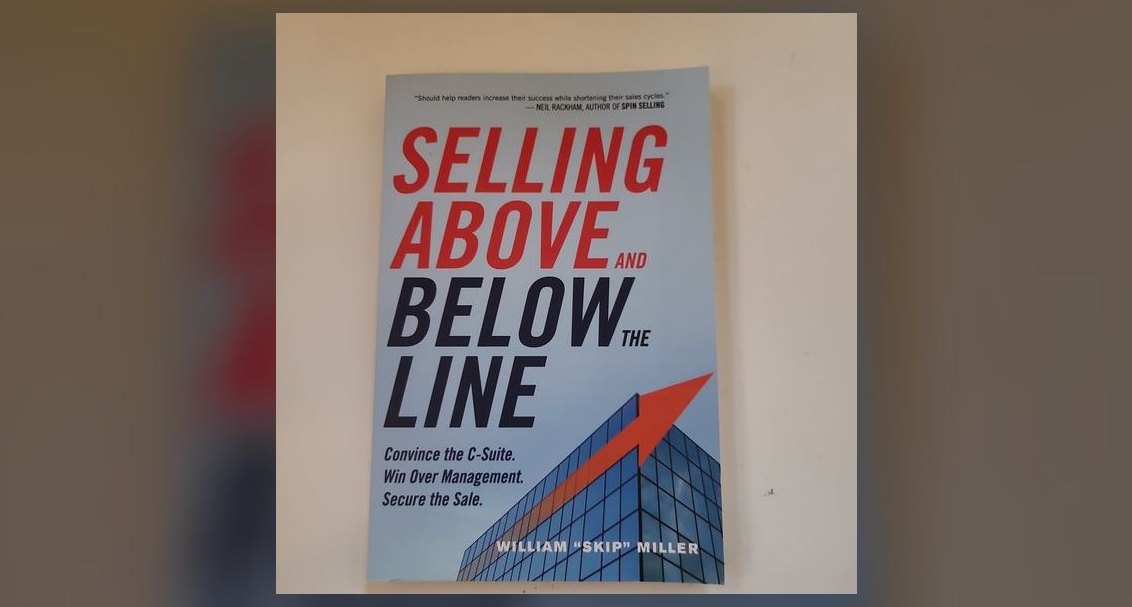 pulse-recentSelling Above and Below the Line by Skip Miller — Top 10 Key Takeaways for Sales Leaders in 2027
 pulse-recentInsight Selling by Mike Schultz and John Doerr — Top 10 Key Takeaways for Sales Leaders in 2027
 pulse-recentBlue Ocean Strategy by W. Chan Kim and Renee Mauborgne — Top 10 Key Takeaways for Sales Leaders in 2027
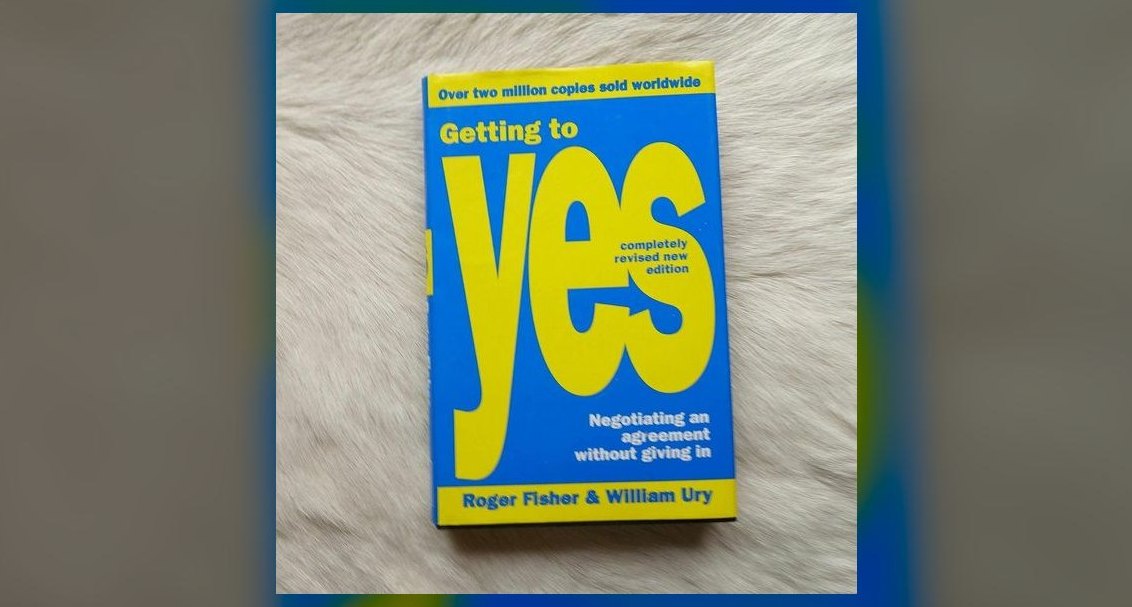 pulse-recentGetting to Yes by Roger Fisher and William Ury — Top 10 Key Takeaways for Sales Leaders in 2027
 pulse-recentWhat is the first concrete step in the Sandler Selling System for handling a prospect's initial brush-off in 2027?
 pulse-recentWhat are the first three concrete steps in Sandler Rule #1 for a new sales rep in 2027?
 pulse-recentNever Split the Difference by Chris Voss — Top 10 Key Takeaways for Sales Leaders in 2027
 pulse-booksWhat are the most common mistakes in Book Summaries in 2027?
 pulse-recentHow to Apply Strategic Selling — Step-by-Step Playbook in 2027