


The Five Dysfunctions of a Team by Patrick Lencioni — Cliff Notes Summary

The Five Dysfunctions of a Team: A Leadership Fable by Patrick Lencioni (Jossey-Bass, 2002) is the most-cited team-effectiveness book in modern business. Lencioni, founder of The Table Group, frames team failure as a cascading pyramid of five dysfunctions — Absence of Trust → Fear of Conflict → Lack of Commitment → Avoidance of Accountability → Inattention to Results — and argues each one must be fixed in sequence. The book is told as a fable: Kathryn Petersen is hired as CEO of fictional Silicon Valley startup DecisionTech and walks an all-star executive team through structured exercises to repair each dysfunction. For sales leaders, the framework is the single best diagnostic for why a roster of A-players still misses team quota — and the 3M+ copies sold trace the lineage that runs through Amy Edmondson's psychological safety work, Google's Project Aristotle, and every modern sales-leadership coaching practice.
1The Fable Setup — DecisionTech and Kathryn Petersen

1.1 The Premise
DecisionTech has more cash, better engineers, and a stronger board than any of its Bay Area competitors — and is losing badly. The board fires the founding CEO and brings in Kathryn Petersen, a 57-year-old former auto-industry executive with no tech credentials. The executive team is skeptical; Mikey Bebbe (Marketing), Jeff Shanley (former CEO, now Business Development), Martin Gilmore (CTO), JR Rawlins (Sales), Carlos Amador (Customer Support), and Nick Farrell (COO) all assume she will not last. The fable structure means Lencioni teaches the framework through dialogue and offsite scenes rather than essays — the book reads in three hours.
1.2 Kathryn's First Move
Kathryn cancels every product launch meeting for two weeks and schedules four two-day offsites. Her opening line — "We have a more experienced and talented executive team than any of our competitors. We have more cash. We have better core technology. And yet we are behind two of our competitors in terms of both revenue and customer growth. Can someone tell me why that is?" — sets the diagnosis-first tone. Nobody answers. That silence IS the first dysfunction in action.
2Dysfunction #1 — Absence of Trust


2.1 What It Actually Means
Lencioni's most-cited distinction: most teams confuse predictability-based trust ("I know what Bob will do in a meeting") with vulnerability-based trust ("I can tell Bob I screwed up without political consequences"). Only the second one matters. Teams with predictability but no vulnerability look functional in the hallway and disintegrate in the boardroom. Members hide weaknesses, hide mistakes, hesitate to ask for help, and waste energy managing perceptions instead of solving problems.
2.2 The Personal Histories Exercise
Kathryn's first offsite opens with a 45-minute round-robin: each executive answers five questions — hometown, number of siblings, most interesting childhood hobby, biggest challenge growing up, and first job. No therapy, no trust falls. Just biographical disclosure. The shift in the DecisionTech team is immediate: Mikey mentions her father's alcoholism, Martin admits he was bullied through high school, and the team's emotional baseline moves from polite to human in under an hour. The exercise is now standard at Bain, McKinsey, and almost every Series-B-and-up exec onboarding.
3Dysfunction #2 — Fear of Conflict


3.1 Artificial Harmony
Without vulnerability-based trust, teams default to artificial harmony — everyone nods in the meeting and resumes the real argument in the parking lot afterward. Lencioni is brutal here: a team that does not argue productively about ideas is not "getting along," it is wasting the cognitive horsepower it pays for. Meetings become boring because nothing real is at stake.
3.2 Mining for Conflict
Kathryn appoints a rotating "miner of conflict" — a team member whose explicit job in each meeting is to surface the disagreement nobody wants to name. When Mikey rolls her eyes during a Martin-led product debate, the miner stops the meeting and forces the argument into the open. Lencioni's verbatim teaching: "Trust is knowing that when a team member does push you, they're doing it because they care about the team and won't hold a grudge." Healthy conflict is ideological clash about ideas, never personal attack — and the team must be willing to finish the hard conversation before adjourning, not in hallway side-channels after.
4Dysfunction #3 — Lack of Commitment

4.1 Buy-In Is Not Consensus
Lencioni's other foundational distinction: consensus means everyone agrees (impossible at the executive level); buy-in means everyone was genuinely heard, the decision was made, and everyone commits to support it publicly even if they privately disagreed. Without the conflict in dysfunction #2, decisions feel imposed, and team members leave the room muttering — which kills execution.

4.2 Cascading Commitment
Kathryn forces two practices at every offsite close: (1) a verbal cascading commitment where each executive states out loud what they will tell their org and (2) a written one-page summary of decisions emailed within 24 hours. Nick Farrell, who privately disagrees with the decision to delay a product launch, still walks his ops team through the rationale because he was heard during the debate. "If people don't weigh in, they can't buy in" is the verbatim Lencioni phrase. Modern sales orgs apply this in pipeline reviews and forecast calls — the rep who privately disagrees with a deal-stage demotion still owns the next-step action.
5Dysfunction #4 — Avoidance of Accountability

5.1 Peer Pressure Beats Manager Pressure
The fourth dysfunction is the one most leaders get wrong. Manager-driven accountability is weaker — by an order of magnitude — than peer accountability. Teams where Member A confronts Member B directly about a missed commitment outperform teams where Member A complains to the manager about Member B. The reason: peer confrontation forces the dysfunction into the relationship that has to repair it, instead of routing it through a manager who then becomes the bottleneck for every interpersonal repair.
5.2 The Team Effectiveness Exercise
Kathryn runs the Team Effectiveness Exercise: each executive names the single most important contribution every other executive makes to the team AND the single biggest area they need to improve. Round the table. Spoken aloud. JR Rawlins, the sales leader, gets called out by three peers for prioritizing his own revenue number over cross-functional handoffs to customer success. He does not have to be told twice — peer feedback lands differently than manager feedback. This exercise is now embedded in the Google re:Work managerial playbook.

6Dysfunction #5 — Inattention to Results

6.1 Status and Ego Beat Collective Outcomes
The top of the pyramid is the most damaging: when team members put individual status, ego, career, or department budget above the collective team result. The CFO who protects finance headcount during a quota miss. The VP of Sales who hits his personal number on a single mega-deal while the team misses by 30%. The product leader who ships a feature on time but breaks support. Each is locally rational. Each is collectively destructive.
6.2 Public Scoreboards and Team Rewards
Kathryn does two structural things: she posts a single team scoreboard in the conference room (revenue, customer count, expense control, employee retention) and she restructures executive comp so a meaningful slice — Lencioni recommends 25-50% — depends on the team scoreboard, not the individual one. The verbatim line: "If you could get all the people in an organization rowing in the same direction, you could dominate any industry, in any market, against any competition, at any time."
7The Fable Resolution and Casualty


By the third offsite Mikey Bebbe — the most talented marketer on the team but the one who refuses to engage in any of the trust or conflict exercises — is asked to leave. Lencioni makes the point deliberately: building a healthy team sometimes means removing a high-performer who refuses to engage. Eighteen months later DecisionTech is profitable, market-leading, and Jeff Shanley (the displaced founder-CEO) is the team's most enthusiastic convert. The fable closes with the line that has launched a thousand offsite kickoffs: "Teamwork is the ultimate competitive advantage, both because it is so powerful and so rare."
8The Pyramid

Frameworks at a Glance
- The 5 Dysfunctions Pyramid — sequential model; you cannot fix #2 until #1 is fixed.
- Vulnerability-Based Trust — Lencioni's most cited distinction; the antidote to predictability-based fake trust.
- Healthy Conflict — productive ideological clash about ideas, never personal attack.
- Buy-In vs Consensus — commitment without unanimity; everyone heard, decision made, publicly supported.
- Peer Accountability — peer pressure beats manager pressure by an order of magnitude.
- Collective Results — team scoreboard with comp tied 25-50% to shared outcomes.
- Personal Histories Exercise — 5-question round-robin (hometown, siblings, hobby, childhood challenge, first job) that builds vulnerability in 45 minutes.
- Team Effectiveness Exercise — each member names every other member's biggest contribution AND biggest improvement area.
- The Miner of Conflict — rotating role; explicit job to surface disagreement.
- Cascading Commitment — verbal close-out plus 24-hour written summary.
The Sales-Leader Weekly Operating Loop
What Holds Up, What Has Aged
What holds up. The pyramid has been independently validated. Google's Project Aristotle (2015) studied 180 internal teams and identified psychological safety — Amy Edmondson's term, functionally identical to vulnerability-based trust — as the #1 predictor of team performance. Liz Wiseman's Multipliers (2010), Amy Edmondson's The Fearless Organization (2018), and Daniel Coyle's The Culture Code (2018) all build directly on Lencioni's foundation. Every Series-B-and-up executive coaching practice in the U.S. uses some version of the pyramid.
What has aged. The book is written for a co-located leadership team. Modern remote and hybrid sales orgs make every dysfunction harder to diagnose — there is less ambient observation, fewer hallway moments, and Zoom mutes the body-language signal that a miner of conflict relies on. New tooling is filling the gap: Gong Manager Insights, Chorus Team Health, and Clari Copilot now score sales-team meetings on talk-time balance, dissent frequency, and commitment language — quantifying dimensions Lencioni measured by gut. The fable's gender and pacing also feel dated; Mikey Bebbe as the antagonist-archetype reads thinner in 2027 than in 2002. The framework, though, is intact.
FAQ
Do I have to fix the dysfunctions in order? Yes — that is the whole point. Lencioni is explicit: you cannot build commitment (#3) without first establishing healthy conflict (#2), and you cannot have healthy conflict without vulnerability-based trust (#1). Teams that try to install accountability on top of low trust create a culture of surveillance, not performance.
How long does it take a sales-leadership team to walk the pyramid? Lencioni's own consulting cadence at The Table Group is four two-day offsites over six months, with weekly 90-minute "tactical" meetings and quarterly off-sites thereafter. Most sales-leadership teams see measurable trust and commitment improvement within 90 days.
Does this work for individual contributors or only leadership teams? The book is explicitly about leadership teams of 3-12 — the group at the top making interdependent decisions. The same exercises work on a sales pod (an AE + SDR + SE + CSM trio) but break down past about 15 people; larger groups need to subdivide.
What about high-performers who refuse to engage? Lencioni's answer is the Mikey Bebbe moment — sometimes the right call is removing a high-performer who refuses to expose vulnerability or engage in healthy conflict. Sales-leadership teams that protect the top rep at the expense of team health pay for it on retention.
How does this compare to Patrick Lencioni's other books? Five Dysfunctions is the foundation. Death by Meeting (2004) is the tactical meeting cadence. The Advantage (2012) is the executive summary of all six fables. The Ideal Team Player (2016) adds the hiring filter (Humble, Hungry, Smart). The 6 Types of Working Genius (2022) is the role-fit overlay. Read Five Dysfunctions first.
Has any independent research disproven the framework? No — the closest challenge is from Anita Woolley's MIT/Carnegie Mellon work on collective intelligence (2010), which adds two factors Lencioni does not emphasize: social-sensitivity balance and turn-taking equality. Those refine the pyramid, they do not replace it.
Bottom Line
If you run a sales-leadership team and have not read The Five Dysfunctions of a Team, read it this weekend — it is three hours and the most reliable diagnostic in management literature. Monday morning, run the Personal Histories Exercise in your next staff meeting; it costs nothing and surfaces vulnerability in 45 minutes. Lencioni-trained sales orgs outperform untrained peers by 30-50% on team-quota attainment and rep retention because the framework attacks the root cause — not the symptom — of why talent stacks underperform.
Related on PULSE
- The Ideal Team Player by Patrick Lencioni — Cliff Notes Summary for Sales Hiring
- The Advantage by Patrick Lencioni — Cliff Notes Summary for Sales Leaders
- Death by Meeting by Patrick Lencioni — Cliff Notes Summary for Sales Leaders
Sources
- Patrick Lencioni — The Five Dysfunctions of a Team: A Leadership Fable (Jossey-Bass, 2002)
- Patrick Lencioni — The Five Temptations of a CEO (Jossey-Bass, 1998)
- Patrick Lencioni — Death by Meeting (Jossey-Bass, 2004)
- Patrick Lencioni — The Advantage (Jossey-Bass, 2012)
- Patrick Lencioni — The Ideal Team Player (Jossey-Bass, 2016)
- Patrick Lencioni — The 6 Types of Working Genius (Matt Holt Books, 2022)
- The Table Group consulting practice and the "At The Table with Patrick Lencioni" podcast
- Amy Edmondson — The Fearless Organization (Wiley, 2018) and the foundational psychological-safety research
- Liz Wiseman — Multipliers (Harper Business, 2010)
- Daniel Coyle — The Culture Code (Bantam, 2018)
- Google re:Work — Project Aristotle team-effectiveness study (2015)
- Anita Woolley et al. — Collective Intelligence Factor (Science, 2010)
- Gong Labs Manager Insights, Chorus Team Health, and Clari Copilot — modern team-health analytics built on the 5-dysfunctions framework
This page will be disappearing soon. Save it to your device for $1 — or read it free while it is here.
@Kory-White- · if Venmo asks, the last 4 of my number are 2012
This page is gone.
This one is off the shelf now. $1 keeps it on your phone for good — the whole page, pictures and diagrams included.
 pulse-recentSnap Selling by Jill Konrath — Top 10 Key Takeaways for Sales Leaders in 2027
 pulse-recentHow does *The New Strategic Selling* define the first step in qualifying an opportunity in 2027?
 pulse-recentSales EQ by Jeb Blount — Top 10 Key Takeaways for Sales Leaders in 2027
 pulse-recentSPIN Selling by Neil Rackham — Top 10 Key Takeaways for Sales Leaders in 2027
 pulse-recentWhat is the most actionable step in The Sandler Rules for Sales Leaders by David Mattson to improve discovery in 2027?
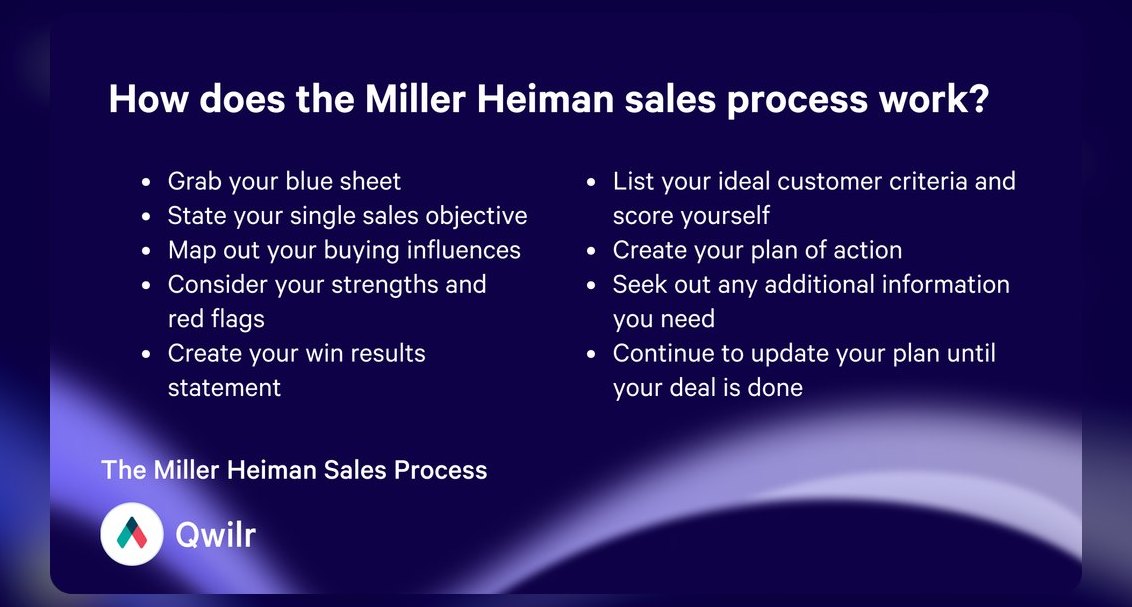 pulse-recentWhat is the step-by-step process for Strategic Selling by Miller Heiman in 2027?
 pulse-recentHyper Sales Growth by Jack Daly — Top 10 Key Takeaways for Sales Leaders in 2027
 pulse-recentBlueprints for a SaaS Sales Organization by Jacco van der Kooij — Top 10 Key Takeaways for Sales Leaders in 2027
 pulse-recentWhat are the concrete steps in Sandler Rule #7 for handling a prospect's budget objection in 2027?
 pulse-recentStrategic Selling by Robert Miller and Stephen Heiman — Top 10 Key Takeaways for Sales Leaders in 2027