


Tribal Leadership by Logan, King & Fischer-Wright — Cliff Notes Summary
Quality
Certified

Tribal Leadership (Logan, King & Fischer-Wright, HarperBusiness, 2008) argues organizations are really networks of 20–150-person tribes, each stuck at one of five cultural stages you can diagnose by listening to language. Leaders upgrade tribes one rung at a time — never skipping — using targeted language interventions and triads anchored on core values and a noble cause.
The two competing reads of the book: diagnostic instrument or leadership strategy
Most people who pick up Tribal Leadership walk away with one of two very different books, and which one you walk away with determines whether the ideas survive contact with your calendar.
The first read treats the book as a diagnostic instrument. On this reading, the five stages are a classification scheme — a way to listen to a standup, a deal review, or a Slack channel and label what you hear. Stage 1 sounds like "life sucks"; Stage 2 sounds like "my life sucks"; Stage 3 sounds like "I'm great and you're not"; Stage 4 sounds like "we're great"; Stage 5 sounds like "life is great." The diagnostic read is cheap to adopt, requires zero organizational change, and gives a manager immediate vocabulary for something they already felt. Its weakness is that diagnosis alone changes nothing. Plenty of leaders can now confidently say "we're a Stage 3 floor" and have said it for three consecutive years while remaining a Stage 3 floor.
The second read treats the book as a leadership strategy — a sequenced intervention plan with a specific structural move at its center. On this reading, the stages are scaffolding for the real content: you cannot skip rungs, each rung has its own intervention, and the leader's job shifts from being the hub of every relationship to being the person who deliberately builds three-way relationships and then recedes. The structural move — the triad — is the actual product. Everything else is the packaging that makes the triad legible.

The tension between these two reads is not academic. It shows up in how organizations deploy the material. A company that buys the diagnostic read runs a workshop, prints a five-stage poster, and moves on. A company that buys the strategy read restructures how deal reviews run, who introduces whom, what gets said in the Monday meeting, and what the team is fighting for beyond the number. The first costs an afternoon. The second costs a year of leadership attention and produces the outcome the book is actually about.
There's a third position worth naming, because sophisticated readers land here: the book is a language-first theory of culture change. Its genuinely original claim isn't "there are five stages" — stage models of organizational maturity long predate it, and Edgar Schein's work on culture is the deeper academic foundation. The original claim is that *language is both the symptom and the lever*. You diagnose by listening, and you intervene by changing what gets said and by whom. That's a stronger and stranger claim than either simpler read, and it's the one that has held up best.
Where the book is weakest is precisely where a strategy book should be strongest: it under-specifies failure modes. It tells you Stage 3 people hoard knowledge; it doesn't tell you what to do when the hoarder is your top biller and the CFO has already modeled next year around their number. It tells you triads survive turnover better than dyads; it doesn't tell you how to build one between two people who genuinely dislike each other. The practitioner has to fill that in.
Deciding which read you need — and which stage you're actually in

The decision isn't really "diagnostic or strategy." It's a sequence: you use the diagnostic to establish where you are, then you decide whether the gap between where you are and where you need to be justifies the strategy's cost. Most teams skip the first step, guess wrong, and apply an intervention calibrated for the wrong rung.
Guessing wrong is the norm, not the exception. Ask any sales leader to self-report and you'll hear "Stage 4" — we're collaborative, we win together, we have a mission statement. Then sit in the standup. If the reps address every comment to the manager rather than to each other, if the phrase "I closed" outnumbers "we closed" four to one, if nobody has ever seen a colleague's discovery-call framework, you are looking at a Stage 3 floor with Stage 4 marketing copy. The research base behind the book — a decade of work out of USC Marshall involving roughly 24,000 people across a couple dozen organizations — put the bulk of professional tribes squarely in that Stage 3 middle, with a much smaller share reaching Stage 4 and only a sliver ever touching Stage 5. Your gut is not a measurement instrument. Pronoun counts are.
The practical decision procedure runs in four moves. First, sample the language rather than surveying opinions. Surveys measure what people believe they should say; language samples measure what they actually say when they're not being measured. Sit through three unrelated meetings — a standup, a pipeline review, and something social — and tally pronouns and objects of complaint. Second, locate the modal stage, not the average. Culture isn't a mean; it's a mode plus a distribution. A floor with eight Stage 3 reps and two Stage 4 reps is a Stage 3 floor, and the two Stage 4 people are a flight risk. Third, check the gap against the business need. If your entire strategic requirement is hitting this quarter's number in a favorable market, Stage 3 will do it. Individual quotas, individual leaderboards, and individual commission are a machine purpose-built for Stage 3, and that machine works. It works right up until the market turns, a hero rep leaves, or you need reps to cover for each other on a complex multi-threaded deal. Fourth, only then choose the intervention matched to the current rung.
That last step is where most implementations die. The interventions are stage-specific and non-substitutable. A Stage 2 person — the rep who believes the pricing is broken, the territory is unwinnable, and leadership doesn't listen — does not need a triad. They need a win. Assign a genuinely winnable account, coach them through it personally, then name them in the team meeting. Repeat it two or three times over a quarter and the story they tell about themselves changes from "I'm powerless" to "I can produce." That's the Stage 2 to Stage 3 move, and it's individual, not structural.
A Stage 3 person needs the opposite. They already believe they can produce; that belief is the problem. Give a Stage 3 rep another individual win and you've reinforced the ceiling. What they need is a structural change in their relationship graph — introduce them to another high performer around something both care about, then get out of the way. If you stay in the conversation, you've built two dyads, not a triad, and you remain the bottleneck.
One more decision input that the book itself handles only lightly: how distributed is the team? A co-located floor generates accidental triads. Two reps end up at the same coffee machine, compare notes on a shared account, and a three-way relationship forms without the manager doing anything. A remote or hybrid floor generates almost none of these. Slack is structurally dyadic — DMs dominate, channels are broadcast — and video calls default to hub-and-spoke with the manager running the agenda. If your team is distributed, the strategy read isn't optional; the diagnostic read will just tell you, accurately and uselessly, that you're stuck at Stage 3.
The numbers behind each option: distribution, timelines, and what a stage actually costs
The book's quantitative spine is thinner than its reputation suggests, and it's worth being precise about what's actually measured versus what's asserted, because a practitioner making a resourcing argument needs to know which claims will survive scrutiny.

The research base. The credible number is the study itself: roughly a decade of fieldwork, about 24,000 people, spanning about two dozen organizations across sectors — biotech, financial services, healthcare, design. Named exemplars in the book include Amgen, American Express, Griffin Hospital, and IDEO. That's a large qualitative-plus-coded-language dataset, not a randomized trial, and the stage distribution it produced is a description of the sample, not a law of nature. Treat the distribution as an order-of-magnitude prior: a small sliver at Stage 1, roughly a quarter at Stage 2, the plurality — call it around half — at Stage 3, a meaningful minority at Stage 4, and about two percent at Stage 5. The useful takeaway from those proportions isn't the decimal places. It's the shape: the middle is enormous, the top is rare, and your default assumption about your own team should be "Stage 3 until proven otherwise."
What each stage costs you, in mechanisms rather than invented percentages. Stage 1 productivity is effectively zero — the tribe's energy goes into hostility and self-protection. You rarely see a pure Stage 1 sales org, but you see Stage 1 *pockets*, and they appear predictably: after a layoff round that hit without warning, after an acquisition where one side clearly lost, or under a leader who uses performance-improvement plans as a threat rather than a process. Those pockets are contagious and they're a hiring liability long after the triggering event.
Stage 2 productivity is low and, more diagnostically, *supervision-dependent*. Work happens when someone is watching and stops when they aren't. The financial signature is a team where activity metrics look acceptable in weeks when the manager is present and collapse when the manager is at a conference. If you're trying to build a forecasting model on a Stage 2 team, your inputs are theater.
Stage 3 productivity is moderate-to-high but fragile and unevenly distributed. The classic Stage 3 signature is revenue concentration: two or three reps produce a disproportionate share of the number, the rest cluster well below quota, and the org's fate is tied to whether those two or three stay. The costs are real but they show up on lagging indicators — ramp time for new hires (nobody will share a playbook, so every new rep reinvents the discovery process), knowledge loss on departure (the top biller's account intelligence walks out the door because it lived in their head and their personal notes), and manager bandwidth (every relationship routes through you, so your span of control caps out far lower than the org chart claims).
Stage 4 productivity is high and — the property that actually matters — resilient. A Stage 4 tribe absorbs a bad quarter without fracturing into blame. When the number is missed, the language is "what did we miss and what do we change," not "marketing's leads were garbage." The book asserts substantial gains in retention and team-wide quota attainment for Stage 4 organizations relative to Stage 3. Take the direction seriously and the magnitude with caution: those follow-up figures come from the authors' own consulting practice, not from independent replication, and I'd present them internally as "the authors report material gains" rather than quoting a percentage you can't source.
Timelines. This is where the book is most useful for planning. A Stage 2 to Stage 3 upgrade for an individual is fast — think a quarter, driven by two or three engineered wins with public recognition. A Stage 3 to Stage 4 upgrade for a *tribe* is slow: the authors put it in the range of six to eighteen months of sustained leadership attention, and that estimate matches what practitioners report. It accelerates around a triggering event — a new mission, a marquee customer win, a founder reset, a merger that forces a genuine shared identity. It does not happen at all without the leader personally building triads and personally, repeatedly articulating the cause. Delegating culture change to an enablement team produces a poster.
Stage 4 to Stage 5 is different in kind. Stage 5 is temporary by design — it appears when a tribe takes on something it cannot accomplish alone, which forces partnership with other tribes, sometimes including competitors. When the history-making project ships, the tribe drops back to Stage 4. That's healthy. Chasing permanent Stage 5 is a burnout strategy, and the book says so.
The budget conversation. If you're asking for resources, the honest framing is: the diagnostic costs you three meetings and a notebook. The strategy costs you roughly two hours of leadership time per week for a year — one deliberate triad introduction, one values reinforcement moment tied to a real deal, one noble-cause story tied to a real customer outcome, and the discipline to let a pod run a deal review without you. That's the actual price. Anyone quoting you a number for a two-day offsite is selling the diagnostic and calling it the strategy.
Implementing the upgrade: sequencing, triads, and the weekly loop
The implementation has a required order, and inverting it is the most common failure I see.
Step one: listen before you announce. Spend a full week sampling language with no intervention and no announcement. If you announce a culture initiative first, you contaminate the sample — people start performing "we" language immediately and you lose your baseline. Take notes per person, not just per team, because stage is an individual property inside a tribal average. You want to know which two people are already operating at Stage 4, because those are your triad seeds.
Step two: articulate values and cause before you build structure. Stage 4 rests on two anchors and neither is optional. Core values are what the tribe stands for — the principles that decide trade-offs when nobody's watching. They have to be specific enough to lose something. "Integrity" is not a core value; it's a word. "Customer truth over forecast comfort" is a core value, because it tells a rep what to do when the deal they've been calling commit has clearly gone dark: tell the truth, take the forecast hit, keep the trust. Noble cause is what the tribe is fighting for beyond the commission — "we help underdog software companies beat incumbent giants" does work that "be the market leader" cannot, because it gives the rep a reason to care about a customer's outcome after the contract is signed.
The extraction method matters more than the wording. Don't write these in a leadership offsite and roll them out. Interview reps individually: "Tell me about a moment here you were proud of." The values are hiding in the stories. Then reflect the pattern back and let the tribe sharpen it. A cause the tribe recognizes is a cause the tribe repeats; a cause handed down is a slogan that dies in a Slack channel.

Step three: build triads deliberately, one per week. This is the mechanical core. The move is: identify two people who share a value or a concrete problem, introduce them *around that specific thing*, and then recede. The receding is the part leaders skip. If you introduce two reps and then stay in the thread to coordinate, you've built two dyads with yourself at the center and reinforced exactly the structure you're trying to dismantle.
A well-formed triad has three properties. It's anchored on something specific — a shared account, a shared obstacle, a shared value someone demonstrated — not "you two should connect." It's mutually beneficial, meaning both parties can name what they get from it. And it's self-sustaining, meaning if you go on vacation the relationship continues. The durability argument is straightforward: a dyad dies when one person leaves. In a triad, if any one person leaves, the remaining two still have a working bond, and the network survives turnover instead of resetting.
For distributed teams, triads must be engineered rather than hoped for. Concrete mechanisms that work: rotating pod-based deal reviews where a peer, not the manager, runs the session; shared account war rooms where two reps co-own a strategic pursuit; a standing peer-coaching pair that rotates monthly; and asynchronous artifacts — a shared doc where one rep's discovery framework is visible and another rep annotates it. The common thread is that the manager is not the routing layer.
Step four: keep the Stage 3 machine running while you build Stage 4 on top of it. This is the pragmatic move and the one that separates implementations that survive from implementations that get killed by the CFO in month four. Do not dismantle individual quotas, individual leaderboards, or individual commission. Stage 3 mechanics are how the number gets hit while the culture change is still cooking. What you add is a layer: pod-based deal teams, at least one shared accountability metric (team attainment, net retention, or ramp time for new hires), and cause-anchored recognition alongside the revenue leaderboard. Reps read the comp plan as the real statement of values, so if you want collaboration to be more than rhetoric, something in the measurement system has to reward it — even if it's recognition rather than dollars in year one.

Step five: run a weekly loop and re-measure quarterly. The loop is small enough to survive a busy quarter, which is the only kind of loop that survives.
Where this connects to adjacent work. The Tribal Leadership frame is incomplete on its own and slots naturally next to three neighbors. Lencioni's Five Dysfunctions gives you the trust-and-conflict mechanics underneath a Stage 3 to Stage 4 transition — a team that can't survive productive conflict cannot form real triads. Wiseman's Multipliers describes the *individual* leadership behaviors that make a Stage 4 tribe possible, particularly the shift from being the smartest person in the room to being the person who makes the room smarter. And Edmondson's work on psychological safety fills the book's biggest gap: Tribal Leadership tells you Stage 2 people feel powerless but is light on the conditions under which people will risk speaking up at all. If you're only reading one companion volume, make it that one.
There's also a tooling angle the 2008 book couldn't anticipate. Conversation-intelligence platforms now record and transcribe the meetings you'd otherwise sit through with a notebook, which makes language sampling far cheaper and far more consistent than manual observation ever was. Use it carefully — recording changes behavior, and a team that knows its pronouns are being scored will supply you with "we" on demand. The honest use is longitudinal: compare quarters, look for drift, and don't tell anyone you're counting.
Related questions
Can one rep be at a different stage than their team?
Yes, and spotting it is the leader's job. A Stage 4 rep on a Stage 3 team either pulls the team up or leaves within a year. A Stage 2 rep on a Stage 3 team gets carried for a quarter, then visibly underperforms once the honeymoon ends.
Why can't I just hire Stage 4 people?

Stage isn't a personality trait — it's a property of the tribe you're in. A rep who operated at Stage 4 at their last company typically regresses to the surrounding stage within a quarter. Hiring doesn't beat culture; it feeds it.
Is Stage 3 always bad for a sales floor?
No. Stage 3 hits quota in favorable markets and is cheap to run. It breaks in downturns, concentrates revenue in two or three people, and caps team-wide attainment. If you need one good quarter, Stage 3 works. For a durable advantage, it doesn't.
How is this different from Lencioni's Five Dysfunctions?
Lencioni diagnoses a single team's internal mechanics — trust, conflict, commitment, accountability, results. Tribal Leadership diagnoses culture across many 20–150-person groups using language as the instrument. They're complementary: one is a team model, one is an organizational one.
Does this apply to a five-person startup team?
More than it applies to a large org. Small teams are sub-tribes with no buffer, and the founder is the de facto tribal leader. Values and cause articulation matter disproportionately because every hire either reinforces or dilutes them immediately.
FAQ
What's the fastest way to diagnose my team's stage?
Sit silently through next Monday's standup for thirty minutes and count pronouns and objects of complaint. Heavy "I" plus grievances about other departments points to Stage 3, which is where most commission-driven floors live. Heavy "they" plus helplessness points to Stage 2. Heavy "we" plus a named competitor or a stated cause points to Stage 4. Don't announce that you're doing it — announcing it corrupts the sample immediately.
What exactly is a triad, and how is it different from just introducing two people?
A triad is a three-way relationship the leader builds around a specific shared value or problem, and then deliberately steps back from. The difference from a casual introduction is the anchor and the receding. "You two should talk" produces nothing. "You both care about getting new reps productive faster — you should own that together" produces a working relationship that outlives your involvement. If you stay in the middle coordinating, you've built two dyads and remained the bottleneck.
How long does a Stage 3 to Stage 4 upgrade take?
The authors put it at roughly six to eighteen months of sustained leadership attention. It moves faster when there's a triggering event — a new mission, a marquee win, a founder reset, a merger that forces a shared identity. It doesn't happen at all if the leader delegates it, because the two mechanisms that drive it (personally building triads and personally repeating the cause) are non-delegable.
Do I have to give up individual quotas to reach Stage 4?
No, and trying to is usually how these efforts get killed. Keep individual quotas, leaderboards, and commission — that machine is how the number gets hit while the culture shifts. Layer on top of it: pod-based deal teams, at least one shared accountability metric like team attainment or net retention, and recognition tied to the cause rather than only to revenue.
Why does remote work make this harder?
Co-located teams generate accidental triads at the coffee machine and in hallway conversations. Remote work is structurally dyadic — DMs dominate, channels broadcast, and video calls default to the manager running an agenda. Nothing forms by accident, so every three-way relationship has to be engineered through peer-run deal reviews, co-owned accounts, rotating coaching pairs, and shared artifacts.
Is Stage 5 something to aim for?
Not permanently. Stage 5 appears when a tribe takes on something it can't accomplish alone, which forces partnership with other tribes. It's temporary by design, and tribes drop back to Stage 4 when the project ships — which is healthy. Sustained excellence looks like a solid Stage 4 baseline with occasional Stage 5 sprints, not a permanent state of transcendence.
Sources
- https://www.harpercollins.com/products/tribal-leadership-dave-loganjohn-kinghalee-fischer-wright
- https://www.marshall.usc.edu/
- https://www.ted.com/talks/david_logan_on_tribal_leadership
- https://hbr.org/2008/07/the-five-stages-of-tribal-leadership
- https://www.goodreads.com/book/show/2097045.Tribal_Leadership
- https://www.tablegroup.com/books/dysfunctions/
- https://en.wikipedia.org/wiki/Dunbar%27s_number
- https://www.thelencionigroup.com/
- https://hbr.org/2018/11/the-fearless-organization
- https://www.wiley.com/en-us/The+Fearless+Organization-p-9781119477242
Related on PULSE
- The Five Dysfunctions of a Team by Patrick Lencioni — Cliff Notes Summary for Sales Leaders
- The Advantage by Patrick Lencioni — Cliff Notes Summary for Sales Leaders
- Multipliers by Liz Wiseman — Cliff Notes Summary for Sales Leaders
- The 12 Week Year by Brian Moran and Michael Lennington — Cliff Notes Summary for Sellers
- Contagious by Jonah Berger — Cliff Notes Summary for Sellers
This page will be disappearing soon. Save it to your device for $1 — or read it free while it is here.
@Kory-White- · if Venmo asks, the last 4 of my number are 2012
This page is gone.
This one is off the shelf now. $1 keeps it on your phone for good — the whole page, pictures and diagrams included.
 pulse-recentSnap Selling by Jill Konrath — Top 10 Key Takeaways for Sales Leaders in 2027
 pulse-recentStart with No by Jim Camp — Top 10 Key Takeaways for Sales Leaders in 2027
 book-summaryLittle Red Book of Selling by Jeffrey Gitomer — Cliff Notes Summary
 pulse-recentWhat is the most actionable step in The Sandler Rules for Sales Leaders by David Mattson to improve discovery in 2027?
 book-summaryMajor Account Sales Strategy by Neil Rackham: Summary, Key Lessons, and RevOps Takeaways
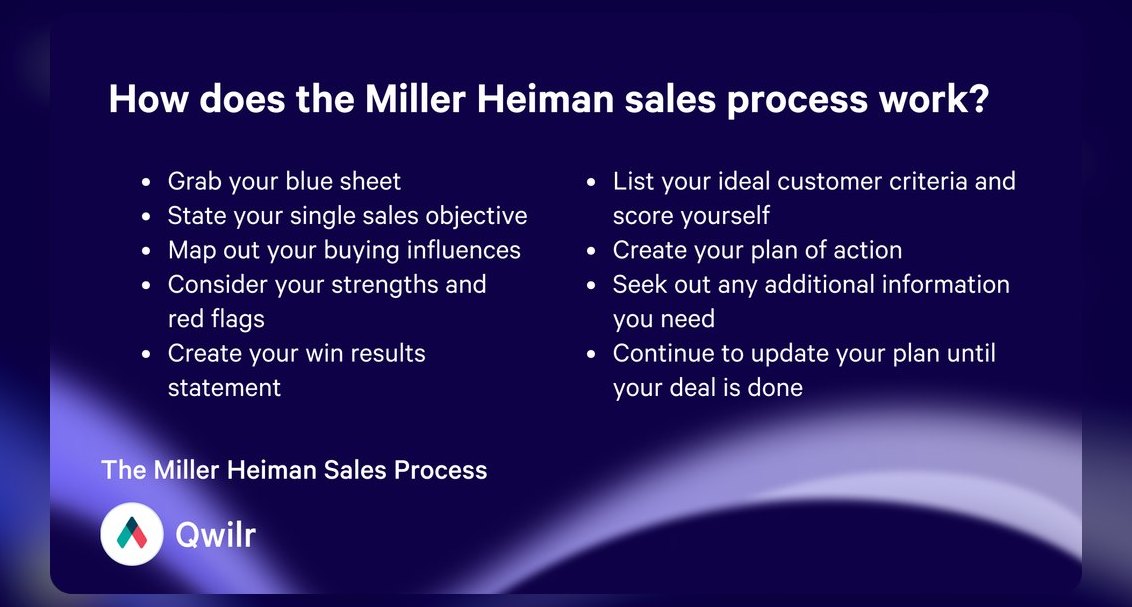 pulse-recentWhat is the step-by-step process for Strategic Selling by Miller Heiman in 2027?
 pulse-recentThe Closer’s Survival Guide by Grant Cardone — Top 10 Key Takeaways for Sales Leaders in 2027
 pulse-recentWhat is the first concrete step in Sandler Rule #4 for a sales leader to implement in 2027?
 pulse-recentHow does *The New Strategic Selling* define the first step in qualifying an opportunity in 2027?
 pulse-recentMonetizing Innovation by Madhavan Ramanujam — Top 10 Key Takeaways for Sales Leaders in 2027