


ProActive Selling by William Miller — Cliff Notes Summary
Quality
Certified
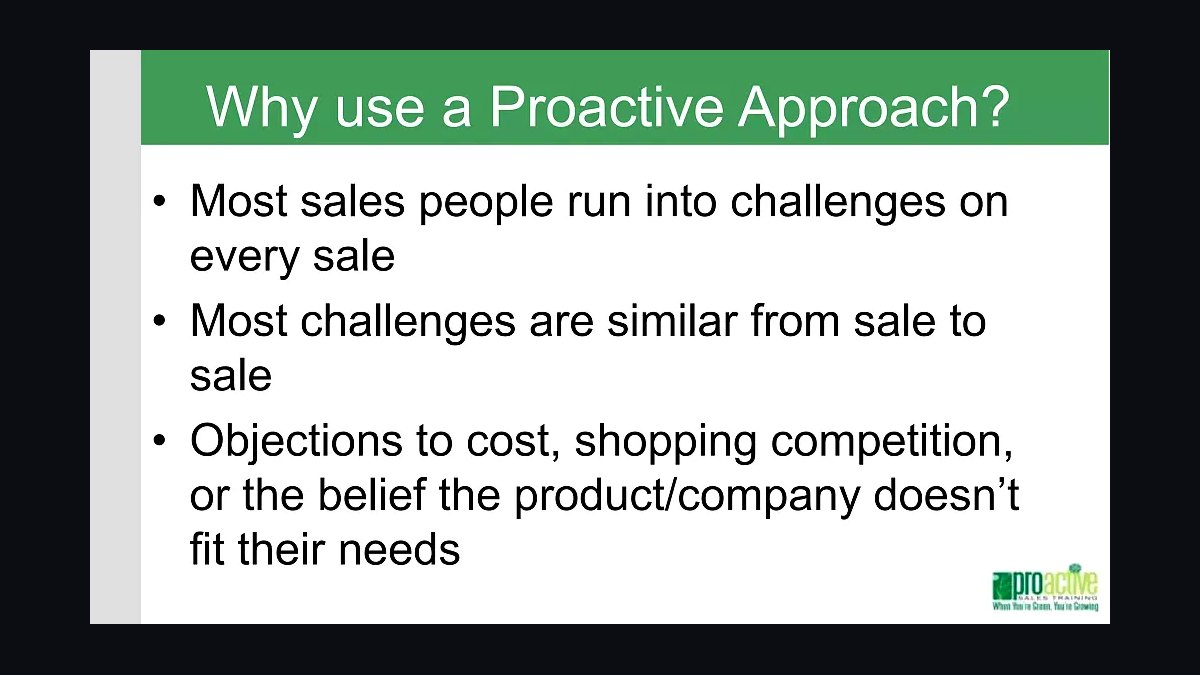
*ProActive Selling* by William "Skip" Miller argues that sellers must control the buying process instead of reacting to it. Its core tools — the PainChain, the 30-Second Speech, Buyer's Anxiety, the 3 Languages, and Trial/Implementation Closes — replace the dramatic close with continuous, stage-matched micro-commitments that shorten cycles and protect price.
Reactive selling versus ProActive selling — the two operating models compared
Every B2B seller runs one of two operating models, and Miller's whole book is a forced choice between them. The reactive model is the default: leads arrive, RFPs land, the buyer proposes the next meeting, and the rep's job is to be responsive, polished, and available. It feels like good customer service. It is, in Miller's framing, a vendor standing in a beauty contest somebody else is running — one where the scoring rubric was written by a competitor who got there first. The reactive rep's calendar is entirely inbound. Their forecast is a list of things they hope other people will do.
The ProActive model inverts the ownership of the process. The rep proposes the next step at the end of every interaction, defines who should be in the room, suggests the evaluation criteria before the buyer drafts them, and disqualifies aggressively when the deal will not move. The famous line — reactive selling responds to RFPs, ProActive selling shapes what's *in* the RFP — is not a slogan about pushiness. It is a claim about *timing*: influence in a complex deal is front-loaded, and by the time requirements are written down, the winner is usually already decided.

The two models diverge on four measurable dimensions. Who sets the agenda: reactive reps accept the buyer's proposed next step; ProActive reps arrive at every meeting with a written next step already drafted. Where discovery stops: reactive reps stop at the pain the first contact volunteers; ProActive reps chase that pain up the org chart until it touches a number an executive is accountable for. How objections surface: reactive reps wait and rebut; ProActive reps name the likely objection first, on their own terms, while it is still cheap. How the deal ends: reactive reps ask for the business in a high-stakes moment; ProActive reps have pre-agreed implementation logistics so thoroughly that the signature is administrative.
The honest trade-off is that the ProActive model is more expensive per deal early and cheaper later. It requires more prep, more stakeholder outreach, more willingness to be told no in month one instead of month six. Reactive selling optimizes for a full pipeline; ProActive selling optimizes for a *true* pipeline. If your compensation plan rewards opportunity creation and your manager reviews pipeline coverage rather than deal quality, the reactive model is what the system is actually paying for — and no amount of book-reading changes that until the incentives move.
There is also a maturity caveat worth stating plainly. The ProActive playbook assumes a considered, multi-stakeholder purchase with real evaluation stages. In transactional, self-serve, or product-led motions where a user swipes a card in eleven minutes, most of these tools have nowhere to attach. The frameworks earn their keep when the deal involves several people, several months, and a business case someone has to defend internally.
How to decide which tool to reach for, and when

The most common misapplication of this book is treating its five tools as a checklist to run in order on every deal. They are not sequential; they are situational. Miller's stage model — Initial Interest, Develop, Justify — exists precisely so the rep can pick the right instrument for where the buyer actually is, and stage-appropriate behavior is the meta-skill the individual tools serve.
In Initial Interest, the buyer has a latent problem and no budget line. Feature demos here bore people; the winning move is the 30-Second Speech and problem framing. The rep's goal is not to advance the deal but to earn the right to a second conversation with a wider group. In Develop, the buyer is actively comparing options and building a shortlist. This is where PainChain mapping, the 3 Languages translation work, and the Wedge belong — the buyer is receptive to shaping criteria because they have not finished writing them. In Justify, the buyer has effectively decided and is now assembling internal cover: risk review, security, procurement, references. Asking open discovery questions here reads as incompetence. The correct tools are Buyer's Anxiety pre-handling and the Implementation Close.

A practical decision heuristic: ask what the buyer's *next internal conversation* is about. If it is "should we even look at this," you are in Initial. If it is "which of these three," you are in Develop. If it is "how do I get this approved," you are in Justify. Reps routinely misdiagnose Justify as Develop because the buyer is still asking questions — but the questions have changed shape from "what does it do" to "what happens if it goes wrong."
The disqualification branch matters more than the advance branch. Miller's position is that a stuck deal is not a slow win, it is a slow loss that is also consuming the hours you would have spent finding a real one. The decision rule he prescribes is uncomfortable but clean: if a deal has not changed stage within a defined window, it leaves the forecast regardless of its theoretical size.
The tools themselves, in operating detail
The PainChain is the book's most original contribution and the one most reps under-execute. The idea: pain surfaced at one level is a feature request; pain traced up the hierarchy is a business case. A user says data entry is tedious. A director says the forecast is unreliable. An executive says the board lost confidence in the number. Those are the same fact at three altitudes, and only the third one funds a project. The rep who can articulate the full chain — and name which specific metric breaks at each link — earns a conversation with the person who controls budget. The rep who stops at user friction sells a small seat count and never moves up.

Building one is mechanical. Write the end-user's daily friction. Ask "and what does that cause for your manager?" Write that. Repeat until you reach someone whose compensation depends on the answer. Then validate the chain with a second source at each level, because a chain built entirely from one contact's guesses is fiction. The common failure is inventing the upper links from a template rather than hearing them from a human.
The 30-Second Speech is a four-part, buyer-specific opener: name a few companies in the buyer's world you've helped, state the concrete outcome, name the problems you typically solve, then hand the floor back with a calibrated question. Its power is entirely in the specificity of the first part — a generic version dies instantly, while one that names organizations the buyer actually competes with earns attention. The discipline is drilling it until it is involuntary, then rewriting it for every distinct buyer persona rather than reusing one script.
Buyer's Anxiety is psychological pre-handling. Every buyer carries unspoken fears: that the project fails with their name on it, that they overpay, that the vendor is gone in eighteen months. Reactive reps wait for these to surface as objections, at which point they are load-bearing. The ProActive move is to name them first — "people in your seat usually worry about X, here's how we've handled it" — which converts a deal-breaker into a discussion topic. The mechanism is well-supported elsewhere in the negotiation literature: labeling an unstated concern reliably reduces its charge.

The 3 Languages anticipates modern multi-threading by a decade. The initiator speaks capability, the economic buyer speaks outcomes and return, the end-user speaks daily workflow. The same offering has to be translated into three native dialects. Walk a finance executive through screen mockups and you lose them; hand an end-user an ROI model and you lose them differently. This has gotten more important, not less, as buying groups have grown — Gartner's buying-group research documents committees well into double digits for enterprise purchases, which means the translation work now spans more dialects than Miller's original three.
Trial and Implementation Closes replace the dramatic ask. A trial close is a small, low-stakes commitment proposed continuously — if we proved this, would you be ready to discuss commercials? A yes is progression; a no is free information you'd otherwise have paid for in month five. The implementation close walks the buyer through logistics — who from your team, which week, what training — long before the formal decision, so the decision becomes a rubber stamp on something already mentally made.
The Wedge is the competitive move: early in discovery, surface a genuine weakness of the likely incumbent as a question the buyer should be asking rather than an attack. Done well, the buyer raises the issue themselves later and you win the comparison without ever naming a competitor negatively. Done badly it is transparent mudslinging. The prerequisite is that the weakness is real and verifiable — inventing one is both dishonest and fragile, since buyers now check.
The funnel as plumbing is Miller's pipeline model: input rate multiplied by velocity equals output. Most reps optimize only input. The prescription is a recurring flush — disqualify anything that hasn't moved — which is the conceptual ancestor of the pipeline-velocity and deal-slippage dashboards that revenue operations teams build today.
Implementation sequencing — a realistic ninety days

Rolling this out as a full methodology on day one is the standard way to fail. The tools have wildly different adoption costs. The 30-Second Speech can be rewritten and drilled in a week. The PainChain requires reps to have conversations they are currently avoiding, and takes a quarter to become habit. Sequence accordingly.
Weeks one to two — the cheapest, highest-visibility win. Rewrite every rep's 30-Second Speech for their top-three target personas. Drill it in role-play until it stops sounding recited. This is the only step that produces a measurable change in meeting-acceptance within days, which matters because early visible wins buy political room for the harder steps.
Weeks three to six — PainChain on live deals only. Take the top open opportunities per rep and map the chain up to the executive level in a working session, not a training room. Require a named human as the source for each link. Reps will discover that most chains stop at the second link because they've never met anyone above their champion — which is precisely the diagnostic value. The output is a list of specific people each rep now has to reach.
Weeks five to eight — stage discipline and the flush. Define what evidence moves a deal from Initial to Develop to Justify in your CRM, in observable terms rather than rep opinion. Then run the first disqualification pass. Expect pipeline to shrink noticeably; that shrinkage is the point, and management has to be prepared to celebrate it rather than punish it. If disqualifying is career-damaging in your culture, nothing else in this book will stick.

Weeks seven to twelve — anxiety pre-handling and implementation closes. These require the most rep judgment and should come last. Build a shared list of the anxieties your buyers actually voice, with the references and proof points that address each one. Then require an implementation conversation before any deal is forecast as commit.
The manager's role is enforcement, not rescue. Miller's prescriptions here are specific: one-on-ones about deals rather than pipeline totals, coaching on 3 Languages delivery during ride-alongs, PainChain review on every top forecast deal, and a culture where early disqualification is rewarded. When adoption stalls, the cause is almost never the training — it is a comp plan or a coverage metric that still pays for the reactive model.
Where the book holds up and where it has aged
Still load-bearing. The reactive-versus-ProActive framing has strengthened with time. Buyers now complete a substantial share of their evaluation independently before speaking to any seller, which means the rep who influences criteria before they are written is the only rep with real leverage. The 30-Second Speech has quietly become the universal template for cold outreach across every channel. The PainChain survives intact, and modern research tooling makes the pre-call stakeholder mapping far cheaper than it was in 2003. The 3 Languages matter more as committees grow.

Showing its age. The Wedge is harder to execute at scale now that buyers arrive with a pre-formed shortlist — there is less unclaimed early space in which to plant a criterion. The funnel-as-plumbing model predates product-led growth, and organizations that acquire meaningful revenue through self-serve expansion need a different instrument entirely. The management chapters assume a field-sales motion and do not anticipate the cadence-engine discipline that hybrid and inside teams now require. And the book predates MEDDPICC as standardized qualification language; the two are complementary rather than competing, and most teams end up running Miller's process tools inside a MEDDPICC scoring frame.
Where it sits in the canon. *ProActive Selling* belongs to a lineage: Miller and Heiman's *Strategic Selling* established stakeholder mapping, Rackham's *SPIN Selling* established question discipline, Bosworth's *Solution Selling* established pain-based framing. Miller's contribution is the tactical instrumentation those books left implicit — the specific things to say and do on a Tuesday afternoon. Read alongside them, not instead of them.
Who should skip it. If you sell transactionally, or your motion is genuinely self-serve, the overhead will not pay back. If you are brand new to sales, the concepts assume enough field experience to recognize the situations they describe. The ideal reader is a mid-market seller or frontline manager whose cycles are lengthening, whose forecast keeps missing, and who loses more deals to no-decision than to competitors — that specific pattern is what this strategy is built to fix.
Related questions
How does ProActive Selling differ from SPIN Selling?
SPIN is a questioning discipline for discovery conversations. ProActive Selling is a process-control framework spanning the whole cycle. SPIN tells you what to ask; Miller tells you who to ask, when, and what to propose next. They compose cleanly rather than competing.
Is the PainChain the same as MEDDPICC's Metrics?

Related but not identical. Metrics quantifies the value case. The PainChain traces causation upward through the org chart to find *whose* metric breaks. Use PainChain to discover the executive pain, then express it as a MEDDPICC metric.
Which edition should I read?
The second edition is the practical choice — it updates examples and tightens the tool descriptions. The core frameworks are unchanged between editions, so an older copy is still useful if that's what you have on the shelf.
Does this work for inside sales teams?
The tools do; the management chapters assume field sales. Inside teams should keep the 30-Second Speech, PainChain, and trial closes, and layer in the sequence and cadence discipline that Miller's era did not need to address.
FAQ
What is the single most important idea in the book?
Control the process or be controlled by it. Every deal has a process; the only question is who is running it. If the seller is not setting agendas, defining who is in the room, and proposing the criteria, then the buyer is — and buyers optimize for their own risk reduction, which lengthens cycles and erodes price.
How long before implementing these techniques shows results?
The 30-Second Speech can shift meeting-acceptance within a week or two because it is a script change. PainChain and stage discipline take a quarter or more because they require new conversations and new manager behavior. Treat the mindset shift as the long pole, not the tactics.
Is a formal close ever appropriate under this model?
Miller treats a dramatic close as evidence the process was run badly. If implementation logistics are pre-agreed and trial closes have been running throughout, the final ask is a formality. A hard close is a rescue attempt for a deal that skipped steps.
Won't surfacing buyer anxiety first create objections that weren't there?
Naming a concern the buyer already holds silently defuses it; inventing one they don't hold does create a problem. The discipline is to name only anxieties you have genuinely heard from comparable buyers, and to pair each with a concrete answer rather than reassurance.
Does this apply outside software sales?
Yes, wherever purchases are considered, multi-stakeholder, and internally justified — industrial equipment, professional services, healthcare systems, construction. The PainChain and 3 Languages are org-chart tools, not software tools. Transactional and self-serve motions are where the fit breaks down.
Do I need the companion books?
Not to start. *ProActive Sales Management* is the manager's volume and is worth reading if you own a team's process. *Selling Above and Below the Line* extends the economic-buyer material. Start with the core book and add the others only if the specific gap applies to you.
Sources
- https://www.harpercollinsleadership.com/9780814432518/proactive-selling/
- https://www.amazon.com/ProActive-Selling-Control-Process-Win/dp/0814432514
- https://m3learning.com/
- https://www.gartner.com/en/sales/insights/b2b-buying-journey
- https://www.gartner.com/en/sales/topics/sales-enablement
- https://www.mheducation.com/highered/product/spin-selling-rackham.html
- https://hbr.org/2012/07/the-end-of-solution-sales
- https://www.penguinrandomhouse.com/books/206420/the-challenger-sale-by-matthew-dixon-and-brent-adamson/
- https://www.harpercollins.com/products/never-split-the-difference-chris-voss
- https://www.investopedia.com/terms/s/sales-funnel.asp
Related on PULSE
- Outbounding by William Miller — Cliff Notes Summary
- The New Strategic Selling by Miller & Heiman — Cliff Notes Summary & Key Takeaways
- The New Conceptual Selling by Miller, Heiman & Tuleja — Cliff Notes Summary
- The Power of a Positive No by William Ury — Cliff Notes Summary
- Building a StoryBrand by Donald Miller — Cliff Notes Summary for Sellers
- Sticky Branding by Jeremy Miller — Cliff Notes Summary
This page will be disappearing soon. Save it to your device for $1 — or read it free while it is here.
@Kory-White- · if Venmo asks, the last 4 of my number are 2012
This page is gone.
This one is off the shelf now. $1 keeps it on your phone for good — the whole page, pictures and diagrams included.
 pulse-recentThe Sandler Rules by David Sandler — Top 10 Key Takeaways for Sales Leaders in 2027
 pulse-recentWhat is the most actionable step in The Sandler Rules for Sales Leaders by David Mattson to improve discovery in 2027?
 pulse-recentWhat is the first concrete step in Sandler Rule #4 for a sales leader to implement in 2027?
 pulse-recentFanatical Prospecting by Jeb Blount — Top 10 Key Takeaways for Sales Leaders in 2027
 pulse-recentProActive Selling by Skip Miller — Top 10 Key Takeaways for Sales Leaders in 2027
 pulse-recentWhat is the first concrete step in The Sandler Rules by David Mattson for a sales leader to implement the system in 2027?
 pulse-recentCoaching Salespeople into Sales Champions by Keith Rosen — Top 10 Key Takeaways for Sales Leaders in 2027
 pulse-recentNever Lose a Customer Again by Joey Coleman — Top 10 Key Takeaways for Sales Leaders in 2027
 pulse-recentBlue Ocean Strategy by W. Chan Kim and Renee Mauborgne — Top 10 Key Takeaways for Sales Leaders in 2027
 pulse-recentHow to Apply Strategic Selling — Step-by-Step Playbook in 2027