


Cold Calling Techniques That Really Work by Stephan Schiffman — Cliff Notes Summary
Quality
Certified
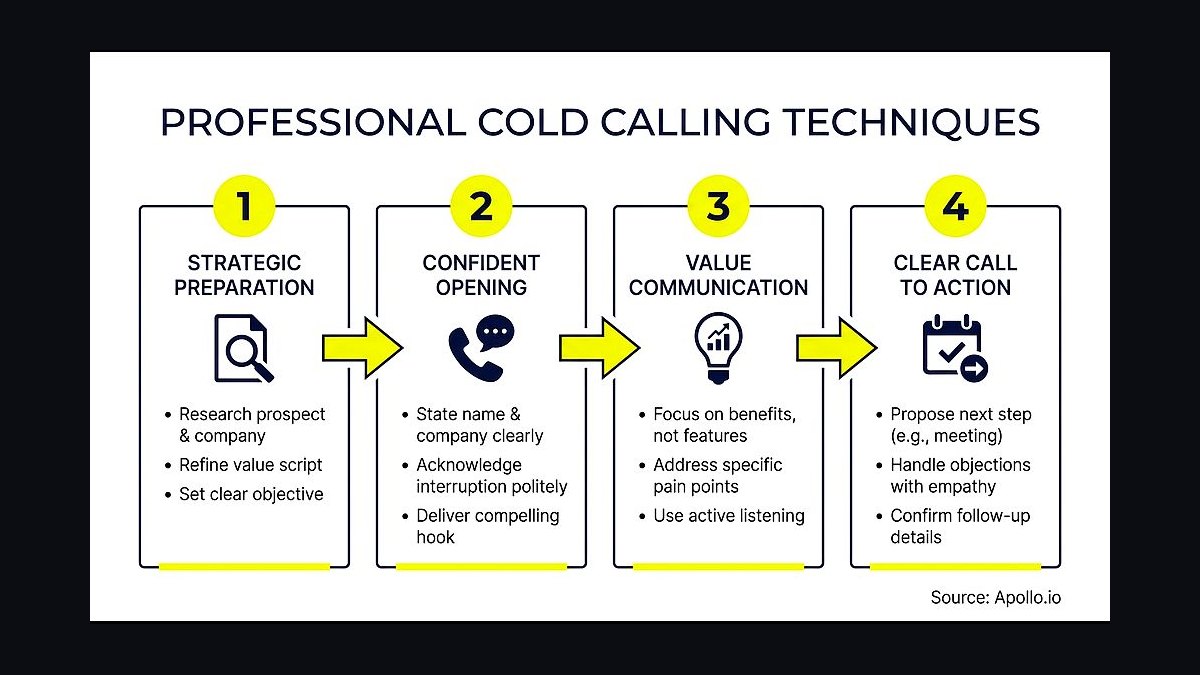
Stephan Schiffman's *Cold Calling Techniques (That Really Work!)* argues that prospecting is arithmetic, not talent: a fixed ratio of dials produces connects, connects produce conversations, conversations produce appointments. Its core tools are a four-part opening script, four categorized rejection responses, the Ledge, timed dialing blocks, and disciplined follow-up past the second attempt.
The outcome you should expect
Read the book expecting a change in operating behavior, not a change in vocabulary. Schiffman's promise is narrow and testable: if you dial a consistent number of net-new prospects every working day, open with a structured script instead of improvisation, treat rejection as a category rather than a verdict, and follow up past the point where most reps quit, your booked-meeting count becomes predictable within a few weeks. That predictability is the actual deliverable. Most sellers do not have a conversion problem — they have a variance problem, where good weeks and dead weeks alternate for reasons nobody can name.
What that looks like in practice is unglamorous. A rep who adopts the method typically sees three shifts. First, the calendar fills earlier in the week, because dialing moves to the front of the day instead of drifting to whatever hour survives after email. Second, call length drops — the four-part open is short by design, so bad-fit prospects disqualify themselves in under a minute instead of consuming eight. Third, the pipeline stops depending on mood. Schiffman is blunt that you do not have to enjoy the phone; you have to do the reps. That framing is the entire self-management thesis of the book, and it is why the text reads more like a training manual than a motivational one.

Set expectations honestly about magnitude. This is not a book that doubles your close rate. It changes the top of the funnel, which then changes everything downstream by volume rather than by skill. If your demo-to-close rate is 20%, Schiffman does not move it — he moves how many demos exist to apply it to. Sellers who expect the book to fix late-stage deal loss, pricing pressure, or multi-threading in a committee sale will finish it disappointed. Pair it with a discovery framework and a negotiation text and the gaps close. Read in isolation, it is a top-of-funnel instrument only, and it is honest about that.
The adjacent outcome worth naming: the same discipline transfers to channels the book never anticipated. The structure of the four-part open — identify, reason, reference, ask — maps cleanly onto a cold email, a LinkedIn message, a trade-show approach, and a referral request. Teams that internalize the architecture usually find their written outbound tightens as a side effect, because the discipline of stating a specific business reason in one sentence is channel-agnostic.
What drives that outcome
Four mechanisms do the work, and they are worth separating because teams usually adopt one and wonder why nothing changed.
Activity volume with a floor, not a target. Schiffman's arithmetic — roughly twenty dials producing five connects, two real conversations, and one appointment — matters less as a specific ratio than as a habit of measurement. The number is a placeholder for *your* number, which you discover by tracking. Once a rep knows their true ratio, quota stops being an abstraction and becomes a dial count. A rep needing eight meetings a month who converts at one meeting per twenty dials knows they owe the phone 160 dials, and can distribute them across the month deliberately instead of panicking in the last week.
Script architecture that removes decisions from the first ten seconds. The open is fixed so cognitive load goes to listening rather than composing. Identify yourself plainly. State a reason tied to a concrete business outcome. Reference a peer or a recognizable proof point. Ask for a specific meeting time. The reason beat is where most reps fail — "increase efficiency" evaporates on contact, while a named metric with a named direction earns another twenty seconds. Schiffman is emphatic that specificity is not a stylistic preference; it is the mechanism.
Rejection triage. Rather than treating every "no" identically, the book sorts responses into brush-offs, stalls, genuine objections, and negative surprises, and gives each a different response shape. A brush-off is a reflex and gets a reframe. A stall gets converted into a dated calendar entry rather than a vague promise. A real objection gets isolated and answered on its merits. A negative surprise — the prospect just signed with a competitor — gets a graceful exit and a future follow-up date set on the call, because contracts churn and rebids happen.
Follow-up as system, not willpower. Schiffman's most durable observation is that the majority of closed business requires many touches while the average rep stops after two. He treats this as a design problem: build the follow-up into a tracked plan so the rep cannot quietly abandon it. Modern sequencing software is a literal implementation of that idea — the cadence exists in the tool, not in the seller's memory.
The Ledge deserves its own note because it is the single technique most often borrowed without attribution. When a prospect throws an objection, you repeat it back as a short question. "We don't have budget." — "You don't have budget?" Three things happen. You signal that you heard them, which lowers defensiveness. You buy yourself a few seconds of thinking time instead of blurting a rebuttal. And very often the prospect fills the silence by qualifying their own objection — *not until next quarter*, *not for this line item*, *not without my director* — which hands you the real constraint. A hard no becomes a scheduling problem. It costs nothing, requires no memorized rebuttal library, and works in email threads and live meetings just as well as on a dial.
Benchmarks and realistic ranges
The book's numbers were gathered in a different phone environment, so treat the *structure* as durable and the *ratios* as needing local recalibration. When Schiffman first published, answering an unknown business line was normal behavior. Direct-dial mobile numbers were rare, caller ID was primitive, and gatekeepers were human. Today most B2B dials land on a mobile, unknown numbers are screened by default, and carrier-level labeling flags high-volume callers. The consequence is that connect rates have fallen substantially, and any modern team applying the book's arithmetic literally will underestimate the dial volume required.
Calibrate your own numbers rather than importing his. The practical method takes two weeks. Log four columns per day: dials attempted, live connects, conversations that got past the first ten seconds, and meetings booked. Do not log anything else — the temptation to instrument everything is how tracking dies. At the end of ten trading days you will have four ratios that are yours, and they will be more useful than any published benchmark, because they encode your list quality, your market, your accent, your product's recognizability, and the hour you happen to dial.
Expect wide variance by segment. Calling a named account list where the prospect recognizes your company behaves nothing like calling a purchased list in a saturated category. Calling into a role that lives on the phone — recruiting, logistics, field service dispatch, agency owners — connects far better than calling into a role that treats the phone as an interruption, like engineering leadership or enterprise finance. Deal size changes the economics too: when a booked meeting is worth a large contract, a low connect rate is still comfortably profitable, whereas the same rate on a small transactional sale is not. That asymmetry, more than any technique, decides whether the phone belongs in your motion at all.
A few ranges worth holding loosely. Dialing sessions are best measured in minutes of pure phone time rather than dials, because dialer technology changes the denominator — a manual dialer, a power dialer, and a parallel dialer produce wildly different dial counts from the same hour. Voicemails should stay short; the book's guidance to state name, company, one specific reason, and your number twice remains a sound structure regardless of how long "short" is fashionable this year. Follow-up sequences should be planned for more touches than feel comfortable, because the entire point of the finding is that the comfortable number is too low.
Two adjacent benchmarks matter for anyone running a team. First, ramp time: the method is learnable in days, which is why it survives as onboarding material — a new hire can run a four-part open competently in a week, whereas discovery skill takes months. Second, coaching surface: because the open is scripted and the rejection categories are named, a manager listening to calls has specific things to correct rather than vague feedback about confidence. That coachability is arguably the book's biggest contribution to sales management, separate from anything it says to individual reps.
Risks, edge cases, and failure modes
The most common failure is adopting the volume and skipping the specificity. A rep who dials heavily with a generic reason-for-calling produces a lot of hang-ups and concludes the phone is dead. The arithmetic only holds when the conversation is worth having; volume amplifies whatever quality you already had, in both directions. If your list is bad, more dials produce more damage to your domain reputation, your caller-ID standing, and your own morale.
The second failure is compliance blindness. Schiffman wrote before the modern regulatory environment, and the book contains no guidance on it. Consumer calling in particular is now heavily constrained — do-not-call registries, consent requirements, calling-window restrictions, and carrier-level registration and authentication regimes all apply. Business-to-business calling is treated differently in most jurisdictions but is not unregulated, and the rules vary meaningfully by country. Anyone building a calling program should get the regulatory read before the script read. Treat the book as a technique manual and your legal counsel as the authority on whether and how you may dial.
The third failure is treating rejection triage as manipulation. The Ledge is a listening device, not a trick — used mechanically, repeating a prospect's words back becomes obviously robotic, and people notice. The same applies to the forced-choice meeting ask. Offering two specific times is helpful when you genuinely want to meet and unhelpful when the prospect has already signaled disinterest; pushing past a clear no burns the account and, in a small market, your reputation. Schiffman's own framing is that you are qualifying, and qualification includes accepting disqualification quickly.
Fourth: role mismatch. The book assumes the caller can book a meeting on their own authority and that a single conversation with a single person can produce one. In committee-driven enterprise sales, a booked meeting with the wrong person can actively hurt you by anchoring the account at too low a level. Similarly, in product-led or inbound-heavy motions, cold dialing may be a poor use of a seller's hours compared with working existing signal. The technique is not wrong in those contexts; it is simply competing against better uses of the same time.
Fifth: the metric becomes the goal. When management measures dials, reps produce dials — short, worthless dials that hang up on voicemail to inflate the count. Schiffman's activity sheet works because it tracks the whole chain, dials through booked meetings, so gaming one column shows up as a broken ratio in the next. Any team that instruments only the first column will get exactly what it measures and nothing beyond it.
Finally, edition and era. The book has been revised repeatedly across decades, and some tonal advice from earlier printings reads as period detail rather than technique. The bones — script architecture, rejection categories, the Ledge, timed blocks, follow-up discipline — have survived every revision unchanged, which is the strongest available evidence for which parts are load-bearing. Read the current edition for updated framing, but do not expect the underlying method to differ.
A practical rollout plan
Roll this out over roughly four weeks, whether you are one seller or a team of fifteen. The sequence matters more than the speed.
Week one — measure before you change anything. Keep dialing exactly as you do now, but log the four columns. Resist improving. You need an honest baseline, and any change introduced during measurement makes the baseline useless. At the end of the week you will have a rough ratio and, more importantly, an accurate picture of how little pure phone time actually exists in a day that felt busy.
Week two — install the open and the blocks. Write the four-part open for your top two segments. The identify and ask beats are boilerplate; spend your effort on the reason and reference beats, and make them concrete enough that a stranger could repeat them back. Then protect dedicated dialing time on the calendar. Short focused blocks beat one long slog: fatigue degrades tone quickly, and tone is audible. During a block, nothing else happens — no email, no chat, no CRM cleanup. Log after the block, not during it.

Week three — install rejection triage. Write one response for each of the four categories and rehearse them out loud before you need them. Practise the Ledge deliberately for a few days; it feels unnatural until it doesn't. The measurable goal for this week is not more meetings but fewer calls that end in the first fifteen seconds without a categorized outcome. Every call should terminate in a labeled bucket, because unlabeled calls cannot be coached.
Week four — install the follow-up system. Take every stall and negative surprise from the prior three weeks and give each one a dated next action, stored somewhere that surfaces without you remembering. This is where a CRM or sequencing tool earns its cost. If you are using a spreadsheet, sort by next-action date and work the top of the list daily. Then compare your week-four ratios against your week-one baseline and decide what to adjust — usually list quality first, reason beat second, dial volume third.
For managers, add two rituals. A weekly ratio review that looks at the whole chain rather than the dial column alone, and a short call-listening session where feedback is tied to a named element — the reason beat was vague, the objection was answered before it was categorized, the ask was open-ended instead of specific. Naming the element is what makes the coaching stick, and it is the reason this method spread through training organizations rather than staying a solo strategy.
Related questions
Is the book still worth reading given how much the phone has changed?
Yes, for the architecture rather than the ratios. The script structure, rejection categories, and follow-up discipline transfer intact to email and social channels. Skip the period-specific tonal advice and recalibrate the numbers against your own logged data.
What should I read alongside it?

Pair it with a discovery framework and a negotiation text. Schiffman covers only the top of the funnel — getting the meeting. He does not address qualification depth, multi-threading, pricing pressure, or closing committee deals, and reading him as a complete system will leave those gaps open.
Does this work for a founder rather than a full-time seller?
Well, with one adjustment. Founders cannot sustain daily dial volume, so run concentrated blocks two or three days a week against a small, well-researched list. The specificity of the reason beat matters more when volume is low, because each conversation carries more weight.
How do I use the Ledge without sounding robotic?
Use it selectively and vary the phrasing. Repeat the substance of the objection, not the exact words, and let a beat of silence follow. If you deploy it on every sentence it reads as a technique; used two or three times per call at genuine friction points, it reads as attention.
FAQ
What exactly is the Ledge? It is the practice of reflecting a prospect's objection back as a short question rather than immediately rebutting it. It confirms you were listening, gives you a few seconds to think, and frequently prompts the prospect to qualify their own objection — turning a flat refusal into a specific, addressable constraint like timing or approval authority.
What are the four parts of the cold call script? Identify yourself plainly, state a specific business reason for the call, offer a reference or proof point the prospect will recognize, and ask for a defined meeting time rather than an open-ended "when works for you." The reason beat carries most of the weight and is where generic language kills the call.
How many dials should I make per day? There is no universal number — that is the point of logging your own ratio. Work backward from the meetings you need, divide by your measured meetings-per-dial rate, and distribute the result across the month. Measure pure phone minutes alongside dial counts, since dialer technology changes what a "dial" means.
Why ask for the appointment instead of trying to sell on the call? Because the cold call's only job is to earn a meeting. The prospect has not been qualified and the seller has not earned the right to a pitch. Attempting to close on the dial lengthens calls, lowers booking rates, and produces meetings that were never real in the first place.
Does any of this apply to cold email and LinkedIn? Directly. The four-part structure maps onto written outbound almost unchanged, and rejection triage applies to replies as well as to live calls. The follow-up finding — that most sellers quit long before the sequence would have worked — is the reason modern cadence tools exist at all.
Do I need to worry about calling regulations? Yes, and the book will not help you there. Consumer calling is tightly regulated in most jurisdictions and business calling is regulated more loosely but not freely. Confirm consent rules, registry obligations, calling windows, and any carrier registration requirements with counsel before you build a program around volume.
Sources
- https://www.simonandschuster.com/books/Cold-Calling-Techniques-That-Really-Work/Stephen-Schiffman/9781440572173
- https://www.goodreads.com/book/show/261216.Cold_Calling_Techniques_That_Really_Work_
- https://www.wiley.com/en-us/Fanatical+Prospecting-p-9781119144755
- https://www.wiley.com/en-us/Smart+Calling%3A+Eliminate+the+Fear%2C+Failure%2C+and+Rejection+from+Cold+Calling%2C+3rd+Edition-p-9781119676720
- https://www.ftc.gov/news-events/topics/protecting-consumer-privacy-security/do-not-call-registry
- https://www.fcc.gov/call-authentication
- https://hbr.org/2012/07/tear-down-your-sales-funnel
- https://www.salesforce.com/resources/articles/cold-calling/
Related on PULSE
This page will be disappearing soon. Save it to your device for $1 — or read it free while it is here.
@Kory-White- · if Venmo asks, the last 4 of my number are 2012
This page is gone.
This one is off the shelf now. $1 keeps it on your phone for good — the whole page, pictures and diagrams included.
 pulse-recentWhat are the first three concrete steps in Sandler Rule #1 for a new sales rep in 2027?
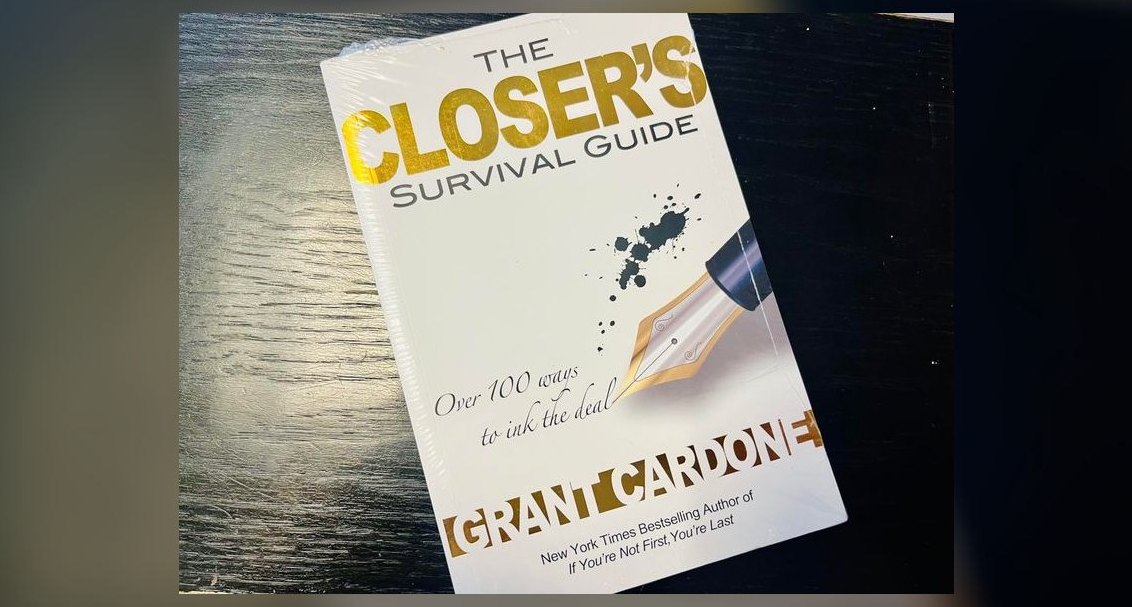 pulse-recentThe Closer’s Survival Guide by Grant Cardone — Top 10 Key Takeaways for Sales Leaders in 2027
 pulse-recentThe Sales Manager’s Guide to Greatness by Kevin Davis — Top 10 Key Takeaways for Sales Leaders in 2027
 pulse-recentWhat is the first concrete step in the Sandler Selling System for handling a prospect's initial brush-off in 2027?
 pulse-recentHow to Apply Strategic Selling — Step-by-Step Playbook in 2027
 pulse-recentSandler Rule #1: What is the first concrete step to build a prospect's trust in a sales conversation in 2027?
 pulse-recentNever Split the Difference by Chris Voss — Top 10 Key Takeaways for Sales Leaders in 2027
 pulse-recentSell or Be Sold by Grant Cardone — Top 10 Key Takeaways for Sales Leaders in 2027
 pulse-recentSales Engagement by Manny Medina — Top 10 Key Takeaways for Sales Leaders in 2027
 pulse-recentHow do you implement the Sandler Rules in your first 30 days as a new sales rep in 2027?