


Changing the Sales Conversation by Linda Richardson — Cliff Notes Summary
Quality
Certified
*Changing the Sales Conversation* (McGraw-Hill, 2014) is Linda Richardson's replacement for the pitch-persuade-close model. It argues that informed buyers make persuasion counterproductive, and offers four skills — Connect, Collaborate, Co-Create, Confirm — plus three techniques: the story-based opener, insight-paired discovery, and a written mutual plan with named owners and dates.
The meeting that made the book necessary
Picture a discovery call that goes wrong in the most ordinary way. An enterprise rep books thirty minutes with a VP of Operations at a mid-market manufacturer. The rep opens with two minutes of weather-and-weekend talk, then shares a screen and walks a fourteen-slide company overview: founding year, logo wall, Gartner quadrant placement, three customer testimonials. At minute nineteen, the rep asks the first real question — "So what are your biggest challenges right now?" The VP gives a polite, generic answer. At minute twenty-six the rep asks whether it makes sense to bring in the VP's boss for a deeper demo. The VP says to send materials over and they'll circle back. Nobody circles back.
Nothing in that call was incompetent. The rep was prepared, articulate, and courteous. The problem is that every single minute of it was spent transmitting information the buyer could have found — and, in most cases, already had found — without the rep. The logo wall is on the website. The analyst placement is a press release. The testimonials are a landing page. The rep spent nineteen of thirty minutes delivering a redundant payload, then used the remaining eleven trying to extract, in a single generic question, the context that should have organized the entire conversation.
This is the scenario Richardson builds the book around, and the diagnosis is structural rather than personal. The pitch-persuade-close sequence was designed for an information asymmetry that no longer exists. When the seller held the only complete picture of the product landscape, a presentation was a genuine service — the buyer needed the transfer. Once buyers could research vendors, read peer reviews, poll their own networks, and assemble a shortlist before ever taking a call, the presentation stopped being a service and became an imposition. CEB's research in the years before the book put buyers well past the halfway mark in their decision process before contacting a supplier; Gartner's later buyer-enablement work has kept the figure high and pushed it higher. Whatever the exact number, the direction is settled and it does not reverse.

Richardson's argument, stated plainly: if the buyer already has the information, the only defensible reason for the meeting to exist is that something happens in the room that could not happen outside it. That something is not a better-delivered version of the website. It is joint work — diagnosis the buyer could not do alone, pattern recognition drawn from deals they have not seen, and a solution built with them rather than handed to them. The four skills are her operating system for producing that.
The scenario also explains why the book lands differently than a general "listen more" exhortation. Telling the rep above to listen more does not fix the call, because the rep had nothing to listen *for*. The call had no hypothesis, no diagnostic frame, no artifact being built. Richardson's contribution is the scaffolding: what specifically to open with, how to structure questions so the buyer gets value from answering them, what to build in the room, and what to write down before anyone leaves. That is the difference between advice and a method.
How the four skills actually work as a loop
The four skills are not stages of a deal. This is the most common misreading and it neuters the model. Connect, Collaborate, Co-Create, Confirm is a *meeting-level* loop that runs inside every conversation, from first call to renewal. A rep who maps Connect to prospecting, Collaborate to discovery, Co-Create to solutioning, and Confirm to closing has rebuilt the linear funnel with new vocabulary and gained nothing.

Connect is the deliberate replacement for rapport-as-small-talk. Richardson's version is a short credibility story — under two minutes — about a comparable organization facing a comparable problem, told concretely enough that the buyer recognizes the situation. The structure is simple: who they were, what they were wrestling with, what they found. Its function is not warmth. It is to establish, inside the first three minutes, that the rep has pattern recognition the buyer lacks, and to give the buyer an immediate, low-cost way to react — "that's us" or "that's not us, ours is different." Either answer is useful. Small talk produces neither.
Connect also carries a counterintuitive move Richardson emphasizes: naming a limitation. Volunteering one thing the product genuinely does not do well, early and unprompted, reads as confidence rather than weakness, and it converts the rest of the conversation from a sales claim into an assessment. It is cheap to do and most reps never do it, because it feels like handing over a weapon. In practice, it is the fastest available trust accelerant, and it pre-empts the objection surfacing later at a worse moment.
Collaborate replaces interrogation-style discovery. The distinction is precise: interrogation extracts information from the buyer for the seller's benefit; collaboration exchanges information so both parties leave better informed. Richardson's mechanism is pairing — every substantive question carries a proof point, observation, or pattern the rep has seen elsewhere. "In our work with regional lenders this year, the ones running two disconnected pipeline systems saw forecast variance widen every quarter. Are you seeing the same, or has something in your mix insulated you?" The buyer answering that question is also *receiving* something. That reciprocity is what makes the buyer willing to go three levels deep instead of stopping at the polite surface answer.
She stacks questions in three tiers. Situation questions establish facts, and Richardson's rule is to minimize them hard — anything discoverable from a website, a filing, or an earnings call should already be known, and asking it burns credibility. Insight questions pair inquiry with an observation that surfaces a gap in the buyer's current thinking. Vision questions push the buyer to describe the future state in their own words, which matters enormously later: the language the buyer uses to describe the outcome is the language that will survive into their internal business case.

Co-Create is the skill Richardson considers the fulcrum, and the hardest to fake. The traditional model has the rep leave, build a recommendation, return, and present it. Co-creation builds it in the room — a whiteboard, a shared document, a working sketch that both parties edit. The mechanism is ownership: a buyer who co-authored the approach does not need to be closed on it, because they are already defending it internally when the rep is not there. That last clause is the whole point. Most enterprise deals are won or lost in meetings the rep never attends. Co-creation is the only reliable way to influence those meetings.
Confirm replaces the trial close. Richardson's objection to "if I could show you X, would you buy?" is not that it is aggressive but that it is *evasive* — it invites a hypothetical answer that commits no one. Her replacement is a written mutual plan: every step from today's meeting to a signed agreement, each with a named owner on both sides and a date, reviewed and updated at the end of every meeting. Alongside it sits the verbal confirmation ritual — restating in plain language what was agreed, what remains open, and what happens next, then asking whether that is right.
The loop runs every meeting. A second meeting opens with Connect again — a different story, closer to the specific problem now understood — and closes with Confirm again against an updated plan. Skipping Connect in later meetings because "we already have rapport" is the single most common way teams degrade the model back into a pitch.
What the numbers look like when teams instrument this
Richardson wrote before conversation-intelligence platforms made call behavior directly measurable, which is what makes the book unusually well-aged: the things she told managers to coach are now the things software counts automatically. Anyone running this model today should instrument it rather than take it on faith.
Talk ratio is the first and bluntest measure. Richardson's benchmark for a healthy collaborative discovery call puts the rep in the low-to-mid forties as a percentage of talk time — meaning the buyer talks more than the rep, but not by an enormous margin, because a rep at fifteen percent is not collaborating either, just passively receiving. Published benchmarks from conversation-intelligence vendors analyzing large B2B call corpora have landed in a similar neighborhood for discovery specifically. The practical coaching target: pull a rep's last ten discovery recordings, compute the ratio, and if it sits north of sixty-five percent the problem is almost certainly a deck being walked rather than a conversation being had.

Time to first buyer-substantive answer is a more diagnostic metric than talk ratio and almost nobody tracks it. Timestamp the moment the buyer first says something the rep could not have known beforehand. In the failed call described earlier, that moment arrived at minute nineteen and produced only a generic answer. A well-run Connect-then-Collaborate opening should get there inside the first five to seven minutes. If it consistently takes longer than ten, the opener is the problem, not the questions.
Question-tier distribution operationalizes the three-tier stack. Tag every question in a recorded call as Situation, Insight, or Vision. Richardson's coaching pushes Situation questions down to roughly a fifth of question time or less. Most untrained reps land far higher — often the majority — because Situation questions are safe, easy to generate on the fly, and feel productive. The improvement curve here is genuinely slow: expect a full quarter of weekly coaching to move a team meaningfully, because reducing Situation questions requires reps to do pre-call research they were previously skipping.
Mutual plan coverage and freshness are the two Confirm metrics worth tracking. Coverage is the percentage of open opportunities above a dollar threshold that have a written mutual plan attached, with owners on both sides. Freshness is the percentage updated within the last fourteen days. Coverage without freshness is theater — a plan written once at stage two and never touched is a document, not a mechanism. Teams typically find coverage easy to drive to a high number within a quarter and freshness stubbornly hard, because freshness requires the ritual at the end of every meeting rather than a one-time artifact.
Stall rate is the outcome metric these feed. Define it as the percentage of opportunities with no buyer-side activity for a defined window — thirty days is a common cut — as a share of open pipeline. Richardson's claim is that explicit confirmation and mutual plans reduce ghosting substantially, and the mechanism is intuitive: a buyer who has verbally agreed to a specific next step with a specific date, and has that in writing with their name on it, faces a small but real social cost in going silent. This is the metric to watch over two full quarters, because it is slow-moving and noisy over shorter windows.

A caution on all of these: none are worth much as individual-rep scorecards used punitively. Talk ratio in particular is trivially gameable — a rep who knows they are measured on it can simply go quiet and produce a great number alongside a useless call. These metrics earn their keep as coaching prompts that direct a manager to the right five minutes of the right recording. That is the use Richardson intended and it remains the correct one.
Ramp expectations. Individual reps typically show visible change in call structure within two to four weeks of deliberate practice — the opener and the confirmation ritual are the fastest to adopt because they are scripted moments at known points in the meeting. Genuine fluency in Collaborate and Co-Create takes considerably longer, on the order of a quarter or two, because those require judgment rather than a script. Organizational adoption is slower still, and it fails almost exclusively at the manager layer, which is the pitfall section's territory.
Where this model fits against the alternatives
Richardson's framework does not exist in isolation, and choosing it means not choosing something else. The honest comparison matters more than the endorsement.
Against SPIN. Rackham's Situation-Problem-Implication-Need-Payoff sequence is the methodological ancestor and remains the more rigorous questioning instrument. SPIN's implication questions in particular — systematically escalating the consequences of an unaddressed problem — are sharper than anything in Richardson's three-tier stack. What SPIN lacks is the rest of the meeting: it is a questioning methodology, not an operating loop, and it says relatively little about how to open, what to build, or how to close the loop on commitments. Richardson's tiers are a simplification of SPIN wrapped in a larger structure. If your team's specific deficiency is that discovery is shallow, SPIN is the better tool. If discovery is adequate but meetings still end in vague next steps, Richardson addresses what SPIN does not.

Against Challenger. Dixon and Adamson's model is the sharper contrast. Challenger's core assertion is that top performers teach, tailor, and take control — including constructive tension with the buyer, and reframing the buyer's understanding of their own problem. Richardson's model is collaborative where Challenger is assertive. These are not compatible dispositions dressed differently; they genuinely disagree about who should be leading the buyer's thinking. Challenger tends to fit better where the seller has a genuine, defensible insight the buyer lacks and where the purchase requires the buyer to change behavior. Richardson's collaboration fits better in relationship-heavy, long-cycle, high-trust categories — financial services, professional services, regulated industries — and in expansion and renewal motions where the tension Challenger cultivates is actively counterproductive. Many teams run a hybrid: Challenger-style reframing during the insight portion of discovery, Richardson's co-creation and mutual planning through the rest of the cycle. That hybrid works, but it must be deliberate, because reps left to their own devices will default to whichever is more comfortable and produce neither.
Against MEDDIC and its variants. This comparison is frequently botched because people treat them as competing methodologies. They are not the same category. MEDDIC is a qualification and deal-inspection framework — it tells you what you must know about a deal for it to be forecastable. Richardson tells you what to do in a room. A team can and often should run both: MEDDIC as the criteria the CRM enforces, Richardson as the behavior the meetings exhibit. The overlap is real but partial — Richardson's committee mapping feeds MEDDIC's champion and economic-buyer criteria, and her mutual plan is close kin to the decision-process element. Running MEDDIC alone produces well-inspected deals full of badly run meetings.
Against product-led motions. This is where the book shows its age most clearly, and it is worth stating directly rather than defending. In product-led growth, the conversation Richardson optimizes largely does not occur in the early cycle. The buyer signs up, uses the product, and forms their own conviction; co-creation is embedded in onboarding and in-product guidance rather than in a meeting. The rep enters later, at expansion or at the point where a bottoms-up adoption needs a top-down contract. The four skills still apply at that entry point, and arguably apply *better* there, because the expansion conversation is genuinely collaborative by nature. But a team whose motion is primarily self-serve will find most of the book addressing a meeting they rarely have.
The synthesis worth holding: Richardson is strongest on meeting mechanics and commitment discipline, weakest on qualification rigor and on categories where the meeting is not the primary unit of the sale. Slot it accordingly rather than adopting it as a totalizing philosophy.
The five ways teams break this in practice

Co-creation theater. The most common failure. A rep opens a shared document, types while the buyer talks, and calls it co-creation. It is not — it is note-taking with an audience. Real co-creation requires the buyer to make a choice inside the session that changes the artifact: which of two sequencing options, which metric defines success, which department goes first. If nothing in the document would be different had the buyer stayed silent, no co-creation occurred. The test is mechanical and worth applying to recordings: point to the specific moment the buyer's input altered the output. If you cannot, the session was a presentation with a friendlier interface.
The mutual plan as artifact instead of ritual. Teams roll out a mutual-plan template, mandate attachment to opportunities, hit high coverage within a quarter, and see no change in stall rate. The reason is always the same: the plan gets written once and never revisited. The value is not in the document, it is in the recurring three minutes at the end of each meeting where both parties look at it and change it. Enforce the ritual, and the artifact takes care of itself. Enforce the artifact alone and you have added a CRM field. A blunt diagnostic: pull twenty plans and check the last-modified dates. If most are the creation date, the ritual is not happening.

Skipping Connect after the first meeting. Reps treat the credibility opener as an icebreaker for strangers and drop it once the relationship is established. But Connect's function in meeting four is different and arguably more important than in meeting one — it re-establishes relevance to the specific problem now understood, and it reorients a group that may include people who were not in meetings one through three. In committee-driven deals, every meeting has a different attendee mix. Treating Connect as a one-time formality guarantees new stakeholders arrive with no frame at all.
The manager bottleneck. Richardson names this herself as the reason the model fails to stick, and it remains true. The four skills are behaviors, and behaviors do not survive a one-day workshop. They survive weekly coaching against actual recordings with a consistent rubric — one to five on each of the four skills, one call per rep per week, with a specific timestamped moment cited for each score. Organizations that skip this get a vocabulary change and no behavior change: reps say "let's co-create" and then present. The cost is real — roughly thirty to forty-five minutes per rep per week of manager time — and organizations that will not spend it should be honest that they are buying a training event rather than a capability.
Over-collaborating with a buyer who wants a recommendation. The failure mode on the other side. Some buyers, particularly technical evaluators late in a cycle and executives with limited time, experience co-creation as the seller refusing to do their job. "What do you recommend?" answered with "well, what do you think?" is infuriating. Richardson's model does not actually require this — co-creation means building the recommendation together, which can and often should include the rep putting a strong initial proposal on the table for the buyer to modify. The distinction is between presenting a finished artifact as final and offering a strong draft as editable. Reps who internalize collaboration as never having a point of view have misread the book, and buyers punish it.
A sixth, quieter one: measuring reps on the metrics rather than coaching with them. Once talk ratio appears on a leaderboard, it stops measuring collaboration and starts measuring the ability to hit a talk ratio. The same applies to question-tier distribution and mutual-plan coverage. Keep these in the coaching conversation and out of the compensation conversation.
Related questions
Is this book worth reading if I have already read SPIN Selling?

Yes, for different reasons. SPIN is a questioning methodology; Richardson is a full meeting loop covering opening, joint building, and commitment discipline. The overlap is confined to the discovery portion. Read Richardson for what happens before and after the questions.
Does the model work for transactional or high-velocity sales?
Partially. The Connect opener and the confirmation ritual compress well into short calls. Co-creation and formal mutual plans generally do not justify their overhead below a certain deal size — most teams find the line somewhere in the mid five figures of annual contract value.
What is the single highest-leverage change to make first?
The end-of-meeting confirmation ritual. It takes ninety seconds, requires no template or tooling, needs no manager approval, and directly attacks the stall problem. Restate what was agreed, what is open, and the next step with a date, then ask if that is right.
How does this interact with conversation-intelligence tooling?
Very well, and somewhat retroactively. Talk ratio, question patterns, and next-step commitments are exactly what these platforms surface. The tooling does not replace coaching; it tells the manager which five minutes of which call to review, which is the expensive part of the coaching loop.
Can this be applied to customer success and renewals?
That is arguably its strongest fit. Renewal and expansion conversations are collaborative by nature, the adversarial framing of more assertive methodologies actively backfires there, and mutual plans map cleanly onto onboarding milestones and success criteria.
FAQ
Is this just "be nice to the customer" advice with new labels?
No. The book prescribes specific mechanics: a structured opener with a defined length and shape, questions paired with proof points, a three-tier question hierarchy with a stated distribution target, a jointly edited artifact produced in the meeting, and a written plan with named owners and dates. Those are testable behaviors, not dispositions. You can watch a recording and determine objectively whether each occurred.

Do I need to read SPIN Selling or The Challenger Sale first?
No. The book stands alone and is more accessible than either. It borrows Rackham's questioning logic and shares conceptual ground with Dixon's insight-led selling, but packages both into a simpler frame. Reading the others afterward is useful mainly for understanding where Richardson's approach deliberately diverges — particularly from Challenger's more assertive posture.
How long before a team sees measurable change?
Individual call structure shifts within two to four weeks, because the opener and confirmation ritual are scripted moments. Fluency in collaboration and co-creation takes a quarter or two. Pipeline-level effects on stall rate need two full quarters to read cleanly through normal seasonal noise. Teams that declare failure at six weeks are measuring the wrong horizon.
Does it apply to B2C?
To high-consideration B2C, yes — real estate, insurance, wealth management, major home projects. The premise that buyers arrive informed and prefer collaboration over persuasion holds anywhere the purchase is researched and consequential. In genuinely transactional retail, the meeting the book optimizes does not exist.
What if my buyers explicitly want to be told what to do?
Give them a recommendation — a strong, specific draft — and then make it editable. Co-creation is not the absence of a point of view. It is refusing to treat your point of view as final before the buyer has shaped it. A rep who answers "what do you recommend?" with a question has misapplied the model.
What is the smallest viable pilot?
One team, one quarter. Mandate three things: a story-based opener on every first meeting, a written mutual plan on every opportunity above your threshold, and the confirmation ritual at the end of every external meeting. Have the manager review one recording per rep per week against a one-to-five rubric on those three. Track stall rate against a comparable team.
Sources
- https://www.mheducation.com/
- https://www.gartner.com/en/sales/insights/b2b-buying-journey
- https://www.gartner.com/en/sales
- https://www.richardson.com/
- https://hbr.org/2012/07/the-end-of-solution-sales
- https://www.gong.io/resources/labs/
- https://www.salesforce.com/resources/articles/sales-process/
- https://www.hbs.edu/faculty/Pages/browse.aspx
- https://www.mckinsey.com/capabilities/growth-marketing-and-sales/our-insights
- https://www.forrester.com/blogs/category/b2b-sales/
Related on PULSE
- Sales Coaching by Linda Richardson — Cliff Notes Summary
- The Challenger Sale by Matthew Dixon and Brent Adamson — Summary and RevOps Takeaways
- Major Account Sales Strategy by Neil Rackham: Summary, Key Lessons, and RevOps Takeaways
- Demand-Side Sales 101 by Bob Moesta: Summary, Key Lessons, and RevOps Takeaways
- Cracking the Sales Management Code by Jason Jordan and Michelle Vazzana: Summary, Key Lessons, and RevOps Takeaways
- Founding Sales by Pete Kazanjy: Summary, Key Lessons, and RevOps Takeaways
This page will be disappearing soon. Save it to your device for $1 — or read it free while it is here.
@Kory-White- · if Venmo asks, the last 4 of my number are 2012
This page is gone.
This one is off the shelf now. $1 keeps it on your phone for good — the whole page, pictures and diagrams included.
 pulse-recentWhat are the concrete steps to implement the Sandler Rules for Sales Leaders by David Mattson in 2027?
 pulse-recentMonetizing Innovation by Madhavan Ramanujam — Top 10 Key Takeaways for Sales Leaders in 2027
 pulse-recentThe Customer Success Professional’s Handbook by Ashvin Vaidyanathan — Top 10 Key Takeaways for Sales Leaders in 2027
 pulse-booksTop 10 practical takeaways from Atomic Habits for building a new routine in 2027.
 pulse-recentStrategic Selling by Robert Miller and Stephen Heiman — Top 10 Key Takeaways for Sales Leaders in 2027
 pulse-recentHow does *The New Strategic Selling* define the first step in qualifying an opportunity in 2027?
 pulse-recentHow do you implement the Sandler Rules by David Mattson in your first 30 days as a new sales manager in 2027?
 pulse-recentWhat is the most actionable step in The Sandler Rules for Sales Leaders by David Mattson to improve discovery in 2027?
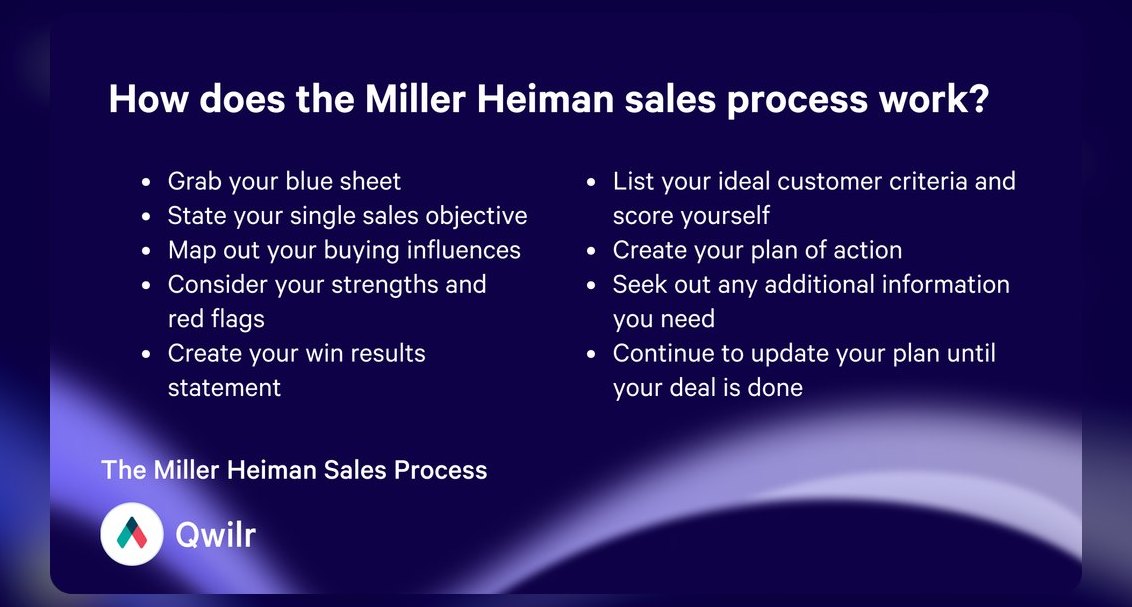 pulse-recentWhat is the step-by-step process for Strategic Selling by Miller Heiman in 2027?
 pulse-recentThe Sandler Rules by David Sandler — Top 10 Key Takeaways for Sales Leaders in 2027