


Trust-Based Selling by Charles Green — Cliff Notes Summary
Quality
Certified
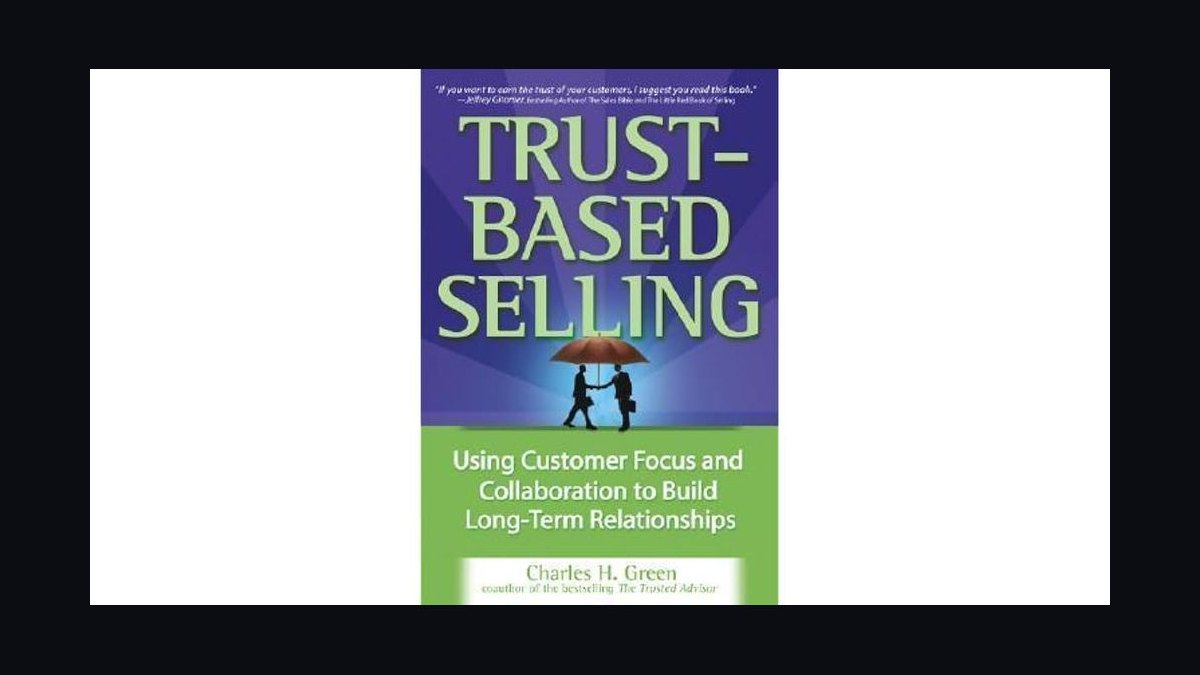
Trust-Based Selling (Charles H. Green, McGraw-Hill, 2005) applies the Trust Equation — Credibility plus Reliability plus Intimacy, divided by Self-Orientation — to sales. Green's argument: the denominator dominates. Sellers whose attention sits on the buyer rather than their own quota win more, hold accounts longer, and get referred more often.
The deal that gets lost in the last ten minutes
Picture a mid-market software deal, six weeks in, four calls deep. The seller has done everything the playbook says. Discovery was solid. The demo hit the three use cases the champion flagged. Pricing came in under the internal number the champion leaked. Then, on the final call, procurement joins, the CFO asks a question about the implementation timeline, and the seller — sensing the quarter closing — says something like "if we can get this papered by the 30th I can hold the discount." The room cools by ten degrees. The deal slips two quarters and eventually goes to a more expensive competitor.
That is the exact failure Charles Green wrote the book to diagnose. Nothing in the seller's *credibility* was wrong. The product knowledge was real, the references checked out, the follow-up was punctual. What broke was the denominator. In one sentence the seller broadcast that their attention was on their own close date rather than the buyer's decision, and everything above the fraction line got divided into irrelevance.
Green's framing is that most sales training optimizes the numerator — better proof points, tighter case studies, faster response times — because the numerator is teachable and measurable. Self-orientation is neither. It leaks through micro-behaviors: the interruption, the pivot back to product, the reflexive "great question" that precedes an answer to a different question, the calendar pressure that shows up in tone before it shows up in words. Buyers detect it fast, usually inside the first few minutes, and they detect it below the level of conscious articulation. They don't think "this rep has high self-orientation." They think "something's off, let's talk to the other vendor too."

The adjacent version of this scenario is worth noting because it generalizes past sales. The same dynamic runs in agency-client relationships, in internal RevOps teams pitching a systems change to finance, in customer success teams handling a renewal conversation, and in partner channels where the reseller has to earn trust twice — once for themselves, once for the vendor behind them. Anywhere someone with an agenda is asking someone with a choice to commit, the equation applies. Green wrote it for sellers because he came out of professional services and saw the pattern most clearly there, but the mechanism is not sales-specific.
The book itself is the sales-facing sequel to *The Trusted Advisor* (Maister, Green, Galford, 2000), which was written for consultants. That lineage matters when you read it. Green is not adapting a sales methodology; he is porting a professional-services relationship model into a quota-carrying environment where the incentives actively fight it. Much of the book is spent on that friction.
How the trust equation actually operates in a sales cycle
The equation is Trust = (Credibility + Reliability + Intimacy) / Self-Orientation. Each term has a distinct behavioral signature, and reading them as separate levers is what makes the model useful rather than decorative.
Credibility is about words — what you say and whether it holds up. It is built through accurate claims, visible expertise, admitting the boundaries of what you know, and never overstating capability. It is the fastest term to establish and the fastest to destroy. One overclaim about a product capability that turns out to be roadmap rather than shipped resets it to zero and taints everything said afterward.

Reliability is about actions over time — do you do what you said, when you said. It accrues only through repetition, which means it is structurally slow. A seller three calls into a first cycle has almost no reliability capital, which is why small promises kept early (send the doc by Thursday, and it arrives Wednesday) are disproportionately valuable. They are the cheapest available reliability deposits.
Intimacy is about emotional safety — can the buyer say the awkward thing to you. Can they admit the project is politically fragile, that the CFO is skeptical, that the last vendor implementation failed and they own that failure. Green treats intimacy as the most neglected numerator term in sales, because it requires the seller to tolerate discomfort rather than smooth it over. The seller who responds to "honestly, our data is a mess" with "no problem, we handle that all the time" has just declined an intimacy deposit in favor of a credibility one, and traded down.
Self-orientation is the divisor and the whole argument. It is not selfishness in a moral sense; it is where attention rests. A seller can be a perfectly decent person and still run high self-orientation because they are anxious about the number, worried about looking uninformed, or attached to a particular solution shape. Anxiety reads as self-orientation from the outside. That is why Green insists it cannot be faked — you cannot perform low self-orientation while internally tracking your close date, because the tracking itself produces the tells.
Layered on top of the equation are Green's four operating principles, which function as a per-call audit. Be customer-focused rather than seller-focused: does the conversation open with their problem or your product. Be collaborative rather than adversarial: are you solving with them or extracting from them. Be medium-to-long-term oriented rather than transactional: would your behavior change if this were the first of twenty deals instead of the only one. Be transparent rather than information-gaming: do you share your reasoning, your pricing logic, your genuine concerns about fit. Green's point is that violating any single one flips the seller into the anti-advisor position immediately — these are not a scorecard where three out of four is a passing grade.

The process layer is five steps: Engage, Listen, Frame, Envision, Commit. Engage means earning the right to the next thirty minutes with a point of view about the buyer's market rather than a recitation of credentials — credentials openers are pure numerator play and read as self-oriented. Listen is the diagnostic instrument, and Green wants three layers heard at once: the stated problem, the emotional stake, the political stake. Frame is naming the problem better than the buyer has named it; the test Green offers is whether the buyer would pay for the frame even if they never bought your product. Envision is co-authoring the future state, which Green positions explicitly as the anti-close. Commit is the step every seller over-weights and Green treats as nearly administrative — if the first four ran well, commitment is documentation and risk removal, not pressure.
What the numbers look like, and what they don't
Green's headline claim is that low-self-orientation sellers close meaningfully more business than high-self-orientation peers — his figure is roughly two to three times — drawn from his own consulting practice rather than a controlled academic study. Treat it as a practitioner's observation with a directional rather than precise reading. Green is a consultant reporting patterns from client engagements, not a researcher publishing methodology, and the book does not present the sampling behind the number.
More usable is the behavioral benchmark he offers as a self-diagnostic: if you have talked more than about thirty percent of the meeting, self-orientation is running too high. This one is checkable. Modern conversation-intelligence platforms — Gong, Chorus, Avoma, and similar tools — surface talk-to-listen ratio automatically off call recordings, along with longest-monologue length and question count. What Green had to teach as a discipline of self-awareness in 2005 is now a dashboard metric. The interesting consequence is that his framework became empirically testable roughly fifteen years after publication, and the directional finding across published vendor research has broadly favored more listening in discovery calls than the average rep does.

A few practical ranges worth holding, all of which are ordinal rather than precise:
- Credibility is fast, reliability is slow. You can establish credibility in a single well-prepared call. Reliability requires a sequence — realistically four to six kept commitments before it registers as a pattern rather than luck. This is why enterprise cycles favor trust-based sellers and one-call transactional sales barely reward them.
- Talk ratio is the cheapest instrument. Thirty percent is Green's line. Most sellers, checked against recordings, sit well above it — and the gap is largest on the calls they thought went best, because "went well" often means "I got to explain a lot."
- Question depth beats question count. Three questions that each go a layer deeper on the same thread outperform twelve that skim across topics. Green's three-layer listen — stated, emotional, political — is essentially an instruction to go vertical.
- Trust shows up in pipeline shape before it shows up in win rate. Earlier signals: buyers volunteering internal politics unprompted, buyers forwarding your material to stakeholders you haven't met, buyers telling you when you're losing. Those precede close-rate movement by a full cycle or more.
- Time to effect is a quarter or two, not weeks. Because reliability is the slow term and because deals in flight were opened under old behavior, an honest expectation is that the behavior change shows up in relationship quality within weeks and in the number one or two cycles later.
The number Green does not give — and this is a legitimate gap in the book — is the cost side. Trust-based selling loses some deals. Refusing to manufacture urgency means occasionally watching a price-driven buyer take the cheaper option. Refusing to overstate fit means disqualifying deals a more aggressive rep would have run. Green argues the win-rate, deal-size, and tenure improvements on the deals you do win more than compensate, but the book presents that as reasoning rather than measurement. A RevOps team implementing this should instrument both sides: track disqualification rate alongside win rate, or the program looks like pipeline shrinkage to anyone reading the top-line dashboard.
Trade-offs, and where trust-based selling is the wrong tool

The honest case against Green is that his model has a cost structure, and it is not always worth paying.
Where it underperforms. Genuinely transactional, commoditized purchases with a single decision-maker and low switching cost do not reward relationship investment. If the buyer is purchasing a known quantity on price and will not remember your name in six months, the seller optimizing for trust is spending time that a high-velocity seller converts into three more calls. Green would push back — he argues procurement-led and price-only buyers are precisely where trust is most differentiating because those buyers are starved for anyone treating them as a person — but the economics depend on deal size and repeat probability. Below some threshold, volume beats depth.
Where it dominates. Long cycles, multiple stakeholders, high implementation risk, meaningful switching cost, and a real chance of expansion or renewal. Anywhere the buyer is making a career-visible bet, the seller who reduces their personal risk wins. Enterprise software, professional services, capital equipment, anything with a multi-year contract.
The compensation conflict. This is the trade-off Green treats most seriously and where the book is most useful to sales leadership rather than individual sellers. A monthly quota with a hard cutoff manufactures self-orientation structurally — it is not a character flaw in the rep, it is the plan working as designed. Green's organizational chapter argues that comp design, forecast rituals, deal reviews, and manager coaching language all transmit signals about which behavior the firm actually rewards. A weekly pipeline call conducted entirely in commit-this-quarter language teaches exactly the instincts the methodology forbids. His prescriptions: measure on longer cycles (retention, expansion, referral), coach to the five-step process rather than to close rate, and give explicit organizational permission to walk away from bad-fit deals. That last one is the load-bearing item and the one most firms decline to actually grant.

Against adjacent methodologies. SPIN Selling (Rackham, 1988) is a questioning structure — Situation, Problem, Implication, Need-payoff — and is largely complementary; SPIN gives you the mechanics of the Listen and Frame steps that Green describes at the level of intent. The Challenger Sale (Dixon and Adamson, 2011) sits in genuine tension with Green: Challenger's teach-tailor-take-control posture, particularly constructive tension and controlling the sale, can read as high self-orientation if executed without care. The reconciliation most practitioners land on is that Challenger's *teaching* maps cleanly onto Green's Engage-with-a-point-of-view, while Challenger's *taking control* is the part that needs the trust framework as a governor. Later relationship-first work — Carole Mahoney's *Buyer First* (2023), Stephen M.R. Covey's *The Speed of Trust* (2006) — extends the same lineage rather than competing with it.
Against no methodology. The most common real-world alternative is not another framework, it's an unstructured rep doing what feels natural. Green's model beats that reliably, mostly because it gives sellers a vocabulary for something they already sense but cannot name.
Where practitioners get this wrong
Treating trust as a technique. The most common and most fatal error. Sellers read the book, adopt the paraphrase ("so what I'm hearing is...") and the strategic silence, and deploy them while internally still counting the days to quarter-end. Buyers read the mismatch immediately — performed listening is more alienating than honest impatience, because it adds a second problem: now you're managing me. Green's position is that the mindset shift precedes the behaviors, not the reverse. The switch he prescribes is substituting "what would a trusted advisor do here?" for "how do I close this?" at every decision point in the cycle, and running it often enough that it stops being a deliberate substitution.

Confusing intimacy with rapport. Rapport is weather-and-weekend small talk; intimacy is the buyer telling you the implementation will be hard because their own team is skeptical. A seller can build extensive rapport and zero intimacy — that is the golf-buddy vendor who still loses on renewal. The intimacy move is usually to sit with an uncomfortable admission instead of immediately reassuring past it.
Solving too early. The most expensive habit, because it feels like value delivery. A buyer describes a problem, the seller sees the product fit, and the conversation jumps to solution before the problem has been fully mapped. This kills the Frame step outright and reads unmistakably as self-orientation, because a fast solve is transparently a fast route to your product. The discipline is to hold the diagnosis open one beat longer than is comfortable.
Transparency as a blunt instrument. Green's transparency principle is about sharing reasoning, not about disclosing everything. Sellers sometimes over-correct into volunteering competitor advantages unprompted or narrating their own internal deal pressure. Transparency means the buyer can see how you got to your recommendation and that you are not concealing material information — it does not mean the buyer becomes your confidant about your quota anxiety, which is self-orientation wearing an honesty costume.
Skipping the audit. Green's closing prescription is a trust audit on your last ten calls: score each against the four principles, each component of the equation, and each of the five stages as executed, partial, or skipped. Practitioners skip it because self-scoring feels unrigorous. It isn't — the audit's value is that failures concentrate. Almost nobody is bad at all five stages; nearly everybody has one repeating leak, usually Frame (skipped entirely) or Listen (performed but shallow). Finding the single leak is the whole point, and running the audit off call recordings rather than memory is now trivially easy in a way it wasn't in 2005.
Deploying it against an unchanged comp plan. Sales leadership rolls out trust-based training, keeps the monthly quota and the end-of-month discount authority, and then wonders why nothing changed. The training loses to the incentive every time. If the operating system rewards quarter-end pressure, that is the strategy the field will actually execute regardless of what the workshop said. Any serious implementation has to touch measurement, not just training — which is precisely why the organizational chapter is the one most often ignored and most often the reason the program fails.
Expecting speed. Reliability is the slow numerator term by construction. Sellers who apply the framework for three weeks, see no pipeline change, and revert have not disproven anything — they have observed that a term requiring repeated kept commitments cannot be established in three weeks.
Related questions
Is Trust-Based Selling the same book as The Trusted Advisor?
No. *The Trusted Advisor* (Maister, Green, Galford, 2000) was written for consultants and professional-services advisors. *Trust-Based Selling* (2005) is Green's sales-facing follow-up, porting the same Trust Equation and relationship model into a quota-carrying environment and dealing directly with the incentive friction that creates.
Does the book give scripts or talk tracks?
Essentially no. Green offers principles, a five-step process, and a self-audit rather than canned language. His explicit position is that trust cannot be faked with lines — a script executed by a seller whose attention is on their own number produces the mismatch buyers detect fastest.
How does it fit with The Challenger Sale?
They sit in partial tension. Challenger's teaching motion maps well onto Green's "engage with a point of view," but Challenger's take-control posture can read as high self-orientation if run mechanically. Most practitioners use Green's equation as the governor on Challenger's assertiveness.
Can conversation intelligence tools measure self-orientation?

Partially. Talk-to-listen ratio, monologue length, question count, and pronoun patterns are all measurable off recordings by tools like Gong or Avoma, and they proxy for self-orientation reasonably well. They cannot measure whether the seller's attention was genuinely on the buyer — only the observable output of it.
What should a sales manager change first?
The forecast conversation. If weekly pipeline reviews are conducted entirely in commit-and-close language, that vocabulary trains the field faster than any workshop. Adding process-stage questions — was the problem framed, did the buyer co-author the future state — shifts behavior at near-zero cost.
FAQ
What exactly is the Trust Equation?
Trust equals Credibility plus Reliability plus Intimacy, divided by Self-Orientation. Credibility is what you say, reliability is what you do over time, intimacy is how safe the buyer feels being candid with you, and self-orientation is where your attention actually rests. Green's core argument is that the denominator dominates: a seller with strong credibility and reliability but high self-orientation still lands at low trust, because dividing by a large number collapses whatever sits above the line.
Is this book only useful for consultants and enterprise sellers?
It is most valuable where deals are long, multi-stakeholder, and carry real implementation risk — enterprise software, professional services, capital equipment. In genuinely transactional, single-decision-maker, price-driven sales the return on relationship investment is thinner and a velocity-first motion often wins on economics. The principles still apply anywhere someone with an agenda asks someone with a choice to commit; the question is whether the payback period fits your deal cycle.
How reliable is the claim that low-self-orientation sellers close two to three times more?
Treat it as a practitioner's directional observation, not a controlled finding. Green drew it from his own consulting engagements, and the book does not publish the sampling or methodology behind it. The more checkable benchmark he offers is the talk ratio — if you're speaking more than roughly thirty percent of a meeting, self-orientation is running high — and that one is now measurable directly from call recordings.
What does the five-step process actually consist of?
Engage, Listen, Frame, Envision, Commit. Engage earns attention with a point of view rather than credentials. Listen goes three layers deep — stated problem, emotional stake, political stake. Frame names the problem better than the buyer named it. Envision co-authors the future state as the deliberate anti-close. Commit makes the decision easy and removes buyer-side risk, and Green treats it as the least important step precisely because everyone over-weights it.
How long before applying this changes results?
Relationship quality shifts within weeks — buyers start volunteering constraints and internal politics unprompted. Pipeline metrics lag by a cycle or two, partly because reliability accrues only through repeated kept commitments and partly because deals already in flight were opened under the old behavior. Expect a quarter or two before the number moves, and instrument disqualification rate alongside win rate so the early shrinkage reads correctly.
Has the book aged well given digital and asynchronous selling?
The framework has aged better than most of its 2005 contemporaries. Its only real dating is the absence of digital channels — Green wrote before LinkedIn-driven prospecting, Slack-connected buyers, and async buying committees were normal. The equation translates cleanly into those channels, and arguably matters more there, since self-orientation in written and recorded communication is easier to review after the fact and harder to charm your way past.
Sources
- https://www.mheducation.com/highered/product/trust-based-selling-using-customer-focus-collaboration-build-long-term-relationships-green/M9780071461948.html
- https://trustedadvisor.com/
- https://trustedadvisor.com/why-trust-matters/understanding-trust/the-trust-equation-a-primer
- https://www.simonandschuster.com/books/The-Trusted-Advisor/David-H-Maister/9780743212342
- https://www.simonandschuster.com/books/The-SPEED-of-Trust/Stephen-M-R-Covey/9781416549000
- https://www.wiley.com/en-us/Buyer+First%3A+Grow+Your+Business+with+Collaborative+Selling-p-9781119983606
- https://www.penguinrandomhouse.com/books/309090/the-challenger-sale-by-matthew-dixon-and-brent-adamson/
- https://www.gong.io/resources/labs/
- https://hbr.org/2016/03/the-new-sales-imperative
- https://www.winningbydesign.com/resources/
Related on PULSE
- The Trusted Advisor by Maister, Green & Galford — Cliff Notes Summary
- The Trusted Advisor Fieldbook by Green and Howe — Cliff Notes Summary
- The Speed of Trust by Stephen M.R. Covey — Cliff Notes Summary
- Buyer First by Carole Mahoney — Cliff Notes Summary
- Selling the Invisible by Harry Beckwith — Cliff Notes Summary
- Secrets of Question-Based Selling by Thomas Freese: Summary, Key Lessons, and RevOps Takeaways
This page will be disappearing soon. Save it to your device for $1 — or read it free while it is here.
@Kory-White- · if Venmo asks, the last 4 of my number are 2012
This page is gone.
This one is off the shelf now. $1 keeps it on your phone for good — the whole page, pictures and diagrams included.
 pulse-recentWhat are the concrete steps to implement the Sandler Rules for Sales Leaders by David Mattson in 2027?
 pulse-recentThe Customer Success Professional’s Handbook by Ashvin Vaidyanathan — Top 10 Key Takeaways for Sales Leaders in 2027
 pulse-recentHow I Raised Myself from Failure to Success in Selling by Frank Bettger — Top 10 Key Takeaways for Sales Leaders in 2027
 pulse-recentTraction by Gabriel Weinberg and Justin Mares — Top 10 Key Takeaways for Sales Leaders in 2027
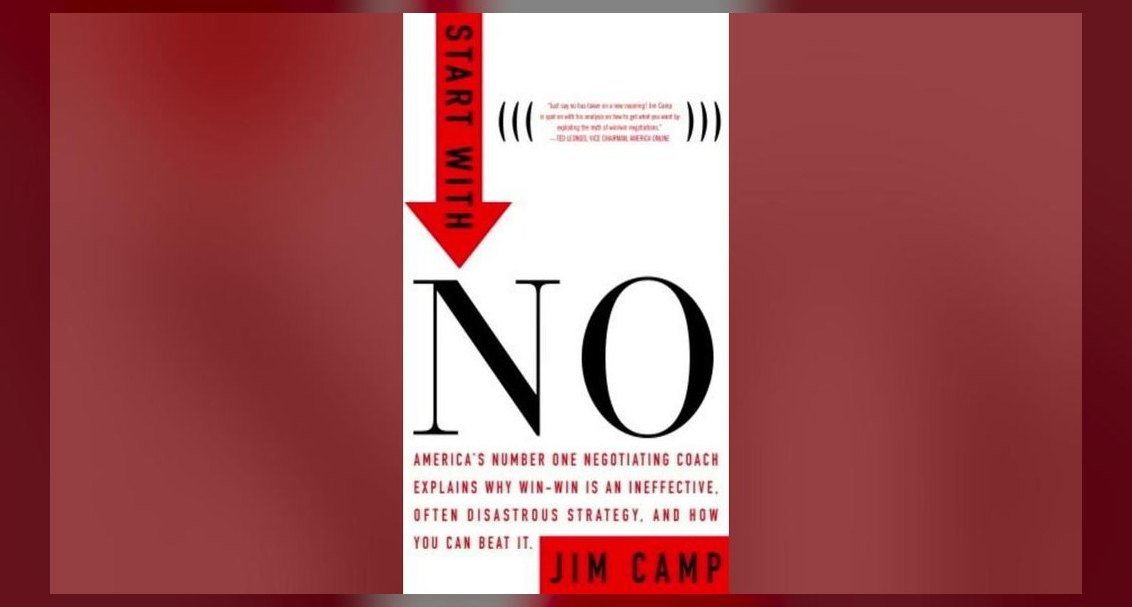 pulse-recentStart with No by Jim Camp — Top 10 Key Takeaways for Sales Leaders in 2027
 pulse-recentSales Engagement by Manny Medina — Top 10 Key Takeaways for Sales Leaders in 2027
 pulse-recentHow do you implement the Sandler Rules by David Mattson in your first 30 days as a new sales manager in 2027?
 pulse-booksTop 10 practical takeaways from Atomic Habits for building a new routine in 2027.
 pulse-recentThe Challenger Customer by Brent Adamson — Top 10 Key Takeaways for Sales Leaders in 2027
 pulse-recentMonetizing Innovation by Madhavan Ramanujam — Top 10 Key Takeaways for Sales Leaders in 2027