


Working Backwards by Bryar and Carr — Cliff Notes Summary
Quality
Certified
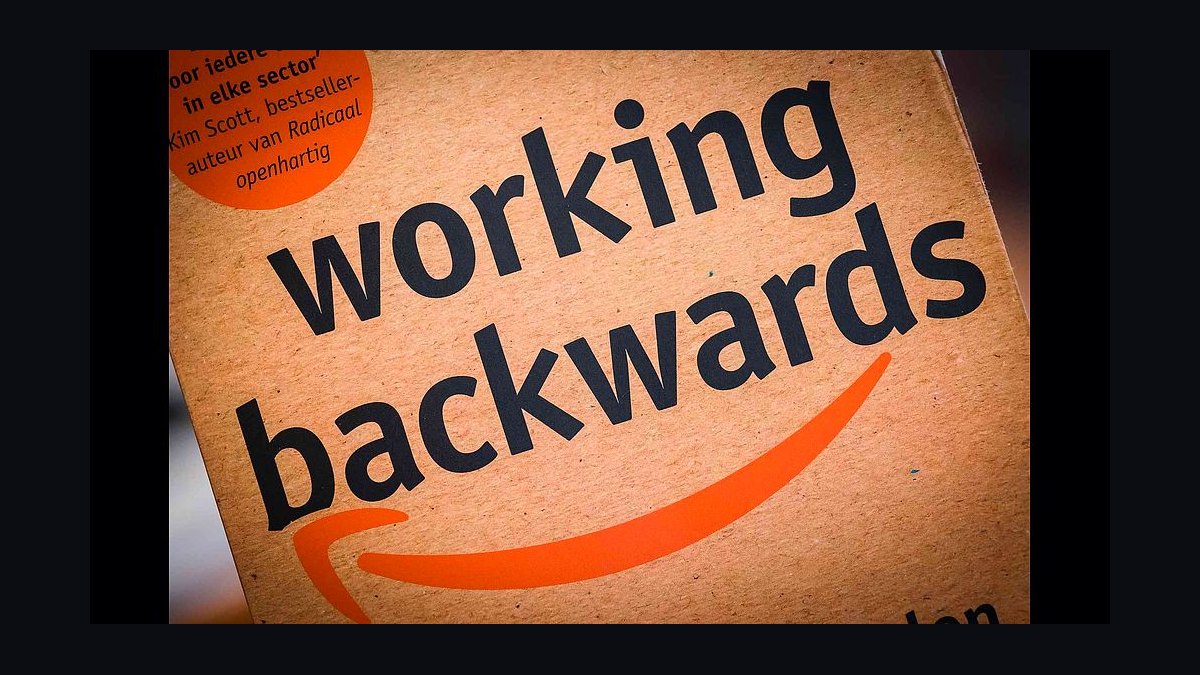
*Working Backwards* by Colin Bryar and Bill Carr is an insider account of Amazon's operating system, distilled from 27 combined years inside the company. Its core claim: Amazon's results come from transferable mechanisms — the PR/FAQ written before building, six-page narrative memos, fourteen Leadership Principles, Bar Raiser hiring, single-threaded ownership, and input-metric management.
The scenario that makes this book click
Picture a Tuesday roadmap meeting at a 300-person B2B software company. A product director has forty-one slides. Slide nine says "Enterprise customers demand deeper reporting." Slide fourteen says "Q3: ship analytics v2." Nobody in the room asks who those enterprise customers are, how many of them, what "deeper" means, or what they do today instead. The deck moves, the room nods, and eleven months later the analytics module ships with a 4% weekly-active rate among the accounts it was supposedly built for. Everyone can name the moment it went wrong only in hindsight, and by then the sunk cost is a year of six engineers.
That failure is the exact problem Bryar and Carr are writing about. Their diagnosis is not that the director was lazy or that the customers were unknowable. It is that the *format of the artifact* permitted the fuzziness. A bullet that reads "Enterprise customers demand deeper reporting" is grammatically complete and analytically empty. The room cannot audit it because there is nothing there to audit. Slide decks are performance instruments — the presenter supplies the connective tissue verbally, the audience absorbs vibes, and the logical gaps live in the space between bullets where nobody has to defend them.
Now run the same meeting the Amazon way. The director walks in with a one-page press release dated the day the feature ships, written in plain English for the customer, plus an FAQ answering every hostile question. The room reads in silence for thirty minutes. Someone underlines the sentence "Finance leaders at mid-market SaaS companies can now close the month in two days instead of nine" and writes in the margin: *which finance leaders, how many, and where did the nine come from?* The press release survives or it doesn't — and either outcome costs a morning, not a year.

That contrast is the whole book in miniature, and it is why the title is *Working Backwards*. The method starts at the customer's finished experience and reverse-engineers everything upstream: the FAQ, the memo, the approval, the team, the build. Bryar was Jeff Bezos's technical advisor — the "shadow" role, two years sitting in on essentially every meeting Bezos attended, drafting his responses — and spent twelve years at Amazon overall. Carr ran digital music and video and was on the founding team behind Prime Video and Amazon Studios. The book's authority comes from the fact that they ran the meetings rather than reported on them, which distinguishes it from the journalist accounts that preceded it.
The adjacent lesson, and one the book underplays: this failure mode is not unique to product roadmaps. It shows up identically in quarterly business reviews where a sales leader presents "pipeline is healthy" over a stacked bar chart, in marketing plans that assert "brand awareness is the constraint," and in RevOps proposals that claim "we need a new CPQ." Every one of those sentences would collapse under a single paragraph of forced prose. The mechanism travels further than the book's Amazon framing suggests.
How the working backwards mechanism actually runs
The mechanics are more specific than the slogan. Working Backwards is a sequence of artifacts, each of which gates the next, and the discipline lives in refusing to skip a gate.
Step one: the press release. One page, maximum. Written as though the product already shipped. Dated. Structured like a real press release — headline, subhead, summary paragraph, problem paragraph, solution paragraph, a quote from a company leader, a fictional customer quote describing the before-and-after, and a call to action. No internal jargon, no acronyms, no architecture. If a reader outside your company can't understand it, it fails. Teams commonly iterate through ten to thirty drafts before the document is meeting-ready; a first draft that reads well is usually a sign the author is describing the product they already wanted to build rather than the customer's problem.
Step two: the FAQ. This is where the honest work happens, and it's the part most teams skip when they cargo-cult the method. The FAQ anticipates every question a customer, a journalist, a skeptical executive, a legal reviewer, and an engineer would ask. Customer-facing FAQ items cover pricing, availability, migration, and what happens to existing workflows. Internal FAQ items cover the ugly stuff: what this cannibalizes, what the unit economics look like at scale, which team loses headcount, what the dependency graph is, and what has to be true for the forecast to hold. A PR/FAQ typically runs five to seven pages total once the FAQ is complete.
Step three: the six-page narrative memo. In 2004 Bezos banned PowerPoint from senior team meetings, and the replacement was a six-page memo written in full sentences and paragraphs — no bullets standing in for arguments, appendices allowed but not counted. Every meeting opens with roughly thirty minutes of silent reading. Nobody presents. Discussion starts only after everyone has read, which means the loudest voice no longer sets the frame and the most junior person in the room has read the same thing as the most senior. Bryar describes Bezos rewriting a single sentence for an hour; the memo is treated as a thinking artifact, not a briefing document.
Step four: single-threaded ownership. If the memo is approved, the initiative gets a Single-Threaded Leader — one person whose entire job is that one thing, with a team that carries no operational responsibility for anything else. No dotted lines, no shared platform team you have to negotiate for, no committee. The argument is that parallel innovation at scale requires this: Amazon could run AWS, Kindle, Prime Video, Alexa, and dozens of smaller bets simultaneously because each had a named owner who woke up thinking about exactly one bet.
Step five: staffing through the Bar Raiser. Every hiring loop includes a trained, certified interviewer drawn from *outside* the hiring team, with veto power over the offer. The Bar Raiser has no incentive to fill the seat quickly — that's the entire point of the structural separation. Their charge is to confirm the candidate would raise the average of the current population in that role. If they say no, the offer doesn't go out, regardless of what the hiring manager wants.
Step six: input metrics and the weekly review. Once the thing is live, the team reports weekly on controllable input metrics rather than outputs. Outputs — revenue, profit, share price — are lagging and largely uncontrollable in any given week. Inputs — selection, price competitiveness, in-stock availability, page load time, defect rate — are directly actionable. The Weekly Business Review is the ritual that enforces it: a large deck of input charts, anomalies surfaced and root-caused live, an owner assigned to each.
The loop at the bottom matters more than the linear path at the top. Most organizations that adopt Working Backwards adopt steps one through three and stop, because those are the visible, meeting-shaped parts. Steps four through six are where the strategy either compounds or evaporates.
The numbers, ranges, and case studies worth knowing
The book's second half is case studies, and they're the part that makes the mechanisms concrete rather than aspirational.
Kindle. Bezos believed Amazon had to enter hardware to defend the books business, which was Amazon's founding category. The press release described a device that disappears into the reading experience and holds every book ever printed, in any language. The named insight is that Amazon was willing to destroy its own physical book business to win e-books, on the reasoning that if they didn't, a competitor would. This is the book's cleanest example of customer obsession beating competitor obsession — the decision is legible only if you start from what the reader wants rather than from what protects the current P&L.
Prime Video. Carr ran this personally, which makes it the most textured chapter. The original press release promised on-demand video included with Prime membership. What followed was years of licensing negotiations with studios, streaming infrastructure built largely from scratch, and eventually original production through Amazon Studios. It is the book's best illustration of single-threaded leadership over a multi-year horizon: Carr's team owned no retail, no AWS, no shared roadmap obligations. The time constant here is worth internalizing — this was not a two-quarter bet, and treating Working Backwards as a fast-shipping methodology misreads it badly.
Prime. The clearest inputs-not-outputs case. The shipping economics on Prime were negative at launch and stayed negative for years by any conventional analysis. Bezos approved it because the leading indicators — purchase frequency, basket size, category breadth per customer, retention — were strongly positive, and the output would follow with a lag. Any standard ROI gate, applied to the output metric, kills Prime in the first review cycle. The lesson generalizes: if your approval process evaluates lagging metrics on a quarterly clock, you have structurally excluded every high-leverage bet whose payback period exceeds a year.
AWS. The largest case study in Think Big and Invent and Simplify. The originating observation was that Amazon's own internal teams were spending the large majority of their time on undifferentiated infrastructure work rather than on the thing that made their product distinctive — Bryar and Carr put the figure around 70%. If Amazon built that infrastructure once, as a service, it could sell it to every company on earth. When the idea was first proposed, Bezos's response was to ask what the press release looked like. They wrote one. AWS now generates the majority of Amazon's operating income, on a business that started as a solution to Amazon's own internal drag.
Practical ranges you can plan against. The book doesn't publish a metrics appendix, but the operating shapes are consistent enough to be useful as planning defaults:
- Press release: one page, hard cap. Ten to thirty drafts is normal, not a sign of dysfunction.
- PR/FAQ combined: roughly five to seven pages by the time the internal FAQ is honest.
- Narrative memo: six pages of body text, unlimited appendix. Written over days to weeks, not the night before.
- Meeting structure: ~30 minutes silent reading, then the remaining time is entirely discussion. A 60-minute slot yields ~30 minutes of real debate, which is more than most 60-minute deck meetings produce.
- Hiring loop: typically five to seven interviewers, one of whom is the Bar Raiser with veto authority.
- Input metric reporting: weekly cadence, not monthly. Anomalies get an owner in the room.
- Single-threaded team: 100% allocation. Anything less — an STL who also owns a quarterly ops number — is not single-threaded, it's a title.
The 100% allocation point is where most adoptions quietly fail. A leader at 60% on the new bet and 40% on the existing business will always be pulled to the existing business, because the existing business has customers who escalate today. The structural separation is the mechanism; the title is just the label on it.
Trade-offs, alternatives, and where the method doesn't fit
Working Backwards is not free, and the book is more candid about the cost than most summaries convey.
The cost is front-loaded time from your most expensive people. A serious PR/FAQ plus a six-page memo represents days of senior writing and editing before a single line of code exists. For a genuinely large bet, that trade is obviously correct — days against a year of engineering. For a two-week integration a customer asked for last Thursday, the ceremony costs more than the decision is worth. Teams that apply the full apparatus uniformly turn it into bureaucracy and then blame the method when velocity drops.
It fits discrete, launchable things better than continuous improvement. A press release presumes there is a moment when something new exists and a customer notices. That maps cleanly onto product launches, new market entries, pricing changes, and major platform bets. It maps poorly onto the ongoing work of shaving latency, reducing defect rates, or tightening a fulfillment process — that work is better served by kaizen-style continuous improvement, where the discipline is a tight measure-adjust loop rather than a document gate. Trying to write a press release for "we reduced p99 latency by 12%" produces a document nobody needs.
The alternatives are real and sometimes better. Marty Cagan's product-discovery model at SVPG emphasizes rapid prototyping and direct customer testing over written specification — get something in front of ten users this week rather than perfecting a document. Lean startup's build-measure-learn loop makes the same bet on empirical speed. Jobs-to-be-Done, as framed by Clayton Christensen, attacks the same "who is this for and why" question through interview methodology instead of through a writing artifact. And design sprints compress the whole thing into a facilitated week. The honest read is that these are complements, not competitors: the PR/FAQ is strongest at forcing clarity *before* you commit resources, while prototyping is strongest at testing whether the clarity was correct. Teams that run both — write the press release, then prototype against it — get the most out of either.
The cultural cost is real and underweighted in the book. Amazon's operating model is famously demanding. Bryar and Carr write from the perspective of people who thrived in it, which is an inherent selection bias in any insider account. Brad Stone's *The Everything Store* documents the human side more critically, and reading the two together gives a more complete picture than either alone. If you import the mechanisms without acknowledging the intensity they were designed inside, you will import the process and lose the people.
The two-way door concept — most decisions are reversible and should be made fast, a minority are irreversible and deserve deliberation — is the governing filter. Applying the heavy apparatus to reversible decisions is the single most common way organizations turn this book into overhead.
Common pitfalls when teams adopt this
Writing the press release after the roadmap is set. This is the most common failure and the most invisible. A team decides to build analytics v2, then writes a press release for analytics v2. The document becomes marketing copy for a foregone conclusion, and the gate that was supposed to kill weak ideas never kills anything. The tell is that no PR/FAQ in your organization's history has ever resulted in a project being cancelled. If the answer is zero, the mechanism is decorative.
Bullets smuggled back into the memo. Teams adopt the six-page format and then fill it with fragments, tables, and bulleted lists — which is a slide deck in a Word document. The prose requirement exists because a paragraph forces you to state a claim, its support, and its implication in a connected sequence. A bullet lets you assert the claim alone. If the memo reads faster than a page a minute, it isn't a narrative.
Skipping the silent reading. Sending the memo out beforehand seems more efficient and destroys the mechanism. Half the room won't read it, and the ones who did read it read different amounts with different attention. The thirty minutes of enforced silence guarantees a shared baseline and removes the presenter's ability to steer interpretation. It feels awkward the first three times and then becomes the most valuable half hour on the calendar.
Fake single-threading. Naming an STL who still carries a quota, an ops number, or a platform on-call rotation. The existing business will always win that competition, because escalations are loud and new bets are quiet. Either protect the allocation or don't claim the model.

Bar Raiser drawn from inside the hiring team. The veto only means something because the person holding it doesn't need the seat filled. A "Bar Raiser" who reports to the hiring manager is a rubber stamp with a title.
Adopting the vocabulary without the mechanisms. Leadership principles on a wall poster are worthless; the reason Amazon's fourteen work is that they are the literal language of hiring debriefs, promotion cases, and performance reviews, with specific interviewers assigned to probe specific principles. Copy the principles without wiring them into those three processes and you have a values statement, not an operating system.
Managing outputs while claiming to manage inputs. A team that reports input metrics weekly but gets promoted on revenue is managing outputs. The metric you report is not the metric you optimize — the metric your compensation and promotion depend on is. Aligning those two is harder than building the dashboard and is where most of the real work sits.
Applying it to sales without translating it. The direct translations are worth naming, since the mechanisms port cleanly. Run discovery by working backward from the buyer's twelve-month success state and write it down before the proposal. Use a structured leadership rubric as the hiring standard for reps and managers rather than gut feel. Assign single-threaded ownership on strategic accounts so no logo is "covered" by three people and owned by none. Manage input metrics — meetings booked with the right title, multithreaded contacts per open opportunity, days since last executive touch — instead of staring at the forecast number, which is a lagging output you cannot move directly in any given week.
Related questions
Is the book worth reading or is a summary enough?
A summary conveys the mechanisms; the case studies convey the judgment. The Kindle, Prime, Prime Video, and AWS chapters show the operating system under pressure, including the arguments against each bet. Read the summary to decide, then read the case studies.
How does Working Backwards differ from a product requirements document?

A PRD describes what will be built, in internal language, for engineers. A PR/FAQ describes what the customer will experience, in plain language, for anyone. The PRD assumes the decision is made; the PR/FAQ is the decision.
Can a small company use this without Amazon's scale?
Yes, and arguably more easily. Press releases and FAQs cost writing time, not headcount. Single-threading is harder under twenty people, since everyone wears several hats — apply it to the one bet that matters most rather than to everything.
What should I read alongside it?
Bezos's shareholder letters from 1997 onward for the strategic principles in his own words, Brad Stone's *The Everything Store* for the outside-journalist view, and Marty Cagan's *Inspired* and *Empowered* for the modern product-team application of single-threaded ownership.
What is the fastest way to try this next week?
Take one initiative already funded. Write its press release in one page. Circulate nothing, then read it aloud to the team. If nobody can explain who the customer is and what changes for them, you have found your answer cheaply.
FAQ
Who wrote the book and why does their background matter?
Colin Bryar spent twelve years at Amazon, including two as Bezos's "shadow" technical advisor — sitting in on his meetings and drafting his responses. Bill Carr was VP of digital music and video and helped launch Prime Video and Amazon Studios. Prior Amazon books were written by journalists observing from outside; this one is written by operators who ran the mechanisms, which is why it reads as a manual rather than a narrative history.
What is the single highest-leverage takeaway?
Write the press release before you build the product. It is the cheapest available forcing function for clarity about who the customer is, what they get, and why they'd care — and it is cheap specifically because killing a bad idea at the document stage costs a morning instead of a year.
How do the fourteen Leadership Principles actually get used?
They are the working vocabulary of hiring debriefs, promotion cases, and performance reviews. Interviewers in a loop are assigned specific principles to probe, and the debrief is conducted in that language. Employees are evaluated against the principles by name. That wiring — into three concrete processes — is what separates them from a values poster.
What is the difference between an input metric and an output metric?
An output is a result you want but cannot directly move this week: revenue, profit, retention rate. An input is something you control now: selection breadth, price competitiveness, in-stock rate, page speed, defect count, meetings booked. Amazon's argument is that outputs follow inputs with a lag, so weekly management should target inputs and let outputs accumulate.
Where does this land in the Bezos canon?
Bryar and Carr's book is the operator's manual — the mechanisms and how they run. The 1997–2020 shareholder letters are the strategic layer, in Bezos's own framing. *The Everything Store* is the human and competitive story from outside. Read all three and you get the system, the strategy, and the cost.
What is the most common way adoption fails?
Ceremony without consequence. Teams write press releases for projects already decided, hold silent-reading meetings where nothing gets killed, and appoint single-threaded leaders who still carry other numbers. The mechanisms only work when they can actually stop something — a gate that has never rejected anything is not a gate.
Sources
- https://www.amazon.jobs/content/en/our-workplace/leadership-principles
- https://www.aboutamazon.com/news/company-news/2020-letter-to-shareholders
- https://ir.aboutamazon.com/annual-reports-proxies-and-shareholder-letters/default.aspx
- https://www.amazon.jobs/content/en/how-we-hire/bar-raiser
- https://www.svpg.com/product-vs-feature-teams/
- https://hbr.org/2013/01/how-amazon-adapted-its-business-model-to-india
- https://press.stmartins.com/9781250267597/working-backwards/
- https://www.aboutamazon.com/news/aws
- https://hbr.org/2016/09/what-amazon-understands-about-customers
Related on PULSE
This page will be disappearing soon. Save it to your device for $1 — or read it free while it is here.
@Kory-White- · if Venmo asks, the last 4 of my number are 2012
This page is gone.
This one is off the shelf now. $1 keeps it on your phone for good — the whole page, pictures and diagrams included.
 pulse-recentWhat are the concrete steps in Strategic Selling for building a sales plan in 2027?
 pulse-recentHow does *The New Strategic Selling* define the first step in qualifying an opportunity in 2027?
 pulse-recentHow do you implement the Sandler Rules by David Mattson in your first 30 days as a new sales manager in 2027?
 pulse-recentBlue Ocean Strategy by W. Chan Kim and Renee Mauborgne — Top 10 Key Takeaways for Sales Leaders in 2027
 pulse-booksTop 10 practical takeaways from Atomic Habits for building a new routine in 2027.
 pulse-recentWhat is the most actionable step in The Sandler Rules for Sales Leaders by David Mattson to improve discovery in 2027?
 pulse-recentThe Sandler Rules by David Sandler — Top 10 Key Takeaways for Sales Leaders in 2027
 pulse-recentProActive Selling by Skip Miller — Top 10 Key Takeaways for Sales Leaders in 2027
 book-summaryWhat factors drive the price of Book Summaries up or down in 2027?
 pulse-recentWhat is the first concrete step in The Sandler Rules by David Mattson for a sales leader to implement the system in 2027?