


Reality Check by Guy Kawasaki — Cliff Notes Summary
Quality
Certified

*Reality Check* by Guy Kawasaki (Portfolio, 2008) is a 480-page anthology of roughly 95 short, deliberately profane essays drawn from his blog and keynotes. Its thesis: most startup and sales advice is polite nonsense. What works is shipping fast, hiring A-players, pitching in ten slides, and telling buyers the truth.
The outcome you should expect from reading it
Set expectations correctly before you crack the spine, because this book fails readers who arrive wanting a manual. *Reality Check* is not a sequenced playbook the way *Predictable Revenue* or *The Challenger Sale* are sequenced playbooks. It is an anthology — essays of roughly three to five pages each, arranged into thematic buckets covering starting, bootstrapping, branding, evangelism, innovation, sales, hiring, firing, leadership, and career. You can read it front to back, but you can equally open to essay 47, read for eleven minutes, close it, and have gotten the full value of that essay. The modular structure is the point. Kawasaki assembled it from blog posts written across roughly a decade at Garage Technology Ventures, and he never sanded the seams smooth.
The realistic outcome, then, is a shift in posture rather than a set of new procedures. Most readers finish with three or four durable mental artifacts and a general immunity to a certain flavor of business-book piety. The artifacts that survive: the 10/20/30 pitch rule, the A-player/B-player hiring axiom, "don't worry, be crappy," and "make meaning, not money." Those four are quoted in venture-backed founder communities, sales-leadership Slack groups, and pitch-coaching sessions constantly enough that a reader who has never read the book has probably still absorbed them secondhand. Reading the source gets you the reasoning underneath the slogan, which matters when you have to decide whether the slogan applies to your situation.
What you should *not* expect is data. Kawasaki writes from pattern recognition — Apple's evangelism program from 1983 to 1987 and again from 1995 to 1997, then several hundred VC pitches sat through at Garage. He is explicit that this is opinion built on experience, not a research program. If your organization makes decisions by citing controlled studies, this book will frustrate you and you should read Dixon and Adamson instead. If your organization is stuck in a planning cycle nobody can end, this book is a crowbar.

The secondary outcome, and the one most underrated: *Reality Check* is unusually good at giving a junior operator permission to say the obvious thing out loud. Much of the book's function is social. When a first-time founder tells their board the five-year model is theater, they sound reckless. When they say "Kawasaki calls this the business-plan industrial complex, and here's the MAT doc instead," they sound read. That is a real, if slightly embarrassing, use of a business book, and it is a large part of why this one has stayed in print.
What drives that outcome — the underlying logic of the essays
Strip the profanity and a coherent operating philosophy sits underneath, which is why the book holds together despite being assembled rather than written. Kawasaki's argument chains: meaning drives durable motivation, motivation survives the shipping of an embarrassing v1, an embarrassing v1 generates real market feedback, real feedback beats speculative planning, and the whole loop only runs if the people executing it are genuinely good. Remove any link and the chain snaps. This is the strategy the book is actually advancing, even though it never presents itself as a strategy document.
Take the pieces in order. Make meaning, not money is placed first deliberately. Kawasaki's claim is that companies organized around a financial target tend to fail, while companies organized around a change they want in the world often make money as a byproduct. He is not being sentimental about this — his argument is mechanical. Meaning is what lets you recruit above your funding weight, survive the eighteen-month stretch where the product is bad, and say no to revenue that would bend the product out of shape.
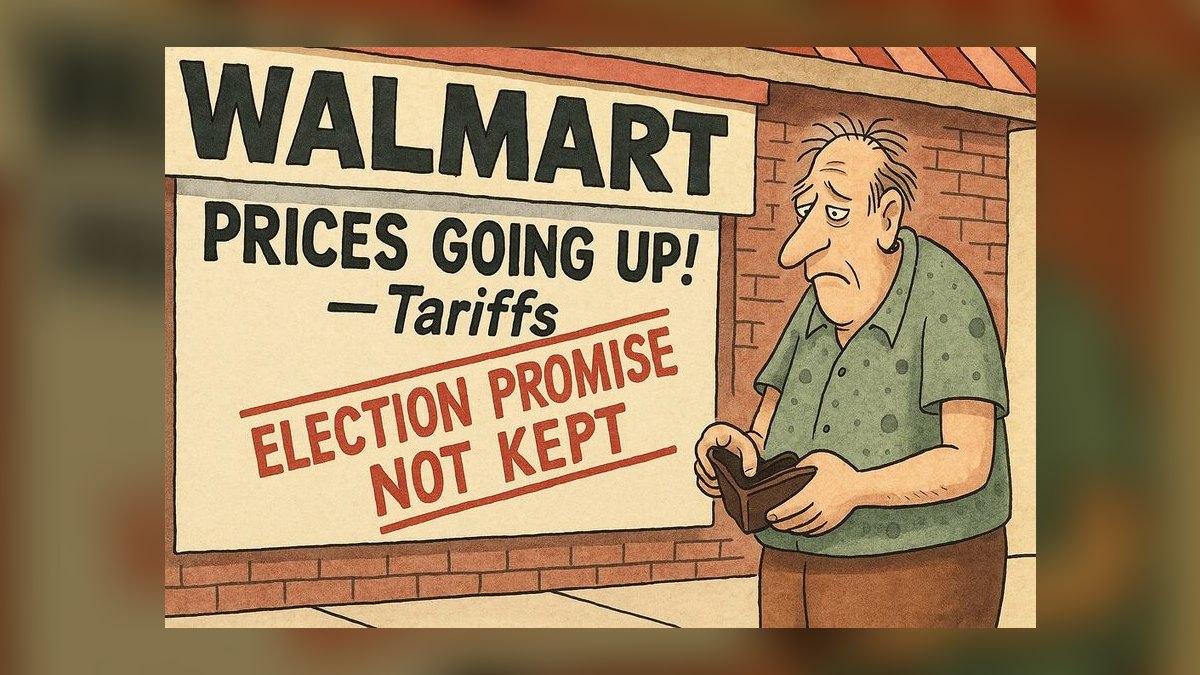
Don't worry, be crappy is the shipping rule, and it is the most misread line in the book. Kawasaki is not endorsing bad work; he is arguing that a v1 in customers' hands inside roughly ninety days teaches you more than any focus group, and that the delta between "embarrassing" and "polished" is usually invisible to the market anyway. Eric Ries formalized the same instinct as the MVP in 2011, and the lineage is direct enough that *The Lean Startup* reads partly as *Reality Check* with a methodology bolted on.
The MAT framework — Milestones, Assumptions, Tasks — is what replaces the business plan. Milestones are the handful of provable events that matter (first paying customer, first renewal, first hire who isn't a founder). Assumptions are the beliefs the milestones test — pricing, sales-cycle length, close rate, support load. Tasks are the mechanics of getting there. The elegance is that the Assumptions column becomes a live learning log: when reality contradicts a number, you update it and the milestone timing moves honestly, rather than quietly missing a plan nobody was tracking anyway.
The A/B/C player axiom is the hiring engine, and Kawasaki treats its failure mode as inevitable rather than possible. A-players hire A-players because good people want to work with good people. B-players hire C-players because C-players do not threaten them. C-players hire D-players for the same reason, one rung lower. The infection compounds, and by the time it is visible in output, the A-players who joined early have already left. His prescription is uncomfortable and simple: keep hiring authority extremely narrow until you trust the bar, and treat the first bad hire as a structural event rather than a personnel one.
Benchmarks and realistic ranges from the book

The book offers surprisingly few hard numbers, which is itself worth flagging — but the numbers it does commit to are the reason people still cite it, so it is worth being precise about each one and about how much weight it can carry.
10/20/30. Ten slides, twenty minutes, thirty-point minimum font. The ten slides Kawasaki prescribes: Title, Problem, Solution, Business Model, Underlying Magic, Go-to-Market, Competitive Analysis, Team, Projections, and Status/Timeline. Each constraint solves a distinct failure. Ten slides forces you to decide what actually matters instead of deferring the decision to the audience. Twenty minutes assumes a one-hour meeting where the laptop does not connect for fifteen and discussion should own the rest. Thirty-point font is the clever one — it is not a design preference, it is a forcing function. At thirty points you physically cannot fit your script on the slide, so you cannot read the slide aloud while the audience reads it faster than you speak. Kawasaki himself frames these as guidelines rather than law; the useful reading is that ten and twenty are ceilings and thirty is a floor.
Ninety days to v1. The shipping benchmark. Not a universal law — regulated software, hardware, and anything touching clinical or financial compliance obviously cannot hit it — but a deliberate provocation aimed at teams whose v1 date has slipped three times.
Eighteen months of runway per round. Kawasaki's financing rule is that a round should buy at least eighteen months, because anything shorter means you re-enter the market at month twelve, and raising while under time pressure destroys your leverage. His related warning on dilution is that founders routinely imagine holding a majority at exit when the realistic range after a normal Series A/B/C stack is far lower — a fraction of what the founding cap table showed. The specific percentages depend entirely on round sizes and option-pool refreshes, so treat the direction as the lesson, not any single figure.

Ninety-five essays, 480 pages, three to five pages each. The read-time math follows: most readers finish in a single-digit number of focused hours, or spread it across a couple of weeks at one essay a sitting. The modularity means partial reading is legitimate — you lose nothing by skipping the branding section if you already have a brand.
The three-question rule. At any event, ask three questions of the other person before you say anything about yourself. Trivially small, and the most immediately actionable thing in the book. Any SDR who runs two minutes of genuine discovery before pitching is executing it without knowing the source.
Where the book is deliberately vague, take that as honest. Kawasaki does not give you a close-rate benchmark, a quota-attainment range, or a sales-cycle length, because he does not have defensible ones and says so. For those, the modern operational literature and your own CRM are better sources than any 2008 anthology.
Risks, edge cases, and where the advice breaks
The honest reality check on *Reality Check* is that a meaningful slice of it is either dated, dangerous when applied literally, or both — and the reader who does not sort the categories will get hurt.
The dated layer is cosmetic but constant. The book was written in 2008 and its examples reflect it: the ambient tech references, the companies used as cautionary tales, the assumption that a blog is a live and slightly novel marketing channel. None of this invalidates the arguments, but it does make the prose feel older than the ideas. A reader in the mid-2020s has to do continuous translation, and some readers find that tiring enough to bounce.
"Don't worry, be crappy" is the most dangerous line in the book taken at face value. It was written for consumer and productivity software in an era when a bad release cost you a patch and some goodwill. Apply it to a payments product, a medical device, a security tool, or anything holding regulated data and you get a genuine incident. The defensible translation is narrow: ship the smallest scope that is *correct*, not the fastest thing that compiles. Kawasaki is arguing against gold-plating and against scope creep, not against correctness — but the slogan does not say that, and slogans travel further than context.

"Customer research is theater" is the second landmine. Kawasaki's position is that customers can tell you what they hated about the last thing but not what they want next, and he points at category-defining products nobody requested. There is real truth here about *aspirational* research. But the sentence is routinely weaponized by product leaders who simply do not want to hear bad news, and it gives them a canonical citation for ignoring their users. The workable split is his own: listen to customers about today's problems, discount them about tomorrow's solutions. Anyone quoting the first half without the second is using the book as cover.
Fire fast is right in principle and legally naive in execution. Kawasaki's underlying claim — that keeping a wrong hire punishes the whole team, and that the hire was your mistake rather than theirs — is defensible and humane. But employment law varies enormously by jurisdiction, and "fire fast" executed without documentation, without a fair process, and without counsel is how companies acquire lawsuits. His dismissal of performance improvement plans as HR theater is too broad; in many jurisdictions a documented process is not theater, it is the thing that makes a termination lawful. Take the urgency, keep the paperwork.
The A-player axiom has a cruelty problem. Sorting humans into letter grades is a rhetorical device that becomes toxic when it becomes an actual internal vocabulary. Teams that start saying "he's a B" out loud have imported a caste system, and it interacts badly with the fact that performance is heavily contextual — people labeled B in one role are A in another, and the label tends to follow them regardless. Use the axiom as a warning about hiring authority, not as a taxonomy for your existing team.

The profanity is a genuine filter, not a marketing posture. The essays are blunt and casually vulgar by design, because Kawasaki is trying to cut through corporate politeness. If you plan to circulate the book to a broad team or quote it in a client-facing setting, read it yourself first. Plenty of workplaces will not receive it the way you intend.
Finally, the survivorship problem. Nearly every book in this genre draws its lessons from companies that won, and *Reality Check* is no exception. The hundreds of teams that shipped crappy v1s, hired for meaning over money, ran perfect 10/20/30 pitches, and died anyway do not appear. That does not make the advice wrong, but it does mean you should treat it as heuristics that improve your odds rather than as a mechanism that produces outcomes.
A practical rollout plan for the ideas
Reading it is easy. Converting it into changed behavior takes a deliberate sequence, and the sequence below is designed so each step produces an artifact somebody else can see — which is the only reason any of it survives contact with a normal week.
Week one — audit the pitch. Open whatever deck you currently take into first meetings, whether that is a fundraise deck or a first sales call. Count the slides. Count the words on the densest one. Set the smallest font on any slide to thirty points and watch what falls off. Almost everything that falls off was a script you were going to read aloud. Rebuild against Kawasaki's ten headings, then time yourself out loud at twenty minutes with no interruptions, knowing the real meeting will interrupt you constantly. Most people find this exercise removes about half their material and improves the meeting.
Week two — kill or demote the long-range model. Find the five-year projection. Do not delete it if an investor or a board genuinely requires one; instead demote it to a compliance artifact and stop treating it as a planning input. Build the MAT sheet alongside it: a Milestones column with the next four provable events, an Assumptions column with the six to ten numbers those milestones depend on, and a Tasks column. Put a date on each assumption for when reality will confirm or kill it. Review it every two weeks. This single sheet is the most portable thing in the book and works equally well for a startup, a new sales territory, or a product line inside a large company.

Week three — audit hiring authority, not people. Do not run an A/B/C sorting exercise on your existing team; that is the failure mode described above. Instead, list everyone who currently has authority to make a final hire. For each, ask whether the last person they hired raised or lowered the bar. Where the answer is uncomfortable, narrow that authority — add a bar-raiser to the loop, or move final approval up a level — before the next requisition opens, not after. This is the version of the axiom that changes outcomes without turning into a caste system.
Week four — rewrite one sales motion around risk. Take your top three open opportunities and write down, in one sentence each, what the buyer's personal downside is if the purchase goes badly. Then check whether your proposal addresses that downside anywhere. Usually it does not — it addresses features and ROI, which are the seller's frame. Kawasaki's closing prescriptions are all risk instruments: give the buyer an escape hatch, name the implementation people individually so the buyer is buying humans rather than software, and get the contract short enough that legal review takes days instead of weeks. Each one reduces the buyer's career exposure, which is the actual objection.
Ongoing — build the evangelist/seller split deliberately. Kawasaki coined "evangelist" as a job title at Apple, and his distinction still maps cleanly onto modern org charts: the evangelist converts the market to the category, the seller closes the individual transaction. In current terms that is developer relations, community, and content on one side, and account executives on the other, with customer success carrying the renewal. Naming which motion each person owns prevents the common failure where a content team is measured on pipeline it cannot control and a sales team is asked to educate a market that has never heard of the category.
Where it sits in the wider canon

*Reality Check* is best read as one node in a lineage rather than a standalone text, and knowing the neighbours tells you what to read next.
Kawasaki's own arc runs from *The Art of the Start* (2004), which is the structured founder manual, through *Reality Check* (2008), which is the irreverent anthology, into *Enchantment* (2011), which turns toward persuasion and likeability, then *The Art of Social Media* (2014) and the memoir *Wise Guy* (2019). If you want the sequenced playbook that *Reality Check* deliberately refuses to be, *The Art of the Start 2.0* is the book you actually wanted.
Sideways, the closest companions are Ben Horowitz's *The Hard Thing About Hard Things*, which covers the same hiring-and-firing terrain with more scar tissue and more specifics on the wartime CEO problem, and Jessica Livingston's *Founders at Work*, which supplies the oral-history evidence base Kawasaki asserts from memory. Downstream, Eric Ries's *The Lean Startup* is the methodology that formalized "ship then test," and Dixon and Adamson's *The Challenger Sale* is the research-backed version of Kawasaki's instinct that the person in the room is rarely the person who decides.
The practical reading order for someone building a revenue function: *The Art of the Start 2.0* for structure, *Reality Check* for calibration and permission, *The Hard Thing About Hard Things* for the people problems, and *The Challenger Sale* for the sales mechanics. *Reality Check* is the one you re-open in a bad week, not the one you plan from.
Related questions
What is the 10/20/30 rule exactly?
Ten slides maximum, twenty minutes maximum, thirty-point minimum font. The slide set: Title, Problem, Solution, Business Model, Underlying Magic, Go-to-Market, Competitive Analysis, Team, Projections, Status/Timeline. The font floor is a forcing function that stops you reading your slides aloud.
Should I read Reality Check or The Art of the Start first?

Read *The Art of the Start 2.0* first if you want structure — it is the sequenced founder manual. Read *Reality Check* first if you are already operating and stuck in planning paralysis. The anthology is a calibration tool, not a syllabus.
Is "don't worry, be crappy" safe advice?
Only for low-stakes software. Translate it as "ship the smallest correct scope," not "ship something broken." In regulated, financial, medical, or security contexts, a literal reading produces incidents rather than learning.
What does the A/B/C player axiom actually predict?
That mediocre hiring managers hire people they cannot be threatened by, and the effect compounds one rung per generation. Use it to decide who holds final hiring authority — not as a label to attach to people already on the team.
Does the book cover remote work, product-led growth, or AI?
No. It predates all three. The persuasion and hiring psychology transfers cleanly, but anything about channel mechanics, distribution, or tooling needs a modern supplement.
FAQ
Is Reality Check still worth reading given it was published in 2008?
Yes, with translation. The frameworks — 10/20/30, MAT, the A-player axiom, make meaning — have aged well and are quoted constantly in founder and sales communities. The examples, company references, and the assumption that blogging is a frontier marketing channel have not. Read it as a mindset correction rather than a current-state market analysis, and expect to do some mental find-and-replace on the illustrations.
Does Kawasaki really swear throughout the book?

Yes, and it is deliberate. The bluntness is the mechanism — he is trying to make points stick by refusing the polite register most business books use. If casual profanity in professional writing bothers you, or if you were planning to hand the book to a team without reading it first, this is worth knowing up front.
How long does it take to read?
The 480 pages break into roughly 95 essays of three to five pages, so it is a single-digit number of focused hours end to end, or a couple of weeks at one essay a sitting. Because the essays are independent, partial reading is legitimate — skip the sections covering ground you already own and lose nothing.
Is the 10/20/30 rule a hard law?
No, and Kawasaki says so. Treat ten slides and twenty minutes as ceilings and thirty-point font as a floor. Plenty of successful pitches break the specific numbers; almost none succeed by being longer and denser than the audience wanted. The underlying principle — decide what matters instead of making the audience decide — is the durable part.
What is the MAT framework and how do I actually use it?
Milestones, Assumptions, Tasks — a single sheet that replaces the long-form business plan in early operation. List the next few provable events, the numbers those events depend on, and the work required. Put a confirm-or-kill date on each assumption and review the sheet every two weeks. It works for a startup, a new territory, or a product line inside a larger company.
Who should skip this book?
Anyone who needs research-backed, data-heavy analysis, a step-by-step operating manual, or coverage of modern topics like product-led growth and remote GTM teams. Also anyone who reacts badly to opinionated, anecdote-driven writing. It is built for operators who need a jolt and permission to stop planning, not for teams that need a process document.
Sources
- https://guykawasaki.com/books/
- https://guykawasaki.com/the-102030-rule-of-powerpoint/
- https://www.penguinrandomhouse.com/books/298806/reality-check-by-guy-kawasaki/
- https://www.goodreads.com/book/show/3671797-reality-check
- https://en.wikipedia.org/wiki/Guy_Kawasaki
- https://theleanstartup.com/principles
- https://a16z.com/books/
- https://review.firstround.com/
- https://www.ycombinator.com/library
Related on PULSE
This page will be disappearing soon. Save it to your device for $1 — or read it free while it is here.
@Kory-White- · if Venmo asks, the last 4 of my number are 2012
This page is gone.
This one is off the shelf now. $1 keeps it on your phone for good — the whole page, pictures and diagrams included.
 book-summaryThe Art of the Start 2.0 by Guy Kawasaki — Cliff Notes Summary
 book-summaryEnchantment by Guy Kawasaki — Cliff Notes Summary
 pulse-recentSelling Above and Below the Line by Skip Miller — Top 10 Key Takeaways for Sales Leaders in 2027
 pulse-recentBlue Ocean Strategy by W. Chan Kim and Renee Mauborgne — Top 10 Key Takeaways for Sales Leaders in 2027
 pulse-recentHow do you implement the Sandler Rules by David Mattson in your first 30 days as a new sales manager in 2027?
 pulse-recentWhat are the seven concrete steps to implement the Sandler Submarine technique from The Sandler Rules in 2027?
 pulse-recentWhat are the concrete steps in Strategic Selling for building a sales plan in 2027?
 pulse-recentThe Sales Acceleration Formula by Mark Roberge — Top 10 Key Takeaways for Sales Leaders in 2027
 pulse-recent$100M Offers by Alex Hormozi — Top 10 Key Takeaways for Sales Leaders in 2027
 pulse-recentWhat is the first concrete step in The Sandler Rules by David Mattson for a sales leader to implement the system in 2027?