


The Lean Startup by Eric Ries — Cliff Notes Summary
Quality
Certified
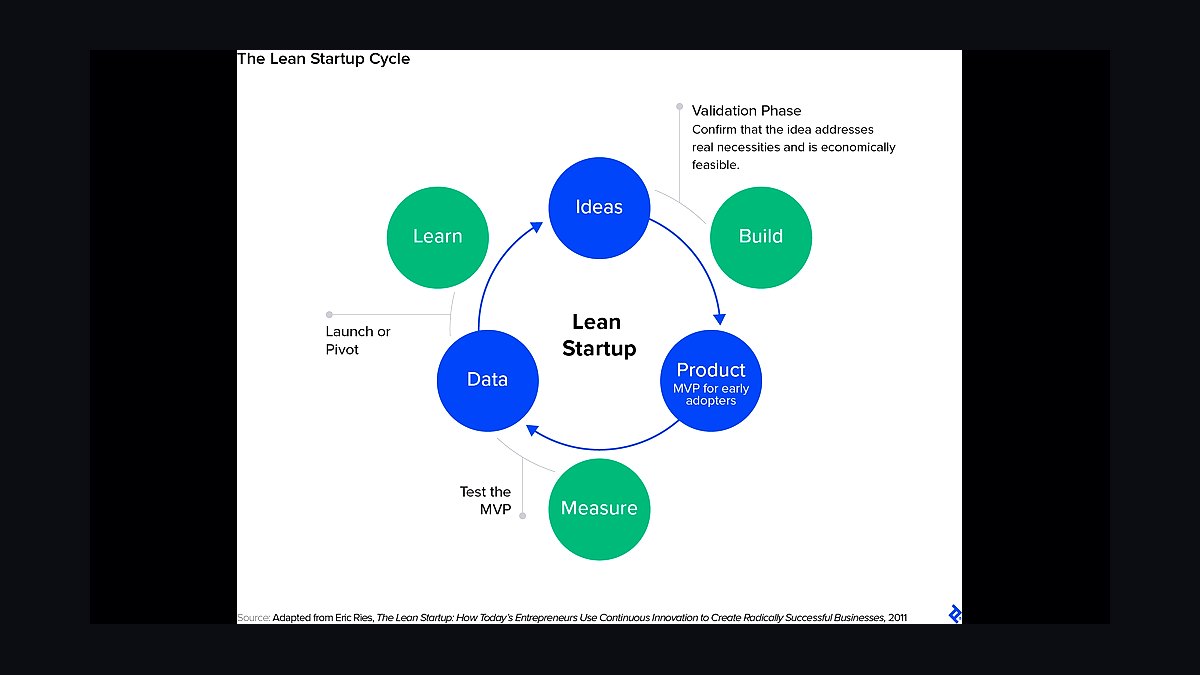
*The Lean Startup* by Eric Ries (2011) argues that a startup is an institution creating products under extreme uncertainty, so progress should be measured in validated learning, not features shipped. Its engine is the Build-Measure-Learn loop: state a leap-of-faith hypothesis, ship a Minimum Viable Product, measure actionable metrics, then pivot or persevere.
The outcome you should expect from working this way
Read the book expecting a management discipline, not a growth-hacking playbook. The outcome Ries promises is narrow and honest: you will not learn how to build a great product, and you will not learn what customers want. What you will learn is how to *find out* faster and cheaper than the alternative — which, in 2011 and still today, was building in stealth for eighteen months and discovering demand only at launch.
Concretely, a team that adopts the method well changes three observable things. First, the unit of planning shrinks. Instead of a quarterly roadmap of committed features, the team carries a short list of open hypotheses with a designed test attached to each. Second, the review meeting changes shape. Instead of "what shipped," the standing question becomes "what did we learn, and does it change the plan?" Third, the definition of failure changes. A test that kills a hypothesis in two weeks is a success; a feature that ships on time into indifference is the failure, no matter how clean the burndown chart looked.
Ries states the crux himself in the IMVU story that opens the book: his team spent six months building an instant-messaging interoperability layer nobody used. His conclusion — "if we are building something that nobody wants, it doesn't much matter if we are doing it on time and on budget" — is the whole thesis compressed into a sentence. The cliff notes summary of the book is really the cliff notes summary of that sentence: on-time and on-budget are measures of execution, and execution is worthless pointed at the wrong hypothesis.

What you should *not* expect is certainty. The method reduces the odds of building the wrong thing; it does not make market timing, competition, capital structure, or distribution go away. Plenty of teams have run tidy Build-Measure-Learn loops straight into a market too small to matter. The loop tells you whether customers respond. It does not tell you whether enough of them exist.
The second thing not to expect is that the book will feel novel. Fifteen years of diffusion have made MVP, pivot, and vanity metrics into ambient vocabulary, which means much of the text now reads as obvious. That is a compliment to the book and a trap for the reader: the ideas are widely *quoted* and thinly *practiced*. Most teams that say "MVP" mean "version one with fewer features," which is precisely the misreading Ries spends a chapter warning against.
What drives that outcome — the loop, the MVP, and the pivot taxonomy
Three mechanisms do the work. Strip them out and the rest of the book is commentary.
Leap-of-faith assumptions. Every plan rests on one or two beliefs that, if false, sink the venture. Ries splits them into the value hypothesis — will customers find this valuable once they use it? — and the growth hypothesis — how will new customers find it? The discipline is not having assumptions; everyone has those. It is naming them explicitly, in falsifiable language, before writing code. Facebook's leap of faith was that people would voluntarily publish personal information to a small network. Google's was that algorithmic relevance would beat human-curated directories. Written down in advance, an assumption becomes testable. Left implicit, it becomes the thing everyone discovers was wrong at the post-mortem.

The Minimum Viable Product. Ries defines it as "that version of a new product which allows a team to collect the maximum amount of validated learning about customers with the least effort." The operative word is *learning*, not *product*. An MVP is an experiment wearing a product costume, and it is frequently not software at all. The book catalogs the archetypes: Zappos founder Nick Swinmurn testing whether people would buy shoes online by photographing inventory in local stores and buying pairs only after orders arrived; Dropbox releasing a short demo video of functionality that did not yet exist and watching beta signups jump by an order of magnitude; Food on the Table hand-assembling one household's meal plan and grocery list every week before writing any code — the concierge MVP; and the Wizard of Oz pattern, where the interface looks automated while employees do the work behind the curtain.
Pivot or persevere. When the metrics move but not enough, you face a decision Ries formalizes as a recurring meeting rather than a crisis. A pivot is "a structured course correction designed to test a new fundamental hypothesis about the product, strategy, and engine of growth" — and crucially it preserves what was learned. The book enumerates ten types: zoom-in (a single feature becomes the whole product), zoom-out (the product becomes a feature of something larger), customer segment (same product, different buyer), customer need (same buyer, different problem), platform, business architecture (high-margin/low-volume flipping to low-margin/high-volume or the reverse), value capture (the monetization model), engine of growth, channel, and technology. The taxonomy matters more than any single entry, because it converts a vague "should we change direction?" into a bounded menu of specific moves. Instagram emerging from the location app Burbn, Slack emerging from the failed game Glitch, and YouTube abandoning video dating for general video sharing are all pivots that kept the team, the code, and the accumulated learning.
Wrapping all three is innovation accounting, Ries's answer to the fact that a pre-revenue company cannot steer by a P&L. It runs in three steps: establish a baseline with a real MVP producing real customer data; tune the engine by iterating until the baseline metrics move; then pivot or persevere based on whether that movement points at a viable business. This is where the book's most durable slogan lives — vanity metrics are the enemy, actionable metrics tell you what to do next. Cumulative registered users, total pageviews, and press mentions only go up, which is exactly why they are useless as a steering signal. Cohort retention, activation rate, and revenue per user can go down, which is what makes them informative.
Benchmarks, realistic ranges, and the three engines of growth

Ries is deliberately light on universal numbers — a discipline built around testing your own assumptions cannot ship a benchmark table — but the book does supply a few concrete reference points, and the surrounding practice has supplied more.
The clearest quantitative claim in the book is about batch size. Borrowing from the Toyota Production System and W. Edwards Deming, Ries uses the envelope-stuffing demonstration: one person completing each envelope end to end finishes ahead of the person who folds all hundred, then addresses all hundred, then seals all hundred — because large batches hide defects until the end and inflate work-in-progress. Applied to software, this is the argument for continuous deployment, and Ries cites IMVU shipping to production roughly fifty times a day at a point when quarterly releases were still normal. The 2026 equivalent is unremarkable: continuous deployment is table stakes at most product companies, which is itself evidence the argument won.
The three engines of growth carry the book's only real thresholds, and each engine has exactly one governing number:
- Sticky engine. Growth comes from retention — new customer acquisition must exceed churn. The governing metric is the churn rate, and the engine only compounds while acquisition outruns it. Typical of enterprise SaaS and anything with high switching costs.
- Viral engine. Growth is a side effect of normal product use, not a marketing activity bolted on. The governing metric is the viral coefficient *k*, and the threshold is unambiguous: sustained growth requires *k* greater than 1, meaning each user recruits more than one additional user. Below 1 you have a decaying series, no matter how good the campaign looks in month one.
- Paid engine. Growth is funded out of margin. The governing constraint is that customer acquisition cost must stay meaningfully below lifetime value, with enough headroom to fund the next cohort before the last one has fully paid back.
Ries's structural claim is that a company runs on *one* engine at a time. Attempting two dilutes both, because the metrics that matter and the experiments worth running diverge sharply. A team optimizing the viral coefficient runs referral and sharing experiments; a team optimizing paid acquisition runs channel, creative, and pricing experiments. Interleave them and neither set gets a clean read.

For loop cadence, the realistic range depends entirely on what you are testing. A landing-page or pricing-page test can complete a full Build-Measure-Learn cycle in days. A change to onboarding that must show up in cohort retention needs weeks, because you cannot measure retention faster than the retention window. A B2B experiment where the outcome is closed revenue often cannot close the loop at all within a quarter — which is exactly the situation innovation accounting was designed for, and the reason you substitute a leading indicator (activation, meeting-set rate, second-session return) for the lagging one. The failure mode is not running slow loops; it is pretending a lagging metric can serve as a fast feedback signal.
One more calibration worth stating plainly: the economics of the MVP have shifted since publication. In 2011, the cheapest credible software MVP still meant weeks of engineering time. Modern AI-assisted build tools have compressed that substantially for a large class of products. This does not invalidate the method — it moves the bottleneck. When building is nearly free, the scarce resource stops being build capacity and becomes *interpretation quality*: choosing the right hypothesis, designing an experiment that can actually falsify it, and reading ambiguous results honestly. Cheap builds make it easier than ever to run a hundred meaningless experiments quickly.
Risks, edge cases, and where the method genuinely fails

The most common failure is definitional. "MVP" has drifted in practice to mean "the first release, minus features we ran out of time for." That is a scoping decision, not an experiment, and it produces none of the promised learning — you ship something mediocre, customers respond tepidly, and you cannot tell whether the hypothesis was wrong or the execution was thin. The corrective is to write the hypothesis and the decision rule *before* building: what result makes us persevere, what result makes us pivot, and what result means the test was inconclusive.
The second failure is metric theater. Teams adopt cohort dashboards, then quietly steer by the vanity numbers anyway because those are the ones that go up and to the right in the board deck. Ries names this directly, but naming it has not cured it. A useful test: if a metric has never once gone down in your reporting history, it is not steering anything.
The third is the pivot that never comes. The pivot-or-persevere meeting exists precisely because sunk cost and founder conviction make course correction psychologically expensive, and teams routinely resolve the tension by scheduling the decision indefinitely. Ries's structural fix — hold the meeting on a fixed cadence whether or not anyone wants to — is one of the book's more practical and least-quoted recommendations.
The most substantive intellectual critique is the vision objection, argued most prominently by Peter Thiel in *Zero to One*: iterative search optimizes locally and can talk a team out of ideas that require years of conviction before any customer can evaluate them. The standard counter-example is a product category that customers could not have asked for and could not have usefully responded to in an early test. This critique has real force. A method built on customer feedback is structurally weakest exactly where customer feedback is uninformative — genuinely new categories, deep infrastructure, long-horizon research, and regulated markets where you cannot ship a partial product to real users at all. Ries partially conceded the ground in *The Startup Way* (2017), which extends the framework toward long-arc, vision-led innovation inside large organizations.
Some edge cases where the loop needs modification rather than faith:

- Regulated and safety-critical domains. Medical devices, financial infrastructure, and anything with a compliance gate cannot ship a Wizard of Oz version to production users. The adaptation is to move the experiment upstream — simulations, pilots under supervision, and paid letters of intent instead of live traffic.
- Enterprise B2B with long cycles. When the outcome you care about lands two quarters after the intervention, you must instrument leading indicators and accept that some hypotheses will not be cleanly testable. Substituting a proxy is fine; forgetting that it *is* a proxy is not.
- Small-sample markets. If your total addressable buyer count is in the hundreds, you cannot A/B test — you burn a scarce prospect on every experiment arm. Qualitative discovery beats statistical testing here.
- Brand-sensitive launches. A deliberately embarrassing MVP shipped under a well-known brand costs more in trust than it returns in learning. Ries acknowledges this; large companies typically resolve it with an unbranded or limited-market test.
A practical rollout plan, and what it looks like in RevOps
The most useful way to read the book is as an operating manual to run against one real decision. Pick the single biggest leap-of-faith assumption in your current strategy — the pricing model, the new segment, the outbound motion, the feature everyone assumes is table stakes — and put it through one complete loop before adopting anything else from the book.
A workable sequence over four to six weeks:

- Write the assumption as a falsifiable sentence. Not "customers want better onboarding" but "at least X% of new signups who complete the guided setup will return in week two." Vague assumptions cannot fail, which is why teams like them.
- Set the decision rule in advance. Name the result that means persevere, the result that means pivot, and the range that means the test was too noisy to read. Doing this after the data arrives is how motivated reasoning gets in.
- Design the cheapest experiment that can actually falsify it. Ask what the concierge or Wizard of Oz version looks like. If the honest answer is "we would have to build the whole thing," the hypothesis is probably too coarse — split it.
- Instrument by cohort before you launch. Retrofitting cohort analysis after the fact is painful and usually impossible. Establish the baseline first; a test without a baseline produces a number, not a learning.
- Run it, then hold the pivot-or-persevere meeting on the calendar date regardless of how the numbers look. The discipline is the meeting existing, not the meeting reaching a dramatic conclusion.
- Run a 5 Whys on whatever broke. Ries imports this from Taiichi Ohno and Toyota: ask *why* five times and a technical symptom resolves into an organizational cause. A server crashed → an untested deploy → a rushed engineer → an unrealistic deadline → a commitment made without engineering input → no cross-functional review process. The fix is a process change, not a hotfix. This is the direct ancestor of the blameless post-mortem now standard in modern engineering organizations.
The adjacent application most teams miss is revenue operations. Ries wrote for product founders, but the loop transfers cleanly to any function that ships changes into an uncertain environment — and a sales motion is exactly that. A new cold-call opener is an MVP: the hypothesis is that leading with a named-account insight lifts reply rate above the current baseline, the build is a script, the cohort is a defined prospect list, and the measurement is reply rate against a control. Emails sent is the vanity metric; cohort reply rate is the actionable one, and a dashboard reporting SDR activity volume without conversion is a vanity dashboard with better styling.
The pivot taxonomy transfers too. Moving from per-seat to consumption-based pricing is a value capture pivot. Moving from field sales to self-serve is a channel pivot. Redirecting an outbound motion from mid-market to enterprise is a customer segment pivot — and naming it as such is useful, because it sets the expectation that messaging, cycle length, and comp plan all move with it rather than being surprises discovered one at a time.
The 5 Whys does its best work in loss review. A deal lost to "no budget" unwinds: the CFO blocked it → procurement found a cheaper alternative → the rep led with feature price rather than economic impact → discovery never surfaced a quantified cost of the status quo → nobody built the value-quantification framework the discovery script would need. One lost deal becomes an enablement fix rather than a line in a CRM dropdown. The same logic drives incident review in engineering and churn review in customer success — the pattern generalizes anywhere symptoms are recorded and causes are not.
Lineage: what the book synthesized and what it produced

*The Lean Startup* is a synthesis, and reading its ancestors clarifies which parts are Ries's and which are inherited. The manufacturing half comes from the Toyota Production System — Taiichi Ohno's small batches, pull systems, stopping the line for defects, and the 5 Whys. The customer half comes from Steve Blank, Ries's mentor, whose *The Four Steps to the Epiphany* introduced Customer Development as a discipline running parallel to product development. Ries's contribution was fusing them and packaging the result for software, starting with a 2008 blog post and arriving at the book in 2011.
Downstream, the lineage is dense. Ash Maurya's *Running Lean* operationalized the hypothesis-first approach into the Lean Canvas. Alexander Osterwalder's *Business Model Generation* and *Value Proposition Design* gave the same thinking a visual modeling layer. Marty Cagan's *Inspired* supplied the product-team operating model that assumes discovery is continuous. Teresa Torres's *Continuous Discovery Habits* turned the loop into a weekly cadence with customer interviews as the default input rather than the exception. Read together, these are less competing frameworks than successive refinements of one argument.
What has held up best is the vocabulary and the underlying stance. Build-Measure-Learn is now the unconscious default at most well-run product organizations. The pivot has lost its stigma and become a respectable strategic move rather than an admission of failure. Cohort-based innovation accounting is the conceptual backbone of every modern product analytics tool. The 5 Whys is standard practice in site reliability engineering. These ideas have diffused so thoroughly that the book now reads partly as a historical document explaining why obvious things became obvious.
What has aged is the cost model and the implicit assumption that customer feedback is always informative. Build cost has collapsed; the constraint has moved to judgment. And the vision critique remains unresolved rather than refuted — the method is genuinely strongest in markets where customers can evaluate what you show them, and genuinely weakest where they cannot. A useful reading strategy is to treat the loop as the default and the vision-led exception as something you must consciously argue for, with the burden of proof on the exception.
Related questions

What is the single best chapter to read if you only read one?
Chapter 6, "Test," which defines the Minimum Viable Product and catalogs the archetypes — video, concierge, Wizard of Oz. It contains the definition most often misquoted and the distinction that does the most practical work: an MVP is an experiment, not a small product.
How does the Lean Startup differ from Customer Development?
Steve Blank's Customer Development is the parent discipline covering how to discover and validate customers. Ries fused it with Lean manufacturing's batch-size and root-cause tools and packaged the result for software teams, adding innovation accounting and the formal pivot taxonomy as his own contributions.
Is the method still relevant when AI can build an MVP in an afternoon?
More relevant, but the bottleneck moved. Cheap building means the scarce skill is choosing hypotheses worth testing and reading ambiguous results honestly. Faster loops amplify good judgment and equally amplify bad judgment — the discipline matters more, not less.
Can you use it inside a large company?
Yes — that is the argument of chapter 12 and the whole of *The Startup Way*. Ries's conditions are scarce but secure resources, independent authority to develop the business without committee approval, and a personal stake in the outcome for the team running it.
What is the difference between a pivot and simply changing the plan?
A pivot tests a new fundamental hypothesis while preserving accumulated learning, team, and often code. Changing the plan without naming which assumption failed discards the learning and usually repeats the same mistake with different surface details.
FAQ

What is the Build-Measure-Learn loop?
It is the core feedback cycle of the book. You state a hypothesis, build the smallest thing that can test it, measure how real customers respond using actionable metrics, and learn whether to pivot or persevere. The point is to minimize total time through the loop, which usually means minimizing what you build rather than maximizing what you learn per cycle.
How is an MVP different from a prototype?
A prototype is typically an internal artifact used to explore feasibility or design. An MVP goes in front of real customers with real stakes, because customer behavior under real conditions is the only data the loop accepts. An MVP can be less functional than a prototype and still be more useful, because it produces behavioral evidence rather than opinions.
What does "pivot" actually mean here?
A structured course correction that tests a new fundamental hypothesis about product, strategy, or engine of growth, while preserving what the team already learned. Ries lists ten types — zoom-in, zoom-out, customer segment, customer need, platform, business architecture, value capture, engine of growth, channel, and technology — so the decision has a bounded menu rather than being an open-ended crisis.
Are vanity metrics ever useful?
For narrative and fundraising, occasionally. For steering, no. The diagnostic is simple: a metric that has never gone down cannot tell you a decision was wrong, and a metric that cannot tell you that has no steering value. Pair every headline number with a cohort-level counterpart before you act on it.
Does the method work outside software?
The principles do — the examples do not. Zappos tested demand with photographs, and Food on the Table ran a concierge service by hand, neither of which is software. The adaptation needed in regulated, capital-intensive, or small-sample markets is to move the experiment upstream into pilots, simulations, and paid commitments rather than live production traffic.
Does following it guarantee success?
No. It reduces one specific risk — building something nobody wants — and leaves market size, timing, competition, distribution, and capital structure untouched. A clean loop can carry you efficiently toward a market too small to sustain a business. The method improves the odds; it does not remove the need for judgment about which market to be in.
Sources
- https://theleanstartup.com/
- https://en.wikipedia.org/wiki/Lean_startup
- https://steveblank.com/2010/03/04/perfection-by-subtraction-the-minimum-feature-set/
- https://hbr.org/2013/05/why-the-lean-start-up-changes-everything
- https://www.ycombinator.com/library
- https://www.toyota-global.com/company/vision_philosophy/toyota_production_system/
- https://www.crownpublishing.com/archives/title/the-lean-startup
- https://www.dropbox.com/
- https://www.intuit.com/company/
- https://www.gsb.stanford.edu/insights
Related on PULSE
This page will be disappearing soon. Save it to your device for $1 — or read it free while it is here.
@Kory-White- · if Venmo asks, the last 4 of my number are 2012
This page is gone.
This one is off the shelf now. $1 keeps it on your phone for good — the whole page, pictures and diagrams included.
 pulse-recentHow to Apply Strategic Selling — Step-by-Step Playbook in 2027
 pulse-recentWhat is the first concrete step in SPIN Selling by Neil Rackham for structuring a discovery call in 2027?
 book-summaryLittle Red Book of Selling by Jeffrey Gitomer — Cliff Notes Summary
 pulse-recentStrategic Selling by Robert Miller and Stephen Heiman — Top 10 Key Takeaways for Sales Leaders in 2027
 pulse-recent$100M Offers by Alex Hormozi — Top 10 Key Takeaways for Sales Leaders in 2027
 pulse-booksRework by Jason Fried and David Heinemeier Hansson — Cliff Notes Summary
 pulse-recentNever Split the Difference by Chris Voss — Top 10 Key Takeaways for Sales Leaders in 2027
 pulse-recentThe Greatest Salesman in the World by Og Mandino — Top 10 Key Takeaways for Sales Leaders in 2027
 pulse-recentThe Collaborative Sale by Keith Eades — Top 10 Key Takeaways for Sales Leaders in 2027
 pulse-booksTop 10 practical takeaways from Atomic Habits for building a new routine in 2027.