


Traction by Weinberg and Mares — Cliff Notes Summary
Quality
Certified

Traction by Gabriel Weinberg and Justin Mares argues that startups fail from distribution failure far more often than product failure, and this Cliff Notes Summary distills the fix into two tools: the 19 Traction Channels (every acquisition lever available) and the Bullseye Framework (brainstorm, rank, test, double down). The 50% Rule and Critical Path round out the strategy, keeping founders testing channels instead of guessing from instinct.
The Two Paths: Instinct-Driven Channel Picking vs. Systematic Channel Testing
Weinberg and Mares frame every founder's growth decision as a fork between two real options, and most founders never realize they are choosing between them at all. The first path is the default: pick the acquisition channel that matches your own background and go all-in on it without testing anything else. An engineer-founder gravitates toward SEO and content marketing because that is the language they already speak fluently. A former banker defaults to outbound sales because relationship-building is the muscle they have already trained. Someone with an agency background reaches for PR because they already know how to pitch a journalist and frame a story. This is the path of least resistance, and the book identifies it as the single most common cause of early failure — not because any of these channels are inherently weak, but because the channel a founder feels comfortable with is rarely the channel that produces the cheapest, most reliable customers for that specific product at that specific stage of the business.
The second path is the disciplined approach the book exists to teach: treat customer acquisition as its own research problem, entirely separate from product-building, and systematically test the full universe of levers before committing real time and real money to any single one. Weinberg and Mares built this path by interviewing more than forty founders and operators — Jimmy Wales of Wikipedia, Dharmesh Shah of HubSpot, Alexis Ohanian of Reddit, Kevin Hartz of Eventbrite, Andrew Chen, Rand Fishkin of Moz, Paul English of Kayak, Ryan Holiday, and others — and distilling their collective experience into nineteen channels: viral marketing, public relations, unconventional PR, search engine marketing, social and display ads, offline ads, SEO, content marketing, email marketing, engineering as marketing, targeting blogs, business development, sales, affiliate programs, existing platforms, trade shows, offline events, speaking engagements, and community building. The authors' claim is that this list is exhaustive — every acquisition channel any startup has ever used maps onto one of these nineteen — which means a founder who skips the exercise is not avoiding complexity, they are simply picking blind from a menu they never bothered to read.

The practical difference between the two paths shows up concretely in how a startup spends its first six months of runway. A founder who defaults to the comfortable channel typically commits most of the traction budget and the team's calendar to one bet before gathering any real evidence that it will work. If it fails — and because the choice was made on instinct rather than tested, the odds are no better than roughly one in nineteen — the startup has burned months of runway with no fallback plan, because no other channel was ever seriously evaluated in parallel. A founder who runs the systematic process instead spends a short, cheap sprint testing several candidate channels at once, which means that by the time real spend is committed, it is committed to a channel with actual evidence behind it rather than a hunch about what should work. The book's position, reinforced by the HubSpot, Reddit, Kayak, and Eventbrite case studies woven through its middle chapters, is that the tested path wins almost every time — not because the channels founders default to are wrong in principle, but because untested conviction is a consistently worse predictor of channel-fit than even a cheap, fast experiment. This is the core strategy Traction asks every founder to adopt before they spend a dollar on growth.
How to Decide: Running the Bullseye Framework
The Bullseye Framework is Weinberg and Mares's answer to "how do I actually choose a channel," and it is structured as a four-ring funnel that narrows nineteen possibilities down to one without burning a quarter's budget to get there.

The Outer Ring step forces a brainstorm across all nineteen channels with no dismissals allowed, even for channels that feel obviously wrong for the business — every channel gets at least a sentence describing what success would look like there, because the entire point is to surface options a founder's gut would have skipped entirely. The Middle Ring is where triage happens: each of the nineteen gets sorted into column A (test now), column B (test later if A fails), or column C (park — unlikely enough that it is not worth testing yet). Most startups land somewhere between three and five channels in column A on the first pass through this exercise.
The Inner Ring is where the actual experimentation happens — small, cheap, time-boxed tests designed to answer three specific questions per channel: roughly what will a customer cost here, how many customers actually exist reachable through this channel, and are they the right customers for this particular product. Once one channel produces a real signal — not a vanity metric like impressions or likes, but actual quantitative evidence of demand translating into interested or paying customers — the founder moves to the Bullseye itself: concentrate the team's time and budget on that one channel and deliberately stop investing in the other eighteen, even ones that showed modest promise during testing.
The deciding logic matters as much as the ritual surrounding it. Weinberg's own framing — that there are nineteen channels and the founder's job is to find which one works for their specific business — is the whole decision rule compressed into a single sentence. The Bullseye is not a committee process or a weighted scoring rubric; it is a cheap filter built to replace conviction with evidence as fast as possible, and then to stop testing the moment sufficient evidence exists. That is also why the framework resists the opposite failure mode: a founder who keeps testing indefinitely without ever committing to a channel is just as stuck as one who commits without ever testing. The decision point in the Bullseye is explicit — one real signal is enough to exit the Inner Ring and enter the Bullseye itself, and lingering in testing mode past that point is treated as its own kind of avoidance.
The Numbers Behind Each Approach

The instinct-driven approach has essentially no numbers attached to it by design, and that absence is precisely the problem with it. A founder defaulting to a comfortable channel typically has no cost-per-customer estimate, no sense of how large that channel's addressable audience actually is, and no evidence of audience fit before committing a real budget to it — the first honest numbers that founder sees are often several months of burned runway and a stalled customer count. The tested approach, by contrast, is built entirely around specific figures that keep the experimentation phase cheap and the eventual commitment phase accountable to real data.
Each Inner Ring test is meant to run on roughly $500 to $5,000, not the $50,000 a founder might end up spending by scaling a channel prematurely before it's proven — a hundred-person landing page test, a fifty-email cold outbound campaign, a single conference booth, or one sponsored post can all qualify as a legitimate Inner Ring test at that budget. The 50% Rule sets the time allocation underneath all of this: half of founder time goes to product and half goes to traction, starting from day one rather than after launch, which is a direct reversal of the ninety-ten product-heavy default most early teams run without questioning it. The Bullseye cycle itself has a built-in rhythm: rerun the rings roughly every six to eight weeks, because channels decay over time, and the channel that reliably worked at a hundred customers typically stops working the same way once a company is trying to reach a hundred thousand.
The book's chapter-level case studies attach concrete figures to specific channels so the numbers are not abstract. PayPal's early viral loop paid ten dollars per referral to bootstrap its network — an aggressive but tightly bounded number that worked because the lifetime value of a PayPal user comfortably justified that acquisition cost. Dropbox's referral loop, offering extra storage to both the referrer and the referred, is the canonical example of a viral coefficient — a k-factor — exceeding one, meaning each existing user brought in more than one additional user on average, which is the mathematical threshold growth researcher Andrew Chen identifies as true, self-sustaining virality. HubSpot's Website Grader, a free engineering-as-marketing tool, is credited with producing more than thirty percent of HubSpot's early sales pipeline, and it is one of the book's most frequently cited numbers precisely because it shows a non-sales, non-advertising channel outperforming paid acquisition for a B2B company. Affiliate programs are framed honestly as viable only where unit economics can absorb a ten to thirty percent revenue share paid out to third-party partners per conversion. Trade shows get the same honest treatment: expensive and often wasteful as a channel, but for the right vertical they remain the fastest route to roughly fifty decision-maker conversations compressed into three days. Taken together, these figures form the evidence layer that the instinct-driven path skips entirely — every number above came from a channel that was actually tested, never from one that was merely projected on a spreadsheet.
Implementation Details and Sequencing: From Monday Morning to the Critical Path

Weinberg and Mares close the book with an explicit sequencing instruction rather than a vague call to action, and it maps directly onto a Monday-morning task list a founder could start executing the same week. The sequence begins with listing all nineteen channels against the specific business, ranking each one A, B, or C in the Middle Ring, and then designing three Inner Ring tests — each budgeted under five thousand dollars — with calendar time blocked out to actually run them within that same week. This is explicitly not meant as a one-time exercise; the book is structured so that it recurs on a schedule.
The Critical Path, introduced in the book's second-to-last chapter, is the discipline that keeps the winning channel from sprawling once it has been chosen. At any given moment, the startup has exactly one Critical Path goal — the next traction milestone that unlocks the next funding round, the next key hire, or the next major product decision — and every experiment run inside the chosen channel gets evaluated strictly against whether it moves that one goal forward. Weinberg's framing here is blunt: pursuing multiple channels at once weakens all of them simultaneously rather than strengthening any one of them. The narrowness of this sequencing is deliberate — the Bullseye exists to find the one channel that works, and the Critical Path exists afterward to keep the team from drifting back into testing three channels at once out of impatience, boredom, or simple fear of missing out on an alternative.

The final piece of the sequencing is the long game underneath all of it: because channels reliably saturate over time, the book recommends having the next candidate channel half-tested before the current winning channel's cost-per-acquisition visibly starts creeping upward, so the team is never starting the Bullseye completely from zero at the exact moment the winning channel finally decays. In modern RevOps and growth terms, this sequencing logic is the direct ancestor of what Reforge's growth curricula and Wes Bush's product-led growth framework later formalized into their own playbooks, and Traction itself sits as the practical middle step between Eric Ries's Lean Startup discovery loop and Sean Ellis and Morgan Brown's Hacking Growth experimentation cadence. Ries's Build-Measure-Learn loop covers what to build in the first place; Weinberg and Mares cover how to find who will actually pay for it once it exists; and Ellis and Brown cover how to run that channel-testing process at a much higher velocity once genuine product-market fit has already been established. Read together, the three books form a continuous strategy spanning product discovery through distribution through compounding growth, and Traction is unambiguously the distribution chapter in that sequence.
Related questions
What are the 19 Traction Channels in the book?
Viral marketing, PR, unconventional PR, SEM, social and display ads, offline ads, SEO, content marketing, email, engineering as marketing, targeting blogs, business development, sales, affiliate programs, existing platforms, trade shows, offline events, speaking, and community building.
How is Traction different from Lean Startup?
Lean Startup, by Eric Ries, focuses on build-measure-learn for the product itself. Traction assumes the product already exists and focuses entirely on distribution — finding which of nineteen channels actually gets customers to notice it.
What is the Critical Path and why does it matter?
It is the single traction milestone a startup works toward at any given time — the next funding, hire, or product unlock. Every experiment is judged against whether it advances that one goal, preventing scattered, unfocused effort across channels.
Does the Bullseye Framework apply to B2B startups?
Yes. The book includes B2B examples like HubSpot and Eventbrite alongside consumer ones. Which channels get prioritized differs by business model, but the underlying testing process stays identical regardless of B2B or B2C.
How often should a startup rerun the Bullseye?

Every six to eight weeks, or sooner if the current channel's cost-per-customer is visibly rising. Channels saturate, so the book recommends having a second channel half-tested before the first one fully decays.
FAQ
What's the single biggest idea in Traction? That startups die from distribution failure far more often than product failure — most founders never seriously test customer-acquisition channels beyond the one or two they are personally comfortable with, and the entire book exists to fix that blind spot.
Who should actually read this book? Early-stage founders, growth marketers, and RevOps leaders who are deciding which acquisition channel to commit budget to next quarter, rather than readers looking for product-development or fundraising advice specifically.
What's the difference between the Outer Ring and the Inner Ring? The Outer Ring is unfiltered brainstorming across all nineteen channels with nothing dismissed outright. The Inner Ring is where only the top-ranked channels get actual cheap, time-boxed experiments designed to produce real evidence.
Is the 50% Rule realistic for a two-person startup? Weinberg and Mares argue it has to be, even at tiny team sizes — the alternative is the common ninety-ten product-heavy pattern that leaves founders with a finished product and zero traction evidence at launch.
Which Traction Channel has aged best since the book published? Community building, according to most modern growth practitioners — it now visibly anchors the growth motion behind product-led companies like Notion, Figma, and Linear far more than it did at the time of publication.
How does this book fit with Hacking Growth by Sean Ellis and Morgan Brown? Hacking Growth picks up after Traction identifies a working channel — it systematizes the high-tempo experimentation cadence a team runs once it already knows which channel to push hardest on.
Sources
- Weinberg, Gabriel & Mares, Justin — *Traction: How Any Startup Can Achieve Explosive Customer Growth* (Portfolio/Penguin, 2015)
- Ries, Eric — *The Lean Startup* (Crown Business, 2011)
- Ellis, Sean & Brown, Morgan — *Hacking Growth* (Crown Business, 2017)
- Bush, Wes — *Product-Led Growth* (Product-Led Institute, 2019)
- Chen, Andrew — *The Cold Start Problem* (Harper Business, 2021)
- Y Combinator Startup School — startup growth and distribution curriculum, ycombinator.com
- Reforge — Growth Series and channel strategy programs, reforge.com
- Moz — Rand Fishkin SEO strategy archives, moz.com
- HubSpot — company and product marketing history, hubspot.com
Related on PULSE
- Traction by Gino Wickman — Cliff Notes Summary for Sales Leaders
- New Sales. Simplified. by Mike Weinberg — Cliff Notes Summary for AEs
- Sales Management. Simplified. by Mike Weinberg — Cliff Notes Summary
- Sales Truth by Mike Weinberg — Cliff Notes Summary
- New Sales. Simplified. by Mike Weinberg — Cliff Notes Summary & Key Takeaways
This page will be disappearing soon. Save it to your device for $1 — or read it free while it is here.
@Kory-White- · if Venmo asks, the last 4 of my number are 2012
This page is gone.
This one is off the shelf now. $1 keeps it on your phone for good — the whole page, pictures and diagrams included.
 pulse-recentThe Collaborative Sale by Keith Eades — Top 10 Key Takeaways for Sales Leaders in 2027
 pulse-recentWhat are the concrete steps to implement the Sandler Rules for Sales Leaders by David Mattson in 2027?
 pulse-recentThe Customer Success Professional’s Handbook by Ashvin Vaidyanathan — Top 10 Key Takeaways for Sales Leaders in 2027
 pulse-recentSell or Be Sold by Grant Cardone — Top 10 Key Takeaways for Sales Leaders in 2027
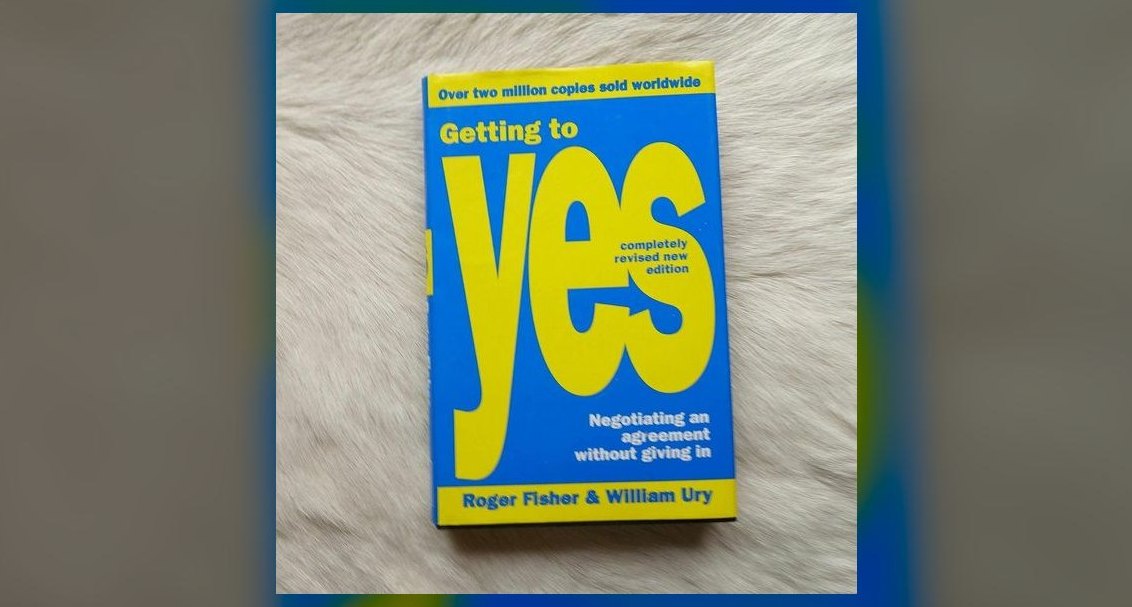 pulse-recentGetting to Yes by Roger Fisher and William Ury — Top 10 Key Takeaways for Sales Leaders in 2027
 pulse-recentWhat are the concrete steps in Sandler Rule #7 for handling a prospect's budget objection in 2027?
 pulse-recentInsight Selling by Mike Schultz and John Doerr — Top 10 Key Takeaways for Sales Leaders in 2027
 pulse-recentThe Sandler Rules by David Sandler — Top 10 Key Takeaways for Sales Leaders in 2027
 pulse-recentWhat are the concrete steps in Strategic Selling for building a sales plan in 2027?
 pulse-booksRework by Jason Fried and David Heinemeier Hansson — Cliff Notes Summary