


Trillion Dollar Coach by Eric Schmidt, Jonathan Rosenberg & Alan Eagle — Cliff Notes Summary
Quality
Certified
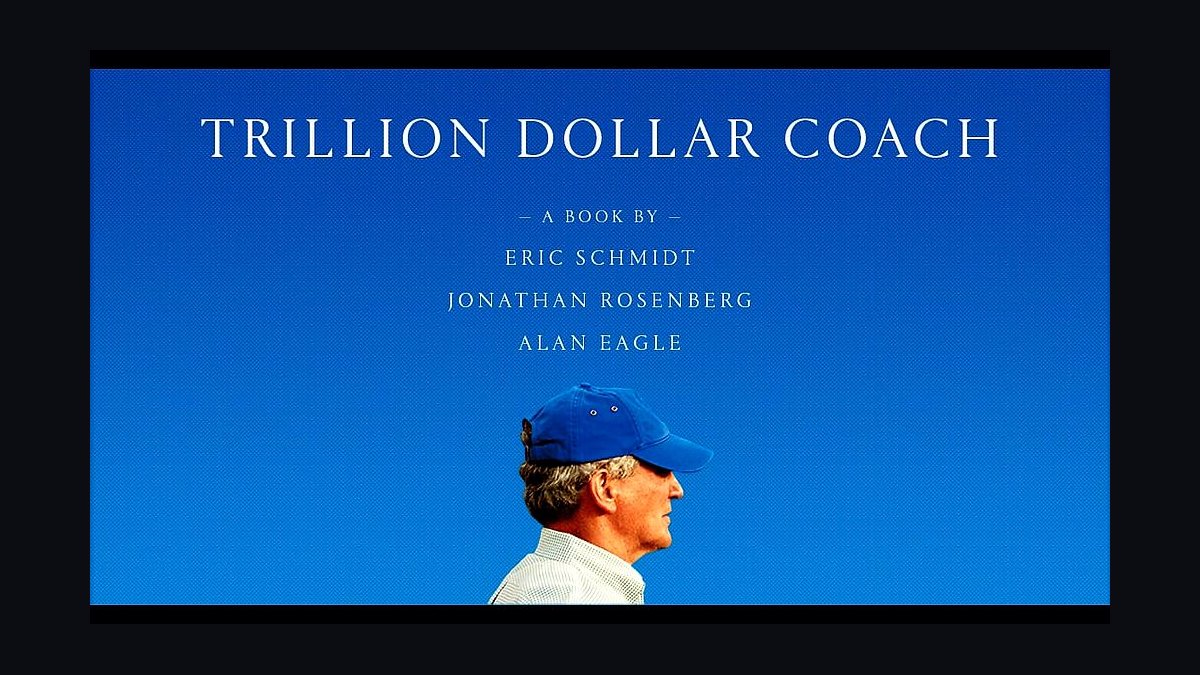
Trillion Dollar Coach: The Leadership Playbook of Silicon Valley's Bill Campbell (HarperBusiness, 2019) by Eric Schmidt (former Google CEO/Chairman), Jonathan Rosenberg (former Google SVP Products), and Alan Eagle is the operating manual of the executive coach who quietly shaped the careers of Steve Jobs, Larry Page, Sergey Brin, Sundar Pichai, Sheryl Sandberg, Tim Cook, Jeff Bezos, Marissa Mayer, Dick Costolo, Brad Smith, and John Donahoe. Bill Campbell — a former Columbia football coach who pivoted into business and became COO of Apple, CEO of Intuit, and the trusted advisor to nearly every Sand Hill Road board — coached companies whose combined market cap exceeded $2 trillion by 2025. The book distills the 45 principles Campbell ran on, organized into four pillars: the manager as coach, build community inside and outside work, trust is the foundation, and love your people.
For CROs, VP-Sales, and RevOps leaders in 2027, the book is a corrective to the data-only management trend. Campbell coached the most data-driven leaders in tech history — Google's executive team — and his repeated message was that the human layer (psychological safety, trust, the elephant-in-the-room, the "first team" loyalty, the team-first ego, the love-your-people premise) is what unlocks the data layer. The frameworks below are the Tuesday-morning ops manual Campbell used in his weekly 1:1s with Larry Page, his weekly staff-meeting facilitation at Intuit, and his board-coaching pattern with Apple.
The chapters below walk Campbell's full playbook and translate it for the 2027 RevOps operator.
Chapter 1 — The Caddie and the CEO
The book opens with Schmidt's first encounter with Campbell. John Doerr at Kleiner Perkins suggests Schmidt, the newly-installed Google CEO, accept a coach. Schmidt — three years into the job, a Princeton PhD, former CEO of Novell — initially resists. "I don't need a coach." Doerr is direct: "Every successful person has a coach." Campbell shows up and within three meetings has restructured how Google's executive team runs.
The opening chapter establishes Campbell's two non-negotiable traits: he never wrote anything down, and he never spoke publicly about who he coached. The Schmidt-Page-Brin trio kept Campbell's role quiet for nearly 15 years. The result was a coach who could say the unsayable in any room without political consequence.
The CRO parallel: every CRO needs a Campbell figure — usually an ex-CRO who has retired, an executive coach, a former boss, or a trusted board member — who can say what your direct reports cannot and what your CEO will not. The biggest predictor of CRO survival past 24 months is whether they have built that relationship.

Chapter 2 — Your Title Makes You a Manager, Your People Make You a Leader
Campbell's first management principle: management is a craft, and the craft begins the day you are responsible for someone else's performance. The principle has a brutal corollary: the leader who skips the management craft never becomes a leader at scale.
The chapter unpacks Campbell's five non-negotiables for the manager-as-coach:
- Run the 1:1 like a craft, not a chore. Campbell's 1:1 template: start with the personal ("how was the weekend?"), move to the professional, end with the team and the company. Never skip the personal — the personal is the data layer everything else sits on.
- Hire the right people, then create the environment. Campbell coached against the "lone-wolf genius" hiring pattern. Hire for smarts, hard work, integrity, and grit — in that order — and fire fast when integrity is the missing one.
- Decide as the manager of last resort, not first resort. The principle Campbell drilled into Schmidt: let the team decide whenever possible. The manager's job is to convene the right people, ensure all viewpoints are heard, and make the call only when consensus stalls.
- Communicate the why before the what. Reps execute 3x better when they understand the strategy. The CRO who rolls out a comp plan without the why this plan now is rolling out a compliance exercise.
- Make the team's reputation your reputation. Campbell told Pichai on his first day as Google CEO: "It's not about you. The teams will measure you by how their reputations grow under you."
Chapter 3 — Win With the Best Idea, Not the Loudest Voice
Campbell's most-cited principle in the Schmidt-Rosenberg era: the best idea wins, regardless of who proposed it or what title they hold. The principle sounds obvious. The discipline it requires is rare.
The execution mechanism is the "trip report" opener Campbell taught Schmidt for every executive staff meeting. The first 10 minutes of every Google E-staff meeting were trip reports — what each executive had seen, learned, or heard since the last meeting. The format had three properties: (1) it was personal, not corporate — what *you* saw, (2) it was specific — a customer story, a competitor signal, a product insight, (3) it built shared context before any decisions were debated.
The trip report mechanism solves three RevOps problems at once: it levels the room before hierarchy kicks in, it surfaces field intel the CRO would never see otherwise, and it builds the relational fabric that makes hard decisions easier to land. CROs who adopt the trip-report opener in their weekly Monday sales-leadership meeting report 40-60% better cross-functional alignment within one quarter.
The second mechanism: assign a "first chair" to controversial decisions. The first chair owns the decision recommendation and the final call. Everyone else is a contributor. The first-chair pattern prevents decision-by-committee paralysis while preserving the best-idea-wins ethic.
Chapter 4 — Build an Envelope of Trust
Trust is Campbell's central currency. The chapter defines trust operationally: trust is the willingness to be vulnerable based on positive expectations of another's actions. Five trust-builders Campbell drilled:
- Confidentiality is sacred. Campbell never repeated what was said in a coaching session. Never. Not to Schmidt about Page, not to Page about Schmidt, not to anyone about anyone. The reputation took 20 years to build and was non-negotiable.
- Loyalty is reciprocal and long. Campbell's loyalty to his coachees survived corporate fights, layoffs, and acquisitions. He coached Marissa Mayer at Google, then continued coaching her after she left for Yahoo, then continued after she was fired. Loyalty doesn't end at the door.
- Speak truth, demand truth. Campbell was famous for the "BS" call-out. In meetings, when an executive started spinning, Campbell would interrupt: "That's BS. What's actually going on?" The bluntness was earned through years of demonstrated care.
- Hold the room when it's hot. When the CRO and CMO are in open conflict in front of the CEO, the trusted coach slows the room down, names what is actually happening, and forces both sides to articulate the interest under the position.
- Make the invisible visible. Campbell's gift was naming the elephant in the room before anyone else dared. "Sundar, I notice you keep deferring to Larry on this — what do you actually think we should do?"
Chapter 5 — Team First, Always
Campbell's "first team" doctrine: the first team of any executive is their peer group at their level, not the team that reports to them. The CRO's first team is the CEO, CFO, CMO, and CPO. The VP-Sales's first team is the other VPs. When a CRO acts as if their direct reports are their first team — protecting them in cross-functional fights, pushing their headcount asks against company priorities, treating the C-suite as adversaries — the company optimizes locally and fails globally.
The first-team doctrine has three operational consequences:
- In conflict, side with the company first, your function second. The CRO who tells the CEO "I'll back the CFO's call on the comp budget even though my team won't love it" earns the trust capital that funds later asks.
- Reps respect a CRO who fights for the company more than one who fights only for them. The reps see the long game. The CRO who picks every fight with marketing about lead quality looks tribal; the one who works the lead-quality problem in the first-team room looks like a leader.
- The first team meeting is the most important meeting on your calendar. The Monday E-staff. The Wednesday GTM leadership. The Friday QBR. Show up prepared, fight in the room, and present one face to the company after.
Chapter 6 — Aberrant Geniuses, Assholes, and Liars
Campbell's most controversial chapter. He had a famously generous tolerance for "aberrant geniuses" — high-performing individuals with quirky, difficult, or abrasive personalities. Steve Jobs, Larry Ellison, Andy Grove, and Marissa Mayer all qualified. Campbell coached them because the company gained more from the genius than it lost from the friction.
But Campbell drew a hard line: he had zero tolerance for two behaviors — lying and putting their own interest ahead of the team's. Aberrant genius was tolerable; integrity violations were not. The line was clear: a brilliant engineer who screamed at people in meetings could be coached; a brilliant engineer who lied about a missed milestone or stole credit was out.
The CRO translation: every sales org has 1-2 aberrant-genius reps — the ones who close massive deals, ignore the CRM, skip pipeline calls, and grind on the SEs. The Campbell rule says keep them, coach them, but draw the line at integrity. The rep who closes 200% but cooks the forecast, sandbags the pipeline, or steals deals from teammates is out — regardless of their number.
The corollary for hiring: Campbell's hiring filter was smart, hardworking, high-integrity, grit, in that exact order. He coached Schmidt to hire for those four traits and fire fast when integrity proved the missing one. The "fire fast" principle applied within 90 days of seeing the integrity signal.
Chapter 7 — The Power of Love
The chapter that the engineering-led Silicon Valley culture least expected from a coach: love your people. Campbell's argument: work is one of the most important parts of a person's life, and the leader who treats it as transactional underuses the most powerful motivator in the workplace.
Campbell's love-your-people practices:
- Bring your whole self to work. Campbell asked about kids, partners, parents, pets, hobbies — every single meeting. The personal opener was not small talk; it was data collection about how to manage the human.
- Celebrate wins out loud, in front of the team. When an engineer shipped a feature, when a rep closed a logo, when a PM hit a launch — Campbell wanted the celebration public and specific. Vague "great work team" emails do not register.
- Be present in hard moments. When Steve Jobs got the cancer diagnosis, Campbell walked the neighborhood with him every Sunday. When Susan Wojcicki's son died, Campbell was at the house. The presence built the trust bank that funded the harder professional conversations.
- Hug your people, literally. Campbell was famous for bear hugs. The physicality signaled what words couldn't: I see you, I value you, you are part of this team. The 2027 update is more nuanced about touch consent, but the principle — physical, in-person presence as the proof of caring — stands.
- Send the gap email. When a leader misses a moment — forgets a milestone, skips a celebration, lets a person down — send the acknowledgment-and-repair note within 24 hours. The repair is more bonding than the original moment would have been.
Chapter 8 — The Yardstick: What Did You Build?
Campbell's final principle: the measure of a leader is what they built that outlasted them. The yardstick isn't your title, your peak revenue number, or your exit comp. It is the bench of leaders you developed, the culture you established, and the company that thrives 5 years after you leave.
Campbell coached his executives to ask three questions at every annual review:
- Who on my team is ready for a bigger role in the next 12 months?
- What system, process, or capability have I built this year that will outlive my tenure?
- What did I teach my direct reports that they will teach their direct reports?
The CRO version of the yardstick is brutal. A CRO who left a $50M-to-$200M ARR run with no successor ready, no documented playbook, no bench of VP-Sales-ready talent, and a comp plan only they understood built nothing. The CRO who left at $200M with a clear successor, a documented sales operating system, three VP-Sales-ready directors, and a comp model the next CRO could iterate on built something durable.
Chapter 9 — How Bill Campbell Ran Staff Meetings

The book's most operationally useful chapter for new managers. Campbell's staff-meeting template:
- Trip reports (15 min). Each exec shares one customer, competitor, or team insight from the past week.
- Operations review (20 min). Numbers, dashboards, KPIs — the data layer, but always after the human layer.
- Big decisions / strategic issues (40 min). Two or three deep-dive topics, with a first chair named for each.
- Looming clouds (10 min). What's coming over the horizon that the team should see.
- Wrap-up rituals (5 min). Celebrations, acknowledgments, personal milestones.
Total: 90 minutes. Campbell ran this template for 20 years at Intuit, then again with the Google E-staff. The format scales from a 4-person startup leadership team to a 12-person FAANG executive committee.
The CRO sales-leadership version: replace trip reports with field reports (one deal story per VP, one customer signal, one competitive intel item). Replace operations review with pipeline + forecast walk (the weekly dashboard). Replace strategic issues with a single deep-dive (territory model, comp plan, segment strategy, hiring plan). Keep looming clouds and wrap-up rituals intact.
Chapter 10 — The Coach's Coach: How to Find and Use Your Own Campbell
The book closes with a meta-chapter: how do you, the reader, get a Campbell? The authors are honest — there was only one Bill Campbell, and he is gone (died 2016). But the archetype can be sourced.
The criteria for finding your coach:
- Operating experience at your level or one above. Theoretical coaches can't pattern-match your reality.
- No conflict of interest. Not a board member, not a peer, not anyone whose compensation depends on you.
- Willingness to say hard things. The coach who agrees with you 80% of the time is wasting your money.
- Confidentiality as a non-negotiable. If they gossip about other clients, they will gossip about you.
- Long-horizon orientation. Coaches who push for quick wins miss the multi-year leadership development.
The CRO 2027 reality: hire your coach within the first 90 days of any new CRO role. Budget $15,000-$40,000/year depending on the coach's seniority. Meet bi-weekly. The ROI is catastrophic-loss-avoidance — the coach who saves you from one bad VP hire, one premature reorg, or one CEO conflict has paid for five years of fees.
Operator Reading Plan for 2027 CROs
Read Trillion Dollar Coach alongside three companions: High Output Management by Andy Grove for the operating cadence, The Hard Thing About Hard Things by Ben Horowitz for the crisis playbook, and Multipliers by Liz Wiseman for the team-leverage frameworks. The four together form the leadership operating system every CRO should internalize within their first 12 months.
Apply Campbell's playbook to four 2027 RevOps moments:
- Weekly 1:1 with each direct report. Open with the personal, hold the invisible visible standard, end with their biggest blocker.
- Monday sales-leadership staff meeting. Run the Campbell template — trip reports, ops review, one deep-dive, looming clouds, rituals.
- Quarterly board update. Show the bench you are building, not just the number you hit.
- Annual planning offsite. End with each exec naming what they will build this year that outlasts their tenure.
FAQ

Q: Was Bill Campbell really worth the title "Trillion Dollar Coach"? Yes — measured by the combined market cap of the companies he coached during his active tenure. Apple (~$3.5T at 2026 peak), Google (~$2.1T at 2026), Intuit (~$180B), plus smaller advisory roles at Twitter, Yahoo, Amazon, eBay, and Andreessen Horowitz portfolio companies. By any reasonable accounting, Campbell's coaching footprint covers more than $2 trillion of enterprise value.
Q: How is this book different from a generic executive-coaching book? Most coaching books are theory plus archetypal examples. Trillion Dollar Coach is a case study written by three people who were directly coached by Campbell for 15+ years each. Schmidt, Rosenberg, and Eagle interviewed 80+ former Campbell coachees for the book — including Tim Cook, Sheryl Sandberg, Dick Costolo, Brad Smith, and John Donahoe. The result is densely sourced, not generic.
Q: What is the single most underrated Campbell principle? The trip-report opener. It is mechanical, takes 15 minutes, requires no special skill, and transforms how an executive team operates within 4-6 weeks. Most leadership teams spend the first 30 minutes of their staff meetings on logistics; replacing those 30 minutes with structured trip reports is the single highest-leverage meeting change a new CRO can make.
Q: Does the "love your people" framework hold up in 2027 with remote and hybrid teams? The principle holds, the execution evolves. Replace hugs with deliberate video presence (camera on, full attention, no laptop multitasking), annual in-person team gatherings, handwritten notes for milestones, and personal milestone tracking (a shared doc with each report's life events). The medium changes; the signal that the leader sees you as a whole person does not.
Q: How does the "first team" doctrine apply if my CEO is the problem? This is the hardest application of the framework. Campbell coached executives through CEO conflicts at Apple, Intuit, and Google. The advice was consistent: try to fix it in private for 6-12 months, escalate through the board if private fails, and leave with grace if escalation fails. The first-team doctrine does not mean tolerate dysfunction — it means don't go to war in the public arena while you're still trying to work it.
Q: Where does Campbell disagree with most modern leadership advice? On vulnerability. The 2020s leadership canon (Brené Brown, Adam Grant, Simon Sinek) emphasizes vulnerability as a leadership tool. Campbell was suspicious of performative vulnerability — the leader who shares their struggle in a Town Hall to seem relatable. His version was private vulnerability with the people who have earned it, and public competence and confidence with everyone else. The distinction is sharp and worth holding onto in 2027.
Bottom Line
Run your CRO calendar through Bill Campbell's filters in 2027: open every 1:1 with the personal, run the staff meeting on the trip-report template, fight as the first team even when your direct reports won't love it, tolerate aberrant genius but never integrity violations, and measure your year by what you built that will outlast you. The CROs who internalize Campbell's playbook build organizations that survive the leadership transition; the ones who don't leave behind orgs that collapse within 6 months of the handoff.
Related on PULSE
- Trillion Dollar Coach by Schmidt Rosenberg Eagle — Cliff Notes Summary
- The Lean Startup by Eric Ries — Cliff Notes Summary
- The Sales Boss by Jonathan Whistman — Cliff Notes Summary
Sources
- Schmidt, Eric; Rosenberg, Jonathan; Eagle, Alan. *Trillion Dollar Coach: The Leadership Playbook of Silicon Valley's Bill Campbell.* HarperBusiness, 2019. ISBN-13: 978-0062839268. 240 pages.
- Author biographies. Eric Schmidt was Google CEO (2001-2011) and Executive Chairman (2011-2017). Jonathan Rosenberg was SVP of Products at Google (2002-2011). Alan Eagle was Director of Executive Communications at Google. All three were directly coached by Campbell for 10+ years.
- Bill Campbell biographical timeline. Columbia football head coach (1974-1979), Apple VP Marketing (1983-1987), Claris CEO (1987-1990), GO Corp CEO (1990-1994), Intuit CEO (1994-2000) and Chairman until 2016, Apple board (1997-2014), Google board advisor (2001-2016). Died April 18, 2016.
- Publisher page (HarperCollins): harpercollins.com/products/trillion-dollar-coach-eric-schmidtjonathan-rosenbergalan-eagle — full chapter list and reader's guide.
- Companion materials: *How Google Works* (Schmidt & Rosenberg, Grand Central, 2014, ISBN 978-1455582341) — earlier Schmidt-Rosenberg book that mentions Campbell only in passing; *Trillion Dollar Coach* is the dedicated follow-up. Companion website: trilliondollarcoach.com with leader-facing tools.
- Independent coverage: *Harvard Business Review*, "What Bill Campbell Taught Silicon Valley" (Apr 2019); *The Information*, "Inside Bill Campbell's Coaching Method" (May 2019); *Fortune*, "The Coach Who Built Silicon Valley" (Apr 2016, obituary).
- Academic references: Campbell's coaching practice is now studied in the Stanford GSB "Interpersonal Dynamics" course curriculum and the Harvard Business School "Authentic Leadership Development" elective. The book is on the Andreessen Horowitz recommended reading list for portfolio CEOs.
This page will be disappearing soon. Save it to your device for $1 — or read it free while it is here.
@Kory-White- · if Venmo asks, the last 4 of my number are 2012
This page is gone.
This one is off the shelf now. $1 keeps it on your phone for good — the whole page, pictures and diagrams included.
 pulse-recentSales Engagement by Manny Medina — Top 10 Key Takeaways for Sales Leaders in 2027
 pulse-recentHow do you implement the Sandler Rules by David Mattson in your first 30 days as a new sales manager in 2027?
 pulse-booksTop 10 practical takeaways from Atomic Habits for building a new routine in 2027.
 pulse-recentThe Challenger Customer by Brent Adamson — Top 10 Key Takeaways for Sales Leaders in 2027
 pulse-recentThe Collaborative Sale by Keith Eades — Top 10 Key Takeaways for Sales Leaders in 2027
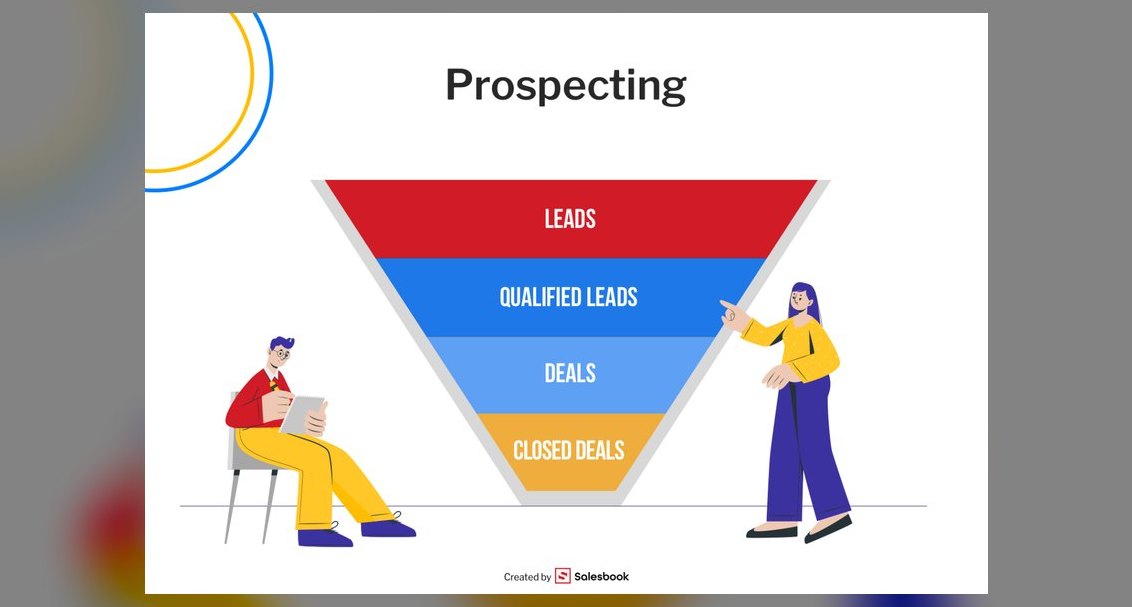 pulse-recentHigh-Profit Prospecting by Mark Hunter — Top 10 Key Takeaways for Sales Leaders in 2027
 pulse-recentGetting to Yes by Roger Fisher and William Ury — Top 10 Key Takeaways for Sales Leaders in 2027
 pulse-recentSandler Rule #1: What is the first concrete step to build a prospect's trust in a sales conversation in 2027?
 pulse-recentBlueprints for a SaaS Sales Organization by Jacco van der Kooij — Top 10 Key Takeaways for Sales Leaders in 2027
 pulse-recentStrategic Selling by Robert Miller and Stephen Heiman — Top 10 Key Takeaways for Sales Leaders in 2027