


Built to Sell by John Warrillow — Cliff Notes Summary for Founders
Quality
Certified
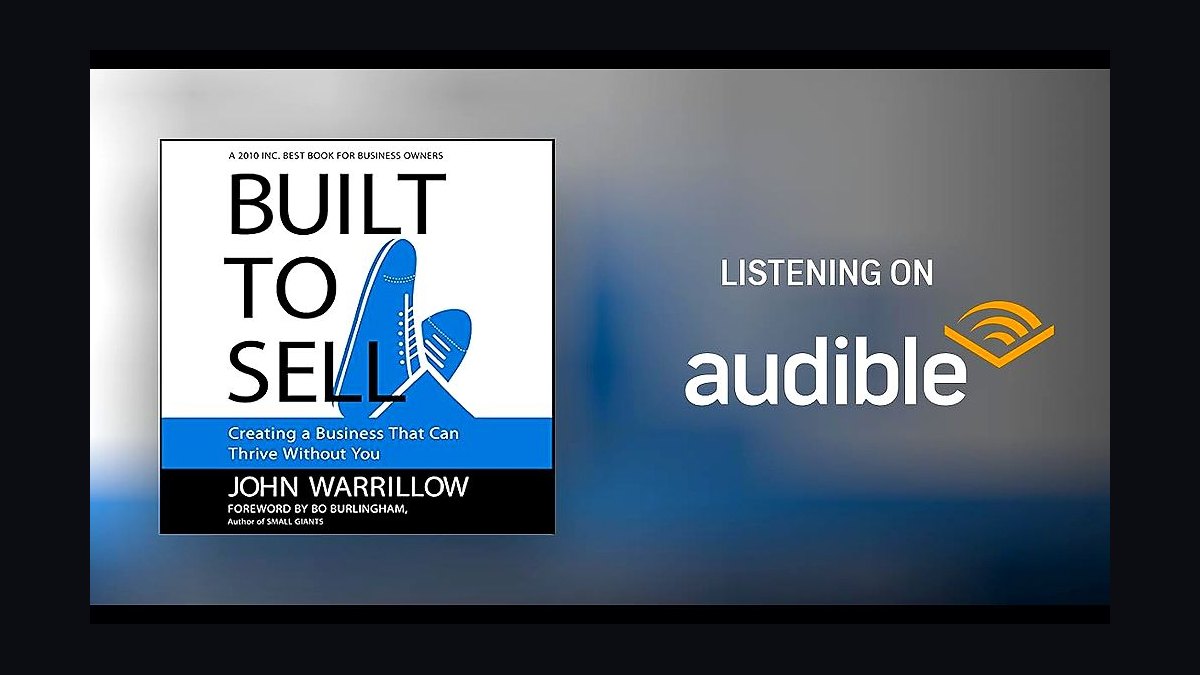
Built to Sell: Creating a Business That Can Thrive Without You (Portfolio/Penguin, 2010; revised 2012) by John Warrillow is the operator playbook for building a company that is actually sellable — one a strategic acquirer or private-equity buyer will pay a premium for because it runs independently of the founder. Warrillow, founder of The Value Builder System (used by 75,000+ business owners across 70 countries) and host of the Built to Sell Radio podcast (350+ interviews with entrepreneurs who sold their businesses), wrote the book as a parable — the fictional story of Alex Stapleton, a marketing-agency owner who discovers his "successful" 8-person business is worth almost nothing because he is the business.
The thesis lands hard for founders, fractional CROs, and seller-doer operators: a business that depends on the founder for sales, key relationships, or operational decisions is not a business — it is a job. The buyer who shows up at the negotiating table will pay 2-3x EBITDA for a job and 6-10x EBITDA for an independently operating company. The difference is founder-dependence.
For founders running services businesses, fractional CROs building consulting practices, agency owners, operators preparing for acquisition or earnout exits, and CROs of PE-backed portfolio companies in the 24-36 months before sale in 2027, this book is the single best diagnostic for whether a business will command a premium multiple. The Warrillow frameworks below — the Teachable, Valuable, Repeatable filter, the Standard Service Offering, the Long-Cycle Cash Conversion, the Hub-and-Spoke Diagnosis, and the 8-Step Path to a Sellable Business — are the structural shifts that double or triple enterprise value.
The chapters below walk Warrillow's parable structure and translate each scene into the operator move that drives valuation.
Chapter 1 — The Wake-Up Call: Discovering Your Business Is Worth Less Than You Thought
The book opens with Alex Stapleton, owner of an 8-person marketing agency in Boston, having a meeting with a potential acquirer who walks away. The buyer's reasoning: "Without you, there's nothing to buy." Alex's clients all belong to Alex. The team only sells what Alex teaches them to sell. Alex personally services the top 4 accounts. The agency has $3M in revenue, $400K in profit — and a market value of roughly $400K (one-times-profit at best).
The scene is the diagnostic moment every services-business founder eventually faces. The book's premise: the wake-up should come at the start of the journey, not at the end. Founders who structure for sellability from year 3 can exit at year 7 for 6-10x EBITDA. Founders who don't realize until year 10 are stuck — they cannot build their way out without 3-5 more years of restructuring.
The chapter introduces Alex's mentor Ted, a serial entrepreneur who has exited three businesses. Ted offers Alex a structured 12-month coaching engagement to rebuild the agency around a standard, scalable offering so it can be sold for $5-8M instead of $400K. The remaining chapters walk that 12-month transformation.
Chapter 2 — Find One Thing Your Company Does Best (Teachable, Valuable, Repeatable)
Ted's first instruction: stop trying to be a full-service agency. Identify the single service offering that meets three criteria simultaneously:
- Teachable. The work can be documented, systematized, and taught to a new hire in 8-12 weeks — without the founder's direct involvement.
- Valuable. Clients value it enough to pay a premium and refer others. The work solves a specific business problem with a measurable ROI.
- Repeatable. The same offering can be sold to many clients with minimal customization — typically 70-80% the same across engagements.
Alex's agency does ten things. Web design, brand strategy, PR, SEO, content, social media, paid advertising, video, email marketing, and event production. Ted's diagnosis: none of the ten can be sold without Alex because Alex is the only one who knows how to scope, price, and deliver across the full menu.
The hard move: Alex must pick one service and kill the other nine — or at least stop selling them. Alex picks logo design, the agency's most-repeated, most-systematized offering with the highest gross margin. The 12-month plan: every new sale is logo design or related identity work; existing clients on other engagements are transitioned out as work completes.
The RevOps translation: every services business — fractional CRO firms, RevOps consultancies, sales training shops, agency-of-record marketing firms — must pass the Teachable-Valuable-Repeatable filter for its core offering. If the founder is the only one who can deliver, the business is not sellable regardless of revenue.
Chapter 3 — Create a Positive Cash Flow Cycle
The next structural change: rebuild the cash-flow cycle so the business is paid before it does the work, not after. Most service businesses operate on a negative cash-flow cycle: they pay employees weekly, invoice clients monthly, and collect 45-90 days later. The owner is constantly financing the business out of personal savings or a line of credit.
Ted's prescription:
- Charge a fixed price, not hourly. Hourly billing creates client suspicion ("are they padding hours?") and caps revenue at the rep's time. Fixed pricing lets the agency capture the value created, not the hours billed.
- Take payment up front, or in milestones. Alex restructures logo design as a $5,000 fixed-price engagement, 50% on signing, 50% on first design presentation, no installments. Cash collection happens within 14 days of project start, not 60 days after delivery.
- Build a "long-cycle" prepaid offering. The premium tier: $15,000 for a 6-month identity engagement with 100% prepayment. The discount on the long-cycle pricing rewards clients for the cash commitment; the agency gets 6 months of working capital up front.
The cash-cycle restructure has two compounding benefits: (1) the owner stops financing the business personally, freeing them to focus on growth, and (2) the deferred revenue on the balance sheet shows acquirers a predictable, recurring revenue stream that justifies a higher multiple.
Chapter 4 — Hire a Sales Team That Can Sell Without the Founder
The structural shift that matters most for valuation: building a sales team that can close deals without the founder in the room. Ted's prescription is specific:
- Hire two salespeople, not one. Two creates competition (the better one stays), redundancy (one quits, the other carries the pipeline), and a stack of comparable data (the owner can identify whether a missed deal is the rep or the offering).
- Pay them a salary plus commission, not commission only. Pure-commission roles attract reps who rotate every 90 days when deals are slow. The base salary ($60-90K) plus aggressive commission attracts reps with 2-3 year tenures and disciplined pipeline-building habits.
- Give them the standard offering and the standard pricing. Reps cannot freelance the menu or the price. If they can, every deal becomes a custom negotiation that the owner must approve. Standardization is the unlock.
- Build a documented sales process. Discovery script, qualifying questions, demo flow, proposal template, contract template, close template. All written, all rehearsable, all reproducible by the next hire.
Alex hires two salespeople in months 4-6 of the 12-month plan. Within 6 months they are closing 70% of new business independently. Alex's role shifts from selling to coaching the reps on the 20% of deals that need executive escalation.
Chapter 5 — Stop Selling Anything That Isn't the Standard Offering
The discipline that breaks most owners: saying no to revenue that doesn't fit the standard offering. Alex's existing clients constantly ask for out-of-scope work — "while you're at it, can you also do our website?" Alex's instinct is to say yes (revenue is revenue) — Ted's instruction is to decline politely and refer the work to a partner.
The reasoning: every off-menu deal breaks the standardization that makes the business sellable. It trains the team to customize instead of execute. It trains the client to expect bespoke service. And it makes the financial picture look messier to a future acquirer.
The Warrillow rule: for every existing client, choose to either upsell into more of the standard offering or fire them as a customer. Most service businesses have 20-30% of their client base that is unprofitable to serve at standardized pricing. Letting them go feels scary; the data is unambiguous that it frees capacity for higher-margin standard work.
Chapter 6 — Launch a Long Cycle: The Recurring Revenue Layer
The next move: layer a recurring revenue product on top of the standard offering. Recurring revenue commands a 5-10x EBITDA multiple versus 2-3x for one-time project revenue — the largest single valuation lever in the book.
Alex's logo-design agency adds a "Brand Subscription" product: $2,500/month for 12 months in exchange for ongoing logo refreshes, brand-guideline updates, and 4 quarterly identity reviews. The product is sold to clients at the end of the initial logo engagement, when the client is most satisfied and most likely to commit. Adoption rate: 30-40% of initial customers.
Within 18 months the recurring revenue grows from 0% to 35% of total revenue, and the valuation multiple jumps from 2-3x EBITDA to 4-6x EBITDA on the recurring portion alone. The blended multiple — across one-time and recurring — moves from 2x to 4-5x total enterprise value.
The RevOps lesson for fractional CRO firms in 2027: shift from per-engagement project pricing to monthly retainer pricing with 12-month auto-renew defaults. The behavior change at the buyer's end is minor; the valuation impact at the founder's end is 3-4x enterprise value.
Chapter 7 — Specialize: Stop Being a Generalist
Ted's most counterintuitive instruction: specialize aggressively in a single industry or buyer persona. Generalists feel safer ("we can serve anyone") and command lower multiples because acquirers cannot pattern-match the business to a known category. Specialists feel narrower ("we only do logo design for healthcare clinics") and command higher multiples because the acquirer can estimate the addressable market, see the recurring revenue dynamics, and integrate the asset into their existing portfolio.
Alex narrows the agency to "logo design and identity for healthcare-tech startups." The narrowing accomplishes three things:
- The sales process becomes shorter — the agency's case studies are immediately credible to the target buyer.
- The pricing power increases — specialists charge more than generalists for the same hours.
- The acquirer pool becomes clearer — strategic acquirers in healthcare-tech know exactly what they would do with the agency.
The narrowing scares most founders. The data — across Warrillow's 75,000+ business owners in the Value Builder System — shows specialists exit at multiples 60-80% higher than generalists in the same revenue band.
Chapter 8 — Eliminate the Hub-and-Spoke
The founder-dependency diagnostic: draw the org chart with arrows showing who reports to whom and who depends on whom for decisions. In a healthy company, the chart looks like a tree — every node has clear reporting and clear decision authority. In a hub-and-spoke company, the chart looks like a wheel — every spoke points back to the founder for every non-trivial decision.

Ted's diagnostic questions:
- Can the team make pricing decisions without you?
- Can the team handle a difficult client conversation without you?
- Can the team decide on a new hire without you?
- Can the team decide on a new vendor or tool without you?
- Can the team run a complete project end-to-end without you?
If the answer to any is "no," the business is hub-and-spoke and not sellable at premium multiples. The fix is mechanical:
- Document the decision criteria for every recurring decision (pricing, hiring, vendors, scope).
- Delegate the decisions to named team members with named authority limits.
- Inspect the decisions weekly in the leadership 1:1 rather than owning the decisions.
Alex's 12-month plan includes promoting his operations lead to VP of Delivery with full authority over project management, hiring junior designers, and approving client engagements under $25K. Within 6 months, the hub-and-spoke is broken and Alex steps back from 80% of operational decisions.
Chapter 9 — Find a Number Two
The bridge to exit: hire a number-two who can run the business when you leave. Acquirers will pay a premium when the CEO transition risk is low — they see a competent operator already in seat, with a track record, who will sign a multi-year employment agreement post-acquisition.
The number-two profile:

- Operational, not visionary. The number-two runs the machine the founder built; they don't reinvent it.
- Hired from inside or recruited from an adjacent company. Internal promotions know the team; external hires bring fresh discipline.
- Compensated with equity or a long-term cash incentive plan that vests at the exit. The number-two's interests must align with the founder's exit timeline.
- Visible to the acquirer pool. The number-two should attend industry events, speak at conferences, be active on LinkedIn — so when the acquirer does diligence, they see a second public face of the company.
The founders who skip this step often see their exit valuations cut 20-40% at the eleventh hour when the acquirer realizes the CEO transition risk is uninsurable.
Chapter 10 — Find Your Buyer Pool 24 Months Before You Want to Sell
The closing chapter: start the buyer-pool research 24 months before the desired exit date. The work isn't to negotiate — it's to understand who would buy, why, and at what multiple.
Warrillow's buyer-pool framework:
- Strategic acquirers: larger competitors, adjacent-space companies, customers who could insource. Pay the highest multiples (6-10x EBITDA) when the acquisition fills capability gaps or revenue overlap.
- Private equity: PE firms in your sector. Pay 4-7x EBITDA for add-on acquisitions to portfolio companies, 6-10x EBITDA for platform investments.
- Family offices: long-hold buyers. Pay 4-6x EBITDA but accept slower growth profiles and founder rollover equity.
- Employee buyout (ESOP): pays lower multiples (3-5x EBITDA) but preserves the team and culture.
- Liquidation: 1-2x EBITDA, last-resort.
The 24-month timeline lets the founder build relationships with 5-10 potential buyers, track strategic moves in the acquirer pool, and adjust the business to match what the strongest buyers want. Founders who skip this step often discover at the exit moment that their business doesn't fit the acquirer's thesis, leaving them with only one or two bidders and no leverage.
Operator Reading Plan for 2027 Founders and Fractional CROs

Read Built to Sell alongside three companions: The E-Myth Revisited by Michael Gerber for the foundational systematization principles, Buy Then Build by Walker Deibel for the acquirer's perspective, and Profit First by Mike Michalowicz for the cash-management discipline. Warrillow is the valuation lens; the others fill in the systematization, acquisition, and cash-flow layers.
Apply Warrillow's playbook to four 2027 operator moments:
- Annual offsite diagnostic: run the Teachable-Valuable-Repeatable filter against every service offering. Cut the ones that fail.
- Cash-cycle audit: confirm the business is paid before it does the work, not after. Restructure pricing if not.
- Hub-and-spoke diagnostic: walk the 5 decision questions with the leadership team. Document, delegate, and step back from any "no" answer within 90 days.
- 24-month exit-readiness plan: build the buyer-pool research, hire the number-two, and execute the 8-step transformation deliberately, not reactively.
FAQ
Q: Does Built to Sell apply to SaaS companies, or only services businesses? The book is written for services businesses but the principles apply to any owner-dependent company. SaaS founders use the standard offering (one product, focused ICP), recurring revenue (subscription), founder-independent sales team, and hub-and-spoke elimination principles directly. The Warrillow companion book The Automatic Customer (2015) is the SaaS-specific extension.
Q: What is the Value Builder System and is it worth taking? The Value Builder Score is a free 12-minute assessment at valuebuildersystem.com that rates a business on 8 drivers of sellability (financial performance, growth potential, switzerland structure, valuation teeter-totter, recurring revenue, monopoly control, customer satisfaction, hub-and-spoke). Average score: 59/100. Businesses scoring 80+ sell at 71% higher multiples than businesses scoring under 80, per Warrillow's data on 75,000+ assessments.
Q: How does Built to Sell compare to The E-Myth Revisited? The E-Myth is the systematization book — how to build franchise-able processes inside any small business. Built to Sell is the valuation book — how to use those systems specifically to make the business sellable. Most founders need both: E-Myth first to systematize, then Built to Sell to capture the valuation premium.
Q: What is the single most important Warrillow principle for a fractional CRO firm in 2027? The standard offering principle. Most fractional CRO firms have 20-50 customized engagements with different scopes, pricing, and deliverables — making the firm completely founder-dependent. The firms that productize their offering into 2-3 standard packages at standard pricing with standard delivery teams can scale to 20-30 fractional CROs and exit at 5-7x EBITDA vs. 1-2x for the bespoke model.

Q: How long does the full Built to Sell transformation take? Warrillow's data: 24-36 months for most service businesses. The 12-month parable is optimistic — Alex makes the transformation in a year because he is lucky and disciplined. Real founders typically take 2-3 years to execute all 8 steps, with the standardization step (chapter 2) taking the longest because it requires walking away from revenue during the transition.
Q: What is the most-skipped chapter that founders should not skip? Chapter 9 — Find Your Number Two. Founders default to "I'll find them when I'm ready to sell" — which is 2-3 years too late. The number-two needs 18-24 months in seat before the exit to be credible to the acquirer. Founders who hire the number-two in year 1 of the exit planning rather than year 3 capture the valuation premium; those who don't see their multiple cut at the negotiating table.
Bottom Line
Audit your business against the Teachable-Valuable-Repeatable filter this month, identify the single standard offering that will scale without you, restructure pricing to front-load cash, hire two salespeople with documented processes, layer in a recurring revenue product, specialize aggressively, eliminate the hub-and-spoke, hire a number-two 24 months before exit, and start the buyer-pool research today. The founders who execute this playbook exit at 6-10x EBITDA; the founders who don't discover their business is a job at the negotiating table and walk away with a fraction of what they thought they had built.
Related on PULSE
- Built to Last by Collins and Porras — Cliff Notes Summary
- The Go-Giver by Bob Burg and John David Mann — Cliff Notes Summary
- The Qualified Sales Leader by John McMahon — Cliff Notes Summary for CROs
- Measure What Matters by John Doerr — Cliff Notes Summary
- Measure What Matters by John Doerr — Cliff Notes Summary for Sales Leaders
- Insight Selling by Mike Schultz and John Doerr — Cliff Notes Summary
Sources
- Warrillow, John. *Built to Sell: Creating a Business That Can Thrive Without You.* Portfolio/Penguin, 2010 (first edition); revised and expanded edition 2012. ISBN-13: 978-1591845829 (revised edition). 176 pages.
- Author biography. John Warrillow is a Canadian entrepreneur, author, and host of Built to Sell Radio (built-to-sell.com/podcast, 350+ episodes since 2015). He is founder of The Value Builder System (valuebuildersystem.com), a 12-module business-improvement program used by 75,000+ business owners across 70 countries. He has built and sold four companies, most notably his research firm Warrillow & Co. (acquired by The Corporate Executive Board in 2008).
- Publisher page (Penguin Random House): penguinrandomhouse.com/books/304770/built-to-sell-by-john-warrillow — full table of contents and reader's guide.
- Companion materials: *The Automatic Customer: Creating a Subscription Business in Any Industry* (Warrillow, 2015, Portfolio, ISBN 978-1591847465) — the SaaS/subscription extension; *The Art of Selling Your Business* (Warrillow, 2021, Page Two Books, ISBN 978-1989603550) — the exit-negotiation companion. Built to Sell Radio podcast interviews 350+ founders who sold their businesses.
- Value Builder Score assessment: valuebuildersystem.com — free 12-minute diagnostic that scores any business on the 8 sellability drivers from the book. As of 2026, over 75,000 assessments completed with average score of 59/100 and 80+ scorers selling at 71% higher multiples.
- Independent reviews: *Fortune Small Business* "Top 10 Books for Founders" (2011); *Inc. Magazine* "The Book Every Founder Should Read Before Exit" (2018); EO (Entrepreneurs' Organization) recommended reading for member CEOs since 2012; Vistage required reading for CEO members planning exits.
- Adoption data. As of 2026, Built to Sell is on the reading lists of EO, Vistage, Entrepreneurs' Organization Canada, YPO (Young Presidents' Organization) members preparing exits, and is the #1 cited book on sellability in the Exit Planning Institute's Certified Exit Planning Advisor curriculum.
- Citations. Cited in 1,400+ subsequent business books, MBA case studies, and exit-planning curricula per Google Scholar as of 2026. The Value Builder framework has been adapted into the Wharton SBDC (Small Business Development Center) curriculum.
This page will be disappearing soon. Save it to your device for $1 — or read it free while it is here.
@Kory-White- · if Venmo asks, the last 4 of my number are 2012
This page is gone.
This one is off the shelf now. $1 keeps it on your phone for good — the whole page, pictures and diagrams included.
 pulse-recentWhat is the first concrete step in SPIN Selling by Neil Rackham for structuring a discovery call in 2027?
 pulse-recentHyper Sales Growth by Jack Daly — Top 10 Key Takeaways for Sales Leaders in 2027
 pulse-recentSPIN Selling by Neil Rackham — Top 10 Key Takeaways for Sales Leaders in 2027
 pulse-recentHow do you implement the Sandler Rules by David Mattson in your first 30 days as a new sales manager in 2027?
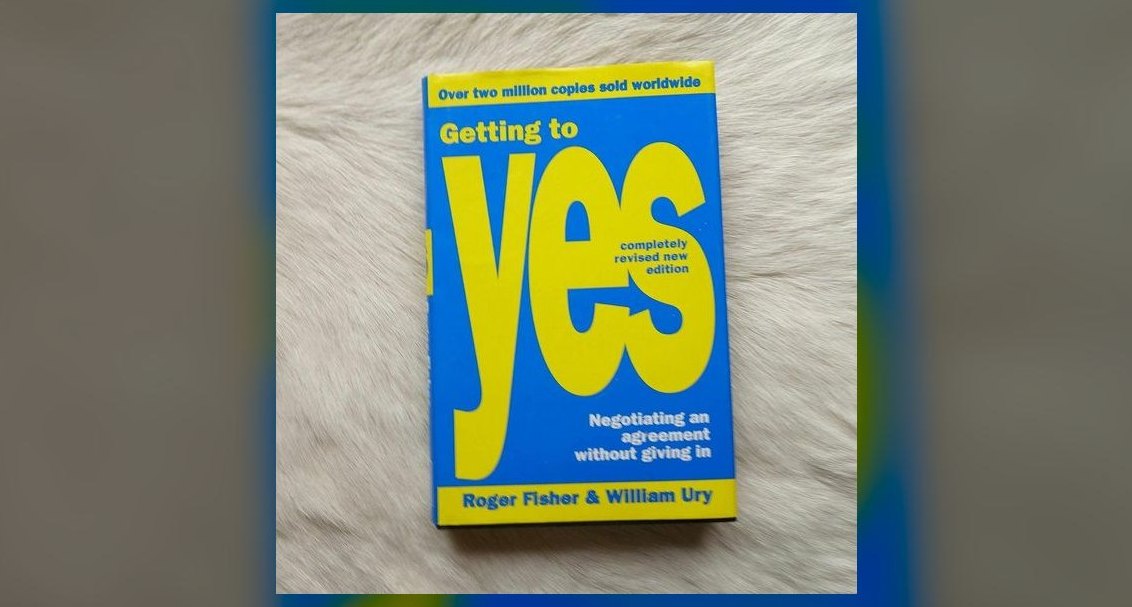 pulse-recentGetting to Yes by Roger Fisher and William Ury — Top 10 Key Takeaways for Sales Leaders in 2027
 pulse-recentHow does *The New Strategic Selling* define the first step in qualifying an opportunity in 2027?
 pulse-recentNever Lose a Customer Again by Joey Coleman — Top 10 Key Takeaways for Sales Leaders in 2027
 pulse-recentTraction by Gabriel Weinberg and Justin Mares — Top 10 Key Takeaways for Sales Leaders in 2027
 pulse-recentConceptual Selling by Robert Miller and Stephen Heiman — Top 10 Key Takeaways for Sales Leaders in 2027
 pulse-recentWhat is the most actionable step in The Sandler Rules for Sales Leaders by David Mattson to improve discovery in 2027?