


The Sales Acceleration Formula by Mark Roberge — Cliff Notes Summary
Quality
Certified

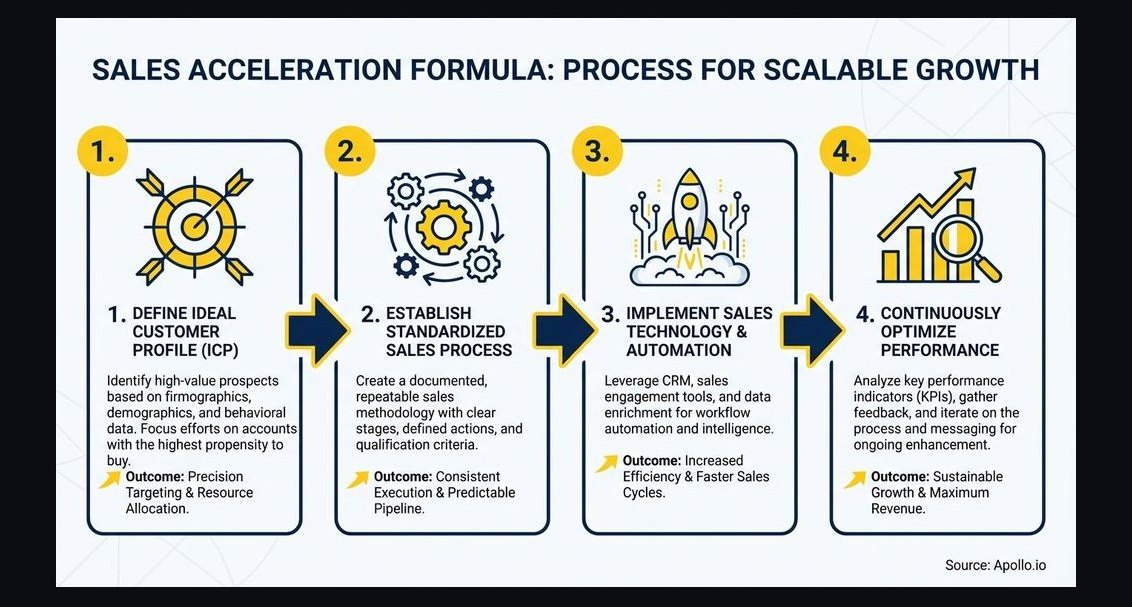
The Sales Acceleration Formula is Mark Roberge's 2015 book arguing that sales is an engineering discipline, not an art. Drawing on scaling HubSpot from zero to roughly $100 million in revenue, Roberge lays out four repeatable systems — hiring, training, management, and demand generation — each built on scored inputs, controlled experiments, and data over instinct.
What the book actually is and why revenue leaders still read it
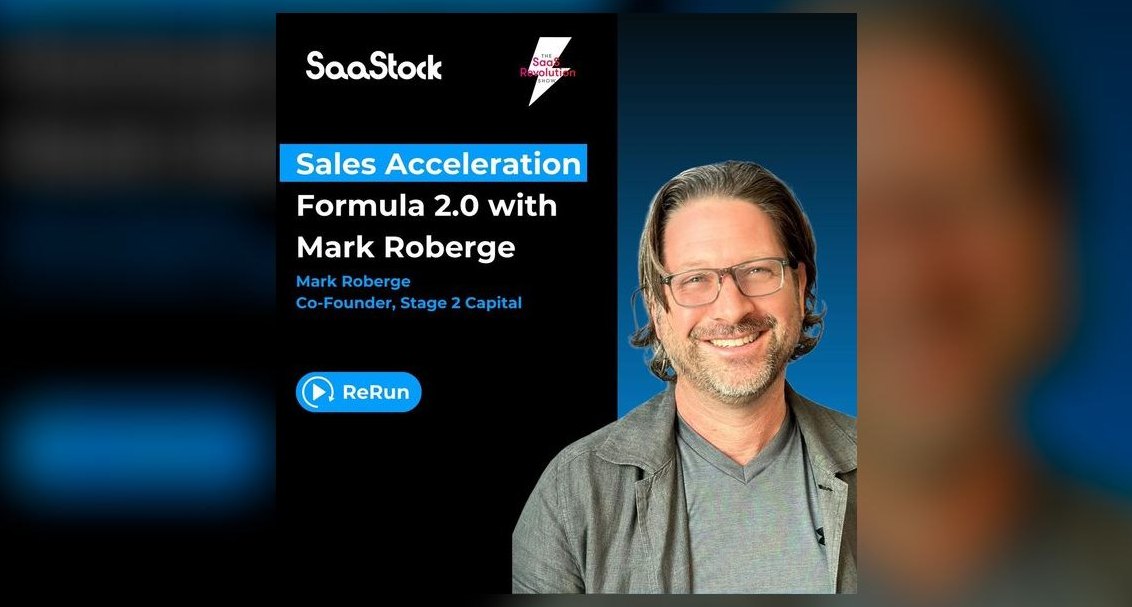
Mark Roberge was HubSpot's fourth employee and its first sales hire, an MIT-trained engineer with no sales background who ended up as Chief Revenue Officer of the sales division through the company's IPO era. That biography is the whole argument in miniature. Someone who had never carried a bag was handed the job of building a sales organization, and instead of copying the conventional playbook he did what engineers do: he broke the problem into input variables, instrumented them, and tested his way to an answer.
The book that came out of that experience is short, blunt, and structurally simple. It is organized around four formulas — the Sales Hiring Formula, the Sales Training Formula, the Sales Management Formula, and the Demand Generation Formula — plus supporting chapters on compensation design, sales-marketing alignment, and technology. Each formula follows the same shape: here is the intuition-driven default most companies use, here is why it fails to scale, here is a measurable substitute, and here is the data from HubSpot showing the substitute worked.
What makes it durable more than a decade later is the meta-argument rather than the specific tactics. Roberge's real claim is that a sales organization is a system with knowable inputs and observable outputs, and that a leader who refuses to instrument the inputs is flying blind no matter how good their gut is. That framing survived the collapse of several of the book's specific tactics. Inbound-only demand generation aged badly; the idea that you should run your demand engine as a measured funnel with defined conversion rates between stages did not.
The audience matters too. This is a book for the person building or rebuilding a sales org, not for the individual rep looking to close more deals. There is almost nothing here about objection handling technique or negotiation tactics. It sits alongside books like *Predictable Revenue* and *From Impossible to Inevitable* in the "how do you construct the machine" shelf rather than the "how do you sell" shelf. Read it against *The Challenger Sale* and you get a useful contrast: Challenger tells you what the rep should do in the room; Acceleration Formula tells you how to find, build, and manage the person who will be in the room.
A word on scale, because it determines whether the book is useful to you. Roberge's methods depend on having enough reps and enough hiring volume to see statistical patterns. A five-person sales team cannot run cohort experiments — the sample size is noise. What a small team can steal is the discipline: write down the traits you think predict success, score candidates against them, and go back six months later to check whether your predictions were any good. That habit costs nothing and works at any size.
The four formulas, step by step
The hiring formula comes first because Roberge considers it the highest-leverage decision a sales leader makes. His approach was to define the traits he believed predicted success, score every candidate against those traits during the interview loop, hire, and then — critically — go back a year later and correlate the interview scores against actual performance. Traits that predicted nothing got dropped. Traits that predicted well got weighted up. The scorecard was a living model, recalibrated as evidence accumulated.
The traits that emerged at HubSpot were coachability, curiosity, prior success, intelligence, and work ethic. The headline finding, and the one most often quoted, is what did *not* make the list: prior sales experience. Roberge concluded that for HubSpot's particular buyer — a marketing manager who wanted to be taught something — the classic outgoing, confident, quota-crushing profile was not the winning one. The buyer wanted a teacher. So he hired people who could learn fast and explain things, then trained the sales mechanics.
That finding is frequently misread as "sales experience doesn't matter." It doesn't generalize. Roberge's own advice is that every company must derive its own trait list from its own data, because the ideal profile is a function of the buyer persona and deal complexity. His prescribed exercise is deliberately simple: interview your top five reps and your bottom five reps with the same questions about background, daily routine, and worldview, then look for what separates the groups. Build the scorecard around the separators, not around what reps are supposed to look like.
The training formula replaced the industry default — shadow a top rep for a couple of weeks — with a structured curriculum ending in a certification gate. The logic is control theory more than pedagogy. If every new rep receives a different informal onboarding, you can never tell whether a cohort's performance difference came from hiring, training, territory, or luck. Standardize the training and you have isolated a variable. Roberge's curriculum covered the company's methodology and product, deep study of the buyer persona, the defined sales process, and graded role-plays that reps had to pass to get live accounts.
The management formula is a rep development scorecard: each rep scored periodically across the skill dimensions that make up the sales process — prospecting, discovery, demonstration, negotiation, closing — with the manager identifying the single weakest dimension and concentrating coaching there. Roberge is emphatic on the "one thing" rule: managers who try to fix three behaviors at once fix none. Force-rank the gaps, work the biggest one for a defined period, re-measure, then move to the next.
The demand generation formula is the inbound engine: educational content targeted at the buyer persona, organic search traffic, gated content offers converting visitors to leads, behavioral and demographic lead scoring to separate the ready from the browsing, fast routing to SDRs with an aggressive speed-to-lead commitment, qualification against a defined framework, and handoff to account executives. Roberge's discovery framework at HubSpot was GPCT — Goals, Plans, Challenges, Timeline — an alternative to BANT designed to center the buyer's objectives rather than the seller's checklist.
What it costs, how long it takes, and what to expect
The honest answer on timeline is that this is a multi-year build, and Roberge says so. The hiring model in particular has a structural lag: you cannot know whether your interview scores predicted anything until the reps you scored have been selling long enough to produce a meaningful performance signal. For most B2B motions that means at least three to four quarters between making a hiring bet and learning whether the bet was informed. The first calibration cycle is therefore roughly a year out, and the model only gets genuinely useful after two or three cycles.
Training is faster to stand up and faster to show results. A structured onboarding curriculum with a certification gate can be built in a quarter and its effect on ramp time is visible within a couple of cohorts. This is usually the right place for a new sales leader to start, precisely because the feedback loop is short: measure days-to-first-deal and days-to-full-quota-attainment before and after, and the delta shows up quickly.
Cost splits into three buckets. First, manager time — the scorecard, the weekly one-to-ones with structured agendas, the call reviews. Roberge's model assumes managers spend a substantial share of their week actually observing selling rather than reporting on it, which in practice means holding manager-to-rep ratios tight, typically somewhere in the six-to-eight range rather than the twelve-plus you see in cost-optimized orgs. Second, enablement headcount to own and maintain the curriculum. Third, tooling: a CRM configured so the funnel stages are actually instrumented, and conversation intelligence so call review does not depend on managers sitting in on live calls.
That last point is where the economics improved dramatically since the book. Roberge built his management formula in a pre-conversation-intelligence era, when reviewing a rep's calls meant a manager physically listening in. Modern call recording and transcription platforms make the observe-diagnose-prescribe-measure loop enormously cheaper. A manager can review the relevant three minutes of a discovery call instead of the whole hour. If anything, the tooling shift makes Roberge's coaching model more feasible now than when he wrote it, not less.
On expected outcomes, be careful with the HubSpot numbers. The book reports specific funnel conversion rates and lead volumes from a specific company, in a specific market, at a specific moment when organic search was cheap and inbound content was a genuine arbitrage. Treating those figures as targets for your own business is exactly the intuition-over-evidence error the book warns against. The transferable practice is to establish your own baseline conversion rates between each funnel stage, then run changes as time-bound tests against that baseline.
One adjacent cost worth naming: the political cost. Instrumenting a sales org means making individual manager and rep performance legible in a way it was not before. Some of your managers will resist a scorecard because it exposes coaching quality. Some reps will resist call recording. Roberge's answer — that data ends arguments — is true but understates how much organizational friction sits in the first year of the change. Budget for that as seriously as you budget for the software.
Where teams get this wrong
The most common failure is cargo-culting HubSpot's specific answers instead of copying the method. Teams read that prior sales experience did not predict performance and adopt a policy of hiring non-sellers, without ever checking whether that holds for their own buyer. If you sell a complex, seven-figure, multi-stakeholder deal into a skeptical procurement process, the traits that win are not the traits that won for a self-serve marketing tool in 2010. Run Roberge's exercise, get your own answer, and be genuinely open to it being the opposite of his.
Second failure: scoring candidates without ever closing the loop. Plenty of organizations build an interview scorecard, use it faithfully, and never once go back to correlate scores against results. That is a rubric, not a formula. The entire value of the hiring formula lives in the calibration step — the moment you discover that the trait you were most confident about predicts nothing and quietly drop it. Without that step you have added process without adding information.
Third: coaching everything at once. Managers with a five-dimension scorecard in front of them find it almost irresistible to walk the rep through all five in a one-to-one. The rep leaves with five things to work on and changes none of them. Roberge's discipline of picking exactly one gap and holding it for a defined period feels slower and produces faster change. The related trap is diagnosing symptoms rather than root cause — a rep with poor close rates often has a discovery problem, and coaching closing technique will do nothing.
Fourth: treating compensation as payroll administration rather than as a strategy lever. Roberge's compensation chapters are among the book's most practically useful, and the arc he describes is worth understanding. HubSpot's early plan paid on new bookings; reps duly closed anything that moved, including poor-fit customers who churned quickly. Reworking the plan so that commission depended on the customer sticking around changed rep behavior almost immediately — reps started disqualifying prospects they previously would have pushed through. A later iteration rewarded longer contract commitments and shifted deal structure accordingly. The lesson is that reps optimize precisely for what you pay them for, so the plan is a statement of strategy. The corollary Roberge stresses: change one variable per cycle, or you will not know which change produced the behavior shift.

Fifth: importing the inbound demand model wholesale in a market where it no longer arbitrages. The 2014 version of this formula worked because educational content ranked cheaply and buyers researched through search. That channel is vastly more crowded now, generative answer engines have changed how buyers find information, and content that would have ranked then is commodity now. Teams that read the demand chapter as a channel prescription rather than as a measurement discipline end up pouring budget into a channel with far worse economics than Roberge enjoyed. The durable part is the funnel instrumentation and the service-level agreements between marketing and sales, not the specific bet on blogging.
Sixth, and subtler: running experiments without pre-registering the success metric. Roberge's experimentation discipline requires you to state, before the test, what result would count as a win and how long you will run it. Teams that skip this end up in the classic pattern of declaring victory on whichever metric happened to move, or killing a change after three weeks because a noisy month looked bad. If your sales cycle is ninety days, a thirty-day test tells you almost nothing about revenue and you need to define an earlier leading indicator instead.
Choosing which formula to implement first
Sequencing matters more than most readers realize, because the four formulas have dependencies. Training is only measurable if hiring is consistent enough that cohorts are comparable. Management scorecards only work if there is a defined sales process to score against. Demand generation experiments are only readable if the sales side converts predictably enough that funnel changes show through. Attempting all four simultaneously in a small org is the fastest way to learn nothing.

The practical entry point depends on where your pain actually is. If reps ramp slowly and inconsistently, start with training — shortest feedback loop, cheapest to build, most visible early win. If you are hiring fast and a worrying share of hires wash out, start with hiring; the payoff is slow but the cost of continuing to guess compounds. If your headcount is roughly stable but performance varies wildly across reps who were hired and trained the same way, that is a management and coaching problem, and the scorecard is your lever. If sales capacity sits idle waiting on pipeline, the constraint is demand generation and nothing you do on the sales side will move revenue.
There is an adjacent decision worth folding into this: whether your motion is sales-led at all. A meaningful share of software companies now run product-led or hybrid motions where self-serve usage generates the qualification signal that Roberge's lead scoring was approximating. In that world the demand chapter's specifics matter far less — the product is the top of funnel — but the hiring, training, and management formulas transfer almost unchanged, because you still need to find, build, and coach the humans who handle expansion and enterprise deals.
Similarly, if you sell enterprise, expect to substitute frameworks rather than abandon the method. GPCT was designed for a fast mid-market motion. Complex enterprise deals with many stakeholders and formal procurement generally need a heavier qualification structure — MEDDIC-family frameworks are the common substitute. The scorecard logic is identical; only the fields change. Roberge himself acknowledges the SMB-to-mid-market origin of the examples and argues the scientific approach transfers even when the tactics do not.
The alignment chapter people skip and shouldn't
Tucked behind the four headline formulas is a chapter on sales and marketing alignment that has arguably had the broadest downstream influence of anything in the book. Roberge's mechanism is a two-way service level agreement. Marketing commits, in writing and in numbers, to deliver a specified volume of qualified leads at a specified quality. Sales commits, equally explicitly, to work every one of those leads within a defined window, make a defined minimum number of attempts, and return structured feedback on why a lead was rejected.

Both sides are measured on their half publicly and frequently, ideally with the numbers on a shared dashboard reviewed in leadership meetings rather than argued about in private. The cultural effect is the point. The perennial marketing-versus-sales fight — leads are junk versus sales doesn't work them — becomes an empirical question with an owner and a number attached. Disagreements escalate to the chief executive with data rather than festering.
The mechanism generalizes well beyond marketing and sales, which is why it shows up in so many revenue operations playbooks. The same two-way commitment structure works between SDR and AE teams, between sales and customer success at handoff, between sales and solutions engineering for demo support, and between revenue operations and everyone for data quality. Anywhere two functions hand work across a boundary and blame each other for the result, a bilateral SLA with numbers on both sides converts an argument into a measurement.
Two implementation notes that trip people up. First, the feedback loop from sales back to marketing is the half that gets dropped, and it is the half that makes the system learn — without structured rejection reasons, marketing has no signal to improve targeting with. Second, the SLA numbers must be renegotiated on a regular cadence as the business changes; a lead volume commitment set for last year's quota becomes either meaningless or punitive within a couple of quarters.
Related questions
Do I need a large sales team for these formulas to work?
The statistical parts need volume — you cannot correlate interview scores against performance with five data points. But the disciplines scale down fine: write your trait hypotheses down, score consistently, and revisit them later. Small teams get the rigor without the statistics.
Is the inbound demand generation chapter still worth reading?
Yes, as measurement discipline rather than channel advice. The funnel instrumentation, stage conversion tracking, speed-to-lead commitment, and two-way SLA all transfer. The specific bet on high-volume educational blogging reflects a search-cost arbitrage that has largely closed since 2014.
How does this compare to Predictable Revenue?
Predictable Revenue focuses narrowly on outbound prospecting and role specialization — separating prospectors from closers. The Sales Acceleration Formula is broader and more methodological, covering hiring, training, coaching, compensation, and demand generation as one instrumented system. They are complementary rather than competing.
What should I read alongside it?
For rep-level technique, The Challenger Sale. For enterprise qualification, MEDDIC-family material. For pricing and packaging, Monetizing Innovation. Roberge's book deliberately leaves technique and pricing alone and focuses on organizational construction.
Does Roberge address customer success or post-sale motion?
Only indirectly, mainly through compensation design — the shift to paying reps on retained revenue is effectively a post-sale alignment mechanism. The book predates the maturation of customer success as a discipline and does not treat it as a fifth formula.
FAQ
Who is Mark Roberge and why should I trust the book?
Roberge was an early HubSpot employee who built and led its sales organization through the company's high-growth years, and he came to the job as an MIT-trained engineer rather than a career seller. He later became a senior lecturer at Harvard Business School and a venture investor focused on go-to-market. The credibility comes less from the title than from the fact that the book shows its work — it reports the experiments, including the ones that failed.
Is this book only useful for B2B SaaS companies?

The examples are heavily SaaS, but the underlying methods — score your hiring inputs, standardize onboarding, coach one gap at a time, treat compensation as a strategy lever — apply to any organization with enough sales headcount to observe patterns. The parts that transfer least well are the demand generation specifics, which assume a digital, self-educating buyer and a short-to-medium sales cycle.
Does the book dismiss soft skills like empathy and relationship building?
No, and this is a frequent misreading. Roberge's position is that traits like curiosity and coachability are real and consequential, and that the mistake is treating them as unmeasurable. He wants them defined, scored during interviews, and validated against outcomes rather than assessed by gut feel and then never checked.
How long before these changes show up in revenue?
Training changes show in ramp metrics within a cohort or two. Coaching changes show in skill-level metrics within a quarter. Hiring model improvements take a year or more to validate because you must wait for scored hires to produce performance data. Compensation changes shift rep behavior fast but take a full cycle to show in retained revenue.
What is GPCT and should I use it instead of BANT?
GPCT stands for Goals, Plans, Challenges, Timeline — HubSpot's discovery framework, designed to organize the conversation around the buyer's objectives rather than the seller's qualification checklist. It suits transactional and mid-market motions well. For complex enterprise deals with formal procurement and many stakeholders, most teams use a heavier framework instead.
What is the single most actionable thing to do after reading it?
Write down the three to five traits you believe predict success in your organization, score every candidate against them in a consistent format, store the scores, and put a calendar reminder six to twelve months out to check whether the scores predicted anything. That one loop is the formula in miniature and costs nothing to start.
Sources
- https://www.wiley.com/en-us/The+Sales+Acceleration+Formula%3A+Using+Data%2C+Technology%2C+and+Inbound+Selling+to+go+from+%240+to+%24100+Million-p-9781119047070
- https://www.hbs.edu/faculty/Pages/profile.aspx?facId=828045
- https://blog.hubspot.com/sales
- https://www.stage2.capital/
- https://www.saleshacker.com/
- https://hbr.org/topic/subject/sales
- https://www.gartner.com/en/sales
- https://firstround.com/review/
Related on PULSE
- Predictable Revenue by Aaron Ross — Cliff Notes Summary
- The Challenger Sale — Cliff Notes Summary for Revenue Leaders
- High-Profit Prospecting by Mark Hunter — Cliff Notes Summary & Key Takeaways
- The Advantage by Patrick Lencioni — Cliff Notes Summary for Sales Leaders
- Major Account Sales Strategy by Neil Rackham: Summary, Key Lessons, and RevOps Takeaways
This page will be disappearing soon. Save it to your device for $1 — or read it free while it is here.
@Kory-White- · if Venmo asks, the last 4 of my number are 2012
This page is gone.
This one is off the shelf now. $1 keeps it on your phone for good — the whole page, pictures and diagrams included.
 book-summaryThe Sales Acceleration Formula by Mark Roberge — Cliff Notes & Chapter-by-Chapter Summary
 pulse-recentSPIN Selling by Neil Rackham — Top 10 Key Takeaways for Sales Leaders in 2027
 pulse-recentSnap Selling by Jill Konrath — Top 10 Key Takeaways for Sales Leaders in 2027
 pulse-recentHow do you implement the Sandler Rules by David Mattson in your first 30 days as a new sales manager in 2027?
 pulse-recentWhat is the first concrete step in SPIN Selling by Neil Rackham for structuring a discovery call in 2027?
 pulse-recentHow I Raised Myself from Failure to Success in Selling by Frank Bettger — Top 10 Key Takeaways for Sales Leaders in 2027
 pulse-recentTraction by Gabriel Weinberg and Justin Mares — Top 10 Key Takeaways for Sales Leaders in 2027
 pulse-recentThe Sales Acceleration Formula by Mark Roberge — Top 10 Key Takeaways for Sales Leaders in 2027
 book-summaryMajor Account Sales Strategy by Neil Rackham: Summary, Key Lessons, and RevOps Takeaways
 pulse-recentHow to Apply Strategic Selling — Step-by-Step Playbook in 2027