


Gap Selling by Keenan — Cliff Notes Summary
Quality
Certified

Gap Selling by Keenan (Jim Keenan, 2018) is the problem-centric sales methodology that exploded in popularity among B2B SDRs and AEs in the late 2010s and remains the #1 recommended sales book on LinkedIn in 2027. The thesis: stop selling your product. Buyers don't care about features, demos, or the seller's "value prop." They care about closing the gap between their current state and their future state — and they buy from the seller who diagnoses the gap most accurately.
Keenan's framework reframes sales as diagnostic consulting. The seller's job is to deeply understand where the buyer is today (Current State), where they want to be (Future State), and what's preventing them from getting there (the Gap). Only when the gap is fully diagnosed, quantified, and emotionally felt does the seller introduce the product — and even then, only as the bridge across the gap, not as the hero of the story.
The book attacks three sales antipatterns that dominate B2B: happy ears (hearing what you want, not what's said), show-up-and-throw-up demos, and feature-pitching before discovery. The replacement is deep discovery — sometimes 3-5 calls before a demo — built around the Current State / Future State / Gap triangle.
Below: chapter-by-chapter notes, the two diagrams (the Gap Selling Triangle and the PIC framework for problem identification), what holds up in 2027, and what every modern enterprise rep steals from this playbook.
Chapter 1 — The Problem-Centric Seller
Keenan opens with a manifesto: the average B2B salesperson is product-centric. They lead with what their product does, hoping the buyer will see the relevance. The data is brutal: product-centric pitches convert at 3-5%. Problem-centric diagnoses convert at 25-35%.
The shift: stop selling solutions, start diagnosing problems. The seller's mental model must become "I am a doctor — I cannot prescribe until I diagnose."
The Three Problem Categories Keenan introduces (referenced throughout the book):
- Physical problems — measurable, observable, often quantitative. ("Our churn is 22%.")
- Process problems — workflow breakdowns, inefficiencies, broken handoffs. ("Reps spend 8 hours/week in admin.")
- People problems — skill gaps, motivation issues, leadership voids. ("Our managers can't coach reps to MEDDIC.")
The principle: most buyers can articulate symptoms but not root causes. The seller's value is in surfacing the root-cause problem the buyer hasn't yet diagnosed.

Chapter 2 — Current State — Diagnose Where the Buyer Is Today
The chapter that defined the book's central framework: the Current State diagnosis is the single highest-leverage activity in the entire sales process. Reps who skip it lose deals; reps who over-invest in it win them.
The 5 dimensions of Current State you must uncover:
- Literal facts — what tools, processes, headcount, and metrics exist today.
- The Problems — what's broken, missing, painful, or expensive about the current state.
- The Impact — what those problems cost the business (in dollars, hours, headcount, market share).
- The Root Causes — why the problems exist (this is where most reps stop too early).
- The Emotional Toll — what the problems mean to the individuals (career risk, frustration, public failure).
Keenan's discovery rule: never present a solution until you've quantified the cost of the current state. If the buyer hasn't acknowledged a $X annual cost of doing nothing, they will never pay $Y to fix it.
The 80/20 rule of discovery: 80% of the sales conversation should be about the buyer's Current State, 20% about your product. Most reps invert this and lose.
Chapter 3 — Future State — Where the Buyer Wants to Be

Keenan distinguishes stated future state from true future state.
Stated future state: what the buyer says they want. "We want a better CRM."
True future state: the measurable business outcome that the buyer's stated want is a proxy for. "We want 20% more pipeline visibility so we can forecast within 5% accuracy and stop missing the public earnings target."
The seller's job is to interrogate stated future state until true future state emerges. Techniques:
- "What does that look like?" — forces the buyer to describe success in concrete terms.
- "How will you know you've achieved it?" — forces measurable success criteria.
- "What changes for you personally when this works?" — surfaces the emotional payoff.
- "Who else benefits?" — surfaces the broader stakeholder map (the M, E, C in MEDDIC).
The trap: reps accept the first articulation of future state and start pitching. Buyers rarely state their real future state in the first sentence — they state the socially acceptable version.
Chapter 4 — The Gap

The literal gap between Current State and Future State is where the buying decision lives.
The Gap is NOT your product. The Gap is the business outcome the buyer wants minus the business reality the buyer has today. Your product is the bridge across the gap — but if the buyer doesn't feel the gap viscerally, no bridge will get bought.
The Gap has three dimensions:
- Size — the dollar magnitude of the difference. ($2M/year)
- Emotion — what the gap means to careers, reputations, and personal stakes. (CRO's job security)
- Urgency — the timeline pressure forcing the buyer to close the gap soon vs. later. (Public earnings call in 90 days)
The Gap Question is the book's most-quoted move: "If you don't solve this, what happens 12 months from now?" This question forces the buyer to walk forward into the painful future of inaction. It surfaces urgency and emotion simultaneously.
Quantifying the gap: Keenan teaches a Gap Math exercise — together with the buyer, calculate revenue impact, cost impact, time impact, and headcount impact of not closing the gap. The result is a written business case the buyer can take to CFO and CEO.
Chapter 5 — Discovery — The Heart of Gap Selling

Keenan's PIC framework (Problem, Impact, Cause) is the operational tool for executing Current State discovery.
P — Problem Identification: what specifically is broken, missing, or painful in the current state? Use open-ended questions to surface multiple problems, then prioritize.
I — Impact Quantification: for each problem, calculate the business cost in measurable units. Revenue lost, hours wasted, headcount drag, customers churned, opportunities missed.
C — Cause Diagnosis: for each problem, drill down 3-5 levels of "why" to surface the root cause, not the surface symptom. Toyota's 5 Whys technique applied to sales discovery.
Example PIC drill-down:
- P: "Our SDRs miss quota."
- I: "We're short 30% on pipeline; CRO at risk; budget cut next quarter."
- C-Level 1: "SDRs aren't making enough dials." (surface)
- C-Level 2: "Dialing tool has 12-second latency between calls." (closer)
- C-Level 3: "Tool was free trial that auto-renewed; nobody owns the tooling decision." (closer)
- C-Level 4: "Sales Operations is reporting to Marketing instead of Sales — no advocate for sales-rep tooling." (root cause)
The reframe: the real problem is organizational structure, not dialer tooling. The seller who diagnoses to level 4 earns the right to propose a much larger solution.
Chapter 6 — Demos and Presentations the Gap-Selling Way

Keenan reserves a chapter for the antipattern every SaaS rep falls into: the show-up-and-throw-up demo.
The traditional demo: 60 minutes of feature tour, every screen, every dropdown, every integration. The buyer's eyes glaze over.
The Gap Selling demo:
- Open with a 5-minute restatement of the Current State + Gap + Future State the buyer described in discovery.
- Show ONLY the 3-5 features that map directly to the buyer's specific gap.
- For each feature shown, restate the gap it closes — "this is what handles the 8-hour-per-week admin drag your reps mentioned."
- Skip every feature that doesn't map — even if the buyer might "find it interesting."
- End with the Gap Math — restate the quantified gap and ask: "If we close this gap, what's the impact?"
The principle: the demo is a proof-point exercise, not a product tour. Every minute of demo time that isn't tied to the buyer's gap is a trust-eroding minute.
Chapter 7 — The Top Mistakes Salespeople Make

Keenan's chapter-length catalogue of the antipatterns that kill deals:
Happy Ears — hearing the buyer say "we're interested" and treating it as a buying signal when it's actually a polite hedge. The remedy: demand a specific Advance (next-meeting commitment, stakeholder intro, technical evaluation) on every call.
Premature Pitching — leading with the product before diagnosing the gap. The remedy: discipline yourself to spend 80% of the first call on Current State.
Surface-Level Discovery — accepting the buyer's first answer instead of drilling 3-5 levels deeper. The remedy: use the PIC framework with the 5 Whys technique.
Ignoring Emotion — focusing only on the rational business case while ignoring the personal stakes. The remedy: ask the personal question — "What does this mean for you personally?" — at least once per discovery call.
Avoiding Tough Questions — sellers afraid to ask about budget, decision process, or competitive alternatives. The remedy: front-load tough questions in the first 2 calls; deferring them costs deals.
Forecasting Hope — putting deals on the forecast based on buyer optimism rather than objective qualification criteria. The remedy: use MEDDIC, MEDDPICC, or BANT ruthlessly.
Chapter 8 — Objection Handling — Gap Selling Style
Keenan reframes objections: objections are gap-diagnosis failures. If a buyer objects to price, the seller didn't quantify the gap large enough. If a buyer objects to timing, the seller didn't surface enough urgency. If a buyer objects to fit, the seller didn't map features to gap.
The Objection-as-Diagnostic-Tool framework:
- "It's too expensive" → re-diagnose Impact. "Help me understand — what's the cost to the business if you don't solve this in the next 12 months?"
- "We need to think about it" → re-diagnose Urgency. "What changes in 3 months that makes the decision easier?"
- "We're going with [competitor]" → re-diagnose Differentiation. "What did they propose that closed the gap you described differently than we did?"
- "We're sticking with status quo" → re-diagnose the Cost of Inaction. "Walk me through what 'staying with current state' looks like 12 months from now."
The principle: every objection is a signal that the diagnostic phase was incomplete. Use the objection as an opportunity to re-diagnose, not a wall to handle.
What Holds Up in 2027 — and What Has Aged
What still works (and has become orthodoxy):
- The Current State / Future State / Gap framework — embedded in Force Management's Command of the Message, Winning by Design's SPICED, and MEDDPICC's "I" (Identify Pain).
- PIC framework discovery — the dominant enablement curriculum at Pavilion, Sales Assembly, and GTM Partners.
- The Cost of Inaction as a deal-acceleration lever — universal in 2027 enterprise selling.
- Demo discipline (only show what maps to the gap) — table-stakes for PLG and SLG motions alike.
- Keenan's bluntness on Happy Ears and forecasting hope — the most-cited principles in CRO post-mortems of missed quarters.
What has aged:
- Discovery-call length expectations — Keenan assumes you'll get 60-minute first calls. 2027 buyers grant 20-30 minutes initially; you need multi-call discovery to execute the full PIC.
- Multi-threaded buying committees — Gap Selling assumes a primary buyer. Modern enterprise deals have 6-12 stakeholders (per Gartner), each with their own Current State, Future State, and Gap.
- AI-augmented discovery — Gong, Chorus, and Clari Copilot now automate the PIC framework coding of discovery calls; manager coaching has shifted from "did you ask the right questions?" to "why did you not push deeper at minute 22?"
- Buyer self-research — 80% of buyers complete most diagnosis themselves before talking to a seller (Gartner 2027 data). Keenan's discovery must now layer on top of pre-existing buyer hypotheses, not start from zero.
FAQ

What exactly is the "Gap" in Gap Selling? The Gap is the distance between a buyer's current state (where they are now) and their future state (where they want to be). Keenan argues that buyers don't buy products; they buy closure of that gap. The seller's job is to diagnose, quantify, and make that gap emotionally tangible.
Is Gap Selling just another sales methodology, or is it different? It's fundamentally different from traditional product-led or feature-led approaches. Most sales training focuses on pitching value props or handling objections; Gap Selling flips that by insisting the seller become a diagnostic consultant. The product is only introduced late, as a bridge, not the hero.
How many discovery calls does Gap Selling recommend before a demo? Keenan suggests 3 to 5 discovery calls before any demo or pitch. The goal is to fully map the current state, future state, and gap — including financial and emotional impacts. Rushing to a demo before that is seen as a common antipattern.
Does Gap Selling work for all types of sales, or just B2B? It's primarily designed for complex B2B sales with longer cycles and multiple stakeholders. The methodology relies on deep diagnosis, which is less suited for low-ticket or transactional sales where buyers already know what they need. For enterprise deals, it's widely considered highly effective.

What's the biggest mistake sellers make according to Gap Selling? The biggest mistake is having "happy ears" — hearing only what confirms the seller's desire to close, rather than truly understanding the buyer's situation. This leads to premature pitching, feature-dumping, and missing the real gap. Keenan calls this the root of most lost deals.
How do you measure the "gap" in a real sales conversation? You measure it by asking diagnostic questions about the current state's costs (time, money, risk) and the future state's value. Keenan recommends quantifying the gap in terms of revenue lost, efficiency gained, or risk avoided — using the buyer's own numbers, not fabricated stats. The gap must feel real to the buyer.
Bottom Line
Gap Selling is the most operationally practical sales book of the last decade — a diagnostic methodology that turns product-pitching reps into business-problem consultants. Spend the first 80% of every deal diagnosing the gap, quantify the cost of inaction, map your product to the gap closure (and nothing else), and use every objection as a re-diagnosis prompt. Combine with MEDDPICC, SPIN questions, and AI conversation analytics to make it stick in 2027 enterprise reality.
Related on PULSE
- Gap Selling by Keenan: Summary, Key Lessons, and RevOps Takeaways
- Gap Selling by Keenan — Cliff Notes Summary & Key Takeaways
- Gap Selling — Cliff Notes Summary
- Selling the Invisible by Harry Beckwith — Cliff Notes Summary
- Secrets of Question-Based Selling by Thomas Freese: Summary, Key Lessons, and RevOps Takeaways
- SPIN Selling by Neil Rackham: Summary, Key Lessons, and RevOps Takeaways
Sources
- Keenan (Jim Keenan). *Gap Selling: Getting the Customer to Yes — How Problem-Centric Selling Increases Sales by Changing Everything You Know About Relationships, Overcoming Objections, Closing and Price.* Sales Guy Publishing, 2018. ISBN-13: 978-1732891005.
- Keenan. CEO of A Sales Growth Company — the consultancy whose curriculum operationalizes Gap Selling for B2B teams.
- A Sales Growth Company companion materials — Gap Selling Online Sales Academy, certification courses, and the Gap Selling Workshop delivered to enterprise teams.
- MEDDIC Academy and MEDDPICC.com — qualification frameworks that complement Gap Selling's diagnostic approach.
- Force Management — enterprise sales-effectiveness firm whose Command of the Message integrates Gap Selling principles into a multi-stakeholder framework.
- Pavilion and Sales Assembly — modern CRO communities where Gap Selling case studies are debated, refined, and combined with AI-driven discovery tooling for 2027 enterprise teams.
Recently Added — Related
- Selling with Noble Purpose by Lisa McLeod — Cliff Notes Summary
- Influence (New and Expanded) by Robert Cialdini — Cliff Notes Summary
- Slow Down, Sell Faster! by Kevin Davis — Cliff Notes Summary
- The Win Without Pitching Manifesto by Blair Enns — Cliff Notes Summary
- Managing Oneself by Peter Drucker — Cliff Notes Summary
This page will be disappearing soon. Save it to your device for $1 — or read it free while it is here.
@Kory-White- · if Venmo asks, the last 4 of my number are 2012
This page is gone.
This one is off the shelf now. $1 keeps it on your phone for good — the whole page, pictures and diagrams included.
 book-summaryGap Selling by Keenan: Summary, Key Lessons, and RevOps Takeaways
 pulse-recentThe Greatest Salesman in the World by Og Mandino — Top 10 Key Takeaways for Sales Leaders in 2027
 pulse-recentThe Collaborative Sale by Keith Eades — Top 10 Key Takeaways for Sales Leaders in 2027
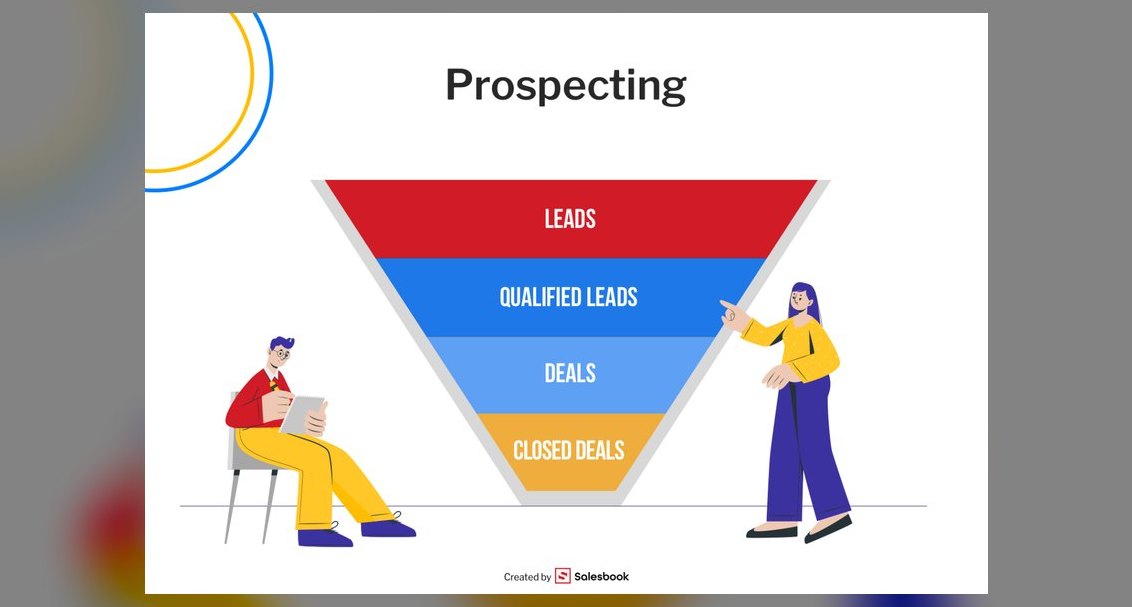 pulse-recentHigh-Profit Prospecting by Mark Hunter — Top 10 Key Takeaways for Sales Leaders in 2027
 pulse-recentStart with No by Jim Camp — Top 10 Key Takeaways for Sales Leaders in 2027
 pulse-recentCrossing the Chasm by Geoffrey Moore — Top 10 Key Takeaways for Sales Leaders in 2027
 pulse-recentSPIN Selling by Neil Rackham — Top 10 Key Takeaways for Sales Leaders in 2027
 book-summaryWhat factors drive the price of Book Summaries up or down in 2027?
 pulse-recentThe Challenger Customer by Brent Adamson — Top 10 Key Takeaways for Sales Leaders in 2027
 pulse-recentHyper Sales Growth by Jack Daly — Top 10 Key Takeaways for Sales Leaders in 2027