


Flip the Script — Cliff Notes Summary
Quality
Certified

*Flip the Script* (Oren Klaff, 2019) argues that modern buyers refuse to be sold to, so the seller's job is Inception: structure the conversation so the buyer reaches your conclusion and believes it was their own. The mechanism is status alignment, demonstrated certainty, pre-wired ideas, and familiar packaging with exactly one novel element.
The outcome you should expect from reading it
Most sales books promise a lift they cannot deliver, and it is worth being blunt about what this one actually changes. *Flip the Script* does not hand you a closing line that rescues a bad-fit deal. What it changes is the front end — the first four to six minutes of a first call, the framing of a follow-up, and the way you position a differentiator against an incumbent. Reps who drill the material tend to report the same qualitative shift: fewer calls that end in "send me some information," more calls where the buyer starts volunteering internal detail unprompted.
That shift matters because the volunteered-detail moment is the real leading indicator in complex B2B. When a buyer tells you the name of the internal skeptic, the actual budget cycle, or the reason the last vendor got ripped out, you have crossed from pitch to consultation. Klaff's entire argument is that this crossing is gated by status, not by content quality. You can have the better product and never get across.
The second outcome is diagnostic rather than tactical. A large share of reps cannot explain why a deal that looked strong went quiet. Klaff supplies vocabulary — status threat, the novelty paradox, the certainty gap — that makes post-mortems more useful. Instead of "they went dark," you get "we opened from below status and never recovered, and the demo confirmed it because we let them drive the agenda." That is a fixable diagnosis. "They went dark" is not.
Third, expect the book to make you shorter. Nearly every technique in it — the Flash Roll, the Three Ws, the one-novelty rule, the two-risks disclosure — pushes toward compression. Reps who internalize it stop delivering forty-minute overviews and start delivering ninety seconds of dense signal followed by silence. That compression is the single most transferable habit in the book, and it survives even if you reject Klaff's status framing entirely.
What you should not expect: a system for pipeline generation, territory planning, forecasting, or anything operational above the individual conversation. This is a conversation-level book. It sits alongside a methodology (MEDDIC, Challenger, Command of the Message) rather than replacing one. Teams that try to run *Flip the Script* as their qualification framework end up with charismatic reps and an unreadable forecast.
What drives that outcome — the Inception sequence
The engine underneath every technique is a five-step sequence. Klaff's framing question is: how do you get someone to do what you want without telling them what to do? His answer runs Status Alignment → Certainty → the Three Ws → Plain Vanilla plus one novelty → Pre-Wired Ideas, and each step is a precondition for the next.
Status Alignment comes first because nothing else lands without it. Klaff draws on dominance-hierarchy research to argue that buyers sort sellers within seconds into above-me, below-me, or with-me. Selling from below-me is structurally impossible — the buyer's attention has already left the room. The tactical expression is the Status Tip-Off: a small, understated signal that only a peer would produce. Politely declining a proposed meeting time and offering your own. Having a real opinion on something adjacent to the deal. Naming a mutual reference point without name-dropping it. Klaff frames these as costly signals — expensive enough that a subordinate would not risk them.
The corollary is his most contested claim: rapport-building is itself a below-status tell. Peers do not warm up with weather and weekend plans; they get to work. Whether you accept that fully or not, the underlying observation holds — the first ninety seconds of a call encode status, and most reps spend them signaling deference.
Certainty is step two, and it is where the book's signature move lives. The Flash Roll is a sixty-to-ninety-second burst of dense, technical, insider-fluent language that demonstrates expertise instead of claiming it. Klaff's own example is a banker rattling off multiples, structures, and recent comparable transactions at a pace only a practitioner could sustain. The cognitive premise is that fluency cannot be faked convincingly under time pressure — you can memorize facts, but you cannot memorize the connective tissue between them. He recommends rehearsing three distinct Flash Rolls covering your three most common objections.
The dominant failure is over-running it. A ninety-second Flash Roll stretched to five minutes stops proving competence and starts proving neediness. Klaff is emphatic: dense, then stop. The silence afterward is what installs the certainty, not the talking.
The Three Ws compress the pitch: Why do I care? What's in it for me? Why you? Every opener, first slide, or cold email should answer all three inside thirty seconds. It is not a novel framework, but Klaff's contribution is the ordering — buyer stake first, buyer benefit second, seller credentials last. Most decks invert it.
Plain Vanilla plus one novelty addresses what Klaff calls the novelty paradox: buyers say they want innovation, but genuinely novel stimuli register as threat. His fix is to package roughly ninety percent of the offering as explicitly ordinary — same integrations, same dashboards, same security posture as everyone else — and then isolate a single differentiator. The familiar bulk lets the threat response settle; the isolated novelty becomes the memorable hook instead of the rejection trigger. He is specific that the sweet spot is one differentiator, not three. Three novel claims re-trigger the threat system and the deal dies of unfamiliarity.
Pre-Wired Ideas close the loop. These are concepts already loaded in the buyer's head that your pitch can attach to, so the buyer recognizes rather than learns. Klaff's big three are Winter Is Coming (a coming shift — regulation, downturn, AI disruption — that makes inaction the risky option), 2X (you must be at least twice as good on the one dimension that matters, or the switching cost is not worth paying), and Skin in the Game (you carry personal exposure to the outcome).
Finding the buyer's pre-wired set is deliberately unglamorous work: their last handful of public posts, the company's most recent earnings call or all-hands, and one industry publication they actually cite. Twenty focused minutes usually surfaces two usable ideas. The advanced move is stacking — Winter Is Coming *and* 2X *and* Skin in the Game inside one narrative arc, so every component is something the buyer already believes.
Where it fits against the rest of the shelf
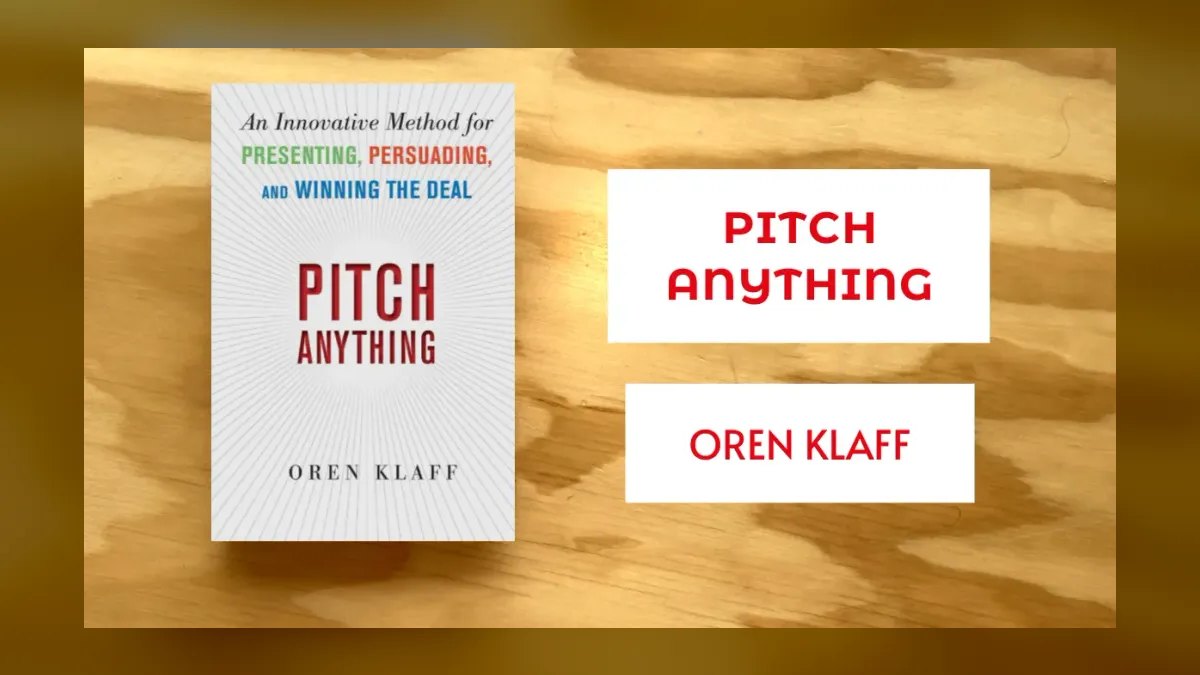
*Flip the Script* is the practical follow-up to *Pitch Anything* (2011), and the relationship between them is the most common point of confusion. *Pitch Anything* taught frame control — how to win the room. *Flip the Script* runs the opposite play: you do not win the room, you make the room invite you in. Klaff says plainly that the earlier book is built for the opening pitch, while this one is built for sustained selling against a buyer who already has all the information.
Read against the wider category, the book occupies a narrow but real slot. *Never Split the Difference* is about extracting information and managing emotion under negotiation pressure; it is downstream of Klaff, useful once you are already at the table with terms in play. *The Challenger Sale* is about teaching the buyer something commercially uncomfortable about their own business — which overlaps heavily with the Flash Roll and with Winter Is Coming, though Challenger argues from research on rep archetypes while Klaff argues from status mechanics and neuroscience-flavored intuition. *SPIN Selling* remains the more rigorous work on question sequencing and is the better first read for someone who has never sold. *Influence* is the academic parent of nearly all of it.
A reasonable sequence for a rep building a foundation: *SPIN Selling* for question discipline, *Pitch Anything* for framing, *Flip the Script* for the modern informed-buyer version of framing, then *Never Split the Difference* for the negotiation end. Klaff's material without the SPIN foundation tends to produce reps who open confidently and then have nothing to ask.
The book's declared audience is narrow and worth taking literally. Klaff writes for enterprise sellers working committee deals — the case studies come from his middle-market investment banking practice — and for founders raising capital, where status games are effectively the whole game. Transactional SMB sellers running high-velocity cycles will find the status apparatus heavy relative to the deal size. A twenty-minute call closing a four-figure annual contract does not have room for a rehearsed Flash Roll, and the Plain Vanilla move requires a buyer sophisticated enough to know what ordinary looks like.
Adjacent roles get more value than the title suggests. Solutions engineers benefit from the certainty material because the technical demo is precisely where status gets won or lost — an SE who narrates architecture at insider density earns more trust than one who walks a feature list. Customer success leaders running renewal-at-risk conversations use the pessimism reframe constantly. Agency and consulting principals pitching retainers may get the most leverage of anyone, because the buyer is explicitly evaluating the person, and Klaff's material is fundamentally about how a person is evaluated.
Benchmarks and realistic ranges
Klaff supplies a few concrete parameters, and it is worth separating what the book actually specifies from what you have to calibrate yourself.
Specified in the book: the Flash Roll runs sixty to ninety seconds. The Three Ws should be answered inside the first thirty seconds or the first slide. The novelty count is exactly one — Klaff treats three novel claims as an active failure mode, not a stylistic preference. The 2X standard means twice as good on the dimension that matters, not twice as good overall. He recommends rehearsing three Flash Rolls, one per common objection, and he describes rehearsing the opening ninety seconds of a pitch the way an actor rehearses a monologue. Two named risks, disclosed upfront, is the pessimism dosage he demonstrates repeatedly.
Not specified, and yours to calibrate: how long the drill takes to change behavior. Klaff's own recommendation is a thirty-day pattern — read the chapter, write your own version for a real deal, rehearse with a peer for roughly two weeks, then deploy live. He is explicit that reading without drilling produces zero behavior change, and that is the most honest sentence in the book. Managers running this across a team should expect the first live Flash Roll attempts to be bad. Fluency under pressure is a motor skill.
Deal-size calibration matters more than the book admits. The techniques were built for deals where a committee deliberates over weeks or months and the buying decision carries career risk. As deal size drops and cycle length compresses, the return on status work drops with it. A practical heuristic: if your cycle is under about three weeks and involves a single decision-maker, take the Three Ws and the one-novelty rule, and skip the rest. If your cycle runs a quarter or more with three or more stakeholders, the full sequence earns its rehearsal time.
Prep-time calibration is the one most teams get wrong. Klaff's pre-wired-idea research is roughly twenty minutes of reading per account — the buyer's recent public writing, the company's latest earnings call or all-hands, one publication they cite. That is a real cost, and it does not scale to a hundred-account week. Teams that adopt this successfully tend to tier it: full prep on named target accounts, a stripped version (one industry pre-wired idea reused across the segment) on everything else. The reused version works less well but costs nearly nothing.
On measurement, resist the urge to attribute win-rate movement to the book. The honest measurable is earlier and narrower: what percentage of first calls produce a scheduled next step with a named additional stakeholder? That metric moves within a few weeks of a real behavior change and is far less noisy than closed-won rate. Second useful measure — average talk-time ratio on first calls. If the compression habit is landing, the rep's share drops noticeably.
The pricing and format details are stable and easy to verify at the publisher: it is a standard business hardcover from Portfolio, available in ebook and audio, and the audio edition is a reasonable first pass for the narrative chapters. The scripts in the closing chapter are worth having in text, though — they are reference material, not listening material.
Risks, edge cases, and failure modes

The most common failure is status theater. A rep reads the dominance-hierarchy chapter, concludes that status equals assertiveness, and starts interrupting buyers and refusing meeting times as a performance. Klaff's Status Tip-Offs work because they are understated and backed by real competence. Performed without the competence underneath, they read as arrogance and torch the call faster than deference ever would. The tell is a rep who is declining meeting times but cannot answer a technical follow-up.
The second failure is the Flash Roll delivered to the wrong audience. Dense insider language proves expertise to a peer practitioner. Delivered to a generalist buyer — a CFO evaluating a technical purchase, a founder outside their domain — it reads as obfuscation and creates the exact status gap Klaff warns against, just inverted. Match density to the listener. Against a mixed committee, the safe move is one dense sentence to establish the register, then plain language.
Third, the pessimism reframe fails when the disclosed risks are fake. Naming two real risks works because volunteering them is costly. Naming two decorative risks — "we might onboard you too fast" — is a recognizable move and buyers who have seen it once discount everything that follows. If you cannot name a risk that genuinely costs you something to say, do not run the play.
Fourth, the "I want to be left alone" close is the book's most quoted line and its most dangerous. It works only after status, certainty, and pre-wired ideas have been genuinely established across prior conversations. Deployed cold, or deployed by a seller the buyer has already sorted as below-status, it reads as a bluff and gets called. Klaff frames it as the terminal move in a sequence; reps extract it as a standalone technique. That extraction is where most of the book's bad reputation comes from.

Fifth, and structurally: the book's evidence base is anecdotal and self-sourced. The case studies come from Klaff's own practice, the neuroscience references are popular-level rather than cited primary research, and there is no controlled data behind the claims. This does not make the techniques wrong — practitioner intuition about status is often ahead of the literature — but it does mean you should treat the specific numbers as heuristics rather than findings, and you should not present them internally as research-backed.
Sixth, there is a real ethical edge. Inception as described is a persuasion technique that deliberately obscures its own operation — the buyer is meant not to notice. In a genuinely good-fit deal, that is just good communication design; you are lowering resistance to a conclusion the buyer would reach anyway. In a bad-fit deal, it is manipulation with a framework. The safeguard is not in the book, so add it yourself: run the sequence only where you would be comfortable if the buyer read the chapter afterward. Reps who apply it indiscriminately generate churn, and churn is a slower, more expensive loss than the deal they saved.
Seventh, team-level adoption has a specific failure pattern. Because the material is performance-oriented, it disproportionately rewards reps who were already comfortable performing. Managers who roll it out as a blanket enablement often widen the gap between top and bottom quartile rather than lifting the floor. The material that lifts the floor is the compressible stuff — Three Ws, one novelty, two risks. The status and voice material is top-quartile amplification. Sequence the rollout accordingly.
A practical rollout plan
If you are drilling this solo, run a four-week cycle against one real deal rather than reading straight through and hoping.
Week one is research and script drafting. Pick a single named account in an active cycle. Spend twenty minutes on the buyer's public footprint and identify two pre-wired ideas actually present in their world — not ideas you wish were there. Draft a ninety-second Flash Roll for the objection you hear most, written out in full and timed with a stopwatch. Write the Three Ws for that account in under sixty words total. Identify the ninety percent of your offering that is genuinely ordinary and name it as such, then isolate exactly one differentiator.

Week two is rehearsal with a peer, which is the step people skip and the reason the book fails for them. Deliver the Flash Roll to a colleague who knows the domain well enough to notice fluency gaps. Cut it until it fits ninety seconds without rushing. Then practice stopping — most reps cannot sit through the silence, and the silence is doing the work.
Week three is live deployment on lower-stakes calls before the account that matters. Run the sequence on two or three deals you can afford to lose. Note where it broke, not whether it worked.
Week four is the named account plus the post-mortem. Afterward, diagnose using Klaff's vocabulary: did status land, did certainty land, did the novelty count stay at one, were the risks real?
For a team rollout, invert the order. Start with the compressible mechanics — Three Ws, one-novelty packaging, two named risks — because those lift the whole distribution and are easy to inspect in call recordings. Build a shared library of Flash Rolls by segment so newer reps are drilling something proven rather than inventing from scratch. Only then introduce the status material, and introduce it with the failure modes attached, because status theater from a junior rep costs more than the technique returns.
Enablement leaders should also connect this to the systems side. Pre-wired-idea research is repeatable work that belongs partly in the CRM — a field for the account's active narrative, populated once and reused by anyone touching the account, beats every rep re-reading the same earnings call. Call-recording tools make the compression habit auditable: talk-time ratio and time-to-first-question are both proxies for whether the material landed. That is the RevOps contribution to a book that is otherwise entirely about individual behavior, and it is the difference between a workshop everyone forgets and a change that persists.
Related questions
Should I read Pitch Anything first?
Yes, if you have time for both. *Pitch Anything* establishes frame control and the vocabulary Klaff builds on. *Flip the Script* stands alone, but several ideas land harder if you already know the earlier framing. If you only read one, pick based on whether your problem is opening pitches or sustained multi-call selling.
Does this work for transactional SMB sales?
Partially. The Three Ws, the one-novelty packaging rule, and the two-risks disclosure transfer to any deal size. The status apparatus and the rehearsed Flash Roll assume a considered purchase with committee involvement. Under roughly a three-week cycle with a single decision-maker, take the compression techniques and leave the rest.
Is the neuroscience in the book credible?
Treat it as illustrative framing rather than evidence. Klaff writes at a popular-science register without primary citations, and the case studies come from his own practice. The behavioral observations are frequently sound; the mechanistic explanations are best read as metaphor. Do not present the claims internally as research-backed.
How does Flip the Script compare to the Challenger Sale?
They overlap on teaching the buyer something uncomfortable about their own business. Challenger argues from research on rep archetypes and builds a team-level operating model. Klaff argues from status mechanics and stays at the individual-conversation level. Challenger scales better across an org; Klaff sharpens the individual call.
What is the single most useful chapter?
Most practitioners name Plain Vanilla plus one novelty. It is immediately actionable, requires no personality change, works at any deal size, and directly counters the most common positioning mistake — stacking three or four differentiators and triggering the buyer's threat response instead of their interest.
FAQ
What is Flip the Script actually about?
It is a sales book arguing that informed modern buyers reject being sold to, so persuasion has to be replaced by Inception — structuring the conversation so the buyer arrives at your conclusion and experiences it as their own. The mechanism runs through status alignment, demonstrated certainty, familiar packaging with one novel element, and attachment to ideas the buyer already holds.

Who should read it, and who should skip it?
Read it if you sell considered B2B purchases to committees, raise capital, or pitch consulting retainers — anywhere the buyer is evaluating you as much as the offering. Skip it, or take only the compression techniques, if you run short high-velocity transactional cycles. It is also a poor first sales book; it assumes you already know how to run discovery.
What is a Flash Roll and how long should it be?
A sixty-to-ninety-second burst of dense, insider-fluent language that demonstrates expertise instead of asserting it. The premise is that connective fluency cannot be convincingly faked under time pressure. Klaff recommends rehearsing three, one per common objection, and the dominant failure is running long — density then silence is the whole move.
How is this different from Pitch Anything?
*Pitch Anything* teaches frame control for winning the room during an opening pitch. *Flip the Script* is the inverse move for sustained selling: rather than winning the room, you make the room invite you in. Klaff says explicitly that the first book is for the pitch and this one is for the long, informed buying cycle that follows.
What is the biggest way people misapply it?
Extracting the "I want to be left alone" close as a standalone line. It only functions as the terminal step of a sequence where status, certainty, and pre-wired ideas are already established. Used cold, it reads as a bluff. The runner-up misapplication is performing status as assertiveness without the underlying competence to back it.
Is the Cliff Notes version enough, or should I read the book?
A summary gives you the frameworks; it cannot give you the scripts or the drilling. The closing chapter's four full scripts — cold open, discovery, pricing, close — are the operational core, and Klaff is explicit that reading without rehearsing produces no behavior change. Use a summary to decide whether the strategy fits your motion, then read the book if it does.
Sources
- Flip the Script — Penguin Random House publisher page
- Flip the Script — Goodreads listing and reader reviews
- Flip the Script — Barnes & Noble book page
- Oren Klaff on Flip the Script — Marketing Over Coffee podcast interview
- Why You Should Flip the Sales Script — Revenue.io podcast with Oren Klaff
- Flip the Script in Sales with Oren Klaff — Roger Dooley interview
- Pitch Anything — Oren Klaff's earlier book, McGraw Hill
- Book Review: Flip The Script — Purpose Focus Commitment
- Flip The Script Book Summary — Wise Words chapter breakdown
Related on PULSE
This page will be disappearing soon. Save it to your device for $1 — or read it free while it is here.
@Kory-White- · if Venmo asks, the last 4 of my number are 2012
This page is gone.
This one is off the shelf now. $1 keeps it on your phone for good — the whole page, pictures and diagrams included.
 pulse-recentThe Sandler Rules by David Sandler — Top 10 Key Takeaways for Sales Leaders in 2027
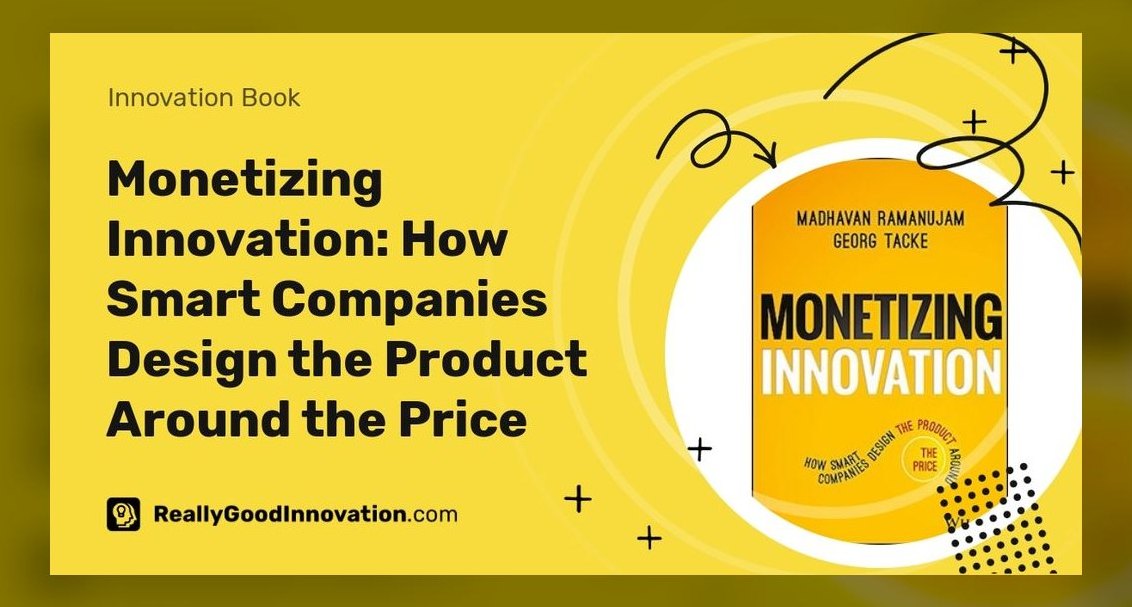 pulse-recentMonetizing Innovation by Madhavan Ramanujam — Top 10 Key Takeaways for Sales Leaders in 2027
 pulse-recentObviously Awesome by April Dunford — Top 10 Key Takeaways for Sales Leaders in 2027
 pulse-recentHow do you implement the Sandler Rules by David Mattson in your first 30 days as a new sales manager in 2027?
 pulse-recent$100M Offers by Alex Hormozi — Top 10 Key Takeaways for Sales Leaders in 2027
 pulse-recentThe Challenger Customer by Brent Adamson — Top 10 Key Takeaways for Sales Leaders in 2027
 pulse-recentWhat is the Blue Sheet from Strategic Selling by Miller Heiman and how do you fill it out in 2027?
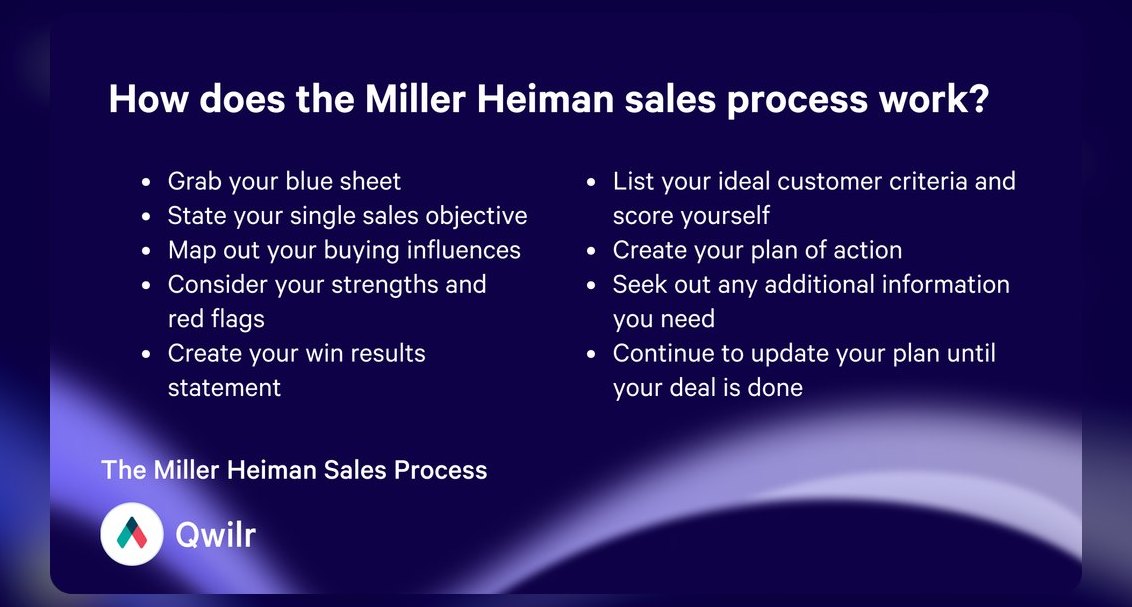 pulse-recentWhat is the step-by-step process for Strategic Selling by Miller Heiman in 2027?
 pulse-recentWhat are the seven concrete steps to implement the Sandler Submarine technique from The Sandler Rules in 2027?
 pulse-recentStrategic Selling by Robert Miller and Stephen Heiman — Top 10 Key Takeaways for Sales Leaders in 2027