


The Sandler Rules — Cliff Notes Summary
Quality
Certified

*The Sandler Rules* by David Sandler (written by David Mattson, 2009) condenses Sandler's 1967 selling system into 49 blunt one-line principles organized around the Sandler Submarine — a seven-compartment sequence of Bonding, Up-Front Contract, Pain, Budget, Decision, Fulfillment, and Post-Sell. Its core strategy is disqualifying bad deals early rather than persuading reluctant buyers late.
The demo that never should have happened
Picture a mid-market AE with a $900K annual quota and an average deal size somewhere in the $40K–$60K range. A prospect from a 400-person logistics company fills out a "request a demo" form. The AE books a 45-minute call for Thursday. On Thursday, they open with four minutes of small talk about the prospect's college football team, then share their screen and walk through eleven features. The prospect nods, says "this looks great," asks two questions about integrations, and closes with the sentence every rep has heard: "Let me take this back to the team and I'll get back to you."
The AE marks the opportunity Stage 2, forecasts it for the quarter, and never hears from the prospect again. Three follow-up emails, one LinkedIn message, one "circling back" voicemail. Silence. Ninety days later the deal is marked Closed-Lost with the reason code "No decision."
That single call is the exact failure mode *The Sandler Rules* was written to eliminate, and it fails on at least five distinct axes. There was no agreement about what the meeting was for, so both parties left with different definitions of success. There was no attempt to understand what problem the prospect was actually trying to solve — the demo assumed the form fill was the qualification. Price never came up, so nobody knows whether the prospect can afford the product or whether the budget cycle closed last month. The decision process was never mapped, so the AE has no idea whether the person on the call can sign anything, influence anyone, or merely gather information for a boss who was never mentioned. And there was no agreed next step, so the deal ended in the worst possible state: not a no, just an ambiguity that lives in the pipeline consuming forecast credibility.
Sandler's argument — and it is the through-line of the whole book — is that this AE did not lose the deal in follow-up. They lost it in the first ninety seconds, when they agreed to give away their expertise for free without securing anything in return. Rule 2, "Don't Spill Your Candy in the Lobby," is the shorthand. The rep dumped everything they knew on the table before establishing whether the person across from them had a problem worth solving, money to solve it with, or authority to act.

The uncomfortable follow-up question is what the alternative looks like. Sandler's answer is not "be more persuasive." It is the reverse: build a process that surfaces the no as fast as possible so the rep's remaining hours go to deals that can actually close. In a world where an AE can hold maybe 25–40 live opportunities before quality collapses, the scarce resource is not persuasion. It is attention. Every hour spent nursing a dead deal is an hour not spent on a live one, and that opportunity cost compounds across a quarter.
This framing is why the book still gets quoted in SaaS orgs six decades after the underlying system was developed. The specific tactics assume a phone call and a face-to-face meeting, but the economic logic — disqualification is cheaper than persuasion — scales cleanly into environments Sandler never saw, including PLG funnels, partner-sourced pipeline, and renewal motions where the "prospect" is an existing customer with an expiring contract.
How the Submarine actually works
The organizing metaphor is a submarine. When a real submarine takes on water, the crew seals each compartment behind them as they move forward, so flooding in one section cannot propagate through the whole vessel. Sandler applied the same one-way discipline to a sale: complete a compartment, seal it, move forward, and never reopen a door you have already closed.
There are seven compartments, and the order is not decorative.
Bonding and rapport is first, and Sandler is specific that this does not mean weather-and-sports filler. The goal is a working relationship honest enough that the prospect will tell you something inconvenient. Mirroring language, matching pace, and — critically — being willing to say something that costs you a little are the mechanics. A rep who says "based on what you've described, I'm not sure we're the right fit, but let me ask two more questions" has done more for rapport than an hour of shared-hobby discovery.

The Up-Front Contract is second and is arguably the single most portable artifact in the book. Before any content is exchanged, both parties agree on the purpose of the conversation, what the prospect needs out of it, what the rep needs out of it, how long it will run, and what outcomes are acceptable at the end — explicitly including "we decide this isn't a fit." Rule 3, "No Mutual Mystification," is the naming of the failure it prevents: two people leaving a meeting with incompatible beliefs about what just happened.
Pain is third, and it is the compartment that produces the book's most-copied technique. Sandler's claim is that people buy to relieve pain far more reliably than they buy to pursue gain, and that the pain a prospect volunteers is almost never the pain that drives a purchase order. Rule 38 states it flatly: the problem the prospect brings you is never the real problem.
Budget is fourth — before the demo, not after the proposal. This is the sequencing choice that most violates modern instinct, and it is deliberate. If the rep discovers on call four that the prospect's realistic ceiling is a fifth of the entry price, the three prior calls were charity. Sandler's position is that the discomfort of raising money early is smaller than the cost of discovering the answer late.
Decision is fifth: who signs, who can veto, who evaluates, what the sequence is, what has to be true for a yes, and when. Not "are you the decision-maker," which invites a face-saving yes, but a reconstruction of how the organization actually bought the last thing it bought.
Fulfillment is sixth. This is the demo, the proposal, the pilot — the part reps instinctively do first. Sandler puts it sixth on purpose, because a demo delivered after pain, budget, and decision are established is a confirmation, while a demo delivered before them is a fishing expedition.
Post-sell is seventh and closes the loop against buyer's remorse. The rep pre-frames the second-guessing — the colleague who says "we should have looked at three vendors," the CFO who reopens the line item — so the buyer has already rehearsed their own defense. Rule 6 names it: don't buy back tomorrow the product or service you sold today.
The compartment sealing is what makes the model useful as a management tool rather than a slogan. If a deal is sitting in Fulfillment but nobody can name the economic buyer, the deal is not in Fulfillment — it is in Decision wearing a costume, and the forecast is wrong. Applied to a pipeline review, the Submarine becomes a diagnostic: for every deal, name the last compartment genuinely sealed, and stage the deal there regardless of what the CRM says.
The Pain Funnel and the numbers behind it
The Pain Funnel is Sandler's most transplanted artifact — it shows up in enablement decks at companies that have never bought a Sandler license. It is a sequence of roughly eight escalating questions, each narrower than the last, designed to move the conversation from a symptom the prospect is comfortable stating to a consequence they are not.
The canonical sequence runs: *Tell me more about that. Can you be more specific — give me an example. How long has that been a problem? What have you tried to do about it? And did that work? How much do you think it has cost you? How do you feel about that? Have you given up trying to fix it?*
Read in order, the questions do something specific. The first three establish that a problem exists and has persisted. The middle two establish that the prospect has already spent effort failing to solve it, which is what separates a real problem from an annoyance. The sixth forces quantification. The seventh and eighth move from organizational cost to personal stake, which is where urgency actually lives.
That escalation maps onto three named levels. Surface pain is the symptom the prospect volunteers: "our pipeline coverage is thin." Business pain is the organizational consequence: the forecast misses, the board asks questions, headcount plans get frozen. Personal pain is the human stake: the VP's credibility, someone's promotion, someone's equity vesting on a timeline that no longer works. A rep who stops at surface pain writes a quote and hopes. A rep who reaches personal pain has a buyer who is now selling internally on their own behalf.
The honest caution is that question six — "how much has it cost you?" — is where most reps get a fabricated number. Prospects estimate under pressure, and the estimate becomes the ROI slide, and the ROI slide gets shredded by a CFO who has real data. The disciplined version is to ask what inputs the prospect would use to calculate it, then build the number jointly from figures the prospect owns. A cost figure the buyer derived themselves survives scrutiny; a cost figure the vendor supplied does not.
On numbers more broadly, this is where a summary should be careful. Vendor-published conversion statistics about methodology adoption are frequently cited and rarely reproducible, and inventing them would undermine the whole point. What can be said honestly is structural.
Deal age is a reliable negative signal across essentially every pipeline analysis ever run: the probability of closing an opportunity declines sharply once it exceeds roughly two to three times the organization's median sales cycle. If a team's median cycle is 45 days, deals past 90–135 days are, statistically, a different population — they are not slow winners, they are undiagnosed losses. That empirical regularity is exactly what Rule 31, "Close the Sale or Close the File," encodes.
Ramp economics tell the same story from a different angle. A mid-market AE running a 45-day cycle with a 20% win rate needs five real opportunities to produce one win. If two of those five were never qualified — no budget, no authority, no urgency — then the effective ratio is closer to one win per three genuine opportunities, and the rep spent 40% of their capacity on volume that could never convert. Disqualification does not lower the win count; it raises the win *rate* by shrinking the denominator, which is what makes forecasting possible.
Deal size interacts with all of this. At a $5K ACV with a two-week cycle, the cost of a wasted demo is roughly an hour, and the aggressive-qualification overhead may exceed the savings. At $150K with a six-month cycle and a nine-to-twelve-person buying committee, a single misqualified deal can consume 60–100 rep-hours plus solutions-engineering time. The value of the Sandler strategy scales directly with deal complexity, which is a useful filter for deciding how much of it to install.
Trade-offs, alternatives, and what to blend
No methodology survives contact with every motion, and the honest read of *The Sandler Rules* is that it is strong in specific places and structurally weak in others.
Against MEDDIC and MEDDPICC. MEDDIC is a qualification checklist: Metrics, Economic buyer, Decision criteria, Decision process, Identify pain, Champion — with Paper process and Competition added in the expanded version. It is an inspection framework. It tells a manager what is missing from a deal; it does not tell a rep what to say. Sandler is the opposite: it is heavy on conversational mechanics and buyer psychology and comparatively light on forecast hygiene. The practical resolution most enterprise teams land on is to run MEDDPICC as the CRM-field layer that governs stage progression and forecast calls, and Sandler tactics as the in-conversation layer that actually produces the information those fields require. They are not competitors; one is the scorecard and the other is the technique.
Against Challenger. *The Challenger Sale* (Dixon and Adamson, 2011) argues that the highest performers teach the customer something they did not know, tailor it to the buyer's economics, and take control of the conversation. Sandler's Rule 27 — you can't sell anybody anything, they must discover it for themselves — appears to contradict this directly. In practice the tension is smaller than it looks. A Challenger-style commercial insight is an efficient way to *provoke* a pain the prospect had not articulated; the Sandler Pain Funnel is an efficient way to make the prospect own it once provoked. Reps who blend them open with a reframe and then shut up and ask questions. Reps who do only Challenger tend to lecture. Reps who do only Sandler tend to be limited to pains the prospect already knew about, which in a category-creation sale is a hard ceiling.
Against value-messaging frameworks. Approaches built around articulating differentiated value and business outcomes are pitch-architecture-first: they optimize how the offering is framed against alternatives and how a champion repeats that framing internally. Sandler barely addresses this. If a deal is being lost on articulation — the buyer understands their pain fine but cannot distinguish two vendors — Sandler has little to offer, and a messaging framework is the right tool. If deals are being lost to no-decision and stall, Sandler is the right tool.
Against product-led growth. This is the genuine structural gap. You cannot run a Pain Funnel on a self-serve signup who has not talked to anyone. In a PLG motion, qualification signal comes from behavior — activation events, seat growth, usage depth, workspace sprawl — not conversation. The Sandler layer re-enters at the handoff, when an expansion or enterprise AE engages an account that has already demonstrated pain through usage. Interestingly, the sequence still holds: the Up-Front Contract on that first sales-assisted call is more valuable, not less, because the user did not ask to be sold to and needs an explicit statement of why the call exists and that ending it is acceptable.
Against modern buyer expectations. Some of the book's tactics — the harder negative-reverse maneuvers, the more theatrical pressure-relief moves — read as manipulative to buyers who have themselves been trained on sales technique. The rules that hold up are the ones that make the seller *less* pushy: mutual agreement on the meeting's purpose, permission to say no, early honesty about money. The rules that age badly are the ones that treat the conversation as a contest to be won.
The synthesis worth remembering: Sandler governs the *conversation*, MEDDPICC governs the *record*, insight-selling governs the *why now*, and messaging frameworks govern the *why us*. A team that installs only one of the four will be strong in one dimension and blind in three.
Where teams get this wrong
The failure patterns are consistent enough to be predictable, and most of them come from adopting the vocabulary without the underlying posture.
The Up-Front Contract becomes a recital. A rep memorizes the five parts and delivers them as a monologue at the top of the call: purpose, your agenda, my agenda, time, outcomes — all in twenty seconds, no pauses. This is worse than not doing it, because it signals process without producing agreement. The part that does the work is the question *"what needs to happen in the next thirty minutes for this to be worth your time?"* followed by silence. If the prospect's answer differs from the rep's assumption — and it often does — the meeting has just been saved. Skip the pause and you have performed a ritual.

"It's okay to say no" is offered but not meant. The permission-to-decline line is the highest-leverage sentence in the framework and the easiest to fake. If a rep says it and then treats every subsequent hesitation as an objection to overcome, buyers detect the mismatch immediately and trust drops below where it started. The line only works if the rep will actually accept the no — which means the rep needs enough pipeline that a single no is survivable. This is why the technique fails hardest on teams with thin pipeline coverage: the economics won't let reps mean it.
Pain discovery turns into an interrogation. Eight questions in sequence, delivered without acknowledgment or synthesis, feels like a deposition. The prospect starts giving shorter answers, then defensive ones, then ends the call early. The repair is mechanical: after every two or three questions, reflect back what you heard in your own words and let the prospect correct you. Corrections are where the real information lives. A prospect who says "well, it's not exactly that, it's more that..." has just handed over something the direct question would never have produced.
Budget-first becomes price-first. There is a meaningful difference between establishing whether a realistic range is viable and opening with a number. Naming a price in the first three minutes, before any pain is established, anchors the conversation on cost with nothing on the other side of the scale. The workable version comes after some pain is on the table: *"Projects like this usually land somewhere between X and Y depending on scope — does that range make this worth continuing, or should we stop here?"* That question qualifies and disqualifies simultaneously, and the "should we stop here" clause is what makes it honest rather than a pressure tactic.
Disqualification becomes an excuse. This is the most damaging misreading. A rep struggling with activity reframes their reluctance to work hard deals as Sandler discipline — "I disqualified them, they weren't a real buyer." The distinguishing test is whether the rep can articulate *what specifically was missing*: no budget authority in the current fiscal year, no named owner for the problem, a competing initiative that consumes the same headcount. A disqualification with a specific reason is discipline. A disqualification with a vague one is avoidance, and a sales manager should treat the two very differently in a one-on-one.

Rule 31 gets applied to the wrong deals. "Close the sale or close the file" is sound as a default, but the threshold has to be calibrated to the actual sales cycle. A team with a nine-month enterprise cycle that starts killing deals at 90 days is destroying its own pipeline. Set the trigger relative to median cycle length — roughly two to three times the median — and require a documented reason before a deal is killed, so the discipline produces learning rather than just a cleaner-looking board.
The seven compartments get treated as CRM stages. The Submarine describes what has been *established*, not what activity has occurred. A team that renames its pipeline stages after the compartments and then lets reps advance deals by holding meetings has gained nothing. The stage gate has to be evidentiary: to be in Decision, someone must have named the signers and the approval sequence. To be in Fulfillment, a budget range must exist in writing.
The book is treated as scripture rather than a summary. *The Sandler Rules* is deliberately compressed — 49 principles, a few pages each. The compression is the product; it is also the limitation. The rules are heuristics that assume judgment, and applying one mechanically in a situation it does not fit is exactly the amateur behavior the book criticizes. Read it as a checklist of failure modes to watch for, not a decision tree to execute.
Related questions
Who actually wrote The Sandler Rules?
David Mattson wrote it, published in 2009. David Sandler developed the underlying selling system starting in 1967 and died in 1995; Mattson, who became Sandler's CEO in 2007, codified the principles into 49 rules with short application chapters for each.
What is the Up-Front Contract in one sentence?
A brief mutual agreement at the start of a meeting covering purpose, the prospect's agenda, the rep's agenda, the time box, and the acceptable outcomes — explicitly including the option to end the process. It prevents the "let me get back to you" non-close.
Does the Sandler system work for transactional or SMB sales?

Partially. The Up-Front Contract and disqualification posture transfer well and cost almost nothing. Full Pain Funnel discovery and formal decision mapping are overhead that low-ACV, short-cycle motions rarely recover. Value scales with deal complexity and committee size.
How does Sandler handle a buying committee?
Weakly, by modern standards. The Decision compartment maps signers, vetoers, and evaluators, which is real, but the framework assumes a manageable number of stakeholders and a rep with direct access. Large committee sales usually need a champion-enablement layer Sandler does not supply.
Is the summary enough, or do you need the full book?
The summary conveys the 49 rules and the Submarine logic — enough to change behavior this week. The full text adds the application chapters, which is where the reasoning and example dialogue live. For a new rep, read the book; for an experienced one, the summary plus deliberate practice.
FAQ
What is the Sandler Submarine?
It is the seven-compartment process that structures the whole system: Bonding and Rapport, Up-Front Contract, Pain, Budget, Decision, Fulfillment, and Post-Sell. The metaphor comes from submarine damage control, where each compartment is sealed before the crew moves forward, so a flood in one section cannot spread. Applied to selling, it means completing and closing each stage rather than looping back — and it doubles as a pipeline diagnostic, since a deal should be staged at the last compartment genuinely sealed, not the last meeting held.
Why does Rule 37 say all prospects lie?
It is a deliberately provocative framing of ordinary buyer self-protection, not an accusation of dishonesty. Buyers give vague timelines, agreeable non-answers, and "send me some information" to avoid confrontation, to avoid appearing uninformed, or simply to end a conversation gracefully. The rule's practical instruction is to treat soft agreement as unverified rather than as progress, and to confirm claims — budget, authority, timing — with a specific follow-up question instead of recording them as fact in the CRM.

How is this different from MEDDIC?
MEDDIC is a qualification and inspection checklist that tells a manager what information is missing from a deal. Sandler is a conversational methodology that tells a rep how to obtain that information and in what order. MEDDIC is strongest in forecast review; Sandler is strongest in the live call. Most complex-sale teams end up running both — MEDDPICC as the CRM structure governing stage progression, Sandler mechanics as the discovery technique that fills those fields honestly.
Should price really come before the demo?
In complex B2B, yes — but as a range framed against established pain, not as an opening number. The purpose is to learn whether the economics are viable before investing in solutions engineering and multi-call cycles. Ask after some pain is on the table: name a realistic band, then explicitly offer stopping as an acceptable answer. In low-ACV or self-serve motions the sequencing matters far less, since transparent pricing already does the qualification work.
Does the disqualification strategy hurt pipeline coverage?
It reduces opportunity count and usually improves win rate, forecast accuracy, and rep capacity. The risk is real, though: a rep with thin pipeline cannot afford to walk away and will either fake the discipline or genuinely damage their number. Disqualification only works when top-of-funnel volume is sufficient to absorb it, which makes it a system-level decision about prospecting capacity rather than an individual rep behavior.
How long before a team sees results from adopting these rules?
Meeting quality shifts within a few weeks — Up-Front Contracts change call outcomes almost immediately because they change what "success" means at the start. Pipeline-level effects lag by roughly one full sales cycle, since deals already in flight were qualified under the old approach. For a team with a 45-day cycle, expect two to three months for the pipeline composition to reflect the change, and longer where cycles run six months or more.
Sources
- The Sandler Rules — publisher page
- The Sandler Rules — Goodreads listing and reader reviews
- HubSpot — The Sandler Selling System, explained
- Salesforce — guide to the Sandler selling methodology
- Gong — the Sandler Pain Funnel
- Sandler — how to succeed at Sandler Rule #1 (podcast)
- Harvard Business Review — The End of Solution Sales
- Wikipedia — Transactional analysis (the psychological basis Sandler drew on)
- Investopedia — sales pipeline and deal-stage fundamentals
Related on PULSE
This page will be disappearing soon. Save it to your device for $1 — or read it free while it is here.
@Kory-White- · if Venmo asks, the last 4 of my number are 2012
This page is gone.
This one is off the shelf now. $1 keeps it on your phone for good — the whole page, pictures and diagrams included.
 pulse-booksTop 10 practical takeaways from Atomic Habits for building a new routine in 2027.
 pulse-recentThe Sales Manager’s Guide to Greatness by Kevin Davis — Top 10 Key Takeaways for Sales Leaders in 2027
 pulse-recentHow does *The New Strategic Selling* define the first step in qualifying an opportunity in 2027?
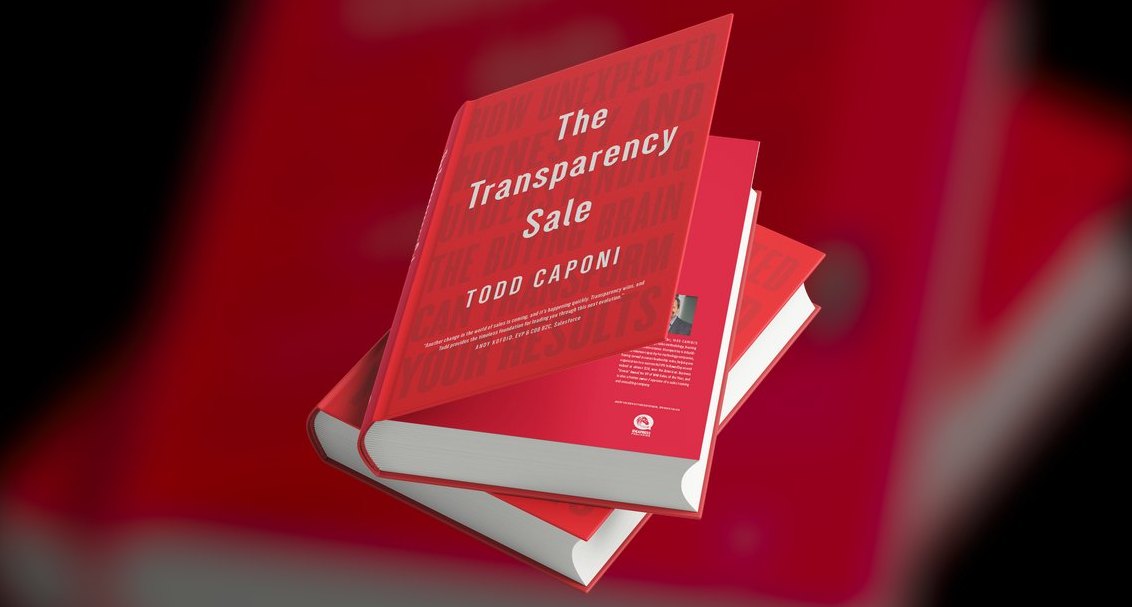 pulse-recentThe Transparency Sale by Todd Caponi — Top 10 Key Takeaways for Sales Leaders in 2027
 pulse-recentWhat is the second concrete step in Strategic Selling by Miller Heiman for identifying a sales coach in 2027?
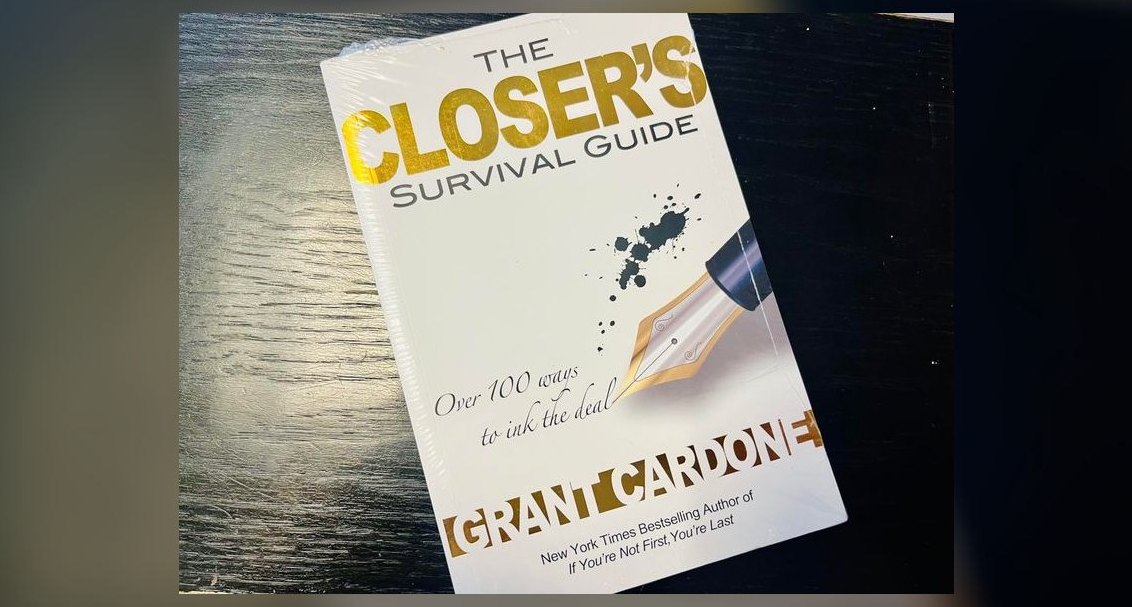 pulse-recentThe Closer’s Survival Guide by Grant Cardone — Top 10 Key Takeaways for Sales Leaders in 2027
 pulse-recentConceptual Selling by Robert Miller and Stephen Heiman — Top 10 Key Takeaways for Sales Leaders in 2027
 book-summaryWhat factors drive the price of Book Summaries up or down in 2027?
 pulse-recentWhat are the concrete steps in Sandler Rule #7 for handling a prospect's budget objection in 2027?
 pulse-recentProActive Selling by Skip Miller — Top 10 Key Takeaways for Sales Leaders in 2027