


Conceptual Selling — Cliff Notes Summary
Quality
Certified

Conceptual Selling argues buyers purchase a mental concept of a solved problem, not a product. Robert Miller and Stephen Heiman's system structures every meeting as Get Information, Give Information, Get Commitment, planned on a one-page Green Sheet with five question types and a dated joint-venture commitment closing each call.
What Conceptual Selling actually is and why it still matters
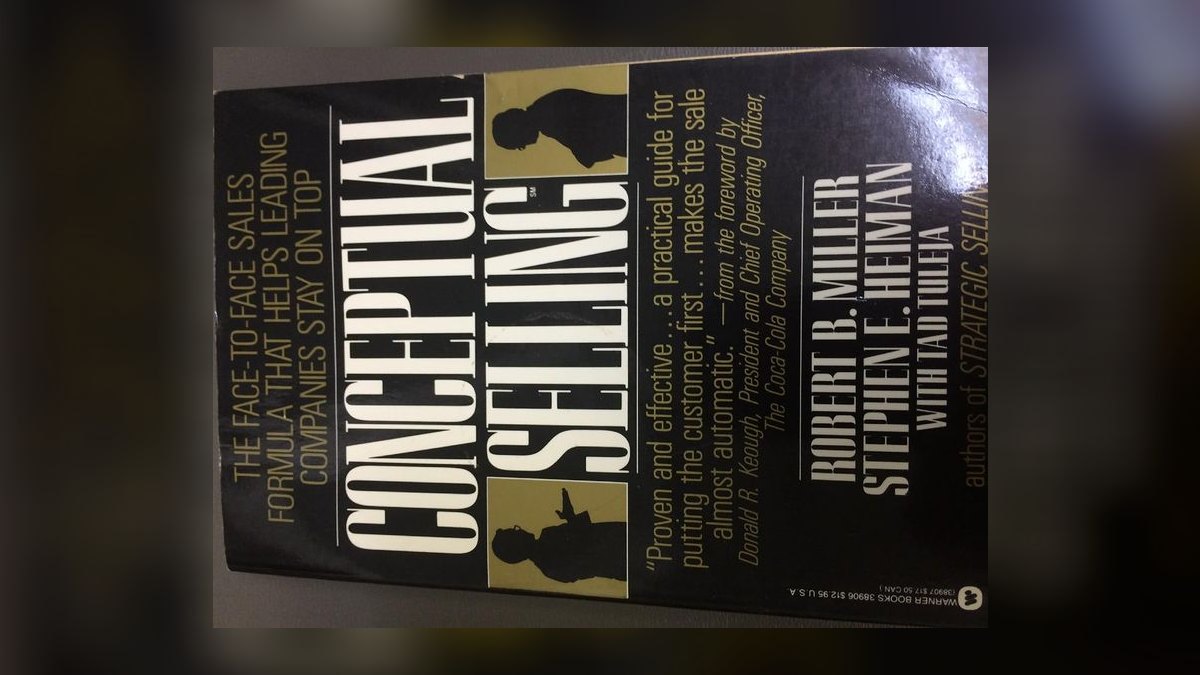
Robert Miller and Stephen Heiman published *Conceptual Selling* in 1987, two years after *Strategic Selling*. The pairing is deliberate and it is the single most useful thing to understand before reading either book. *Strategic Selling* is about the account — who the buying influences are, what each one wins if the deal closes, where the red flags sit. *Conceptual Selling* is about the conversation — one meeting, one buyer, one hour, planned in advance and scored afterward. Blue Sheet for the deal, Green Sheet for the meeting. Most people who say "we run Miller Heiman" mean they run the Blue Sheet and have never touched the Green Sheet, which is roughly like owning a map and refusing to plan the drive.
The word "concept" is doing heavy lifting and it is worth being precise about it. A concept is not a need, and it is not a pain point. It is the buyer's own internal picture of what the solved state looks like — expressed in their language, tied to their role, and usually not the same picture their colleague two doors down is holding. A CFO evaluating revenue tooling is not buying dashboards; she is buying a forecast she can commit to on an earnings call without a knot in her stomach. The VP of Engineering on the same evaluation is buying fewer 3 a.m. pages. The RevOps director is buying one less system to reconcile at quarter close. Same product, same contract, three concepts. Pitch the CFO's concept to the engineer and you sound like you weren't listening, because you weren't.
Miller and Heiman built this out of hands-on enterprise training work in the 1970s and 1980s, when the default sales motion was brochure-first: open with the product, demo the features, negotiate on price. Their inversion was that the buyer's mental model is the deal, and every piece of information the seller offers must be mapped back to that model or it actively costs credibility. This is the part that has aged best. Every serious methodology since — SPIN, Challenger, MEDDIC, Command of the Message, SPICED — has re-derived some version of "understand the buyer's frame before you present," and most of them cite Miller Heiman explicitly when they do.
The second load-bearing idea is win-win, which sounds like a bumper sticker until you see how the book operationalizes it. Every meeting must produce mutual movement. If the buyer commits to introducing you to the economic buyer, you commit to delivering a tailored ROI model by a specific date. Lopsided commitment — where only one side takes on obligation — is flagged as the reliable signature of a deal that is stalling even when the CRM says it is healthy. A seller doing all the work is not a seller winning; a seller doing all the work is a seller being used for free consulting while procurement runs a parallel process.
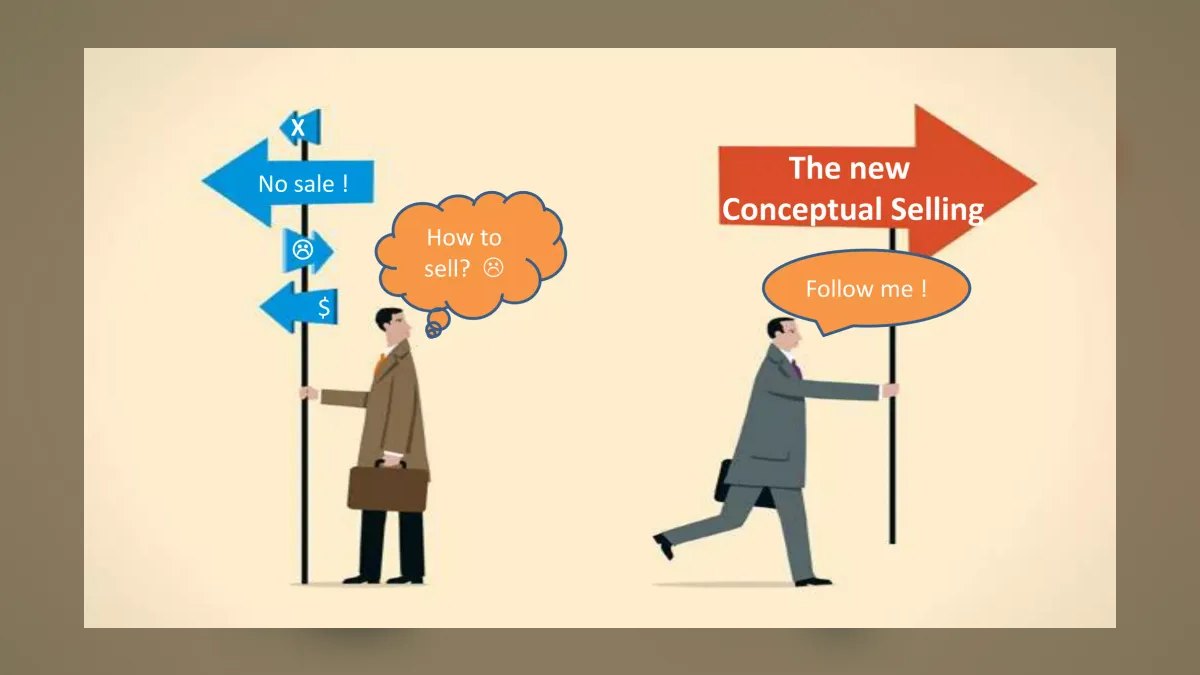
Why does a 1987 book still matter in a world of conversation intelligence and AI-drafted call plans? Because the tooling changed and the failure mode did not. Reps still walk into meetings without a written objective. They still talk more than the buyer. They still end calls with "I'll follow up next week." Gong's published call analytics have repeatedly found that top performers listen substantially more than they talk during discovery while underperformers invert that ratio — which is the Phase 1 discipline restated in dashboard form four decades later. The book is not competing with your tech stack. It is the thing your tech stack is measuring.
There is also an adjacent reason this framework keeps resurfacing outside of pure sales seats. Customer success teams running renewal conversations, solutions engineers scoping a technical validation, partner managers building a co-sell motion, and even internal RevOps leads pitching a systems migration to a skeptical finance team are all doing the same job: discovering a stakeholder's concept, mapping information to it, and leaving with a dated commitment. The Green Sheet transfers cleanly to all of those. It is a meeting operating system that happens to have been written for quota carriers.
The step-by-step process: Green Sheet, three phases, five questions
The mechanics are simple enough to teach in a morning and hard enough to take a quarter to make habitual. Here is the actual sequence a rep runs.
Step one — fill the Green Sheet before the call. The Green Sheet is a one-page pre-call planner. Its core fields are: the buyer's concept as you currently understand it, your Single Sales Objective, your Valid Business Reason for the meeting, your planned questions sorted into the five types, the joint-venture commitments you intend to propose, and a basic-issue checklist of what could kill this. It is meant to be filled out for every meaningful call, not just the big ones, and it should take ten to fifteen minutes once the habit sets in. The first few take forty-five minutes and feel like homework. That is normal and it is the part most rollouts fail to survive.

Step two — write a real Single Sales Objective. An SSO is specific, measurable, and time-bound: not "close the account" but "land a twelve-month, fifty-seat pilot of the analytics module with a decision by end of Q3." Without one, meetings drift toward whatever the buyer wants to discuss, which feels collaborative and produces nothing. Modern MEDDIC practitioners are essentially reconstructing the SSO when they insist on a hard Metric plus a Decision Process. The SSO also does quiet organizational work: it forces a rep to admit, on paper, whether this opportunity is actually the size the pipeline says it is.
Step three — establish the Valid Business Reason. The VBR is *the buyer's* reason to take the meeting, stated from their side of the table. "We released a new feature" is not a VBR. "I have benchmark data from three companies in your segment on how they restructured Q4 renewals" is. The test Miller and Heiman apply is blunt: would the buyer take this meeting if a competing rep called offering the same thing? If yes, it is a real VBR. If the only reason they are meeting is politeness or a prior relationship, you are spending goodwill, and goodwill does not compound.
Step four — run Phase 1, Getting Information, and keep your mouth shut. This phase belongs to the buyer. The book is explicit that the most common failure is jumping to Phase 2 within the first five minutes because a buyer said something the rep has a slide for. The working floor is that at least half the meeting should be buyer talk time, and in a genuine first discovery it should be considerably more than half.
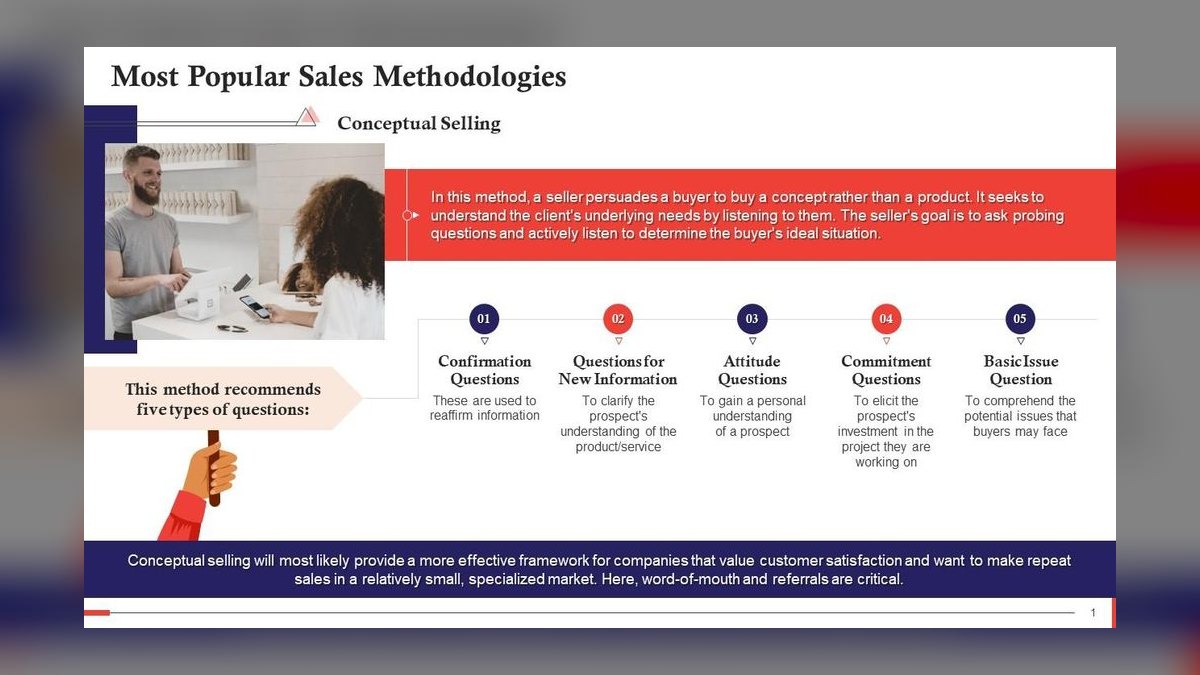
Step five — deploy the five question types deliberately. This is the engine of Phase 1, and it is the single most portable piece of the book.
*Confirmation questions* verify what you believe you already know. "My understanding is your renewal lands in Q3 — still accurate?" They do two jobs: they demonstrate you prepared, and they protect you from the deadliest error in complex sales, which is acting confidently on stale information from a call three months ago.
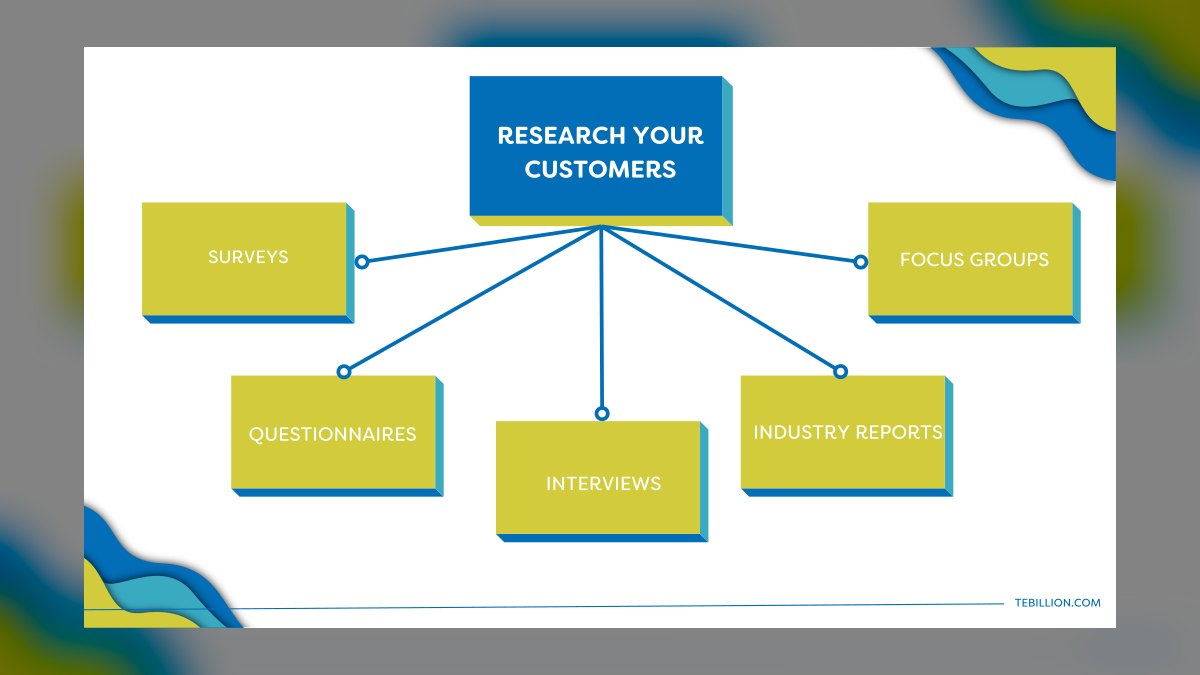
*New information questions* are open discovery. "What's changed since we last spoke?" "Who else will need to weigh in before this moves?" Reps under-ask these because they feel intrusive. Miller and Heiman argue the opposite: buyers experience direct questions as respectful precisely *because* they are paired with confirmation questions that prove homework was done.
*Attitude questions* surface feeling, politics, and motive — the things that never appear in a requirements document. "How does your CFO usually react to multi-year commitments?" "What's your read on being the first internal sponsor for something like this?" Deals are lost on attitude data far more often than on capability gaps, and attitude data only arrives if you ask for it explicitly.
*Commitment questions* test readiness without forcing a premature yes. "If we resolved the integration concern to your satisfaction, what would the next step look like on your side?" The answer tells you whether this person can actually move the deal or whether they are a friendly dead end.
*Basic issue questions* surface the reasons the buyer will not buy. "What would have to be true for this to fail?" "Where does something like this usually die inside your organization?" Miller and Heiman call these the most underused questions in selling. They feel like inviting objections; they are actually the fastest available route to a clean forecast, because a deal that dies in week three costs you nothing compared to one that dies in week eleven.
Step six — run Phase 2, Giving Information, narrowly. Present only the slice of your capability that maps to a concept the buyer actually articulated. If nobody said predictability mattered, the predictability slide stays closed. Information untethered from a stated concept is not neutral filler; it reads as a generic pitch and erodes the credibility Phase 1 just built.
Step seven — run Phase 3, Getting Commitment, and make it dated. Every meeting closes with a specific, time-bound action from the buyer and a matching one from you. "I'll get the security questionnaire to you by Wednesday" and "I'll set up the CFO conversation by Friday." Vague next steps are the book's flagged indicator of a stalling deal, and four decades of pipeline reviews have not produced a better single diagnostic.
Step eight — feed the intel back upstream. Post-call, the new information updates the Blue Sheet: new buying influences discovered, red flags cleared or raised, win-results refined. The Green Sheet is not a filing artifact; it is an input to account strategy. Skipping this step is why so many teams report the methodology "didn't stick" — they ran the meeting layer and never closed the loop to the account layer.
What adoption actually costs in time, training, and calendar
Nobody publishes a universal price list for methodology rollouts, and any number quoted as gospel should be treated with suspicion. But the *shape* of the cost is well understood by anyone who has run one, and it breaks into four buckets.
Reading cost. The book itself is a few hours. The revised edition, *The New Conceptual Selling*, co-authored with Tad Tuleja, is the one most people encounter today and is the version generally recommended — it modernizes the examples and tightens the framework. If you have thirty minutes and no more, read the five question types chapter. Reps who never fill out a single Green Sheet still measurably improve discovery calls just by drilling those five categories.
Formal training cost. The intellectual property now sits with Korn Ferry, which acquired Miller Heiman Group in 2017 and runs the material through its academy. Instructor-led delivery is typically a multi-day workshop, often bundling Strategic Selling and Conceptual Selling together since they were designed as a pair. Per-seat pricing is quoted per engagement and varies enormously by headcount, region, and whether you buy licensed internal delivery versus external facilitation. Budget for it the way you budget any enterprise training engagement: as a five-figure commitment for a small team and a six-figure one for a large org, then negotiate.
Habit-formation cost — the one everyone underestimates. Two days of workshop produces zero durable behavior change on its own. What produces change is manager-led deal coaching afterward: the frontline manager reviewing Green Sheets before calls and reviewing the recorded call against the sheet after. Plan on roughly thirty to sixty days of that reinforcement before the planner survives without prompting, and understand that if your frontline managers do not personally use the framework, adoption will decay to zero within a quarter. This is the single highest-leverage variable and it is almost entirely about manager behavior, not rep behavior.

Ongoing per-call cost. Ten to fifteen minutes of prep per meaningful meeting once fluent. For a rep running fifteen external meetings a week, that is roughly two to four hours weekly. That is a real tax and it is why disciplined teams apply the full Green Sheet to a *subset* of calls — top pipeline deals, competitive situations, first meetings with an economic buyer — rather than every fifteen-minute check-in. A lightweight version of the sheet (concept, objective, three questions, intended commitment) covers routine calls in two minutes.
Timeline to signal. Discovery quality changes within one to two weeks of drilling the question types; you hear it in call recordings almost immediately. Next-step specificity improves within a month if managers inspect for it. Pipeline hygiene effects — fewer zombie opportunities, earlier disqualification, less end-of-quarter surprise — show up over a full sales cycle, so on a ninety-day enterprise cycle you are looking at one to two quarters before the forecast reflects it. Anyone promising quarter-one revenue lift from a methodology rollout on a long cycle is selling something.
Where the framework is worth the tax and where it isn't. High-ACV, multi-stakeholder, sixty-day-plus cycles: clearly worth it. Transactional SMB motions with one decision maker and a two-call cycle: the full sheet is overhead, though the five question types and the dated-commitment habit still pay for themselves. Product-led motions where usage telemetry already reveals the concept: compress Phase 1 hard and apply the framework mainly to expansion and pilot-to-paid conversations where a human buying committee finally appears.
Where teams get this wrong
Treating the Green Sheet as a compliance artifact. The fastest way to kill this is to make sheet completion a CRM field that managers audit for existence rather than quality. Reps will fill it out after the call to satisfy the report, which inverts the entire point. The sheet is a *thinking* tool. If it is not changing what the rep asks in the room, it is paperwork.
One sheet per opportunity instead of one per meeting per stakeholder. This is the most common structural mistake. The four buying influences that *Conceptual Selling* inherits from *Strategic Selling* — economic buyer, user buyer, technical buyer, and coach — each hold a different concept. A rep running a six-stakeholder enterprise deal may legitimately need six distinct Green Sheets for one opportunity, because the economic buyer's concept and the technical buyer's concept are not merely different emphases of one story. They are different stories.

Confusing a pain point with a concept. "Their reporting is manual" is a pain point you observed. The concept is what *they* believe the fixed state looks like and why it matters to them personally — which might be "I stop being the bottleneck every month-end and get my Thursdays back." Reps who stop at the pain point present features. Reps who reach the concept present a version of the buyer's own future.
Asking basic issue questions too late. Reps save the "what could kill this" question for late-stage, when it feels safe. By then, the answer is expensive. Ask it in the first or second meeting. A cheerful "where do initiatives like this usually stall out here?" in week two routinely surfaces a procurement policy or a competing internal project that would otherwise have eaten your quarter.
Accepting soft commitments and logging them as next steps. "They're going to loop in their VP" is not a commitment. "Dana will forward the summary to the VP and copy me by Thursday" is. If your CRM next-step field accepts prose without a name and a date, it is generating false confidence at scale. This is the cheapest possible fix in the entire framework and the one most teams skip.
One-sided joint ventures. If your commitment list is four seller obligations and zero buyer obligations, you do not have a deal, you have an unpaid consulting engagement. The asymmetry is diagnostic. Read it as data, not as a reason to work harder.
Single-threading on the coach. The book leans on the coach as an internal hero, and reps read that as permission to build one strong relationship and coast. Modern enterprise buying committees have grown substantially since 1987; a single champion who changes jobs takes the deal with them. Treat the coach as your best source of internal intelligence, not as your only route into the account, and deliberately build three or more relationships in any six-figure cycle.
Assuming the face-to-face model transfers unchanged. Written in a world of in-person meetings, the framework assumes a room. Video calls compress everything: attitude questions land differently when you cannot read a room's body language, and Phase 3 commitments are far more likely to evaporate without a written recap. Adapt by sending the joint-venture commitments in writing immediately after the call, and by treating an async mutual action plan as the durable record rather than your notes.
Skipping the Blue Sheet update. Covered above, but worth repeating because it is the quiet killer. The Green Sheet generates intelligence. If that intelligence does not flow into account strategy, you have a well-run set of disconnected conversations and no coherent deal plan.
Choosing your framework: when Conceptual Selling is the right tool
Nobody should run one methodology religiously. The useful question is which framework governs which layer of the motion, and *Conceptual Selling* has a clear and narrow answer: it governs the meeting.
Against Strategic Selling. Not a competition — they are two halves of one system by the same authors. Strategic answers "who must say yes and what does each of them win?" Conceptual answers "what happens in the next sixty minutes with this specific person?" Run both, or run Strategic alone and accept that your meetings will be improvised.
Against SPIN Selling. Neil Rackham's SPIN is a question sequence — situation, problem, implication, need-payoff — grounded in observational research on large numbers of sales calls. It is narrower and more prescriptive than the five question types, and it is arguably the better first read for a rep who needs a script to lean on. Conceptual Selling is broader: it wraps the questioning inside meeting planning and commitment mechanics. They compose well. Use SPIN's implication and need-payoff sequence *inside* Phase 1 of a Green Sheet.
Against The Challenger Sale. Challenger says lead with commercial insight and constructive tension — teach the buyer something about their own business, tailor it, take control of the conversation. Conceptual Selling says mine the buyer's existing concept first. These look opposed and mostly are not. The synthesis practitioners land on: use Challenger-style insight in Phase 1 to *shape* a concept when the buyer's concept is vague, absent, or wrong, then use Green Sheet mechanics to convert it. Challenger without concept discovery becomes a lecture. Concept discovery without insight becomes an order-taking motion dressed as consulting.

Against MEDDIC and MEDDPICC. These are qualification and inspection frameworks, not conversation frameworks. They tell a manager whether a deal is real; they do not tell a rep what to do in the room. MEDDIC's Metric maps closely to the SSO, Identify Pain maps to concept discovery, and Decision Process maps to the commitment sequence. Run MEDDPICC in pipeline reviews and Conceptual Selling in the meetings that feed them.
Against Gap Selling. Keenan's framing — diagnose current state, define future state, sell the gap — is essentially a sharper, more modern restatement of concept discovery with a stronger diagnostic emphasis. If your team's problem is shallow discovery specifically, Gap Selling is a faster read with a tighter thesis. If the problem is unstructured meetings and vague next steps, Conceptual Selling is the better fit.
Against Command of the Message and SPICED. Force Management's Command of the Message and Winning by Design's SPICED are both commercially packaged descendants. Command of the Message emphasizes required capabilities and negative consequences — an evolution of the basic issue question. SPICED's close stage embeds a dated mutual commitment that is the joint venture concept nearly verbatim. Most modern orgs teach a derivative rather than the source, which is fine; reading the source makes the derivative make sense.
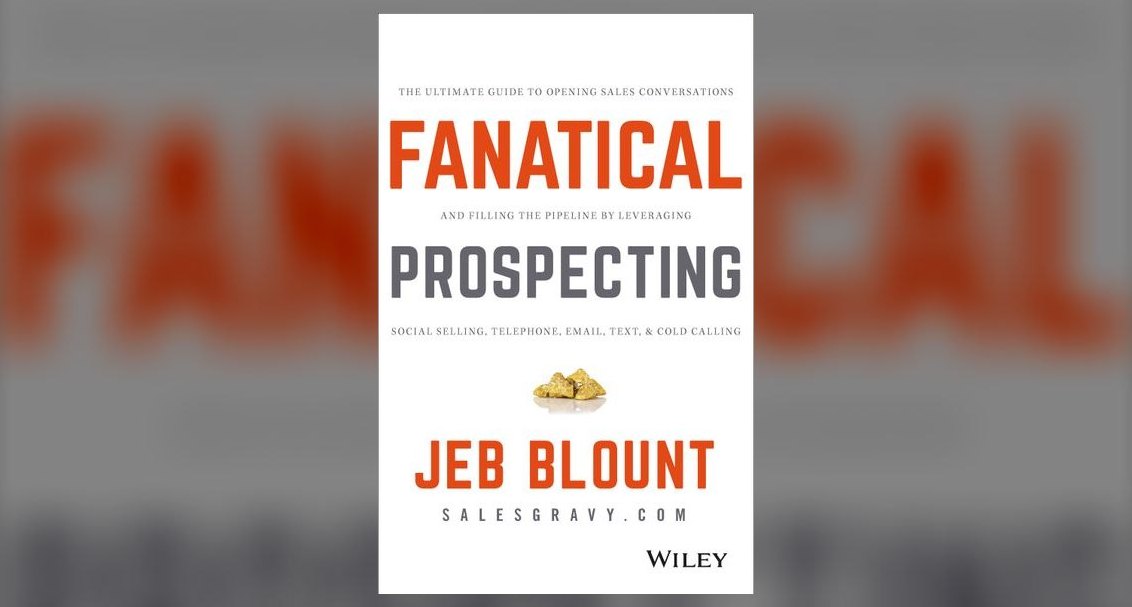
The reading-order question. A brand-new SDR should read *Fanatical Prospecting* first — they need volume mechanics and rejection tolerance, not meeting architecture. Pick up *Conceptual Selling* the day you move into a quota-carrying seat on a cycle longer than sixty days. Then re-read the question chapter once a quarter, because question discipline decays faster than any other sales skill.
A working default strategy for most B2B teams: MEDDPICC for qualification and forecast inspection, Conceptual Selling's Green Sheet for meeting planning, Strategic Selling's Blue Sheet for account strategy, and whatever insight-led narrative your marketing team can actually support layered into Phase 1. That combination covers the account, the deal, and the hour, and none of the three layers is trying to do another's job.
Related questions
What is the difference between the Blue Sheet and the Green Sheet?
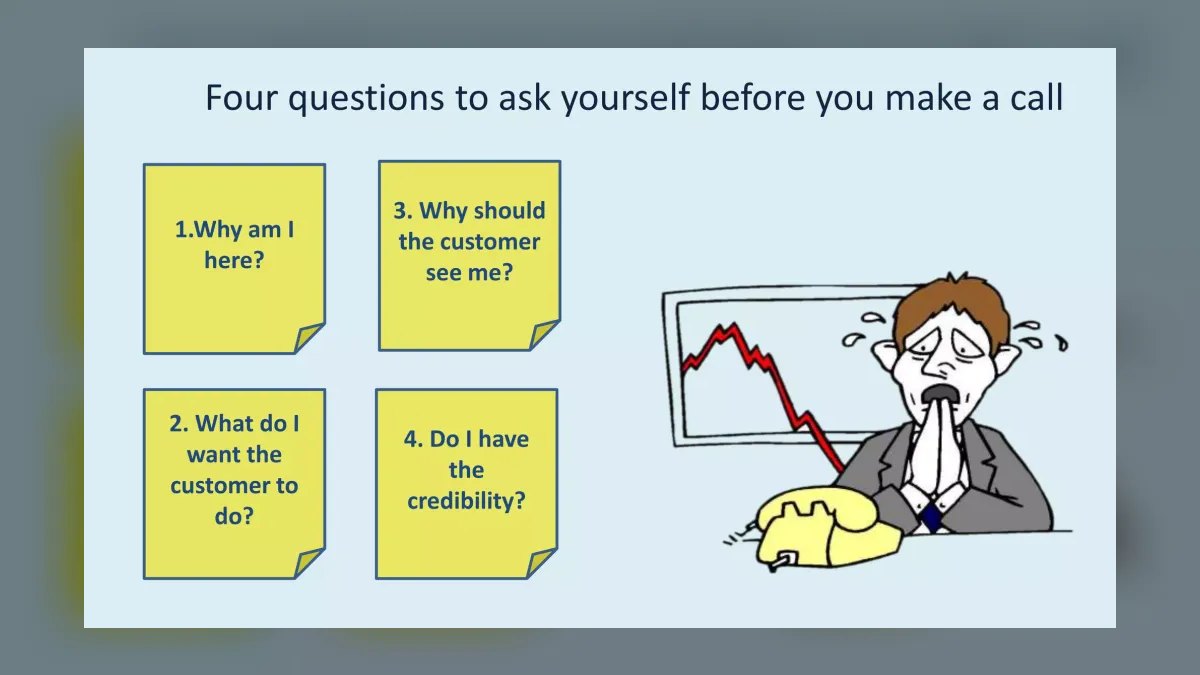
The Blue Sheet, from *Strategic Selling*, maps the whole opportunity: buying influences, win-results, red flags, competitive position. The Green Sheet, from *Conceptual Selling*, plans one meeting: buyer's concept, single sales objective, valid business reason, planned questions, and joint-venture commitments. Blue plans the deal; Green plans the hour.
Should I read the original 1987 edition or The New Conceptual Selling?
Read *The New Conceptual Selling*, the revised edition co-authored with Tad Tuleja. The framework is identical but the examples and language are modernized and the structure is tighter. The 1987 original is worth owning if you care about the intellectual history of sales methodology, not if you want the fastest path to using it.
Does Conceptual Selling work for product-led growth motions?
Partially. It was built for top-down enterprise with a named buying committee, so Phase 1 discovery is largely pre-answered by product usage data in a PLG motion. The valid business reason and dated joint-venture commitment still apply directly to expansion and pilot-to-paid conversations, and the full framework becomes relevant at the PLG-to-enterprise transition.
What is a Valid Business Reason, in one sentence?
A Valid Business Reason is the buyer's reason to spend an hour with you, stated in their terms, and it passes the test only if they would take the same meeting from a competitor offering the same thing.
How does this fit alongside conversation intelligence tools?
Cleanly. Tools like Gong and Clari measure exactly what the framework prescribes: talk ratios, question counts, next-step specificity. Use the Green Sheet to plan the call and the recording to score it against the plan. The tooling makes the coaching loop that historically required a manager riding along.
FAQ
Is Conceptual Selling still relevant, or is it dated?
Both, in different places. The three-phase call structure, the five question types, and the dated joint-venture commitment are foundational and appear in nearly every methodology written since. What is dated is the delivery assumption — paper planners and face-to-face meetings — and the reliance on a single internal coach. Keep the spine, modernize the wrapper with a shared mutual action plan and a conversation-intelligence review loop.
What is the single most valuable chapter if I only have thirty minutes?
The five question types. Confirmation, new information, attitude, commitment, and basic issue. Reps who never fill out a Green Sheet still run measurably better discovery calls after internalizing those five categories, because the taxonomy alone breaks the habit of asking twelve variations of the same situational question.
Who wrote it and what else did they write together?
Robert B. Miller and Stephen E. Heiman, who also co-authored *Strategic Selling* in 1985 and later collaborated with Tad Tuleja on revised editions of both. The methodology is now owned and delivered by Korn Ferry, which acquired Miller Heiman Group in 2017.
Does this conflict with The Challenger Sale?
Less than it appears. Challenger leads with insight and tension; Conceptual Selling leads with concept discovery. In practice they layer: use insight to shape the concept when the buyer's picture is vague or wrong, then use the Green Sheet's structure to convert it into a dated commitment. The conflict only becomes real if a rep uses "teaching" as an excuse to never ask a question.
How do I get a team to actually adopt the Green Sheet?
Manager behavior decides it. Review sheets before calls and review recordings against sheets after, for the first thirty to sixty days. Apply the full sheet only to a defined subset — top pipeline, competitive deals, first economic-buyer meetings — and use a two-minute lightweight version elsewhere. Adoption dies when the sheet becomes a CRM compliance field instead of a pre-call thinking exercise.
Is this useful for anyone who isn't a quota-carrying AE?
Yes. Customer success leads running renewal conversations, solutions engineers scoping technical validations, partner managers building co-sell motions, and internal RevOps leaders pitching a systems migration all face the same problem: discover a stakeholder's concept, present only what maps to it, and leave with a dated commitment. The Green Sheet transfers to any of those with minimal editing.
Sources
- The New Conceptual Selling — Hachette Book Group publisher page
- The New Conceptual Selling — Amazon listing, revised edition
- Conceptual Selling, 1987 original — Amazon listing
- Strategic Selling — Hachette Book Group publisher page
- Korn Ferry — Miller Heiman Group acquisition and sales methodology practice
- Gong Labs — sales call research and talk-ratio analysis
- Harvard Business Review — The End of Solution Sales
- SPIN Selling by Neil Rackham — publisher listing
- The Challenger Sale — Penguin Random House publisher page
- Miller Heiman Group Academy — official training catalog
Related on PULSE
- The New Conceptual Selling by Miller, Heiman & Tuleja — Cliff Notes Summary
- Selling the Invisible by Harry Beckwith — Cliff Notes Summary
- Secrets of Question-Based Selling by Thomas Freese: Summary, Key Lessons, and RevOps Takeaways
- SPIN Selling by Neil Rackham: Summary, Key Lessons, and RevOps Takeaways
- Gap Selling by Keenan: Summary, Key Lessons, and RevOps Takeaways
- The SPIN Selling Fieldbook — Cliff Notes Summary
This page will be disappearing soon. Save it to your device for $1 — or read it free while it is here.
@Kory-White- · if Venmo asks, the last 4 of my number are 2012
This page is gone.
This one is off the shelf now. $1 keeps it on your phone for good — the whole page, pictures and diagrams included.
 pulse-recentFanatical Prospecting by Jeb Blount — Top 10 Key Takeaways for Sales Leaders in 2027
 pulse-recentWhat are the seven concrete steps to implement the Sandler Submarine technique from The Sandler Rules in 2027?
 pulse-recentHigh-Profit Prospecting by Mark Hunter — Top 10 Key Takeaways for Sales Leaders in 2027
 pulse-recentWhat is the first concrete step in The Sandler Rules by David Mattson for building a sales plan in 2027?
 pulse-recentSell or Be Sold by Grant Cardone — Top 10 Key Takeaways for Sales Leaders in 2027
 pulse-recentStrategic Selling by Robert Miller and Stephen Heiman — Top 10 Key Takeaways for Sales Leaders in 2027
 pulse-recentWhat is the Blue Sheet from Strategic Selling by Miller Heiman and how do you fill it out in 2027?
 pulse-recentThe Customer Success Professional’s Handbook by Ashvin Vaidyanathan — Top 10 Key Takeaways for Sales Leaders in 2027
 pulse-recentBlueprints for a SaaS Sales Organization by Jacco van der Kooij — Top 10 Key Takeaways for Sales Leaders in 2027
 pulse-recentObviously Awesome by April Dunford — Top 10 Key Takeaways for Sales Leaders in 2027