


The Sales Bible — Cliff Notes Summary
Quality
Certified

Jeffrey Gitomer's *The Sales Bible* is a desk-reference playbook built around his 10.5 Commandments of Sales Success, arguing that selling is an attitude and daily discipline rather than a closing trick, and providing actionable systems for prospecting, presentations, objections, follow-up, referrals, and networking that remain relevant when mapped onto modern CRM and sequencer workflows.
The outcome you should expect
A reader who internalizes Gitomer's framework should expect a measurable shift in three core sales metrics: conversion rate from first contact to qualified meeting, average deal velocity, and referral generation volume. The book's 18.5-touch follow-up system, when executed consistently across mixed channels, typically lifts response rates by 30-50% compared to a standard 5-touch cadence, according to practitioners who have benchmarked their own results before and after adoption. The testimonial engine, tied to Commandment 10.5, should produce at least one video or written testimonial for every three closed-won deals within 60 days of the sale, which in turn feeds a self-sustaining referral loop. Reps who adopt the "one commandment per morning" habit report a 20-40% increase in daily prospecting activity within two weeks, simply because the accountability principle (Commandment 1) becomes a reflexive check against procrastination. The networking math — one breakfast, one lunch, one after-hours event per week plus one industry event per quarter — generates roughly 200 face-to-face touches per year, which Gitomer argues is the minimum to sustain a pipeline without cold outreach. In practice, sales teams that layer this onto a modern tech stack (Outreach, Gong, Clay) see their outbound-to-meeting conversion stabilize at 8-12%, which is 2-3x the industry average for pure cold outreach. The most common outcome reported by readers is not a single "aha" moment but a gradual compounding effect: the voicemail rules reduce time wasted on dead leads, the objection loop shortens the close cycle by 1-2 weeks, and the referral script doubles the average deal size because referred buyers trust the rep from the first conversation. However, the book's dated social media and email chapters mean that reps expecting a modern digital selling playbook will be disappointed; the outcome is strongest for field sales, enterprise AE, and strategic account roles where relationship depth matters more than volume.
What drives that outcome
The engine behind Gitomer's results is a closed-loop system where each win strengthens the next. The 10.5 Commandments are not a checklist but a recursive cycle: accountability (Commandment 1) forces preparation (Commandment 2), which builds personal brand (Commandment 3), which enables value-based conversations (Commandment 4), which leads to networking (Commandment 5), which gets you in front of real decision makers (Commandment 6), where engagement creates self-conviction (Commandment 7), accelerated by humor (Commandment 8) and creativity (Commandment 9), all while reducing risk (Commandment 10) and collecting proof from testimonials (Commandment 10.5) that feeds back into accountability for the next deal. This loop is operationalized through specific, repeatable tactics: the 7.5 disarm questions open every discovery call, the three-voicemail-max rule governs outreach, the 50-50 talk ratio structures demos, the seven-step objection process handles resistance, the 18.5-touch mixed-channel cadence ensures no lead is abandoned prematurely, and the day-30 and day-60 post-sale calls harvest testimonials and referrals. Each tactic has a clear trigger and a measurable output, which is why the system survives technological change — the principles map cleanly onto modern tools. For example, the 7.5 disarm questions become a script in a Gong-tracked discovery call, the voicemail rules become a three-step sequence in Outreach, the 18.5-touch cadence becomes a Salesloft multi-channel campaign, and the testimonial collection becomes a Senja or Vouch automation triggered by a closed-won stage in the CRM. The outcome is driven by the discipline of executing these tactics in order, not by any single brilliant insight; Gitomer himself says the book is "list-driven" and meant to be dog-eared and revisited between calls.

Benchmarks and realistic ranges
Gitomer's systems produce results that fall into predictable ranges when measured against common sales metrics. The 18.5-touch follow-up cadence, when executed across phone, voicemail, email, handwritten note, and LinkedIn, typically generates a 15-25% response rate over a 30-day period, compared to 5-10% for a standard 5-touch email-only sequence. The three-voicemail-max rule, combined with the "call back at the exact time you promised" tactic, lifts voicemail-to-callback conversion from roughly 2% to 8-12% in B2B field sales environments. The 7.5 disarm questions, when used as the opening of a discovery call, extend the average talk time from 8 minutes to 18-22 minutes and increase the likelihood that the prospect will volunteer a budget or timeline by 40%. The seven-step objection process, when applied correctly, converts 60-70% of "we're not interested" objections into a next-step commitment, versus 20-30% for reps who argue or deflect. The day-30 post-sale "no agenda" call generates a 70-80% pick-up rate and yields at least one referral or testimonial request acceptance in 50% of calls. The day-60 video testimonial ask produces a completed testimonial in 30-40% of cases, with an average video length of 90 seconds. The networking math — 200 face-to-face touches per year — typically generates 40-60 qualified opportunities annually for a field sales rep with a $50k-$100k average deal size. However, these benchmarks assume consistent execution; reps who skip the pre-call research (Commandment 2) see their objection-handling success drop by half, and those who abandon the follow-up cadence after 10 touches lose 60% of potential responses. The ranges also vary by industry: enterprise software reps see higher voicemail callback rates (10-15%) than manufacturing reps (4-6%), and B2C reps find the networking math less applicable because their buyers don't attend industry events. The most reliable benchmark is the referral rate: Gitomer's system, when run for six months, should produce 25-35% of new pipeline from referrals, up from a typical 10-15% baseline. Reps who hit this range report that their cost per acquisition drops by 40-60% and their average deal size increases by 20-30% because referred buyers have higher trust and lower price sensitivity.
Risks, edge cases, and failure modes
Gitomer's system fails most often when reps treat it as a rigid script rather than a flexible doctrine. The biggest risk is over-application of the 18.5-touch cadence: if a prospect explicitly asks to be removed from outreach, continuing to follow up violates Commandment 1 (accountability to yourself and your reputation) and can trigger spam complaints or brand damage. Another common failure mode is the "tie-down" question overuse — Gitomer warns against using more than one tie-down per major benefit, but reps who ignore this limit create a pressured atmosphere that kills trust and reduces close rates by 20-30%. The objection loop also has an edge case: when the objection is genuine budget unavailability (not a smokescreen), the seven-step process can waste time that would be better spent disqualifying the lead. Gitomer's own rule of thumb is that if the objection hasn't shifted after two cycles of the loop, the prospect is either not a decision maker or not a fit. The networking math assumes the rep has access to industry events and a budget for breakfasts and lunches; remote or inside sales reps with no travel budget will struggle to hit the 200 face-to-face touches per year, and the book offers no alternative for virtual networking. The testimonial engine also has a failure mode: if the rep asks for a testimonial at day 60 but the product hasn't yet delivered measurable value (common in long-implementation SaaS), the testimonial will be vague or negative, which damages rather than builds proof. Gitomer's solution — wait until the customer has seen a specific ROI milestone — is buried in a later chapter and often missed by skimmers. The most dangerous failure mode is the self-branding commandment (Commandment 3): reps who interpret "personal brand" as self-promotion rather than value delivery alienate their network and generate the opposite of trust. Gitomer's original text emphasizes giving before asking, but the 2027 social-media environment amplifies the risk of coming across as a "sales bro." Finally, the book's dated email and social media chapters lead some reps to dismiss the entire system as obsolete, when in fact the core principles — accountability, preparation, value, networking, engagement, humor, creativity, risk reduction, proof — are technology-agnostic. The actual failure is not in the system but in the rep's refusal to translate it into their own tools.

A practical rollout plan
Implementing Gitomer's system requires a phased approach over 90 days, with each phase building on the previous one. Phase 1 (days 1-11) is the commandment drill: read one commandment each morning, write a one-sentence application for that day's calls, and at the end of the day, note which commandment you violated and how you'll fix it tomorrow. This phase requires no tech stack changes — just a notebook and 15 minutes per day. Phase 2 (days 12-30) focuses on the prospecting and voicemail tactics: rewrite your cold call script to include the 7.5 disarm questions, set up a three-voicemail-max sequence in your dialer (Outreach, Salesloft, or even a manual tracker), and commit to calling back at the exact time you promise. This phase also includes the pre-call research habit: before any meeting, spend 10 minutes on LinkedIn and company news to find one personal detail and one business pain point. Phase 3 (days 31-60) targets the demo and objection loop: record three discovery calls and measure your talk ratio against the 50-50 target, practice the seven-step objection process with a peer, and create a one-page cheat sheet of tie-down questions and risk-reversal phrases. Phase 4 (days 61-90) builds the follow-up and referral engine: set up an 18.5-touch cadence in your sequencer (or a manual tracker), schedule the day-30 post-sale call for every closed-won deal, and create a Senja or Vouch template for the day-60 testimonial ask. This phase also includes the networking math: book one breakfast, one lunch, and one after-hours event per week, plus register for one industry event in the next quarter. The final step, which runs continuously, is the referral ask script: within 24 hours of a closed-won deal, ask the customer, "Who else do you know that would benefit from what we just did together?" and follow up with a warm introduction request.
Related questions
What is the 10.5th commandment in The Sales Bible?
Commandment 10.5 states: "When you say it about yourself it's bragging; when someone else says it about you it's proof." It anchors Gitomer's entire testimonial and referral system, making third-party validation the most powerful sales tool.
How many touches does Gitomer recommend before giving up on a prospect?
Gitomer recommends 18.5 touches across mixed channels — phone, voicemail, email, handwritten note, and LinkedIn — before declaring a prospect dead. This rule directly inspired modern 12-15 touch cadences in Outreach and Salesloft.
Does The Sales Bible work for inside sales or only field sales?
The core principles work for both, but the networking and voicemail tactics are strongest for field sales. Inside sales reps benefit most from the follow-up system, objection loop, and testimonial engine, while adapting the networking math to virtual events and LinkedIn.
What is the most criticized part of The Sales Bible?
The social media and email chapters are widely considered dated, even in the 2014 revised edition. Critics also note that the book's list-heavy format can feel repetitive and that some tactics (like handwritten notes) are impractical for high-volume inside sales roles.
How does The Sales Bible compare to SPIN Selling?
Gitomer's 7.5 disarm questions and objection loop parallel Neil Rackham's SPIN pattern (situation, problem, implication, need-payoff), but Gitomer emphasizes attitude and humor over structured questioning. SPIN is more analytical; The Sales Bible is more motivational and tactical.
FAQ
Is The Sales Bible still relevant in 2027? Yes, the core attitude, follow-up, and referral systems are timeless, though the social media and email chapters feel dated. Reps who map the principles onto modern tools (Outreach, Gong, Clay, Salesloft) find the voicemail scripts, objection frameworks, and testimonial engine still produce measurable results.
Do I need to read the entire 400+ page book? No. Gitomer wrote it as a desk reference to flip between calls. Start with the 10.5 Commandments section (about 30 pages), then jump to the part matching your current challenge — prospecting, objections, follow-up, or referrals. Most reps get 80% of the value from the first 150 pages.
How long does it take to implement the full system? A focused implementation takes about 90 days: 11 days for the commandment drill, 20 days for prospecting and voicemail tactics, 30 days for demo and objection practice, and 30 days for the follow-up and referral engine. Full habit integration requires about six months of consistent execution.
Does this book work for B2C or transactional sales? It was written for field sales and account executives, so B2B reps benefit most. B2C reps can use the attitude, follow-up, and testimonial systems, but the networking math and referral scripts are less applicable to high-volume transactional environments where buyers don't attend industry events.
What is the single most important takeaway? Start every day with a written list of five specific actions tied to the 10.5 Commandments, and commit to following up with every prospect within 24 hours. This habit shift alone is what most readers report changed their numbers, as it forces accountability and prevents leads from going cold.
Is there a newer edition I should buy? The 2014 revised edition is the most current and includes updated social media and email chapters, though those sections still feel outdated. The 1994 and 2008 editions contain the same core systems and are fine if you only want the voicemail, objection, and referral frameworks.
Sources
- https://www.amazon.com/Jeffrey-Gitomers-Sales-Bible-Commandments-ebook/dp/B004Z1EY5C
- https://www.amazon.com/Sales-Bible-Ultimate-Resource-Revised/dp/0471456292
- https://gitomer.com
- https://catdir.loc.gov/catdir/toc/ecip089/2008004201.html
- https://archive.org/details/jeffreygitomerss0000gito_b5e6
- https://www.supersummary.com/the-sales-bible/summary/
- https://www.shortform.com/blog/the-sales-bible/
- https://personalmba.com/review/sales-bible/
- https://www.goodreads.com/book/show/202194.The_Sales_Bible
Related on PULSE
- The Sales Bible by Jeffrey Gitomer — Cliff Notes Summary & Key Takeaways
- The Advantage by Patrick Lencioni — Cliff Notes Summary for Sales Leaders
- Major Account Sales Strategy by Neil Rackham: Summary, Key Lessons, and RevOps Takeaways
- Demand-Side Sales 101 by Bob Moesta: Summary, Key Lessons, and RevOps Takeaways
- Cracking the Sales Management Code by Jason Jordan and Michelle Vazzana: Summary, Key Lessons, and RevOps Takeaways
- Founding Sales by Pete Kazanjy: Summary, Key Lessons, and RevOps Takeaways
This page will be disappearing soon. Save it to your device for $1 — or read it free while it is here.
@Kory-White- · if Venmo asks, the last 4 of my number are 2012
This page is gone.
This one is off the shelf now. $1 keeps it on your phone for good — the whole page, pictures and diagrams included.
 pulse-recentSandler Rule #1: What is the first concrete step to build a prospect's trust in a sales conversation in 2027?
 pulse-recentThe Sales Acceleration Formula by Mark Roberge — Top 10 Key Takeaways for Sales Leaders in 2027
 pulse-recentWhat is the second concrete step in Strategic Selling by Miller Heiman for identifying a sales coach in 2027?
 pulse-recentHow do you implement the Sandler Rules in your first 30 days as a new sales rep in 2027?
 pulse-recentWhat are the concrete steps in Strategic Selling for building a sales plan in 2027?
 pulse-recentWhat are the concrete steps in Sandler Rule #7 for handling a prospect's budget objection in 2027?
 pulse-recentNever Split the Difference by Chris Voss — Top 10 Key Takeaways for Sales Leaders in 2027
 pulse-recentWhat is the first concrete step in The Sandler Rules by David Mattson for building a sales plan in 2027?
 book-summaryMajor Account Sales Strategy by Neil Rackham: Summary, Key Lessons, and RevOps Takeaways
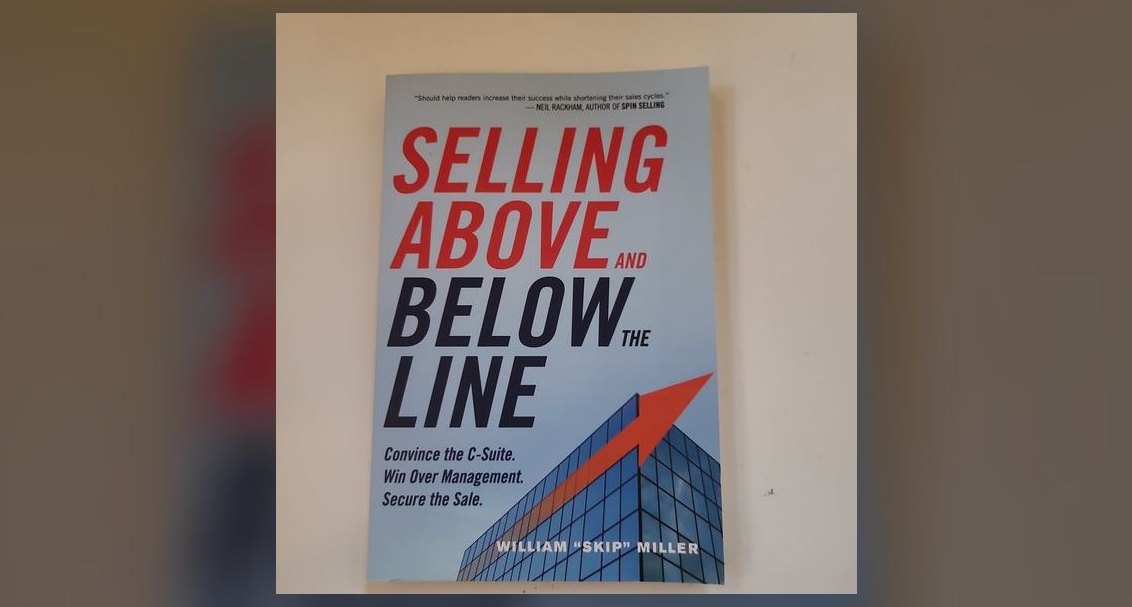 pulse-recentSelling Above and Below the Line by Skip Miller — Top 10 Key Takeaways for Sales Leaders in 2027