


Little Red Book of Selling — Cliff Notes Summary
Quality
Certified

Jeffrey Gitomer's *Little Red Book of Selling* (Bard Press, 2004) argues the real question isn't "how do I sell?" but "why do people buy?" Its 12.5 principles hold that buyers purchase from reps they like, trust, and find valuable — not from reps who out-pitch them. It's a mindset reset, not a methodology.
The rep who has every framework and still misses quota
Picture a mid-market account executive — call her the composite of every rep a sales manager has coached through a bad quarter. She has been through MEDDPICC certification. She can recite the Challenger teach-tailor-take-control sequence. Her CRM hygiene is spotless, her sequences are built in the engagement platform, her AI research assistant drops a company brief into her inbox every morning before she logs in. And she is at 61% of quota with six weeks left in the year.
Her manager pulls the deal reviews and finds a pattern that no scorecard flags. Every stalled opportunity has the same fingerprint: a champion who likes her fine but has never taken a risk on her behalf, an economic buyer she has spoken to once on a 22-minute call, and a discovery transcript full of questions that sound like they came off a template because they did. The deals aren't losing to a competitor. They're losing to "we decided to revisit next year," which is the enterprise-software phrase for *nobody in that building cared enough to spend political capital*.
This is the exact failure mode the *Little Red Book* was written against, twenty-plus years before the tooling existed to make it worse. Gitomer's premise is that process compliance and selling are different activities, and that a rep can be perfect at the first while being invisible at the second. His book doesn't give her a better qualification scaffold — she already has one. It gives her a diagnostic question to run against every stuck deal: *does this buyer like me, trust me, and see value in me specifically, independent of my product?* If the honest answer is no on any of the three, the framework was never the problem.

The book's physical form is part of the argument. Gitomer published it as a pocket-sized red hardback with short chapters, oversized margins, and hand-lettered exclamations — deliberately anti-textbook. The design assumes a rep reads one principle sitting in a parking lot before a call, not a chapter a night at a desk. That constraint forces every idea to survive compression into something a person under pressure can actually retrieve. A 400-page methodology bible does not get read in a parking lot. A three-page chapter titled "Kick Your Own Ass" does.
Gitomer himself is not an academic. He's a Charlotte, North Carolina-based sales trainer and speaker whose syndicated "Sales Moves" column ran in dozens of regional business journals, and who wrote *The Sales Bible* a decade earlier. The *Little Red Book* is essentially his keynote material distilled into a form that survives without him in the room. That origin explains both its strengths — every principle is stage-tested on rooms full of working reps — and its limits: it's persuasion literature, not research literature, and it never pretends otherwise.
How the 12.5 principles actually chain together
Most summaries list Gitomer's principles as twelve-and-a-half disconnected slogans. They aren't. They form a rough sequence that runs from the rep's internal state outward to the buyer's decision, and reading them as a chain is what makes the book usable rather than merely quotable.
Principles 1 through 4 are the pre-work. *Kick Your Own Ass* rejects the standard excuse stack — the economy, the territory, the comp plan, marketing's lead quality. Gitomer's position is that motivation is not a manager's deliverable. *Prepare to Win, or Lose to Someone Who Is* sets a concrete bar: if you can't name three specific things about the prospect's business before the call, you're not ready. *Personal Branding IS Sales* compresses into "it's not who you know, it's who knows you" — pick one channel and own it until inbound starts. *It's All About Value, It's All About Relationship, It's NOT All About Price* is the most-quoted of the set, and it's a sequencing claim as much as a values claim: deliver insight, a benchmark, an audit, something useful *before* the ask, and the discount fight is largely pre-won.
Principles 5 through 8 are the field motion. *It's NOT Work, It's NETwork* pushes reps into rooms where buyers already are. *If You Can't Get in Front of the Real Decision Maker, You Suck* is the bluntest line in the book and the one that maps most cleanly onto modern qualification — it is MEDDPICC's Economic Buyer criterion with the diplomacy removed. *Engage Me and You Can Make Me Convince Myself* is the Socratic core: "salespeople become known by the questions they ask." *If You Can Make Them Laugh, You Can Make Them Buy* is the principle most people dismiss and shouldn't — Gitomer's argument is that humor is a proxy for mutual approval, and mutual approval is the fulcrum the rest of the sale pivots on. He is not asking for stand-up. He's asking for the disarming, self-deprecating, observational kind that signals a human is present.
Principles 9 through 12.5 are differentiation and surrender. *Use Creativity to Differentiate and Dominate* — the handwritten note, the prospect-specific one-pager, the custom video. *Reduce Their Risk and You'll Convert Selling to Buying* — enumerate the buyer's technical, financial, political, and career risks and neutralize each before they surface it. *When You Say It About Yourself It's Bragging; When Someone Else Says It About You It's Proof* — testimonials, references, third-party validation, earned continuously rather than scrambled for at close. *Antennas Up* is a standing instruction to notice: competitor moves, org changes, a buyer's stated interests, anything that makes the next touch specific. And *Resign Your Position as General Manager of the Universe* — the half-principle, buried at the bottom on purpose — is straightforwardly stoic: work the inputs you control and stop litigating the outputs you don't.

Underneath the twelve-and-a-half sits the layer that gives the book its title question. Gitomer enumerates the buyer's actual reasons for purchasing: *I like my rep. I understand what I'm buying. I see a difference between this seller and the alternatives. I see value. I trust my rep. I feel a fit. The price seems fair.* Notice that price is last and conditional — "seems fair," not "is lowest." Every principle above exists to move one of those seven levers. That's the whole architecture, and it's why the book survives methodology fashion cycles: the levers haven't changed even as the channels have.
What the numbers around the book actually support
Be careful here, because summaries of this book are full of confidently stated figures that trace back to marketing copy rather than audited data. A few things are well-established. The book was published in 2004 by Bard Press. It spent an extended run on business bestseller lists and has been translated into a long list of languages. It has sold in the millions of copies across editions — the publisher and author's own materials are the source for the specific count, so treat any precise number you see quoted as a publisher claim, not an independent audit. It remains, two decades on, a standing fixture on new-hire reading lists at insurance, payroll, and business-services organizations that run large field sales forces, which is a more meaningful durability signal than any sales figure.
What's more useful than book-sales trivia is the set of operational numbers the principles imply, because those are what a manager can actually instrument.
Prep time per call. Principle 2's "three specific things" test is roughly a 20-to-30-minute research block per target account — enough to read a recent earnings call summary or press release, scan the buyer's professional profile and posting history, and identify one competitor already in the account. For a rep running five priority accounts a week, that's two to three hours weekly. Against a typical 40-hour week that's 5-8% of capacity, which is the single highest-leverage block on most reps' calendars and the first thing cut when pipeline pressure hits.
Question ratio in discovery. Principle 7 is measurable via conversation-intelligence tooling, which most mid-market sales orgs now run. The standard benchmarks circulating in that category put strong discovery calls somewhere in the range of a 45-55% rep talk ratio with roughly a dozen-plus substantive questions asked. You do not need to accept any specific vendor's number to use the principle — pull your own team's recordings, compute the median question count on closed-won versus closed-lost discovery calls, and the gap will tell you whether Principle 7 is a real constraint in your org or a solved problem.
Access to the economic buyer. Principle 6 is the easiest to instrument and the most consistently damning. Run a query against your CRM for open opportunities above your average deal size, and check what fraction have a logged meeting with a title at VP level or above. In most mid-market teams that number lands uncomfortably low. The follow-on query — win rate for deals *with* an economic-buyer meeting versus deals without — is usually the single most persuasive chart a sales leader can put in front of a skeptical team, and it makes Gitomer's crude phrasing land without anyone having to quote him.
Proof assets. Principle 11 implies a cadence, not a project. One new piece of third-party validation per rep per month — a written testimonial, a reference willing to take a call, a short recorded customer quote, a review on a public software marketplace — compounds into roughly a dozen per rep per year. Sales orgs that treat this as a marketing responsibility rather than a rep responsibility end up with four polished case studies and nothing that matches the specific vertical and company size of the deal in front of them.
Time cost of the book itself. Two to four hours, cover to cover. Chapters run two to four pages. That's the actual economic argument for buying it in bulk for a team: the intervention costs a rep half a workday and a manager the price of a paperback, which is a rounding error against the cost of a single stalled enterprise deal.
Where Gitomer conflicts with the frameworks that came after
The *Little Red Book* predates most of the vocabulary a modern revenue org runs on, and the honest read is that it agrees with those frameworks more than the labels suggest — but not entirely.
Versus the Challenger model. Matthew Dixon and Brent Adamson's 2011 research argued that the top-performing profile was the Challenger — teach, tailor, take control — and specifically that the Relationship Builder profile underperformed. Read superficially, that torpedoes Gitomer, who spends a whole book on likeability and rapport. Read carefully, it doesn't. Gitomer's Principle 4 is *value first* — show up with insight, a benchmark, an education the buyer didn't have. That is Challenger's "teach" with different branding. The genuine disagreement is narrower: Gitomer believes being liked is causally upstream of being trusted, while the Challenger data suggests being liked without teaching is inert. Both can be true. The synthesis most practitioners land on is that likeability is necessary and insufficient.
Versus MEDDPICC. The qualification scaffold that dominates enterprise software has no field for humor, creativity, or personal brand. It is a deal-inspection instrument, and it's excellent at what it does: forcing a rep to name the metric, the economic buyer, the decision criteria and process, the pain, the champion, the competition. What it cannot tell you is *how* to earn the champion or *why* the economic buyer took the meeting. Gitomer fills exactly that gap. Running both is not redundant — MEDDPICC is the checklist, the *Little Red Book* is the behavior that populates it.

Versus modern discovery frameworks. Keenan's *Gap Selling* and Rackham's older SPIN research are both, structurally, expansions of Principle 7. SPIN gave the question types a taxonomy backed by observational research on thousands of calls. Gap Selling gave the current-state/future-state gap a rigorous shape. Gitomer gave the one-line version a rep can remember under pressure. If you have time for one, take the researched frameworks; if you have a rep who won't read 300 pages, the one-liner still moves behavior.
Versus buyer-led, product-led motions. This is the sharpest limit. The book assumes the rep controls the entry into the deal. In categories where buyers self-educate through communities, review sites, and free product tiers before ever speaking to sales, a large share of the decision is formed before Principle 5 has a chance to operate. Gitomer's answer — get to the real decision maker — still applies, but the path there now routes through intent data, product usage signals, and warm community presence rather than a chamber-of-commerce breakfast.
The practical takeaway from this comparison: do not adopt the *Little Red Book* as your sales methodology. Adopt it as the layer underneath whichever methodology you already run. A team that swaps MEDDPICC for Gitomer will lose forecast accuracy. A team that runs MEDDPICC without any of Gitomer's soft-skill layer will have immaculate deal reviews on deals nobody in the buying organization actually wants.
The ways this book gets misapplied
Treating it as a system. The most common failure is a sales leader reading it over a weekend, deciding it's the new operating model, and rolling it out as a mandate. It doesn't have the structure to bear that weight — there is no qualification gate, no forecast category definition, no deal-stage exit criteria. Use it as a coaching supplement and a mindset intervention. Deploy one principle per week in the team meeting, with a concrete assignment attached, and let it work slowly.

Taking the dated tactics literally. The book recommends faxed thank-you notes, printed newsletters, and getting on local television. Those were reasonable differentiation plays in 2004 and are period pieces now. The *principle* underneath each is intact — send something the other twelve vendors didn't, in a medium where you'll be seen. The modern translations are a short personalized video, a genuine handwritten card through a fulfillment service, a specific and useful comment on the buyer's own published thinking, or a one-page teardown of their public-facing funnel. What is emphatically *not* a translation: a mass-personalized AI email that pattern-matches to the same 300 other reps' mass-personalized AI emails. Principle 9's value has gone *up* as generative tools have made fake personalization free — genuine creative effort is now the scarce signal.
Weaponizing Principle 6. "If you can't get in front of the real decision maker, you suck" is a useful diagnostic and a terrible management line. Delivered by a manager to a struggling rep, it does exactly nothing except confirm the rep's suspicion that the manager has no coaching to offer. Convert it into a process: a required exec-sponsor field on the opportunity, a champion-enablement plan, an executive-to-executive introduction motion where your own leadership opens doors. The insight survives; the delivery shouldn't.
Reading humor as personality. Principle 8 gets misread by naturally serious reps as an instruction to be funny, which produces the worst outcome on the list — forced levity in a discovery call. What Gitomer is actually describing is warmth and low defensiveness. A rep who can acknowledge an awkward moment, laugh at their own product's rough edge, or let a small human exchange happen before diving into the agenda is executing the principle without telling a single joke.
Using it to justify avoiding process. A predictable pattern: the rep who hates CRM hygiene discovers a book that says selling is about relationships, and uses it as permission. Gitomer's Principle 2 is preparation and Principle 12 is relentless noticing — both are process-heavy behaviors. Nothing in the book argues against rigor; it argues against rigor as a *substitute* for human competence.

Skipping 12.5 because it looks soft. The half-principle is the one that keeps reps in the job long enough for the other twelve to compound. Territory quality, macro conditions, product gaps, a competitor's funding round — all real, none controllable. The reps who burn out are usually the ones spending their limited emotional bandwidth on the uncontrollables. Making a short written list of controllable weekly inputs — research blocks, conversations initiated, questions added to the bank, proof assets requested — and grading yourself only on that list is the most operational version of Gitomer's most abstract idea.
Expecting it to teach objection handling. It doesn't, deliberately. There are no scripts and no word-for-word rebuttals. If a rep needs a call-block script or a pricing-objection response, this is the wrong book; the *Sales Bible* or a modern tactical text is a better fit. The *Little Red Book* addresses the layer above scripts — the conditions under which the objection never gets raised because the risk was already neutralized.
Buying it for the wrong role. It's aimed at people who carry a bag: field reps, account executives, sales development reps, and the managers coaching them. It is a poor fit for someone architecting a complex multi-year enterprise pursuit with a twelve-person buying committee, and close to useless for a revenue operations analyst trying to fix pipeline conversion math. Match the book to the job, not to the org chart.
Related questions
Is the Little Red Book of Selling still worth reading?
Yes, for the mindset chapters — preparation, better questions, value-first, and the stoic half-principle. Skip the media tactics, which are twenty years stale. Budget two to four hours and treat it as a coaching supplement, not a methodology replacement.
How does it compare to The Sales Bible?

*The Sales Bible* (1994) is the comprehensive reference — longer, tactical, script-adjacent. The *Little Red Book* is the compressed mindset version, built for re-reading between calls. Most reps get more from the Red Book first, then use the Bible as a lookup manual.
What is the "12.5" about?
Gitomer numbers the final principle ".5" as a deliberate wink — it's the one readers skip and the one that matters most. "Resign Your Position as General Manager of the Universe" means working the inputs you control and releasing the outcomes you don't.
Can a sales manager run team training from this book?
Yes, one principle per week with a concrete assignment attached — a proof asset requested, an economic-buyer meeting booked, five accounts researched. Avoid rolling it out as a formal methodology; it lacks qualification gates and forecast structure.
Does it work for inside sales and SDRs?
Mostly. Principles 2, 4, 7, 9, and 11 translate directly to prospecting. Principle 5's in-person networking advice needs modernizing into community and social presence, and Principle 6 becomes a multithreading discipline rather than a door-knocking one.
FAQ
Who wrote the Little Red Book of Selling and when?
Jeffrey Gitomer wrote it, published by Bard Press in 2004. Gitomer is a sales trainer, speaker, and syndicated columnist based in Charlotte, North Carolina, whose earlier book *The Sales Bible* established him in the category. The Red Book distills his live keynote material into a pocket-sized hardback built for repeat reading rather than a single pass.
What are the 12.5 principles in one line each?

Kick your own ass; prepare or lose; personal branding is sales; value and relationship over price; it's not work, it's network; reach the real decision maker; better questions make buyers convince themselves; make them laugh; use creativity to differentiate; reduce their risk; earn third-party proof; keep antennas up; and resign as general manager of the universe.
Is this summary enough, or should I read the book?
A summary gets you the principles; it can't reproduce the format, which is most of the value. The book is designed for a rep to open at a random page in a parking lot and get one usable idea in ninety seconds. If you only need the framework for a comparison or a team discussion, a summary works. If you want the behavioral effect, read the actual thing.
Does the book conflict with MEDDPICC or Challenger?
Less than the labels suggest. Gitomer's value-first principle is essentially Challenger's "teach," and his decision-maker principle is MEDDPICC's economic buyer with the diplomacy stripped out. The genuine gap is that neither modern framework has any field for humor, creativity, or personal brand — which is exactly the layer Gitomer covers. Run them together, not instead of each other.
What in the book has aged badly?
The media tactics. Faxed notes, printed newsletters, and local-television appearances were differentiation plays in 2004 and read as period pieces now. The networking chapter also skews heavily toward in-person events at a time when a rep can build a wider network through professional communities online. Translate the principle, discard the medium.
Who should not read this book?
Anyone looking for scripts, objection-handling language, complex-pursuit strategy for large buying committees, or revenue operations analysis. It offers none of those and doesn't claim to. It's a mindset and behavior book for people who carry a quota, and it works best as a supplement to whatever structured methodology a team already runs.
Sources
- Little Red Book of Selling — Amazon listing
- Little Red Book of Selling — Barnes & Noble
- Internet Archive — full book scan
- Goodreads — reader reviews and ratings
- Bard Press — publisher site
- Gitomer's official site
- Harvard Business Review — The End of Solution Sales (Challenger research)
- Shortform — Little Red Book of Selling overview
Related on PULSE
- Selling the Invisible by Harry Beckwith — Cliff Notes Summary
- Secrets of Question-Based Selling by Thomas Freese: Summary, Key Lessons, and RevOps Takeaways
- SPIN Selling by Neil Rackham: Summary, Key Lessons, and RevOps Takeaways
- Gap Selling by Keenan: Summary, Key Lessons, and RevOps Takeaways
- The SPIN Selling Fieldbook — Cliff Notes Summary
- The Sales Acceleration Formula by Mark Roberge — Cliff Notes Summary
This page will be disappearing soon. Save it to your device for $1 — or read it free while it is here.
@Kory-White- · if Venmo asks, the last 4 of my number are 2012
This page is gone.
This one is off the shelf now. $1 keeps it on your phone for good — the whole page, pictures and diagrams included.
 pulse-recentFanatical Prospecting by Jeb Blount — Top 10 Key Takeaways for Sales Leaders in 2027
 pulse-recentHow does *The New Strategic Selling* define the first step in qualifying an opportunity in 2027?
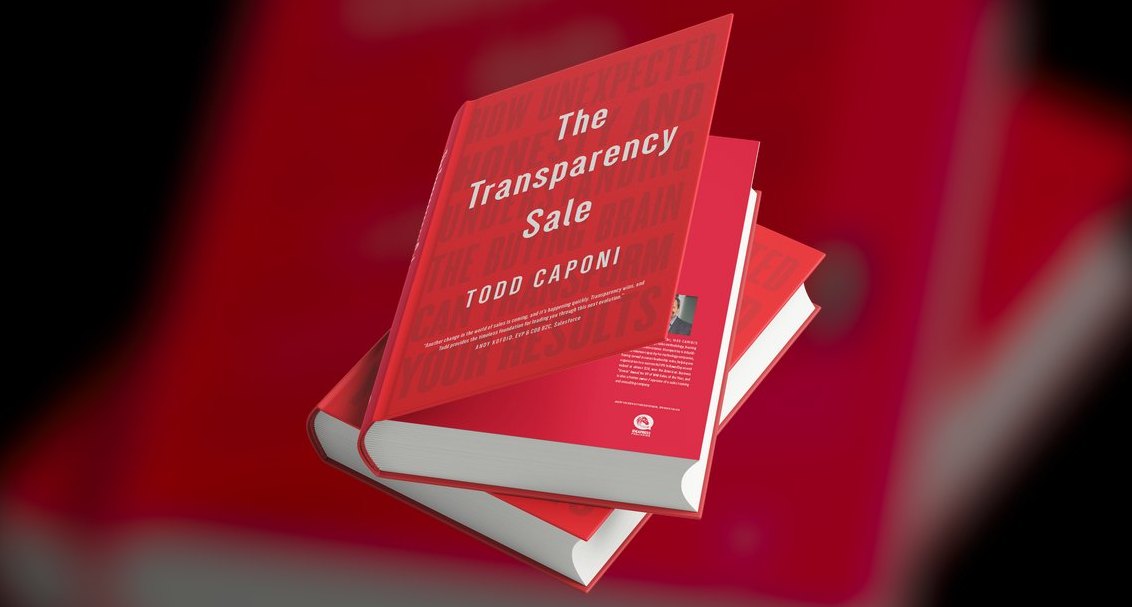 pulse-recentThe Transparency Sale by Todd Caponi — Top 10 Key Takeaways for Sales Leaders in 2027
 pulse-recentCoaching Salespeople into Sales Champions by Keith Rosen — Top 10 Key Takeaways for Sales Leaders in 2027
 pulse-recentThe Sandler Rules by David Sandler — Top 10 Key Takeaways for Sales Leaders in 2027
 pulse-recentHow to Apply Strategic Selling — Step-by-Step Playbook in 2027
 pulse-recent$100M Offers by Alex Hormozi — Top 10 Key Takeaways for Sales Leaders in 2027
 pulse-booksWhat are the most common mistakes in Book Summaries in 2027?
 pulse-recentWhat is the first concrete step in The Sandler Rules by David Mattson for a sales leader to implement the system in 2027?
 pulse-recentConceptual Selling by Robert Miller and Stephen Heiman — Top 10 Key Takeaways for Sales Leaders in 2027