


How to Win Friends and Influence People — Cliff Notes Summary
Quality
Certified
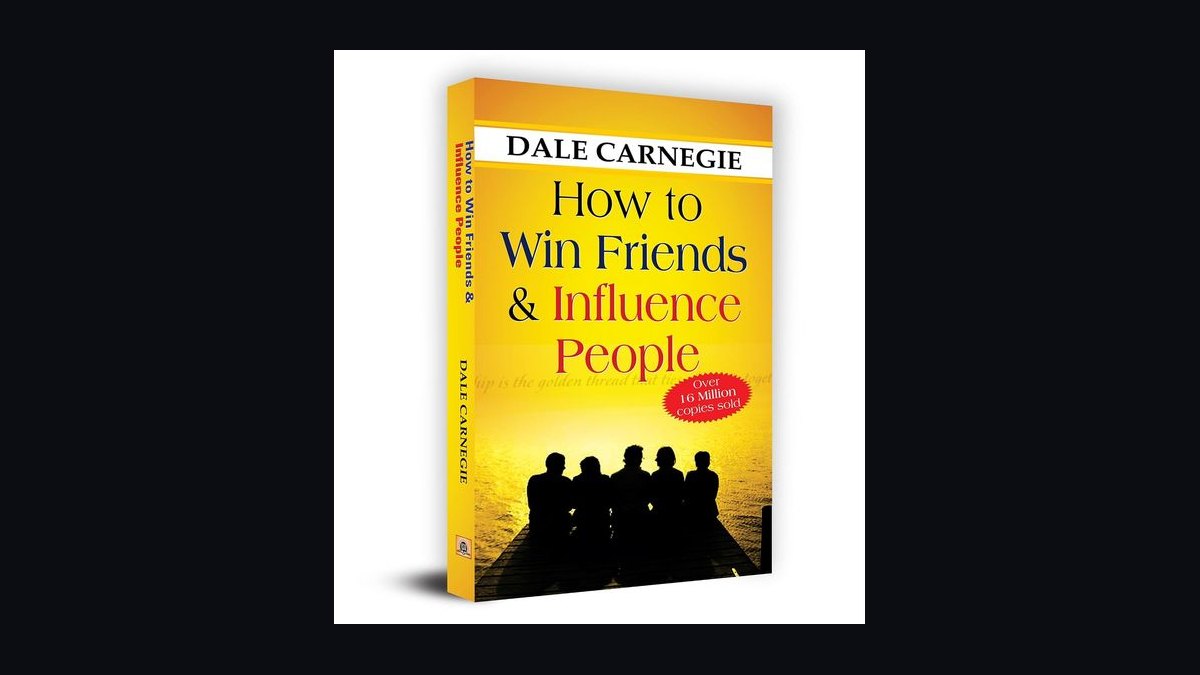
*How to Win Friends and Influence People* is Dale Carnegie's 1936 human-relations manual, organized into four parts and thirty short principles: handle people without criticism, make people like you, win them to your thinking, and lead without breeding resentment. Its core claim is that people act on their own wants and their craving to feel important.
Two ways to read Carnegie: the cliff notes versus the full text
Most people arriving at this book have already decided they want the summary. That's a legitimate choice, but it's worth being honest about what each option actually gives you, because they are not interchangeable and the gap between them is bigger than the page count suggests.
The cliff-notes route delivers the thirty principles as a list. You can absorb that list in fifteen minutes. The principles are short, imperative, and memorable by design — Carnegie wrote them to be recited in a training room, not parsed in an armchair. "Don't criticize, condemn, or complain." "Remember that a person's name is, to that person, the sweetest sound in any language." "Try honestly to see things from the other person's point of view." Read as a list, they sound obvious. That obviousness is the trap: a list of thirty things you already agree with produces zero behavior change, because you never encounter a situation where following the principle costs you something.
The full text — roughly 250–290 pages depending on edition, six to ten hours of reading for most people — buries each principle under three to eight anecdotes. That ratio is the whole design. Carnegie was a public-speaking instructor who tested this material on adult-education classes in New York for years before publishing; the stories exist because he watched which ones made a room of working salespeople actually change their behavior the following week. The story of the engineer who stopped correcting his boss, the landlord who reduced a tenant's rent after being thanked, the father who apologized to his son in "Father Forgets" — those are the load-bearing parts. Strip them out and you have a fortune cookie.
The practical trade-off looks like this. If you want to *reference* the framework — to have a name for a thing you already do intuitively, or to check yourself before a hard conversation — the summary is sufficient and the full book is a poor use of eight hours. If you want the material to actually change how you open a difficult 1:1 or a stalled renewal conversation, the summary will not do it. The anecdotes are the mechanism by which the principles become retrievable under pressure.

There's a third option people rarely consider: read the four part-openers and the chapter on avoiding arguments, and skip the rest. Carnegie's structure is unusually skimmable — each chapter ends with the principle stated in bold as its own line. You can read a single chapter in eight minutes and get the full argument for that one principle plus two supporting stories. Treated as a reference manual rather than a book, it holds up better than most business writing of any era.
What the four parts actually contain
The book's architecture is worth knowing even if you never read past this page, because "the 30 principles" as a flat list obscures the fact that they're four distinct tools for four distinct situations.
Part One — Fundamental Techniques in Handling People (3 principles). Don't criticize, condemn, or complain. Give honest and sincere appreciation. Arouse in the other person an eager want. These are the foundation and the shortest section. Carnegie leans on behaviorist research — the finding that reward-trained animals learn faster and retain more than punished ones — and extends it to people. His line is "Any fool can criticize, complain, and condemn — and most fools do." The third principle here, arousing an eager want, is the one modern sales training quotes most: "The only way on earth to influence other people is to talk about what they want and show them how to get it."
Part Two — Six Ways to Make People Like You (6 principles). Become genuinely interested in other people. Smile. Remember names. Be a good listener and encourage others to talk about themselves. Talk in terms of the other person's interests. Make the other person feel important, sincerely. This is the section most often excerpted and most often mocked, because out of context it reads like advice on being a golden retriever. In context, principle four — listening — is the substantive one, and the other five are supports for it.
Part Three — How to Win People to Your Way of Thinking (12 principles). The longest section and the one that maps most directly onto negotiation. The only way to get the best of an argument is to avoid it. Show respect for the other person's opinions; never say "you're wrong." If you are wrong, admit it quickly and emphatically. Begin in a friendly way. Get the other person saying "yes, yes" immediately. Let the other person do a great deal of the talking. Let the other person feel the idea is theirs. Try honestly to see things from their point of view. Be sympathetic with their ideas and desires. Appeal to the nobler motives. Dramatize your ideas. Throw down a challenge.
Part Four — Be a Leader: How to Change People Without Giving Offense or Arousing Resentment (9 principles). Begin with praise and honest appreciation. Call attention to mistakes indirectly. Talk about your own mistakes before criticizing. Ask questions instead of giving direct orders. Let the other person save face. Praise the slightest improvement. Give the other person a fine reputation to live up to. Use encouragement; make the fault seem easy to correct. Make the other person happy about doing what you suggest.
Notice the escalation. Part One is about not doing damage. Part Two is about earning a hearing. Part Three is about moving someone's position. Part Four is about changing behavior in someone who has to keep working with you afterward — which is why it's last and why it's the section managers should read first.
How to decide which part you actually need
The mistake most readers make is reading the book front-to-back once and never returning. The better pattern is diagnostic: identify what's failing in your conversations and go to the part that addresses it. The four parts are not a sequence you graduate through — they're four different failure modes.
Working the diagnostic honestly is harder than it looks, because the most common failure is the first branch and nobody thinks they're on it. Criticism disguises itself well. "I just want to understand why the numbers slipped" is criticism. "Help me understand what happened here" is closer to neutral, but tone decides it. Carnegie's test is simple and unflattering: if the other person would describe your opening line as being about their mistake, you're in Part One and the rest of your technique doesn't matter yet.
The second-most common failure is people applying Part Three tactics — the persuasion moves — to someone who hasn't yet decided they want to talk to you. Getting a stranger to say "yes, yes" to leading questions when they have no relationship with you reads as manipulation, because functionally it is. The Part Two principles aren't a warm-up act; they're the precondition that makes Part Three land as persuasion rather than as a technique being run on someone.
Part Four is separated for a structural reason worth naming. Parts Two and Three assume a roughly symmetric relationship — you can walk away, they can walk away. Part Four assumes a power asymmetry and a continuing relationship. That's why its principles are softer and more indirect: "call attention to mistakes indirectly," "let the other person save face," "make the fault seem easy to correct." When you hold power, the same directness that reads as candor between peers reads as a threat downward. Carnegie understood this in 1936 better than a lot of management writing does now.
The numbers behind the book and its reception
Concrete figures matter here because the book's staying power is the strongest argument for reading it, and because inflated claims circulate freely about it.
Sales. The book has sold well over 30 million copies worldwide since 1936, which places it among the best-selling non-fiction titles ever published. It has never been out of print. It continues to sell in substantial volume every year, nearly ninety years after publication — a pattern almost no business book matches. Most business bestsellers have a two-to-four-year commercial life; Carnegie's has had nine decades.
Institutional recognition. A 2011–2013 Library of Congress and Book-of-the-Month Club survey of "Books That Shaped America" included it among the most influential books in American history — notable because it sat alongside literary and political works rather than other self-help titles.
Length and time cost. Standard editions run roughly 250–290 pages. At an average adult reading pace of 200–250 words per minute, that's six to ten hours end to end. The revised edition (updated posthumously by the Dale Carnegie organization) modernizes some examples; the original 1936 text is also widely available and is the version most quoted. A single chapter is typically 6–12 pages, or eight to fifteen minutes.
The training business. Carnegie founded a training company in 1912 that still operates internationally, running courses in dozens of countries. Warren Buffett has spoken publicly and repeatedly about taking a Dale Carnegie public-speaking course as a young man and has said he keeps that certificate displayed — a detail he has cited as more meaningful to him than his academic credentials. That's a data point about the *course*, not the book, but they share the same source material.
What the numbers don't prove. Sales volume is evidence of reach, not of efficacy. There is no controlled study demonstrating that reading Carnegie improves negotiation outcomes by some percentage, and anyone quoting such a figure is inventing it. The honest claim is narrower: the book's specific behavioral prescriptions — use names, ask questions instead of issuing orders, open with genuine appreciation, let the other person talk more than you do — are consistent with a large body of later work on listening, reciprocity, and face-saving, and they cost nothing to test on yourself.
The criticisms, stated fairly. Three recur. First, some of Carnegie's anecdotes are unverifiable and several have been questioned as embellished or too neat — he was writing inspirational instruction, not history. Second, the examples skew heavily toward 1930s American industry and the gender language is of its era, which makes stretches of the text feel like a period piece. Third, and most substantively, the book can be read as a manual for instrumental relationships — being interested in people *in order to* get something. Carnegie anticipates this and repeatedly insists on sincerity, but insisting on sincerity in a book about technique is an unresolved tension, not a rebuttal. Readers who dislike the book usually dislike it for this reason, and the objection is fair.
Reading it as strategy, not as a checklist
The single biggest determinant of whether this book does anything for you is how you sequence the reading and the practice. Treating thirty principles as a checklist fails predictably — you cannot hold thirty rules in working memory during a live conversation, and trying to produces the stilted, performed quality that gives the book its bad reputation.
The approach that works is narrow and slow. Pick one principle. Run it for a full week across every conversation you have, professional and personal. Then pick the next. Carnegie himself recommends something like this in the book's opening "Nine Suggestions" — read each chapter twice, stop and reflect, keep notes on where you applied a principle and what happened, and review weekly.
A workable eight-week sequence, ordered by difficulty rather than by the book's own order:
Week 1 — Names. Use the person's name once, naturally, in every conversation. This is the easiest principle and it builds the habit of noticing you're applying something. Nobody has ever been offended by hearing their own name.
Week 2 — Listen and don't finish sentences. Track how much of each conversation you spoke. Aim to speak less than a third. This one is uncomfortable and immediately informative — most people discover they talk far more than they believed.
Week 3 — Genuine questions instead of statements. Convert three assertions per day into questions. "This won't work because X" becomes "What happens with X in this approach?" Same information, different posture.
Week 4 — No criticism. The hardest of the early ones. For one week, do not open any conversation with what someone did wrong. If a correction is genuinely necessary, follow Part Four: talk about your own comparable mistake first, then make the fault seem easy to correct.
Week 5 — Admit error fast. When you're wrong, say so immediately and more emphatically than the other person would have. Carnegie's insight is that self-criticism preempts other-criticism and defuses the confrontation entirely.
Week 6 — Their point of view, written down. Before any consequential conversation, write two sentences describing what the other person wants and what they're worried about. Not what you want them to want — what they actually want. This is the principle everything else in Part Three rests on.
Week 7 — Appreciation, specific and earned. Once per day, tell someone something specific you genuinely value about their work. Specificity is the whole thing; "great job" is noise, "the way you caught that discrepancy before it shipped" is signal.
Week 8 — Let the idea be theirs. In one meeting, plant a direction through questions and let someone else arrive at it and own it. This is the hardest principle for anyone whose ego is tied to being visibly right, which is most people.

Two sequencing notes. First, do not start with Part Three's persuasion moves. Running "get them saying yes" on people before you've fixed your criticism reflex is how the book earns the accusation of manipulation — technique without the foundation reads as technique. Second, keep the notes. The reason this material fails for most readers is that behavior change is invisible from the inside; without a written record of "I tried X, they responded Y," you get no feedback signal and revert within two weeks.
Where Carnegie sits among the books that came after
Reading Carnegie in isolation gives you an incomplete picture, because nearly every persuasion and negotiation book since either builds on him or defines itself against him. Knowing the map helps you decide what to read next.
**Cialdini's *Influence*** is the empirical successor. Where Carnegie asserts from experience and anecdote, Cialdini catalogs six principles — reciprocity, commitment and consistency, social proof, authority, liking, scarcity — and grounds each in experimental research. "Liking" is essentially Carnegie's Part Two with citations attached. If Carnegie's lack of evidence bothers you, this is the book that fixes it.
**Fisher and Ury's *Getting to Yes*** takes Carnegie's "try honestly to see things from the other person's point of view" and turns it into a negotiation method: separate people from the problem, focus on interests rather than positions, invent options for mutual gain, insist on objective criteria. "Interests, not positions" is Carnegie's third principle — the eager want — formalized.
**Chris Voss's *Never Split the Difference*** inverts one of Carnegie's most famous moves. Carnegie wants you to get people saying "yes, yes." Voss, from hostage-negotiation practice, argues that early yeses are commitment-averse and that "no" is the safer door — and pushes tactical empathy, labeling, and mirroring, all of which are Carnegie's listening principle with sharper mechanics.

The Challenger Sale is the most direct rebuttal. Its research argues that in complex enterprise sales, relationship-building alone underperforms, and that the highest performers teach, tailor, and take control — including constructive disagreement with the customer's stated view. That is a real conflict with Carnegie's "avoid the argument." The reconciliation most practitioners land on: Carnegie governs the interpersonal layer, Challenger governs the content layer. You can disagree with someone's diagnosis while still never telling them they're wrong about themselves.
Gap Selling and most modern discovery methodologies are Carnegie's "arouse an eager want" with a process wrapped around it — find the current state, find the future state, quantify the gap, and let the buyer's own stated want do the persuading.
The upstream lineage matters too. Carnegie draws openly on William James on the craving for appreciation, on Alfred Adler on self-interest, and on the behaviorist literature of his day. He was a synthesizer and a popularizer, not an original researcher, and he says so. The book's contribution was packaging — turning scattered psychology into thirty imperatives that a working adult could actually apply on Monday.
A last note on scope. The title is about influence, but the book's most durable use is in relationships where you're not trying to influence anything: a spouse, a difficult colleague, a parent. The section on family relations that closed the original edition was dropped from later revisions, which is a small loss. The principles work in low-stakes settings precisely because there's no outcome you're steering toward, which removes the sincerity problem entirely.
Related questions
Should I read the original 1936 edition or the revised one?
The original if you want the text people quote; the revised if dated examples will stop you from finishing. The principles are identical. The revision modernizes anecdotes and drops the family-relations section. Most quotations circulating online come from the original.
Is the book manipulative?

It can be used that way, and Carnegie repeatedly warns against it — his answer is that insincere technique gets detected and backfires. The fair criticism is that a book teaching sincerity as method has an unresolved tension in it. Readers uncomfortable with that usually stay uncomfortable.
What's the single most useful principle if I only take one?
"Try honestly to see things from the other person's point of view." Every other principle is downstream of it. Written practice helps: before hard conversations, note in two sentences what they want and what they fear.
How does it compare to Cialdini's *Influence*?
Carnegie is prescriptive and anecdotal; Cialdini is descriptive and experimental. Carnegie tells you what to do, Cialdini explains why compliance works. Read Carnegie for behavior, Cialdini for mechanism. They overlap most on liking and reciprocity.
Does any of it work over email and video calls?
Yes, with adjustment. Names, specific appreciation, and asking questions instead of asserting all transfer directly to written channels. Smiling and genuine interest need camera-on and slower pacing. The listening principle is harder remotely and matters more.
FAQ
How long does it take to read?
Standard editions run 250–290 pages, or roughly six to ten hours at typical adult reading speed. Individual chapters take eight to fifteen minutes each. Because every chapter ends with its principle stated as a standalone line, the book skims unusually well — you can extract the framework in under an hour and return to specific chapters as reference.
Do I need to memorize all thirty principles?
No, and trying to is counterproductive. Thirty rules cannot be held in working memory during a live conversation, and attempting it produces the stilted quality critics complain about. Pick one principle, run it for a week, then move to the next. Most people find that three or four — names, listening, avoiding criticism, and specific appreciation — account for nearly all the practical benefit.
Is it only useful for salespeople?
No. It's written for anyone who deals with other people, and the strongest applications are arguably domestic and managerial rather than commercial. It's most valuable in roles requiring persuasion, coaching, or conflict resolution, but the principles apply equally to a marriage or a neighbor dispute. The sales association comes from how heavily sales training has adopted it, not from the text itself.
Is the advice outdated?
The examples are; the mechanics aren't. Anecdotes lean on 1930s American industrialists and the gender language is of its era. But the underlying observations about appreciation, face-saving, and self-interest describe human behavior that hasn't changed. Read the dated passages as period texture rather than as the argument.
Can a summary replace the book?
For reference, yes. For behavior change, no. The principles read as obvious in list form, which is exactly why a list produces no change — you agree and move on. The anecdotes are the mechanism that makes a principle retrievable when following it costs you something. Use a summary as a refresher after reading, not instead of it.
What should I read after it?
Cialdini's *Influence* for the experimental grounding Carnegie lacks. *Getting to Yes* for negotiation structure. *Never Split the Difference* for sharper listening mechanics and a useful counterargument about early agreement. *The Challenger Sale* if you work in complex B2B and want the strongest case against relationship-first selling.
Sources
- Wikipedia — How to Win Friends and Influence People
- Simon & Schuster — publisher page
- Dale Carnegie Training — official site
- Library of Congress — Books That Shaped America
- Britannica — Dale Carnegie
- Farnam Street — How to Win Friends and Influence People
- SparkNotes — How to Win Friends and Influence People
- Goodreads — How to Win Friends and Influence People
- Project Gutenberg Canada — Dale Carnegie texts
Related on PULSE
This page will be disappearing soon. Save it to your device for $1 — or read it free while it is here.
@Kory-White- · if Venmo asks, the last 4 of my number are 2012
This page is gone.
This one is off the shelf now. $1 keeps it on your phone for good — the whole page, pictures and diagrams included.
 pulse-recentWhat are the concrete steps to implement the Sandler Rules for Sales Leaders by David Mattson in 2027?
 pulse-recentThe Collaborative Sale by Keith Eades — Top 10 Key Takeaways for Sales Leaders in 2027
 pulse-recentWhat is the first concrete step in The Sandler Rules by David Mattson for building a sales plan in 2027?
 pulse-recentWhat is the first concrete step in the Sandler Selling System for handling a prospect's initial brush-off in 2027?
 pulse-recentCrossing the Chasm by Geoffrey Moore — Top 10 Key Takeaways for Sales Leaders in 2027
 book-summaryLittle Red Book of Selling by Jeffrey Gitomer — Cliff Notes Summary
 book-summaryWhat factors drive the price of Book Summaries up or down in 2027?
 pulse-recentThe Challenger Customer by Brent Adamson — Top 10 Key Takeaways for Sales Leaders in 2027
 pulse-recentSales EQ by Jeb Blount — Top 10 Key Takeaways for Sales Leaders in 2027
 pulse-recentStart with No by Jim Camp — Top 10 Key Takeaways for Sales Leaders in 2027