


The 10X Rule — Cliff Notes Summary
Quality
Certified

The 10X Rule (Grant Cardone, Wiley, 2011) argues success gaps come from targets set too small and effort estimated too low. Multiply your goal by ten, then multiply the action you think it requires by ten again. Its durable core is the Four Degrees of Action and expand-don't-contract; its weakest parts are the obsession rhetoric.
The rep who did everything right and still missed by 40 percent
Picture a mid-market AE carrying a $1.2M annual quota, split into four quarters of roughly $300K. She is not lazy. She hits her activity metrics: 50 dials a day, 60 emails, a LinkedIn touch on every open opportunity. Her manager's dashboard is green on every leading indicator. And she finishes Q1 at $178K — 41% under. Q2 looks identical. She works longer hours, tightens her discovery script, buys a sales book, and lands at $195K.
This is the exact operator Cardone wrote the book for, and it is worth being precise about why "working harder" stopped working for her. Her problem is arithmetic, not effort. If her average deal is $30K and her stage-to-close rate from first meeting is 18%, then $300K a quarter requires ten closed deals, which requires roughly 56 first meetings, which — at a 4% meeting-book rate on cold outbound — requires around 1,400 meaningful contacts a quarter, or about 22 a day across every channel. Her 50 dials produce maybe 6 connects. Her 60 emails produce 2 replies. She is generating roughly a third of the top-of-funnel volume her own conversion math demands, and no amount of script polish closes a 3X input gap.
The 10X Rule's contribution here is not motivational. It is a claim about systematic estimation error: humans under-forecast the effort a goal requires by roughly an order of magnitude, so applying a 10X multiplier is a correction for a known bias, not an act of bravado. When the AE above wrote her plan, she estimated the activity honestly and still landed at a third of what the math needed — which is what estimation bias looks like from the inside. It feels like a reasonable plan right up until the quarter closes.

Broaden the frame past the individual rep and the same failure repeats at every altitude. A founder projects 40 investor conversations to close a seed round and takes 260. A RevOps leader models 3X pipeline coverage and discovers the forecast only holds at 5X. A marketing team plans 12 pieces of content a quarter to move organic rankings and learns that the competitors ranking above them publish 12 a week. Every one of those is the same shape: the plan was built by scaling up from current behavior rather than backward from the required outcome. Cardone's fix is crude but structurally correct — force the number so far past current behavior that incremental adjustment becomes impossible and the operator has to redesign the system instead.
That redesign is the actual payload of the book, and it is why the Cliff Notes version is more useful than the full read. You cannot 10X a quota by dialing faster. You get there by adding channels, changing the ICP, raising price, hiring, partnering, or building a referral engine — structural moves, not effort moves. The multiplier is a forcing function that makes structural thinking mandatory.
How the 10X mechanism actually works
The book's engine is Chapter 7's Four Degrees of Action, and everything else in the 400-odd pages is commentary on it. Cardone's claim is that on any goal, at any moment, a person is operating at exactly one of four levels.
Do Nothing. Passive avoidance. The rep who "didn't get to" the call list, the founder who has been "about to" start fundraising for six weeks. It is failure by omission and it is at least honest about itself.
Retreat. Active withdrawal from the goal to avoid the pain of pursuing it. The AE who stops prospecting after two no-shows. The manager who quietly lowers the team target mid-quarter so the miss looks smaller. Retreat is more corrosive than Do Nothing because it involves a decision.
Normal Action. Socially acceptable, market-average effort. This is the trap, and it is Cardone's sharpest observation. Normal Action produces just enough motion to convince the operator they are trying — the dials got made, the dashboard is green — while never crossing the threshold where results compound. Chapter 8, "Average Is a Failing Formula," makes the argument explicit: average effort in a market where everyone is averaging produces below-average results, because the middle of the distribution is the most crowded and least defensible place to stand.
Massive Action. Volume and persistence far beyond what feels reasonable or comfortable. Cardone's contention is that only this degree reliably produces outsized outcomes, and that from a results standpoint the first three degrees are functionally interchangeable.
The second mechanism, running underneath the four degrees, is that action precedes belief rather than following it. Cardone does not argue you should feel confident and then prospect; he argues you should prospect at absurd volume until prospecting stops feeling like a threat. The rep who books ten times as many meetings stops experiencing meeting-booking as difficult, because repetition has moved it from event to routine. This is the least controversial claim in the book and the one with the most support outside it — it is a plain restatement of exposure-based behavior change, the same principle underneath every skills-acquisition curve.
Chapter 16 gives the mechanism an operating instruction: fear is directional data. If a price-increase conversation, a firing, or a call to a lapsed account produces dread, that dread marks the highest-leverage available action, and the instruction is to take it within minutes of noticing the feeling — before avoidance sets and hardens into a permanent hole in the plan.

Chapter 9 supplies the mechanical procedure: write the current target, multiply by ten, then work backward to the daily activity the bigger number implies. The backward pass is the part operators skip and the part that does the work. A $1.2M quota becomes $12M, and the moment you decompose $12M into daily activity the plan visibly breaks — which is the intended outcome. You are supposed to discover that the current system cannot produce it, because that discovery is what licenses redesign.
Chapters 13 and 15 add the commitment layer: go all in and overcommit, then burn the retreat path. Commit to the deliverable publicly before you know how you will produce it, on the theory that the commitment recruits problem-solving that comfortable planning never triggers. This is the most operationally dangerous advice in the book and needs a boundary, which the trade-offs section takes up.
Real numbers, ranges, and benchmarks
The most useful thing a practitioner can do with the 10X Rule is stop treating "10X" as a literal coefficient and start treating it as a direction, then anchor the actual multiplier to real funnel math. Here is where the numbers actually live.
Pipeline coverage. The standard planning ratio in most B2B forecasting practice is 3X to 5X pipeline against quota, with weaker-converting segments or longer sales cycles pushing toward 5X or 6X. That ratio is a small-scale, disciplined version of exactly what Cardone is arguing: the input has to be a multiple of the output, and the multiple is larger than intuition suggests. A team that plans at 2X coverage and forecasts confidently is making the same estimation error the book describes, just with a smaller exponent. The practical move is to compute your own coverage requirement from historical stage conversion rather than adopting a rule of thumb — if 22% of Stage 2 pipeline closes, you need roughly 4.5X, and no motivational framing changes that.

Outbound conversion cascades. Work the chain honestly and the volume requirement stops being a matter of opinion. Cold-call connect rates in most B2B motions land in the low single digits to around 10% depending on data quality and persona; cold email reply rates for well-targeted, well-written sequences commonly sit in the low-to-mid single digits, with meeting-book rates a fraction of that. Multi-touch sequences typically need 8 to 12 touches across channels before a large share of the eventual replies arrive — a majority of responses come after the point where most reps have already stopped. That last figure is where 10X thinking pays: the rep running 4 touches and the rep running 12 are not 3X apart in results, because the 4-touch rep is quitting before the yield curve turns.
Deal-size and cycle interactions. The multiplier is not uniform across motions. A transactional SMB deal with a 14-to-30-day cycle and a $5K ACV tolerates and rewards raw volume increases almost linearly — more contacts genuinely means more revenue. A $250K enterprise deal with a nine-month cycle and a seven-person buying committee does not. There, 10X applied to dials is waste; 10X applied to the number of stakeholders touched inside a single account, or the number of executive relationships built before a renewal, is the correct translation. The rule has to be re-pointed at the constrained variable, and in enterprise the constrained variable is almost never call count.
Ramp and capacity. If your answer to a 10X target is headcount, the numbers get unforgiving. New AE ramp to full productivity commonly runs two to three quarters in mid-market and longer in enterprise, and attrition in SDR roles has historically run high enough that a team's effective capacity is meaningfully below its headcount at any given moment. A leader who commits publicly to a 10X number and plans to hire into it needs to work backward through ramp: capacity you need in Q4 has to be hired in Q1 or Q2, and the cash to carry unproductive ramping reps has to exist. This is the practical reason overcommitment fails more often than it works — the commitment is instant and the capacity is not.
Content and demand-side analogues. The same arithmetic governs the upstream channels a revenue leader controls. Organic content programs usually need a critical mass of indexed pages and several months of compounding before ranking movement is measurable; running a program at one-tenth the required volume produces the same "we tried content, it didn't work" conclusion the AE reached about prospecting. Paid channels behave differently — spend can be scaled instantly, but CAC typically degrades as you push past the highest-intent audience segments, so a literal 10X on paid budget rarely returns 10X pipeline. Knowing which of your channels are volume-elastic and which are not is the difference between applying the rule intelligently and burning a budget.
Setting the target itself. A workable pattern is to run three numbers rather than one: the committed number (what you forecast and are accountable to), the stretch number (roughly 1.5X to 2X, resourced but not promised), and the 10X number (used only to test whether the current system could ever produce it). The 10X number is a design tool. You never commit to it externally; you use it to surface which constraint breaks first — capacity, pricing, ICP, or channel mix — and then you go fix that constraint at a realistic multiple.
Trade-offs, alternatives, and where the strategy breaks
The 10X Rule is a volume instrument, and volume instruments have a specific failure domain: they cannot fix a broken direction. If the product does not fit the market, the ICP is wrong, the pricing is misaligned, or the message does not land, then multiplying activity multiplies waste and accelerates the burn of the finite resources — rep energy, domain reputation, prospect goodwill, cash — that you will need once you find the right direction. Ten times the outbound to the wrong persona gets you to a dead end faster and with a worse sender reputation than you started with.
This is the single most important calibration for a practitioner. Diagnose the constraint before applying the multiplier. If the gap is volume, 10X is the right tool and probably underapplied. If the gap is positioning, conversion quality, product, or territory design, 10X is actively harmful, and the alternative frameworks are better fits: constraint-based thinking that finds and relieves the single binding bottleneck, or disciplined experiment design that runs many cheap tests to find direction before committing scale.

The second trade-off is human. Chapter 12 frames obsession as a gift rather than a pathology, and Chapter 17 dismisses time management as a genre — the argument being that you have a priority problem, not a time problem, and 10Xers create time by cutting low-value activity rather than scheduling it better. The priority-versus-time observation is genuinely useful. The obsession framing has aged badly, and not merely because norms shifted. Sustained Massive Action has a real cost curve: quality of thought degrades, judgment errors rise, and the operator's most valuable output — strategic decisions about where to point the effort — is exactly the thing that suffers first under sleep debt. The workable adaptation most revenue leaders converge on is 10X applied in defined sprints against a specific gap, with normal operating cadence between them, rather than 10X as a permanent identity.
The third trade-off is the overcommitment mechanic. Committing publicly before you know how is legitimately powerful for reversible commitments — a self-imposed activity target, a demo booked before the demo is polished, a launch date you can slip by two weeks. It is reckless for irreversible ones: a customer contract you cannot deliver, a board number that drives hiring you cannot fund, a personal guarantee. Sort commitments by reversibility, apply the mechanic freely to the reversible ones, and never to the others.
Chapter 14, "Expand — Never Contract," is the piece of the book that has held up best and deserves separate treatment. The default institutional response to a revenue decline is to cut spend, freeze hiring, and shrink territory coverage. Cardone's argument is that this is usually wrong: contraction is what everyone else is doing, which means the cost of attention, talent, and market share is temporarily depressed, and the operator who expands into the trough takes share cheaply. The 2022-2025 software correction gave this a live test, and the pattern was visible — teams that held or increased coverage while competitors cut came out of it with better positions. The honest caveat is that expansion into a downturn is a capitalization question first. If you have 30 months of runway, expand. If you have nine, the advice is a trap, and the chapter does not say so.

Chapter 20's omnipresence argument aged similarly well. Being present across multiple channels and formats, repeatedly, is now baseline practice in outbound sequencing and demand generation — the book was early to it by roughly five years. Chapter 19's claim that customer satisfaction is the wrong target is also frequently misread: Cardone is not arguing against happy customers, he is arguing that "satisfied" is a floor rather than a ceiling and that the real target is customers who actively advocate. In modern instrumentation that is the difference between a promoter-heavy score and a merely non-negative one, and it changes what you build — referral mechanics and expansion motions rather than complaint reduction.
Common pitfalls when applying it
Multiplying the wrong variable. The most frequent error is applying the multiplier to whatever is easiest to count. Dials are easy to count; account depth, stakeholder coverage, and message quality are not. A team that 10X's dials in an enterprise motion will produce a large number of hostile connects and no pipeline. Identify the variable that actually gates your outcome — for enterprise it is usually stakeholder breadth per account, for SMB it is genuinely contact volume, for expansion revenue it is executive relationship count — and multiply that.
Ignoring channel-level ceilings. Every channel has a saturation point and a reputation cost. Email volume increases past a threshold hurt deliverability, which silently reduces the yield of every message including the ones you were already sending. Call volume past a point exhausts the callable universe of a territory. Paid spend past the high-intent segment degrades CAC. The 10X move in a saturating channel is not more of that channel — it is adding a channel, which is exactly the structural redesign Cardone actually intends, even though the rhetoric reads as "do more."
Committing publicly to an unfunded number. Overcommitment works when the gap is closeable by effort and creativity. It fails when the gap requires capital or ramp time you do not have. Before making the commitment, do the capacity math: how many productive reps does the number require, how long is ramp, when must hiring start, and does the cash exist to carry it. If the answer is no, the public commitment does not summon resources — it just makes the miss visible and damages the credibility you will need for the next plan.

Confusing activity with the compounding threshold. Cardone's argument is that Normal Action fails because it never crosses a threshold. Teams misread this as "any increase in activity is progress." It is not. If 12 touches is where the reply yield turns and you move from 4 to 6, you have added 50% more work for a small fraction more result and will conclude the channel is dead. Either go past the threshold or do not bother — partial increases are the worst position on that curve.
Running 10X without instrumentation. If you multiply activity and cannot attribute the change to outcomes at stage level, you learn nothing and cannot tell whether the multiplier worked or the quarter was just seasonal. Before a 10X sprint, baseline your stage conversion rates, cycle length, and channel-level yield. After it, compare. The whole point is to discover whether volume was the binding constraint, and without a baseline that question stays unanswered.
Treating it as a complete strategy. This is the book's most common misuse and the fairest criticism against it. The 10X Rule contains no theory of positioning, segmentation, pricing, or product. It is a calibration tool for effort estimation, and it is a good one. Paired with a sound strategy it is a force multiplier. Substituted for a strategy it is a way to fail energetically. The practitioner's version is: decide what to do using something else, then use the 10X frame to decide how much of it to do — and expect the honest answer to be far more than the plan says.
Skipping the backward pass. Multiplying the goal is the fun part and takes ten seconds. Decomposing the multiplied goal into required daily activity is tedious and is the entire value. A 10X target that never gets decomposed is a slogan on a whiteboard. The decomposition is what surfaces the impossible step, and the impossible step is what tells you which part of the system to rebuild.
Related questions
Is The 10X Rule worth reading in full?
For most operators, no. The framework is fully delivered by Chapter 9, and the remaining chapters restate it with additional exhortation. A Cliff Notes summary plus the Four Degrees of Action and Chapter 14 captures nearly all the practical value in a fraction of the time.
How does it compare to other sales-mindset books?
It is narrower and blunter. Books on method teach what to say in a call; The 10X Rule only addresses how much you attempt. It pairs well with a methodology book and poorly on its own, because it supplies intensity without technique.
Does 10X thinking apply to non-sales roles?
Partially. It transfers well anywhere output scales with attempt volume — recruiting outreach, fundraising, content, business development. It transfers badly to work gated by quality or risk, such as engineering or finance, where ten times the output at the same care level is a defect factory.
What is the single most useful chapter?
Chapter 14, "Expand — Never Contract." It is the least motivational and most strategic argument in the book, it runs against institutional instinct, and it has been repeatedly validated by operators who held coverage through downturns while competitors cut.
How do you apply it without burning out a team?
Run it as bounded sprints against a named gap, not as culture. Six weeks of elevated volume against a specific pipeline shortfall, with explicit return to normal cadence afterward, captures the compounding benefit without the sustained cost that the obsession chapters ignore.
FAQ
What does 10X action actually mean in practice?
It means estimating the effort your goal requires, then assuming that estimate is roughly a tenth of the truth. Practically, it means computing required activity backward from your own conversion rates rather than scaling up from what you did last quarter — and then adding structural capacity when the arithmetic proves the current system cannot produce the number.

Is this book only for salespeople?
It is written for commission sellers, founders, and revenue leaders, and the examples all come from that world. The underlying claim about effort estimation is general, but the prescription — more volume — only maps cleanly onto roles where output scales with attempts. Apply it to attempt-driven work; be skeptical of it for judgment-driven work.
Does the 10X Rule ignore burnout risk?
Largely, yes. Obsession is framed as an asset and sustainability barely appears. The practical adaptation is to run 10X in defined sprints against a specific gap rather than adopting it as a permanent operating mode, since sustained maximum output degrades the strategic judgment that determines where effort should point.
How do I set a 10X target without it feeling absurd?
Keep it as a design exercise rather than a commitment. Multiply the number by ten, decompose it into daily activity, and note precisely where the plan breaks — that broken point names your binding constraint. Then commit externally to a realistic number while resourcing the fix for the constraint you just found.
Does the 10X framing still hold up today?
The math does. Pipeline coverage ratios, multi-touch sequence requirements, and content volume thresholds are all applications of the same principle at smaller exponents. What has aged poorly is the rhetoric — the obsession chapters and the competition-is-weakness framing sit awkwardly against modern norms and against ecosystem and partnership strategies that reward cooperation.
What is the strongest criticism of the book?
That it treats volume as a universal remedy and offers no theory of direction. If the product, pricing, or ICP is wrong, ten times the effort produces ten times the waste and burns finite resources faster. Diagnose the constraint first; use the multiplier only once you have confirmed the gap is genuinely one of volume.
Sources
- The 10X Rule — Wiley publisher page
- The 10X Rule — O'Reilly Library table of contents
- The 10X Rule — Amazon listing
- Grant Cardone — official site
- The 10X Rule — Goodreads reviews and ratings
- The Power Moves — critical review of The 10X Rule
- Shortform — The 10X Rule summary
- Aures Notes — chapter-by-chapter summary
- Harvard Business Review — sales and pipeline management research
- Wiley — Grant Cardone author page
Related on PULSE
This page will be disappearing soon. Save it to your device for $1 — or read it free while it is here.
@Kory-White- · if Venmo asks, the last 4 of my number are 2012
This page is gone.
This one is off the shelf now. $1 keeps it on your phone for good — the whole page, pictures and diagrams included.
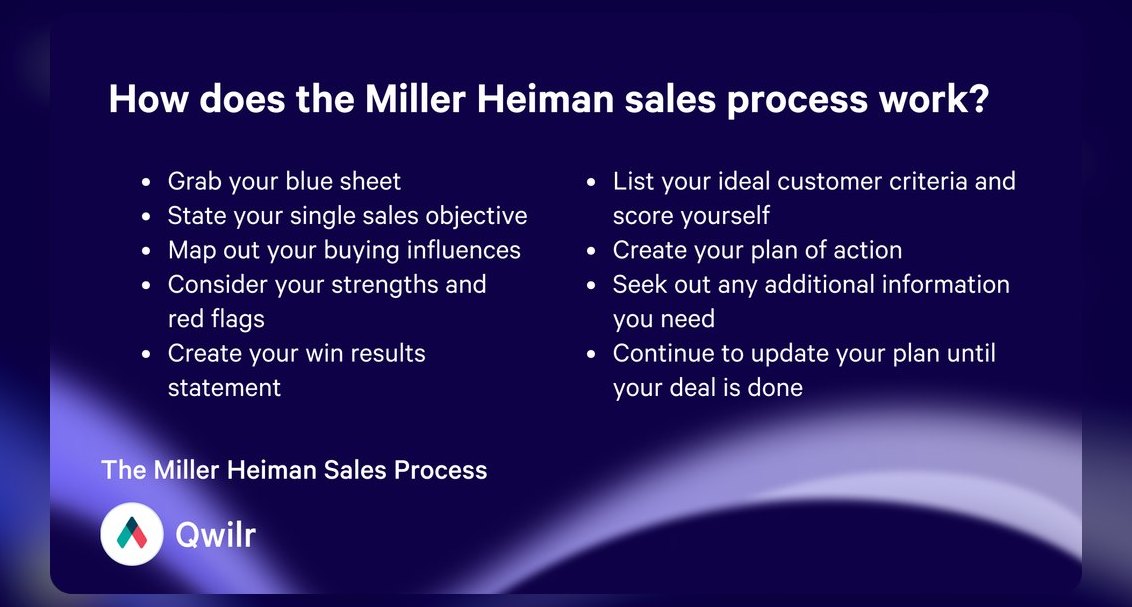 pulse-recentWhat is the step-by-step process for Strategic Selling by Miller Heiman in 2027?
 pulse-recentSnap Selling by Jill Konrath — Top 10 Key Takeaways for Sales Leaders in 2027
 pulse-recentSell or Be Sold by Grant Cardone — Top 10 Key Takeaways for Sales Leaders in 2027
 pulse-recentWhat are the concrete steps to implement the Sandler Rules for Sales Leaders by David Mattson in 2027?
 pulse-recentWhat are the concrete steps in Sandler Rule #7 for handling a prospect's budget objection in 2027?
 book-summaryMajor Account Sales Strategy by Neil Rackham: Summary, Key Lessons, and RevOps Takeaways
 pulse-recentTraction by Gabriel Weinberg and Justin Mares — Top 10 Key Takeaways for Sales Leaders in 2027
 pulse-recentThe Closer’s Survival Guide by Grant Cardone — Top 10 Key Takeaways for Sales Leaders in 2027
 pulse-recentStrategic Selling by Robert Miller and Stephen Heiman — Top 10 Key Takeaways for Sales Leaders in 2027
 pulse-recentThe Sandler Rules by David Sandler — Top 10 Key Takeaways for Sales Leaders in 2027