


The Transparency Sale by Todd Caponi: Summary, Key Lessons, and RevOps Takeaways
Quality
Certified
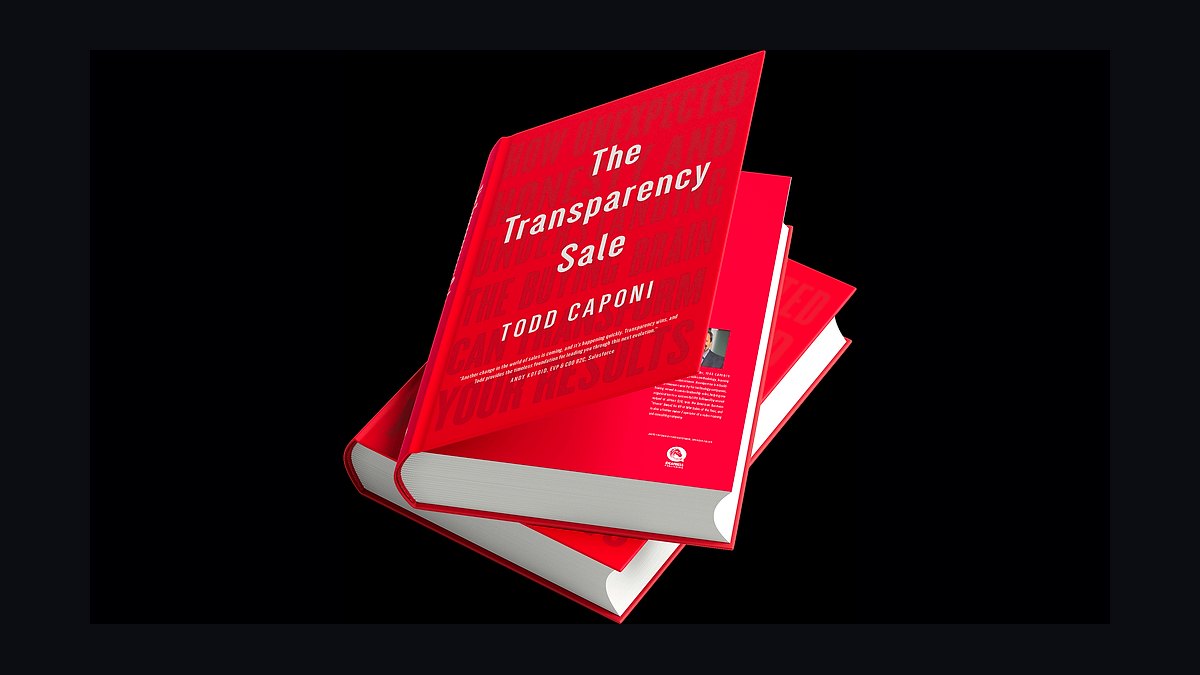
The Transparency Sale by Todd Caponi argues that proactively disclosing your product's real flaws — before the buyer finds them — is the fastest route to trust, shorter cycles, and better win rates. Grounded in behavioral economics, its core claim is that imperfection sells: honest weaknesses make your strengths believable.
The outcome you should expect when a team sells transparently
The first thing that changes is not your win rate. It is the shape of your objections. Teams that adopt Caponi's method report that objections arrive earlier and sound different — instead of a buyer surfacing "I heard your implementation is painful" in week six of an eight-week cycle, the rep says it in the first call, and the conversation immediately moves to whether the buyer can live with it. That reordering is the whole mechanism. An objection discovered late is a credibility event; an objection volunteered early is a qualification event.
The second change is in how buyers behave during pricing conversations. When a seller explains the logic behind a number rather than defending the number itself, the buyer stops treating price as a test of the seller's honesty. Caponi's argument is that most discount pressure is not really about budget — it is about the buyer's suspicion that the first number was inflated. Remove the suspicion and a meaningful share of the haggling evaporates. Sellers who hold price while explaining what drives it often land closer to list than sellers who open high and negotiate down, because the second group has trained the buyer to expect a give.
The third outcome is disqualification speed, which most teams undervalue. Transparency surfaces bad fits fast. If your product genuinely struggles for organizations under fifty seats, saying so in discovery kills a percentage of your pipeline that was never going to close — and that is a win, not a loss, because those deals were consuming the same rep hours as real ones. RevOps leaders adopting this should expect raw pipeline volume to dip while pipeline quality and stage-conversion rates climb. If you measure only pipeline created, transparency will look like a failure in month one and a success by month four.

What you should *not* expect is a uniform lift across every segment. Transparency compounds where buyers have access to third-party information — public reviews, active peer communities, analyst coverage. In markets where buyers are relatively uninformed, the seller who leads with flaws is handing over information the buyer had no other way to get, and the payoff is thinner. Caponi's own framing supports this: the more informed the buyer, the more powerful transparency becomes. The honest read is that this is a strategy with variable returns, strongest exactly where selling is hardest.
There is also a durability effect worth naming. Deals won on transparency tend to renew better, because the customer's expectations at signature match the product they actually receive. Sales teams that oversell create a churn liability that lands eighteen months later on a different team's number. When you model the ROI of transparency, the retention line matters as much as the win-rate line, and it is the line most sales orgs never connect back to how the deal was sold.
What actually drives the outcome
Caponi's mechanism runs through buyer psychology rather than through persuasion technique. Buyers decide emotionally and then assemble a rational case to defend the decision — to themselves, to their manager, and to a procurement committee that was not in the room. The seller's real job, in this model, is to supply the ammunition for that second stage. Hiding flaws starves the buyer of exactly the material they need to defend the choice, because the first thing a skeptical stakeholder asks is "what's the downside?" A buyer who cannot answer that question stalls.

The signature evidence is the star-rating effect. Products rated a perfect 5.0 convert worse than products in roughly the 4.2 to 4.7 band, because a flawless rating reads as manipulated. A visible negative is what makes the positives credible. Applied to a sales conversation, a rep who names two or three genuine weaknesses earns the right to be believed on the other ten claims. The negativity bias that normally works against sellers flips: once a flaw is acknowledged, the buyer's search for hidden problems largely stops, and attention returns to fit.
Caponi also leans on the trust equation popularized by David Maister — credibility, reliability, and intimacy divided by self-orientation. Transparency moves two terms at once. It raises intimacy, because sharing a vulnerability is a relational act, and it lowers self-orientation, because a seller working purely for themselves would never volunteer a weakness. Since self-orientation sits in the denominator, reducing it has outsized leverage. This is why a single honest disclosure can shift a conversation more than an hour of polished discovery.
The behavioral-trigger layer matters too. The book catalogs the shortcuts buyers rely on — social proof, anchoring, loss aversion, herd behavior — and argues that transparency works *with* them rather than manipulating against them. Honest social proof holds up under reference checks; inflated claims collapse the moment a prospect calls one of your customers. That durability is the practical difference between a technique and a strategy.

One adjacent effect is worth tracing: transparency upstream changes what happens downstream in onboarding and support. When sales sets accurate expectations about implementation timelines, the implementation team inherits a customer who is not already disappointed. Teams that instrument this find that the flaws most worth disclosing are often the ones showing up in early-life support tickets — which makes your support queue a legitimate input into sales messaging, not just a cost center.
Benchmarks and realistic ranges
Be careful here, because this is where summaries of the book most often overclaim. Caponi draws on his own experience as a CRO and on companies he has coached; the book is not a controlled study, and it does not publish rigorously measured win-rate deltas. Any specific percentage you see attributed to it should be treated as directional rather than as a measured benchmark. The intellectually honest framing is that the mechanism is well supported by decision-science research and the magnitude in your business is unknown until you measure it.
That said, you can build your own benchmarks, and RevOps is the right function to do it. Start by scoring call recordings on a simple five-point transparency scale: did the rep name a genuine limitation unprompted, was it relevant to this buyer's use case, was it paired with how existing customers work around it, was pricing logic explained rather than defended, and did the rep decline to invent a capability. Score twenty won deals and twenty lost deals from the last two quarters. You are looking for correlation between the score and three outcomes — cycle length, discount depth, and stage-two-to-close conversion.

Useful measures to instrument, none of which most CRM setups capture by default:
Time-to-first-objection. Days from first meeting to the first substantive concern raised by either side. Transparent selling should pull this number sharply toward day one. If your median is still late in the cycle after a quarter of enablement, the behavior has not actually changed regardless of what reps say on coaching calls.
Disclosure origin. For every closed-lost deal, tag whether the deciding concern was volunteered by your rep or discovered by the buyer. This single field is the highest-signal thing you can add. A ratio moving toward "volunteered" means the strategy is taking hold, even before win rates move.
Discount depth distribution. Not the average — the distribution. Transparency tends to compress the tail. You should see fewer deals landing at deep end-of-quarter concessions, even if the mean barely moves.
Quote-to-published-price variance. If your pricing page says one thing and reps quote another, you have an opacity problem that no amount of rep training fixes. Reconcile the pricing page, CPQ, and CRM catalog. A discrepancy a prospect can spot themselves undoes every trust gain the rep made in the room.
Sales-set expectation accuracy. Ninety days post-close, ask the customer whether implementation matched what they were told. This is the cleanest read on whether transparency is real or performed, and it connects sales behavior to the retention number.
On timelines, be realistic. Behavior change in a sales org running quarterly cycles takes two to three quarters to show clean signal, because the deals closing this quarter were mostly sourced under the old approach. Expect leading indicators — time-to-first-objection, disclosure origin — to move within one quarter and lagging indicators — win rate, discount depth, renewal — to move in the second or third. Leaders who kill the program at ninety days are reading noise.
Risks, edge cases, and failure modes

The most common failure is performative transparency: a rep names a "flaw" that is really a humblebrag. "We're so feature-rich the learning curve is steep" fools nobody and costs you the credibility the technique was supposed to buy. A disclosed flaw only works if a buyer would recognize it as a genuine cost. The test is simple — would a current customer, asked privately, say the same thing? If not, it is not a flaw, it is marketing.
The second failure is over-disclosure. Naming every limitation in the product is not transparency, it is an unqualified data dump that overwhelms the buyer and does real damage. Relevance is the filter. A weakness that does not touch this buyer's use case should not be raised, because raising it introduces a risk the buyer would never have encountered. Caponi's own framing is about the flaws that matter to the specific buyer, not a full confession.
Third: unilateral adoption inside a competitive deal. If your rep discloses honestly and the competing vendor does not, the buyer's raw comparison sheet may show your product with three flagged limitations and the competitor with zero. Reps need language that reframes this — inviting the buyer to ask the same question of every vendor and to notice who has an answer. Without that move, transparency can lose winnable deals in an evaluation matrix, and reps who feel burned once will quietly stop doing it.

Fourth: the pricing-transparency argument has aged unevenly. It was written against a world of list prices and negotiated discounts. Usage-based, consumption, and dynamic pricing models complicate "just publish the logic" considerably, because the honest answer to "what will this cost me" is genuinely "it depends on your volume." The workable adaptation is to publish the *drivers* and a realistic range for a described customer profile, rather than a single number. Refusing to give any range because the model is complex reads as evasion regardless of how true the complexity is.
Fifth: incentive misalignment. If your comp plan rewards pipeline volume and your enablement rewards early disqualification, reps will follow the money. Transparency programs that fail almost always fail here, not in the training room. Before rolling this out, check whether a rep who disqualifies a bad-fit deal in week one is better or worse off than one who drags it to the forecast for a quarter. If the answer is worse off, fix the plan first.
Sixth: regulated and low-information markets. Where public reviews are thin and buyers cannot independently verify claims, the asymmetry the book exploits is weaker. Transparency still helps relationally, but the "they already know" argument does not apply, and expected returns are smaller. In some regulated contexts, what a rep may say about product limitations is also constrained by legal and compliance review, which means your flaw list needs sign-off before it reaches a call.
Finally, watch for the enablement half-life. Flaw lists go stale. A limitation you fixed two releases ago, still being disclosed by a rep working from an old card, makes you look uninformed about your own product. Put an owner and a review cadence on the list — quarterly at minimum, tied to release notes.
A practical rollout plan

Treat this as an operational program, not a book club. The sequence below is what makes the lessons in the book survive contact with a real sales org.
Weeks one and two — build the honest flaw list. For each product or segment, assemble three to five real limitations. Source them from three places, not one: closed-lost interview notes, early-life support tickets, and public review sites where your own product is discussed. Cross-check with a handful of customers and with your implementation team, who almost always know the truth. For each flaw, write three things — the plain statement, the context in which it actually bites, and how existing customers work around it. A flaw without a workaround is just bad news; a flaw with one is a qualification tool.
Weeks three and four — reconcile the pricing surface. Get the pricing page, CPQ configuration, CRM product catalog, and the deck reps actually send saying the same thing. Decide what you will publish: a starting price, a range tied to a described profile, and the two or three variables that move it. Set explicit no-discount zones so reps are holding a company position rather than improvising one.
Weeks five and six — rewrite enablement and rehearse. Rewrite discovery and demo scripts so disclosure has a designated moment rather than being left to rep courage. Role-play the hardest version: the competitive deal where the other vendor is claiming perfection. Give reps the exact language for the reframe. Rehearsal matters more than the deck, because the failure mode is a rep who believes the strategy but freezes in the moment.

Week seven onward — instrument, then coach on the data. Add the fields described earlier: disclosure origin on closed-lost, time-to-first-objection, a transparency score on sampled calls. Review a sample weekly. Coach on the specific moment in a recording where a flaw could have been named and was not — that is a far better coaching artifact than an aggregate score.
Quarterly — audit and refresh. Re-derive the flaw list from the last quarter's losses and tickets. Retire fixed limitations, add new ones. Re-check the pricing surface for drift, because it drifts constantly.
One adjacent extension: the same discipline transfers to renewal and expansion conversations, which are usually run by teams with no transparency training at all. A CSM who names a known gap in an upcoming release before the customer hits it converts a future complaint into a planning conversation. The summary version of the takeaway is that transparency is a company-wide posture, and confining it to new-logo sales leaves most of the value on the table.
Related questions
Is The Transparency Sale still relevant given how buyers research now?
More relevant, not less. AI-assisted research and mature review ecosystems mean nearly every meaningful flaw is discoverable before a rep speaks. That makes leading with weaknesses closer to table stakes than to differentiation, though most sales orgs still have not operationalized it.
How is this different from challenger-style selling?
Challenger centers on reframing the buyer's thinking and teaching them something new about their business. Caponi centers on credibility mechanics — reducing suspicion so your claims land. They are compatible; transparency is arguably what makes a challenger insight believable rather than presumptuous.
Does transparency mean you should publish your pricing?

Not necessarily a single number. Publish the drivers and a realistic range for a described customer profile. With usage-based models, refusing any range reads as evasion; a well-explained range with named variables achieves the trust benefit without pretending pricing is simpler than it is.
Which team should own the flaw list?
Product marketing or enablement should own it, with mandatory input from implementation and support, and a quarterly review tied to the release calendar. Sales should not own it alone — the incentive to soften the language over time is too strong.
What is the fastest signal that adoption is working?
Disclosure origin on closed-lost deals. When the share of losses where your rep named the deciding concern first starts climbing, behavior has genuinely changed — and that indicator moves a full quarter or two before win rate does.
FAQ
Does the book really say to tell prospects about your product's flaws?
Yes, but selectively. Caponi's argument is about volunteering the flaws that matter to that specific buyer's use case, paired with how current customers work around them. Full disclosure of every limitation is not the recommendation and tends to backfire by introducing risks the buyer would never have encountered on their own.
What is the "imperfection sells" idea in practice?

It comes from consumer review data showing that a perfect rating converts worse than a slightly imperfect one, because flawless reads as fake. In a sales conversation, naming two or three genuine weaknesses buys credibility on everything else you claim, and it stops the buyer from hunting for hidden problems.
Is the behavioral science in the book rigorous?
It draws on well-established decision-science lineage — dual-process thinking, Cialdini's influence principles, the Maister trust equation — but the book is a practitioner's synthesis, not academic work, and it does not present controlled studies of its own. Treat the mechanism as well grounded and any specific performance figure as directional.
Will transparency hurt me in a competitive deal where the other vendor overclaims?
It can, if reps have no reframe. Train them to invite the buyer to ask every vendor the same question about limitations, and to point out who can answer it. Without that move, an evaluation matrix can penalize the only honest vendor in the room.
How long before this shows up in the numbers?
Leading indicators such as time-to-first-objection and disclosure origin move within a quarter. Win rate, discount depth, and renewal quality typically take two to three quarters, because the deals closing now were sourced under the old approach. Programs killed at ninety days are usually killed on noise.
What is the single highest-leverage change for a RevOps leader?
Reconcile the pricing surface. A prospect who sees one price on your site and hears another from a rep will discount everything else the rep said. It is unglamorous, it is fixable in weeks, and it protects every other trust investment you make.
Sources
- https://www.transparencysale.com/
- https://www.amazon.com/Transparency-Sale-Unexpected-Understanding-Transform/dp/1633537331
- https://www.g2.com/
- https://www.gartner.com/reviews/home
- https://hbr.org/2018/12/what-sales-teams-should-do-to-prepare-for-the-future
- https://www.influenceatwork.com/principles-of-persuasion/
- https://trustedadvisor.com/why-trust-matters/understanding-trust/the-trust-equation
- https://www.nngroup.com/articles/negativity-bias-ux/
Related on PULSE
- High-Trust Selling by Todd Duncan — Cliff Notes Summary
- Secrets of Closing the Sale by Zig Ziglar — Cliff Notes Summary & Key Takeaways
- Hope Is Not a Strategy by Rick Page: Summary, Key Lessons, and RevOps Takeaways
- Start with No by Jim Camp: Summary, Key Lessons, and RevOps Takeaways
- $100M Leads by Alex Hormozi: Summary, Key Lessons, and RevOps Takeaways
- Positioning: The Battle for Your Mind by Al Ries and Jack Trout: Summary, Key Lessons, and RevOps Takeaways
This page will be disappearing soon. Save it to your device for $1 — or read it free while it is here.
@Kory-White- · if Venmo asks, the last 4 of my number are 2012
This page is gone.
This one is off the shelf now. $1 keeps it on your phone for good — the whole page, pictures and diagrams included.
 pulse-recentSell or Be Sold by Grant Cardone — Top 10 Key Takeaways for Sales Leaders in 2027
 pulse-recentInsight Selling by Mike Schultz and John Doerr — Top 10 Key Takeaways for Sales Leaders in 2027
 pulse-recentWhat is the Blue Sheet from Strategic Selling by Miller Heiman and how do you fill it out in 2027?
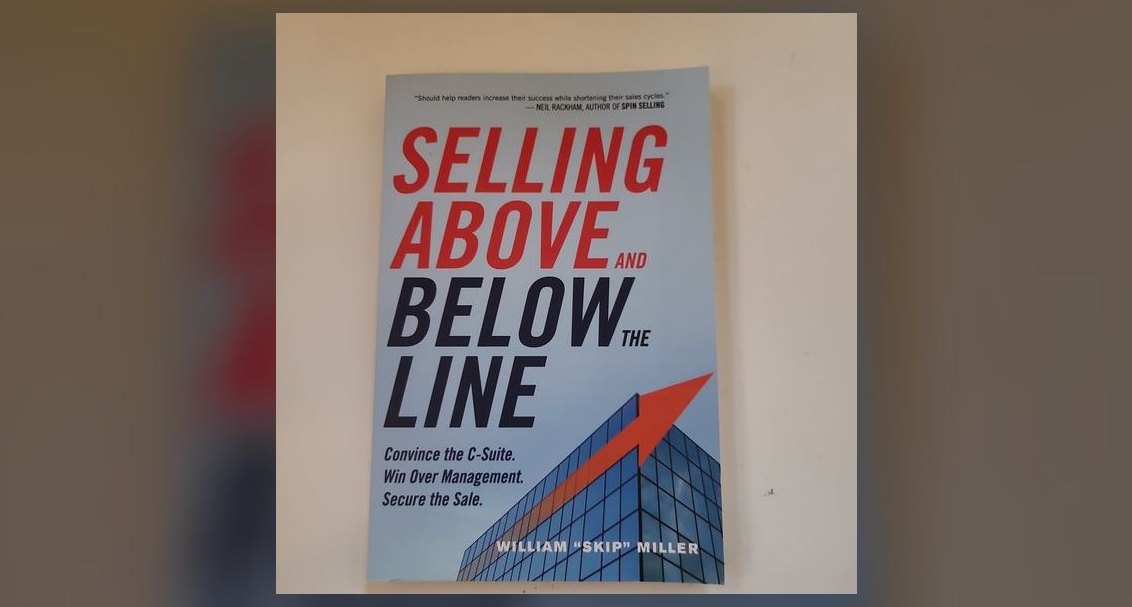 pulse-recentSelling Above and Below the Line by Skip Miller — Top 10 Key Takeaways for Sales Leaders in 2027
 pulse-recentCoaching Salespeople into Sales Champions by Keith Rosen — Top 10 Key Takeaways for Sales Leaders in 2027
 pulse-recentWhat are the concrete steps in Sandler Rule #7 for handling a prospect's budget objection in 2027?
 pulse-recentWhat are the seven concrete steps to implement the Sandler Submarine technique from The Sandler Rules in 2027?
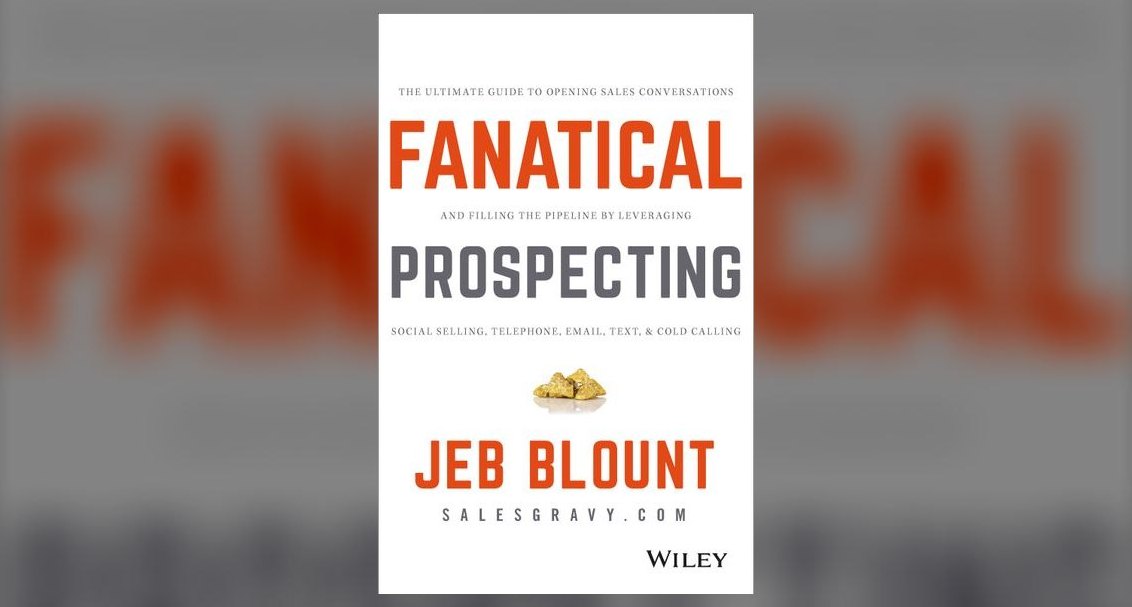 pulse-recentFanatical Prospecting by Jeb Blount — Top 10 Key Takeaways for Sales Leaders in 2027
 pulse-recent$100M Offers by Alex Hormozi — Top 10 Key Takeaways for Sales Leaders in 2027
 pulse-recentThe Collaborative Sale by Keith Eades — Top 10 Key Takeaways for Sales Leaders in 2027