


SPIN Selling by Neil Rackham: Summary, Key Lessons, and RevOps Takeaways
Quality
Certified
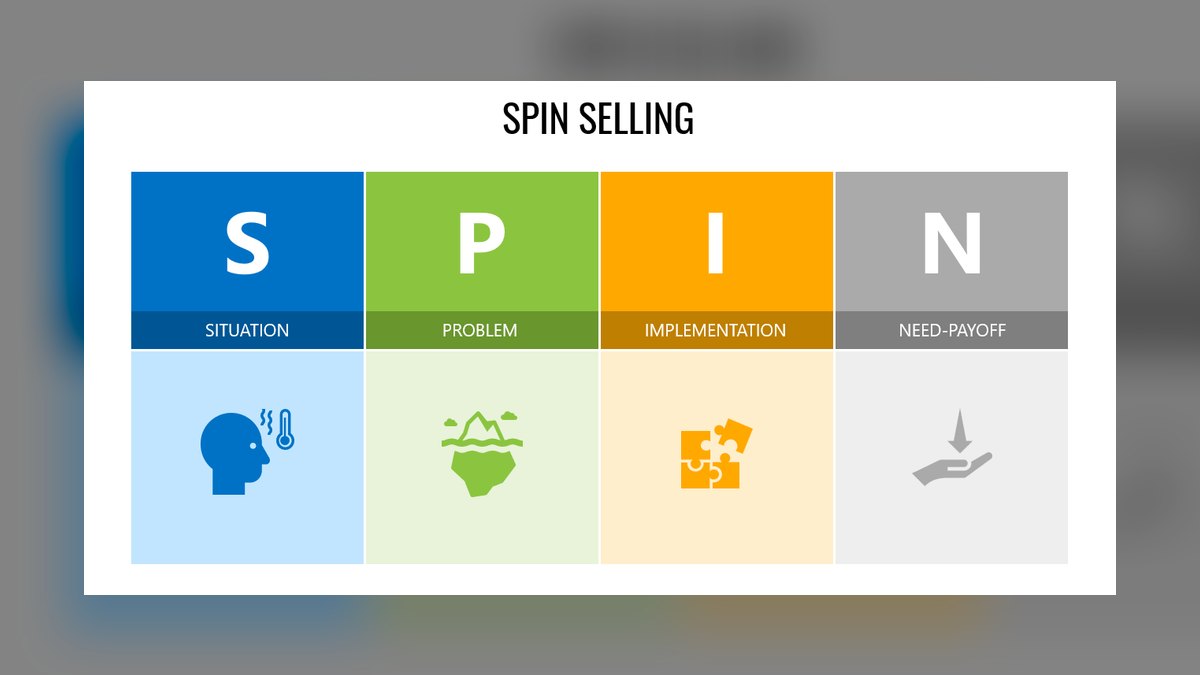
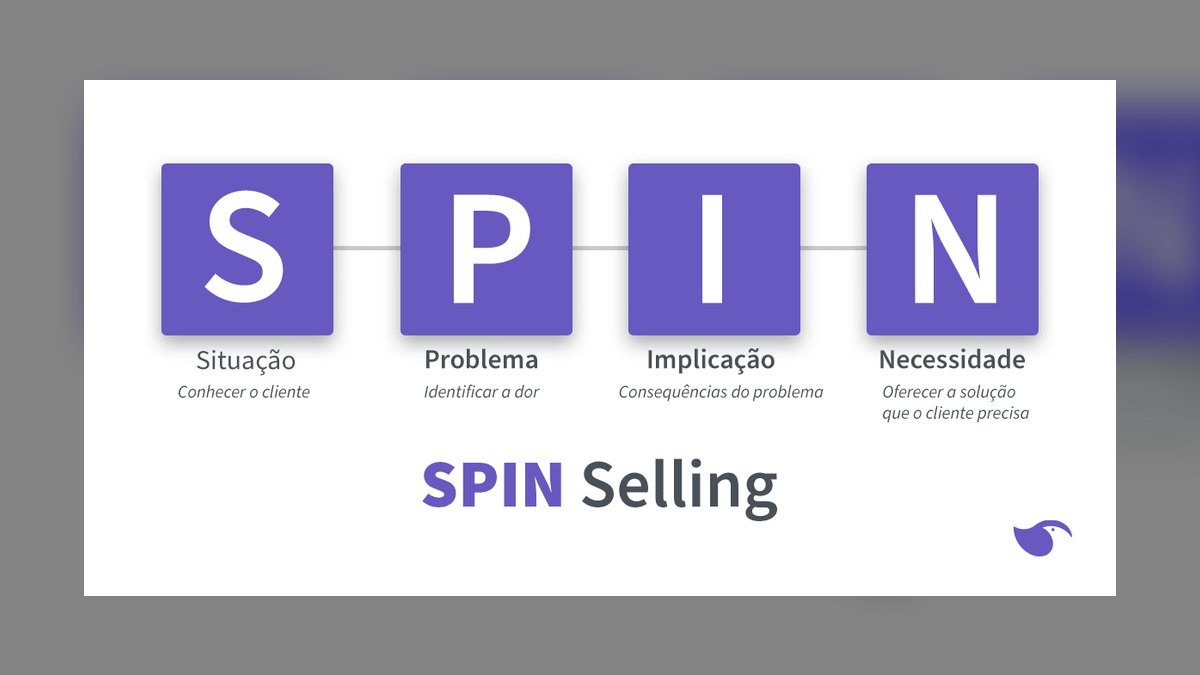
SPIN Selling by Neil Rackham summarizes Huthwaite's analysis of roughly 35,000 sales calls and finds that large deals reward questioning, not pitching. Sellers move buyers through Situation, Problem, Implication, and Need-payoff questions until the buyer states the value themselves. Classic closing tactics, effective in small sales, actively depress complex-deal win rates.
A deal that stalls for reasons the CRM never records
Picture a mid-market logistics software rep working a $180,000 warehouse management deal. Discovery call one goes well: forty minutes, a friendly operations director, six pages of notes. The CRM record afterward looks healthy — decision timeline captured, tech stack documented, budget "confirmed verbally." Stage moves from Discovery to Solution Validation. Forecast category: Commit.
Then the deal sits. The demo happens, attendance is thin, and the champion goes quiet for three weeks. When the rep finally gets a reply, it is the sentence every seller has read: "We've decided to revisit this next fiscal year." Nothing broke. No competitor won. The deal simply evaporated, and the pipeline review afterward produces the usual diagnosis — "no urgency," "not a priority," "budget got reallocated."
Rackham's research explains what actually happened, and it happened on call one. Read the rep's notes and almost every line is a fact: how many warehouses, which ERP, how many pickers per shift, what the current contract renews. Those are Situation questions. They are cheap to ask, they feel productive, and they fill a call. What the notes do not contain is a single line where the buyer described a difficulty in their own words, and not one line where the buyer quantified what that difficulty costs. The rep collected context and mistook it for need.
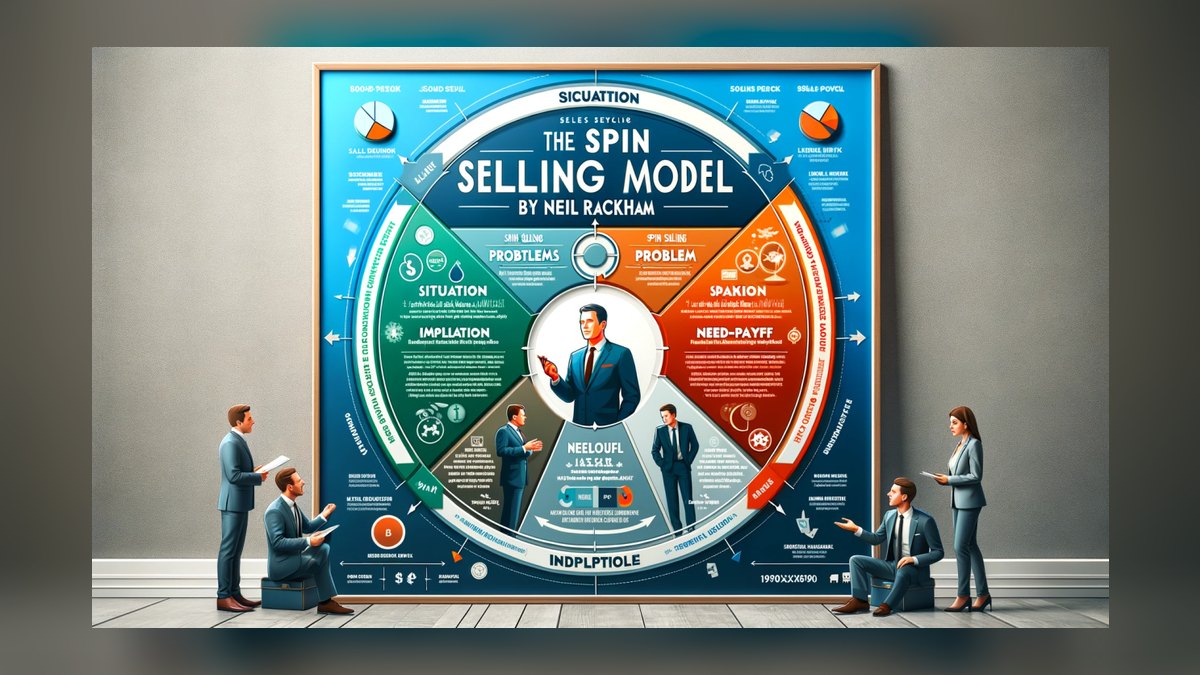
This is the gap the book was written to close. Huthwaite's researchers sat in on real calls across more than twenty countries and coded seller behaviors against outcomes, which let them separate what sellers believe works from what correlates with orders. The finding that organized the whole book: small sales and large sales obey different rules. On a low-value, single-decision-maker purchase, an enthusiastic benefit statement plus a confident close genuinely lifts conversion. On a six-figure, multi-stakeholder, four-month purchase, those same two behaviors suppress it — because they generate pressure on a buyer whose actual problem is internal justification, not persuasion.
The logistics rep's call was not a bad call by small-sale standards. It was warm, thorough, and organized. It was a bad call by large-sale standards, because nothing in it gave the operations director a story to carry to a finance committee. When the champion had to defend the spend internally, they had the rep's benefit list and nothing of their own. Benefit lists do not survive contact with a CFO. A number the operations director calculated themselves would have.
Adjacent industries make the same mistake in their own dialect. A staffing agency's business development lead maps org charts instead of asking what an unfilled role costs per week. A commercial HVAC firm's estimator documents equipment age instead of asking what a mid-July compressor failure does to tenant retention. A professional services partner scopes the engagement before the client has articulated why the current state is unacceptable. Different verticals, identical failure: the seller owns the reasoning, so the buyer owns none of it.
How the four question types actually shift the buyer
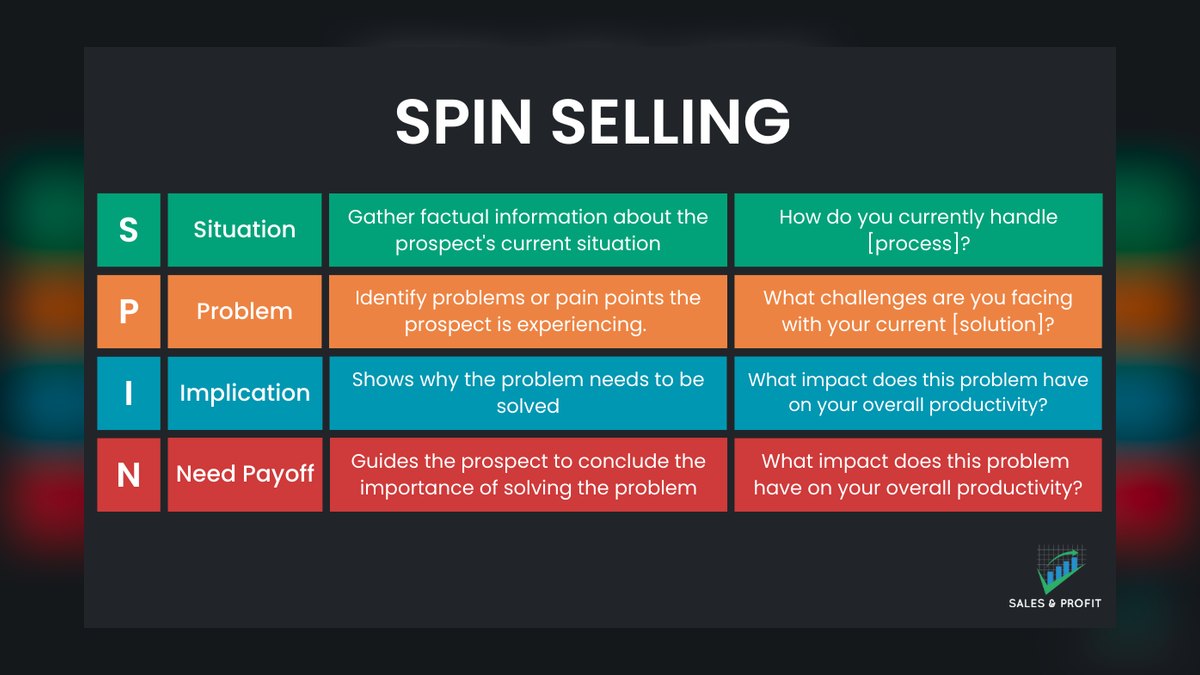
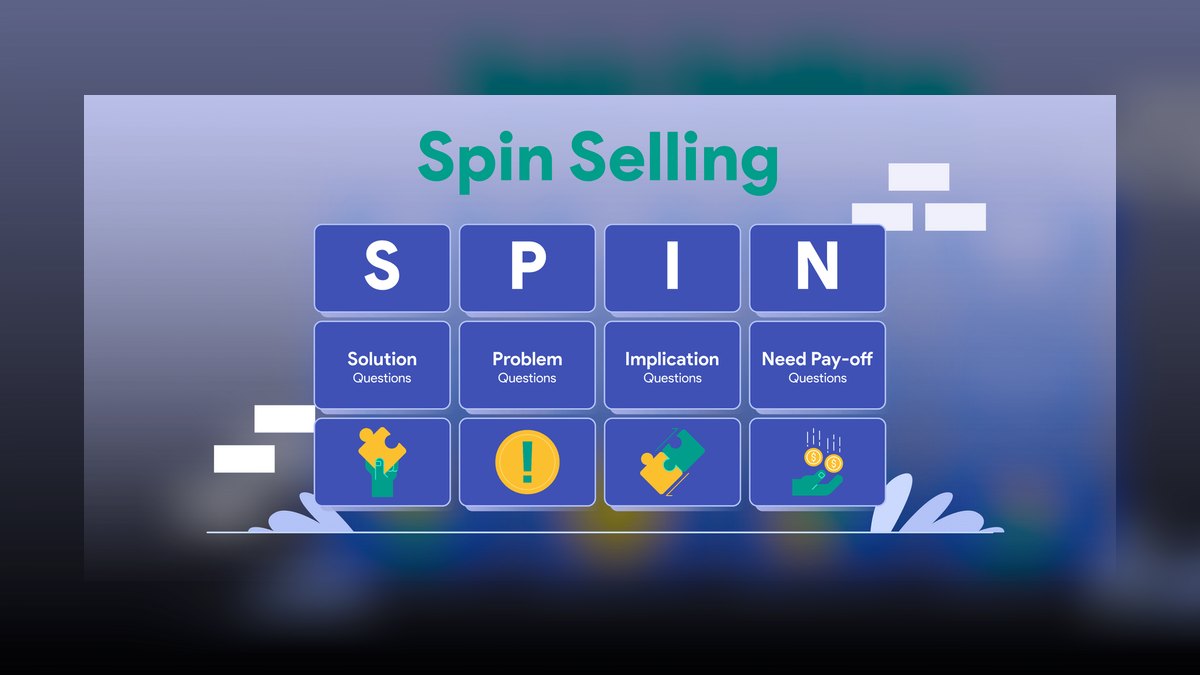
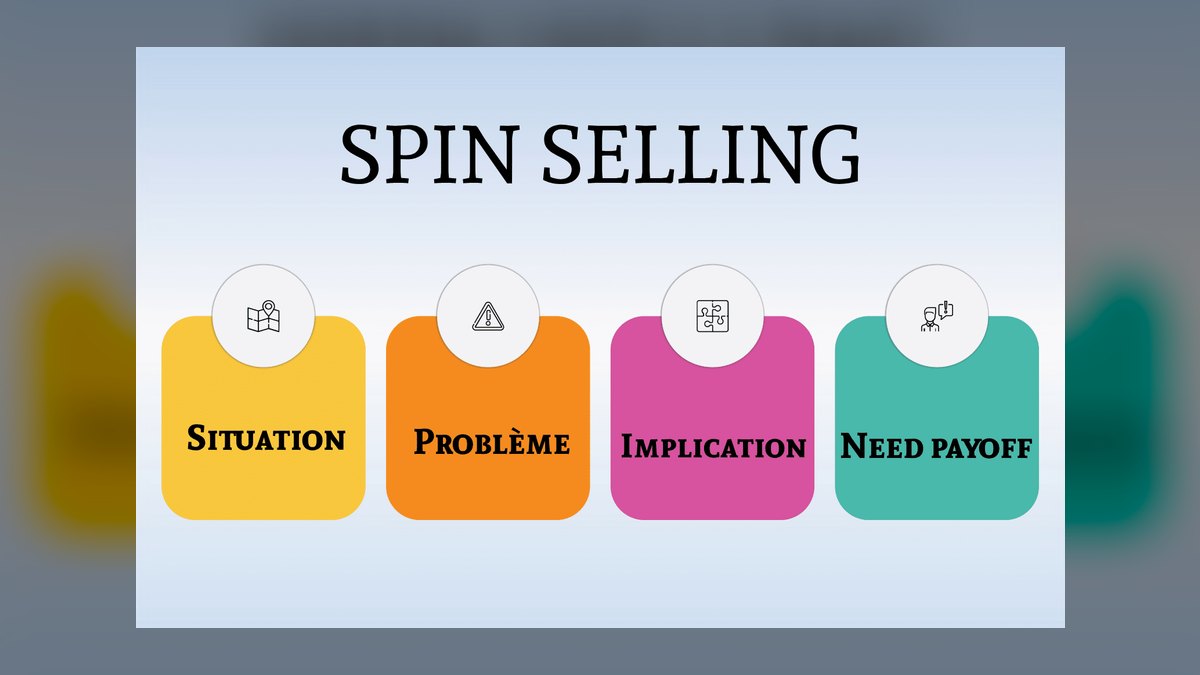
The mechanism is sequential and the sequence is the point. Each question type does one job, and skipping a stage breaks the stage after it.
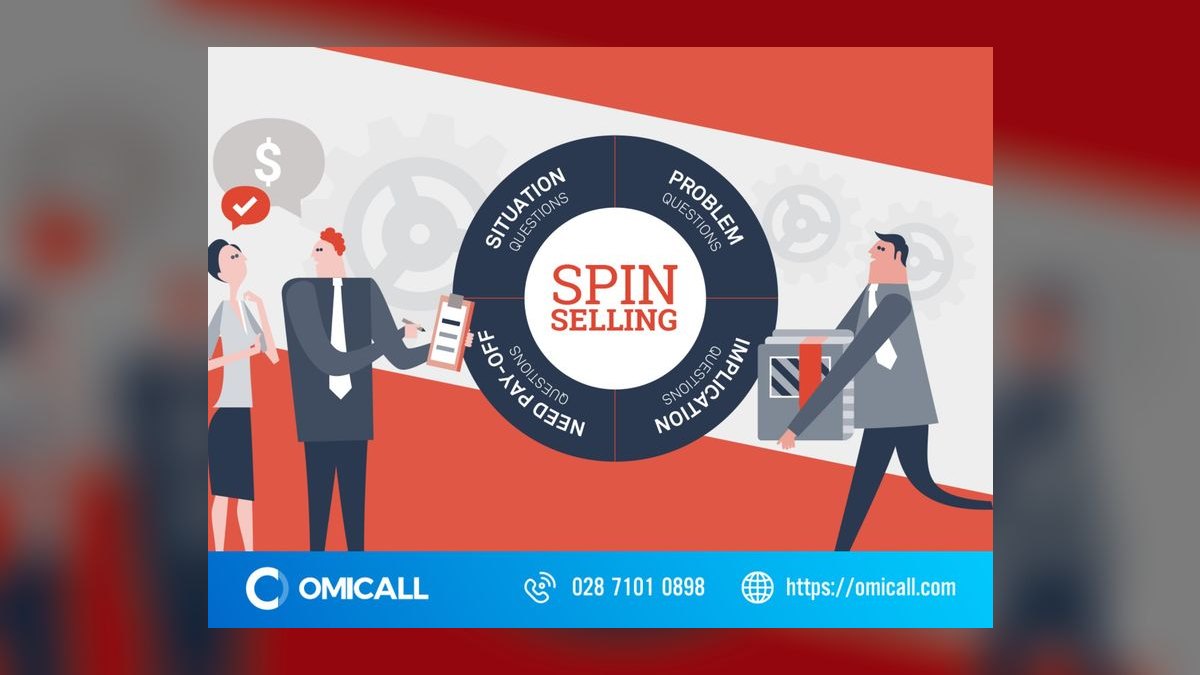
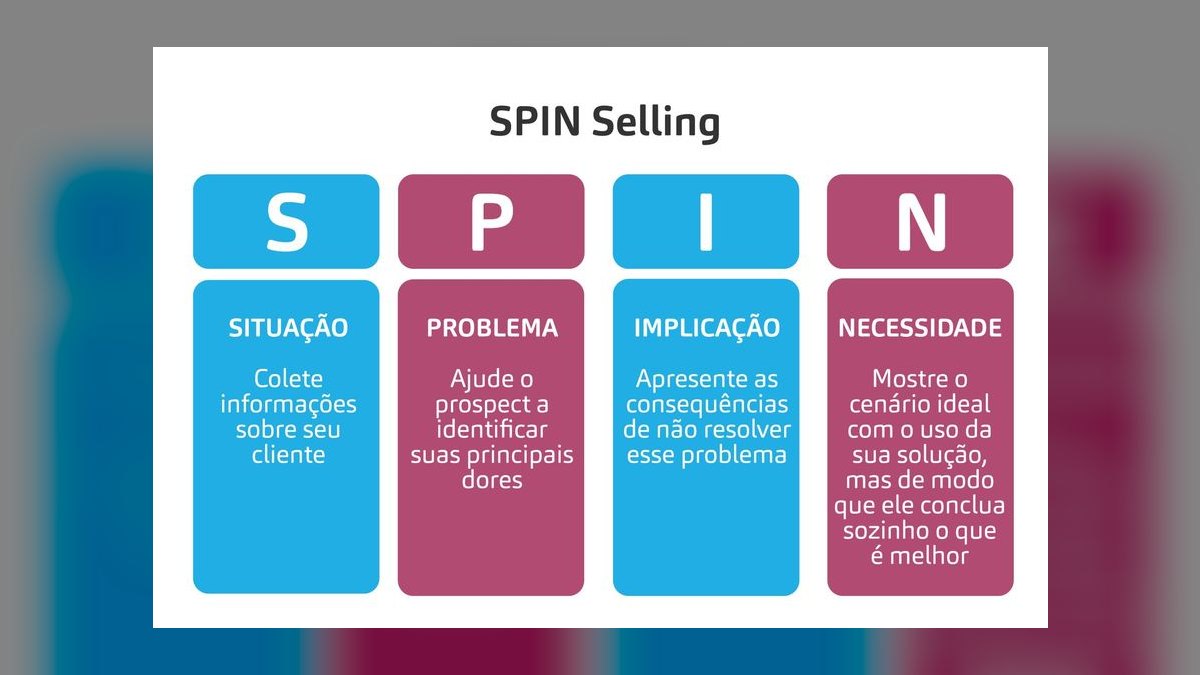
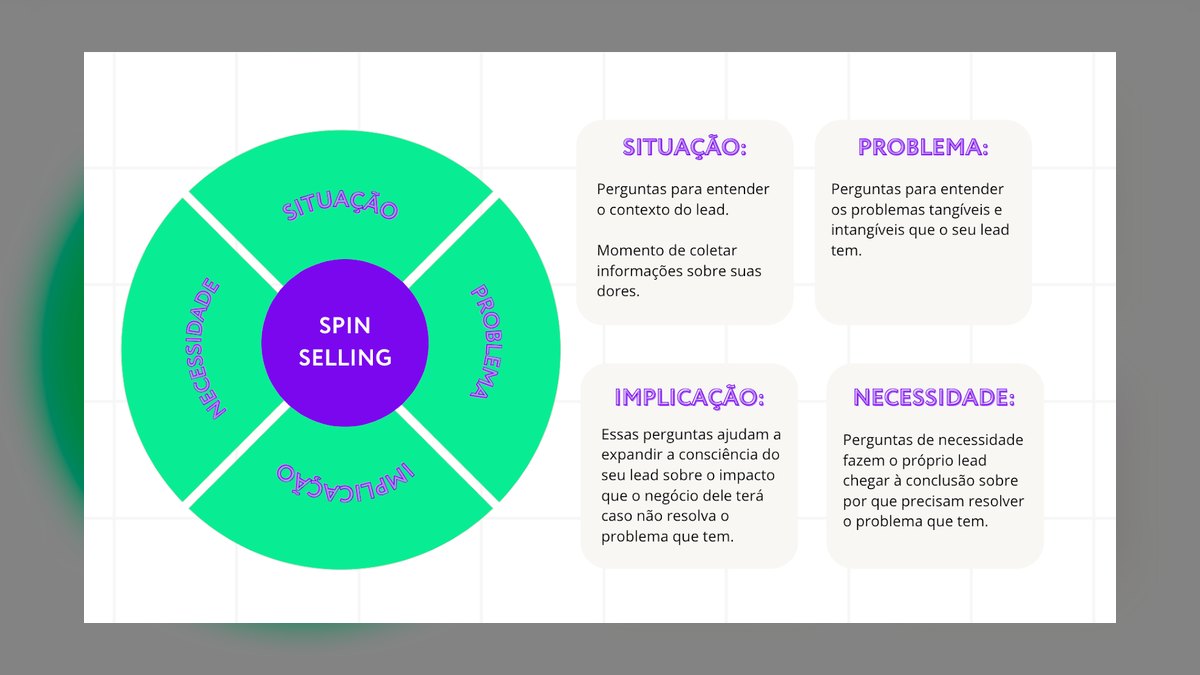
Situation questions collect background facts — current setup, headcount, tooling, process. They are necessary and they are the most over-used behavior in the book. Rackham's coding showed successful reps in large sales asked *fewer* Situation questions than average reps, not more, because they had already mined the annual report, the job postings, the LinkedIn org chart, and the review sites before dialing. Every Situation question you ask that a public source could have answered spends buyer patience and returns nothing. A useful working ratio is that Situation questions should be a minority of your questioning, roughly ten to fifteen percent, and they should be the ones no research could resolve.
Problem questions ask about difficulties, dissatisfactions, and frustrations — "Where does the current process break down?" This is where discovery genuinely begins, because a Problem question produces an *implied need*: a statement of dissatisfaction. "Peak season fulfillment gets tight." "The handoff between AE and CSM is messy." Average sellers hear that, feel relief, and pivot to demo. That pivot is the single most common failure in complex selling, because an implied need is not a buying reason. It is a raw material.
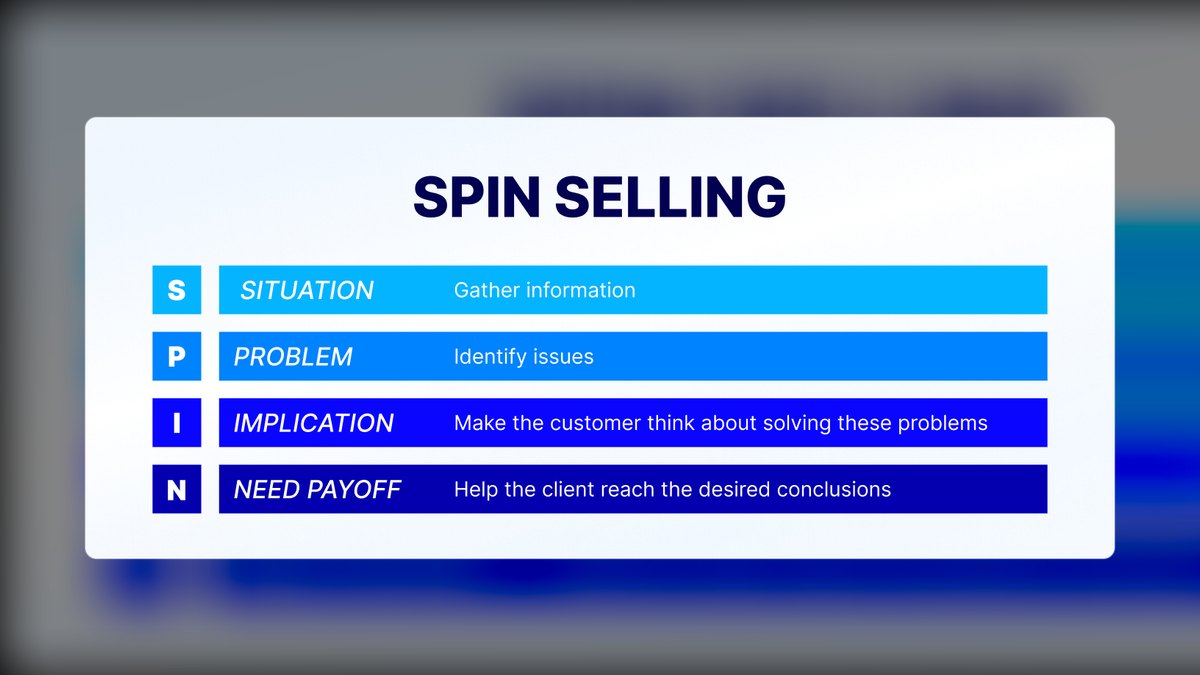
Implication questions are the book's central discovery and the hardest behavior to learn. They take an acknowledged problem and walk it outward: what does that cost, who else feels it, what happens downstream, what does it do to the people affected, what does it look like twelve months from now if nothing changes. Implication questions do not add information for the seller — the seller usually already knows the answer. They add *weight* for the buyer. They convert "peak season gets tight" into "peak season costs us a measurable amount of repeat business, ties up two supervisors on exception handling, and is the reason we lost the regional account last year." That transformation happens inside the buyer's head, in the buyer's language, which is exactly why it survives the internal meeting the seller will never attend.
Need-payoff questions ask about the value of a solution — "If you could cut that exception handling in half, what would that free up?" They invert the persuasion burden. Instead of the seller asserting the benefit and the buyer resisting it, the buyer asserts the benefit and has nothing to resist. Rackham's data tied these to both success rates and to smoother internal approval, because a buyer who has said the value out loud rehearses the argument they will later make to their own committee.
The conceptual spine underneath all four is the distinction between implied needs and explicit needs. An implied need is a problem statement. An explicit need is a clear statement of want or intent to solve — "we need to fix this," "we're looking for a way to." In large sales, explicit needs were the strongest behavioral predictor of success in Huthwaite's data. The seller's job is not to persuade; it is to develop implied needs into explicit ones. Problem questions surface the raw material, Implication questions build the pressure, Need-payoff questions convert it.
What the research actually establishes, and what it does not
Precision matters here, because SPIN is frequently cited with numbers the book never published. The claims that are firmly Rackham's and Huthwaite's are these: the study base was on the order of 35,000 sales calls observed across more than twenty countries over roughly a decade; behaviors were coded and correlated with call outcomes; Implication and Need-payoff questions correlated most strongly with success in large sales; Situation questions correlated weakly or negatively; successful sellers in large sales used fewer traditional closing techniques than less successful ones, and the gap widened as deal value rose; and successful calls ended in an *advance* — a specific, agreed action that moves the sale forward — rather than a continuation, which is a pleasant call that produces no committed next step.
That last distinction is the most operationally useful metric in the book and the one most teams never instrument. Rackham splits call outcomes four ways: order, advance, continuation, no-sale. Most CRM stage models only recognize the first and last, which means a pipeline can be full of continuations that look like progress. If you instrument nothing else from SPIN, instrument this: after every meeting, did the buyer commit to a specific action with a date, or did they commit to "circling back"? Teams that start tracking advance rate typically discover their real conversion problem sits one or two stages earlier than they assumed.
Be careful with the borrowed statistics that circulate around SPIN. Claims that Implication questions make a call "3.5x more likely to succeed," or that each additional Implication question raises deal value by a fixed percentage, are not figures Rackham published, and they should not go into a training deck as if they were. The honest version is directionally strong and quantitatively modest: Implication and Need-payoff behaviors showed the strongest positive correlation with large-sale success in the study; the effect sizes are correlational, drawn from observational field research done largely in the 1970s and 1980s, and they describe behavior frequency, not a causal dose-response curve.
What *is* legitimately reinforcing is that modern conversation-intelligence platforms — Gong, Chorus, and similar tools that transcribe and analyze large volumes of recorded calls — have independently published findings pointing the same direction: top performers talk less, ask more questions, and spend more time on the customer's problem than on product. Those studies use different methods, different question taxonomies, and different definitions of success than Huthwaite did, so treat them as convergent evidence rather than confirmation of specific SPIN ratios. The useful move is to check the published methodology of whichever vendor study you plan to cite before you cite a number from it.
Sensible internal benchmarks a RevOps team can actually set, without borrowing anyone's statistics: talk-to-listen ratio on discovery calls in the range of 40/60 to 45/55 seller-to-buyer; at least one buyer-stated quantification of a problem captured verbatim before a deal leaves discovery; at least one buyer-stated value statement captured before a proposal is issued; and an advance rate — meetings ending in a dated, specific commitment — tracked per rep per month. Baseline your own team for a quarter, then set targets off your own numbers rather than someone else's blog post.
Where SPIN sits historically is worth stating plainly for a Summary of this kind. It is the intellectual ancestor of most quantified-pain methodologies that followed. MEDDICC's "Identify Pain" and "Metrics" elements are, functionally, Implication questions turned into a qualification checklist. Gap Selling's current-state/future-state gap is the implied-to-explicit development loop rendered as a diagram. Challenger's commercial teaching insight departs from Rackham on who supplies the insight, but shares the conclusion that feature-pitching loses large deals. Knowing the lineage helps a team stop treating these as competing religions and start treating the later frameworks as qualification and messaging layers on top of a questioning discipline.
Trade-offs: where SPIN is the wrong tool, and what to pair it with
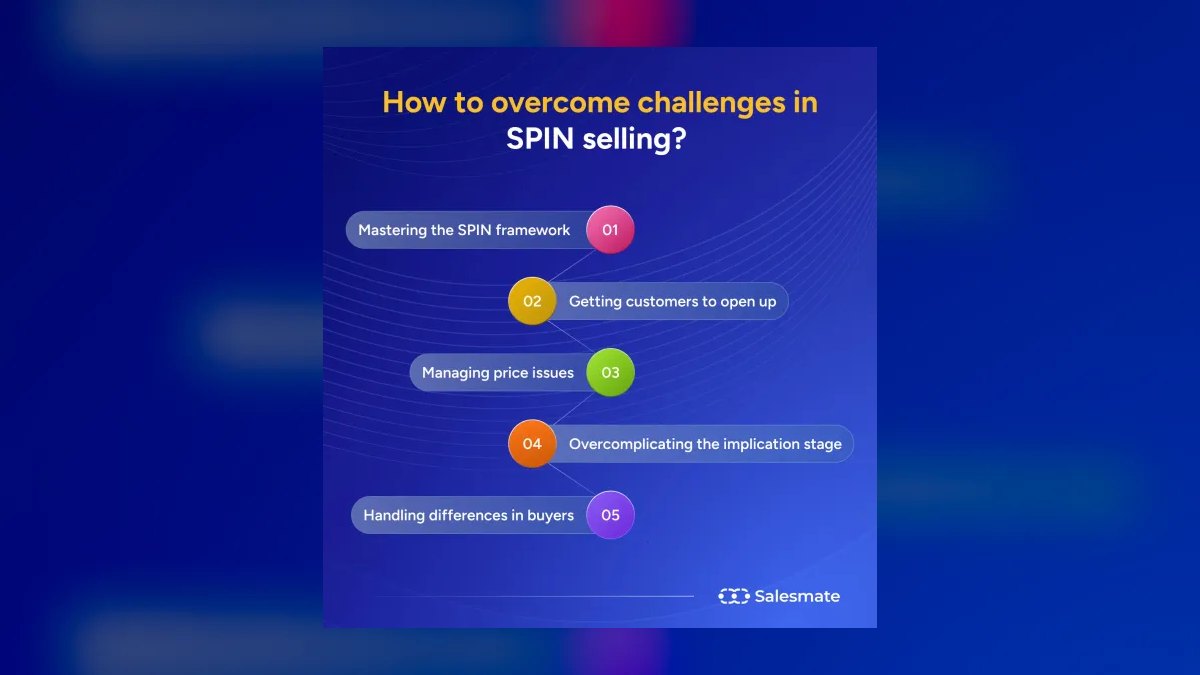
SPIN is not universal, and Rackham says so directly. In small, transactional, single-decision-maker sales, the research found benefit statements and closing techniques work fine — sometimes better than extended questioning, which can read as friction when a buyer already knows what they want and wants to be done in nine minutes. Running full SPIN discovery on a $400/month self-serve renewal is a cost with no return. The threshold is not a dollar amount so much as a structural test: does the buyer face internal justification, multiple stakeholders, and perceived risk of a wrong decision? If yes, question. If no, help them buy quickly.
The second real trade-off is time. Implication questioning lengthens discovery. A team running high-velocity inbound with a two-week cycle and a heavy lead volume may find that deepening every discovery call reduces total throughput even as it raises per-deal win rate. The correct response is segmentation, not doctrine: run light discovery below a deal-size threshold and full SPIN above it, and let the data tell you where the line is by comparing win rate and cycle length on either side of a few candidate cutoffs.
Third, SPIN is a questioning discipline, not a complete go-to-market strategy. It says nothing about territory design, pricing, packaging, multi-threading, procurement, or how to handle a security review. Teams that adopt it as their sole methodology tend to produce excellent first calls and then flounder in month three of an enterprise cycle. Pair it accordingly: SPIN for discovery depth, MEDDICC or a similar qualification frame for deal inspection and forecast hygiene, a mutual action plan for the advance-tracking Rackham cares about, and Challenger-style insight where the buyer genuinely does not know what they do not know.
Fourth, there is a misuse risk that deserves naming. Implication questioning done badly is indistinguishable from manufactured anxiety. If the seller has not earned the right — if the buyer has not acknowledged a problem — then "what's that costing you?" reads as a trap. The buyer's defenses go up, the call turns adversarial, and the rep concludes SPIN "doesn't work." It worked; the sequence was violated.
Fifth, the alternatives are not equally suited to every buying context. Consultative discovery frameworks that emphasize teaching work best where the buyer's mental model is genuinely outdated. Question-based approaches like SPIN work best where the buyer knows their environment better than you do and simply has not connected the dots between a tolerated annoyance and its cumulative cost. Most B2B situations are the second kind, which is why SPIN has held up.
Pitfalls that kill SPIN adoption, and the drills that fix them
Interrogation mode. The most common rollout failure is reps asking more Situation questions because "SPIN says ask questions." The call becomes an intake form. Fix: build a pre-call research checklist that closes the public-information gaps before the meeting, and cap Situation questions at three per discovery call as a training constraint. Reps hate the cap for two weeks and then stop noticing it.
Implying cost before pain is admitted. Asking "what's that costing you?" when the buyer has not conceded a problem produces defensiveness. Fix: a hard sequence rule in coaching — no Implication question until the buyer has said a difficulty out loud, in their words, and you can quote it back.
Need-payoff as a trial close. Reps ask "wouldn't it be valuable to solve this?" and immediately reach for the ask. That is a closing technique wearing a Need-payoff costume, and buyers detect it instantly. Fix: require three Need-payoff questions before any commitment ask, each building on the last, and coach reps to sit in the silence after the buyer answers rather than filling it.
Scripting. SPIN written as a literal call script produces robotic calls. The four types are categories of intent, not sentences. Fix: have reps write implications in their own vertical's language — a hospital operations buyer and a freight buyer describe cost in completely different vocabularies.
No preparation for Implication questions. This is the quiet one. Implication questions are hard to invent live, which is why reps default to Situation facts under pressure. Rackham's own recommendation was to write them in advance, and it remains the highest-leverage drill available. Practical version: take the five most common problems in your segment, and for each brainstorm five implications across cost, time, risk, morale, and growth. That is twenty-five prepared implication threads, and after a month of use most reps stop needing the sheet.
Adopting all four types at once. Rackham warned against it. Staged adoption works better: weeks one to three, ask more and better Problem questions until surfacing difficulty is automatic; weeks four to eight, add prepared Implication questions; only then layer Need-payoff, which becomes easy once the weight is already there.
Coaching outcomes instead of behaviors. A manager who reviews win rates cannot coach SPIN, because the feedback loop is a quarter long. Fix: review recordings and count behaviors. Conversation-intelligence tooling makes this cheap — tag calls for buyer-stated problem quantifications and buyer-stated value statements, and coach the specific missing behavior rather than the aggregate number. The RevOps takeaway is that behavior instrumentation is what converts a book everyone nods at into a habit the team runs.
Letting the CRM lose the buyer's words. If a rep paraphrases "customer sees value in efficiency" into a notes field, the asset is destroyed. The value of a buyer-articulated implication is that it is *verbatim*. Fix: a required field for the buyer's own quantification, quoted, and a proposal-generation step that reuses that quote rather than the seller's ROI model. Buyers do not argue with their own sentences.
Related questions
Does SPIN Selling still apply to product-led and self-serve motions?
Partially. Self-serve buyers do not need questioning to convert. But when a PLG account reaches an expansion conversation with a procurement review, the deal becomes a large sale, and SPIN's Implication and Need-payoff work applies to that expansion motion directly.
How is SPIN different from MEDDICC?
SPIN is a live questioning sequence for developing need. MEDDICC is a qualification checklist for inspecting a deal's health. They operate at different moments — SPIN produces the information that MEDDICC's Metrics and Identify Pain fields are supposed to contain.
What single metric shows whether reps are running SPIN?
Advance rate: the percentage of meetings ending in a specific, dated, buyer-committed next step rather than a vague "we'll circle back." It is the cleanest behavioral proxy Rackham's model offers and most CRMs can track it with one field.
Can SPIN be applied outside software sales?
Yes. Any purchase involving multiple stakeholders and internal justification qualifies — commercial construction, staffing, equipment leasing, professional services, medical devices. The vocabulary of implications changes by industry; the mechanism of developing implied needs into explicit ones does not.
FAQ
Is SPIN Selling still relevant given it was published in 1988? Yes, for complex deals. The book contains nothing about email, video calls, CRM, or buying committees as they exist now, but the underlying finding — that questioning outperforms pitching when the buyer faces internal justification and perceived risk — has been directionally reinforced by modern conversation-intelligence research using entirely different methods.
What exactly did Huthwaite study?
Researchers observed on the order of 35,000 sales calls across more than twenty countries, coding seller behaviors and correlating them with call outcomes. The design was observational field research, so the results are correlational. That is still an unusually large evidence base by sales-literature standards, where most books rest on anecdote.
Do I need all four question types on every call? No. Situation questions should be minimized through research. Problem questions are non-negotiable. Implication questions matter most on large deals and least on small ones. Need-payoff questions only land after implications have been developed — asking them early produces awkward, obviously leading questions.
What is an "advance" and why does Rackham emphasize it? An advance is a specific action the buyer agrees to that moves the sale forward — a stakeholder meeting scheduled, a data set shared, a security review initiated. It contrasts with a continuation, a friendly call producing no commitment. Tracking advances exposes pipeline that looks active but is not progressing.
Should we replace our current methodology with SPIN? Usually no — layer it. SPIN covers discovery depth and says nothing about qualification, forecasting, multi-threading, or procurement. Most teams get the best result running SPIN as the discovery discipline underneath whatever qualification framework already governs their pipeline reviews.
How long does it take a team to actually get good at this? Expect a quarter for the habit to hold, with staged adoption. Problem questions improve within weeks. Implication questions require written preparation and recorded-call coaching and are the skill most likely to regress under quota pressure, so they need reinforcement well past the initial training.
Sources
- https://www.huthwaiteinternational.com/
- https://en.wikipedia.org/wiki/Neil_Rackham
- https://www.gong.io/resources/
- https://hbr.org/2012/07/the-end-of-solution-sales
- https://www.mheducation.com/
- https://www.salesforce.com/resources/articles/sales-methodology/
- https://blog.hubspot.com/sales/sales-methodology
- https://www.rainsalestraining.com/blog
Related on PULSE
- SPIN Selling by Neil Rackham — Cliff Notes Summary
- Major Account Sales Strategy by Neil Rackham: Summary, Key Lessons, and RevOps Takeaways
- The SPIN Selling Fieldbook — Cliff Notes Summary
- Secrets of Question-Based Selling by Thomas Freese: Summary, Key Lessons, and RevOps Takeaways
- SPIN Selling — Cliff Notes Summary
This page will be disappearing soon. Save it to your device for $1 — or read it free while it is here.
@Kory-White- · if Venmo asks, the last 4 of my number are 2012
This page is gone.
This one is off the shelf now. $1 keeps it on your phone for good — the whole page, pictures and diagrams included.
 book-summarySPIN Selling by Neil Rackham — Cliff Notes Summary
 book-summarySPIN Selling by Neil Rackham — Cliff Notes & Chapter-by-Chapter Summary
 pulse-recentObviously Awesome by April Dunford — Top 10 Key Takeaways for Sales Leaders in 2027
 pulse-recentHow I Raised Myself from Failure to Success in Selling by Frank Bettger — Top 10 Key Takeaways for Sales Leaders in 2027
 pulse-recentHow does Strategic Selling by Miller Heiman define a Champion and how do you qualify one in 2027?
 pulse-recentThe Customer Success Professional’s Handbook by Ashvin Vaidyanathan — Top 10 Key Takeaways for Sales Leaders in 2027
 pulse-recentWhat is the first concrete step in SPIN Selling by Neil Rackham for structuring a discovery call in 2027?
 pulse-recentStrategic Selling by Robert Miller and Stephen Heiman — Top 10 Key Takeaways for Sales Leaders in 2027
 pulse-recentThe 22 Immutable Laws of Marketing by Al Ries and Jack Trout — Top 10 Key Takeaways for Sales Leaders in 2027
 pulse-recentFanatical Prospecting by Jeb Blount — Top 10 Key Takeaways for Sales Leaders in 2027