


Secrets of Question-Based Selling by Thomas Freese: Summary, Key Lessons, and RevOps Takeaways
Quality
Certified

Secrets of Question-Based Selling argues the best sellers ask rather than tell. Thomas Freese's QBS method builds curiosity first, then sequences questions from safe status queries to sharp implication questions, using social proof and loss aversion to lower buyer risk — so the prospect articulates the need and grants permission to present.
What Question-Based Selling actually is, and why it still matters
Thomas Freese wrote *Secrets of Question-Based Selling* out of a simple, uncomfortable observation: the moment a seller starts telling, the buyer starts resisting. His answer was not a better pitch but a different unit of work — the question. QBS treats the question as the seller's primary instrument, the thing that moves the conversation, gathers intelligence, builds trust, and creates urgency. Everything else in the sale, including the demo, the proposal, and the close, is downstream of whether the questioning was any good.
The book is organized around three movements. The first establishes *why* asking beats telling. The second lays out the questioning method itself — the types of questions, the order they belong in, and how to phrase them so they don't backfire. The third introduces the behavioral levers Freese layers on top: herd theory, the twin motivators he nicknames gold medals and German shepherds, and systematic risk reduction. Read in sequence, the argument compounds. Curiosity earns you the conversation, sequencing earns you the depth, and behavioral levers earn you the decision.
What separates QBS from the discovery advice that surrounds it is its attention to conversational mechanics. Plenty of methodologies tell you *what* to find out — budget, authority, need, timeline, metrics, champion, decision criteria. QBS is one of the few that focuses on *how the asking itself lands*. That distinction matters more than it sounds. A rep can memorize a qualification checklist and still torch a discovery call by asking the right question in the wrong words at the wrong moment. Freese's contribution is a set of rules for that layer.

For a revenue operations function, the relevance is direct. RevOps owns the artifacts that shape rep behavior at scale: the CRM discovery fields, the call scorecards, the onboarding curriculum, the stage-exit criteria, the conversation-intelligence trackers. Every one of those artifacts encodes an implicit theory of what a good sales conversation looks like. If that theory is "collect the fields," you get interrogation-style discovery and reps who read questions off a screen. If the theory is closer to Freese's — curiosity first, layered sequence, phrasing that avoids defensiveness — you get discovery calls where the buyer talks more than the rep and the notes are worth reading.
The book also holds up in a way many 1990s-rooted sales texts do not, because its foundations are psychological rather than tactical. Curiosity, loss aversion, social proof, and risk perception are stable features of how people decide. Channel assumptions age; those do not. The one genuine adjustment a modern team must make is the starting point: buyers now arrive having already read, watched, compared, and in many cases asked an AI assistant to summarize the category. Curiosity creation has to clear a higher bar than it did when the seller controlled most of the information. You cannot spark interest by offering facts the buyer already has.
Building curiosity before you have earned the right to ask anything
Freese's most distinctive claim is that engagement precedes discovery. Before a prospect will answer a real question honestly, they have to *want* the conversation. He calls this creating curiosity, and he treats it as a discrete skill rather than a personality trait.

The mechanics are unglamorous. A curiosity opener is short, specific, and slightly incomplete — it references something the buyer recognizes as their own problem and then stops before resolving it. A reference to a comparable company's situation works. So does a partial observation: naming a pattern you have seen in three similar teams and asking whether it shows up here. What does not work is a value proposition, because a value proposition is a statement, and statements invite evaluation rather than engagement.
Where this breaks in practice is the outbound sequence. Most cold email and cold call scripts are built to *inform* — here is who we are, here is what we do, here is a proof point, here is a meeting ask. Every one of those is a telling move. Rewriting an outbound sequence along QBS lines usually means cutting the body copy substantially, dropping the feature list entirely, and replacing the close with a question that is genuinely easier to answer than to ignore. Teams that make this change tend to see reply quality shift before reply volume does — fewer polite deflections, more actual conversation.
The adjacent workflow worth pulling in here is content and demand generation. If curiosity is what earns engagement, then the marketing surface a buyer touches before the first call is doing curiosity work too, whether or not anyone planned it that way. A resource that fully answers a question leaves nothing to ask about; one that frames a problem sharply and shows the shape of an answer creates the opening a rep can walk through. Alignment between what marketing publishes and what reps open with is the kind of thing RevOps can actually audit — pull the top ten pieces of content by pipeline influence and check whether the first-call opener references any of them.
There is a failure mode to name. Curiosity creation degrades quickly into manufactured intrigue — the vague subject line, the "quick question" that isn't, the fake referral. Freese's version depends on the curiosity being *earned by relevance*, not manufactured by ambiguity. The test is simple: if the prospect learned exactly what you were referring to, would they still find it interesting? If not, you built a hook, not curiosity.
The step-by-step process: how a QBS conversation is sequenced

The operational core of the book is sequence. Freese argues that questions carry an implicit permission cost — the deeper and more personal the question, the more trust it requires — and that most failed discovery calls are failures of ordering rather than content. The rep asked a legitimate question far too early, the buyer's defenses went up, and every subsequent answer got shorter.
The progression runs in three tiers. Status or situational questions come first: low-risk, factual, easy to answer. How is this handled today, who touches the process, what tooling is in place, how long has it worked that way. These questions cost the buyer nothing to answer and they give the seller the baseline vocabulary needed to ask anything sharper. They also serve a rhythm function — a few easy exchanges establish that this is a conversation, not a deposition.
Issue or diagnostic questions come second, once the baseline exists. What's the friction in that process, where does it break down, what happens when volume spikes. These require the buyer to admit something imperfect, which is why they cannot lead. A diagnostic question asked before any status question has been answered reads as an accusation.
Implication questions come last and do the heaviest lifting. If that continues through next quarter, what does it cost the team? Who feels it first? What has already been tried? Implication questions are where urgency is manufactured — not by the seller asserting that the problem is expensive, but by the buyer computing the cost out loud. That distinction is the whole point. A cost the buyer states is a cost the buyer believes.

Freese layers conversational layering across all three tiers: each question should visibly descend from the previous answer. This is the difference between discovery that feels like a dialogue and discovery that feels like a form. Practically, layering means the rep's next question contains a word or phrase the buyer just used. It sounds trivial. In call reviews it is the single clearest separator between reps who get long answers and reps who get short ones.
Phrasing sits alongside sequence as the second half of the method. Freese's guidance here is concrete. Prefer *what* and *how* over *why*, because *why* implies the buyer should justify a past decision and people defend rather than explain when asked to justify. Prefer open framing over binary framing — "how do you typically fund initiatives like this" invites a paragraph where "do you have budget" invites a word. Embed a normalizing assumption when the topic is sensitive: prefacing a question with the observation that many teams in a similar position struggle with the same thing converts a potential criticism into a shared observation.
He gives this resistance reflex a name — mismatching, the human tendency to push back on an assertion almost automatically. Mismatching is why a confident claim often produces a counterexample rather than agreement, and why the same content delivered as a question produces engagement instead. A seller who understands mismatching stops phrasing conclusions as statements and starts phrasing them as questions the buyer can arrive at.
Herd theory, gold medals, and German shepherds
The third section of the book layers behavioral levers onto the questioning method. These are the parts practitioners quote most, partly because the names are memorable and partly because they map cleanly onto what actually stalls deals.

Herd theory holds that buyers feel materially safer making a decision that people like them have already made. Freese's point is not that social proof persuades — everyone knows that — but that it *reduces perceived risk*, which is a different and more useful mechanism. A buyer who is convinced of the value but uncertain about the exposure will not move. Peer evidence addresses the exposure. The operational implication is that references, customer stories, and market-pattern observations belong earlier in the process than most teams place them, and belong in question form rather than assertion form. "Several teams in your segment have moved this in-house over the last year — how does that read against your roadmap?" does more work than a logo slide.
Gold medals and German shepherds is Freese's shorthand for the two motivational poles. Gold medals are the gains a buyer wants: the outcome, the promotion, the metric that improves. German shepherds are what they are running from: the outage, the audit finding, the number they have to explain. Both drive action; they do not drive it equally. Loss aversion is generally the stronger pull, which means a discovery call that surfaces only the upside has surfaced the weaker half of the motivation.
The practical move is to ask for both explicitly. What does success look like if this works — and what happens if nothing changes by the end of the year? Most reps ask the first reflexively and skip the second, because the second feels negative. It is the one that predicts whether the deal closes.
Risk reduction ties the two together and runs through the whole method. Freese's framing is that buyers are not only buying value, they are buying down risk — financial, operational, and personal. Personal risk is the one that gets underweighted. The person signing has a career stake in the decision being defensible, and no amount of ROI modeling addresses that if the decision looks lonely. Questions that surface personal risk sound like: what would need to be true for you to feel comfortable defending this internally, who else has to be comfortable, what has gone wrong with a purchase like this before here.
That last question is worth calling out. Asking what has previously gone wrong with a similar purchase does three things at once — it surfaces the objection before it hardens, it signals that the seller is not afraid of the answer, and it hands over the exact criteria the proposal has to satisfy. It is a high-trust question, which is precisely why it belongs late in the sequence rather than early.
Where teams get QBS wrong

The most common implementation failure is converting the method into a script. Freese offers example questions, and organizations reliably mistake the examples for the deliverable — the questions get pasted into a call guide, reps read them in order regardless of what the buyer says, and the layering that made the method work disappears entirely. A scripted QBS call is worse than an unscripted one, because the rep is now both rigid and slow.
The second failure is CRM-driven interrogation. When required discovery fields multiply, reps optimize for filling them, and the call turns into a field-collection exercise conducted in the buyer's time. The fix is not fewer fields but different ones. Fields that capture *the buyer's words* — the pain in their phrasing, the cost they named, the risk they raised — produce better forecasting data and cannot be filled by an interrogation. Fields that capture categories can be filled without ever having a real conversation.
The third is treating curiosity creation as an opener rather than a recurring obligation. Curiosity decays across a multi-call cycle. The second call, the technical deep dive, the mutual-action-plan review — each of these needs its own reason for the buyer to lean in, and most teams design only the first one. Watch attendance drop between call one and call three and you are usually watching curiosity decay, not a qualification failure.
The fourth is enablement without measurement. Question quality is measurable now in a way it was not when the book was written. Conversation intelligence platforms can count questions per call, measure talk ratio, flag whether implication-style questions were asked, and correlate all of it with stage progression. A team adopting QBS without instrumenting any of that is running on anecdote. The instrumentation does not need to be elaborate — talk ratio, question count, and whether a cost-of-inaction question appeared before the proposal will tell you most of what you need.

The fifth is misreading the informed buyer. A prospect who has already done the research does not need situational questions about what tooling they use — they will find those tedious, and tedium is a trust cost. The tier-one questions still matter, but they should target what the research could not tell you: internal constraints, prior attempts, political dynamics, what changed recently. Sequence survives; content shifts upstream.
Operationalizing it: what RevOps actually builds
Turning a questioning philosophy into a repeatable revenue strategy is where RevOps earns its keep, and the work is mostly artifact design.
Start with the call scorecard. A QBS-aligned scorecard scores sequence and phrasing, not coverage. Did the rep open with something that created curiosity? Did status questions precede diagnostic ones? Did at least one question descend directly from the buyer's previous answer? Was a cost-of-inaction question asked? Did the buyer talk more than the rep? Five binary items beat a twenty-point rubric nobody completes.
Then the stage-exit criteria. Most stage definitions describe seller activity — demo delivered, proposal sent. QBS suggests defining them by buyer articulation instead: the stage advances when the buyer has stated the problem in their own words, named a consequence of inaction, and identified who else must be comfortable. Those are checkable in a call recording and they are much harder to fake than an activity checkbox.
Then the discovery fields. Keep them few and make them verbatim. A single field capturing the buyer's own description of the problem is worth more to forecasting, marketing, and product than six picklists. It also creates a corpus — after a few hundred deals, the language buyers actually use becomes visible, and that language belongs in the outbound sequences and the website copy.

Then onboarding. The mindset shift from telling to asking takes weeks of deliberate practice to show up in call quality and considerably longer to become default under pressure. Ramp plans should reflect that: role-play the sequence before the product training, not after, because a rep who learns the feature list first will reach for it every time the conversation gets uncomfortable.
Finally, the cross-functional spillover, which is where the adjacent value sits. Question discipline is not a sales-only asset. Customer success renewal conversations, implementation scoping calls, win-loss interviews, and product discovery all run on the same mechanics — curiosity, sequence, phrasing that avoids defensiveness, surfacing the consequence rather than asserting it. Teams that train the method once and apply it across those four surfaces get considerably more return than teams that scope it to new-logo sales. Win-loss interviewing in particular improves dramatically: an interviewer who asks *why did we lose* gets a rationalization, and one who asks *what would have needed to be true* gets the actual criteria.
Where QBS sits relative to the neighbors is worth being precise about. SPIN Selling shares the situation-problem-implication spine and is the closer relative. MEDDIC is a qualification checklist — it tells you what information the deal needs, not how to get it, which makes it complementary rather than competing. Gap Selling centers the current-state-to-future-state delta. Challenger prescribes teaching and taking control, which sits somewhat against Freese's grain but is reconcilable if you treat the teaching insight as a curiosity device rather than an assertion. A team can run MEDDIC as the qualification frame and QBS as the conversational technique without contradiction, and most mature organizations effectively do, whether or not they name it that way.
Related questions
Is QBS still relevant given how much research buyers do before the first call?

Yes, with an adjustment. The sequence holds, but the content shifts: situational questions should target what public research cannot reveal — internal constraints, prior failed attempts, political dynamics — rather than basics the buyer already published or explained elsewhere.
How does QBS compare to SPIN Selling?
They overlap heavily on the situation-problem-implication progression. SPIN is more research-grounded and adds need-payoff questions; QBS adds curiosity creation, mismatching avoidance, and the behavioral levers. Reading both is not redundant, but reading either well beats reading both casually.
Can QBS be trained through conversation intelligence tooling?
Partly. Tooling reliably measures talk ratio, question count, and whether certain question types appeared. It cannot judge whether a question descended naturally from the last answer. Automated metrics plus periodic human call review together cover the gap.
Does QBS work for transactional or high-velocity sales?
The phrasing rules and curiosity work transfer well. The full three-tier sequence often compresses into a single exchange because the deal cycle does not support extended discovery. Keep the implication question — even in a five-minute call, it is the one that creates urgency.
What should a rep practice first?
Phrasing. Switching *why* to *what* and *how*, and replacing binary questions with open ones, produces a measurable change in answer length within days and requires no organizational buy-in to attempt.
FAQ

What is the main idea of Secrets of Question-Based Selling?
That asking beats telling. Freese argues the pitch triggers resistance while the well-sequenced question creates engagement, surfaces genuine need, and lets the buyer talk themselves toward the solution — earning the seller the right to present rather than demanding it.
How is QBS different from MEDDIC or other qualification frameworks?
MEDDIC specifies what information a deal requires; QBS specifies how to obtain it without triggering defensiveness. They operate at different layers and combine cleanly — run MEDDIC as the qualification structure and QBS as the conversational technique inside it.
Does the book provide scripts?
It provides example questions and sequences, but Freese is explicit that they should be adapted rather than recited. Teams that paste the examples into a call guide and read them in fixed order lose the conversational layering that makes the method work at all.
What are gold medals and German shepherds?
Freese's shorthand for the two motivational drivers — the gains a buyer wants to achieve and the losses they want to avoid. Both matter; loss aversion typically pulls harder, so discovery that surfaces only the upside has captured the weaker half.
How long before a team sees results from adopting QBS?
Individual conversation quality usually shifts within a few weeks of deliberate practice, particularly on phrasing. Durable change — the questioning reflex holding up under quota pressure — takes months and depends on reinforcement through call coaching, not a single training session.
Is this a book for reps or for leaders?
Both, differently. Reps get technique. Leaders and RevOps get a specification for what the scorecards, stage-exit criteria, and CRM fields should measure — buyer articulation rather than seller activity, which is a meaningfully harder standard to fake.
Sources
- https://www.qbsresearch.com/
- https://www.penguinrandomhouse.com/books/294285/secrets-of-question-based-selling-by-thomas-a-freese/
- https://www.mheducation.com/highered/product/spin-selling-rackham/M9780070511132.html
- https://hbr.org/2018/05/the-surprising-power-of-questions
- https://hbr.org/2012/03/the-end-of-solution-sales
- https://www.gong.io/resources/
- https://www.nobelprize.org/prizes/economic-sciences/2002/kahneman/facts/
- https://www.apa.org/monitor/2014/07-08/curiosity
Related on PULSE
- SPIN Selling by Neil Rackham: Summary, Key Lessons, and RevOps Takeaways
- Gap Selling by Keenan: Summary, Key Lessons, and RevOps Takeaways
- Start with No by Jim Camp: Summary, Key Lessons, and RevOps Takeaways
- Hope Is Not a Strategy by Rick Page: Summary, Key Lessons, and RevOps Takeaways
- Secrets of Closing the Sale by Zig Ziglar — Cliff Notes Summary & Key Takeaways
- 21 Secrets of Million-Dollar Sellers by Stephen Harvill — Cliff Notes Summary
Recently Added — Related
This page will be disappearing soon. Save it to your device for $1 — or read it free while it is here.
@Kory-White- · if Venmo asks, the last 4 of my number are 2012
This page is gone.
This one is off the shelf now. $1 keeps it on your phone for good — the whole page, pictures and diagrams included.
 pulse-recentThe Customer Success Professional’s Handbook by Ashvin Vaidyanathan — Top 10 Key Takeaways for Sales Leaders in 2027
 pulse-recentStrategic Selling by Robert Miller and Stephen Heiman — Top 10 Key Takeaways for Sales Leaders in 2027
 pulse-recentCoaching Salespeople into Sales Champions by Keith Rosen — Top 10 Key Takeaways for Sales Leaders in 2027
 pulse-recent$100M Offers by Alex Hormozi — Top 10 Key Takeaways for Sales Leaders in 2027
 pulse-recentPredictable Revenue by Aaron Ross — Top 10 Key Takeaways for Sales Leaders in 2027
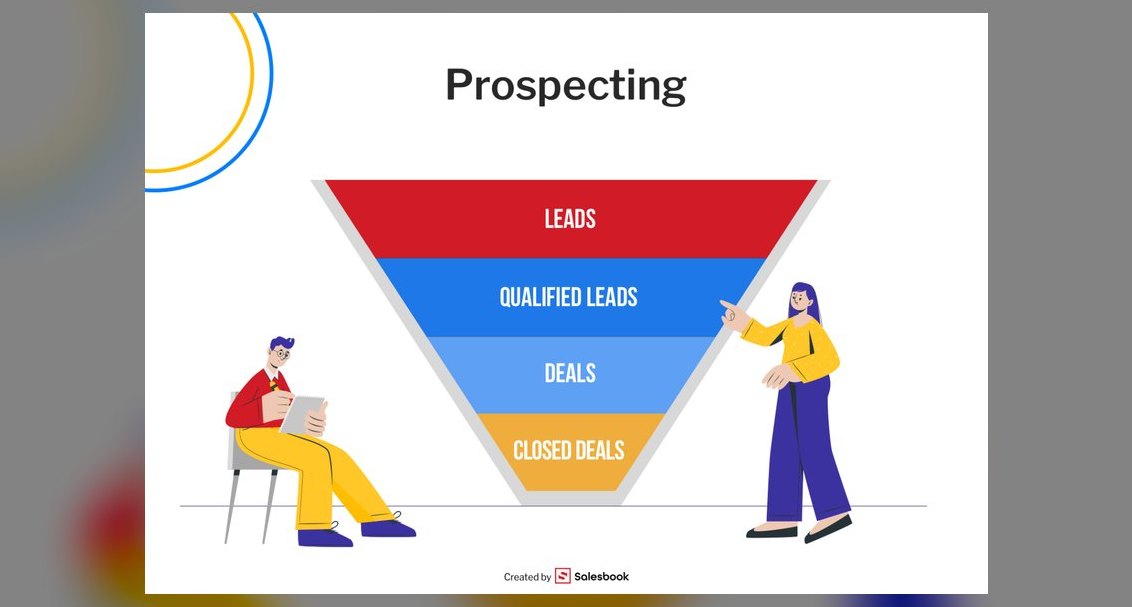 pulse-recentHigh-Profit Prospecting by Mark Hunter — Top 10 Key Takeaways for Sales Leaders in 2027
 pulse-recentStart with No by Jim Camp — Top 10 Key Takeaways for Sales Leaders in 2027
 pulse-recentNever Lose a Customer Again by Joey Coleman — Top 10 Key Takeaways for Sales Leaders in 2027
 pulse-recentHow does Strategic Selling by Miller Heiman define a Champion and how do you qualify one in 2027?
 pulse-recentSPIN Selling by Neil Rackham — Top 10 Key Takeaways for Sales Leaders in 2027