

How do you start a solar installer business in 2027?

Start a solar installer business in 2027 by securing the right state electrical or specialty contractor license, general liability plus workers' compensation coverage, NABCEP certification, and $150,000 to $500,000 in launch capital. Then diversify financing partners early, attach battery storage to most proposals, and control the permit-to-PTO cycle relentlessly.
The scenario that frames the problem
Picture a foreman who has spent six years on residential rooftop crews. He knows racking, flashing, conduit runs, and how to talk a homeowner through a main panel upgrade without spooking them. In late 2026 he decides to stop building someone else's company and start his own. He has $180,000 — a mix of savings, a HELOC, and a silent partner — a used box truck lined up, and two installers who will follow him out the door.
He assumes the hard part is the work. It is not. The work is the part he already knows how to do.
Within his first ninety days he discovers the real constraints. His state requires an electrical contractor license he cannot personally hold yet, because the qualifying-individual experience requirement is measured in verified years under a licensed contractor, and his hours were logged under a company that no longer exists. He needs a qualifying party — a master electrician willing to attach their license to his entity — and that person wants either a salary north of $120,000 or an equity slice. His workers' compensation quote lands in the electrical classification band, which prices meaningfully higher than an office trade and eats a chunk of every payroll dollar. And when he calls the residential lending desks to get a dealer agreement, two of them decline to onboard a company with no operating history and no completed installs, and the one that says yes quotes a dealer fee that consumes a double-digit percentage of every financed contract before he touches a single panel.
That last item is the one that kills new entrants. The 2024–2025 stretch was brutal for the residential solar channel: Sunlight Financial filed for Chapter 11 in March 2024, SunPower filed in August 2024, and Sunnova filed in June 2025. Each of those events stranded installers who had built their entire sales motion on a single partner's paper. Dealer fees across the surviving lenders climbed sharply from the 2020–2021 environment, underwriting tightened, and thousands of sales reps flooded the labor market looking for a new logo. A founder launching in 2027 is entering a market that has already been through a violent culling — roughly a quarter to a third of the installer base that existed at the 2022 peak is gone.
The upside of entering after a shakeout is real, though. Panel wholesale pricing has collapsed by roughly 80% since 2010, sitting in the low-to-mid cents-per-watt range. Displaced talent — closers, designers, permit coordinators — is available at rational compensation for the first time in years. The customers of the bankrupt brands are warranty orphans who need a service company. And the operators who survived are mostly the ones who ran disciplined unit economics, which means the pricing floor stopped racing downward.
The scenario generalizes past solar. Any specialty trade that grew on cheap third-party consumer financing — roofing on storm-restoration paper, HVAC on same-as-cash promos, home remodeling on unsecured installment loans — faces the same structural exposure. The lending channel is a supplier, and single-supplier dependency in a business where financing touches most transactions is an existential concentration risk, not a procurement detail. The RevOps discipline that saves you here is exactly the one a software company applies to channel concentration: instrument the pipeline by source, watch the take-rate per channel, and never let one partner exceed a share of bookings you could not survive losing overnight.
How the mechanism actually works
The business converts a homeowner's or building owner's electricity bill into a financed asset, and takes its margin in the gap between what the customer pays and what the system plus soft costs actually cost to deliver. Every part of the machine either shortens the cash cycle or lengthens it.

The path runs: lead → site qualification → design and proposal → contract and credit approval → engineering and plan set → permit application to the authority having jurisdiction (AHJ) → utility interconnection application → install → final inspection → utility commissioning → permission to operate (PTO). Only at PTO does the system legally produce for the customer, and in most financing structures the final draw releases at or near that milestone. That is why the permit-to-PTO cycle is the single most important operating metric in the business — it is a working-capital clock, not a paperwork chore.
The federal incentive stack sits underneath all of it. Under current statute the residential credit (Internal Revenue Code Section 25D) and the clean electricity investment credit for commercial systems (Section 48E) carry a 30% base, with commercial projects able to layer domestic-content and energy-community adders on top. Commercial systems also depreciate on a five-year MACRS schedule, and the bonus depreciation percentage has been stepping down year over year. Section 6418 transferability lets a commercial project owner sell the credit to a third party for cash rather than needing tax appetite of their own — that provision is what made mid-market commercial solar financeable without a traditional tax-equity partnership.
Two cautions on incentives. First, the political posture toward these credits has been unstable, and announced or rumored changes freeze large commercial buying decisions for months at a time. Build your model so it survives a reduced credit; do not build a company whose only pitch is a tax credit. Second, never advise a customer on their tax position. You describe what the statute provides and tell them to confirm with their CPA, in writing, in the contract.
The state layer is where the economics actually diverge. California's shift to the Net Billing Tariff under NEM 3.0 in April 2023 cut export compensation dramatically, which pushed solar-only payback out by years and made battery attachment close to mandatory in that market. Massachusetts runs the SMART declining-block program. New York runs NY-Sun through NYSERDA with regional incentive blocks. New Jersey and Illinois run renewable-credit markets. Texas has no state incentive at all, so the pitch is pure retail-rate arbitrage plus resilience. The same 10 kW system is a different product in each of those states.
Two structural facts fall out of that diagram. First, the permit and interconnection applications should run in parallel, not in sequence — sequencing them is the most common self-inflicted delay in the business, and it can add weeks to every job. Second, the disqualify branch is a profit center. A site with a failing roof, heavy shade, or a service panel that needs an expensive upgrade should be killed at survey, not after you have paid a closer and burned a design slot. Every job that dies after engineering is pure loss.
Real numbers, ranges, and benchmarks
Numbers below are working planning ranges, not quotes. Verify every one against your state, your utility, and live vendor pricing before you commit capital.
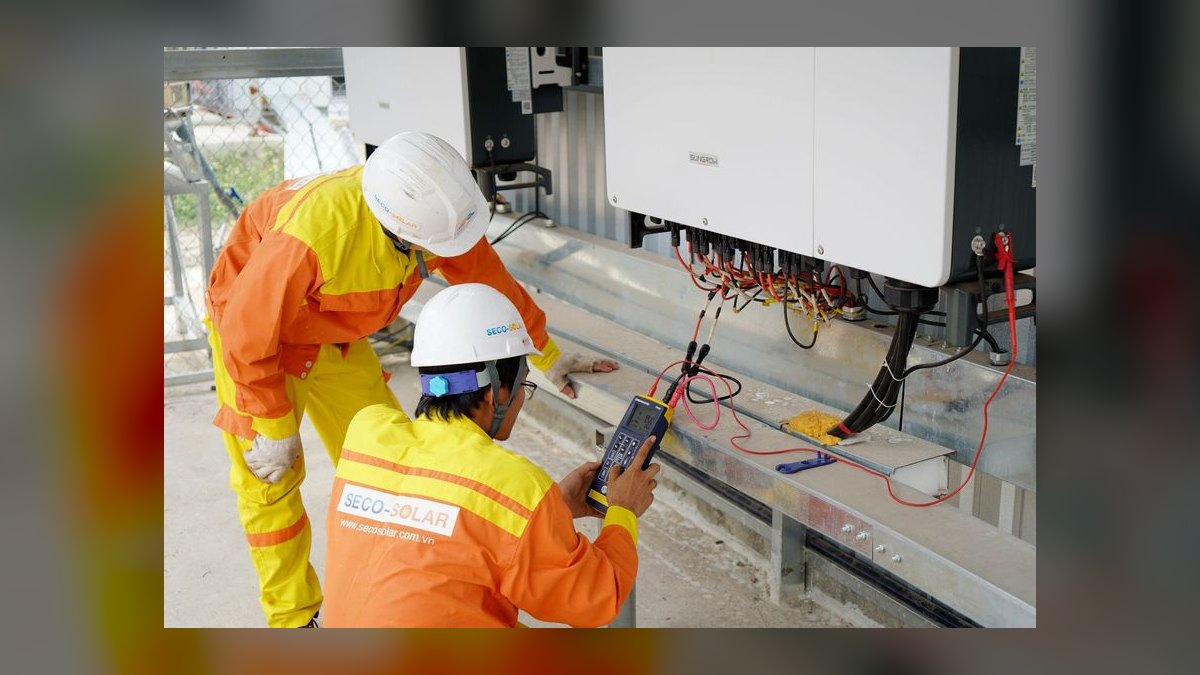
Launch capital. A residential launch with one to two crews generally lands between $150,000 and $500,000. That covers one or two used work vans or a box truck ($50,000–$160,000), ladders and fall-arrest gear for three to six workers ($6,000–$17,000), PV-specific test and torque tools including a clamp meter, insulation tester, and IV curve tracer ($15,000–$35,000), a materials float for two or three jobs ($25,000–$75,000), first-year licensing, bonding, and insurance ($15,000–$45,000), a first-year software stack ($10,000–$30,000), NABCEP certification and training ($3,000–$15,000), and working capital plus initial marketing ($25,000–$100,000).

Scaling to three-to-seven crews moves the number to roughly $500,000–$2.5 million, with the largest single line being working capital to carry a 60-to-120-day install-to-PTO cycle across a growing job board. A commercial EPC start is a different animal entirely — $2.5 million to $15 million — because you are hiring licensed engineers, buying commercial design software, carrying performance and payment bonds at 1–3% of contract value, and financing net-30-to-90 receivables with retainage held back.
Pricing and ticket. Residential systems commonly run 7–14 kW. Installed pre-incentive pricing varies widely by market: lower-cost, high-volume markets like Texas, Florida, and Arizona sit meaningfully below California, where NEM 3.0-driven battery attachment pushes the typical ticket well up. A solar-plus-battery job carries a materially higher ticket than solar-only, because storage adds roughly $0.80–$1.80 per watt-hour installed. Gross margin on residential typically runs in the high-20s to low-40s percent; net margin after sales, marketing, and overhead has compressed into roughly the 4–12% band, down sharply from the 2020–2022 boom.
Commercial rooftop prices lower per watt — economies of scale on a flat roof are real — and runs thinner gross margin, generally mid-teens to high-20s percent, on projects from roughly $75,000 to several million. Utility-scale EPC prices lower still per watt and runs single-digit net margins on very large contracts, with 18-to-36-month development-to-commercial-operation cycles.
Cost of acquisition. This is the line that has moved most. Residential customer acquisition cost climbed dramatically after 2022, and a founder should budget in the low four figures per closed install rather than the few hundred dollars that was normal a decade ago. Sales and marketing commonly consume 12–22% of residential revenue. Door-to-door canvassing produces low cost-per-lead but demands a managed team; marketplace leads cost more per lead but arrive further along; manufacturer and financing-partner referrals convert best because the homeowner is pre-qualified and already trusts a brand adjacent to yours.
Labor. Lead installers with certification command a real premium over general installers, and a master electrician — the person who signs off in most jurisdictions — is the most expensive and most constrained hire in the business. In-house is expensive; subcontracting is more expensive per hour and adds scheduling lead time you do not control. Sales rep churn in residential solar is notoriously high, and the 2024–2025 displacement wave made reps more mobile, not less. Retention spend — a truck, healthcare, certification sponsorship, a real bonus — reliably pays for itself against the $15,000–$35,000 it costs to replace a lead installer.
Insurance. A mid-size residential installer should plan on a full stack — general liability, workers' compensation in the electrical classification, commercial auto across the fleet, inland marine on tools and materials in transit, professional liability for design and performance claims, and an umbrella — landing somewhere in the $70,000–$200,000 annual range depending on payroll and state. Workers' compensation is the dominant line and scales directly with payroll, which is why crew productivity is an insurance strategy as much as an ops strategy.
The metrics that actually predict survival. Track close rate on completed site surveys, average ticket, battery attach rate, days from contract to PTO, cancellation rate after contract, gross margin per job, revenue per crew day, and channel concentration in your financing partners. That last one is the tripwire. If any single lender is above roughly half your financed volume, you are one press release away from a very bad quarter.

Trade-offs and the alternatives worth considering
The first real fork is which of three businesses you are actually starting. They share a name and share almost nothing else.
Residential rooftop has the fastest cash cycle and the lowest capital bar, and the worst customer acquisition economics of the three. You are running a consumer sales operation that happens to install hardware. If you cannot build and manage a sales team, do not start here.
Commercial rooftop EPC trades a four-to-nine-month B2B sales cycle for a far cheaper acquisition motion — one relationship with a property manager or a REIT asset team can produce repeat work for years. The tax stack does the selling for you. But you need engineering capability, bonding capacity, and enough balance sheet to carry retainage.
Utility-scale EPC is a construction contracting business, not a solar business. Multi-year RFPs, sophisticated counterparties, interconnection queues measured in years, and thin single-digit margins on very large numbers. It is not a realistic first venture.
The second fork is build versus buy. Acquiring an existing single-location installer typically transacts at a low multiple of seller's discretionary earnings, and SBA 7(a) financing is available for that kind of purchase. You inherit a crew, a licensed qualifying individual, supplier tiering, an existing dealer agreement, and a service book that generates referrals — which collapses the eighteen months a greenfield launch spends earning all of that. The diligence risks are specific and severe: how much of the revenue walks out with the founder, whether the financing-partner relationship survives a change of control (many dealer agreements do not automatically transfer), and how much unfunded warranty liability is sitting in the installed base. Post-bankruptcy, warranty-orphan exposure deserves careful reading.
The third fork is cash versus financed versus third-party ownership. Cash deals carry the cleanest gross margin and the smallest addressable market. Loan deals expand the market enormously but hand a large percentage of the ticket to the lender as a dealer fee, which you must price into gross or watch your margin vanish. Lease and PPA structures shift ownership — and the tax credit — to a third-party owner, which lets you serve customers with no tax appetite, at the cost of a larger dealer fee and a twenty-plus-year customer relationship you do not fully control.
The fourth fork is crew versus subcontractor. W-2 crews give you quality control, brand consistency, and a training pipeline; they also give you fixed payroll through winter and workers' compensation exposure. Subcontracted crews flex with demand and shift some risk, but you are competing for their calendar against everyone else and your callback rate will show it. Most durable operators run a W-2 core with a subcontracted surge layer.
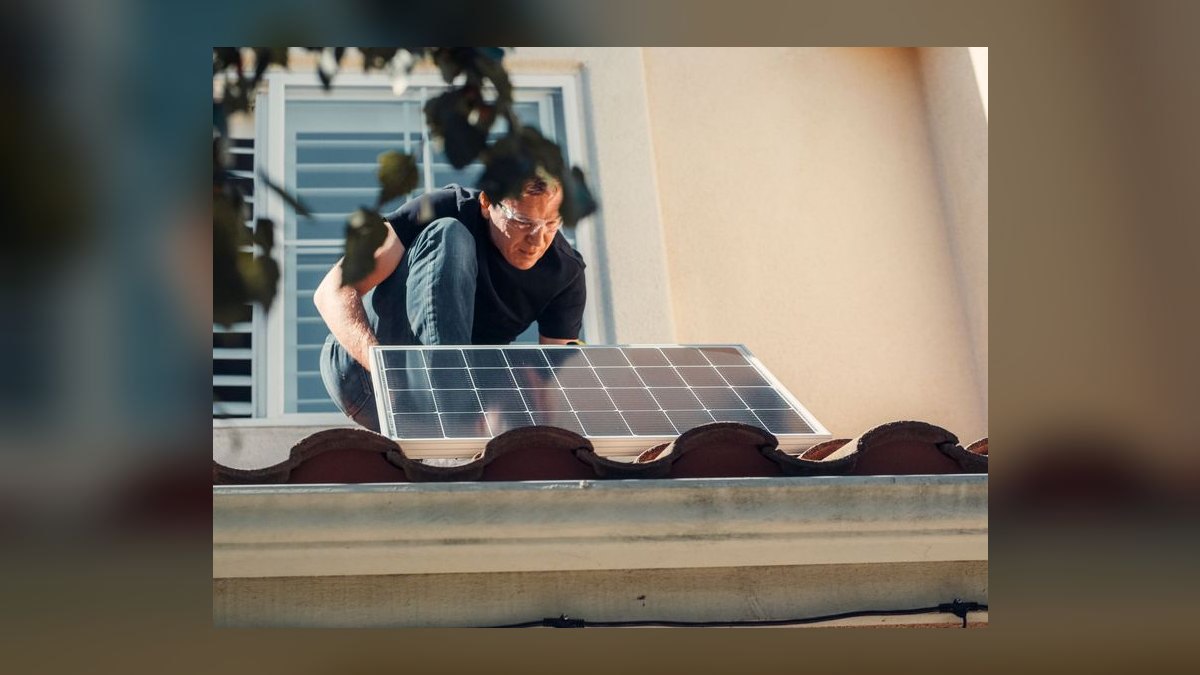
Adjacent moves worth weighing. Roofing and solar pair naturally — a solar job on a fifteen-year-old roof should be a re-roof plus solar, and owning both trades captures the whole ticket. EV charger installation is a low-friction attach for a licensed electrical contractor and reaches the same homeowner. Battery-only retrofits sell into an installed base that already has panels, including the orphaned customers of failed brands. Operations and maintenance contracts on other companies' systems are unglamorous, recurring, and countercyclical — when new installs slow, service volume does not. Several of the most durable operators quietly built a service book that carried them through the downturn.
Common pitfalls and how to avoid them
Single-lender dependency. The pitfall that ended the most companies in 2024 and 2025. Sign dealer agreements with at least three lenders before you need the third, integrate all of them into your CRM so a closer can re-run a declined application without leaving the kitchen table, and review your volume mix monthly. If one partner exceeds a share you could not absorb losing, actively steer volume elsewhere even at slightly worse economics. You are buying insurance.
Selling solar-only in an export-compensation-cut market. California's NEM 3.0 is the canonical case: without a battery, the payback math stopped working for many homeowners, and operators who kept pitching the old product simply stopped closing. Any market moving from retail-rate net metering toward avoided-cost export compensation follows the same pattern. Learn to size a system for self-consumption, quote storage on the majority of proposals, and lead with resilience and time-of-use arbitrage rather than an export credit that may be legislated away.
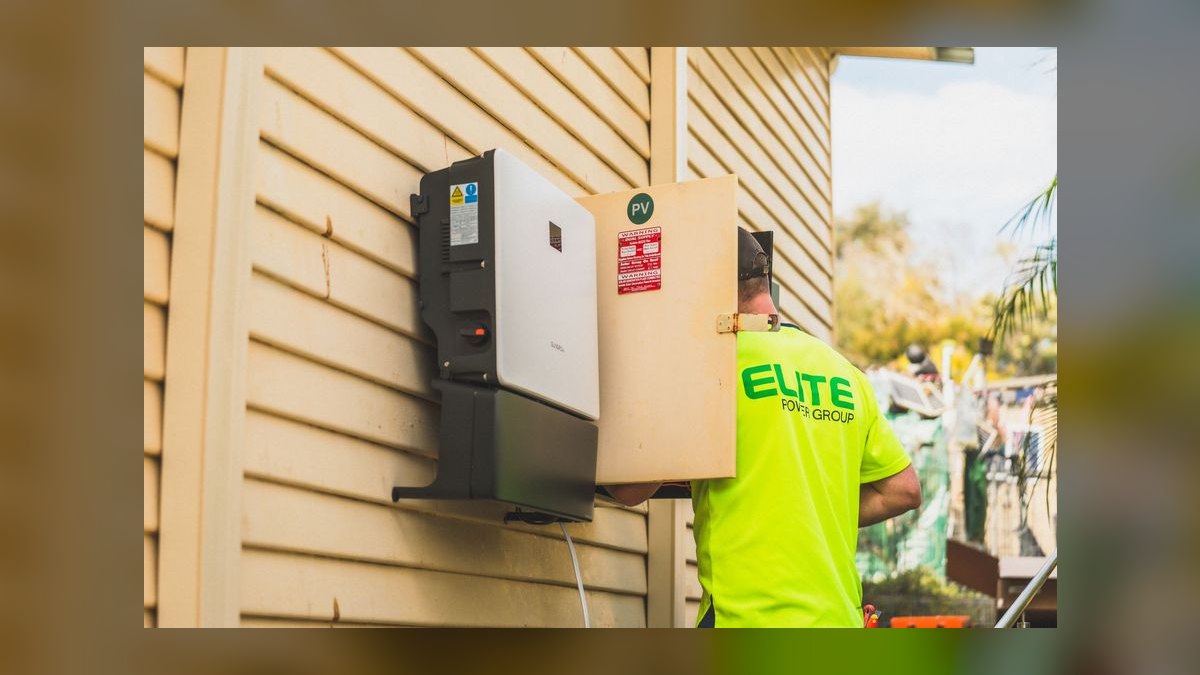
Underestimating the working-capital hole. New founders budget for trucks and tools and forget that a signed contract is not revenue for two to four months. You pay for materials, payroll, and permit fees long before final funding. Model your cash on a 120-day cycle even if you expect 75, negotiate distributor terms in writing, and stage material draws to job start instead of stockpiling inventory that ties up cash on a shelf.
Ignoring the AHJ and utility relationship. Permit offices and utility interconnection desks are the two bottlenecks you cannot buy your way past. Learn each jurisdiction's plan-set expectations before you submit, because a rejected plan set costs you a full review cycle. Assign one person to own permitting and interconnection as their actual job by the time you hit three crews — a permit coordinator is the highest-ROI back-office hire in the business. Track expected turnaround per jurisdiction and set customer expectations off real data, not hope.
Overpromising savings. Solar consumer-protection enforcement has tightened considerably, and the industry's reputational damage from aggressive door-to-door sales is a headwind every honest operator inherits. Put production estimates in writing with the modeling assumptions stated. Never quote a guaranteed dollar savings figure that depends on future utility rate increases. Never let a rep imply a tax credit is a rebate, or that the customer will definitely receive its full value — eligibility depends on their tax liability. The complaints that generate regulatory attention almost always trace back to a sales claim, not an installation defect.
Hiring a sales team before you can install. A closer will outrun a single crew within weeks. A backlog you cannot install becomes cancellations, one-star reviews, and refund demands. Grow install capacity slightly ahead of sales capacity, and cap the pipeline deliberately when the ratio slips.
Treating the qualifying-individual license as a formality. In many states, if your qualifying master electrician leaves, your license is suspended and every open permit is at risk. Put that relationship on a real contract with notice provisions, and start building a second qualified person the day you hire the first.
Skipping the service motion. Systems fail. Inverters go dark, monitoring drops, squirrels chew wire. An operator with no service process gets the negative reviews that raise acquisition cost for every future job. Build a service queue, staff it, and charge for out-of-warranty work rather than eating it silently.
Running blind on unit economics. Many solar founders track revenue and cash in the bank and nothing in between. Instrument the funnel the way any competent RevOps function would: cost per lead by channel, close rate by rep and by channel, gross margin per job, and revenue per crew day. Without those four numbers you cannot tell a marketing problem from a sales problem from a production problem, and you will fix the wrong one.
Related questions
Do I need an electrical license, or is a solar-specific license enough?
It depends entirely on your state. Some states offer a solar or PV specialty classification; many require an electrical contractor license, and nearly all require a licensed electrician to perform or sign off on the service-panel and interconnection work. Confirm with your state licensing board before you spend anything.
Is NABCEP certification actually required?
Rarely required by law, frequently required in practice. State incentive programs, utility programs, and manufacturer certification tiers often condition participation on it, and certified installers command a pay premium. Treat it as a commercial requirement rather than a legal one.
How long until a new solar installer breaks even?
Plan on twelve to twenty-four months. The lag comes from the licensing timeline, the permit-to-PTO working-capital cycle, and the months spent building enough completed installs to earn favorable dealer terms and referral volume. Undercapitalized founders usually fail on timing, not demand.
Should I start in a high-incentive state or a low-cost state?
Both work, differently. High-incentive states offer richer economics and heavier regulatory complexity and competition. Low-incentive states like Texas run on pure retail-rate and resilience value with faster permitting and thinner ticket sizes. Pick the one whose sales motion matches your actual skills.
Can I start with subcontracted crews and no employees?
Yes, and many do for the first year. It preserves cash and avoids payroll through slow months. The costs are quality variance, scheduling you do not control, and misclassification risk if you direct their work like employees. Get the classification reviewed by an employment attorney.
FAQ
How much money do I need to start a solar installer business?
A one-to-two-crew residential launch typically requires $150,000 to $500,000 all-in, with working capital — not equipment — being the line founders most often underestimate. Scaling to several crews pushes that toward $500,000 to $2.5 million, and a commercial EPC start requires millions because of engineering staff, bonding, and receivables carry. SBA 7(a) financing is commonly used for equipment, working capital, and acquisitions.
What is the hardest part of the business?
Not the panels, which are a commodity, and not the installation labor, which is trainable. The hardest parts are financing-channel access, policy volatility in state export-compensation and federal tax-credit rules, and customer acquisition cost. A founder who is excellent on a roof and mediocre at those three will struggle; the reverse is far more survivable.
Do I need to sell batteries?
In markets that have moved away from retail-rate net metering — California most prominently since NEM 3.0 took effect in April 2023 — storage is effectively mandatory for the economics to work. Elsewhere, it is an attach that raises ticket and margin and sells on resilience. Build storage competency early regardless; the direction of travel across states is consistent.
How long does a typical residential job take from contract to turn-on?
Sixty to a hundred and twenty days is a normal range: roughly a week for site survey, one to three weeks for design and engineering, thirty to sixty days for permit and interconnection review running in parallel, one to three days of installation, then two to six weeks for final inspection and utility commissioning. Dense urban jurisdictions run considerably longer.
Should I buy an existing solar company instead of starting one?
Often yes, if the price is reasonable. You inherit a licensed qualifying individual, a trained crew, supplier tiering, and a service book — collectively about eighteen months of runway. Diligence hard on founder-dependency of revenue, whether the dealer agreement survives a change of control, and unfunded warranty liability in the installed base.
How do I protect myself from another financing partner bankruptcy?
Maintain live dealer agreements with at least three lenders, integrate them all so a closer can re-run a declined applicant immediately, monitor your volume concentration monthly, and keep enough cash to fund payroll and materials through a channel disruption. Also keep a cash-sale motion alive — a small percentage of cash deals is your floor when consumer paper tightens.
Sources
- https://www.seia.org/research-resources/solar-market-insight-report
- https://www.nabcep.org/
- https://www.energy.gov/eere/solar/homeowners-guide-federal-tax-credit-solar-photovoltaics
- https://www.irs.gov/credits-deductions/residential-clean-energy-credit
- https://www.nrel.gov/solar/market-research-analysis/solar-cost-benchmarks.html
- https://www.cpuc.ca.gov/nembt
- https://www.sba.gov/funding-programs/loans/7a-loans
- https://emp.lbl.gov/tracking-the-sun
- https://www.energysage.com/
- https://www.eia.gov/todayinenergy/
Related on PULSE
- How do you start a roofing company in 2027?
- How do you start an HVAC business in 2027?
- How do you start an electrical contracting business in 2027?
- How do you start an EV charger installation business in 2027?
- How do you price a home services job for margin instead of volume?
- How do you build a RevOps function inside a specialty trades business?
 pulse-toolsHow Many Staff Should I Schedule Each Shift Across My Food Truck Fleet?
 pulse-moviesTop 10 Westerns of All Time in 2027
 pulse-moviesTop 10 Movies on Netflix 2027
 pulse-moviesTop 10 Crime Movies of All Time in 2027
 pulse-moviesTop 10 Musical Movies of All Time in 2027
 pulse-moviesTop 10 Fantasy Movies of All Time in 2027
 pulse-moviesTop 10 Documentaries of All Time in 2027
 pulse-moviesTop 10 War Movies of All Time in 2027
 pulse-moviesTop 10 Thriller Movies of All Time in 2027
 mvTop 10 Horror Movies of All Time in 2027